考点分析
解题技巧
话题突破20 科技发明(听力专练)

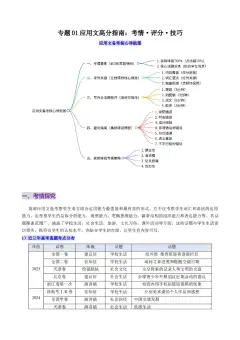
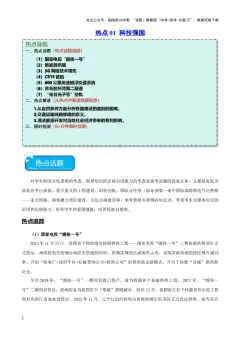
高考英语听力中的“科技发明”类话题,通常不会考查深奥的技术原理,而是聚焦于科技产品/发明的应用、
利弊、用户体验和社会影响。主要呈现以下特点:
场景生活化:对话或独白通常设定在日常生活场景中,如家庭、商店、学校、工作场所,讨论科技产品如
何融入并改变这些场景。
焦点在“人”不在“技”:重点不是技术本身,而是人与科技的互动——人们如何使用它、感受它、评价
它。
辩证看利弊:许多题目会涉及科技带来的便利与随之产生的担忧(如失业、隐私、人际疏远),需要考生
捕捉双方观点。
词汇高频复现:核心科技词汇和表达会 across 不同题目反复出现。
常见提问角度:
谈话的主题/主旨是什么?(What are the speakers mainly talking about?)
科技产品的功能/用途是什么?(What can the AI/robot do?)
说话人对科技产品的态度/感受如何?(How does the man feel about the smartwatch?)
使用科技产品的原因/目的是什么?(Why did the woman use AI?)
科技产品带来的好处与问题是什么?(What is the advantage/concern about...?)
技巧1 首句原则与话题导入:
密切关注对话或独白的开头几句,主题往往在此引出。例如:“Have you heard of Sophia? She is a
robot...”(直接点明主题是机器人)。
技巧2 抓住核心科技名词:
快速识别并锁定对话中出现的核心科技产品词汇,如 robot, AI, smartwatch, smartphone, self-driving
car, VR, digital assistant, 3D printer 等。这些词是答案的锚点。
技巧3 辨识功能与用途的表达:
注意听取描述功能的动词和短语:help to, be used to, can, function as, track, monitor, remind,
provide information, personalize 等。例如:“It helps me keep track of my steps, heart rate and even my
sleep patterns.”
技巧4 捕捉态度与评价的线索:
正面评价:amazing, helpful, useful, efficient, convenient, cool, brilliant, life-changing, pleased with...
负面/ 担忧评价:annoying, strange, worrying, dangerous, a concern, unreliable, too much, reduce
语料总结
interaction, lose jobs...
辩证性评价:Every coin has two sides. / Balance is key. / It’s helpful, but...
技巧5 理解上下文与避免陷阱:
干扰项常常使用原文中出现的其他词汇。例如,在谈论机器人歌手Sophia 时,干扰项会出现
“musician” 和 “pop star”。必须听懂整个语境,明确主题是“机器人”而非“音乐家”。
注意转折词(but, however, actually)后面的内容,这通常是说话人真实意图或题目的关键所在。
核心科技
产品与概
念
Artificial Intelligence (AI) / robot 人工智能 / 机器人
smartwatch / smartphone 智能手表 / 智能手机
self-driving / autonomous car 自动驾驶汽车
Virtual Reality (VR) / online world 虚拟现实 / 网络世界
digital tool / app 数字工具 / 应用程序
search engine / algorithm 搜索引擎 / 算法
invention / innovation 发明 / 创新
high-tech product / device 高科技产品 / 设备
data / personal information 数据 / 个人信息
machine learning / computer intelligence 机器学习 / 计算机智能
Internet of Things (IoT) / 5G network 物联网 / 5G 网络
clean energy tech 清洁能源技术
smart home / future hotel 智能家居 / 未来酒店
chatbot / smart tutor 聊天机器人 / 智能导师
bubble machine / dishwasher 泡泡机 / 洗碗机
功能与用
途动词
help (to) / assist 帮助
track / monitor 追踪 / 监测
remind / alert 提醒 / 警报
provide / offer 提供
improve / enhance 改进 / 提升
change / transform 改变 / 转变
analyze data / personalize learning 分析数据 / 个性化学习
turn on / off 打开 / 关闭
upload a file / pick a style 上传文件 / 选择风格
sort items / clean the floor 分拣物品 / 清洁地板
描述优点
efficient / save time 高效的 / 节省时间
与便利性
convenient / user-friendly 方便的 / 用户友好的
accurate / precise 准确的 / 精确的
powerful / multi-functional 功能强大的 / 多功能的
amazing / fantastic 令人惊奇的 / 极好的
energy-efficient / great for bills 节能的 / 对节省开支很有利
quiet / not noisy 安静的 / 不吵的
a significant advance / breakthrough 一项重大进展 / 突破
free someone from heavy housework 将某人从繁重的家务中解放出来
revolutionize how we access information 彻底改变我们获取信息的方式
表达担忧
与缺点
replace human jobs 取代人类工作
over-reliance on technology 对科技的过度依赖
lack feelings / emotions 缺乏感情 / 情感
a cold machine 一台冰冷的机器
out of control / dangerous 失控的 / 危险的
reduce face-to-face communication 减少面对面交流
privacy concern / issue 隐私担忧 / 问题
be annoying / bothering 令人厌烦的 / 烦人的
weaken one's own skills 削弱某人自身的技能
feel strange / unnatural 感觉奇怪 / 不自然
be too expensive / cost a lot 太贵了 / 花费很多
辩证性观
点与解决
方案
Every coin has two sides. 事物都有两面性。
Balance is key. 平衡是关键。
It's helpful, but... 它很有用,但是...
Humans and AI should work together. 人类和AI 应该协同工作。
set strict laws / limits for AI use 为AI 使用制定严格的法律/限制
use it as a tool for brainstorming 将其用作头脑风暴的工具
focus on decisions and values 专注于决策和价值观
常用表达
与句式
询问功
能与看
法
How does it work? 这个怎么用?
What can it do? 它能做什么?
What's the advantage of (the smartwatch) over (the phone)? (智能手表) 比 (手机)
好在哪里?
What do you think of AI? 你对人工智能怎么看?
Have you heard of (Sophia / FlyZoo Hotel)? 你听说过 (索菲亚 / 菲住酒店)
吗?
Can beginners use it too? 初学者也能用吗?
表达兴
That's pretty high tech! 那真高科技!
强化训练
奋与肯
定
It's amazing / fantastic! 太棒了!
I'm pleased with its efficiency. 我对它的效率很满意。
You're a life-saver! 你真是我的救命恩人!(形容某物/某人非常有用)
I expect to try / stay there one day. 我期待有一天能试试/住那里。
That's a significant advance. 那是一个重大进步。
表达困
惑与担
忧
I'm not sure where to begin. 我不确定该从哪里开始。
It feels a little strange. 感觉有点怪。
Can (AI) really understand...? (AI) 真的能理解...吗?
I can't imagine what will happen if it gets out of control. 我无法想象如果它失控
了会怎样。
Isn't it a bit too perfect? 这是不是有点太完美了?(暗示可能非人为)
What if it replaces us? 如果它取代了我们怎么办?
提出建
议与解
决方案
Let me show you how it works. 我来教你怎么用。
You can use it for... but don't forget to... 你可以用它来...,但别忘了...
We need laws to set strict limits. 我们需要法律来设定严格的限制。
Just press the button. 按下这个按钮就行。
You could use it to generate ideas. 你可以用它来激发灵感。


试题总览
短对话
1
讨论如何使用一款名为ArtGen 的AI 绘画工具来创作获奖的数字艺术作品。
2
Ryan 表示,在各种技术中,虚拟现实这一创新最让他感兴趣。
3
男士联系Higgins 教授是为了解某项发明对环境可能产生的影响。
4
男士在抱怨频繁收到由机器人拨打的骚扰电话。
5
男士昨天参加了一个科学展,并展示了他制作的能够分拣纸张的机器人。
6
两人在讨论新买的洗碗机其高效能、静音和节能等优点。
7
男士在健身房指导一位新手如何使用健身器械进行训练。
8
男士以专家身份询问女士对于2025 年即将出现的新技术的看法。
9
两人在讨论阿里巴巴旗下由机器人服务的“未来酒店”——FlyZoo Hotel。
10
对话围绕一个名为Sophia 的、具备唱歌等多种能力并与音乐家合作的机器人展
开。
长对话
1
两人讨论智能手表在追踪睡眠等方面的功能,女士认为它像一个有用的健康教
练。
2
Steve 认为AI 擅长常规任务并能帮医生提高效率,但强调人与AI 协作是关键。
3
两位同学讨论AI 在教育中的应用,女士用它来激发写作灵感,男士从怀疑转为
认可。
4
老师指出学生过度依赖AI 写作导致文章失去个人特色,并强调形成个人观点的
重要性。
5
两人讨论AI 目前是没有感情的机器,并认为随着其发展,需要制定严格的法律
来约束。
6
妻子使用扫地机器人Roomba 轻松完成了地板清洁,夫妻二人在讨论它的便利
性。
7
售货员向男士介绍智能手表的基本部件,男士最关心的是心率监测功能。
独白
1
讲座探讨了AI 通过个性化学习改变教育,但也担心其减少人际互动,下节课将
比较不同教学方法。
2
德克萨斯大学的科学家在“读心”技术上取得突破,利用AI 将脑活动转化为文
本,未来或能帮助无法说话的人。
3
为应对劳动力老龄化,日本建筑公司引入机器人负责夜间运输等任务,并由经理
通过电脑指派工作。
4
DeepSeek 是一款利用AI 理解上下文进行精准搜索的新技术,特别适用于科研等
领域,将使搜索更快更有效。
5
介绍荣获科学探索奖的医学科学家林贤锋,他致力于基因靶向治疗研究,并以坚
定的 commitment 克服了无数困难。
练习 1 短对话
听下面10 段对话。每段对话后有一个小题,从题中所给的A、B、C 三个选项中选出最佳选项。听完每段
对话后,你都有10 秒钟的时间来回答有关小题和阅读下一小题。每段对话仅读一遍。
1. What are the speakers mainly talking about?
A. An AI painting tool.
B. A unique art style.
C. A digital art competition.
【答案】A
【原文】W: Jake, congratulations on your winning the first prize in the competition! Your digital art
looks amazing! How did you make it?
M: Thanks! I used an AI tool called ArtGen. It turns sketches into colorful designs.
W: Wow! Can beginners use it too?
M: Definitely. You just upload a drawing, pick a style, and boom — it’s done!
2. What is Ryan most excited about?
A. Online videos.
B. Virtual reality.
C. Phone applications.
【答案】B
【原文】M: I’m unfamiliar with web application development. I’d mainly use technology to keep in touch with
friends and family. This innovation of virtual reality is most interesting to me.
W: Sure, Ryan. This new form of video communication will be very useful!
3. Why did the man contact Professor Higgins?
A. To design an invention.
B. To learn more about the invention.
C. To discuss departmental matters.
【答案】B
【原文】W:I don't really understand why you called Professor Higgins. He has nothing to do with our department
and project.
M: Well, we wanted to understand what impact an invention like this would have on the environment. And that's his
area of expertise.
4. What is the man mainly complaining about?
A. Unwanted calls.
B. Broken phones.
C. Crazy robots.
【答案】A
【原文】M: This is crazy! Every time I pick up the calls, there is a robot speaking. And I don’t
recognize any of the numbers. They’re upsetting me.
W: Just leave them alone and report them.
M: I really need to find a way to block them.
5. What did the man do yesterday?
A. He visited a website.
B. He bought a robot.
C. He attended a fair.
【答案】C
【原文】Text 1 W:Sam, your photo is on the school website. Were you in the Science Fair yesterday?
M: Yeah, I made a robot that can sort paper.
W: That's amazing. I wish I had visited the fair.
6. What are the speakers talking about?
A. A machine.
B. Energy bills.
C. A kitchen.
【答案】A
【原文】W: Have you seen the new dishwasher? I’m pleased with its efficiency.
M: Yeah. Its design fits our kitchen perfectly.
W: It is so quiet compared to our old one. Plus, it’s energy-efficient, which is great for our bills.
7. What is the man doing?
A. Helping a beginner.
B. Training his muscles.
C. Selling a machine.
【答案】A
【原文】M: Hello, you look a little lost. Are you new here?
W: Yeah, I just started my training today and I’m not sure where to begin.
M: Follow me. This machine here will exercise your leg muscle and you can use it like this.
8. What does the man ask the woman to do?
A. Offer her opinions.
B. Help him with a project.
C. Learn more about technology.
【答案】A
【原文】M: So as an expert, what new Tech do you think we’ll see in 2025?
W: We’ll continue to see improvements in machine learning and computer intelligence leading to progress in the
Internet of things and five-G. I also hope to see new clean energy Tech coming into the market.
9. What are the speakers mainly talking about?
A. A robot.
B. A zoo.
C. A hotel.
【答案】C
【原文】W: Have you heard of FlyZoo Hotel in Hangzhou?
M: Yes. It is Alibaba’s first “future hotel”. No people work there but robots. I expect to stay there one day.
10. What are the speakers mainly talking about?
A. A robot.
B. A musician.
C. A pop star.
【答案】A
【原文】W: Have you heard of Sophia? She is a robot with many abilities. She can even sing.
M: Sure. Sophia is now working with human musicians on several musical works as part of a project called Sophia
Pop.
练习2  中长对话
听下面几段对话。每段对话后有几个小题,从题中所给的A、B、C 三个选项中选出最佳选项,并标在试
卷的相应位置。听每段对话前,你将有时间阅读各个小题,每小题5 秒钟;听完后,各小题将给出5 秒钟
的作答时间。每段对话读两遍。
Dialogue 1
听下面一段较长对话,回答以下小题。
6. What is the advantage of the smartwatch over the phone?
A. Tracking steps.
B. Tracking heart rate.
C. Tracking sleep.
7. What does the woman think of the smartwatch?
A. It's helpful.
B. It's bothering.
C. It's unnecessary.
【答案】6. C    7.A
【原文】
W: Hi Charles, you've been wearing that smart watch all week.
M: Yeah, it helps me keep track of my steps, heart rate and even my sleep patterns.
W: That's pretty high tech. My phone can track some of that but not sleep. Does it also remind you to exercise?
M: Definitely. It tells me to move if I sit for too long, though it can be a bit annoying during work.
W: Nice. It's like having a little health coach on your wrist. I'm planning to get one.
Dialogue 2
听下面一段较长对话,回答以下小题。
11. What kind of tasks does Steve think AI is good at?
A. Creative.
B. Complex.
C. Routine.
12. How can AI help doctors according to Steve?
A. Increase work efficiency.
B. Develop their skills.
C. Provide treatment plans.
13. What does Steve mean in the end?
A. AI will replace many human jobs.
B. Humans and AI should work together.
C. AI development should be reconsidered.
【答案】11. C    12.A    13. B
【原文】W:
Hey, Steve, do you think AI will replace human jobs completely one day?
M: Not entirely. AI excels at routine tasks like data entry, sorting files, or moving items along production
lines, but creativity and emotional intelligence — like writing poetry or comforting patients — are still uniquely
human strengths.
W: But AI can write articles and even compose music. Isn’t that creative?
M: It follows patterns from existing data, but lacks true understanding. Still, it’s useful — like helping doctors
identify diseases faster.
W: True. But relying too much on AI might weaken their own skills.
M: Balance is key. Let AI handle data; humans focus on decisions and values.
Dialogue 3
听下面一段较长对话,回答以下小题。
11. What is the probable relationship between the speakers?
A. Classmates.B. Fellow workers. C. Teacher and student.
12. How does the man feel about AI use at first?
A. Slightly doubtful.
B. Rather disappointed. C. Pretty satisfied.
13. What does AI help the woman to do?
A. Write drafts.
B. Grade essays.
C. Generate ideas.
【答案】11. A    12. A    13. C
【原文】W: Have you heard about all the AI tools that are being used in schools now? Our teachers are
even using them to grade assignments.
M: Yeah, I heard about that. It’s pretty wild, right? I can see how it helps teachers save time, but it also feels a little
strange. Like, can AI really understand the slight differences in the paper?
W: I get what you mean, but AI can, and it’s not just grading. Some schools are using AI to give students
suggestions, like how to improve their writing or even help them with research. It’s like having a tutor 24/7.
M: That’s pretty cool actually.
W: I’ve been using AI to help me with my essays. Before writing, I turn to it and it offers me a variety of ideas. It
can also polish the rough drafts of my essays. It’s better than staring at a blank page for hours.
M: Wow, AI is developing so rapidly.
Dialogue 4
听下面一段较长对话,回答以下小题。
14. What does Mr. Green notice about Nancy’s article?
A. It lacks examples.
B. It is poorly structured.
C. It appears too well-written.
15. Why did Nancy use AI to write her article?
A. She wanted to save time.
B. She expected to impress Mr. Green.
C. She thought the ideas were excellent.
16. What does Mr. Green think is the most important in writing articles?
A. Gathering good ideas.
B. Choosing writing tools.
C. Developing personal ideas.
17. How will Nancy respond to Mr. Green’s advice?
A. She will follow his suggestion.
B. She will stop using AI for writing.
C. She will ignore the feedback from him.
【答案】14. C    15. C    16. C    17. A
【原文】M: Nancy, can I have a word with you about your last article?
W: Of course, Mr. green. Is there something wrong with it?
M: Well, I notice that your article seems a bit too perfect. Did you use AI to write it?
W: Uh, yes I did. I thought its ideas sound really good.
M: I see it is well structured, but somehow it doesn't quite feel like you.
W: I guess I relied too much on what the AI gave me.
M: That's the issue. AI can be helpful, but the purpose of writing an article is to form your own ideas. For instance,
your earlier pieces included original examples from your experiences, which were quite impressive.
W: I see your point, but isn't it okay to use AI as a tool? I mean, it's everywhere now.
M: It's fine to use it for information gathering or brainstorming, but don't forget to stand up for yourself as a writer.
Your voice and opinions are valuable.
W: Thank you, Mister Green. I really appreciate your feedback.
Dialogue 5
听下面一段较长对话,回答以下小题。
11. What does the man think of AI today?
A. It can replace humans.
B. It’s helpful but dangerous. C. It’s just a tool without feelings.
12. What has the woman’s cousin been doing recently?
A. Chatting with AI robots.
B. Studying laws.
C. Watching movies.
13. What solution does the woman suggest for advanced AI?
A. Making AI less intelligent.
B. Teaching AI human emotions.
C. Creating strict laws for AI use.
【答案】11. C    12. A    13. C
【原文】M: Hey, Judy. Have you watched the movie WALL-E? It’s about AI. The main character,
WALL-E, has a rich inner world. So, do you think an Al chat robot can truly feel emotions?
W: No, it’s just a machine. It never gets why you’re upset. However, if a robot really understands feelings, the line
between humans and machines might be unnoticeable.
M: Well, it depends on how an Al robot will develop in the future. But for now, it is just a cold machine that can’t
take the place of humans.
W: Right. AI is quite intelligent now! My cousin’s been addicted to talking to AI chat robots recently.
M: But every coin has two sides. I can’t imagine what will happen if Al gets out of control.
W: True. One thing is certain: the smarter Al is, the more we need laws to set strict limits on its use.
Dialogue 6
听下面一段较长对话,回答以下小题。
8. What is the conversation mainly about?
A. The woman’s poor health.
B. The cleaning of the floor.
C. The prize for a good job.
9. What is the probable relationship between the two speakers?
A. Husband and wife.
B. Doctor and patient.
C. Boss and employee.
10. What do we know about the Roomba?
A. It helps the man with his work.
B. It costs the woman nearly $400.
C. It frees users of heavy housework.
【答案】8. B    9. A    10. C
【原文】M: The floor looks so shining. Did you call the cleaning company?
W: No. I had a headache and returned home earlier. So I did it myself.
M: A headache?
W: Don’t worry. I am feeling much better now.
M: You could have called me.
W: Thanks, honey. It wasn’t as hard as you think. I have been using a Roomba recently.
M: Oh, that cleaning robot? It costs a lot. Maybe $400?
W: Actually, I got it as a prize from my boss last week. You know I always do a good job.
M: You saved a lot. By the way, how to use the Roomba?
W: It’s easy. Just press the button. You can do something else while it’s working.
M: Interesting. Let me help clean the floor next time.
W: Sure.
Dialogue 7
听下面一段较长对话,回答以下小题。
10. How many parts are there in the smartwatch?
A. Five.
B. Six.
C. Eleven.
11. Where is the power button of the smartwatch?
A. At the back.
B. On the right side.
C. At the bottom left.
12. Which function does the man care about most?
A. The microphone.
B. Heart rate monitor.
C. The touch screen.
【答案】10. C    11. C    12. B
M: Good morning. How can I use this smartwatch?
W: Well, there are eleven parts in this watch, but I’ll just show you the first five most basic buttons. To turn on the
watch, you need to press the Home Button, which is at the bottom left of the watch.
M: OK, I see.
W: The second button is the Microphone, which is on the right side of the watch. It picks up sound or voice if you
are sending it to other people.
M: Well, Is there anything that helps me to measure my heart rate?
W: Sure, sir. Here is the Heart Rate Sensor on the back of the smart watch. Another feature is the touch screen on
which you can touch to enable any function. And with the Back button, you can press it if you want to return to the
previous screen.
练习 3 独白
Passage 1
听下面一段较长独白,回答以下小题。
18. How does AI benefit students according to the speaker?
A. By replacing teachers.
B. By personalizing learning.
C. By lowering education costs.
19. What is a major concern about AI in education?
A. It requires complex training.
B. It is too expensive for schools.
C. It may decrease face-to-face communication.
20. What will the next session focus on?
A. Future AI inventions.
B. Technical problems of AI tools.
C. A comparison of teaching methods.
【答案】18. B    19. C    20. C
【原文】 Good morning, class. Today we’ll explore how artificial intelligence (AI) is transforming education. AI
tools like smart tutors can now personalize learning by analyzing students’ strengths and weaknesses. They provide
instant feedback and even adapt exercises to individual needs. Many teachers find this helpful, especially for
students who require extra support. Still, some worry that over-reliance on AI might reduce human interaction in
classrooms. It’s crucial to balance technology with traditional teaching methods. Next time, we’ll compare AI-
assisted learning with conventional approaches side by side.
Passage 2
听下面一段独白,回答以下小题。
18. What is the main topic of the talk?
A. The effect of AI use on language skills.
B. The possibilities of AI use in training brains.
C. The breakthrough of AI use in reading minds.
19. Where did the research take place?
A. At Oxford University.
B. At the University of Texas.
C. At Osaka University.
20. Who is likely to benefit most from the research?
A. Filmmakers.
B. Language teachers.
C. People who are unable to speak.
【答案】18. C    19. B    20. C
【原文】
We all know that AI technology can write emails, paint pictures, and provide personalized advice. But now,
according to a group of American researchers, it can even read minds! (19) (20) Well…almost.
Scientists at the University of Texas have created an AI-based system that can turn a person’s brain
activity into text. (19) This has previously only been possible through the use of surgical implants (植入物). The
breakthrough is contributed by the large language models used by AI “chatbots” such as ChatGPT and their
understanding of natural speech. Using these, scientists have been able to match brain activity to whole sentences
and their meanings. Three volunteers spent 16 hours listening to stories while their brain activity was
recorded. They then watched four silent films while the machine attempted to describe what they were
seeing. The translations weren’t perfect. They tended to describe general ideas, rather than providing
an accurate word-for-word match for each thought. However, it’s hoped that this technology could someday
help thousands of patients who are unable to communicate. (20) Professor Shinji Nishimoto of Osaka
University called the research “a significant advance”, while Oxford University’s Professor Tim Behrens said it
opens up many experimental possibilities.
Passage 3
听下面一段独白,回答以下小题。
18. What is the main idea of the speech?
A. The benefits of 5G mobile networks.
B. Construction firms need old workers.
C. Robots doing more work on building sites.
19. What is happening to the Japanese construction workforce?
A. It is getting slower.
B. It is getting older.
C. It is getting smaller.
20. Who controls the robots on the computer?
A. A manager.                         B.A laborer.                         C. An engineer.
【答案】18. C    19. B    20.A
【原文】M:Shinichi Sakamoto is 57, and works in Shimizu, one of Japan's biggest construction companies.
He is part of the greying and falling workforce. According to Mr. Sakamoto, statistics showed that a
third of Japanese construction laborers are over 54 years old, and they are considering retiring so soon.
And they're not being replaced by younger builders. "The number of laborers under 30 is just above
10%,"he said. In September, Mr. Sakamoto's firm gained a promising new co-worker —a robot. It is
currently working on a high-rise development in Osaka, transporting heavy building materials every
night from the ground floor to where they're needed. “Can you imagine that materials are in the right
position in the morning when laborers come to the site?" said Mr. Sakamoto, “He even works at night
time." Robots will benefit from super-fast 5G mobile networks. Better connections will make it easier for
multiple robots to cooperate. Many small robots could work together on different parts of a task. An
example is the 3D printing robots at a university in Singapore, each of which can print concrete
following a computer map. All robots in a group could learn from what one robot is learning. Mr.
Sakamoto also introduced other robot workers. The robots operate on their own, performing tasks a
manager assigns them on a computer.
Passage 4
听下面一段独白,回答以下小题。
18. What is a key difference between DeepSeek and traditional search engines?
A. It uses keywords.
B. It uses ranking systems.
C. It understands inquiry context.
19. Which field benefits from DeepSeek for precise information?
A. Fashion design.
B. Daily shopping.
C. Scientific research.
20. What does the speaker imply about DeepSeek's future?
A. It will help people make decisions someway.
B. It will provide faster and more effective searches.
C. It will only serve the educational and academic field.
【答案】18. C    19. C    20.B
【原文】DeepSeek is a cutting-edge technology that combines artificial intelligence and advanced search
algorithms to help users find information more efficiently on the Internet. Unlike traditional search engines, which
merely rely on keywords and basic ranking systems often leading to unrelated results, DeepSeek can deeply
understand the context and relevance of the user's inquiry.(Q18) By using powerful AI capabilities, it can quickly
analyze vast amounts of data from various online sources, then filter and organize the information to provide more
accurate and personalized results tailored to each user's specific needs. This technology is particularly valuable in
industries like scientific research, where researchers need precise academic papers(Q19); education, where students
seek targeted learning resources; and healthcare, where medical staff require reliable clinical information—all
fields where precise information is crucial for decision-making. As DeepSeek continues to evolve with
technological advancements, it will further revolutionize how we access and interpret online information,
ultimately making online searches faster, more effective, and more user-friendly for people across all walks of
life(Q20).
Passage 5
听下面一段独白,回答以下小题。
18. What field does Lin Xianfeng work in?
A. Medical science.
B. Mathematical physics.
C. Information technology.
19. How did Lin Xianfeng deal with failures?
A. He faced them bravely.
B. He changed his direction.
C. He waited for opportunities.
20. Which word can best describe Lin Xianfeng?
A. Tolerant.
B. Committed.
C. Considerate.
【答案】18. A    19. A    20.B
【原文】Hello everyone. Today, I'd like to introduce a young scientist. His name is Lin Xianfeng who is 35 years
old and has just won the 2025 Science Exploration Award. Lin is from Zhejiang University, and his research lies in
the field of medical science. Since he was young, Lin has been curious about how human body works and how to
cure diseases. This curiosity led him to study hard and finally step onto the path of scientific research. In the past
few years, he has devoted himself to the research of gene targeted treatments for rare genetic diseases. It was a long
and tough journey. There were countless failures and setbacks. However, Lin never gave up. He spent day and night
in the laboratory, analyzing data, conducting experiments and discussing with his team. Finally, his efforts paid off.
His research made great breakthroughs in finding more effective treatment methods for some rare genetic diseases.
Winning the Science Exploration Award is a great recognition of his work. It not only provides him with more
funds for further research, but also encourages more young people to engage in scientific exploration. Lin
Xianfeng's story shows that with passion and hard work. Young people can make great achievements in the
scientific world.