文档文本内容
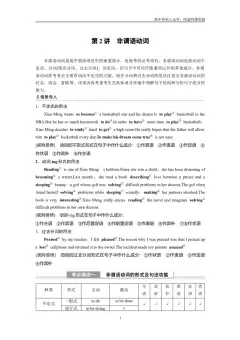
解析非谓语动词
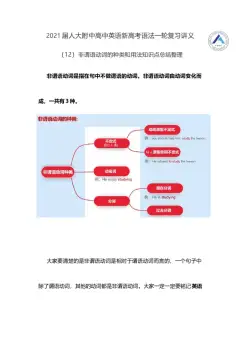
非谓语动词,顾名思义,就是不作谓语的动词;非谓语动词除了不作谓语,可以作主语、宾
语、定语、状语和表语等各种其他句子成分。要掌握非谓语动词的用法,就是要掌握不同非
谓语动词在各个句子成分的不同含义和用法。
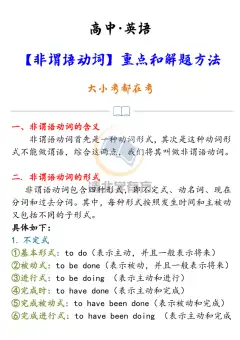
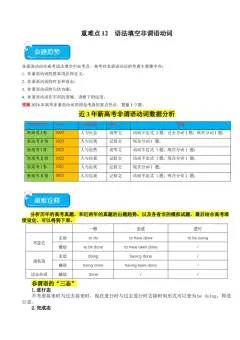
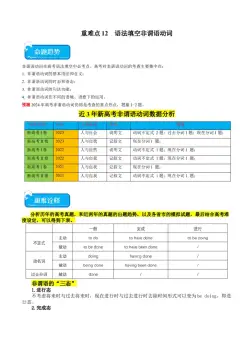
非谓语动词的形式
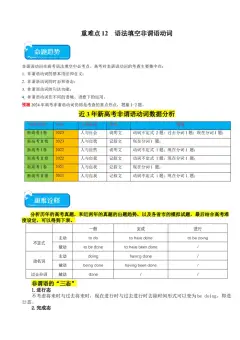
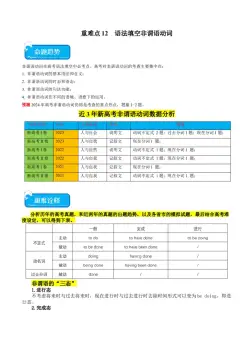
非谓语动词包括:动词不定式-to do;动名词-doing;现在分词-doing;过去分词-done。
动词不定式
★形式
①基本形式:to do(表示主动,并且一般表示将来)
②被动式:to be done(表示被动,并且一般表示将来)
③进行式:to be doing (表示主动和进行)
④完成时:to have done(表示主动和完成)
⑤完成被动式:to have been done(表示被动和完成)
⑥完成进行式:to have been doing (表示主动和完成进行)
The teacher told us to do morning exercises .
The car to be bought is for his sister.
She pretended to be reading when the teacher came into the classroom.
The thief is said to have escaped.
The thief is said to have been arrested.
She is said to have been working in the factory over the last 20 years.
★功能
动词不定式在句中可以作主语、表语、宾语、定语、状语、补语。
现在分词
★形式
①基本形式:doing (表示主动和进行)
②被动式:being done(表示被动和进行)
③完成式:having done(表示主动和完成)
④完成被动式:having been done(表示被动和完成)
He sat there, reading a newspaper.
The area being studied may be rich in coal.
Having finished my homework, I began to watch TV.
Having been told many times, she still can't remember it.
★功能
现在分词可以作定语,表语,补语,状语。
过去分词
★形式
①基本形式:done
polluted river 被污染的河流
fallen leaves 落叶
★功能
过去分词可以作定语,表语,补语,状语。
动名词
★形式
①基本形式:doing (表示主动)
②被动式:being done(表示被动)
③完成式:having done(表示主动和完成)
④完成被动式:having been done(表示被动和完成)
Travelling in space by ordinary people will be common in the future.
Freddy and his band could go nowhere without being followed by their fans.
I have no idea of his having done such a thing against you.
Many customers complain of having been given short weight at that shop.
★功能
动名词可以作主语,表语,宾语,定语等。
不定式与动名词的区别
作主语和表语的区别
一般来说,在表示比较抽象的一般行为或者经常性行为时多用动名词;在表示具体的某次动
作,特别是将来发生的动作,多用不定式。
★作主语:Smoking is prohibited here. 此地禁止抽烟。To invite him to tomorrow party is
necessary. 邀请他参加明天的聚会是必要的。
★作表语:My job is teaching English. 我的工作是教英语。Our task now is to increase food
production. 我们现在的任务是增加粮食产量。
表语是以下一些词,一般用动名词做真正主语:
It is +
no use/no good
+doing (动名
词)
useless/senseless
fun/enjoyable/tiring
nice/expensive/dangerous
a waste of time/a good
pleasure
注意:it 是形式主语,动名词是真正主语。It's no use talking like that.It's a waste of time
arguing with him.
这种句型,表语是其他词,用不定式做真正主语。It's necessary to do the work.
作宾语的区别
1. 谓语动词是以下这些动词时,非谓语动词做宾语,必须用动名词doing:
enjoy doing
finish doing
suggest doing
喜欢做...
完成做...
建议做...
avoid doing
excuse doing
delay doing
避免做...
借口做...
推迟做...
imagine doing
keep doing
admit doing
想象做...
坚持做...
承认做...
consider doing
deny doing
permit doing
考虑做...
否认做...
允许做...
forbid doing
practise doing
risk doing
禁止做...
练习做...
冒险做...
appreciate doing
be busy doing
feel like doing
感激做...
忙于做...
想做...
protect…from
doing
prevent…from
doing
be engaged in
doing
保护...免受...
阻止...做...
参与,从事...
例如:I appreciate having been given the opportunity to study abroad two years ago.我很感
激两年前给我出国学习的机会。She suggested going to the great wall for the spring outing.
她建议我春游去长城。
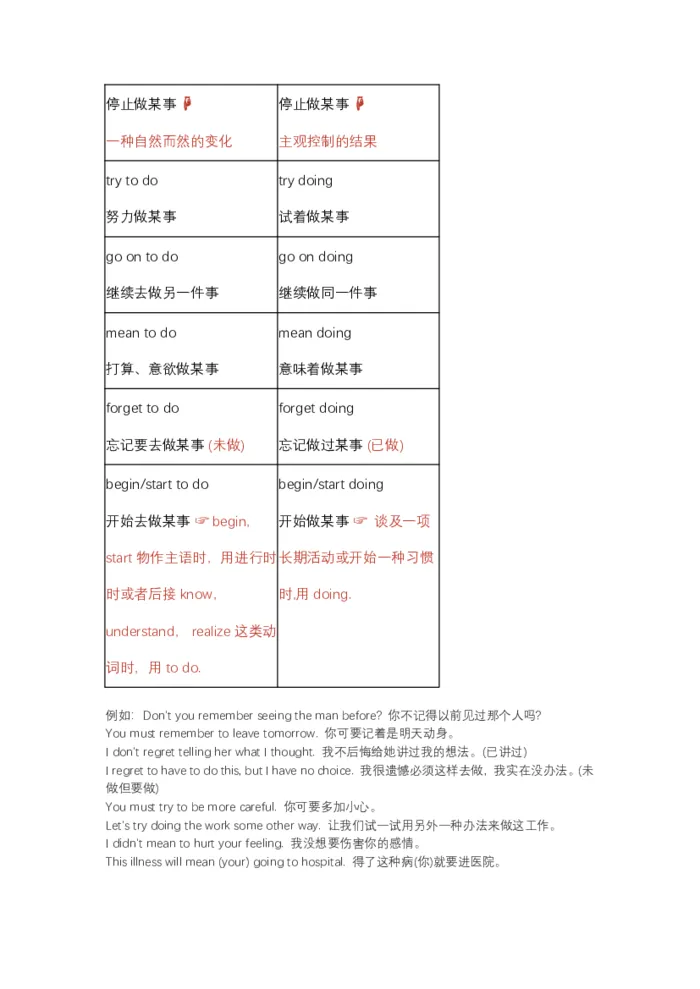
2. 有些动词后使用动名词和动词不定式作宾语的差别
stop to do
停止现在做的去做另一件事
stop doing
停止正在做某事
remember to do
记得要去做某事(未做)
remember doing
记得做过某事(已做)
regret to do
遗憾要去做某事(未做)
regret doing
遗憾做过某事(已做)
cease to do
cease doing
停止做某事☟
一种自然而然的变化
停止做某事☟
主观控制的结果
try to do
努力做某事
try doing
试着做某事
go on to do
继续去做另一件事
go on doing
继续做同一件事
mean to do
打算、意欲做某事
mean doing
意味着做某事
forget to do
忘记要去做某事(未做)
forget doing
忘记做过某事(已做)
begin/start to do
开始去做某事☞begin,
start 物作主语时,用进行时
时或者后接know,
understand,realize 这类动
词时,用to do.
begin/start doing
开始做某事☞谈及一项
长期活动或开始一种习惯
时,用doing.
例如:Don't you remember seeing the man before? 你不记得以前见过那个人吗?
You must remember to leave tomorrow. 你可要记着是明天动身。
I don't regret telling her what I thought. 我不后悔给她讲过我的想法。(已讲过)
I regret to have to do this, but I have no choice. 我很遗憾必须这样去做,我实在没办法。(未
做但要做)
You must try to be more careful. 你可要多加小心。
Let's try doing the work some other way. 让我们试一试用另外一种办法来做这工作。
I didn't mean to hurt your feeling. 我没想要伤害你的感情。
This illness will mean (your) going to hospital. 得了这种病(你)就要进医院。
3. need,want,deserve,require + 动名词主动形式可表被动意义;
need,want,
deserve,require + 不定式需用被动形式表被动意义。
例如:手表需要修了。The watch needs repairing. The watch needs to be repaired.
随即随练
题型: 单选题
难度:
准确率: 98.82%
题1
It's good manners seats to those in need.
A.given up
B.to give up
C.giving up
D.give up
隐藏答案
答案
B
解析
考查非谓语动词。It’s good manners to do sth.表示做某事是很有礼貌的,应使用动词不定
式,因此选B 项。
题型: 单选题
难度:
准确率: 85.53%
题2
After receiving the Oscar for Best Supporting Actress, Anne Benedict went on all the people
who had helped in her career.
A.to thank
B.thanking
C.having thanked
D.to have thanked
隐藏答案
答案
A
解析
句意:在获得奥斯卡最佳女配角后,Anne Benedict 继续感谢所有帮助她演艺生涯的人。go
on to do 继续做不同的事情,所以选A.
题型: 单选题
难度:
准确率: 77.78%
题3
She doesn't like Miss Janie, so she always avoidswith her.
A.to be left alone
B.being left behind
C.being leaving behind
D.being left alone
隐藏答案
答案
D
解析
考查非谓语动词。句意:她不喜欢Miss Janie,所以总是避免单独被留下和她一块儿。avoid
后加动词-ing 形式,主语she 和leave 是被动关系,指“被留下”,要用过去分词表被动,故
选D。
不定式与现在分词的区别
to do 表示还未发生,表目的;doing(现在分词)表示正在发生或表示与谓语动词同时发
生。
例如:a sleeping child
正在睡的小孩a child to sleep
要去睡的小孩
随即随练
题型: 单选题
难度:
准确率: 75.84%
题4
When an earthquake happens, the safest place in a house is the bathroom.
A.stay
B.to stay
C.staying
D.stayed
隐藏答案
答案
B
解析
考查非谓语动词。句意:地震发生时,房间里最安全可以待的地方是卧室。这里用动词不定
式作后置定语,修饰the safest place。选择B。
题型: 单选题
难度:
准确率: 70.17%
题5
What will you do if the peopleat the back of the hall have trouble hearing the speech?
A.sitting
B.sit
C.sat
D.to sit
隐藏答案
答案
A
解析
句意:如果坐在大厅后排的人们听不清演讲你该怎么办?根据题干中谓语动词have trouble
doing 判断出前面填非谓语结构,人们和坐在是主动关系,故选A。
现在分词和过去分词的区别
1. 逻辑上来说,现在分词是主动关系;过去分词是被动关系。
The man coming up is our teacher.
走过来的那个人是我们的老师。
You can have your clothes washed in the washing machine.
你可以用洗衣机洗衣服。
The amazing story told by him is totally made up.
他讲的那个惊人的故事完全是虚构的。
2. 时间上来说,现在分词是现在进行的;过去分词是过去完成的。
The developed countries are supposed to make more efforts to protect our environment.
发达国家应该更加努力地保护我们的环境。
Although its economy develops fast, China is still a developing country.
虽然经济发展很快,但中国仍然是一个发展中国家。
Watch out! You can get burnt by the boiling water.
小心!你会被开水烫到的。(这里的开水是指正在沸腾的水。)
The Chinese people tend to drink boiled water.
中国人喜欢喝开水。(这里的开水是指烧开了的水。)
He is making a speech on modern education.
他正在就现代教育发表演讲。
They have already left.
他们已经走了。
随即随练
随即随练
题型: 单选题
难度:
准确率: 82.69%
题6
Do you wake up every morning energetic and ready to start a new day?
A.feel
B.to feel
C.feeling
D.felt
答案
C
解析
句意:你是否感到每天早上起来精神充沛并且为一天做好了准备?feel 的逻辑主语是you,
因此是主动的关系。
题型: 单选题
难度:
准确率: 72.96%
题7
Time,correctly, is money in the bank.
A.to use
B.used
C.using
D.use
答案
B
解析
句意:使用得当,时间就是银行里的钱. 要填的是非谓语形式,,而且use 和主语time 的关系是动
宾关系,所以要用过去分词表被动意义,相当一个条件状语从句:if it (time) is used correctly.