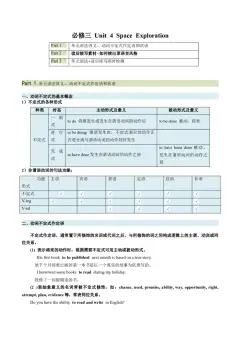
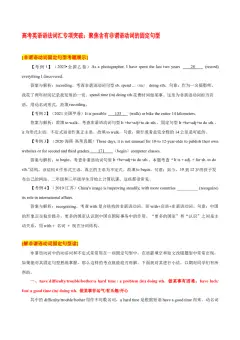
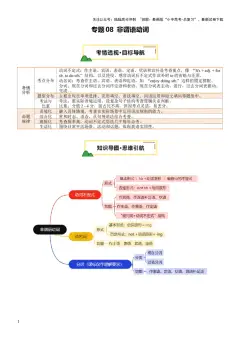
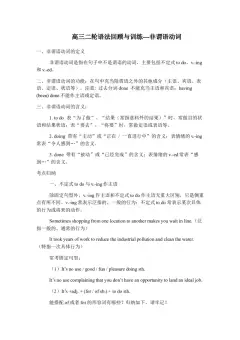
高中英语语法详解(讲义)chapter1 不定式
■

一、概说
■

二、不定式的用法
■

三、独立主格结构中的不定式
■

四、不定式的复合结构
■五、由with 或without

引导的逻辑主语
■

六、带疑问词的不定式
■

七、省略的不定式
■

八、不定式的时态和语态
■
“
九、系动词be
”

+不定式的用法
一、概说
“
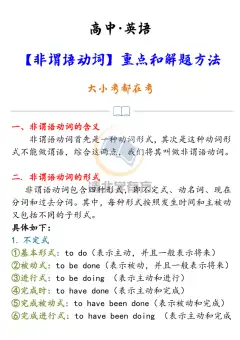
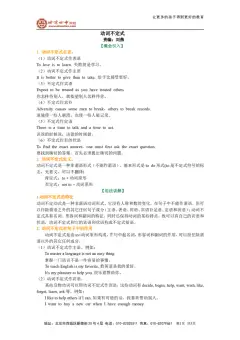
不定式是一种非限定动词,通常由to
”
+动词原形构成,如to be,
to do, to combine, to expand, to get up 等。这里的to 是不定式的符
号,没有词义,有时还可以省略。动词不定式没有人称和数的变
化。不定式在句中不能单独用作谓语,但还保留着动词的若干特
征:可以带状语,及物动词可以带宾语,系动词可以带表语。不定
式可以连同它的附属成分一起组成不定式短语。例如:
We decided to begin the experiment in the afternoon.【在不定式短
语to begin the experiment in the afternoon 中,the experiment 是begin
的宾语,in the afternoon 是状语。整个不定式短语在句中作谓语动词
decided

的宾语。】我们决定了下午开始做实验。
二、不定式的用法
不定式(短语)在句中起相当于名词、形容词或副词的作用,
可作主语、表语、宾语、定语、状语和宾语补语。
(一)具有名词的性质
1.用作主语。例如:
(1)To make you understand him completely is impossible.让你们
完全了解他是不可能的。
(2)To run machines needs power.开动机器需要动力。
(3)To remember to switch off the electricity is important.重要的
是要记住关掉电源。
To live is to function.That is all there is in living.(Holmes)活着就
要发挥作用,这就是生活的全部真谛。
To live of money is the root of all evil.(R.L.Stevenson)迷恋金钱
是一切罪恶的根源。
To be ignorant of one's ignorance is the malady of the ignorant.
(A.B.Alcott)不知道自己的无知,是无知者的可悲之处。
To spread knowledge is to spread happiness.(Alfred Nobel)传播
知识就是播种幸福。
不定式、特别是不定式短语作主语时,为了保持句子平衡,往
往把主语放在句子末尾,而在它原来的位置上加上引导词it 作形式
上的主语。现代英语倾向于采用这种结构,尤其是当主语较长或谓
语动词是被动语态或谓语动词不是系动词时,更是如此。而当句子
是疑问句或感叹句时,也必须用这种结构。例如,上述(1)(2)
(3)三个例子可转换为:
(1)It is impossible to make you understand him completely.
(2)It needs power to run machines.
(3)It's important to remember to switch off the electricity.
又如:
It's silly to build a wall around your interests.(Walt Disney)在自
己兴趣的周围建起一座墙,是愚蠢的行为。
It is the duty of a scientist to remain curiosity.(A.Einstein)科学家
的责任是保持好奇心。
It was an easy matter to find the Count when we entered the opera
house.我们走进歌剧场,很容易找到了伯爵。
It's good to have you back safe and sound.你们平平安安回家就好。
It was my privilege to see her out of hers.(W.Faulkner)能参加她
的葬礼是我的荣幸。
It was a good thing to work there in the little field beneath the singing
larks.(Liam O'Flaherty)在地里干活,倾听着头顶上云雀歌唱,真
是乐在其中。
How long will it take you to get there?(疑问句)要花多长时间才
能到达那里?
What a joy it was to see her!(感叹句)见到她多么高兴!
在以it 为形式主语的句子中,它所代表的真正主语有时用不定
式复合结构。不定式的逻辑主语用for 或of 引出。
如果句子中作表语的形容词表示事物的性质,如important,
necessary, possible, easy, difficult, hard, heavy 等,用for 引出。例如:
It is impossible for us to get there before lunch.我们午餐前赶到那里
是不可能的。
It is necessary for you to learn from others.你必须向别人学习。
It is difficult for me to believe that you could so forget yourself and
your rearing.我难以相信你会这样忘记你自己和你的教养。
如果句中作表语的形容词表示人的特征、品德或意愿,如kind,
honest, careless, lazy, stupid, clever, foolish, silly, selfish, polite, bad,
generous, cruel, willing, reluctant, deliberate 等,则用of 引出。例如:
(4)It's very nice of you to be considerate.你真好,想得这么周
到。
(5)It's careless of her to notice nothing of it.她很粗心,连这一点
也没注意到。
(6)It is foolish of him to meet her again.他很愚蠢,又跟她相
会。
【注】 “It is+形容词+of sb.to do”句型一般可转换成一个不定
“
式作状语的句子,语义不变;而It is+形容词+for sb.to do”句型则
不可以。例如,上述三个句子可转换为:
(4)You are very nice to be considerate.
(5)She is careless to notice nothing of it.
(6)He is foolish to meet her again.
2.用作表语。例如:
Her wish was to become a teacher.她的愿望是当个教师。
The most difficult thing in life is to know yourself.(Thales)人生
最难是自知。
To know everything is to know nothing.样样都懂,样样稀松。
There are two tragedies in life.One is not to get your heart's desire.
The other is to get it.(G.B.Shaw)人生有两种悲剧:一种是得不到你
想要的东西,另一种是得到了你想要的东西。
To enlarge or illustrate this power and effect of love is to set a candle
in the sun.(Robert Burton)用笔墨叙述爱情的这种力量和影响,无
异于在阳光下点燃一支蜡烛。
What we want is to learn from practice.我们需要的是向实践学习。
带wh-疑问词的不定式短语可作表语。例如:
Our difficulty is where to find a guide.我们的困难是到哪里去找向
导。
用介词for 引出不定式的逻辑主语的不定式复合结构,可作表
语;这时,句中的主语是不定式的逻辑宾语。例如:
This form is for you to fill (in).这张表格由你来填写。
A lecture on high-energy physics will be for Professor Bryce to
deliver.高能物理演讲将由布赖斯教授来做。
在用不定式作表语的句子中,系动词除be 外,还有seem,
happen, appear, get, pretend 等。例如:
He seems (appears) to be living in the area.他似乎是住在这个地
区。
He appears to have caught cold.他似乎是伤风了。
She pretended not to see him.她装作没看见他。
句中如果主语部分有实义动词do 的各种形式,作表语的不定式
实际上是do 的引申,即表示do 所做的内容,这时不定式可省略
to。例如:
The least I can do is (to) write to you.

我至少能做到的是给你写
信。
What the plan does is (to) ensure a fair pension for all.实施这项计划
就是保证给所有的人一笔可观的救济金。
The only thing I can do now is go on by myself.我现在唯一能做的
事就是自己继续进行下去。
3.用作宾语。不定式用作宾语时相当于名词,放在某些及物动
词之后。这类及物动词常见的有:afford, agree, aim, appear, apply,
arrange, ask, attempt 等。例如:
The owner wanted to make a large purchase of gift before Christmas.
老板想在圣诞节前做一大笔礼品生意。
I try to keep that in mind.我努力记住这一点。
He had decided to return after receiving the first letter from Tess.收
到苔丝的第一封信后,他便决定起程回来。
用作宾语的动词不定式有时可以带上疑问词how, where, who,
when, which, why, what 等一起构成不定式短语。能用于这种结构的
动词,常见的有:ask, consider, decide, discuss, explain, find out,
forget, inquire, know, learn, remember 等。例如:
She forgot which way to take.她忘了该走哪条路。
He didn't know whether to laugh or to cry when he heard the words.
听了这话,他啼笑皆非。
When I start to paint I know how to place myself in a state of
inwardness.(P.Picasso)我开始作画时,我知道如何把自己置于一种
灵性的境界之中。
用作宾语的不定式后面如果有补语,可以用it 作形式宾语,把
真正宾语置于补语之后,以免宾语太长使句子显得不协调。在这种
用法中,常见的动词有think, feel, make, find, consider, count, deem,
judge, believe, take 等。例如:
She thought it unnecessary to quarrel with him over trifles.

她认为没
必要为小事跟他争吵。
I did not think it convenient to write about the matter.我觉得写信谈
这件事不合适。
He found it utterly impossible to leave the spot.(T.Hardy)他发现
要离开这里是完全不可能的。
I took it as an honor to have been invited to the meeting.我把应邀出
席这次会议看作是一种荣誉。
Before my graduation from Columbia, the family met with severe
financial reverses and I felt it my duty to leave college and take a job.
(A.Block)没等我从哥伦比亚大学毕业,家庭经济严重恶化,我感
到自己有责任退学找工作。
Do you consider it worthwhile for them to make the experiment?你
认为他们做这实验值得吗?
不定式结构一般不可以作介词宾语,但在含有否定意义的带有
介词except, but(=except)以及about, save, besides, than 的结构中,
可以作这些介词的宾语。例如:
He seldom comes except to look at my picture.除了看我的图画,他
很少来。
There's no choice but to wait till it stops raining.别无选择,只有等
到雨停下来。
We had no duties provided for us save to eat and sleep.除了吃和睡
外,没有给我们安排任务。
He was about to start.他即将动身。
介词except, but, save 前面有表意动词do 的某种形式时,不定式
通常不带to。例如:
There's nothing to do except wait till it stops raining.别无办法,只
有等到雨停下来。
I hardly remember what I did besides read.

除了阅读外,我几乎记
不起我还做过什么。
Now there was nothing he could do except admit defeat.现在他只有
认输。
4.用作宾语补语。不定式作宾语补语时相当于名词,跟在某些
及物动词的宾语之后,对宾语作进一步的补充说明,并与该宾语构
成逻辑上的主谓关系。这类及物动词常见的有advice, allow, ask, beg,
cause, consider, command, compel, drive, encourage 等。例如:
I wanted something to happen to me, but nothing happened.
(L.Hughes)我希望在我身上会发生些什么变化,可是什么都没发
生。
I know nothing about him and I beg you to tell me nothing.他的情况
我并不知道,我也请求您别告诉我。
在一些使役动词如make, let, have 等和表示感觉的动词如see,
watch, perceive, observe, notice, hear, feel, look at, listen to 等,作宾语
补语的不定式须省略to。例如:
She let her hand fall from his arm and said no more.她放开他的胳
膊,没再说什么。
Electricity makes machines run.电使机器转动。
Then she turned quickly away, and Reinhard heard her go sobbing up
the stairs.她很快转过身,莱因哈特听到她抽泣着走上台阶。
The policeman observed the man open the window.警察看见了这个
人打开窗子。
有时,不定式可以直接置于let 后面,而把let 的宾语放到不定式
后。例如:
It would be a pity to let slip such an opportunity.错过这样一个机会
真可惜。
在某些表示心理状态的动词如believe, find, consider, prove,
suppose, think, know, understand, judge, guess, declare, take,  deny 等
“
后,作宾语补语的不定式往往是to be
”
+形容词。这时,这些动词
后的to be 通常可省略。例如:
They believe him (to be) innocent.他们相信他是无辜的。
We found the answer (to be) correct.我们发现这个答案是对的。
They declared themselves (to be) for the plan.他们宣称自己赞成这
个计划。
但是,如果不定式结构是完成式,则to 不能省略。例如:
We believe it to have been a mistake.我们相信这是一个错误。
5.用作主语补语。将有宾语补语的句子改用被动语态,则原来
的宾语变为主语,原来的宾语补语变为主语补语。主语补语一定要
带to。例如:
This test is thought to have practical value.大家认为这个试验有实
际价值。
He was seen to enter the laboratory.有人看见他走进了实验室。
6.用作同位语。不定式偶尔可用作同位语,它位于与之同位的
抽象名词之后,使该名词的内容具体化,并常用逗号、破折号或冒
号把它们分开。被修饰的抽象名词常见的有:idea, fact, belief,
ability, attempt, promise, answer, appeal, plot 等。例如:
Their aspiration, to become free and independent, is deserving of
every kind of help from us.他们想自由和独立的愿望值得我们给予各
方面的援助。
(二)具有形容词的性质
用作定语。位于被修饰的名词(短语)之后,说明被修饰词的
特征。例如:
Can you think up a good way to deal with the ever increasing prices?
你们能否想出一个对付日益上涨的物价的好办法?
A letter from Clare gave her an excuse to leave.克莱尔的一封来信
给了她一个离开的借口。
At present I have no lawful right to act for her.目前,我还没有保护
她的法律权利。
如果不定式和被修饰的具体名词之间有逻辑上的动宾关系,则
“
”
不定式多半表示未来的动作,翻译时常须在不定式前加要字。例
如:
We have three machines to repair today.我们今天有三台机器要修
理。
Do you like something to drink?你要喝点什么吗?
在处于动宾关系的情况下,如果不定式是不及物动词,其后要
加一个结构上或含义上所需的介词。例如:
I've got my wife and little boy to look after.(T.Dreiser)我还有老
婆和孩子需要我照顾。
You've given me much to think about.你已经给了我许多问题思
考。
John is the best man to consult about the matter with.约翰是可以与
之商量此事的最合适的人。
I have enough to eat and occasionally a bed to sleep in.我有足够的
食物,偶尔也有床可以睡觉。
为了使句子结构匀称,有时作定语的不定式与其所修饰的名词
分隔开,移到谓语动词之后。例如:
At the meeting a decision was made to transfer a part of the students
to another school.【不定式短语修饰a decision

】会上做出一项决定,
把一部分学生转到另一所学校。
(三)具有副词的性质
1.用作状语。不定式(短语)用作状语主要表示目的、结果和
原因,也可以表示条件、方式或比较。
(1
——
)用作目的状语
可位于句末或句首。有时,为了强调目
的,特别是当不定式前有否定词not 时,通常在不定式前加上in
order 或so as。前者可位于句末或句首,后者只能位于句末。例如:
We use electrical energy to do many things.我们用电能做许多事
情。
He will be in Atlanta Friday to speak with Captain Butler and to
escort you home.星期五他要到亚特兰大,同巴特勒船长交涉,顺便
带你回家。
John hurried in order not to be late for the party.约翰急急忙忙的,
为了准时参加晚会。
In order to see better, we took front seats.为了能看得更清楚些,我
们坐在前排的座位上。
We should develop new products so as to meet the demand of the
world's market.我们应该开发新产品,以便满足国际市场的需求。
(2
——
)用作结果状语
不定式作结果状语总是位于句末,不定
式的逻辑主语往往是句中的主语。能直接用不定式作结果状语的动
词为数不多,常见的仅有find, form, hear, give, learn, make, produce
等几个。例如:
After the war they parted company, never to see each other again.战
后他们分了手,从此再也没见过面。
She went abroad never to return.她到国外去了,从此没有回来
过。
“
在too
”
+形容词/名词+不定式结构中,不定式表示结果。由
于too
“
”
表示过量,具有否定意义,所以这类句子在形式上是肯定
“
……
……”
的,但在内容上是否定的,译作太
以致不能
。例如:
Atoms are too small to see.原子太小,看不见。
This material is too expensive to use in everyday life.这种材料太昂
贵,不能用于日常生活中。
The tea is too hot to drink.茶太热,不能喝。
This perfume is too expensive to purchase.这瓶香水太贵,买不
起。
用于enough
“
,so+形容词或副词+as”
“
或such+名词+as”之后
的不定式(短语)表示结果,一般放在句末。例如:
The ice is thick enough to walk on.冰很厚,能够在上面行走。
The auditorium is spacious enough to hold five thousand people.大礼
堂很宽敞,足以容纳五千人。
This kind of wood is so heavy as to sink in water.这种木头非常重,
在水里会下沉。
He was so angry as to be unable to speak.他生气得连话也说不出
来。
It is such a high temperature as to change water into steam.温度高到
使水变成了蒸汽。
He was in such a state as to be unable even to feed himself.他的情况
这么糟糕,甚至不能糊口。
His illness is not such as to cause anxiety.他没有病到引起忧虑。
(3
——
)用作原因状语
形式跟表示目的状语相似。区分标志
是:表示目的,不定式前可加in order 或so as,不定式的动作后于
谓语动词的动作;表示原因,则不定式的动作先于谓语动词的动
作。例如:
She wept to hear the news.

【原因】她听到这个消息哭了。(比
较:She wept to obtain sympathy.

【目的】她哭是为了得到同情。)
I pretended to be happy to know him.

【原因】(由于)认得他我
装作高兴的样子。(比较:I pretended to be happy to stop mother from
worrying.

【目的】我装作高兴的样子,以免母亲忧虑。)
He laughed to see such fun.他看见这么可笑的事笑了。
I trembled to think of it.一想到这件事,我就不寒而栗。
He jumped with joy to learn his being admitted to the university.他知
道被录取进大学高兴得跳起来。
I'll be glad to drive you home.我将很高兴开车送你回家。
(4)用作条件状语。例如:
To hear him talk, you would think he owned the whole world.如果你
听他讲话,你会以为整个世界都是他的。
A man would be blind not to see that.一个人如果看不到这一点就
是瞎子。
They could have done better to have had some tools.他们如果有些
工具就会做得更好些。
(5
——
)用作方式状语
不定式(短语)用连词as if, as though
引导。例如:
He cleared his throat as though to speak.他清了清喉咙,好像要说
话的样子。
As if to justify his view, he cited some groundless rumors.好像要证
明他的观点正确似的,他引述了一些毫无根据的传闻。
(6)用作比较状语。例如:
I know better than to believe such a man.我不至于相信这样一个
人。
The American president had no better choice than to resign.这个美国
总统除辞职外,别无更好的选择。
(7)用作让步状语。例如:
To do his best, he could not fulfil his task in time.即使他竭尽全力,
仍然不能按时完成任务。
You couldn't do that to save your life.你即使为了救自己的命也不
能那样做。
2.用作插入语。不定式通常以固定短语形式构成独立成分,在
句中用作插入语(也称评注性状语),对全句作附加说明,表示说
话人对所说的话的看法或态度。作插入语的不定式常见的有:to
begin with, to be fair, to be frank, to conclude 等。例如:
To begin with, we must consider the problem in an all-round way.首
先,我们必须全面地考虑这个问题。
Among the writers of his age, he was, so to speak, a giant among
dwarfs.在同时代的作家中,他可以说是鹤立鸡群。
To tell you the truth, they didn't quite like the idea.实话告诉你,他
们并不很喜欢这种想法。
To conclude, his coming here is a great help to us.总之,他来到这
里对我们帮助很大。
三、独立主格结构中的不定式
不定式的逻辑主语可直接置于不定式之前,构成不定式独立主
格结构。在此结构中,不定式可以用作逻辑上的谓语,说明逻辑主
语的动作或状态。通常置于句末,作状语,表示伴随情况(主要用
于书面语中)。例如:
He proposed a picnic, he himself to pay the railway tickets and John
to provide the food.他提议举行一次野餐,他自己付火车票钱,约翰
供给食物。
A number of officials followed the emperor, some to hold his robe,
others to adjust his girdle, and so on.许多官员尾随皇帝之后,有的拎
着皇帝衣袍,有的给他整理腰带,等等。
四、不定式的复合结构
动词不定式也可以有自己的逻辑主语。其结构是用介词for 引出
名词(或代词宾格)作为它的逻辑主语、放在不定式前面。形成
“for+
”
名词(或代词宾格)+不定式的结构,这叫作不定式的复合结
构。介词for 本身无词汇意义,不用译出。不定式复合结构在句中可
作主语、宾语、表语、定语、状语和同位语。
1.用作主语。例如:
For him to do the job alone is impossible.他单独一人做这工作是不
可能的。
It is very important for us to combine theory with practice.最重要的
是我们要理论结合实际。
2.用作宾语。不定式复合结构作宾语时,多半带有宾语补语,
这时需要用形式宾语it 置于宾语的位置,把作宾语的不定式复合结
构移到宾语补语之后。例如:
How I wish for him to be here by this time tomorrow.我多么希望明
天这个时候他能在这里。
We deem it advisable for him to go there at once.我们认为他立刻去
那里是合适的。
We think it a shame for Tom to do such a thing.我们认为汤姆做这
样一件事是可耻的。
3.用作表语。例如:
The best thing would be for us to make a practical plan.我们制定一
个切实可行的计划是再好不过的了。
4.用作定语。例如:
The work for us to do is not easy.我们要做的工作是不容易的。
The time has come for you to do some extensive reading.你该进行一
些泛读了。
What a tedious practical subject for you to talk about Mrs.Chevely!
你谈论奇夫雷太太是多么无聊的话题呀!
5.用作状语。例如:
Call me again (in order) for me not to forget it.(目的)再给我打一
次电话,以免我把这件事忘了。
You walked too fast for us to keep pace with you.(结果)你走得太
快,我们跟不上。
He is anxious for his son to pass the entrance exams.(原因)他担
心他儿子能否通过入学考试。
6.用作同位语。例如:
His last request, for his son to visit him, was never delivered.他想要
儿子来看他,这一最后要求始终没提出来。
五、由with 或without 引导的逻辑主语
有时,不定式的逻辑主语可由介词with 或without 引导,这种结
构的不定式在句中作状语。例如:
With only five minutes to go, we made for the classroom in great
haste.只有五分钟了,我们匆忙地赶去教室。
Without anybody to call her, she would most probably be late.如果没
人叫她,她多半会迟到。
六、带疑问词的不定式
有时,不定式前可加疑问词how, when, where, why, what, which,
whom 或whether,构成一种特殊的不定式短语。这种结构相当于名
词性从句,在句中主要用作宾语,也可用作主语、表语、同位语
等。例如:
How to earn daily bread by my pen was then the problem.(主语)
如何靠我的笔谋生,在当时是一个问题。
It's not yet decided where to hold the meeting.在哪里开会尚未决
定。
One of the greatest difficulties was how to find the source of water.
(表语)最大困难之一是如何找到水源。
I don't know when to start.(动词的宾语)我不知道什么时候出
发。
Throughout the ages man has learned more about how to control fire
and how to use it.(介词宾语)世世代代以来,人类已经懂得了如何
控制和利用火。
The problem what to send them is unsolved.(同位语)该给他寄去
什么东西的问题尚未解决。
七、省略的不定式
为了使语言简洁,避免重复,不定式的原形动词(及其连带成
分),在重新出现时可以省略而只保留to。省略的不定式一般在下
列动词或情态动词等后面使用:care, expect, forget, have, like, love,
mean, need, oblige, ought, plan, try, used, want, wish, be able, be going
等。例如:
Don't go unless you have to (go).除非你不得不去,否则别去。
I'd like to come but I don't know whether I shall be able to (come).我
倒想来,但不知是否能来。
You can do it this way if you are to (do it).如果你想做,可以这么
做这件事。
有时,整个带to 的不定式都可省略。例如:
You may go if you like (to go).你高兴的话可以去。
You will make it if you try (to make it).如果你争取的话,你会成功
的。
有时,上文并没有不定式形式,不定式的原形动词仍可省略。
例如:
He works harder now than he used to (work hard).他现在比过去工
作努力。
八、不定式的时态和语态
(一)概说
不定式是动词的非谓语形式,但它还保留着动词谓语形式的一
些特征,具有时态(一般式、完成式和进行式)和语态(主动和被

动)变化。
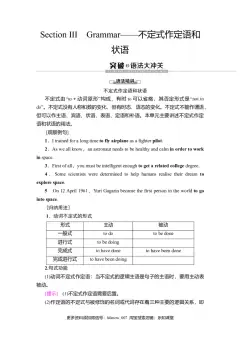
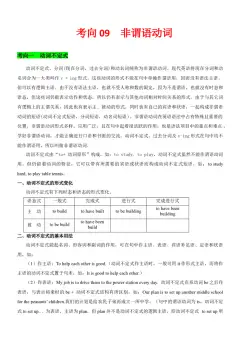
构成:以build 为例。

(二)不定式时态的用法
1
——
.现在时态
现在时态所表示的动作跟谓语动词所表示的动
作同时发生或在它之后发生。例如:
The scientist tries to apply newer way to production.【同时发生】
科学家想把较新的方法应用到生产中去。
Who heard him say that?

【在后发生】谁听见了他说那种话?
2
——
.完成时态
完成时态表示的动作在谓语动词的行为之前已
经发生或完成。例如:
They are much pleased to have designed such an electronic
computer.他们因为设计了这样一个电子计算机而感到很高兴。
The energy of coal is found to have come from the sun.人们发现煤
的能量来自太阳。
I'm sorry to have troubled you so much.我很抱歉,麻烦了你这么
多。
在助动词be
“
”
“
”
“
”
和表示意图、希望、需要等意义的动词的过去
式之后用不定式的完成时;或这类动词的过去完成时+不定式的一
“
”
“
”
般式,均可表示过去想做而未做的事情或行为没有实现。这类动
词有desire, expect, hope, intend, mean, plan,  suppose, think, want,
wish 等。例如:
He was to have left home at nine o'clock.他本该九点钟离开家。
We planned to have started the work at the beginning of the month.
我们原来计划月初开始这工作。
We wished to have solved the problem graphically.我们原想用图解
法解算这道习题。
I had hoped to catch the 8:30 bus, but found it was gone.我原来希望
赶上8 点30 分的车,但发现车已开走了。
I had meant to tell you about it earlier, but I could not come.我本想
早点把这事告诉你,但我来不了。
用在would like, had better, should, ought, be supposed 等之后,也
可表示事情未曾发生过或愿望没有实现。例如:
She should have told him he could shower in the house if he wanted.
她原该告诉他如果需要,可以用房子里的莲蓬头洗澡。
The letter should have been ten pages long.这封信本该有10 页长。
You oughtn't to have spoken to them in that way.你本不该这样对他
们说话。
在情态动词must, may, might, could 或can 之后用不定式完成时,
说明对过去发生的事情或某种情况表示怀疑或推测。例如:
You must have used the wrong data yesterday.昨天你一定用了错误
的数据了。
And he must have died alone, that's why he had the cameras sent to
her.他死时一定是孤身一人,所以他才让人把相机寄给她。
He may have done the work very well.他也许已经把工作做得很出
色吧。
Could she have forgotten to come?她可能忘记来了吗?
3
——
.进行时态
进行时态表示的行为在谓语动词行为发生时正
在进行。例如:
They were said to be making a new experiment.据说他们正在做一
个新的实验。
The new satellite is reported to be flying around the earth.据报道新
卫星正在绕地球飞行。
I don't like you to be always coming late for work.我不喜欢你上班
总是迟到。
The weather seems to be improving.天气似乎正在好转。
情态动词must, may 等之后接不定式的进行时表示对现在正在进
行的事或状况的猜测或估计。例如:
Philip thought Rose must be looking forward to his return. 菲利普
想,露丝准是盼望他回来。
He may be reading the book.他也许正在读这本书。
4
——
.完成进行时态
说明行为在谓语动词表示的行为之前开
始,并延续到那个时候可能仍在进行。例如:
She was said to have been living in Guangzhou for ten years.据说她
在广州一直住了十年。
He seems to have been writing an article on applied physics.他似乎
一直在写一篇关于应用物理的论文。
This project is known to have been going on for three months.大家知
道这个工程已经进行了三个月。
(三)不定式的被动语态
当不定式的逻辑主语是不定式动作的对象或承受者时,这个不
定式要用被动语态。(一般式通常表示将来的动作;完成式表示在
谓语之前发生的动作。)不定式的被动式在句中可作主语、表语、
宾语、主语补语、宾语补语、定语、状语等。
1.用作主语。例如:
It is an honour for me to be invited to the party. 我被邀请参加晚
会,这是个荣幸的事。
2.用作表语。例如:
Nothing seems to have been forgotten.仿佛一切都记忆犹新。
The problem remains to be further discussed in detail.这个问题尚需
进一步详细讨论。
3.用作宾语。例如:
She asked to be sent to our college.她请求派到我们学院。
The students wanted to be given more experiments to do.学生们想多
给些实验做。
More than half a century after his death, he continues to be read and
quoted.他去世已经半个多世纪,他的著作继续为人们阅读和引用。
4.用作主语补语。例如:
Transistors are known to be widely used in radio industry.晶体管被
公认广泛用到无线电工业中。
This book is said to have been translated into English.据说这本书已
经译成英语。
5.用作宾语补语。例如:
He did not like his intention to be laughed at.他不喜欢自己的意图
受到嘲笑。
The governor wanted the thief to be punished.地方长官要让这个窃
贼受到惩罚。
6.用作定语。例如:
This question will be discussed at the conference to be held next
month.这个问题将在下月举行的会议上讨论。
Let us show you the engine to be tested.让我们给你看看要检验的
那台发动机。
7.用作状语。例如:
I was glad to have been praised.我很高兴受到了表扬。
He has returned only to be sent away again.他回来后又被派了出
去。
(四)不定式语态的应用
1.当用作定语的不定式的逻辑主语是句中的主语时,一般用主
动语态的不定式来表示被动意义。例如:
He has borrowed some books to read on the journey.他已经借了一
些旅途上阅读的书籍。
Every week she laid aside a few shillings to put into the bank.她每周
积蓄几个先令存进银行里。
2.在不定式作定语的句子中,如果找不到不定式的逻辑主语
(即不定式的动作由其他人完成)时,则不定式通常用被动语态。
例如:
Jack has a pair of shoes to be mended.杰克有一双鞋要修补。
We wanted the letter to be typed at once.我们要这封信马上打好
字。
This is a day never to be forgotten.这是令人难忘的一天。
3.在不定式复合结构中,如果介词引导的逻辑主语是不定式的
行为的执行者,不定式用主动语态;如果是动作的承受者,则用被
动语态。例如:
This is a matter for the president to consider.这是一件由董事长考虑
的事。
The valve opened for air to be driven out.阀门打开,以便排除空
气。
4.当be 的表语是形容词或名词,其后的不定式用作状语,并且
句子的主语又是不定式的逻辑宾语时,不定式用主动语态。例如:
This question is difficult to answer.这个问题很难回答。
England is not easy to understand.英国并不容易了解。
【注】 这条规则很严谨,如果句子有任何改动,便要用被动语
态。例如:
This question is difficult to be answered off-hand.这个问题很难立
刻回答。
当用作表语的形容词本身意思不完全,其后的不定式如有被动
意义,则用被动语态;如有主动意义,则用主动语态。例如:
We are liable to be overheard here.

【被动】我们在这里容易被人
偷听。
He's liable to shout when angry.

【主动】他生气时可能会嚷嚷。
如果be 之后的表语是副词,句子的主语是不定式的逻辑宾语,
则不定式用被动语态。例如:
His article is easily to be abridged.他的文章容易删节。
5.当不定式用作表语时,该不定式用主动语态表示被动意思。
例如:
She is not to blame.【be to blame“
”
应受责备,应负责任是固定短

语】这不应该怪她。
He was in no way to blame.他无可非议。
The house is to let.

【多用于广告】房子出租。
【注】 这个规则仅适用于一些固定短语或用于广告;否则用被
动语态。例如:
She is not to be blamed for this.不应该为这件事怪她。
The house is to be let, not to be sold.房子出租,但不卖。
6.有些动词要求后接双宾语。当不定式用来修饰直接宾语,而
这个直接宾语又是不定式的逻辑宾语时,用主动语态代替被动意
思。例如:
She was given a cat to keep.别人给了她一只猫养。
They will show you the right path to take.他们会指点你该走的路。
7.在there be 句型中,作定语的不定式用主动语态,重点在
人;用被动语态,重点在事物。两者在意义上略有差异。例如:
There was not much to see in the street at night. 【to see=worth
seeing

】晚上在街上没有许多东西值得看。
There was not much to be seen in the street at night.【to be seen=that
could be seen

】晚上在街上看不到许多东西。
There is nothing to do now.【=We have nothing to do now.

】现在
没事干。
There is nothing to be done now.【=We can do nothing now.

】现在
没有办法了。
“
九、系动词be
”
+不定式的用法
“be
”
+不定式是英语中常见的一种复合谓语形式。能够表示多种
不同的概念。
1.表示既定的计划、安排、打算或约定做某事。例如:
The new building is to be fifty storeys high.这幢新建筑物计划建50
层高。
We are to visit the university tomorrow.我们打算明天访问这间大
学。
They are to be married next month.他们计划下个月结婚。
2.表示命令、权威性的指示或禁令。例如:
This chemical is not to be exposed to air.这种化学制品不可暴露在
空气中。
Employees are not to smoke while near the petrol-pumps.工作人员
不许在汽油泵旁抽烟。
You are to come here at 3:00 p.m..你必须下午三时来这里。
3
“
”
“
”
.表示意愿或想要。例如:
What time are you to be there?你想什么时候到那里去?
The house is to let.房子出租。
4
“
”
.表示某种事情的可能性。例如:
Many interesting things are to be seen at the museum.在这个博物馆
里可以看到许多有趣的东西。
Not a sound was to be heard.一点声音也听不到。
5
“
”
“
”
.表示从义务上或道义上应该、必须做的事。例如:
Insurance is to be effected by the buyer.保险由买方负责投保。
These rules of the road are to be strictly observed.这些交通规则必
须严格遵守。
What am I to do then?那么我该怎么办呢?
Some books are to be tasted, others to be swallowed, and some few
to be chewed and digested.(Francis Bacon)书有可浅尝者,有可吞食
者,少数则须咀嚼消化。
6.表示命中注定要发生的事情或情况。例如:
He was never to see his wife and son again.他命中注定再也见不到
他的妻子和儿子了。
He was to suffer a terrible disaster.When he was 28 ,he began to
lose his hearing.他注定要遇到一场可怕的灾难:他28 岁时失去了听
力。
7
“
”
.表示某种目的。例如:
The medal was to honour him for his bravery.这枚奖章是为了他的
勇敢而授予他。
The telegram was to break the terrible news to him as gently as
possible.这份电报要把可怕的消息尽可能缓慢地告诉他。
8
“
”
.表示某种结果。例如:
He was to perish in a shipwreck and to leave a wife and two children.
他在一次沉船事故中丧生,留下了妻子和两个儿子。
9
“
”
.表示计划或安排没有实现。例如:
The jewellery was to have been placed in bank for safety.为了安全
起见,这些首饰原该存入银行保管。【由于其他原因,首饰并没有

存入银行保管。】
They were to have started their talk at two o'clock, but later it was
cancelled.他们原打算两点钟开始会谈,但是后来会谈取消了。
【注1】 “be
”
“
+不定式结构和be going to”结构的区别。例如:
“be
”
+不定式结构强调某计划或安排是既定的、必须执行的,多
“
用于广告、告示或书面通知等文体中;而be going to”结构仅仅表示
某种打算,并非一定要执行。例如:
He was to arrange for us to visit Hongkong next month.【已经作好

安排,非去不可。】他已安排好我们下个月访问香港。
He was going to arrange for us to visit Hongkong next month.【准备

安排去,并非一定要去。】他安排我们下个月访问香港。
【注2】
“
”
“
”
“
”
“
在表示应该、必需、可能等概念时,be+
”
不定式
“
结构和情态动词(should, ought to, must, need, can, may 等)+动词
”
原形的区别。例如:
“be
”
+不定式结构语气比较强烈,郑重其事,含义更为丰富。例
如:
You are to give up smoking.你务必把烟戒掉。【郑重其事地劝

告,让对方认真考虑。】
You must give up smoking.你必须把烟戒掉。【只是出于礼貌劝

告对方一下。】