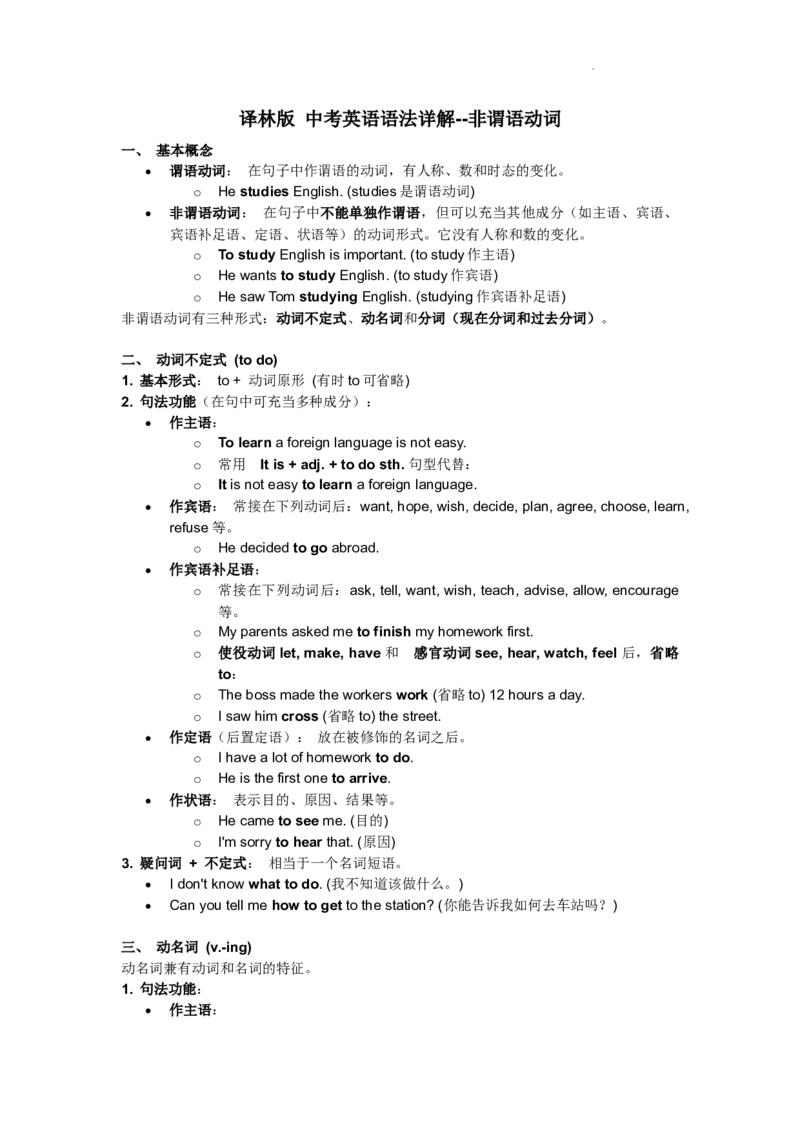
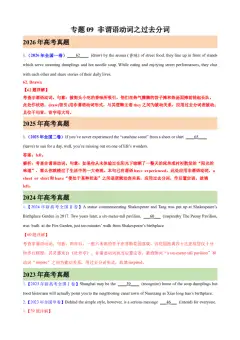
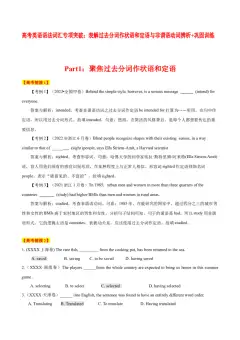
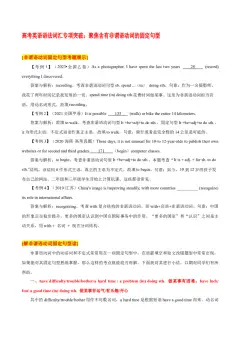
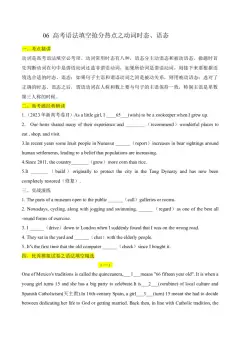
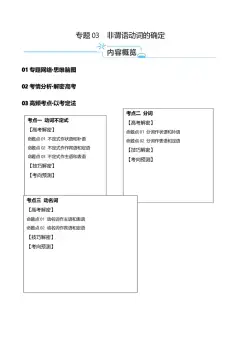
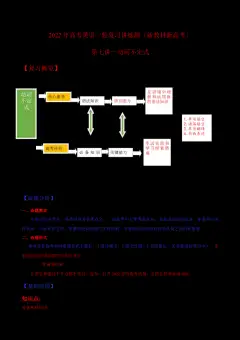
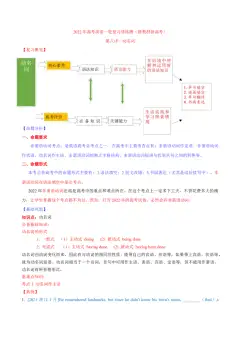
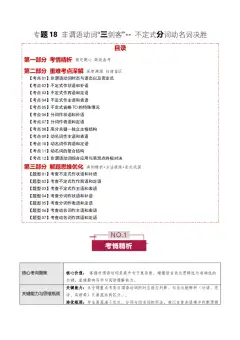
译林版 中考英语语法详解--非谓语动词
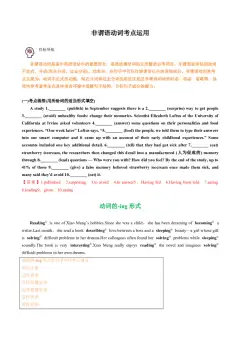
一、 基本概念
谓语动词: 在句子中作谓语的动词,有人称、数和时态的变化。
o He studies English. (studies是谓语动词)
非谓语动词: 在句子中不能单独作谓语,但可以充当其他成分(如主语、宾语、
宾语补足语、定语、状语等)的动词形式。它没有人称和数的变化。
o To study English is important. (to study作主语)
o He wants to study English. (to study作宾语)
o He saw Tom studying English. (studying作宾语补足语)
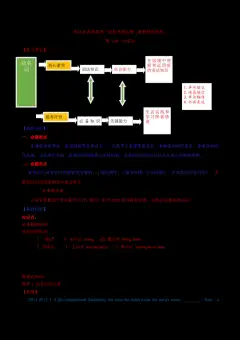
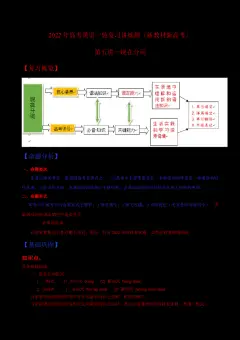
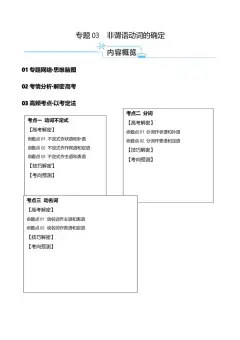
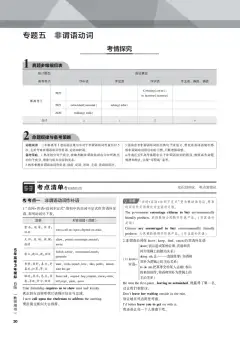
非谓语动词有三种形式:动词不定式、动名词和分词(现在分词和过去分词)。
二、 动词不定式 (to do)
1. 基本形式: to + 动词原形 (有时to可省略)
2. 句法功能(在句中可充当多种成分):
作主语:
o To learn a foreign language is not easy.
o 常用 It is + adj. + to do sth. 句型代替:
o It is not easy to learn a foreign language.
作宾语: 常接在下列动词后:want, hope, wish, decide, plan, agree, choose, learn,
refuse等。
o He decided to go abroad.
作宾语补足语:
o 常接在下列动词后:ask, tell, want, wish, teach, advise, allow, encourage
等。
o My parents asked me to finish my homework first.
o 使役动词let, make, have 和 感官动词see, hear, watch, feel 后,省略
to:
o The boss made the workers work (省略to) 12 hours a day.
o I saw him cross (省略to) the street.
作定语(后置定语): 放在被修饰的名词之后。
o I have a lot of homework to do.
o He is the first one to arrive.
作状语: 表示目的、原因、结果等。
o He came to see me. (目的)
o I'm sorry to hear that. (原因)
3. 疑问词 + 不定式: 相当于一个名词短语。
I don't know what to do. (我不知道该做什么。)
Can you tell me how to get to the station? (你能告诉我如何去车站吗?)
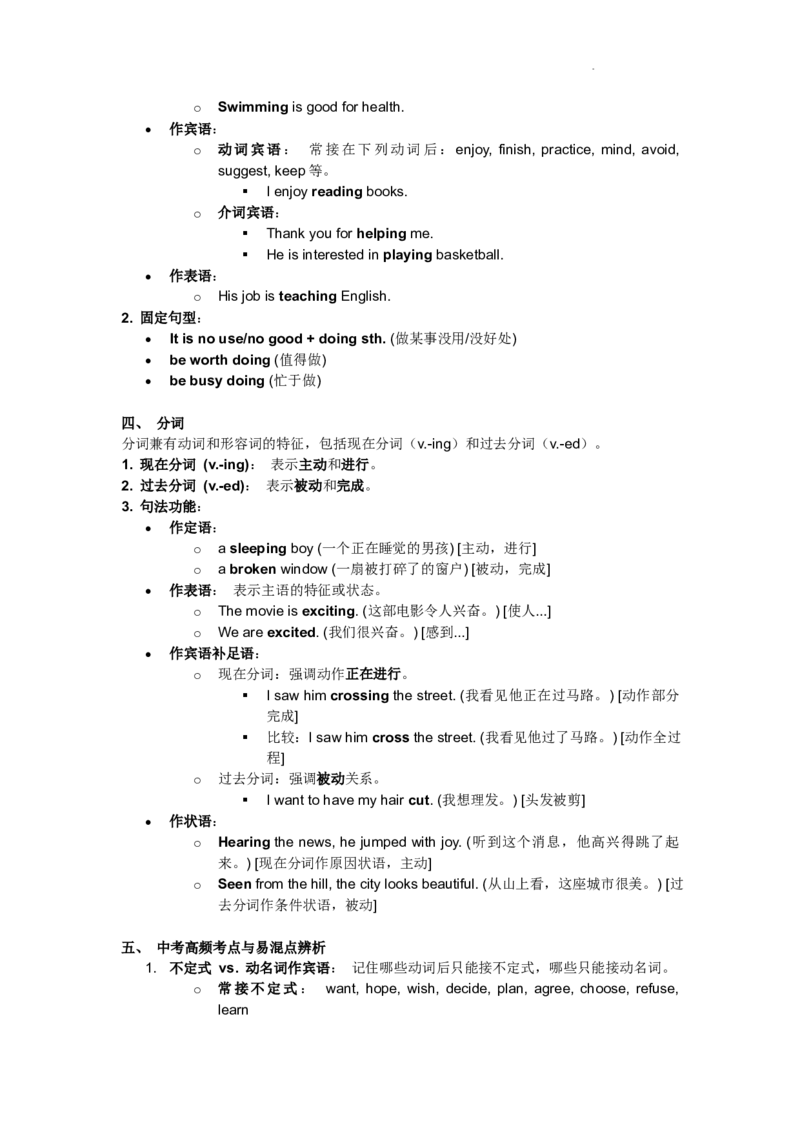
三、 动名词 (v.-ing)
动名词兼有动词和名词的特征。
1. 句法功能:
作主语:
学科网(北京)股份有限公司o Swimming is good for health.
作宾语:
o 动词宾语: 常接在下列动词后:enjoy, finish, practice, mind, avoid,
suggest, keep等。
I enjoy reading books.
o 介词宾语:
Thank you for helping me.
He is interested in playing basketball.
作表语:
o His job is teaching English.
2. 固定句型:
It is no use/no good + doing sth. (做某事没用/没好处)
be worth doing (值得做)
be busy doing (忙于做)
四、 分词
分词兼有动词和形容词的特征,包括现在分词(v.-ing)和过去分词(v.-ed)。
1. 现在分词 (v.-ing): 表示主动和进行。
2. 过去分词 (v.-ed): 表示被动和完成。
3. 句法功能:
作定语:
o a sleeping boy (一个正在睡觉的男孩) [主动,进行]
o a broken window (一扇被打碎了的窗户) [被动,完成]
作表语: 表示主语的特征或状态。
o The movie is exciting. (这部电影令人兴奋。) [使人...]
o We are excited. (我们很兴奋。) [感到...]
作宾语补足语:
o 现在分词:强调动作正在进行。
I saw him crossing the street. (我看见他正在过马路。) [动作部分
完成]
比较:I saw him cross the street. (我看见他过了马路。) [动作全过
程]
o 过去分词:强调被动关系。
I want to have my hair cut. (我想理发。) [头发被剪]
作状语:
o Hearing the news, he jumped with joy. (听到这个消息,他高兴得跳了起
来。) [现在分词作原因状语,主动]
o Seen from the hill, the city looks beautiful. (从山上看,这座城市很美。) [过
去分词作条件状语,被动]
五、 中考高频考点与易混点辨析
1. 不定式 vs. 动名词作宾语: 记住哪些动词后只能接不定式,哪些只能接动名词。
o 常接不定式: want, hope, wish, decide, plan, agree, choose, refuse,
learn
学科网(北京)股份有限公司o 常接动名词: enjoy, finish, practice, mind, avoid, suggest, keep, be busy,
be worth
2. see/hear sb. do sth. vs. see/hear sb. doing sth.
o do sth. 表示看到/听到动作的全过程或经常性动作。
o doing sth. 表示看到/听到动作正在进行。
3. ** exciting vs. excited / boring vs. bored** (-ing vs. -ed)
o -ing 结尾的形容词,意为“令人...的”,修饰物。
The news is exciting. (这个消息令人兴奋。)
o -ed 结尾的形容词,意为“感到...的”,修饰人。
We are excited at the news. (我们对这个消息感到兴奋。)
4. ** forget/remember/regret to do vs. forget/remember/regret doing**
o to do: 忘记/记得/遗憾要去做某事 (动作未发生)
Please remember to turn off the lights when you leave.
o doing: 忘记/记得/遗憾做过某事 (动作已发生)
I remember seeing him somewhere before.
六、 中考经典例题分析
1. ( )My mother often tells me ____ too much junk food. It's bad for my
health.
A. not to eat B. don't eat C. not eat D. to not eat
答案:A。解析:tell sb. (not) to do sth. 是固定结构。否定不定式,not放在to前
面。
2. ( )— What are you busy with?
— ____ for the coming party.
A. Prepare B. Prepared C. Preparing D. To prepare
答案:C。解析:问句问“忙于做什么”,答语是“我正在为即将到来的派对做准
备”。be busy doing sth. 是固定搭配。
3. ( )The little boy saw the airplane ____ and disappear into the sky.
A. take off B. taking off C. took off D. to take off
答案:A。解析:see sb./sth. do sth. 表示看到动作的全过程(起飞并消失)。
see后接省略to的不定式作宾补。
4. ( )— How do you feel about the ____ news?
— I'm very ____.
A. exciting; excited B. excited; exciting C. exciting; exciting D. excited; excited
答案:A。解析:第一空修饰物news,用exciting(令人兴奋的);第二空修饰人
I,用excited(感到兴奋的)。
5. ( )It's important for us ____ a healthy lifestyle.
A. have B. having C. to have D. had
答案:C。解析:It is + adj. + for sb. + to do sth. 是固定句型,it是形式主语,真
正的主语是后面的不定式to have。
学科网(北京)股份有限公司