文档文本内容
学科网(北京)股份有限公司
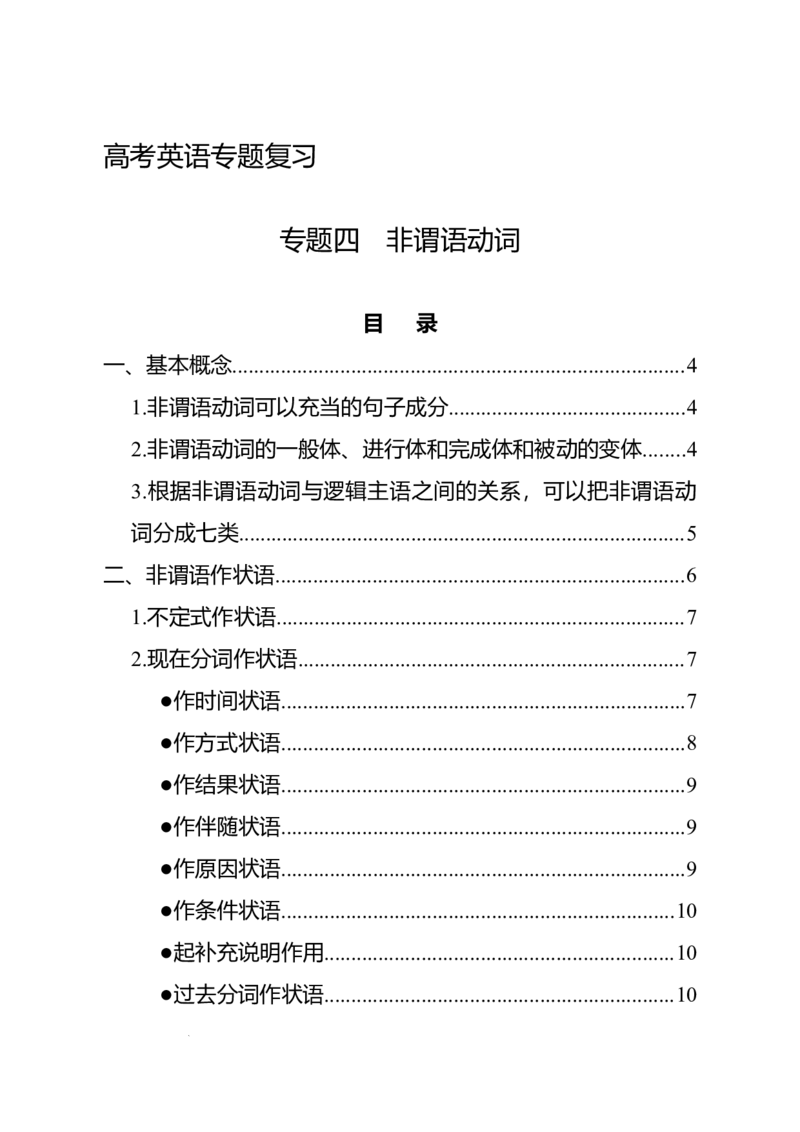
高考英语专题复习
专题四  非谓语动词
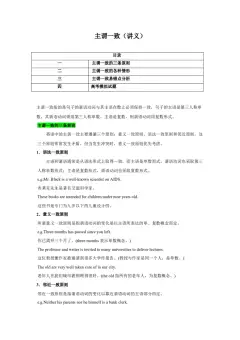
目   录
一、基本概念....................................................................................4
1.非谓语动词可以充当的句子成分............................................4
2.非谓语动词的一般体、进行体和完成体和被动的变体........4
3.根据非谓语动词与逻辑主语之间的关系,可以把非谓语动
词分成七类...................................................................................5
二、非谓语作状语............................................................................6
1.不定式作状语............................................................................7
2.现在分词作状语........................................................................7
●作时间状语...........................................................................7
●作方式状语...........................................................................8
●作结果状语...........................................................................9
●作伴随状语...........................................................................9
●作原因状语...........................................................................9
●作条件状语.........................................................................10
●起补充说明作用.................................................................10
●过去分词作状语.................................................................10
学科网(北京)股份有限公司
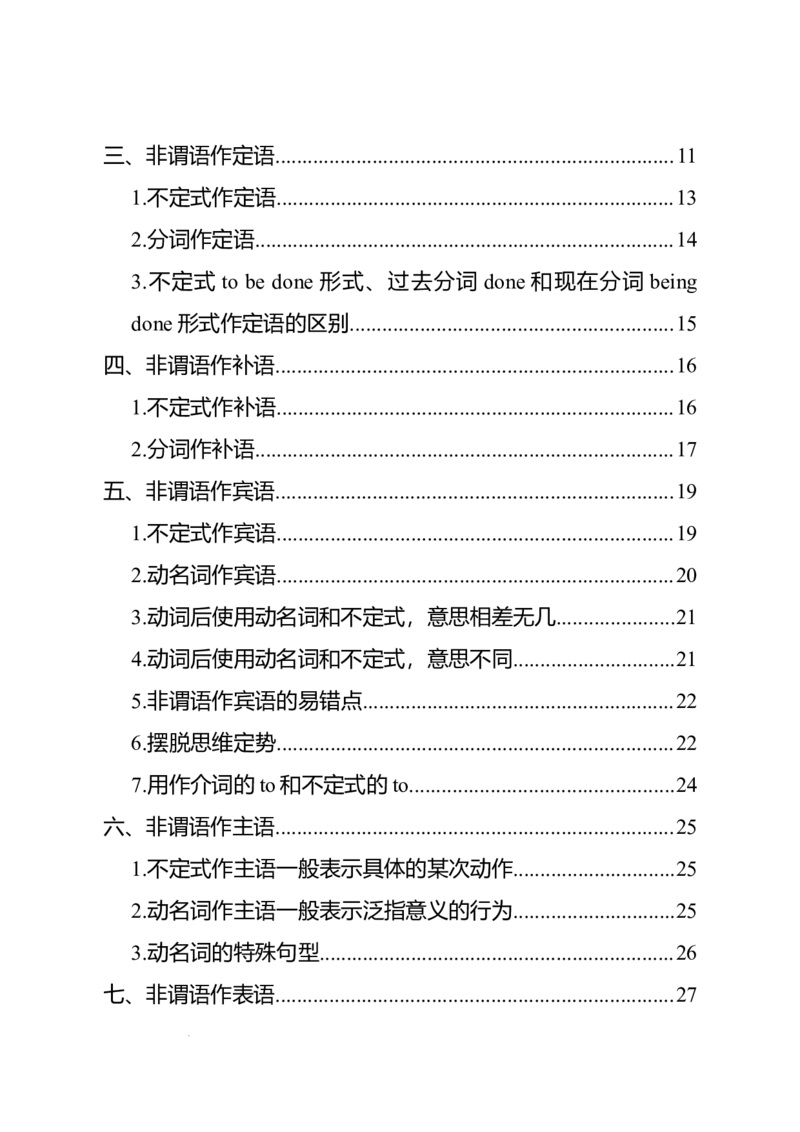
三、非谓语作定语..........................................................................11
1.不定式作定语..........................................................................13
2.分词作定语..............................................................................14
3.不定式to be done 形式、过去分词done 和现在分词being
done 形式作定语的区别............................................................15
四、非谓语作补语..........................................................................16
1.不定式作补语..........................................................................16
2.分词作补语..............................................................................17
五、非谓语作宾语..........................................................................19
1.不定式作宾语..........................................................................19
2.动名词作宾语..........................................................................20
3.动词后使用动名词和不定式,意思相差无几......................21
4.动词后使用动名词和不定式,意思不同..............................21
5.非谓语作宾语的易错点..........................................................22
6.摆脱思维定势..........................................................................22
7.用作介词的to 和不定式的to.................................................24
六、非谓语作主语..........................................................................25
1.不定式作主语一般表示具体的某次动作..............................25
2.动名词作主语一般表示泛指意义的行为..............................25
3.动名词的特殊句型..................................................................26
七、非谓语作表语..........................................................................27
学科网(北京)股份有限公司
1.不定式和动名词作表语..........................................................27
2.分词作表语..............................................................................27
学科网(北京)股份有限公司
一、基本概念
在句子中充当除谓语以外的各种句子成分的动词形式叫做非
谓语动词。非谓语动词包括:不定式、动名词和分词。它们的
核心意义是:
·不定式:目的、将来
·动名词:功能同名词
·现在分词:主动、进行
·过去分词:被动、完成
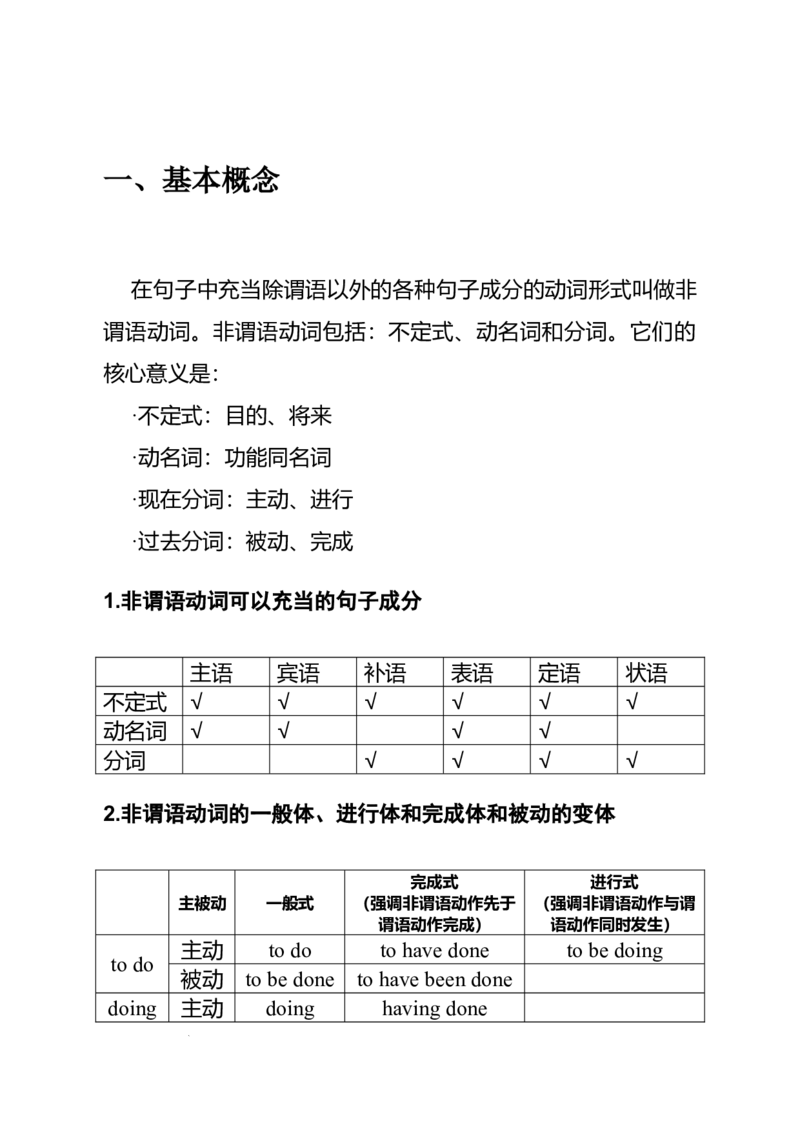
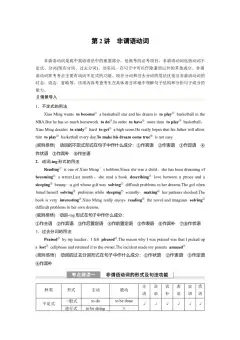
1.非谓语动词可以充当的句子成分
主语
宾语
补语
表语
定语
状语
不定式
√
√
√
√
√
√
动名词
√
√
√
√
分词
√
√
√
√
2.非谓语动词的一般体、进行体和完成体和被动的变体
主被动
一般式
完成式
(强调非谓语动作先于
谓语动作完成)
进行式
(强调非谓语动作与谓
语动作同时发生)
to do
主动
to do
to have done
to be doing
被动
to be done
to have been done
doing
主动
doing
having done
学科网(北京)股份有限公司
被动
being done
having been done
done
被动
done
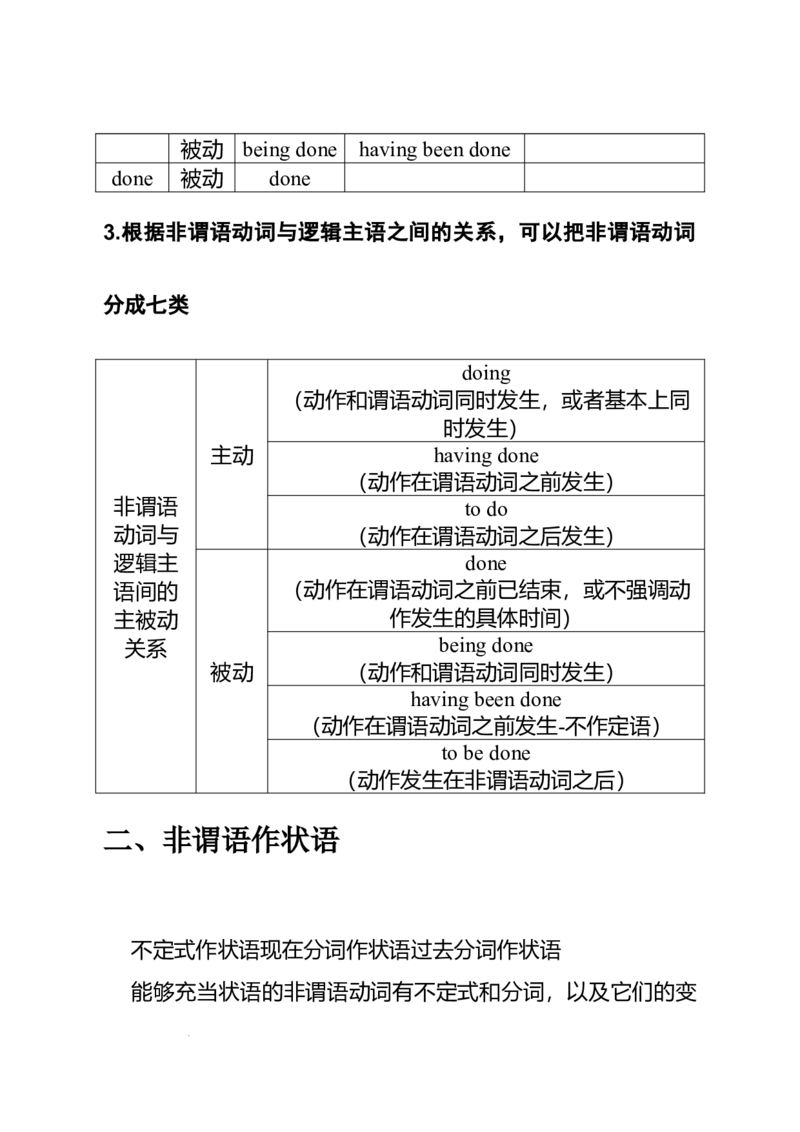
3.根据非谓语动词与逻辑主语之间的关系,可以把非谓语动词
分成七类
非谓语
动词与
逻辑主
语间的
主被动
关系
主动
doing
(动作和谓语动词同时发生,或者基本上同
时发生)
having done
(动作在谓语动词之前发生)
to do
(动作在谓语动词之后发生)
被动
done
(动作在谓语动词之前已结束,或不强调动
作发生的具体时间)
being done
(动作和谓语动词同时发生)
having been done
(动作在谓语动词之前发生-不作定语)
to be done
(动作发生在非谓语动词之后)
二、非谓语作状语
不定式作状语现在分词作状语过去分词作状语
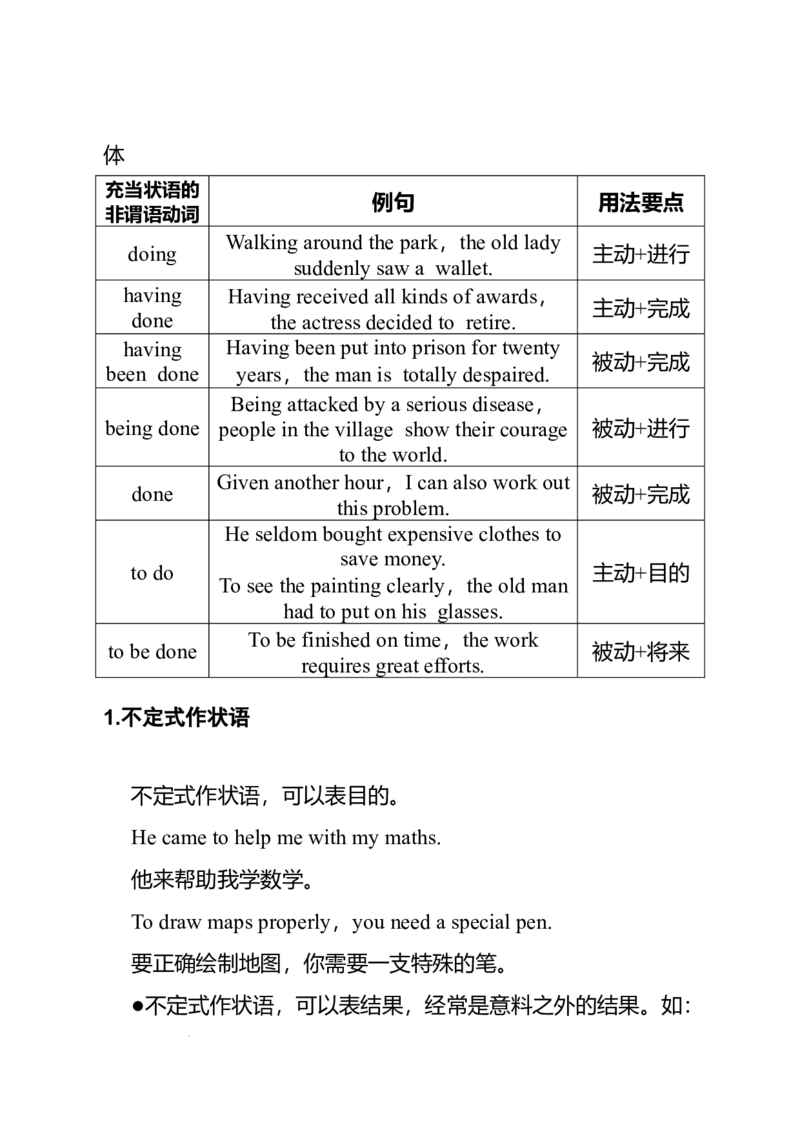
能够充当状语的非谓语动词有不定式和分词,以及它们的变
学科网(北京)股份有限公司
体
充当状语的
非谓语动词
例句
用法要点
doing
Walking around the park,the old lady
suddenly saw a wallet.
主动+进行
having
done
Having received all kinds of awards,
the actress decided to retire.
主动+完成
having
been done
Having been put into prison for twenty
years,the man is totally despaired.
被动+完成
being done
Being attacked by a serious disease,
people in the village show their courage
to the world.
被动+进行
done
Given another hour,I can also work out
this problem.
被动+完成
to do
He seldom bought expensive clothes to
save money.
To see the painting clearly,the old man
had to put on his glasses.
主动+目的
to be done
To be finished on time,the work
requires great efforts.
被动+将来
1.不定式作状语
不定式作状语,可以表目的。
He came to help me with my maths.
他来帮助我学数学。
To draw maps properly,you need a special pen.
要正确绘制地图,你需要一支特殊的笔。
●不定式作状语,可以表结果,经常是意料之外的结果。如:
学科网(北京)股份有限公司
I hurried to his house only to find he was out.
我急忙赶往他家,却发现他不在家。
●某些形容词作表语,表示喜怒哀乐,后跟不定式表原因。
如:
I'm very glad to see you.
见到你很高兴。
I'm sorry to hear about your failure in business.
听说你生意失败了,我很遗憾。
2.现在分词作状语
●作时间状语
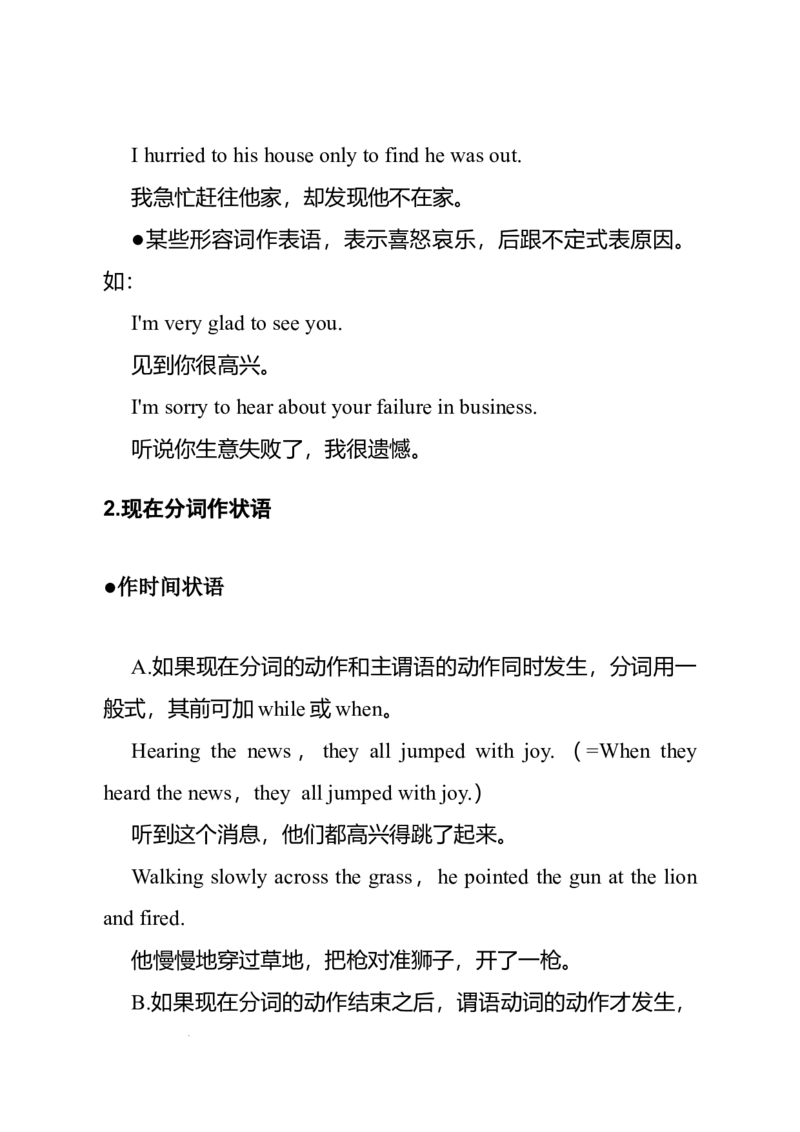
A.如果现在分词的动作和主谓语的动作同时发生,分词用一
般式,其前可加while 或when。
Hearing the news ,they all jumped with joy. (=When they
heard the news,they all jumped with joy.)
听到这个消息,他们都高兴得跳了起来。
Walking slowly across the grass,he pointed the gun at the lion
and fired.
他慢慢地穿过草地,把枪对准狮子,开了一枪。
B.如果现在分词的动作结束之后,谓语动词的动作才发生,
学科网(北京)股份有限公司
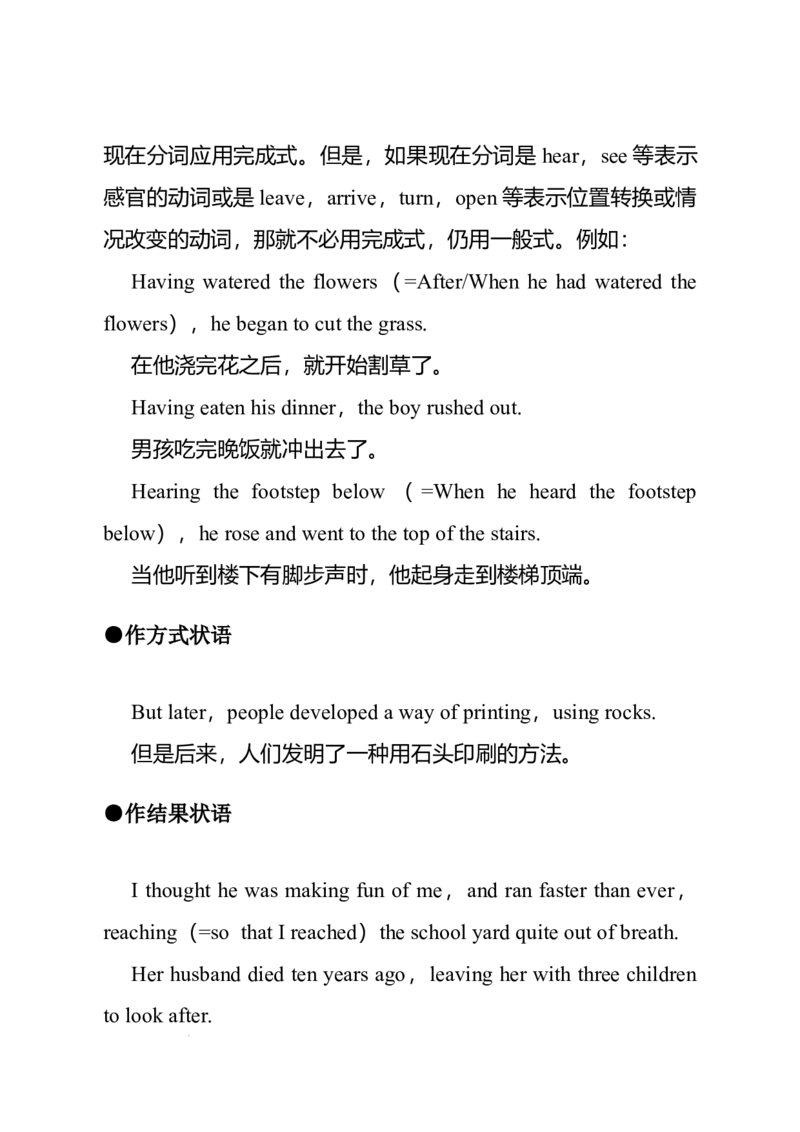
现在分词应用完成式。但是,如果现在分词是hear,see 等表示
感官的动词或是leave,arrive,turn,open 等表示位置转换或情
况改变的动词,那就不必用完成式,仍用一般式。例如:
Having watered the flowers(=After/When he had watered the
flowers),he began to cut the grass.
在他浇完花之后,就开始割草了。
Having eaten his dinner,the boy rushed out.
男孩吃完晚饭就冲出去了。
Hearing the footstep below (=When he heard the footstep
below),he rose and went to the top of the stairs.
当他听到楼下有脚步声时,他起身走到楼梯顶端。
●作方式状语
But later,people developed a way of printing,using rocks.
但是后来,人们发明了一种用石头印刷的方法。
●作结果状语
I thought he was making fun of me,and ran faster than ever,
reaching(=so that I reached)the school yard quite out of breath.
Her husband died ten years ago,leaving her with three children
to look after.
学科网(北京)股份有限公司
●作伴随状语
伴随状语的特点是:它所表达的动作或状态是伴随着句子谓
语动词的动作而发生或存在的。
He sat in the armchair,reading a newspaper.
他坐在扶手椅里读报。
All night long he lay awake,thinking of the problem.
他整夜睡不着,想着这个问题。
●作原因状语
现在分词短语作原因状语,尤其是be ,feel ,know ,
recognize,fear 等状态动词的现在分词(短语),以及现在分词
的否定式用作状语时,通常表示原因。
Being sick,I stayed at home.
生病了,我呆在家里。
Not knowing her address,I can't write to her.
不知道她的地址,我不能给她写信。
Not having done (=As he has not done )his homework,he
stayed at home.
由于没有做功课,他呆在家里。
学科网(北京)股份有限公司
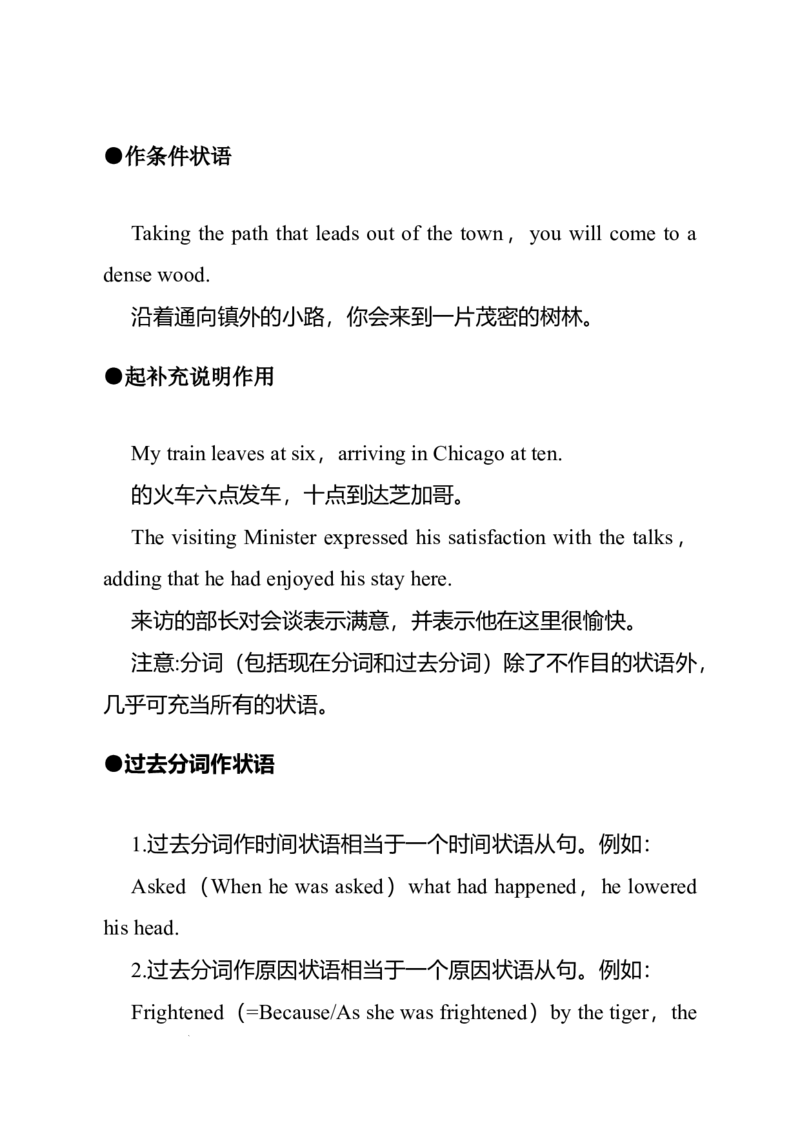
●作条件状语
Taking the path that leads out of the town,you will come to a
dense wood.
沿着通向镇外的小路,你会来到一片茂密的树林。
●起补充说明作用
My train leaves at six,arriving in Chicago at ten.
的火车六点发车,十点到达芝加哥。
The visiting Minister expressed his satisfaction with the talks,
adding that he had enjoyed his stay here.
来访的部长对会谈表示满意,并表示他在这里很愉快。
注意:分词(包括现在分词和过去分词)除了不作目的状语外,
几乎可充当所有的状语。
●过去分词作状语
1.过去分词作时间状语相当于一个时间状语从句。例如:
Asked(When he was asked)what had happened,he lowered
his head.
2.过去分词作原因状语相当于一个原因状语从句。例如:
Frightened(=Because/As she was frightened)by the tiger,the
学科网(北京)股份有限公司
girl didn't dare to sleep alone.
3.过去分词作条件状语相当于一个条件状语从句。例如:
Grown(If these seeds are grown)in rich soil,these seeds can
grow fast.
Given(If we were given)more time,we could do it better.
4.过去分词作让步状语相当于一个让步状语从句。例如:
Left(Although he was left)at home,John didn't feel afraid at
all.
5.过去分词作状语表示伴随动作或状态。例如:
The teacher entered the classroom,(and he was)followed by
a group of students.
三、非谓语作定语
不定式作定语分词作定语不定式to be done 形式、过去分词
done 和现在分词being 区别
与逻辑
主语的
主被动
关系
充当定
语的非
谓语动
词
例句
用法要点
主动
doing
The moving castle has attracted
many people's attention.
动作由所修饰的
名词发出。
to do
He is the right man to do the job.
动作由所修饰的
名词the man 发
学科网(北京)股份有限公司
出
被动
done
The destroyed bridge needs
repairing.
所修饰的名词
“被使用、被破
坏”
being
done
The bridge being built by the
workers will be finished before
December.
所修饰的名词
“被建造”
to be
done
The question to be discussed at
tomorrow's meeting is very
important.
问题“被讨论”
注意:动名词亦可充当定语,只是在充当定语时受限,仅在
修饰逻辑主语的功能用途时可用。
如:washing machine(洗衣机),bottling plant(装瓶车
间)等。
对上述五种能够充当定语的非谓语动词,根据动作与所修饰
名词的主动、被动关系,可以作如下分类:
作定语,且表示主动作
定语,且表示被动
doing(主动+进行,或者不强调具
体时间)
to do(主动+将来)
done(被动+完成,或者不强调具
体时间)
being done(被动+进行)
to be done(被动+将来)
1.不定式作定语
作定语的不定式如果是不及物动词,或者不定式所修饰的名
词或代词是不定式动作的地点、工具等,不定式后面需要相关
的介词。如:
The Brown have a comfortable house to live in.
学科网(北京)股份有限公司
布朗一家住着舒适的房子。
但是,不定式修饰的名词如果是time,place 或way 时,不
定式后面的介词习惯上省去,如:
He had no money and no place to live(in).
他没有钱,也没有地方住。
当作定语的不定式所修饰的名词或代词是不定式动作的承受
者时,不定式既可以用主动语态,也可以用被动语态,但其意
义有所不同,试比较:
Have you got anything to send?(不定式to send 的动作执行者
是“听话者”)
Have you got anything to be sent?(不定式to be sent 动作执行
者是“说话者”或“第三者”)
用不定式作定语的几种情况:
A.不定式表将来
The car to be caught is for his sister.
B.用来修饰被序数词、最高级或不定代词(no,all,any
等)限定的中心词,且与中心词为逻辑上的主动关系。
He was the best man to do the job.
他是做这项工作的最佳人选。
She was the first woman to win the gold medal in the Olympic
Games.
学科网(北京)股份有限公司
她是第一位在奥运会上获得金牌的女性。
C.被修饰的词是抽象名词,常见的有:ability,chance,
idea,fact,excuse,promise,attempt,belief,way,reason,
moment,time 等。
2.分词作定语
作定语的及物动词的分词形式为:现在分词、being+过去分
词、过去分词。
当被修饰的名词与非谓语动词为主动关系时,用现在分词;
当被修饰的名词与非谓语动词为被动关系且表正在进行时,用
being+过去分词;当被修饰的名词与非谓语动词为被动关系且
表完成时,用过去分词。如:
The houses being built are for the teacher.(被动,正在进行)
Tsinghua University ,founded in 1911 ,is home to a great
number of outstanding figures.(被动,完成)
清华大学创建于1911 年,培养了大批杰出人才。
I have never seen a more moving movie.(主动,表特征)
我从没见过这么感人的电影。
●作定语的不及物动词的分词形式为:现在分词和过去分词。
现在分词表示正在进行;过去分词表示已经完成。如:
boiling water 沸腾的水
学科网(北京)股份有限公司
falling leaves 正在下落的叶子
boiled water 烧开过的水(开水)
fallen leaves 已经落下的叶子
【再次强调】having(been)done 不作定语。
3.不定式to be done 形式、过去分词done 和现在分词being
done 形式作定语的区别
●不定式to be done 形式表被动+将来;过去分词done 表被动
+完成;现在分词being done 形式表被动+正在进行。如:
The players selected from the whole country are expected to
bring us honor in this summer games.(被动,完成)
从全国挑选的运动员们将为我国在本届夏季奥运会上赢得荣
誉。
Listen!The song being sung is very popular with the students.
(被动,正在进行)
听!这首歌在学生中很流行。
The question to be discussed at tomorrow's meeting is a very
important one.(被动,将来)
明天会议要讨论的问题非常重要。
学科网(北京)股份有限公司
四、非谓语作补语
不定式作补语分词作补语
1.不定式作补语
分类
常见词汇
带to 的
不定式
作补语
allow/advise/ask/beg/cause/encourage/expect/forbid/
force/get/intend/invite/like/love/order/persuade/prefer/
require/teach/tell/remind/want/warn/wish/wait for/call
on/depend on sb.to do sth.
不带to
的不定
式作补
语
感官动词:look at/see/watch/notice/observe/listen
to/hear/feel sb.do sth.
使役动词:let/make/have sb.do sth.
(即:五看三使两听一感觉)
2.分词作补语
现在分词和过去分词可以放在感官动词和使役动词后面作宾
语补足语。
常见词汇
基本用法
let
let sb.do sth.
let sb./sth.be done
Let the work be finished on time
make
make sb.do sth.
You can't make everyone feel satisfied.
make sb./sth.done
The teacher had to shout to make himself heard.
have
have sb.do sth.
学科网(北京)股份有限公司
Mother had me go to the shop and buy some salt.
have sb.doing sth.
It's rude of you to have a lady waiting in the rain for
two hours.
have sb./sth.done
I had my hair cut yesterday.
get
get sb.to do sth.
You will never get him to understand.
get sb.doing sth.
The captain got the soldiers moving towards the
destination after a short rest.
get sb./sth.done
I want to get my clothes washed in the Laundromat.
leave
leave sb.doing sth.
It's wrong of you to leave the machine running.
leave sb.to do sth.
He left me to do all the rest of the work.
leave sth.undone
The guests left most of the dishes untouched,which
made us really depressed.
leave sth.to be done
The boss suddenly went out ,leaving many
problems to be settled.
注意:
·没有let sb./sth.done 的结构
·没有make sb.doing sth.的结构
·have sb./sth.done 时,意味着动作不是由主语发出的,而是
由别人完成。
·get sb./sth.done 时,意味着动作不是由主语发出,而是由别
人完成。
常见词汇
基本用法
学科网(北京)股份有限公司
感官动词
5 看:
look at/see/
watch/notice/
observe
2 听:
hear/listen to
1 感觉:
feel
下面以see 为例来分析:
see sb.do sth 看见某人做了某事(主动,完
成)
I saw the little baby grow into a sweet girl.
see sb.doing sth.看见某人正在做某事(主动,
正在进行)
I saw the girl painting when I opened the door.
see sb./sth.done(被动,完成,或者不强调时
间性)
I saw the old man greeted by a group of young
men.
see sb./sth.being done 看见某人/ 某事正在
被……
I saw the waiter being scolded by the boss when
I passed by the restaurant.
五、非谓语作宾语
不定式作宾语动名词作宾语动名词的逻辑主语问题用作介词
的to 和不定式的to
1.不定式作宾语
动词后面可用不定式作宾语。这类动词有:
decide/determine ,learn ,want ,expect/hope/wish;refuse ,
manage,care,pretend,offer,promise,choose,plan;agree,
ask/beg,help
学科网(北京)股份有限公司
帮助记忆的口诀:
决心学会想希望,拒绝设法愿假装。
主动答应选计划,同意请求帮一帮。
此外:seem,attempt,fail,happen,afford,strive,make up
one's mind to,be determined to,would/should like/love to 等后面
亦可加不定式作宾语。
●介词后面的宾语通常都是动名词或名词结构。但介词but 和
except(皆表示“除了”)这两个除外,它们后面用不定式作宾
语。如:can't choose but……,can't help but……
The soldier had no other choice but to wait for the order.
The soldiers could do nothing but wait for the order.
The scientist cannot help but wonder,"Are humans dying out
like other animals?"
注意:but 和except 所在句子中,谓语带有do 的任何形式或
can't,则不定式要省略to。
2.动名词作宾语
少数动词后只能用动名词作宾语,如:
miss,imagine,mind,escape,insist on,practise,suggest,
consider,avoid,risk,finish,enjoy/appreciate,deny,forbid,
keep/keep on ,allow/permit ,delay/put off ,can't stand ,give
学科网(北京)股份有限公司
up,feel like,insist on,thank you for,apologize for,be busy
(in ),have difficulty/trouble/problem (in ),have a
good/wonderful/hard time(in),spend time(in).
3.动词后使用动名词和不定式,意思相差无几
有些动词后面既可以加不定式作宾语,亦可以加动名词作宾
语,而且意思差不多的,如:
like/love/hate/prefer to do sth. (偏向于具体事件)
≈like/love/hate/prefer doing sth.(偏向于常态事件)
start/begin to do sth.≈start/begin doing sth
4.动词后使用动名词和不定式,意思不同
forget to do 忘记要去做某事(未
做)
forget doing 忘记做过某事(己做)
stop to do 停止去做吊一件事
stop doing 停止正在或经常做的事
remember to do 记住去做某事(未
做)
remember doing 记得做过某事(已
做)
try to do 努力,企图做某事
try doing 试验,试一试某种办法
mean to do 打算,有意要…
mean doing 意味着
go on to do 继而(去做吊外一件事
情)
go on doing 继续(原先没有做完的事
情)
regret to do 对要做的事遗憾
regret doing 对做过的事遗憾,后悔
propose to do 打算(要做某事)
propose doing 建议
学科网(北京)股份有限公司
5.非谓语作宾语的易错点
注意动词的一词多义
☆consider 只有在作“考虑”解时才以-ing 形式作宾语
Tom is considered to be the best driver in the team.(认为)
Tom is considering borrowing some money from the bank.(考
虑)
☆can't help 只有作“禁不住”解时才以-ing 形式作宾语
Sorry,I'm busy preparing for the exam and can't help clean the
room 不能帮
Sorry,I can't help laughing when I heard the news.(禁不住)
☆be used to 只有作“习惯于”解时才以-ing 形式作宾语
The knife is used to cut off the skin of the trees.(被用来做)
The students are used to getting up early in the morning.(习惯
于)
6.摆脱思维定势
allow,advise,forbid,permit
+doing sth.
①
+sb.to do sth.
②
My parents don't allow me to go there by plane for the sake of
①

学科网(北京)股份有限公司
safety.
为了安全起见,我父母不允许我乘飞机去那里。
They don't allow smoking in this area of the campus.
校园里不允许吸烟。
Jill's teacher advised him to take the job in the less famous
②

company.
吉尔的老师建议他去那家不太出名的公司工作。
Jill's teacher advised taking the job in the less famous company.
The manager forbids anyone to enter his office without
③

permission.
Smoking is forbidden in this office.
6.动名词的逻辑主语问题
动名词的逻辑主语通常为:①形容词性物主代词+动名词;
②名词所有格+动名词。如:
Tom insisted on my going with them.
He dislikes his wife's working late.
I can hardly imagine Peter's sailing across the Atlantic Ocean in
five days.
●在动名词的复合结构作宾语时,其中的形容词性物主代词
可以转化为宾格形式的人称代词。如:
We'll appreciate your calling back soon.(your→you)
学科网(北京)股份有限公司
Do you mind your students' using mobiles in school? (your
students'→your students)
●但是当动名词作主语时,前面只能用形容词性物主代词或
者名词所有格。
His coming back late made all of us angry.
My mother's being ill sent all of us into great anxiety.
7.用作介词的to 和不定式的to
to 有两种用法:一为不定式+动词原形;一为作介词+名
词/动名词。在下面的用法中,to 充当介词,因此后面加动名词
或名词:
admit to 承认
confess to 坦白
be accustomed to 习惯于
be used to 习惯于
stick to 坚恃
turn to 转向,向…求助
devote oneself to 献身于
be devoted to 致力于
look forward to 盼望
pay attention to 注意
学科网(北京)股份有限公司
get down to 着手做某事
lead to 导致
object to 反对
六、非谓语作主语
不定式作主语动名词作主语动名词的特殊句型
1.不定式作主语一般表示具体的某次动作
如:
To complete the 30 storied building in one year was quite a
difficult task.
2.动名词作主语一般表示泛指意义的行为
(这时也可用动词不定式)如:
Seeing is believing.
注意1:当主语较长,谓语较短时,常用汇做形式主语,而将
不定式所作的主语放到谓语的后面。
It is important for modern young people to master at least two
foreign languages.
学科网(北京)股份有限公司
注意2:在It's no use(或good,need).或It's useless….等结构
中,常用动名词作真正的主语。
It is no use watching too much TV.
注意3:比较状语从句里的主语用动词不定式还是用动名词,
取决于主句里主语的形式。
It's easier to read a foreign language than to speak it.
读外语比说外语容易。
Reading a foreign language is easier than speaking it.
学习一门外语比说它容易。
3.动名词的特殊句型
☆It is+no use,no good(fun,a great pleasure,a waste of
time,a bore...)等名词+doing sth.
It is no use/no good crying over spilt milk.
It is a waste of time persuading such a person to join us.
It is fun playing with children.
☆It is+useless+doing sth.
It is useless speaking.
☆There is no use(good/point/sense/harm..)+doing sth.
There is no use crying over spilt milk.
There is no point asking his parents for the money,for they are
学科网(北京)股份有限公司
poor.
There's no sense in waiting three hours.
There is no harm having a walk after your meal.
☆have difficulty/trouble/problem…+(in)+doing.
We had difficulty(in)carrying out the plan.
☆feel like+名词/动名词=would like to+原形动词
I feel like a newborn baby.
I feel like having a shower.=I would like to have a shower.
☆spend/waste time doing sth.
They spent a lot time(in)making preparations.
七、非谓语作表语
不定式作表语分词作表语
1.不定式和动名词作表语
不定式和动名词作表语,通常表示主语的内容。不定式偏向
于具体事件,动名词偏向于常态事件。如:
My job is teaching.
Today my job is to teach my little sister to swim.
学科网(北京)股份有限公司
2.分词作表语
分词作表语通常表示主语的性质和状态。一般而言,现在分
词表示主语的性质,而过去分词则表示主语的状态。如:
This famous performer is interesting.
这位著名的表演者很有趣。
My favorite cup is broken.
我最喜欢的杯子坏了。
在分词作表语的情况中,分词多数已形容词化了,如上例中
的interesting 和broken 我们平常也作为形容词使用。