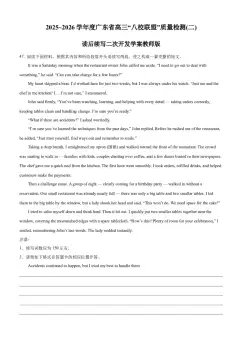
《人教版 2019 选择性必修一 Unit 4 读
后续写遣词造句练习》
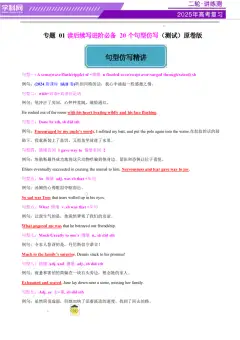
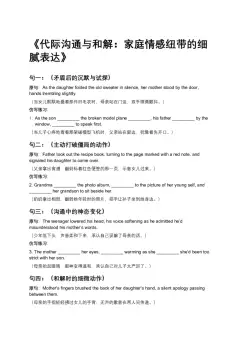
一、动作描写(“谓语动词 A, B and C” 结构)
句型
多个连续动作,用 “主语 + 谓语动词 1, 谓语动词 2 and 谓语动词 3”,按动作先后或逻辑排
列,简洁呈现连贯动作流。
迁移示例
The diplomat bowed, shook hands and exchanged greetings with the foreign guests.(外交
官鞠躬、握手,与外国客人互致问候。依次呈现 “鞠躬 - 握手 - 互致问候” 连贯动作)
仿写填空
1. She ______ her waist, ______ his cheek and ______ approval with a smile.(她弯下腰,
轻触他的脸颊,微笑着表示同意)
2. The twins ______ identical gestures, ______ the barrier and ______ in the nonverbal
interaction.(这对双胞胎做出相同的手势,打破隔阂,参与到非语言交流中)
3. They ______ their chests, ______ straight and ______ at the audience confidently.(他们
挺起胸膛,站直身体,自信地凝视着观众)
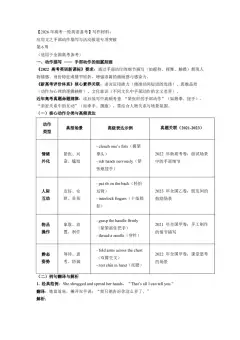
二、动作描写(“谓语动词 + 非谓语动词(描述肢体动作 / 心
理)” 结构)
句型
“主语 + 谓语动词 + 非谓语动词(现在分词 / 过去分词,体现伴随肢体动作或心理状态)”,让
动作与伴随情况融合,丰富表意。
迁移示例
He stared at the ceiling, thinking about the conflict that had arisen during the meeting.(他盯
着天花板,思考着会议中出现的冲突。“stared” 是谓语,“thinking about the conflict that had
arisen during the meeting” 现在分词短语表伴随心理)
仿写填空
1. The educator ______ the students' gestures, ______ their nonverbal cues carefully.(教
育家观察学生们的手势,仔细解读他们的非语言信号。现在分词表伴随动作)
2. She ______ by the incident, ______ with embarrassment.(她被这件事弄得很尴尬,羞得
满脸通红。过去分词表伴随状态)
3. They ______ in the trial, ______ with anxiety about the result.(他们参与审判,因担心结
果而焦虑不安。现在分词表伴随心理)
三、情绪 + 动作融合(非谓语动词(描述肢体动作)+ 句子(描
述心理))
句型
先以非谓语动词(多为现在分词)呈现肢体动作,后接句子说明心理,把外在动作和内在情绪
关联,让情绪表达更具画面感。
迁移示例
Clenching his fists tightly, he tried to control his anger at the unfair assessment.(他紧攥拳
头,努力控制对这不公平评价的愤怒。“Clenching his fists tightly” 展现肢体动作,后续句子点
明克制愤怒的心理)
仿写填空
1. ______ her head slightly, she ______ that he was merely pretending to be busy.(微微低
下头,她推断他只是假装忙碌。非谓语体现动作,句子说明推断心理)
2. ______ up straight, the boy ______ he was confident enough to handle the problem.(挺
直身子,男孩表明他有足够的信心处理这个问题。非谓语表动作,句子表表明心理)
3. ______ at the stranger, she ______ a sense of anxiety rising in her chest.(盯着那个陌生
人,她察觉到胸口涌起一阵焦虑。非谓语展动作,句子表察觉心理)
四、情绪 + 神态融合(非谓语动词(描述心理)+ 句子(描述心
理 + with 复合结构(神态描写))
句型
非谓语动词(如现在分词)体现心理,句子进一步阐释心理,并用 “with + 名词 + 形容词 / 现
在分词” 复合结构描绘神态,多维度渲染情绪。
迁移示例
Embarrassed, she apologized with her cheeks turning red.(尴尬不已,她道歉时脸颊通
红。“Embarrassed” 表心理,“with her cheeks turning red” 复合结构描神态)
仿写填空
1. ______, he explained the incident with his voice ______.(焦虑不安,他解释这件事时声
音在颤抖。非谓语表心理,复合结构描神态)
2. ______, she listened to the criticism with her head ______.(羞愧难当,她听着批评时低
着头。非谓语体现心理,复合结构绘神态)
3. ______, they discussed the conflict with their eyes ______.(怒气冲冲,他们讨论冲突时
眼睛冒着怒火。非谓语表心理,复合结构描神态)
五、环境描写(形容词(描述心理)+ 句子(描述肢体动作)
+with 复合结构(神态描写))
句型
先用形容词体现人物心理,接着句子描述肢体动作,再以 “with + 名词 + 形容词 / 现在分词”
复合结构补充神态,借环境或场景关联心理、动作与神态。
迁移示例
Confused, the tourist wandered through the crowd with his eyebrows furrowed.(困惑不已,
游客在人群中漫步,眉头紧锁。“Confused” 表心理,“wandered through the crowd” 是动
作,“with his eyebrows furrowed” 描神态)
仿写填空
1. ______, she ______ the nonverbal cues with her eyes ______.(专注,她观察非语言信
号时眼睛一眨不眨。形容词表心理,句子描动作,复合结构绘内在状态)
2. ______, he ______ to the question with his hands ______.(犹豫,他回答问题时双手绞
在一起。形容词体现心理,句子表动作,复合结构描神态)
3. ______, they ______ the interaction with their faces ______.(好奇,他们观察互动时脸
上带着疑惑。形容词表心理,句子描动作,复合结构绘状态)
六、环境描写(形容词(视觉、听觉、嗅觉))
句型
用视觉、听觉、嗅觉相关形容词描绘环境,营造氛围,为故事添背景色彩,让读者借感官感受
场景。
迁移示例
The noisy hall, with the sound of arguments and the tension in the air, was full of conflict.
(喧闹的大厅里,有争吵声和空气中的紧张气氛,充满了冲突。“noisy”(视觉 / 听
觉)、“sound of arguments”(听觉)、“tension in the air”(感觉)营造场景)
仿写填空
1. The ______ meeting room, with the ______ of whispered conversations and the ______
of awkwardness, made everyone uneasy.(安静的会议室里,有低语声和尴尬的氛围,让
每个人都不自在。视觉、听觉、感觉词)
2. The ______ classroom, with the ______ of students' laughter and the ______ of joy, was
full of energy.(热闹的教室里,有学生们的笑声和欢乐的气氛,充满了活力。感官词)
3. The ______ negotiation room, with the ______ of raised voices and the ______ of anger,
showed the intensity of the discussion.(严肃的谈判室里,有提高的说话声和愤怒的情
绪,体现了讨论的激烈。感官词)
七、公用高级句式(倒装结构)
句型
把谓语或谓语部分提前,如 “副词 / 介词短语 + 谓语 + 主语”,突出强调,让句子有变化、更
紧凑,增强表达力度。
迁移示例
Only when they clarified their gestures did the misunderstanding disappear.(只有当他们澄
清了手势的含义,误解才消失。“Only when they clarified their gestures” 提前,引发倒装,强
调条件)
仿写填空
1. ______ did the two sides realize the importance of nonverbal communication.(直到冲突
爆发,双方才意识到非语言交流的重要性。用倒装突出意识到的时机)
2. ______ can we distinguish between different emotional expressions.(通过仔细观察,我
们才能区分不同的情感表达。借倒装强调方式)
3. ______ came the moment when the barrier between them finally broke down.(在多次沟
通后,他们之间的隔阂终于消除的时刻到来了。用倒装突出时刻)
八、巧用修辞手法(比喻)
句型
用 “像…… 一样”(like)、“仿佛……”(as if)等,把事物比作另一类事物,让描述生动形象、
具体可感。
迁移示例
A warm smile is like a bridge, connecting people's hearts.(温暖的微笑像一座桥梁,连接着
人们的心灵。把微笑比作桥梁,突出其连接作用)
仿写填空
1. Nonverbal gestures are ______ that reveal people's true feelings.(非语言手势像一扇窗
户,揭示人们的真实情感。用比喻描绘手势的作用)
2. The tension in the room was ______ that made everyone hold their breath.(房间里的紧
张气氛像一块沉重的石头,让每个人都屏住呼吸。借比喻展现紧张氛围)
3. A friendly tone is ______ that eases conflicts between people.(友好的语气像一剂良药,
缓解人与人之间的冲突。用比喻体现语气的作用)
九、巧用修辞手法(拟人)
句型
把事物或抽象概念当作人,赋予人的动作、情感、神态等,让描写鲜活有趣,拉近与读者距
离。
迁移示例
Silence hung in the air, witnessing their awkward interaction.(沉默笼罩在空气中,见证着他
们尴尬的互动。“hung”“witnessing” 赋予沉默人的动作)
仿写填空
1. The gesture of bowing ______ respect, showing politeness in many cultures.(鞠躬的手
势表达尊重,在许多文化中表示礼貌。拟人化,赋予手势 “表达” 动作)
2. Anxiety ______ in his chest, making it hard for him to speak.(焦虑在他的胸口蔓延,让他
难以开口。让焦虑 “蔓延”,拟人呈现)
3. The tone of her voice ______, revealing her true anger despite her smile.(她的语气在抗
议,尽管微笑着却暴露了她真正的愤怒。赋予语气 “抗议” 的拟人化行为)
十、巧用修辞手法(夸张)
句型
故意夸大或缩小事物特征、程度,突出特点,增强感染力,让读者印象深刻。
迁移示例
His stare was so intense that it seemed to burn a hole in the ceiling.(他的凝视如此强烈,仿
佛要在天花板上烧出一个洞。夸张突出凝视的强烈)
仿写填空
1. The embarrassment she felt was so great that ______ to disappear into the ground.(她
感到的尴尬如此强烈,仿佛想钻进地里消失。夸张突出尴尬的程度)
2. The noise of their argument was so loud that ______ in the entire building.(他们争吵的
声音如此之大,仿佛整栋楼都在震动。夸张体现声音的响亮)
3. His anxiety was so overwhelming that ______ to breathe normally.(他的焦虑如此强烈,
仿佛几乎无法正常呼吸。夸张突出焦虑的程度)
参考答案
一、动作描写(“谓语动词 A, B and C” 结构)
1. bent; touched; showed
2. made; broke; participated
3. puffed; stood; stared
二、动作描写(“谓语动词 + 非谓语动词” 结构)
1. observed; interpreting
2. was embarrassed; blushing
3. participated; trembling
三、情绪 + 动作融合
1. Lowering; inferred
2. Straightening; declared
3. Staring; perceived
四、情绪 + 神态融合
1. Anxious; trembling
2. Ashamed; bowed
3. Angry; blazing with fire
五、环境描写(心理 + 动作 + 神态)
1. Focused; observed; wide open
2. Hesitant; responded; twisted together
3. Curious; watched; filled with confusion
六、环境描写(感官)
1. quiet; murmur; atmosphere
2. lively; sound; feeling
3. serious; noise; emotion
七、倒装结构
1. Only when the conflict broke out
2. Only by observing carefully
3. After many communications
八、比喻
1. like a window
2. like a heavy stone
3. like a medicine
九、拟人
1. expresses
2. spread
3. protested
十、夸张
1. she wanted
2. it seemed to shake
3. he could barely