文档文本内容
学科网(北京)股份有限公司
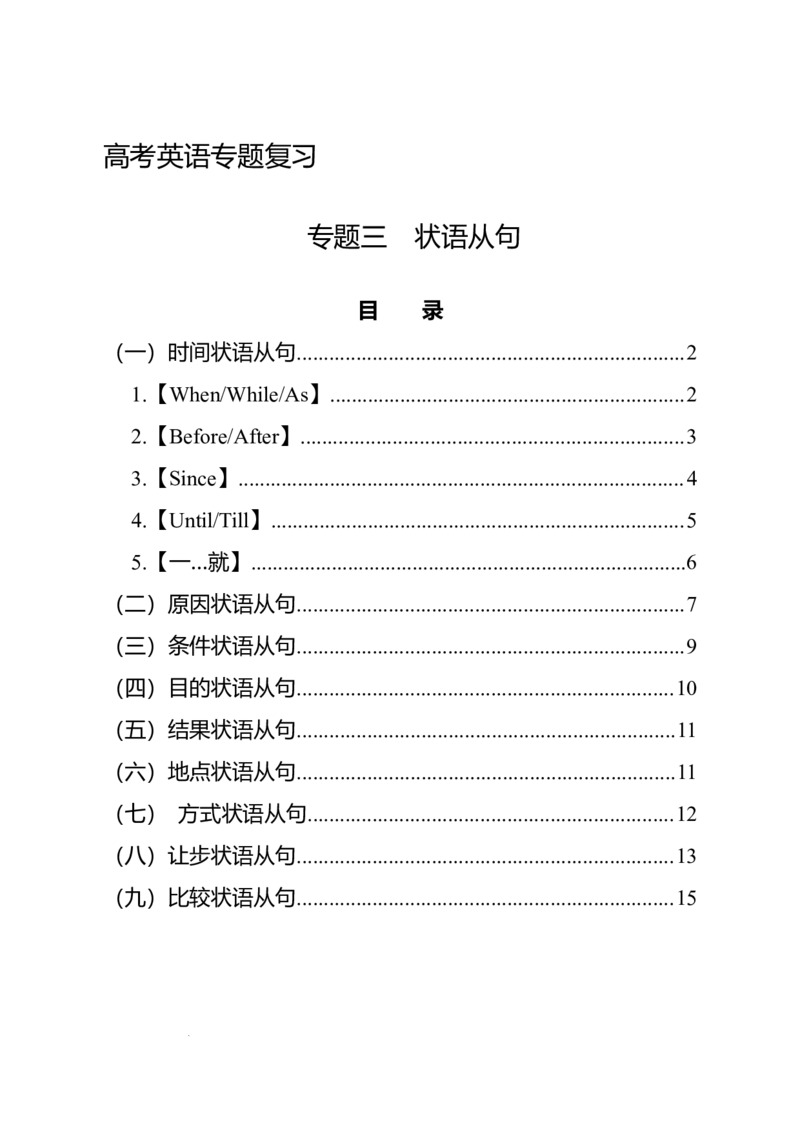
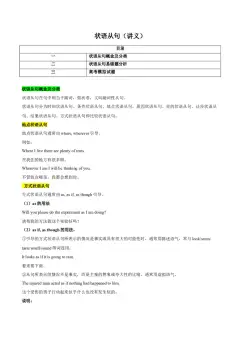
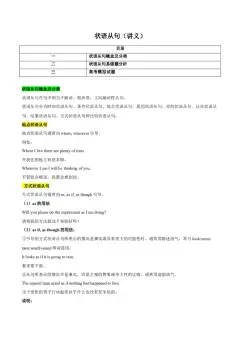
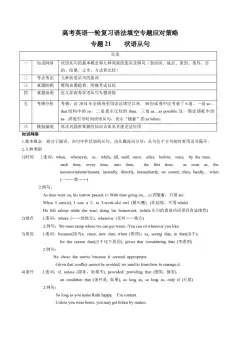
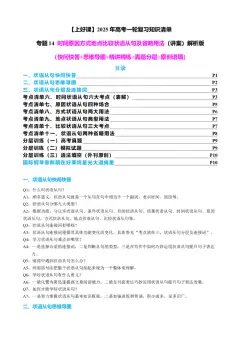
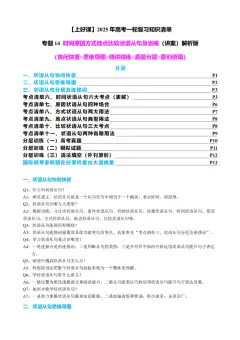
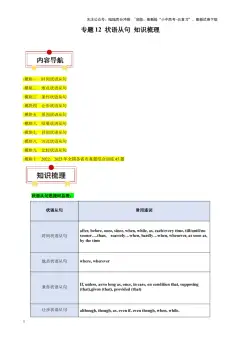
高考英语专题复习
专题三  状语从句
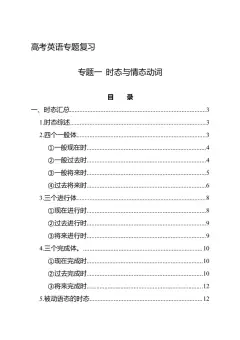
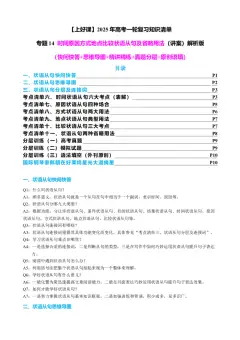
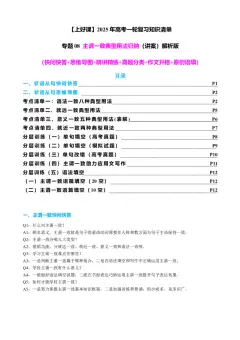
目    录
(一)时间状语从句........................................................................2
1.【When/While/As】..................................................................2
2.【Before/After】.......................................................................3
3.【Since】...................................................................................4
4.【Until/Till】.............................................................................5
5.【一…就】.................................................................................6
(二)原因状语从句........................................................................7
(三)条件状语从句........................................................................9
(四)目的状语从句......................................................................10
(五)结果状语从句......................................................................11
(六)地点状语从句......................................................................11
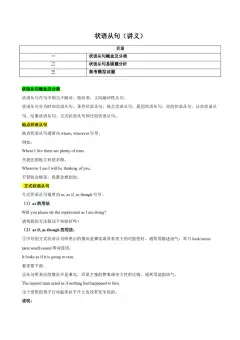
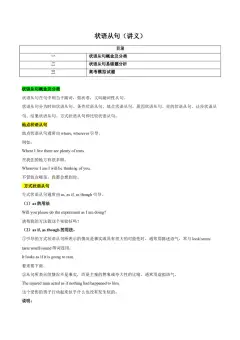
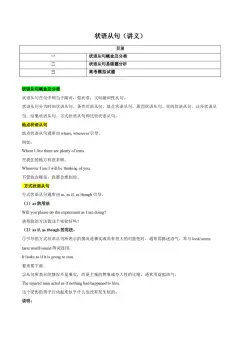
(七) 方式状语从句....................................................................12
(八)让步状语从句......................................................................13
(九)比较状语从句......................................................................15
学科网(北京)股份有限公司
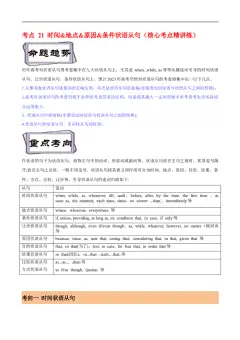
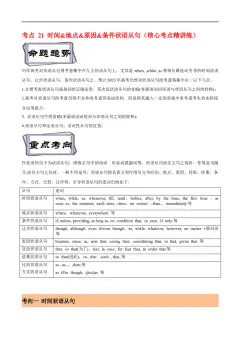
(一)时间状语从句
1.【When/While/As】
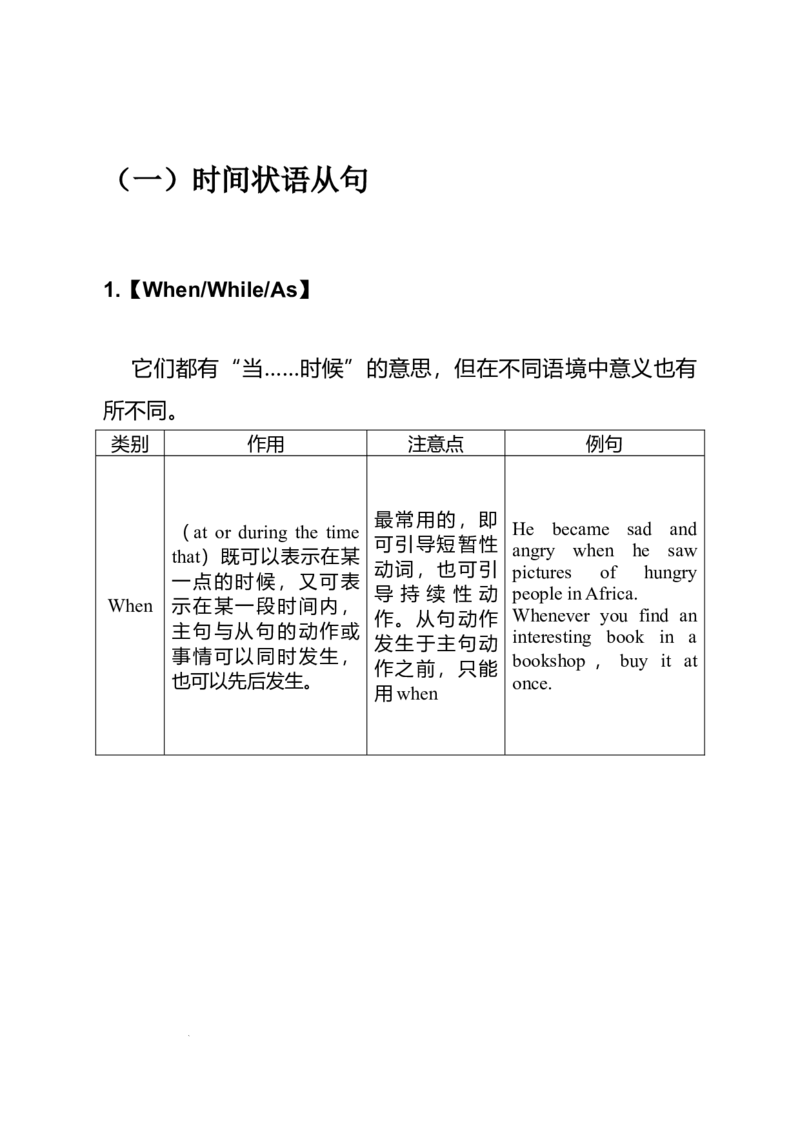
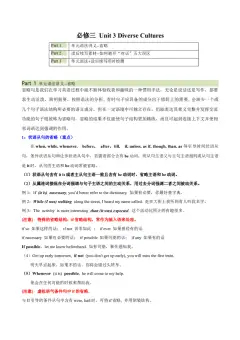
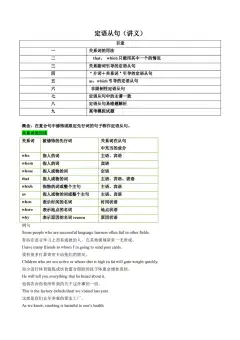
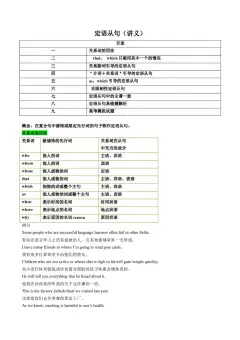
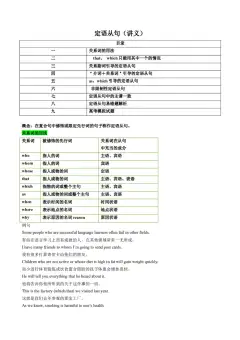
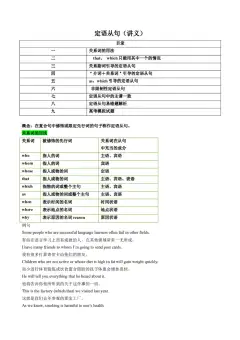
它们都有“当……时候”的意思,但在不同语境中意义也有
所不同。
类别
作用
注意点
例句
When
(at or during the time
that)既可以表示在某
一点的时候,又可表
示在某一段时间内,
主句与从句的动作或
事情可以同时发生,
也可以先后发生。
最常用的,即
可引导短暂性
动词,也可引
导持续性动
作。从句动作
发生于主句动
作之前,只能
用when
He became sad and
angry when he saw
pictures of hungry
people in Africa.
Whenever you find an
interesting book in a
bookshop ,buy it at
once.
学科网(北京)股份有限公司
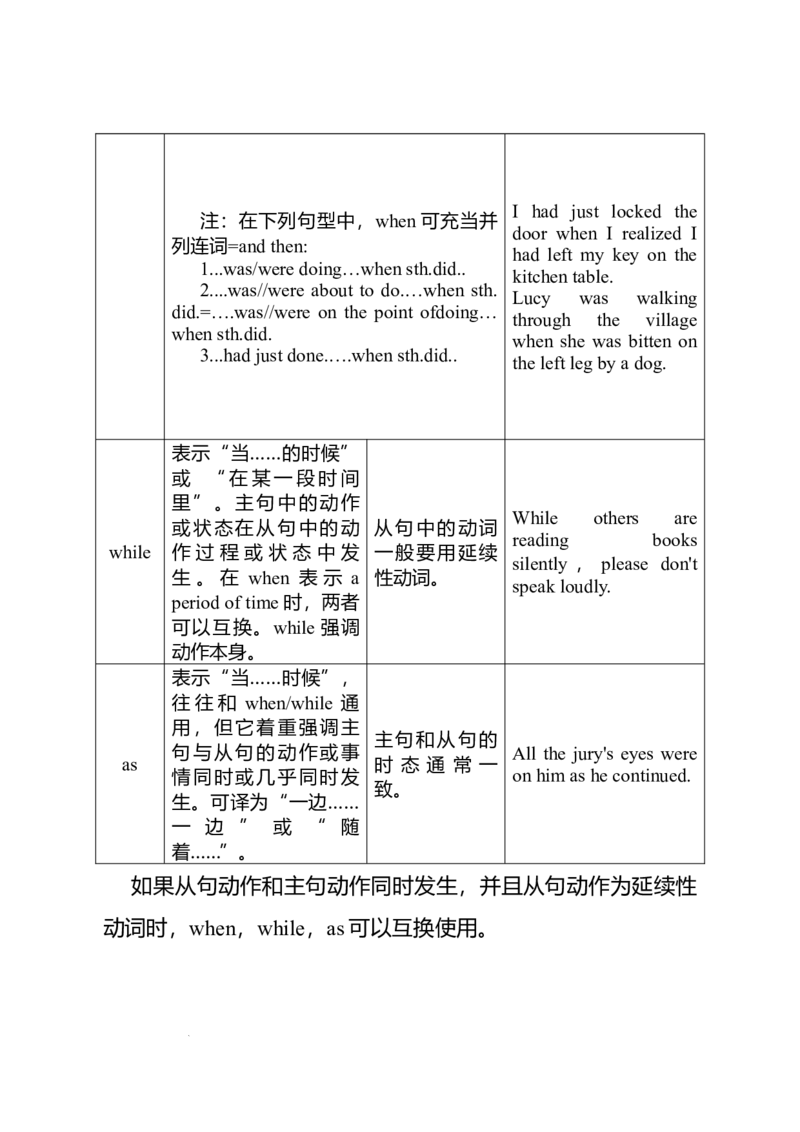
注:在下列句型中,when 可充当并
列连词=and then:
1...was/were doing…when sth.did..
2....was//were about to do.…when sth.
did.=….was//were on the point ofdoing…
when sth.did.
3...had just done.….when sth.did..
I had just locked the
door when I realized I
had left my key on the
kitchen table.
Lucy was walking
through the village
when she was bitten on
the left leg by a dog.
while
表示“当……的时候”
或 “ 在某一段时间
里”。主句中的动作
或状态在从句中的动
作过程或状态中发
生。在when 表示a
period of time 时,两者
可以互换。while 强调
动作本身。
从句中的动词
一般要用延续
性动词。
While

others

are
reading

books
silently ,please don't
speak loudly.
as
表示“当……时候”,
往往和when/while 通
用,但它着重强调主
句与从句的动作或事
情同时或几乎同时发
生。可译为“一边……
一边” 或“ 随
着……”。
主句和从句的
时态通常一
致。
All the jury's eyes were
on him as he continued.
如果从句动作和主句动作同时发生,并且从句动作为延续性
动词时,when,while,as 可以互换使用。
学科网(北京)股份有限公司
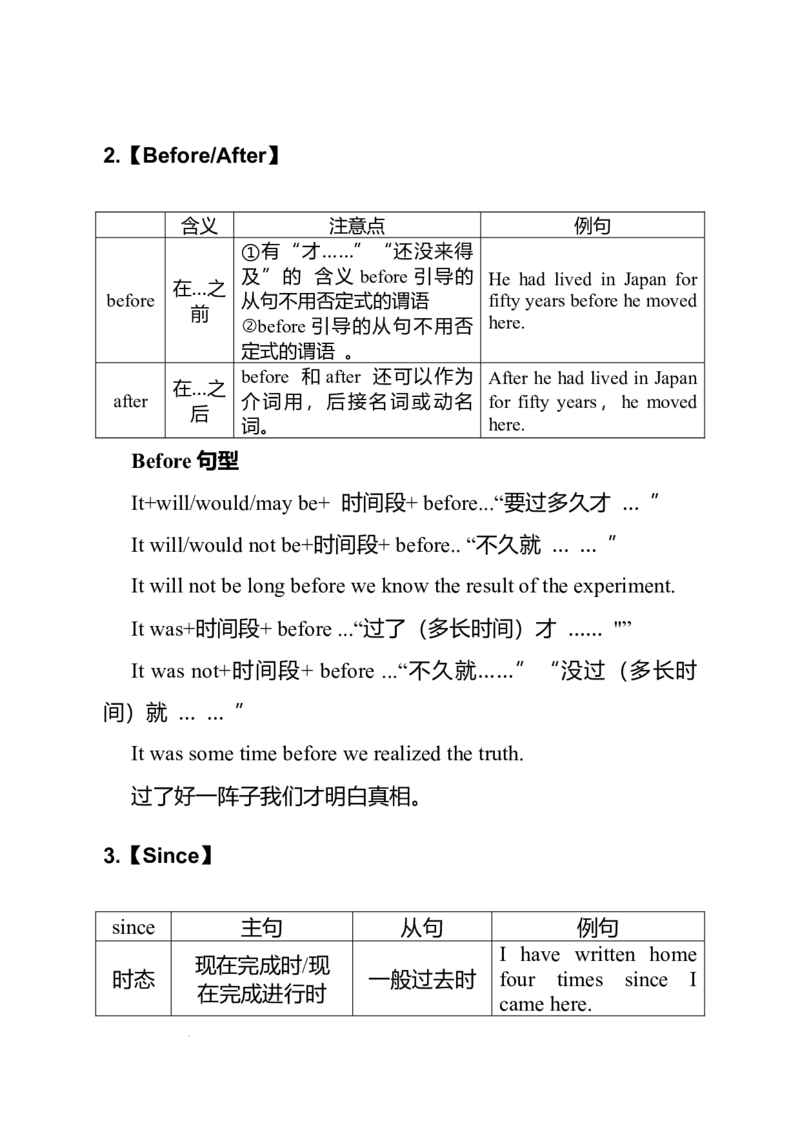
2.【Before/After】
含义
注意点
例句
before
在…之
前
①有“才……”“还没来得
及”的 含义before 引导的
从句不用否定式的谓语
before
②
引导的从句不用否
定式的谓语 。
He had lived in Japan for
fifty years before he moved
here.
after
在…之
后
before 和after 还可以作为
介词用,后接名词或动名
词。
After he had lived in Japan
for fifty years ,he moved
here.
Before 句型
It+will/would/may be+ 时间段+ before...“要过多久才 … ”
It will/would not be+时间段+ before.. “不久就 … … ”
It will not be long before we know the result of the experiment.
It was+时间段+ before ...“过了(多长时间)才 …… "”
It was not+时间段+ before ...“不久就……”“没过(多长时
间)就 … … ”
It was some time before we realized the truth.
过了好一阵子我们才明白真相。
3.【Since】
since
主句
从句
例句
时态
现在完成时/现
在完成进行时
一般过去时
I have written home
four times since I
came here.
学科网(北京)股份有限公司
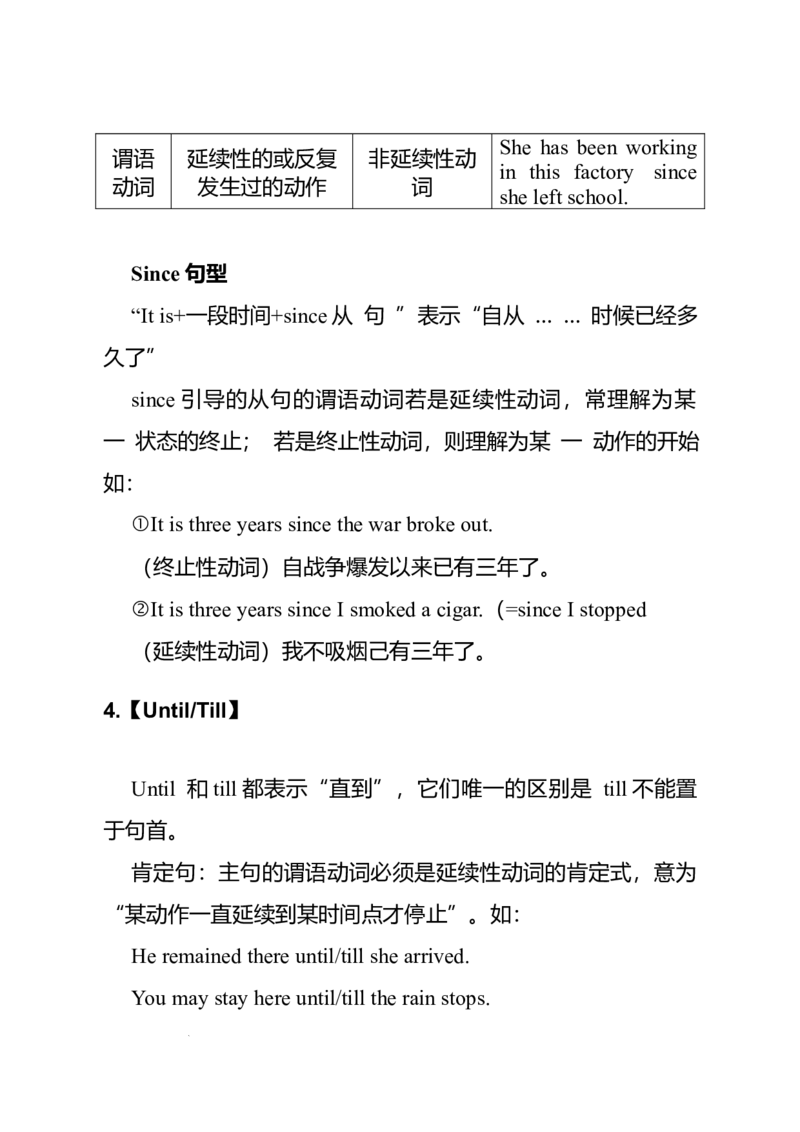
谓语
动词
延续性的或反复
发生过的动作
非延续性动
词
She has been working
in this factory since
she left school.
Since 句型
“It is+一段时间+since 从 句 ”表示“自从 … … 时候已经多
久了”
since 引导的从句的谓语动词若是延续性动词,常理解为某
一 状态的终止; 若是终止性动词,则理解为某 一 动作的开始
如:
It is three years since the war broke out.
①
(终止性动词)自战争爆发以来已有三年了。
It is three years since I smoked a cigar.
②
(=since I stopped
(延续性动词)我不吸烟己有三年了。
4.【Until/Till】
Until 和till 都表示“直到”,它们唯一的区别是 till 不能置
于句首。
肯定句:主句的谓语动词必须是延续性动词的肯定式,意为
“某动作一直延续到某时间点才停止”。如:
He remained there until/till she arrived.
You may stay here until/till the rain stops.
学科网(北京)股份有限公司
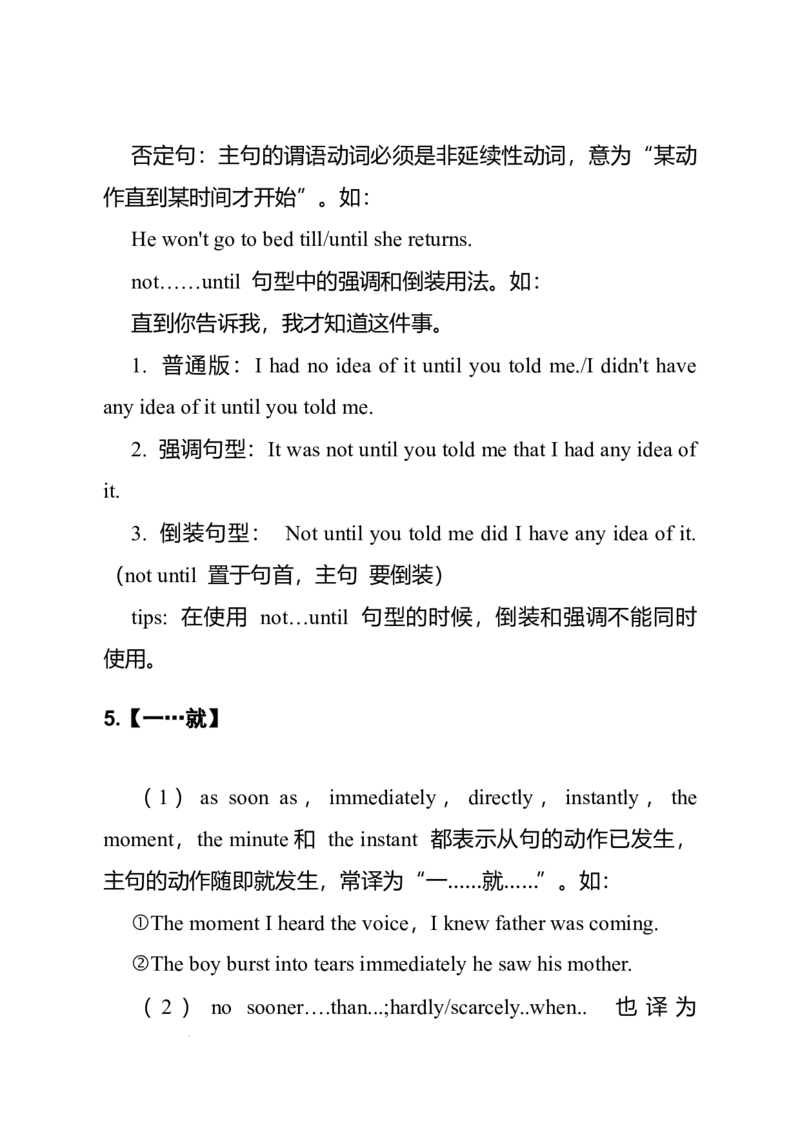
否定句:主句的谓语动词必须是非延续性动词,意为“某动
作直到某时间才开始”。如:
He won't go to bed till/until she returns.
not……until 句型中的强调和倒装用法。如:
直到你告诉我,我才知道这件事。
1. 普通版:I had no idea of it until you told me./I didn't have
any idea of it until you told me.
2. 强调句型:It was not until you told me that I had any idea of
it.
3. 倒装句型: Not until you told me did I have any idea of it.
(not until 置于句首,主句 要倒装)
tips: 在使用 not…until 句型的时候,倒装和强调不能同时
使用。
5.【一…就】
(1 )as soon as ,immediately ,directly ,instantly ,the
moment,the minute 和 the instant 都表示从句的动作已发生,
主句的动作随即就发生,常译为“一……就……”。如:
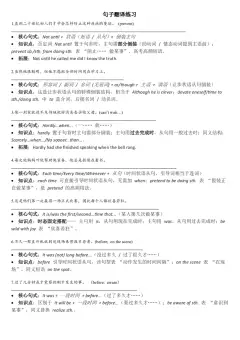
The moment I heard the voice
①
,I knew father was coming.
The boy burst into tears immediately he saw his mother.
②
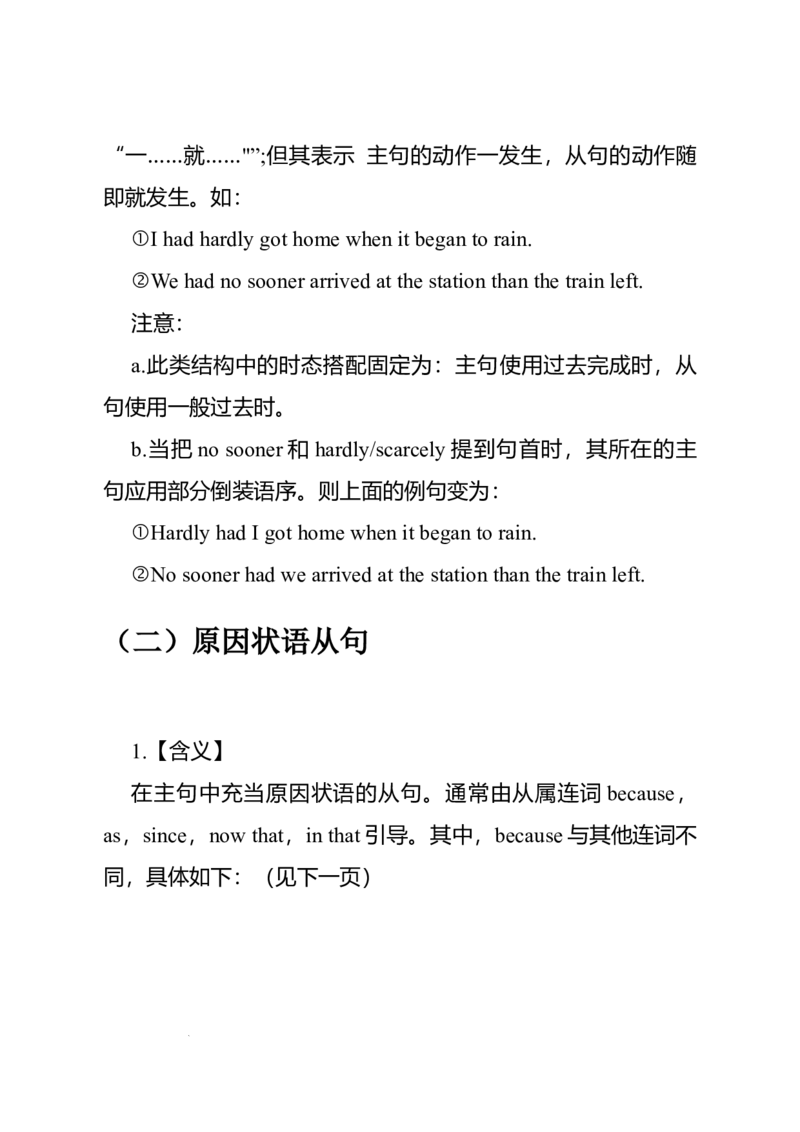
(2 )no sooner….than...;hardly/scarcely..when.. 也译为
学科网(北京)股份有限公司
“一……就……"”;但其表示 主句的动作一发生,从句的动作随
即就发生。如:
I had hardly got home when it began to rain.
①
We had no sooner arrived at the station than the train left.
②
注意:
a.此类结构中的时态搭配固定为:主句使用过去完成时,从
句使用一般过去时。
b.当把no sooner 和hardly/scarcely 提到句首时,其所在的主
句应用部分倒装语序。则上面的例句变为:
Hardly had I got home when it began to rain.
①
No sooner had we arrived at the station than the train left.
②
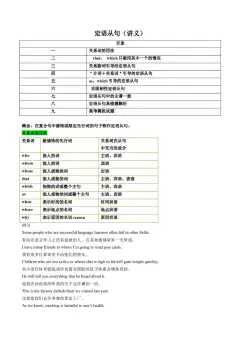
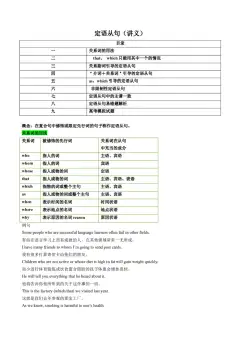
(二)原因状语从句
1.【含义】
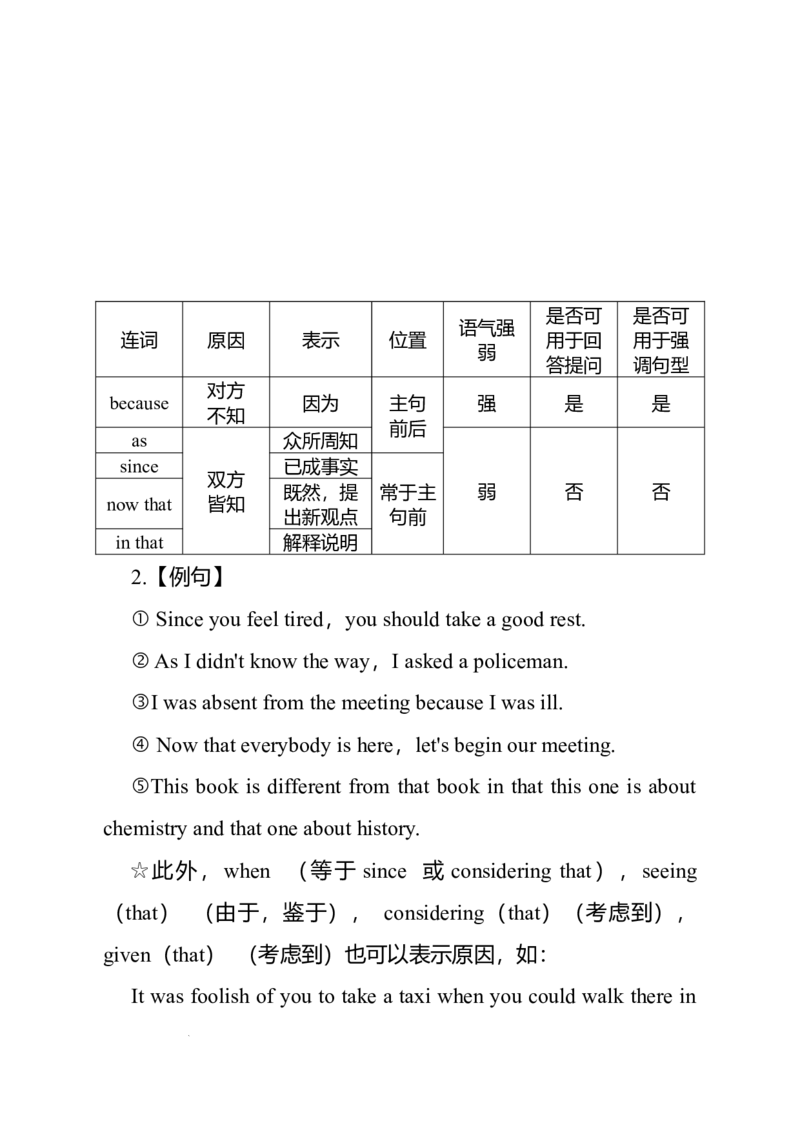
在主句中充当原因状语的从句。通常由从属连词because,
as,since,now that,in that 引导。其中,because 与其他连词不
同,具体如下:(见下一页)
学科网(北京)股份有限公司
连词
原因
表示
位置
语气强
弱
是否可
用于回
答提问
是否可
用于强
调句型
because
对方
不知
因为
主句
前后
强
是
是
as
双方
皆知
众所周知
弱
否
否
since
已成事实
常于主
句前
now that
既然,提
出新观点
in that
解释说明
2.【例句】
 Since you feel tired
①
,you should take a good rest.
 As I didn't know the way
②
,I asked a policeman.
I was absent from the meeting because I was ill.
③
 Now that everybody is here
④
,let's begin our meeting.
This book is different from that book in that this one is about
⑤

chemistry and that one about history.
☆此外,when (等于since 或considering that),seeing
(that) (由于,鉴于), considering(that)(考虑到),
given(that) (考虑到)也可以表示原因,如:
It was foolish of you to take a taxi when you could walk there in
学科网(北京)股份有限公司
five minutes.
(三)条件状语从句
1.【连词】
引导条件状语从句的从属连词有:if,unless,so/as long as,
in case,on condition that, suppose/supposing(that),provided
that 等。
2.【含义】
(1)if 表示“如果、假如”,引导的条件句有真实条件句
和非真实条件句两种。如:
If you are not too tired,let's go out for a walk.
如果你不太累,我们出去散散步吧。
(2)unless 相当于 if not, 意思是“除非….”“如果不…
就…”。如:
Let's go out for a walk unless you are too tired.
你如果不累,我们就出去走走吧、
(3)in case 表示“假如”。同时,它还可以引导目的状语
从句,表示“以防万一”如:
In case there is a fire,what will we do first?
万一发生火灾,我们首先做什么?
学科网(北京)股份有限公司
(4)as long as/so long as 表示“只要”。 如:
As long as you don't lose heart,you will win her heart.
只要你不灰心,你就能赢得她的心。
(5)on condition that(条件是),suppose/supposing(that)
(假设,如果),provided that (如果)等都可以引导条件状
语从句。如:
Suppose/supposing(that) they refuse us,who else can we
turn to for help?
假如他们拒绝我们,我们还能向谁求助呢?
(四)目的状语从句
【连词】
引导目的状语从句最常用的是so that(从句谓语常有情态动
词),in order that,in case (以防万一),for fear that(以防
以免),lest 等。如:
You must speak louder so that /in order that you can be heard
①

by all.
你必须说得更大声,这样才能让所有人都听到。
He wrote the name down for fear that
②
(lest ) he whould
forget it.
学科网(北京)股份有限公司
他把这个名字写下来,以免忘记。
Better take more clothes in case the weather is cold.
③
最好多带些衣服,以防天气寒冷。
注意:in order that 比so that 更正式,引导的目的状语从句
可置于主句前后,而so that 只能跟在主句之后。
(五)结果状语从句
【连词】
结果状语从句由so.that… 和 such...that..等引导,意为“如
此…以致于 …”,其结构形式为:
(1)so+ 形容词/副词 + that 从句
So + 形容词+ a/an+ 可数名词单数形式 + that 从句
So+ many/much/few/little (少)+名词 + that 从句
(2)such+ a/an+ 形容词+可数名词单数形式 + that 从句
such+ 形容词+可数名词复数形式/不可数名词 + that 从句
such+ a lot of/lots of+ 名词 + that 从句
例:他是一个如此诚实的工人,以至于我们都相信他。
 He is such an honest worker that we all believe him.
①
He is so honest a worker that we all believe him.
②
学科网(北京)股份有限公司
(六)地点状语从句
【连词】
(1)在复合句中充当表示地点的从句。它由从属连词
where,wherever 等引导。从句既 在主句之前(通常为抽象意
义)也可在主句之后,意为“在…地方”,“无论在…地方”。
 Where he had mistakes
①
,he admitted these willingly.
They followed the taxi wherever it went.
②
(2)有时地点状语还可以由anywhere,everywhere 引导。
He would live with his grandmother anywhere she lived.
①
 Everywhere they lived
②
,they were warmly received.
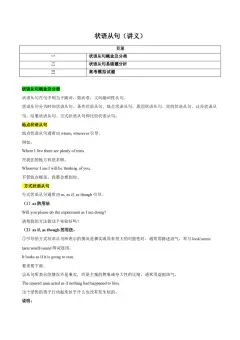
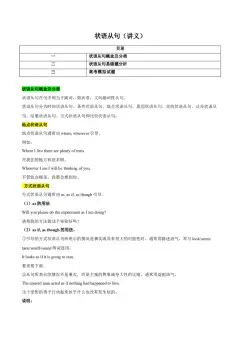
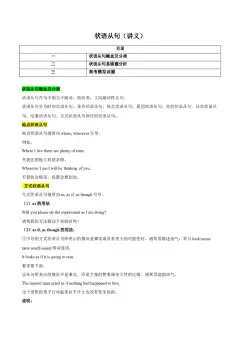
(七) 方式状语从句
【连词】
通常由(just)as,as if,as though 引导。
(1)as 从句带有比喻的含义,意思是“正如….”,“就
像….”,多用于正式文体。如:
Just as we sweep our rooms,we should sweep backward ideas
from our minds.
学科网(北京)股份有限公司
就像我们打扫房间一样,我们也应该从脑海中清除旧思想。
(2)as if,as though 两者意义和用法相同,引出的状语从
句谓语多用虚拟语气,表示与事实相反,有时也用陈述语气,
表示所说情况是事实或实现的可能性较大。常译作“仿佛……
似的”,“好像……似的”。如:
He looks as if
①
(as though) he had been hit by lighting.
他看起来好像被闪电击中了。
It looks as if the weather may pick up
②
(转晴) very soon.
(不用虚拟)看来天气可能很快就会转晴。
(3)as if/as though 也可以引导一个分词短语、不定式短语
或无动词短语。如:
 He stared at me as if seeing me for first time.
①
他盯着我,好像第一次见到我一样。
He cleared his throat as if to say something.
②
他清了清嗓子,好像要说什么。
He acted as if nothing had happened .
③
他表现得好像什么也没发生过。
(八)让步状语从句
【连词】
学科网(北京)股份有限公司
让步状语从句一般翻译为“尽管…”或“即使… ”,可由
although ,though ,as ,even if (though ),however ,
whatever,whether ...or,no matter who(when,what,...)等引
导。
(1)although,though,as
类别
共同点
不同点
although
主句中不能使用
but 等转折连
词,但可以与
yet,still 或
nevertheless 连用
不能倒装
though
可以形式倒装;也可以不倒装
as
须进行形式倒装。
形式倒装:让步从句中表语或状语
(名词、形容词、副词、 分词、实
义动词)提前,其他语序保持不
变。
注:形式倒装中,可数名词单数提
前需省略冠词
(2)ever if=even though 即使。如:
We'll make a trip even though the weather is bad.
(3)while 引导让步状语从句时相当于although , 一般要
位于句首。如:
While I like the color,I don't like the shape.
(4)no matter+疑问词=疑问词-ever
含义为“……都…;不管…… ·都……”,所引导的让步状语从
句可以互换。如:
学科网(北京)股份有限公司
No matter what happened,he would not mind.
=Whatever happened,he would not mind.
【特别注意】(1) whether...o..表示“不论是否……”。可
引导让步状语从句,它没有对应的 no matter 形式。如:
Whether you believe it or not,it is true.
(2)疑问词-ever 既可引导名词性关系从句,又可引导让步
状语从句;而 no matter+疑问词只能 引导让步状语从句。如:
 Whatever I said
①
,he wouldn't listen to me.
=No matter what I said,he wouldn't listen to me. (让步状语
从句)
He would believe whatever I said.
②
(宾语从句)
(九)比较状语从句
【 连 词 】
比较状语从句常用“ 比较级+than” ,“ so
(as).….as”,“the more ...the more”等引导。 如:
I have made a lot more mistakes than you have.
①
我比你犯的错误多得多。
He smokes cigarettes as expensive as he can afford.
②
他尽可能地吸昂贵的香烟。
学科网(北京)股份有限公司
 The busier he is
③
,the happier he feels.
他越忙,他就越快乐。
As…as 结构中若想加名词,应为:
(1)as+形容词+(名词结构,即冠词+名词)+as
(2)as much+不可数名词+as
(3)as many+复数名词+as
如:
She is as good a teacher as her mother.
①
她和她母亲一样是个好老师。
You've made as many mistakes as I have.
②
你和我一样犯了很多错误。
I haven't got as much money as I thought.
③
我没有我想的那么有钱。