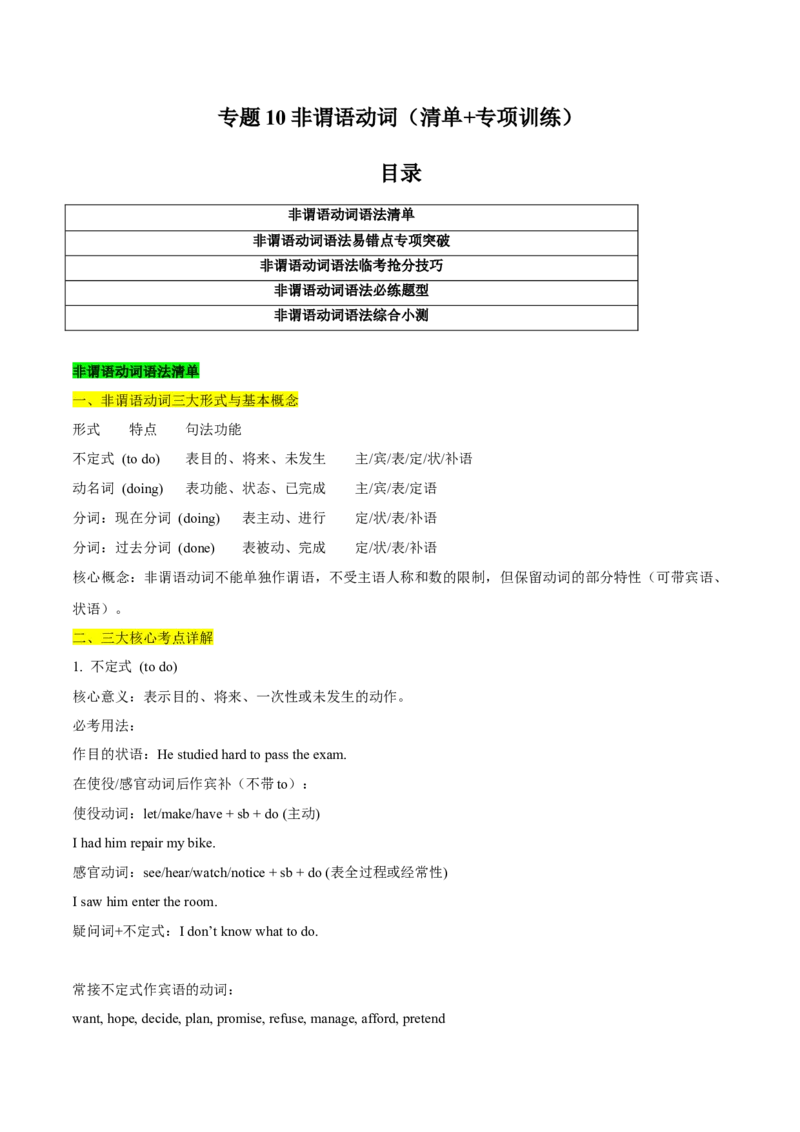
专题10 非谓语动词(清单+专项训练)
目录
非谓语动词语法清单
非谓语动词语法易错点专项突破
非谓语动词语法临考抢分技巧
非谓语动词语法必练题型
非谓语动词语法综合小测
非谓语动词语法清单
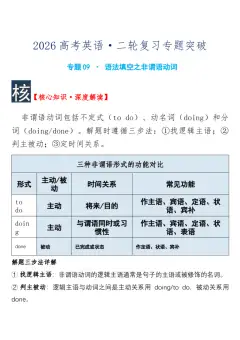
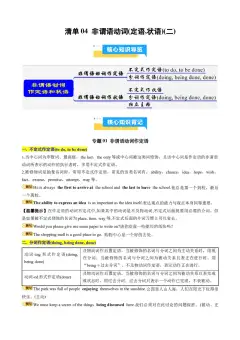
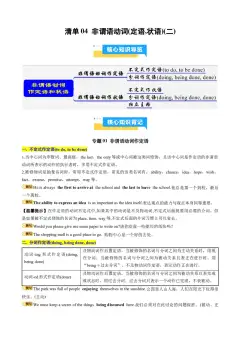
一、非谓语动词三大形式与基本概念
形式
特点
句法功能
不定式 (to do)
表目的、将来、未发生
主/宾/表/定/状/补语
动名词 (doing)
表功能、状态、已完成
主/宾/表/定语
分词:现在分词 (doing)
表主动、进行
定/状/表/补语
分词:过去分词 (done)
表被动、完成
定/状/表/补语
核心概念:非谓语动词不能单独作谓语,不受主语人称和数的限制,但保留动词的部分特性(可带宾语、
状语)。
二、三大核心考点详解
1. 不定式 (to do)
核心意义:表示目的、将来、一次性或未发生的动作。
必考用法:
作目的状语:He studied hard to pass the exam.
在使役/感官动词后作宾补(不带to):
使役动词:let/make/have + sb + do (主动)
I had him repair my bike.
感官动词:see/hear/watch/notice + sb + do (表全过程或经常性)
I saw him enter the room.
疑问词+不定式:I don’t know what to do.
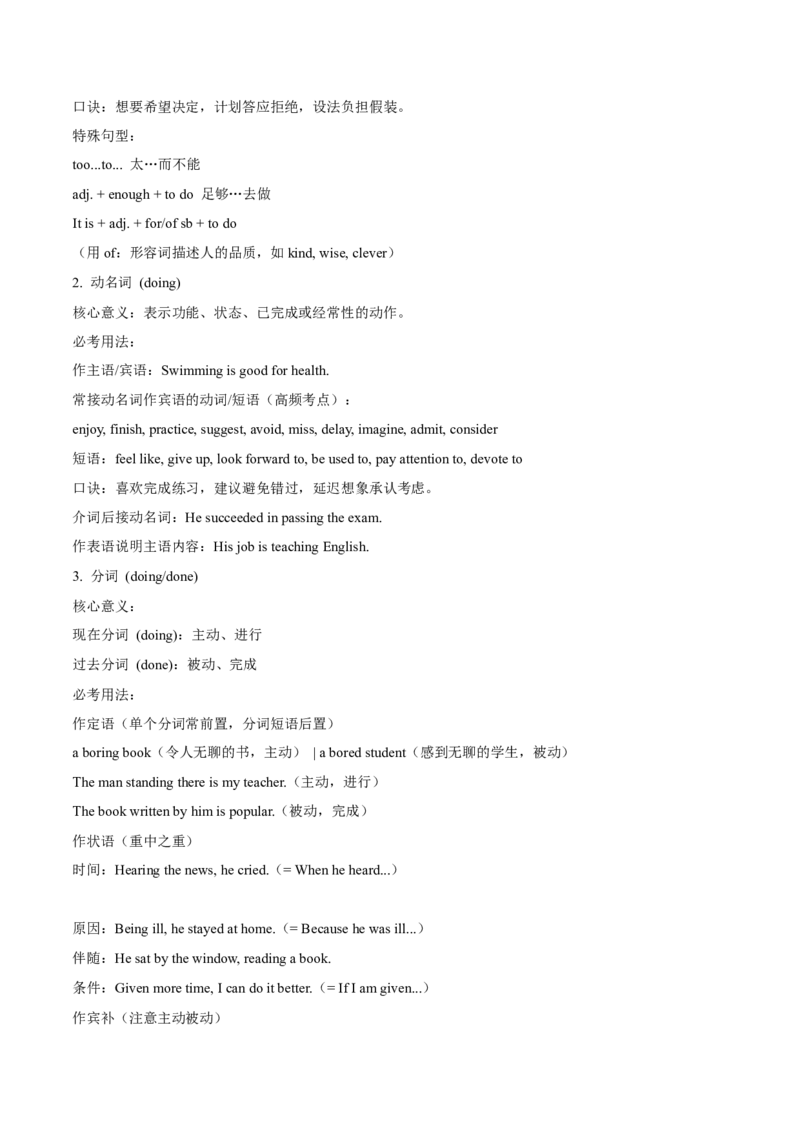
常接不定式作宾语的动词:
want, hope, decide, plan, promise, refuse, manage, afford, pretend
口诀:想要希望决定,计划答应拒绝,设法负担假装。
特殊句型:
too...to... 太…而不能
adj. + enough + to do 足够…去做
It is + adj. + for/of sb + to do
(用of:形容词描述人的品质,如kind, wise, clever)
2. 动名词 (doing)
核心意义:表示功能、状态、已完成或经常性的动作。
必考用法:
作主语/宾语:Swimming is good for health.
常接动名词作宾语的动词/短语(高频考点):
enjoy, finish, practice, suggest, avoid, miss, delay, imagine, admit, consider
短语:feel like, give up, look forward to, be used to, pay attention to, devote to
口诀:喜欢完成练习,建议避免错过,延迟想象承认考虑。
介词后接动名词:He succeeded in passing the exam.
作表语说明主语内容:His job is teaching English.
3. 分词 (doing/done)
核心意义:
现在分词 (doing):主动、进行
过去分词 (done):被动、完成
必考用法:
作定语(单个分词常前置,分词短语后置)
a boring book(令人无聊的书,主动) | a bored student(感到无聊的学生,被动)
The man standing there is my teacher.(主动,进行)
The book written by him is popular.(被动,完成)
作状语(重中之重)
时间:Hearing the news, he cried.(= When he heard...)
原因:Being ill, he stayed at home.(= Because he was ill...)
伴随:He sat by the window, reading a book.
条件:Given more time, I can do it better.(= If I am given...)
作宾补(注意主动被动)
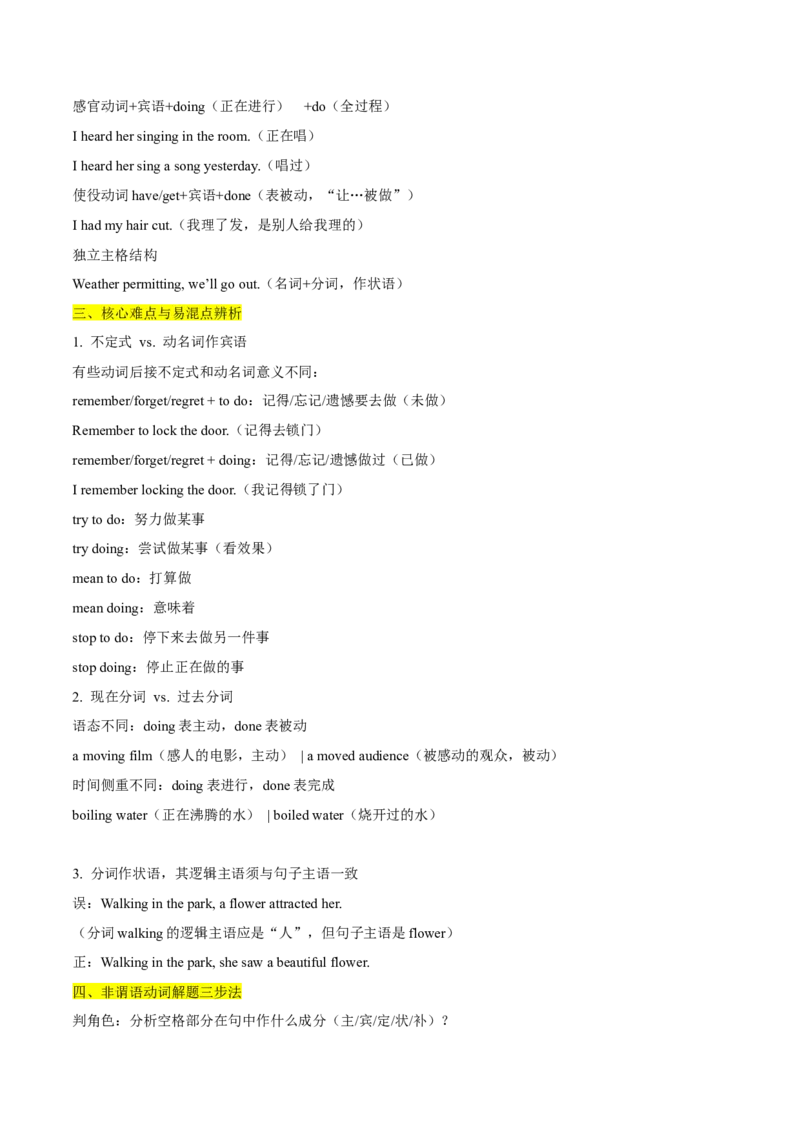
感官动词+宾语+doing(正在进行)  +do(全过程)
I heard her singing in the room.(正在唱)
I heard her sing a song yesterday.(唱过)
使役动词have/get+宾语+done(表被动,“让…被做”)
I had my hair cut.(我理了发,是别人给我理的)
独立主格结构
Weather permitting, we’ll go out.(名词+分词,作状语)
三、核心难点与易混点辨析
1. 不定式 vs. 动名词作宾语
有些动词后接不定式和动名词意义不同:
remember/forget/regret + to do:记得/忘记/遗憾要去做(未做)
Remember to lock the door.(记得去锁门)
remember/forget/regret + doing:记得/忘记/遗憾做过(已做)
I remember locking the door.(我记得锁了门)
try to do:努力做某事
try doing:尝试做某事(看效果)
mean to do:打算做
mean doing:意味着
stop to do:停下来去做另一件事
stop doing:停止正在做的事
2. 现在分词 vs. 过去分词
语态不同:doing 表主动,done 表被动
a moving film(感人的电影,主动) | a moved audience(被感动的观众,被动)
时间侧重不同:doing 表进行,done 表完成
boiling water(正在沸腾的水) | boiled water(烧开过的水)
3. 分词作状语,其逻辑主语须与句子主语一致
误:Walking in the park, a flower attracted her.
(分词walking 的逻辑主语应是“人”,但句子主语是flower)
正:Walking in the park, she saw a beautiful flower.
四、非谓语动词解题三步法
判角色:分析空格部分在句中作什么成分(主/宾/定/状/补)?
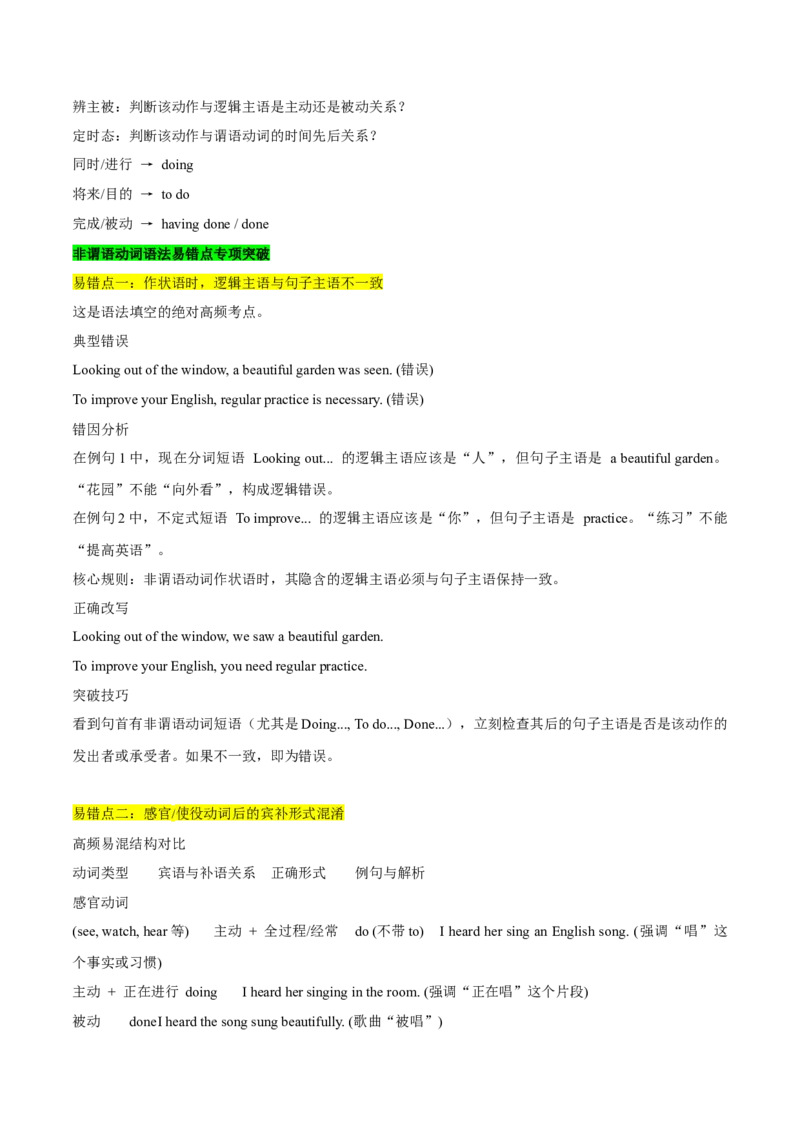
辨主被:判断该动作与逻辑主语是主动还是被动关系?
定时态:判断该动作与谓语动词的时间先后关系?
同时/进行 → doing
将来/目的 → to do
完成/被动 → having done / done
非谓语动词语法易错点专项突破
易错点一:作状语时,逻辑主语与句子主语不一致
这是语法填空的绝对高频考点。
典型错误
Looking out of the window, a beautiful garden was seen. (错误)
To improve your English, regular practice is necessary. (错误)
错因分析
在例句1 中,现在分词短语 Looking out... 的逻辑主语应该是“人”,但句子主语是 a beautiful garden。
“花园”不能“向外看”,构成逻辑错误。
在例句2 中,不定式短语 To improve... 的逻辑主语应该是“你”,但句子主语是 practice。“练习”不能
“提高英语”。
核心规则:非谓语动词作状语时,其隐含的逻辑主语必须与句子主语保持一致。
正确改写
Looking out of the window, we saw a beautiful garden.
To improve your English, you need regular practice.
突破技巧
看到句首有非谓语动词短语(尤其是Doing..., To do..., Done...),立刻检查其后的句子主语是否是该动作的
发出者或承受者。如果不一致,即为错误。
易错点二:感官/使役动词后的宾补形式混淆
高频易混结构对比
动词类型
宾语与补语关系
正确形式
例句与解析
感官动词
(see, watch, hear 等)
主动 + 全过程/经常
do (不带to)
I heard her sing an English song. (强调“唱”这
个事实或习惯)
主动 + 正在进行doing
I heard her singing in the room. (强调“正在唱”这个片段)
被动
doneI heard the song sung beautifully. (歌曲“被唱”)
使役动词
(make, let, have)
主动
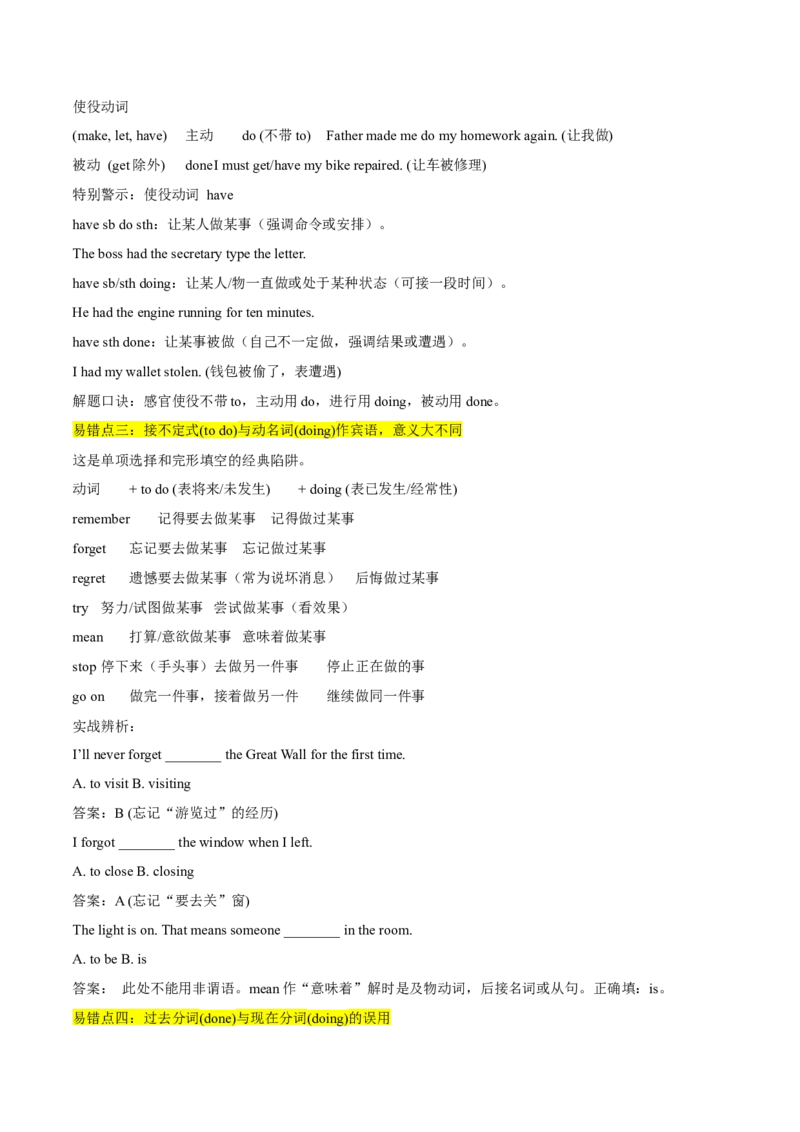
do (不带to)
Father made me do my homework again. (让我做)
被动 (get 除外)
doneI must get/have my bike repaired. (让车被修理)
特别警示:使役动词 have
have sb do sth:让某人做某事(强调命令或安排)。
The boss had the secretary type the letter.
have sb/sth doing:让某人/物一直做或处于某种状态(可接一段时间)。
He had the engine running for ten minutes.
have sth done:让某事被做(自己不一定做,强调结果或遭遇)。
I had my wallet stolen. (钱包被偷了,表遭遇)
解题口诀:感官使役不带to,主动用do,进行用doing,被动用done。
易错点三:接不定式(to do)与动名词(doing)作宾语,意义大不同
这是单项选择和完形填空的经典陷阱。
动词
+ to do (表将来/未发生)
+ doing (表已发生/经常性)
remember
记得要去做某事
记得做过某事
forget
忘记要去做某事
忘记做过某事
regret
遗憾要去做某事(常为说坏消息)
后悔做过某事
try
努力/试图做某事尝试做某事(看效果)
mean
打算/意欲做某事意味着做某事
stop 停下来(手头事)去做另一件事
停止正在做的事
go on
做完一件事,接着做另一件
继续做同一件事
实战辨析:
I’ll never forget ________ the Great Wall for the first time.
A. to visit B. visiting
答案:B (忘记“游览过”的经历)
I forgot ________ the window when I left.
A. to close B. closing
答案:A (忘记“要去关”窗)
The light is on. That means someone ________ in the room.
A. to be B. is
答案: 此处不能用非谓语。mean 作“意味着”解时是及物动词,后接名词或从句。正确填:is。
易错点四:过去分词(done)与现在分词(doing)的误用
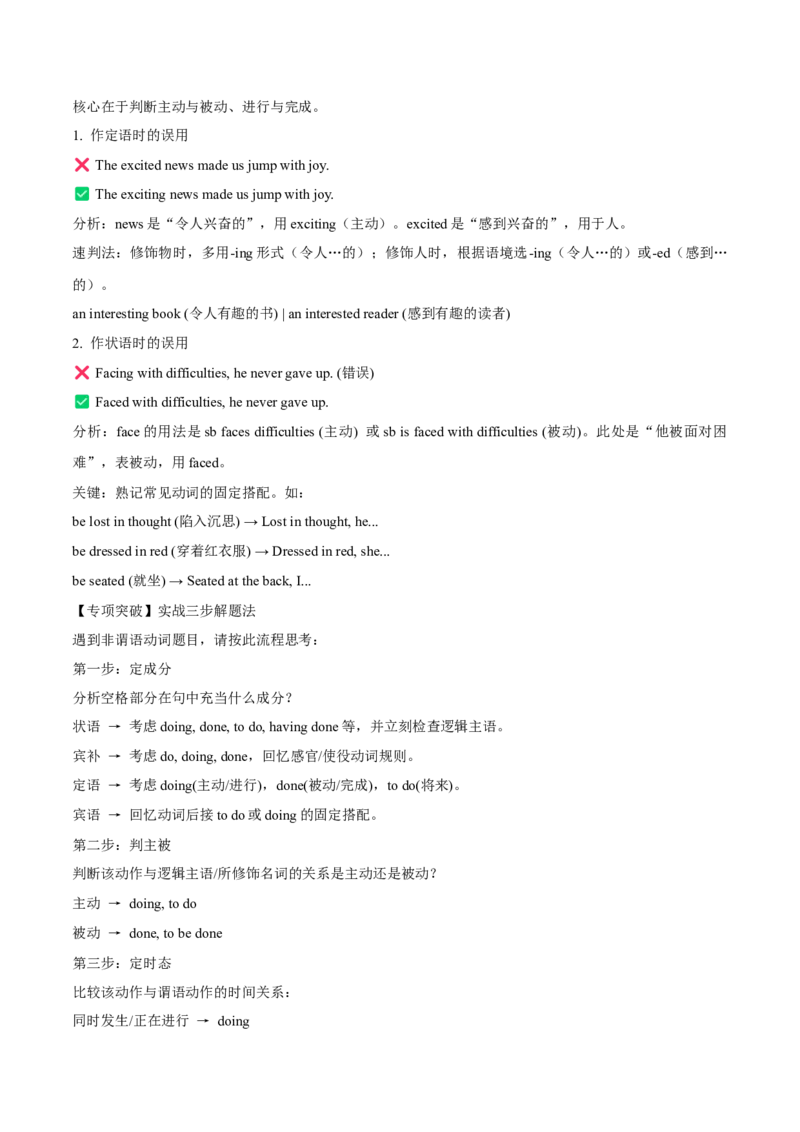
核心在于判断主动与被动、进行与完成。
1. 作定语时的误用
 The excited news made us jump with joy.
❌
 The exciting news made us jump with joy.
✅
分析:news 是“令人兴奋的”,用exciting(主动)。excited 是“感到兴奋的”,用于人。
速判法:修饰物时,多用-ing 形式(令人…的);修饰人时,根据语境选-ing(令人…的)或-ed(感到…
的)。
an interesting book (令人有趣的书) | an interested reader (感到有趣的读者)
2. 作状语时的误用
 Facing with difficulties, he never gave up. (
❌
错误)
 Faced with difficulties, he never gave up.
✅
分析:face 的用法是sb faces difficulties (主动) 或sb is faced with difficulties (被动)。此处是“他被面对困
难”,表被动,用faced。
关键:熟记常见动词的固定搭配。如:
be lost in thought (陷入沉思) → Lost in thought, he...
be dressed in red (穿着红衣服) → Dressed in red, she...
be seated (就坐) → Seated at the back, I...
【专项突破】实战三步解题法
遇到非谓语动词题目,请按此流程思考:
第一步:定成分
分析空格部分在句中充当什么成分?
状语 → 考虑doing, done, to do, having done 等,并立刻检查逻辑主语。
宾补 → 考虑do, doing, done,回忆感官/使役动词规则。
定语 → 考虑doing(主动/进行),done(被动/完成),to do(将来)。
宾语 → 回忆动词后接to do 或doing 的固定搭配。
第二步:判主被
判断该动作与逻辑主语/所修饰名词的关系是主动还是被动?
主动 → doing, to do
被动 → done, to be done
第三步:定时态
比较该动作与谓语动作的时间关系:
同时发生/正在进行 → doing
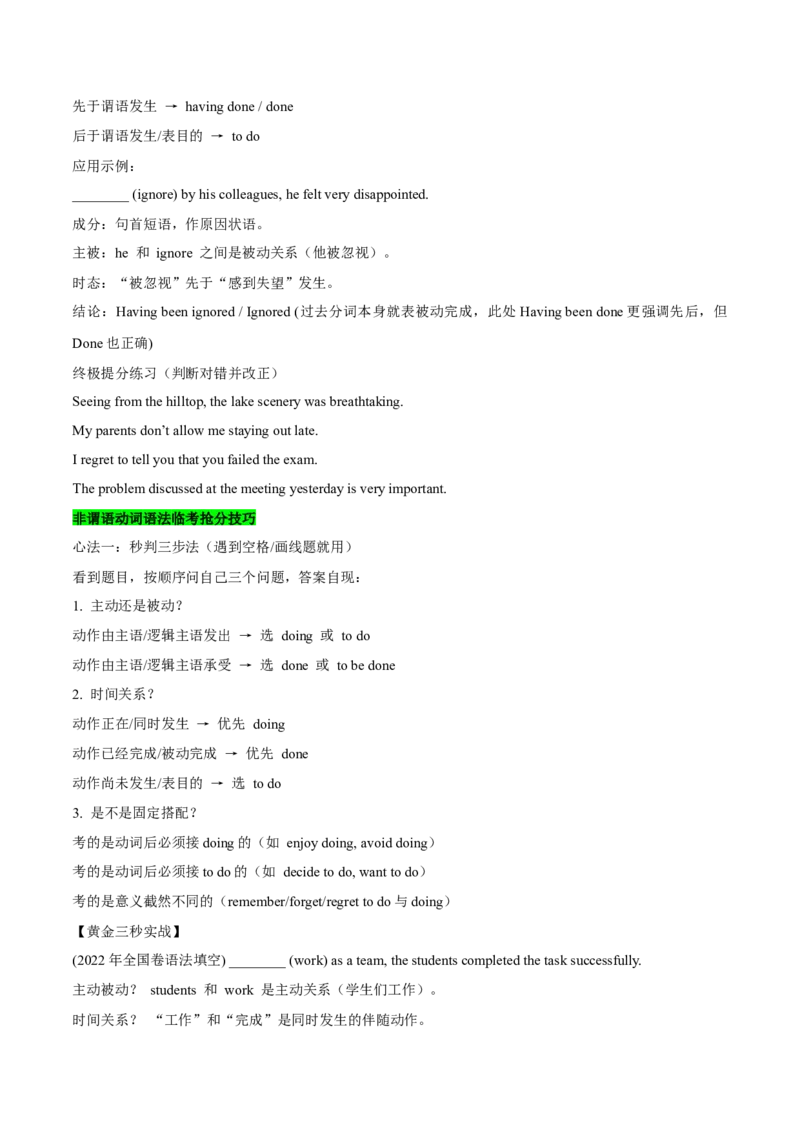
先于谓语发生 → having done / done
后于谓语发生/表目的 → to do
应用示例:
________ (ignore) by his colleagues, he felt very disappointed.
成分:句首短语,作原因状语。
主被:he 和 ignore 之间是被动关系(他被忽视)。
时态:“被忽视”先于“感到失望”发生。
结论:Having been ignored / Ignored (过去分词本身就表被动完成,此处Having been done 更强调先后,但
Done 也正确)
终极提分练习(判断对错并改正)
Seeing from the hilltop, the lake scenery was breathtaking.
My parents don’t allow me staying out late.
I regret to tell you that you failed the exam.
The problem discussed at the meeting yesterday is very important.
非谓语动词语法临考抢分技巧
心法一:秒判三步法(遇到空格/画线题就用)
看到题目,按顺序问自己三个问题,答案自现:
1. 主动还是被动?
动作由主语/逻辑主语发出 → 选 doing 或 to do
动作由主语/逻辑主语承受 → 选 done 或 to be done
2. 时间关系?
动作正在/同时发生 → 优先 doing
动作已经完成/被动完成 → 优先 done
动作尚未发生/表目的 → 选 to do
3. 是不是固定搭配?
考的是动词后必须接doing 的(如 enjoy doing, avoid doing)
考的是动词后必须接to do 的(如 decide to do, want to do)
考的是意义截然不同的(remember/forget/regret to do 与doing)
【黄金三秒实战】
(2022 年全国卷语法填空) ________ (work) as a team, the students completed the task successfully.
主动被动? students 和 work 是主动关系(学生们工作)。
时间关系? “工作”和“完成”是同时发生的伴随动作。
固定搭配? 不是。
答案:Working(现在分词作状语)
心法二:五大必考陷阱“一眼破”
陷阱1:句首的“悬垂结构”(送分/送命题)
看到:Doing.../ Done.../ To do... 开头的短语,后面接一个句子。
动作:立刻看逗号后的主语,是不是这个动作的“执行者”或“承受者”?
错误标志:主语是物,但句首分词是人的动作(如 Looking..., Feeling...)。
秒杀:逻辑不一致就是错!在短文改错中,要么改非谓语形式,要么改句子主语。
陷阱2:感官/使役动词后的“隐形to”
口诀:“感使动词不带to,宾补主动用原形,被动完成用done,正在发生用doing。”
看到:see/watch/hear/make/have/let + 人/物 + 空格
判断:
空格后无宾语 → 很可能填 do (强调全过程/事实)
空格后有宾语且强调进行 → 填 doing
空格与前面人是被动 → 填 done
陷阱3:那几个“意义天差地别的”动词
必背两组:
忘记/记得/后悔类:
forget/remember/regret + to do:事情还没做
+ doing:事情已经做了
尝试/意味着/停止类:
try to do:努力做(未必成功)
try doing:试试看(一种方法)
mean to do:打算做
mean doing:意味着
stop to do:停下来去做另一件事
stop doing:停止手头的事
陷阱4:-ing 还是-ed?一招选对
修饰物(书、电影、消息、工作)→ 几乎永远用 -ing (exciting, interesting, boring)
an exciting game (令人兴奋的比赛)
修饰人的情绪感受 → 用 -ed (excited, interested, bored)
We are excited. (我们感到兴奋)
例外警报:修饰“人”的表情、声音时,也用-ed。
a surprised look (惊讶的表情) | a tired voice (疲惫的声音)
陷阱5:介词后的“隐身-ing”
黄金法则:所有介词后面,如果跟动词,必须变成doing!
高频介词/介词短语:of, about, at, for, without, by, look forward to, pay attention to, devote...to, be used to
看到介词,直接找doing。
抢分三优先原则(用于两选项纠结时)
作目的状语,优先选to do。
He got up early ______ (catch) the bus. → to catch (目的是赶车)
作伴随状语(无目的性),优先选doing。
He sat by the window, ______ (read) a book. → reading (坐着的同时看书)
“让某事被做”或“遭遇某事”,优先选have/get sth done。
I need to have my hair ______ (cut). → cut
临考终极清单(考前10 分钟速览)
见到这些词,后面直接+doing:
建议放弃享受,考虑完成练习,介意推迟想象
(suggest, give up, enjoy, consider, finish, practice, mind, delay, imagine) + doing
记住这三个“后接to do 表目的”的例外名词:
ability to do (做某事的能力)
way to do (做某事的方法)
chance/opportunity to do (做某事的机会)
非谓语动词语法必练题型
第一关:基础巩固(单项选择)
1. ______ the heavy rain, they continued working in the field.
A. Although  B. Despite  C. Because of  D. Ignoring
2. The teacher had us ______ a 500-word essay before Friday.
A. Write  B. to write  C. writing  D. written
3. The problem ______ at the meeting yesterday is of great importance.
A. Discussing  B. discussed  C. being discussed  D. to discuss
4.He rushed to the station, only ______ the train had left.
A. to find  B. finding  C. found  D. to have found
5. Don't forget ______ the lights when you leave the classroom.
A. turning off  B. to turn off  C. turn off  D. to turning off
第二关:语法填空(高频考点实战)
用括号内动词的正确形式填空。
1. I look forward to ________ (hear) from you soon.
2. ________ (see) from the top of the hill, the city looks like a garden.
3. The boy pretended ________ (read) when his mother entered.
4. He had his wallet ________ (steal) on the bus yesterday.
5. ________ (give) more time, we could have done it better.
第三关:辨错改错(易错点突破)
下列每句均有一处错误,找出并改正。
1. I’m considering to change my job because of the low salary.
2. Seen from space, the earth looks like a blue ball.
3. The children were excited to see the excited performance.
4. She regretted not to attend the lecture last week.
5. He made his son to finish homework before playing games.
第四关:综合进阶(长难句分析)
理解句子结构,选择最佳答案。
1. ______ in the queue for half an hour, Tom suddenly realized he had left his wallet at home.
A. Waiting  B. Having waited  C. To wait  D. To have waited
2. The building ______ next year will be used as our new library.
A. Completed  B. being completed  C. to be completed  D. completing
3. With a lot of work ______, I can’t go to the cinema with you.
A. Done  B. to do  C. doing  D. being done
第五关:翻译应用(写作提分句)
汉译英,使用非谓语动词结构。
为了通过考试,他每天学习到深夜。(目的状语)
昨天讨论的那个问题很复杂。(过去分词作定语)
他走进房间,发现空无一人。(现在分词作伴随状语)
我听见有人在隔壁房间唱歌。(宾补结构)
第六关:真题感悟(考点归纳)
(2023 年全国卷语法填空节选)
I still remember ______ (visit) the Great Wall for the first time. ______ (be) only ten years old then, I
was amazed by its magnificence. ______ (tell) that it took centuries to build, I couldn’t help feeling
proud of the ancient Chinese.
非谓语动词语法综合小测
一、单项选择(每题2 分,共30 分)
1. ______ the heavy rain, they continued to work in the field.
A. Although  B. Despite of  C. Because of  D. Ignoring
2. The teacher had us ______ a 500-word essay before Friday.
A. Write  B. to write  C. writing  D. written
3. The problem ______ at the meeting yesterday is of great importance.
A. Discussing  B. discussed  C. being discussed  D. to be discussed
4. He rushed to the station, only ______ the train had left.
A. to find  B. finding  C. found  D. to have found
5. Don't forget ______ the lights when you leave the classroom.
A. turning off  B. to turn off  C. turn off  D. to turning off
6. ______ from the hill, the park looks very beautiful.
A. Seeing  B. Seen  C. To see  D. See
7. I regret ______ you that your application has been rejected.
A. Informing  B. to inform  C. informed  D. inform
8. With time ______, we had to change our plan.
A. run out  B. running out  C. ran out  D. to run out
9. The ______ news made all of us ______.
A. excited; excited  B. exciting; exciting
C. exciting; excited  D. excited; exciting
10. She sat at the desk, ______ a letter to her parents.
A. Wrote  B. writes  C. writing  D. written
11. I'll never forget ______ the Great Wall for the first time.
A. to visit  B. visiting  C. visited  D. visit
12. The boy pretended ______ when his mother came in.
A. to sleep  B. sleeping  C. slept  D. to be sleeping
13. ______ more attention, the tree could have grown better.
A. Given  B. To give  C. Giving  D. Having given
14. He is said ______ a new novel recently.
A. to write  B. to have written  C. writing  D. having written
15. The house ______ now will be our new laboratory.
A. Built  B. being built  C. to build  D. building
二、语法填空(每空2 分,共30 分)
用括号内动词的适当形式填空。
1. I look forward to ________ (hear) from you soon.
2. ________ (work) as a volunteer in the countryside was a valuable experience for me.
3. The film was so ________ (move) that many people were ________ (move) to tears.
4. ________ (not receive) any reply, he decided to write again.
5. He had his car ________ (repair) yesterday.
6. The meeting ________ (hold) tomorrow is very important.
7. The teacher walked into the classroom, ________ (follow) by his students.
8. I heard her ________ (sing) in the next room at this time yesterday.
9. The book is worth ________ (read) a second time.
10. It took him two hours ________ (finish) the work.
11. ________ (see) from the moon, the earth looks like a blue ball.
12. She was the first woman ________ (elect) to the committee.
13. The children were happy ________ (give) so many gifts.
14. The question is too difficult ________ (answer).
15. I can't understand his ________ (leave) so suddenly.
三、句子改错(每题4 分,共20 分)
下列每个句子均有一处错误,找出并改正。
1. I'm considering to buy a new car next year.
2. Seen from space, the earth looks like a blue ball.
3. The exciting children couldn't fall asleep the night before the trip.
4. He had his bike repair yesterday.
5. I look forward to hear from you soon.
四、句子翻译(每题5 分,共20 分)
使用非谓语动词翻译下列句子。
1. 为了通过考试,他每天学习到深夜。
2. 坐在树下的那个男孩是我的弟弟。
3. 他走进房间,发现里面空无一人。
4. 由于没有收到回信,他决定再写一封。