高中英语基础语法汇编 chapter 13 状语从句
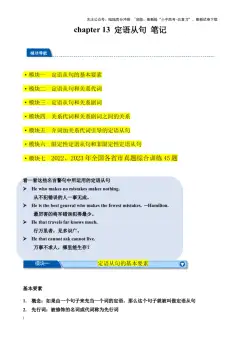
第一节 状语从句的定义
状语从句(Adverbial Clause), 是指用作复合句的状语起副词作用
的句子。状语从句可以修饰谓语、非谓语动词、定语、状语或整个
句子。根据其在复合句中所起的不同作用可分为时间、地点、原
因、条件、目的、结果、让步、方式和比较等从句。
第二节 状语从句的分类及用法
一、时间状语从句(Adverbial Clause of Time)
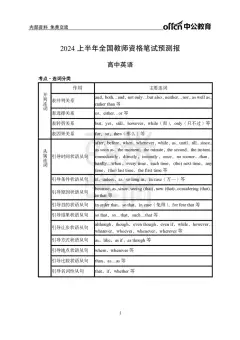
1.时间状语从句的引导词
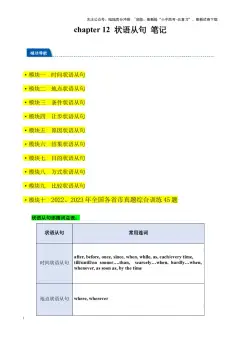
时间状语从句常用的引导词有:when(在……时), as(当……时),
while(在……期间), as soon as(一……就……), before(在……之前),
after(在……之后), since(自从……以来), not...until(直到……才),
until/till(直到……时)等。例如:
He had known the fact before I wrote to him.
Since he was a child he has lived in Nanning.
特殊的引导词有:the minute, the moment, the second, every time,
the day, the instant(瞬间, 顷刻), immediately, directly(不久, 立即),
no sooner...than( 一… … 就… … ), hardly...when( 刚… … 就… … ),
scarcely...when(刚……就……/一……就……)。例如:
Her teacher recognized her the minute she appeared at the door.
2.时间状语从句的用法及注意问题
(1)一般情况下, 时间状语从句的谓语动词用“一般现在时”表示
“一般将来时”;用“现在完成时”表示“将来完成时”。例如:
I will write to you as soon as I arrive in Guilin.(一般现在时表示一般
将来时)
Our monitor will give her opinion when she has read our drafts.(现在
完成时表示将来完成时)
(2)注意区别when 和 while。具体的区分方法如下。
when
①
引导的状语从句的谓语动词可以是延续性动词, 也可以是
瞬间动词。另外, when 有时可表示“就在那时”, 而while 没有这个
意思。while 引导的状语从句的谓语动词必须是延续性动词, 并强调
主句和从句的动作同时发生。除此之外, while 有时还可以表示对比,
when 则没有对比的意思。when 和while 有时可以互换, 有时不能。
例如:
When she came in, her mother was cooking.(瞬间动词, 只能用
when)
When I lived in the countryside, I used to carry some water for him.
(延续性的动词, 可以互换)
We were about to leave when he came in.(瞬间动词, 表示“就在那
时”, 只能用when)
He likes watching TV while his wife likes reading.(表示对比, 只能
用while)
when
②
后面接一般过去式;while 后面接进行时。例如:
The girl was doing her homework when she saw the superstar.
While the man was buying a souvenir, the boy called the police.
when
③
除了表示主句和从句动作同时发生之外, 还可以表示从句
动词的动作在主句动词的动作“之前”或“之后”发生。而while 用
于强调两个动作同时进行。例如:
When Jack arrived at the station, the train had left.(从句动词的动作
在主句动词的动作之后发生)
While the teacher was giving the lecture, the boy smiled.(从句动词
的动作和主句动词的动作同时进行)
(3)hardly...when, scarcely...when, barely...when, no sooner...than 等
引导的状语从句位于句首时, 意思为“一……就”, 且一般采用主谓
倒装的结构。例如:
No sooner had the sport meet started than it began to rain heavily.
Hardly had I finished my words when he stood up.
Scarcely had he opened the door when a gust of wind blew the candle
out.
二、地点状语从句(Adverbial Clause of Place)
1.地点状语从句的引导词
地点状语从句常用的引导词有where, wherever。例如:
Where there is a will, there is a way.
Wherever he goes, he always carries his umbrella.
2.地点状语从句与定语从句的区别
通常, 根据从句在句中充当的成分来判断其为状语从句还是定语
从句。若从句充当主句中状语的成分, 则为状语从句;充当修饰名
词的定语成分, 则为定语从句。另外, where 引导定语从句时, 从句
前应有一个表示地点的名词作为先行词;而状语从句前则没有先行
词。例如:
You can go where you want to go.(where 引导地点状语从句)
你可以去你想去的地方。
You can go to the school where you want to go.(where 引导定语从
句, 修饰school)
你可以去你想去的学校。
三、原因状语从句(Adverbial Clause of Cause)
1.原因状语从句的引导词
原因状语从句常用的引导词有because, since, as 等。例如:
He had to take a part-time job because he needed money for his
tuition.
As I was late for class, I was punished.
Since dinner is ready, let's start.
其他的引导词有:seeing that, now that, in that, given that 等。例
如:
Seeing that you have no time, I do it myself.
I am lucky in that I have got two sisters and a brother.
2.because, since, as, for 辨析
(1)because 语势最强, 用以回答why 提出的问题, 说明人所不知的
原因。当原因显而易见或已为人们所知, 应用as 或since。例如:
——Why were you late?
——Because the traffic was too heavy.
Since/As the weather is so bad, we have to delay our journey.
(2)若because 引导的从句位于句末, 且前面有逗号, 则可用for 来
代替。for 引导的是一个并列句, 多用以对多种情况加以推断, 或对
前一分句进行补充说明。例如:
He is absent today, because/for he is ill.
He must be ill for he is absent today.
It must have rained for the ground is wet.
四、目的状语从句(Adverbial Clause of Purpose)
1.目的状语从句的引导词
目的状语从句常用的引导词有so that, in order that。例如:
I got up early so that I could catch the bus.
In order that he could pass the exam, he worked hard.
注意:当主、从句的主语一致时, 可以用in order to 结构代替in
order that 引导的从句。例如:
In order that I can afford a car I am saving money.
=In order to afford a car I am saving money.
其他的引导词有:lest(以免, 唯恐), in case(万一, 以防), for fear
that(that 可以省略, 表示“以免”)等。例如:
She hid the toy for fear that/lest her sister should see it.
Take your dictionary in case you need it.
2.目的状语从句的用法及注意问题
for fear(that), lest 引导的目的状语从句常用虚拟语气。例如:
They talked in low voice lest they(should)be heard.
The little girl took an umbrella with her for fear it might rain.(for fear
后面省略了that)
五、结果状语从句(Adverbial Clause of Result)
1.结果状语从句的引导词
结果状语从句常用的引导词有so...that, such...that。其中, such 是
形容词, 修饰名词;so 是副词, 修饰形容词或副词。二者具体的应用
形式如下:
(1)“so+adj./adv.+that;so+adj.+a/an+n.+that”结构。例如:
He speaks so fast that we can not catch him.
There is so rapid an increase in population that a food shortage is
caused.
(2)“such+(a/an+)adj.+n.+that”结构。其中, 名词可以是可数名词的
单数或复数, 也可以是不可数名词。例如:
He is such a good person that we all love him.
They are such fine teachers that we all respect them.
注意:so 与表示数量的代词many, few, much, little 等可形成固
定搭配, 在此类结构中, so...that 结构不能换用为such 对应的结构。
例如:
Our country has so much coal that she can export large quantities.
其他的引导词有:so that, such that, to the degree that, with the
result that, to such a degree that 等。例如:
I was cooking, with the result that I did not hear the telephone.
2.so that 用法辨析
so that 可引导结果状语从句, 表示“因此, 以至于”;也可引导
目的状语从句, 表示“为了, 以便”。例如:
It was very cold, so that the river froze.天气非常寒冷, 以至于河水
都结冰了。(so that 引导结果状语从句)
I went to school early so that I could clean the classroom.
=I went to school early in order that I could clean the classroom.(so
that 引导目的状语从句)
六、条件状语从句(Adverbial Clause of Condition)
条件状语从句表示条件时, 分为真实条件和非真实条件两种情
形。(关于非真实条件的相关知识, 详见“虚拟语气”一章。这里只
讨论真实条件的情况。)
1.条件状语从句的引导词
条件状语从句常用的引导词有if, unless, whether(whether...or
not)。例如:
If you go to the party, you will have a good time.
They won't attend the party unless they are invited.
其他的引导词有as/so long as(只要, 如果), only if(只有, 除非),
providing/provided that(假如, 除非), supposing that(如果, 假如), on
condition that(在……条件下)等。例如:
So long as I need you, you will be there.
The fans will go only if their idols go with them.
We will accept the price on condition that the goods are of good
quality.
Supposing that you have no money, what would you do?
2.用法及注意问题
使用条件状语从句时, 要注意正确使用时态。当主句为将来时时,
从句要用一般现在时。例如:
If it rains tomorrow, I'll stay at home.
If you don't hurry up, you'll miss the bus.
七、让步状语从句(Adverbial Clause of Concession)
1.让步状语从句的引导词
让步状语从句常用的引导词有though, although, even if, even
though 等。例如:
I will have a try even though I should fail.
注意:though, although 表示“虽然”, 不能与but 连用。例如:
Although she may have told you the truth, you still think it is
impossible.
2.as, though 引导的倒装句
(1)as/though 引导的让步状语从句通常采用倒装结构, 其中, as 必
须用倒装, though 可用可不用。其倒装结构的形式为表语或状语提
前。例如:
Child as/though he was, he knew what was the right thing to do.
Fast as you read, you can't finish the book in a day.
Much as we admire his courage, we don't think he was right.
(2)as/though 引导的让步状语从句采用倒装结构时需注意下列问
题。
①句首名词不能带有任何冠词。例如:
Boy as he is, he can manage it.
②句首为实义动词时, 其他助动词要放在主语的后面。若实义动
词带有宾语和状语, 则宾语和状语要随实义动词一起放在主语之前
(详见第十七章“倒装句”)。例如:
Try hard as he will, he never seems able to finish it before the
deadline.
Change your mind as you will, you can not gain our support.
八、比较状语从句(Adverbial Clause of Comparison)
1.比较状语从句的引导词
比较状语从句常用的引导词有as(同级比较), than(不同程度的比
较), “the+比较级”...“the+比较级”。三者具体的用法如下:
(1)同级比较:as...as(第一个as 为副词, 修饰副词或形容词;第二
个as 为连词, 后接主谓结构。由于第二个as 后面的句子的谓语通常
与主句一样, 所以往往省略其谓语)。例如:
He studies as hard as she does.(as 修饰副词)
The lecture is as important as that one.(as 修饰形容词)
as...as 的否定结构为not so/as...as。例如:
I have never seen so much rain as fell that March.
It was not as cold as on the previous night.
(2)不同程度的比较:than。例如:
Health is more important than wealth.
The bag is less expensive than that one.
The old man moves more slowly than the young man does.
(3)“the+比较级”...“the+比较级”表示越……越……。例如:
The harder he worked, the happier he felt.
The more you read the book, the more you understand what I mean.
2.比较状语从句的用法及注意问题
使用比较状语从句时, 比较的内容要一致。例如:
The weather in Nanning is warmer than Beijing.(错)
The weather in Nanning is warmer than that in Beijing.(对)
九、方式状语从句(Adverbial Clause of Manner)
1.方式状语从句的引导词
方式状语从句常用的引导词有as (按照, 正如, 像), (just)as...so...
(正如……一样, ……也……)引导。例如:
You should do as the teacher tells you.
As water is to fish, so air is to man.
2.as though, as if 引导的从句的时态辨析
as if 和as though 引导的从句中的时态取决于说话者对所谈内容
的态度。若说话者认为其看法是真的或可能会成为事实, 从句中的
谓语不用虚拟语气。若从句的内容是不真实的, 或与事实相反, 从句
中的谓语要用虚拟语气。例如:
It looks as if it may rain soon.(发生的可能性大, 用陈述语气。)
They talked as if they had been friends for years.
(与事实相反, 用虚拟语气。)
When a pencil is partly in a glass of water, it looks as if it were
broken.(与事实相反, 用虚拟语气。)