 夜雨聆风
夜雨聆风


当你的AI助手突然开始向你推销卖货 | 经济学人
Why your AI assistant is suddenly selling to you
Sponsored chats are changing the way digital advertising works
The Economist
Business
April 19, 2026 | 1023 words | ★★★★☆
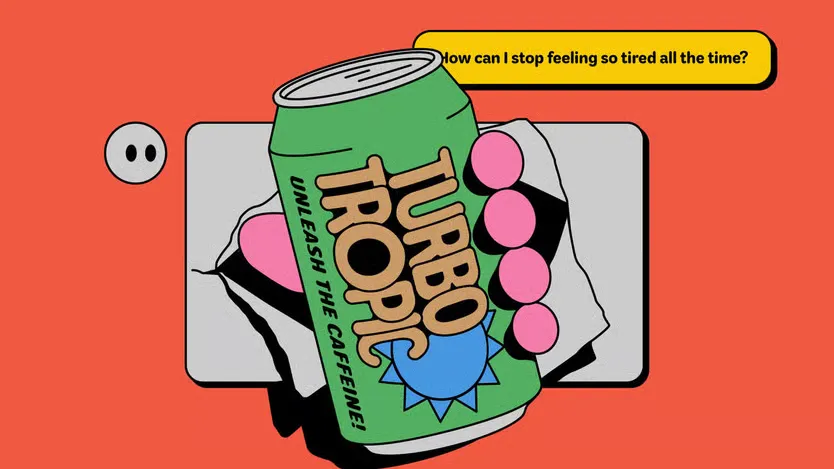
Chatbots are employed every day as teachers, counsellors, coders and escorts. Now they are taking on another role: salesmen. Advertisements are popping up ever more frequently in users’ conversations with large language models, punctuating chats with promotions. Consumers’ search queries, editing sessions and even intimate moments are increasingly at risk of interruption by sponsored messages.
As chatbots become adbots, the future of two industries is at stake. For the artificial-intelligence business, ads represent a way to monetise a wildly expensive invention that most people currently use free of charge. For the ad industry, adbots are a possible answer to the existential question of how advertising will work if users move away from conventional search engines. Although it is early days, the outlines of a new kind of marketing are emerging.
Most of the AI giants are piling in. In February OpenAI said it would begin testing ads in ChatGPT, the most widely used chatbot. Google has been trialling them in its search engine’s “AI Mode” since last year, and Microsoft has woven them into its Copilot. Amazon’s shopping assistant, Rufus, allows brands to sponsor its replies. Meta’s chatbot does not yet show ads, but since December it has been passing on insights from chats to its sister companies, Facebook and Instagram, to help them serve better-targeted plugs.
For OpenAI, which reportedly expects to burn $25bn of cash this year and twice as much in 2027, the need for another revenue stream is acute. Although it sells subscriptions, most of ChatGPT’s more than 900m weekly users are on its free tier. Ads represent a way to monetise them. What is more, they may allow the company to make its best—most expensive—models available to users who do not pay, thus deepening their engagement, argues Benedict Evans, a tech analyst. Even Google, which has no immediate cashflow worries, has reason to bring ads to AI chats if these interactions are to replace search for some users. Already Google is set to lose its crown as the biggest seller of digital ads: this year Meta will overtake it with ad revenue of $243bn, forecasts eMarketer, a research firm.
So far the experiments are modest. ChatGPT is showing ads in only about 1% of conversations, and Google in an even smaller share of AI Mode queries, estimates Similarweb, a data provider. But they are due to ramp up. OpenAI has reportedly told investors that it expects ChatGPT to generate $2.5bn in ad revenue this year and $11bn in 2027, with a goal of hitting $100bn by 2030. That would make it one of the world’s largest sellers of ads.
The early evidence suggests that OpenAI and Google have different approaches to how a chatbot should sell. According to Similarweb, 98.5% of the ads in Google’s AI Mode appear in response to the user’s first query, rather like a conventional search engine. ChatGPT, by contrast, bides its time. Less than half its ads come in the chatbot’s first response, and nearly a third come after the tenth turn in the conversation—like a shop assistant waiting for the customer’s intent to become clear before they make their pitch. “This is not search. This is a new category of advertising,” argues Harel Amir of Similarweb.
So far the results are mixed. ChatGPT’s targeting sometimes seems sophisticated: for instance, advertising job-interview coaching to a user drafting a professional email. Other times it is comically literal. One user asking about cryptographic “private keys” was served an ad for metal safety-boxes from Bed Bath & Beyond. OpenAI’s fledgling ad service so far offers advertisers little in the way of performance data or the ability to target specific demographic groups, says Caelean Barnes of Gauge, which helps brands track how chatbots talk about them.
OpenAI and Google also seem to be going after different kinds of advertisers. Google’s Direct Offers allow companies to promote a discount code for a product the user is researching in AI Mode. OpenAI, meanwhile, is focused on brand-building ads designed to burnish a company’s image rather than trigger a click. So far 81% of its ads fall into that category, by Similarweb’s analysis. It may reckon that users deep in a coding or editing session are unlikely to break off to pursue an offer.
The good news for chatbot-makers is that users do not seem to be repelled by ads. Some competitors have steered clear of sponsored replies, fearing these will hurt trust: in February Perplexity stopped showing ads and Anthropic skewered its ad-toting rivals with a series of skits showing therapists and professors suddenly launching into sales pitches. Yet Similarweb finds that 72% of ads shown on ChatGPT are not on the final turn of the conversation—in other words, users keep chatting. Conversations incorporating ads last an average of about 20 turns, the same as those without.
For advertisers, AI ads present two challenges. The first is measurement. If users keep chatting rather than clicking through, “post-view attribution”—the murky science of determining whether a user eventually buys the product elsewhere—will become the main way to assess a campaign’s effectiveness. The second challenge is brand safety. Mark Zuckerberg has painted a picture of a future where advertisers simply tell Meta their objective and let the AI handle the rest. But letting a chatbot write its own creative copy is a gamble. Personalised ads are proven to be more effective than generic ones. Companies may nevertheless be wary of a silicon salesman who could hallucinate a deal too good to be true. ■
扫码进福利群👇免费获取PDF

新英文精选
每日精选推送优质外刊文章
扫码关注我们
觉得文章不错,点赞鼓励一下