ARTICLE · 1291405
【备考】2023年6月大学英语四六级写译资料汇总


写作资料
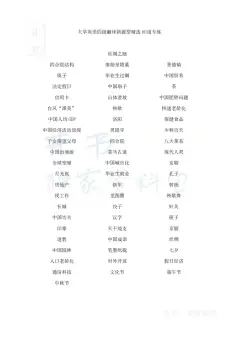
【备考】四六级写作素材:social network 社交网络
翻译
【翻译素材】苏州园林:A Glimpse of the Orient
【CET】四六级翻译预测(一):人民币升值、丝绸之路、竹子、客家
【CET】四六级翻译预测(二):民族、文学、服饰、曲艺
【CET】四六级翻译预测(三):传统体育、风景名胜、传统手工艺、中国戏曲
【备考】【CET】四六级翻译预测(四):方言、脸谱、武汉、黄海、汉服
【CET】四六级翻译预测(五):客家、菜系、数字文化
传统节日
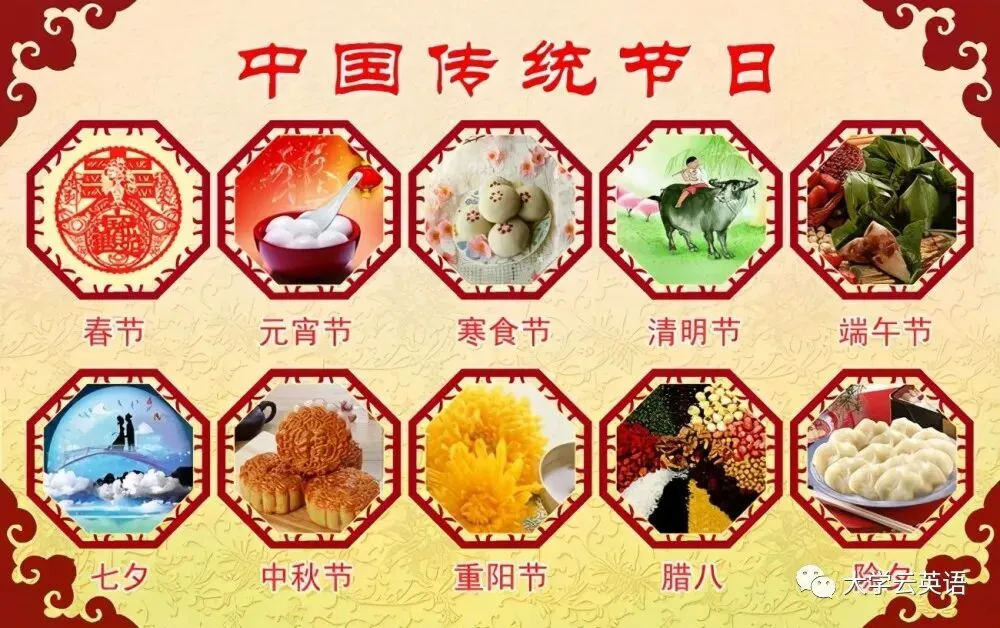
清明节1
清明节是我国传统节日,有着悠久的历史,人们通常会在这一天祭祖和扫墓。清明节是二十四节气(the 24 solar terms)之一,预示着春耕的好时节已经到了。清明节一般在四月五日,正值春天,它又叫踏青节,在这天人们去郊游踏青,还放风筝来放松心情。
Tomb Sweeping Day is a traditional Chinese festival with a long history. People always worship their ancestors and clean the tombs on that day. As one of the 24 solar terms, it means that it's a good time for spring ploughing. Tomb Sweeping Day falls around April the fifth, and it's during the spring, so it is also called “Hiking Day” when people go to the suburbs for an outing and fly kites to release their pressure.
清明节2
清明节是中国人的祭祀节日。在每年的 4 月 5 日左右,人们祭祖和扫墓。按照旧时习俗,扫墓时,人们来到墓地将食物供给在亲人墓前。为坟墓培上新土,折几只嫩绿的新枝插在坟上,然后叩头祭拜。九百多年前的一幅画《清明上河图》,描绘了当时人们在过清明时的繁荣景象和节日风俗。人们骑着马,挑着担从扫墓的地方归来。现在清明节已经成为中国的法定假日。虽然随着时间的推移,祭祀的习俗可能稍稍改变。但中国人依然会在清明这一天,伴随着春天的细雨用自己的方式寄托对故人的哀思。
The Qing Ming festival is a day of reverence for Chinese. People hold ceremonies for ancestors, and sweep their tombs on April 5th every year. According to tradition, duringthe Tomb Sweeping, peopleput food in front of the tombs, add new soil on the tomb. Decorate the tombs with some fresh branches and knock head. A traditional Chinese painting named Riverside Scene on the Qing Ming festival,drawn nine years ago, shows the prosperous atmosphere and activities that day.People returnedfrom Tomb Sweeping with horses and packages in the picture. Now it is a public holiday in China. Although ceremonies have changed a little with time. Chinese still express their grief for the deceased .
端午节1
农历五月初五是中国传统佳节---端午节。自2008年起,被列为国家法定节假日。在这一天,人们会欣赏赛龙舟、吃粽子,以纪念中国著名的爱国诗人屈原。与此同时,中国某些地方的人们还会藏香袋、在门上悬挂艾叶(mugwort)、喝雄黄酒的风俗来庆祝这个节日。
The Dragon Boat Festival is a traditional Chinese festival, falling on the fifth day of the fifth lunar month. Since 2008, it has been listed as a national holiday. On that day people will appreciate the dragon boat racing and eat Zongzi in memory of Qu Yuan, an ancient Chinese patriotic poet. At the same time, people from some regions in China also wear a perfume pouch, hang mugwort leaves on their doors and drink realgar wine to celebrate this festival.
端午节2
城市景点
桂林
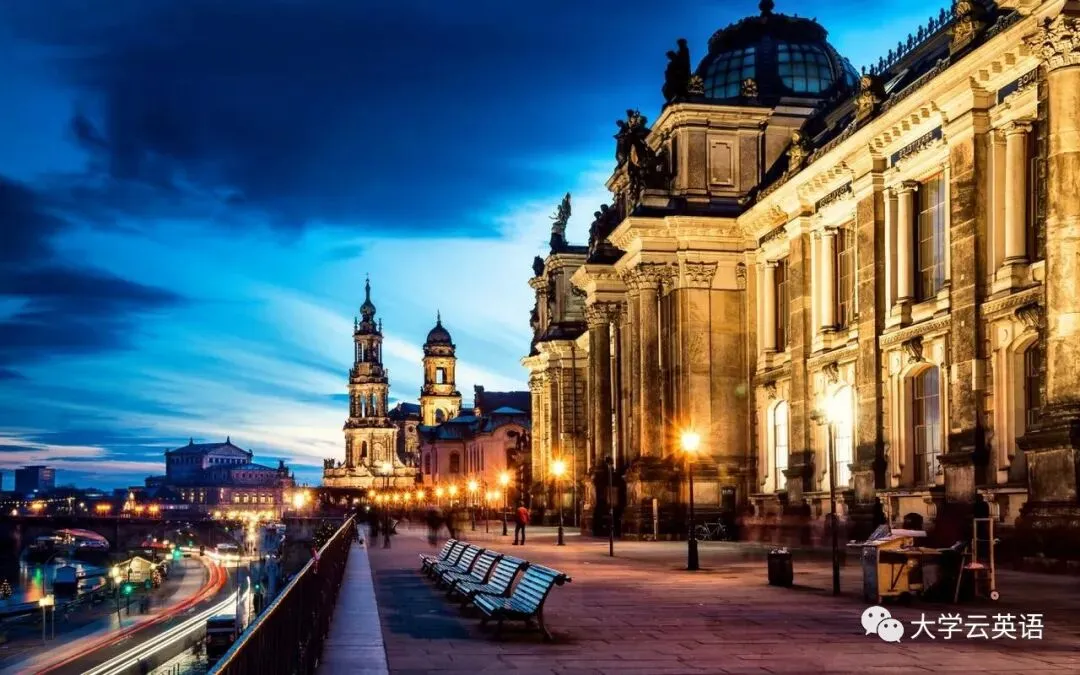
桂林位于广西壮族自治区东北部,是世界著名风景游览城市之一。桂林因其山水而闻名,自古就有:“桂林山水甲天下”的美誉。桂林因象鼻山而出名,此山为桂林的象征。漓江风光更是桂林山水之精华,有山青、水秀、洞奇、石美之誉。1982年11月“桂林漓江风景区”被国务院列为第一批国家重点风景名胜区,要求重点保护。
Located in the northeast of Guangxi Zhuang Autonomous Region, Guilin is one of the world's famous scenic cities. It is known for its landscapes as a popular Chinese saying goes, " Guilin's scenery bests all others in the world". It is famous for the Elephant Trunk Hill, the symbol of Guilin. The scenery of the Lijiang River is the essence of Guilin's landscape with green mountains, crystal-clear water, fascinating caves and beautiful stones. In November 1982, Lijiang River Scenic Zone with key protection was listed as the first batch of national key scenic spots by the State Council.
南京
浦东
客家土楼
客家土楼(Hakka Earth Buildings)是坐落于中国南方福建省西部的独一无二的传统民居建筑,被世人称誉为“东方古城堡”。客家士楼始建于唐代,元末明初蔚成风气,并随着客家人的足迹传播至闽西、赣南、粤东等地区。因其造型多样奇特,富有神秘感,坚实牢固而文明。土楼虽然仅仅是一种建筑形式,但它所蕴含的客家文化却影响了世世代代遍布在全球的客家人。客家人最突出的特点是团结,有福同享,有难同当。这种团结互助的精神和客家上楼居住文化有着必然的联系。
Hakka Earth Buildings are unique traditional residential buildings located ih the western part of Fujian Province in southern China.They are known as the "Ancient castle of the East" . Hakka Earth Buildings were first built in the Tang Dynasty and became popular in the late Yuan Dynasty and early Ming Dynasty. They spread to western Fujian, southern Jiangxi, eastern Guangdong and other regions with the footprints of Hakka people. They become famous for their diverse and peculiar shapes, deep mystery and solid firmness. Although Earth Buildings are only a form of architecture, the Hakka culture contained in them has influenced generations of Hakka people all over the world. The most prominent characteristic of Hakka people is unity, sharing the joys as well as the sorrows. This spirit of unity and mutual assistance has an inevitable connection with the living culture of Hakka Earth Buildings.
苏州园林
苏州园林始于春秋,清末已有各色园林170余处。因此苏州也被誉为"园林之城"。苏州园林是中国古典园林最杰出的代表,大部分为私家所有。现保存完好的园林有60多处,对外开放的有十余处。苏州园林宅园合大,可赏,可游,可居,其建筑规制反映了中国古代江南民间的生活方式和社仪习俗。苏州园林不仅是历史文化的产物,同时也是中国传统思想文化的载体。
Suzhou gardens were first built in the Spring and Autumn Period. By the late Qing Dynasty, Suzhou had built over 170 gardens of diverse styles, thus, Suzhou was well-known as "The City of Gardens". As the most outstanding representative of classical Chinese gardens , most of these gardens were privately owned. Now, over 60 gardens are kept in good condition, and more than 10 are open to the public. Suzhou gardens are assemblies of residences and gardens, which makes them suitable places for living, visiting and appreciating. The architectural principles of the gardens are a demonstration of the lifestyles and social customs of the ancient Chinese people in the south of the Lower Yangtze River. Suzhou gardens are not only a product of Chinese history and culture, but also a carrier of traditional Chinese ideology and culture.
科技文化
围棋
扇子
昆曲
指南针
健康饮食
药膳
豆腐
有没有一种既便宜,又美味而且营养丰富的食物?有!它就是中国的豆腐。2100多年前,一位贵族渴望长生不老,他每天研制各种药方。一天他不小心把石膏碰翻到豆浆中。豆浆凝固成一块白白嫩嫩的东西。它大胆尝了一下,发现非常美味。这就是我们今天的豆腐。豆腐的原材料非常简单主要是黄豆,它含有丰富的蛋白质。豆腐可以搭配鱼,蔬菜等食材烹饪。也可以生吃。最简单的吃法是放点小葱和油,一点点盐,这就是一盘美味的豆腐了。豆腐的味道清淡,入口即化。在中国,每家的餐桌上可都少不了豆腐。
Is there a kind of foodthat is cheap, delicious and nutritious? Yes! It is Chinese dou fu. Some 2100years ago, a noble who longed for immortality developed all kinds ofprescriptions every day. One day, he accidentally dropped plaster into soybeanmilk. The soybean milk curdled into something like pudding. He boldly tested itand found it very delicious. The new dish is what we called dou fu food today.Dou fu is made of soybeans, which are rich in protein. Dou fu can be cookedwith fish, vegetables and other ingredients. We can also eat it rare. Theeasiest way is to put a little bit of chives ,oil and salt with dou fu. Dou futastes light, yummy and really melts into your mouth. In China, dou fu is quitepopular. You can find it on any dining table.
中医
中医是中国传统医疗方法和养生理论。望闻问切是中国特有的诊断方法。观察石头的颜色听患者语气息的强弱,询问生活习惯和病史,用手指按住手腕上的脉搏体察它跳动的频录以诊断病情。注重自然接触是中医治疗的特点。推拿是医生用手直接治病。刮痧和拔罐所用的工具也都在生活中随处可取。中草药是从自然植物中选材经过加工处理,通过多种搭配,来治疗很多病症。中医认为人体是一个整体,做到整体平衡,人体就是健康的。
Traditional Chinese medicine, zhong yi, is a therapy and a theory on how to stay healthy. Diagnosis in zhong yi comes from various forms of observation, including visual, auditory, olfactory, tactile and questioning. The doctor observes a patient’s tongue, voice, inquires about the patient’s habits and medical history and feels the patient’s pulse to make a diagnosis. Therapies in zhong yi, emphasize tactile stimulation. Doctors give massage. Tools for Gua Sha and cupping are easily found in daily life.
Herbal medicines are selected from natural plants and are processed to cure different diseases. Zhong yi prescribes to the belief that the human body has its own functioning system. People are healthy as long as their body system remains balanced.
温馨提示:
不要迷信押题!
押题只是练习手感
多多积累主题词汇
熟悉翻译技巧和句型结构。
▌信息:大学云英语综合整理编辑,转载请注明出处!
▌配图:来自网络,仅用于学习交流与研究。如有侵权,请联系我们删除
▌编辑:大学云英语

往期推荐
●【备考】四六级翻译考前押题100句(附四六级翻译词汇大全)
●【备考】四六级翻译预测4--- 五四运动、青年节、短视频、博览会