ARTICLE · 1325124
初中英语【满分作文】范文及详解3
点击蓝字,关注我们



现在各行各业都在为建设美丽中国,实现中国梦而奋斗。请根据下列图示,谈谈以下几种职业怎样做贡献的。作为学生,你又该怎么办?
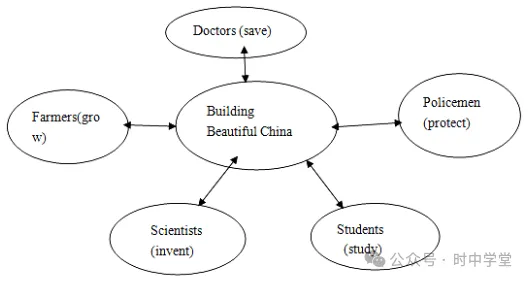
Students(study)
Building Beautiful China
Building Beautiful China
要求:
1、短文需包含提示要点,并适当发挥;
2、文中不得出现真实姓名和校名;
3、语句通顺,结构合理,书写规范;
4、词数:80词左右。短文开头部分已给出,不计入总词数。
Now all the Chinese people are making their efforts to build beautiful China and achieve the Chinese Dream. __________________________________________________________________________________________________________________________________________________________________________________________________________________________________________________________________________


2026/10
参考范文
study time
Now all the Chinese people are making their efforts to build beautiful China and achieve the Chinese Dream.
In the fields, a large number of farmers work hard every day to improve our living levels. In order to produce enough vegetables and fruit, they are busy growing plants.
Meanwhile, in hospitals, doctors and nurses always try their best to save patients day and night. Besides, they also take good care of the old. In our daily life, we can see many policemen in the streets on duty to protect people. As for scientists, they concentrate more on scientific studies to invent something useful and raise our living standards. As students, what should we do to build our country? I think we should study hard to get rich knowledge so as to make contributions to our country.

01

知识点

1.make efforts to do sth 努力做某事;尽力做某事;为做某事付出努力
结构:make efforts to + 动词原形= make an effort to do sth(更常见单数)= try hard to do sth
例句:
We should make efforts to improve our English.我们应该努力提升英语。
She made an effort to arrive on time.她努力准时到达。
They made every effort to save him.他们尽一切努力救他。
He made efforts to change his habits.他努力改变自己的习惯。
易错点(重点):
✅ make an effort to do sth(最常用)
✅ make efforts to do sth(复数,强调多次/持续努力)
✅ make every effort to do sth(尽一切努力)
❌ make effort to do sth(缺冠词或复数,标准英语里不自然)
❌ 不说 make efforts doing sth,一般用 to do
和 try to do 的区别:make efforts to do 更强调“付出努力、尽力”;try to do 更普通,表示“尝试做”。
核心词:effort
音标:英 /ˈefət/;美 /ˈefərt/
翻译:努力;尽力;费力的事
词根词缀:源自古法语 effort,来自 esforcier(用力),与拉丁语 fortis(强壮的)有关;可理解为“使出力量” → 努力。现代英语里不宜硬拆成 ef- + fort + -t 来记。
衍生:
effortless adj. 不费力的;轻松的
effortlessly adv. 毫不费力地
effortful adj. 费力的;需要努力的
effortfulness n. 费力
常见搭配:
make an effort 努力一下
make every effort 尽一切努力
spare no effort 不遗余力
put effort into sth 在……上投入努力
with/without effort 费力地/毫不费力地
2.achieve 英 /əˈtʃiːv/;美 /əˈtʃiːv/
中文翻译:
实现;达到(目标、目的)
取得;获得(成功、成绩、地位等)
完成;做成
词根词缀:
源自古法语 achever,原义与“做到头、完成”有关,进一步可追溯到 a chief / to a head(到头、达到顶点)这类历史形式。
可帮助记忆为:a-(to,朝向)+ chief/head(头、顶点)→ “做到头、达到顶点” → 实现、达到、完成。
⚠️ 现代英语里不宜硬拆成常见前后缀来机械记忆,核心记 achieve = 达到/实现。
单词衍生/同源词:
achievement n. 成就;成绩;实现
achievable adj. 可实现的;可达到的
achiever n. 成功者;有成就的人
underachieve v. 表现不佳;未发挥潜力
underachiever n. 表现不佳者;未发挥潜力的人
overachieve v. 超额完成;表现超出预期
overachiever n. 过度追求成功者;表现超常者
常见搭配:
achieve a goal 实现目标
achieve success 取得成功
achieve one’s dream 实现梦想
achieve a high score 取得高分
achieve independence 获得独立
易错点:
achieve 多接“目标、成功、成绩、结果”等,不常说 achieve sb。
“达到某水平”可用 reach a level;“实现目标”用 achieve a goal 很自然。
3.field 英 /fiːld/;美 /fiːld/
中文翻译:
田地;田野;牧场
领域;范围;界(如 the field of science 科学领域)
运动场;球场;田赛场地
(电、磁等的)场(electric field 电场;magnetic field 磁场)
战场;战地
实地;现场(field research 实地研究)
(计算机)字段;信息项
v. 接球;防守;使上场;应付(问题)
词根词缀:
源自古英语 feld,意为“开阔地、平地、田地”,属日耳曼语源,与德语 Feld 同源。
现代英语里不宜硬拆成前缀+词根+后缀;核心记 field = 开阔地/田地 → 领域、场地、场。
单词衍生/相关词:
fielder n. 守场员;(板球/棒球)外野手
fielding n. 防守;接球;field 的动名词
fielded adj./v. 已上场的;field 的过去式/过去分词
fieldwork n. 实地考察;野外工作
fieldworker n. 实地工作者;野外研究人员
battlefield n. 战场
minefield n. 雷区;危险地带
airfield n. 飞机场;小型机场
playing field n. 运动场;比赛场地
field trip n. 实地考察;郊游学习
field day n. 户外活动日;大获成功的机会
field test n./v. 实地测试
field guide n. 野外指南;图鉴
field goal n. 射门得分;(美式足球)任意球得分
field marshal n. 陆军元帅
field hospital n. 野战医院
field of vision n. 视野
field of study n. 研究领域
常见搭配:
in the field of… 在……领域
a football field 足球场
magnetic field 磁场
field research 实地研究
working in the field 在现场/实地工作
4.improve
中文翻译:
改善;改进;提高
好转;变得更好
改进(某事物)
词根词缀:
来自中古英语 improwen,源自古法语/盎格鲁-法语 emprouwer,意为“使有利可图、使变得更好”
可历史地理解为 im-/en-(使……)+ prou(利益、好处)→ “使变得有利/更好” → 改善、改进
⚠️ 注意:不要拆成 im-(不)+ prove(证明),那不是它的真实构词。
单词衍生:
improvement n. 改善;改进;提高
improved adj. 改进的;改善了的
improving adj. 有启发的;改善中的
improver n. 改进者;改良物
improve on/upon sth:对……作出改进;超过
improve in sth:在某方面有进步/好转
常见搭配:
improve English 提高英语
improve the environment 改善环境
improve efficiency 提高效率
improve on/upon 改进;胜过
His health is improving. 他的健康在好转。
5.level 英 /ˈlevl/;美 /ˈlevl/
中文翻译:
n. 水平;水准;级别;层次
n. 高度;层;楼层
n. 平地;水平面
adj. 平的;水平的;同等的;平稳的
v. 使平坦;夷平;瞄准;使平等
词根词缀:
源自古法语 livel / liveau,进一步与拉丁语 libella(小天平、水平仪)有关,而 libella 是 libra(天平、秤)的指小形式。
核心意象是“天平/水平仪”→ 平的、水平、水准、级别。
⚠️ 现代英语里不宜硬拆成常见前缀+词根+后缀,直接记 level = 平/水平 → 水平、级别。
单词衍生/相关词:
levelness n. 平坦;水平状态
leveler(美)/ leveller(英)n. 使平等的人/物;平地机
leveled / levelled:level 的过去式/过去分词(美式常单写 l,英式常双写 l)
leveling / levelling:level 的现在分词/动名词
level-headed adj. 头脑冷静的;明智的
level crossing n.(英)平交道口
sea level n. 海平面
ground level n. 地面高度;底层
high-level / low-level adj. 高层的/低层的;高水平的/低水平的
multi-level adj. 多层次的
level off / level out:趋于平稳;变平
level with sb:对某人说实话;坦白告诉某人
常见搭配:
at a high level 在高水平上
level of English 英语水平
sea level 海平面
level playing field 公平竞争环境
on the same level 在同一水平/层次
level off 趋于平稳
6.In order to为了……;以便……;目的是……
结构(重点):in order to + 动词原形= so as to + 动词原形(更口语一点)= to + 动词原形(最简洁)
例句:
I get up early in order to catch the bus.我早起是为了赶公交车。
She studies hard in order to pass the exam.她努力学习以便通过考试。
In order to improve your English, you should practice every day.为了提高英语,你应该每天练习。
易错点:
✅ in order to do sth
❌ 不说 in order to doing sth
❌ 不说 in order to sb(后面要接动词原形,不直接接人)
否定形式:in order not to do sth = 为了不做某事例:He left early in order not to be late. 他早走是为了不迟到。
和 in order that 的区别:
in order to + 动词原形:为了做……
in order that + 从句:为了……(较正式)例:He got up early in order that he could catch the bus.他早起是为了能赶上公交车。
核心词:order英 /ˈɔːdə(r)/;美 /ˈɔːrdər/
中文翻译:
n. 顺序;次序
n. 命令;指令
n. 秩序;条理;规矩
n. 订单;订购;所订货物
n. (生物)目;(社会)等级、阶层
v. 命令;吩咐
v. 订购;点(餐)
v. 整理;安排
词根词缀:
源自古法语 ordre,来自拉丁语 ordo / ordinis,意思是“顺序、行列、安排、秩序”。
核心意象:排列成行、有次序 → 顺序、秩序、命令、安排。
现代英语里不宜硬拆成常见前缀+词根+后缀,直接记 order = 次序/安排。
单词衍生/相关词:
ordered adj. 有序的;安排好的
orderly adj. 有秩序的;整齐的;n. 勤务兵;护理员
orderliness n. 整齐;有条理
ordering n. 排序;订购;安排
disorder n. 混乱;失调;疾病
disordered adj. 混乱的;失调的
disorderly adj. 混乱的;扰乱秩序的
reorder v. 重新订购;重新排序
preorder v./n. 预订;预购
mail order n. 邮购
order book n. 订单簿
order form n. 订购单
in order 整齐;秩序井然;按顺序
out of order 出故障;秩序混乱
in order to 为了(固定短语)
in order that 为了……(后接从句)
order sb to do sth 命令某人做某事
place an order 下订单
take an order 点餐;接订单
常见例句:
Please put the books in order.请把书按顺序放好。
The machine is out of order.这台机器坏了。
He ordered us to leave.他命令我们离开。
I’d like to order a coffee.我想点一杯咖啡。
7.produce 这个词要特别注意:动词和名词发音不同。
音标:
动词:英 /prəˈdjuːs/;美 /prəˈduːs/
名词:英 /ˈprɒdjuːs/;美 /ˈproʊduːs/
中文翻译:
v. 生产;制造
v. 产生;导致;引起
v. 出示;拿出(证据等)
v. 制作(电影、节目等)
n. 农产品(不可数,总称,如 fresh produce 新鲜农产品)
词根词缀:
pro-:向前;出
duc / duct:引导;带领(来自拉丁语 ducere)
源自拉丁语 producere:pro-(向前)+ ducere(引导)→ “引出来、带出来” → 生产、产生、出示
记忆:produce = 把东西“向前引出来” → 生产出来、产生出来。
单词衍生:
product n. 产品;结果
production n. 生产;产量;制作
producer n. 生产者;制片人
productive adj. 多产的;富有成效的
productively adv. 富有成效地
productivity n. 生产力;生产率
reproduce v. 繁殖;复制;再现
reproduction n. 繁殖;复制;再现
reproductive adj. 生殖的;复制的
by-product n. 副产品
mass-produce v. 批量生产
producible adj. 可生产的;可产生的
常见搭配:
produce goods 生产商品
produce results 产生结果
produce evidence 出示证据
produce electricity 发电
fresh produce 新鲜农产品
mass production 批量生产
易混辨析:
produce:动词“生产/产生”;名词“农产品”
product:名词“产品、产物”
production:名词“生产、产量、制作”
producer:名词“生产者、制片人”
8.be busy doing sth 忙于做某事;正忙着做某事
结构(重点):be busy doing sth= be busy with sth(忙于某事)注意:后面接 doing,不接 to do。
例句:
She is busy preparing for the exam.她正忙着准备考试。
I was busy doing my homework.我当时正忙着做作业。
He is busy with his work.他忙于工作。
易错点:
✅ be busy doing sth
✅ be busy with sth
❌ be busy to do sth(一般不说)
主语是人:I’m busy doing…;一般不说 The work is busy doing…
核心单词:busy英 /ˈbɪzi/;美 /ˈbɪzi/
中文翻译:忙碌的;忙于……的;(电话)占线的;繁忙的
词根词缀:源自古英语 bisig(忙碌的、勤勉的),属日耳曼语源;现代英语里不宜硬拆成常见前后缀,核心记 busy = 忙。
单词衍生/相关词:
busily adv. 忙碌地
busyness n. 忙碌(注意不是 business)
business n. 生意;商业;事务(同源相关,但拼写和意思要区分)
busybody n. 爱管闲事的人
busywork n. 打发时间的工作;无意义的事务
busy signal n.(美)忙音
9.plant 英 /plɑːnt/;美 /plænt/
中文翻译:
n. 植物;花草
n. 工厂;发电厂;车间
n. 设备;机械装置(较少,偏工业语境)
v. 种植;栽种
v. 安放;放置;布置
v. 栽赃;安插(证据、人员等)
词根词缀:
源自拉丁语 planta,本义与“脚掌、嫩枝、插条”有关,后引申为“种植、栽种”。
可帮助记忆:plant 本身可看作核心词根/词干,核心意象是“插下去、种下去” → 植物、种植;再引申出“工厂、设备”等名词义。
⚠️ 现代英语里不宜把 plant 硬拆成“前缀 + 词根 + 后缀”;它本身就是一个核心词。
单词衍生/相关词:
planting n. 种植;栽种
planter n. 种植者;花盆;播种机
plantation n. 种植园;大农场
plant-based adj. 植物基的;以植物为原料的
implant v./n. 植入;移植;植入物
implantation n. 植入;移植
transplant v./n. 移植;移植手术
transplantation n. 移植
replant v. 重新种植;补种
replanting n. 重新种植
power plant n. 发电厂
manufacturing plant n. 制造厂
plant pot n. 花盆
plant life n. 植物生命;植被
plant species n. 植物物种
常见搭配:
plant trees 种树
plant flowers 种花
a power plant 发电厂
a manufacturing plant 制造厂
plant evidence 栽赃证据
plant-based diet 植物性饮食
易混辨析:
plant:植物;工厂;种植
factory:工厂(更通用,指生产制造场所)
plantation:种植园(大面积种植经济作物)
implant / transplant:植入 / 移植,都是 plant 的衍生相关词
10.meanwhile 英 /ˈmiːnwaɪl/;美 /ˈmiːnwaɪl/
中文翻译:
adv. 与此同时;在此期间;同时
n. 其间;与此同时的这段时间(常见于 in the meanwhile)
词根词缀:
mean:这里不是“意味着/吝啬/卑鄙”,而是古义“中间的、期间的、 intervening”
while:一段时间;一会儿
合起来原义与“在中间那段时间里”有关 → 与此同时;在此期间
可记成:mean(中间的)+ while(一段时间)→ 在中间这段时间 → 与此同时
单词衍生/相关词:
meantime n./adv. 其间;同时
in the meantime 与此同时;在此期间
in the meanwhile 与此同时(较正式/较少)
while n. 一会儿;conj. 当……时;然而
meanwhile 本身常作副词,衍生词不多,主要记 meantime / in the meantime
常见用法:
I was cooking. Meanwhile, she was cleaning.我在做饭。与此同时,她在打扫。
Meanwhile, the situation was getting worse.与此同时,情况正在恶化。
You can stay here in the meanwhile.在此期间你可以待在这里。
注意:
meanwhile 常放句首,后面加逗号:Meanwhile, …
表示“与此同时”最常用 meanwhile 或 in the meantime。
不要把它拆成“mean(意味着)+ while”来理解,这里的 mean 是古义“中间的/期间的”。
11.try one’s best to do sth 尽某人最大努力做某事;尽力做某事
结构(重点):try one’s best to + 动词原形= do one’s best to do sth= try as hard as one can to do sth
one’s 随主语变:
I try my best to help. 我尽力帮忙。
You should try your best to improve. 你应该尽力提高。
She tried her best to pass the exam. 她尽力通过考试。
They tried their best to finish the work. 他们尽力完成工作。
易错点:
✅ try one’s best to do sth
❌ 不说 try one’s best doing sth
❌ 不说 try best to do sth(one’s 不能随便省,除非有物主代词)
best 前要用物主代词:my/your/his/her/our/their best
和 try to do / try doing 的区别:
try one’s best to do sth:尽最大努力做某事(强调尽力)
try to do sth:尝试/努力做某事(普通)
try doing sth:试着做某事(看看效果如何)例:Try doing it this way. 试着这样做做看。
拆词看:try英 /traɪ/;美 /traɪ/
中文翻译:尝试;努力;试用;审判
词根词缀:源自古法语 trier(挑选、筛选、检验),与“试验、尝试”义相关;现代英语不宜硬拆前后缀。
单词衍生/相关词:
trial n. 试验;审判;考验
trying adj. 难对付的;令人烦恼的
tried adj. 经过考验的;可靠的
tryout n. 选拔;试演
try out 试用;试验
12.patient 英 /ˈpeɪʃnt/ 美 /ˈpeɪʃnt/
中文翻译:
adj. 有耐心的;能忍耐的
n. 病人;患者
词根词缀:
来自拉丁语 pati(忍受、受苦、承受)+ -ent(形容词/名词后缀)
核心义:能忍受的 → 有耐心的;承受病痛的人 → 病人
同源词根可联系 pass-(如 passion、passive),都与“承受、受苦”有关。
记忆:patient = 能忍的人 → 有耐心的人 / 忍受病痛的人。
单词衍生:
patience n. 耐心;忍耐
patiently adv. 耐心地
impatient adj. 不耐烦的;急躁的
impatiently adv. 不耐烦地
impatience n. 不耐烦;急躁
patienthood n. 病人身份;患病状态(较少用)
inpatient n. 住院病人
outpatient n. 门诊病人
patient-centered adj. 以病人为中心的
常见搭配:
be patient with sb/sth:对某人/某事有耐心例:You should be patient with children. 你对孩子要有耐心。
a patient:一个病人
patients:病人们
lose patience:失去耐心
have patience with:对……有耐心
易混辨析:
patient(adj.)有耐心的;(n.)病人
patience(n.)耐心
impatient(adj.)不耐烦的
inpatient / outpatient:住院病人 / 门诊病人
13.besides 英 /bɪˈsaɪdz/;美 /bɪˈsaɪdz/
中文翻译:
prep. 除……之外(还);除了……还有(包括前面提到的)
adv. 而且;此外;再说
词根词缀:
来自中古英语 besides,是 beside 的副词性形式
可历史地拆为:be-(在旁)+ side(旁边)+ -s(副词性/属格后缀)
本义与“在旁边、在旁边之外”有关 → 引申为“除此之外、而且”
⚠️ 不要把 besides 理解成 beside 的普通复数;它是独立副词/介词。
单词衍生/相关词:
beside prep. 在……旁边;与……相比
beside oneself 发狂;情绪失控
beside the point 离题;无关紧要
besides 本身派生词很少,主要记 beside / besides 的区别
常见用法:
Besides English, she speaks French.除了英语,她还会说法语。(包括英语)
I don’t want to go; besides, it’s raining.我不想去;而且,还在下雨。
Besides, what can we do?再说,我们能怎么办呢?
易混重点:
besides = 除……之外还有(包括)
except = 除……之外没有(排除)例:Besides Tom, we all went. 除了汤姆,我们也都去了。(汤姆也去了)例:Except Tom, we all went. 除了汤姆,我们都去了。(汤姆没去)
14.take care of
中文翻译:
照顾;照料(人、动物)
处理;应付;负责(事情)
保管;看管(物品)
解决;支付(费用等)(看语境)
结构:take care of + sb/sth
take care of sb:照顾某人
take care of sth:处理/负责/保管某物
代词作宾语放后面:take care of it(✅),不说 take care it of(❌)
例句:
She takes care of her grandparents.她照顾她的祖父母。
I’ll take care of the problem.我会处理这个问题。
Please take care of my bag.请照看我的包。
Don’t worry; I’ll take care of it.别担心,我会处理/搞定的。
近义表达:
look after sb/sth:照顾(更偏照料人/物)
deal with sth:处理(事情/问题)
handle sth:处理;应付
易错点:
✅ take care of sb/sth
✅ take good care of sb/sth:好好照顾……
❌ 不说 take care sb(少了 of)
take care 单独用 = 保重(告别语),和 take care of 不同。
15.on duty 值班;上班;在岗;执勤
结构:
be on duty = 在值班 / 在上班反义:be off duty = 下班;不值班
例句:
The nurse is on duty tonight.这位护士今晚值班。
Who is on duty today?今天谁值班?
I can’t leave; I’m on duty.我不能走,我在值班。
易错点:
✅ be on duty
❌ 不说 be in duty
on duty 强调“处于值班/上班状态”;at work 更泛指“在工作/在上班”。
核心词:duty英 /ˈdjuːti/;美 /ˈduːti/
中文翻译:责任;义务;职责;值班;税(较少)
词根词缀:
源自古法语 deu / du(应尽的、欠下的),来自拉丁语 debere(欠、应当)
与 debt(债务)同源
可记成:duty = 应该“欠着”要做的事 → 责任、义务、职责
-ty 可看作名词后缀,但现代英语里直接记 duty 更稳。
单词衍生/相关词:
dutiful adj. 尽职的;顺从的
dutifully adv. 尽职地;恭顺地
duty-bound adj. 有义务的;责无旁贷的
duty-free adj./adv. 免税的(地)
heavy-duty adj. 重型的;耐用的
off-duty adj. 下班后的;不当班的
on-duty adj. 值班的;在岗的
jury duty n. 陪审义务
customs duty n. 关税
16.protect 英 /prəˈtekt/;美 /prəˈtekt/
中文翻译:
保护;防护;保卫
保护……免受伤害/损失
(法律、保险等)保障
词根词缀:
pro-:向前;在前面
tect:来自拉丁语 tegere(覆盖、遮盖),相关形式 tect- 表示“覆盖”
源自拉丁语 protegere:pro-(在前面)+ tegere(遮盖)→ “在前面遮盖住” → 保护、防护
记忆:protect = 在前面遮住 → 保护
单词衍生:
protection n. 保护;防护;保护措施
protective adj. 保护的;防护的;有保护欲的
protectively adv. 保护地;防护地
protectiveness n. 保护性;呵护
protector n. 保护者;防护装置
protectorate n. 保护国;保护领地
protected adj. 受保护的
unprotected adj. 未受保护的;无防护的
overprotect v. 过度保护
overprotection n. 过度保护
self-protection n. 自我保护
environmental protection n. 环境保护(短语)
常见搭配:
protect sb/sth from sth:保护某人/某物免受……例:We should protect children from danger.我们应该保护孩子免受危险。
protect sb/sth against sth:保护……抵御……例:This medicine protects against infection.这种药可以预防感染。
protect the environment:保护环境
be protected by law:受法律保护
易混辨析:
protect:保护、防护,强调使免受伤害
defend:保卫、防御,强调抵御攻击
guard:守卫、看守,强调警戒
17.as for 至于……;关于……;就……而言
结构:as for + 名词 / 代词 / 动名词常放句首,用来引出话题。
例句:
As for me, I prefer tea.至于我,我更喜欢茶。
As for the price, it’s too high.至于价格,太高了。
As for going there, I haven’t decided yet.至于去不去那儿,我还没决定。
易混:
as for:多放句首,口语常用,引出话题,“至于……”
as to:更正式,可放句首或句中,常表示“关于、至于”,后面可接名词或 wh- 从句例:As to whether we should go, I have no idea.至于我们该不该去,我不知道。
18.concentrate 英 /ˈkɒnsntreɪt/;美 /ˈkɑːnsntreɪt/
中文翻译:
v. 集中(注意力);专心
v. 使集中;聚集
v. 浓缩;提纯
n. 浓缩物;精矿(较少,专业语境)
词根词缀:
con-:共同;一起
centr-:中心(来自拉丁语 centrum)
-ate:动词后缀
源自拉丁语 concentrare:con-(一起)+ centrum(中心)→ “聚到中心” → 集中、专心、浓缩
记忆:concentrate = 把注意力“聚到一个中心” → 集中/专心。
单词衍生:
concentration n. 集中;专心;浓度
concentrated adj. 集中的;浓缩的
concentrating adj. 集中注意力的;concentrate 的现在分词
concentrator n. 集中器;浓缩器
deconcentrate v. 分散;使不集中(较少)
reconcentrate v. 重新集中(较少)
concentration camp n. 集中营(固定短语,注意语境)
常见搭配:
concentrate on sth:专注于某事;集中精力于某事例:I need to concentrate on my study.我需要专心学习。
concentrate one’s attention on:把注意力集中在……
concentrated juice:浓缩果汁
易混提醒:
concentrate on 最常用,别漏 on。
concentration 既可指“专心”,也可指“浓度”。
18.invent 英 /ɪnˈvent/;美 /ɪnˈvent/
中文翻译:
发明;创造(以前不存在的东西)
编造;捏造(故事、借口等)
词根词缀:
in-:进入;在……中
vent:来(来自拉丁语 venire,意为“来”)
源自拉丁语 invenire:in-(进入)+ venire(来)→ “来到其中、遇到、发现” → 引申为“发明、创造”
同源词可联系:event(发生的事)、prevent(阻止)、intervene(干预)、advent(到来)
记忆:invent = 进入某事物中把它“找出来/造出来” → 发明。
单词衍生:
invention n. 发明;发明物;编造
inventive adj. 有发明才能的;有创意的
inventively adv. 有创意地
inventiveness n. 创造力;发明才能
inventor n. 发明家;发明者
reinvent v. 彻底改造;重新发明
reinvention n. 彻底改造;重新发明
uninvented adj. 未发明的(较少用)
inventory n. 库存;清单(同源相关词,来自“发现/列出”义,但现代意思不同)
常见搭配:
invent a machine 发明一台机器
invent a new method 发明一种新方法
invent an excuse 编造借口
Who invented the telephone? 谁发明了电话?
易混辨析:
invent:发明(创造出以前不存在的东西)
discover:发现(原本存在但未被找到/知道的东西)
create:创造(更广,可用于艺术作品、制度等)
18.raise 英 /reɪz/;美 /reɪz/
中文翻译:
v. 举起;抬起;升起
v. 提高;增加(价格、水平、声音等)
v. 筹集(资金);招募(人员)
v. 抚养;养育(孩子);饲养(动物)
v. 提出(问题、议题等)
v. 引起;唤起(注意、意识、疑问等)
n. (美)加薪(英式常用 pay rise)
词根词缀:
源自古诺尔斯语 reisa(使升起、举起),属日耳曼语源。
与 rise(上升)同源,但 raise 是及物动词,强调“使某物升起/提高”;rise 是不及物动词,强调“自己上升”。
现代英语里不宜硬拆成前缀+词根+后缀,核心记 raise = 使升起/提高。
单词衍生/相关词:
raised adj. 凸起的;提高的;raise 的过去式/过去分词
raising n./adj. 提高;抚养;raise 的现在分词
raiser n. 举起者;筹集者;饲养者
fundraiser n. 筹款活动;筹款人
fundraising n./adj. 筹款(的)
fundraise v. 筹款
awareness-raising n./adj. 提高意识(的)
hair-raising adj. 令人毛骨悚然的
pay raise n. 加薪(美式)
raise money 筹款
raise awareness 提高意识
raise a question 提出问题
raise children 抚养孩子
raise animals 饲养动物
raise prices 提高价格
raise one’s hand 举手
raise one’s voice 提高嗓门
易混辨析:
raise:及物动词,后面要接宾语例:raise your hand 举起你的手;raise prices 提高价格
rise:不及物动词,后面不直接接宾语例:The sun rises. 太阳升起。Prices rise. 价格上涨。
arise:不及物,多表示“发生、出现”例:Problems may arise. 问题可能出现。
18.standard 英 /ˈstændəd/;美 /ˈstændərd/
中文翻译:
n. 标准;水准;规范;准则
n. 水平;程度
n. 旗帜;军旗(较旧/正式义)
adj. 标准的;常规的;普通的;规范的
词根词缀:
源自古法语 estandart / estandard,原义与“旗帜、军旗、集合标志”有关,后引申为“标准、规范、准则”。
词源上常与日耳曼语“站立、立起”的意象有关,但现代英语不宜硬拆成 stand + -ard 来机械记忆。
记忆:standard 原义“立起来的旗帜/标志” → 大家共同参照的标志 → 标准、规范。
单词衍生/相关词:
standards n. 标准(复数)
standardize(英)/ standardise v. 使标准化;使统一
standardization(英)/ standardisation n. 标准化
standardized(英)/ standardised adj. 标准化的
standardly adv. 按标准地(较少用)
nonstandard adj. 非标准的
substandard adj. 低于标准的;不合格的
standard-bearer n. 旗手;领导者;倡导者
standard issue n./adj. 标准配发(的);常规配置(的)
standard of living n. 生活水平
standard deviation n. 标准差(统计)
standard time n. 标准时间
standard English n. 标准英语
gold standard n. 金本位;黄金标准
double standard n. 双重标准
常见搭配:
meet the standard 达到标准
raise standards 提高标准
by modern standards 按现代标准
standard of living 生活水平
standard English 标准英语
a standard model 标准型号/常规型号
易混提醒:
standard 作名词是“标准、水准”;作形容词是“标准的、常规的”。
criterion 也指“标准、准则”,但更偏“评判标准”,复数 criteria。
level 也可指“水平”,但 standard 更强调“应达到的规范/水准”。
18.so as to 为了……;以便……;目的是……
结构(重点):so as to + 动词原形= in order to + 动词原形否定形式:so as not to + 动词原形 = 为了不做某事
例句:
I got up early so as to catch the first bus.我早起是为了赶首班公交车。
She spoke slowly so as to make herself understood.她慢慢说,以便让别人听懂。
He left quietly so as not to wake the baby.他悄悄离开,以免吵醒宝宝。
易错点(重点):
✅ so as to do sth
❌ 不说 so as to doing sth
❌ 一般不说 so as to sb(后面要接动词原形)
⚠️ so as to 通常不放句首;放句首常用 in order to。例:✅ In order to catch the bus, I got up early.❌ 一般不说 So as to catch the bus, I got up early.
和 in order to 的区别:
so as to:更口语/自然,通常放句中,不放句首。
in order to:更正式,可放句首或句中。
两者后面都接动词原形,否定都用 not to do。
19.make contributions to 对……作出贡献;为……做贡献;向……捐款/投稿(看语境)
结构(重点):make contributions to + 名词 / 代词 / 动名词= make a contribution to + 名词 / 代词 / 动名词
单数常用 make a contribution to
复数/多次贡献用 make contributions to
这里 to 是介词,后面接名词或 doing,不是动词原形。
例句:
We should make contributions to society.我们应该为社会作贡献。
She made a great contribution to the project.她对这个项目作出了很大贡献。
He made contributions to improving education.他为改善教育作出了贡献。
Everyone can make a contribution to protecting the environment.每个人都能为保护环境作贡献。
易错点(重点):
✅make a contribution to sth / doing sth
✅make contributions to sth / doing sth
❌ 不说 make contribution to do sth
❌ 不说 make a contribution for sth(一般用 to)
contribution 是可数名词,别光写 make contribution,标准形式要加 a 或用复数 contributions。
核心词:contribution英 /ˌkɒntrɪˈbjuːʃn/;美 /ˌkɑːntrɪˈbjuːʃn/
翻译:贡献;捐款;投稿;促成作用
词根词缀:
con-:共同;一起
tribut-:给予;分配;贡奉(来自拉丁语 tribuere)
-ion:名词后缀
整体源自拉丁语 contribuere:con-(一起)+ tribuere(给予)→ “一起给出、共同贡献” → 贡献、捐款、投稿
衍生:
contribute v. 贡献;捐助;投稿;促成
contributor n. 贡献者;捐助者;投稿人
contributory adj. 促成的;有贡献的
contributive adj. 有贡献的;促成的
contributing adj. 起促成作用的
02

全文翻译

如今,全体中国人民都在为建设美丽中国、实现中国梦而努力。在田野里,许多农民每天辛勤劳作,以提高我们的生活水平。为了生产足够的蔬菜和水果,他们忙着种植作物。与此同时,在医院里,医生和护士总是日夜尽全力抢救病人。此外,他们还悉心照顾老人。在我们的日常生活中,我们可以看到许多警察在街上值班,保护人民。至于科学家,他们更专注于科学研究,以发明有用的东西,提高我们的生活水平。作为学生,我们应该怎么做来建设我们的国家呢?我认为我们应该努力学习,获得丰富的知识,从而为国家作出贡献。



更多分享 关注我们


✦
END
✦
-﹣声明﹣-
本篇分享的所有资源、资料和教程均源自互联网公开内容,仅供个人学习交流使用,非商业用途。版权归属于原作者,严禁用于商业活动或倒卖行为。如需获得更佳体验,请支持正版。若发现任何侵权内容,联系我们马上删除处理
你“在看”我吗?