ARTICLE · 1343110
苏州市高三期中考试英语试题七选五试题分析
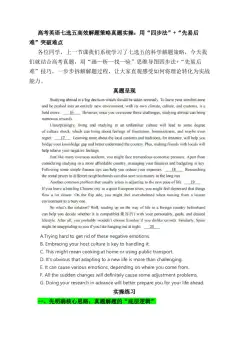
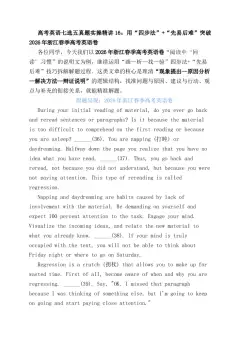
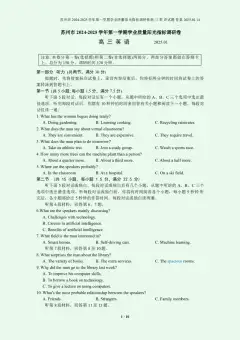
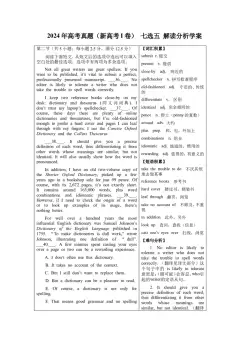
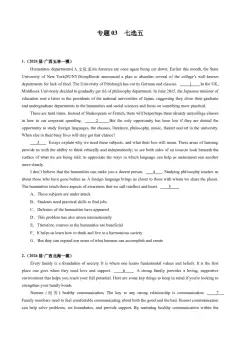
苏州市高三期中考试英语试题七选五试题分析一、原文提取 Today, being bored is as rare as hen's teeth, as the British might say. Boredom, or quiet time, isn't valuable because it's pleasant. 36 Boredom is valuable because it creates the mental space from which creativity, insight, connection, and even purpose emerge. Doing nothing, often equated to being bored, is not wasted time. Rather, these quiet moments may be among the most productive of our day. Perhaps that's why childhood, before this era of constant connection and electronic noise, offered something many adults today rarely experience: long stretches of unstructured time. Like many children of the boomer generation, my summer days stretched endlessly before me. We rode bikes, invented games, and played with whatever neighborhood child wandered into our yard. And when alone, I would read, wonder, and write. 37 Today's children often experience something different. 38 They have little time to be bored and little opportunity for the unstructured time that invites exploration and imagination. Are we doing ourselves or our children any favors by hyper-structuring every hour of the day? Or is boredom always something we should avoid? 39 Researchers increasingly distinguish between chronic (慢性的) boredom, which can harm our well-being, and the temporary boredom that leads to imagination, curiosity, and creativity. Chronic boredom has been linked to depression, poor attention, loneliness, and risk-taking behaviors. Temporary boredom is quite different. 40 It creates space for unexpected connections, creative problem-solving, and the "eureka (灵光一现)" of ideas that can only occur when our minds are free to wander. Some psychologists even suggest that this state can promote personal growth. Perhaps the next time boredom comes calling, invite it in. A. It is where the magic happens. B. They, however, enjoy more freedom than ever before. C. Of course not, because filling every hour leaves no time to rest. D. The answer depends on the kind of boredom we're talking about. E. There was always enough space to inspire curiosity and to daydream. F. Days filled with organized activities and, in the spaces between them, screens. G. In fact, many of us become anxious when bored and reach for the next distraction. ✅ 答案:36.G 37.E 38.F 39.D 40.A 简要解析 36.G:前文说无聊本身并不因为舒服而有价值,G“事实上,我们很多人无聊时就焦虑,立刻去找别的东西分心”承接,引出后文:无聊真正的价值是提供思维空间。 37.E:本段回忆作者小时候有大量自由无安排的时间,E句“总有足够空间激发好奇心、让人放空遐想”承接童年自由时光。 38.F:前一句“现在的孩子不一样”,F“日子被安排好的活动填满,间隙里全是电子屏幕”,和后文“几乎没有时间无聊”呼应。 39.D:上文抛出问题:无聊是不是我们要一直避开的东西?D“答案取决于我们谈论的是哪一种无聊”,引出下文区分慢性无聊和短暂无聊。 40.A:短暂无聊完全不一样,A“这正是奇妙之事发生的地方”,引出后面它带来创意、灵感的好处。 二、全文汉语翻译 正如英国人常说的,如今,无聊已经像母鸡长牙齿一样稀罕了。无聊,或者说安静独处的时光,它的价值并不在于它让人舒服。36. 事实上,我们很多人一感到无聊就焦虑,急着寻找下一个可以分心的事物。无聊之所以珍贵,是因为它创造了思维空间,创造力、深刻见解、情感联结,甚至人生目标都从这里诞生。无所事事——常常被等同于无聊——并不是浪费时间。相反,这些安静的时刻,或许是一天里最有成效的时刻。 也许这就是为什么,在这个随时在线、电子噪音不断的时代到来之前,童年能提供很多成年人如今很难拥有的东西:大段不受安排的自由时间。和很多婴儿潮一代的孩子一样,从前我的夏日时光仿佛没有尽头。我们骑自行车、自创游戏,和任何一个逛到院子里的邻居小孩一起玩。独自一人的时候,我就阅读、遐想、写作。37. 那时总有足够的空间,激发好奇心,任由思绪放空幻想。 现在的孩子常常有着不一样的体验。38. 他们的日子被各类安排好的活动填满,活动间隙里全是电子屏幕。他们几乎没有时间感受无聊,也少有机会拥有可以自由探索、放飞想象的留白时光。我们把每一天的每一小时都安排得满满当当,这是在帮我们自己,或是帮孩子吗?又或者,无聊永远是我们应当避开的东西? 39. 答案取决于我们所说的是哪一种无聊。研究者越来越多地把两种无聊区分开来:慢性无聊会损害我们的身心健康;而短暂的无聊,会催生想象、好奇心与创造力。慢性无聊和抑郁、注意力涣散、孤独以及冒险行为有关。 短暂的无聊则完全不同。40. 这正是奇妙灵感发生的地方。它为意外的思维碰撞、创造性地解决问题、灵光乍现的想法腾出空间——这些想法,只有当大脑可以自由漫游时才会出现。一些心理学家甚至提出,这种状态可以促进个人成长。或许下一次无聊找上门时,不妨接纳它。 三、文章结构(说明文,典型高考七选五:提出观点→今昔对比→分类论证→总结呼吁) 总—分—总 1. 第1段(引入+中心观点):现在人们很少体会无聊;无聊本身不代表舒服,无聊能提供思维空间,催生创意,放空不是浪费时间。 2. 第2段(过去):回忆从前的童年,拥有大量无安排、自由的时间,可以遐想创造。 3. 第3段(现在+设问):对比当代孩子,日程被活动、屏幕填满;抛出问题:无聊是不是坏事? 4. 第4–5段(分类论证,核心分论点):区分慢性无聊(有害) 和短暂无聊(有益,催生灵感)。 5. 结尾(总结呼吁):接纳短暂的无聊。 逻辑线:提出“无聊有价值”→今昔对比(过去有留白,现在被填满)→区分两种无聊,辩证看待→号召接纳有益的短暂无聊。 四、高考高频词、短语 单词 1. boredom /ˈbɔːdəm/ n. 无聊(核心词) 2. rare /reə(r)/ adj. 稀少的 3. valuable /ˈvæljuəbl/ adj. 有价值的 4. pleasant /ˈpleznt/ adj. 令人愉快的 5. creativity /ˌkriːeɪˈtɪvəti/ n. 创造力 6. insight /ˈɪnsaɪt/ n. 深刻见解,顿悟 7. emerge /ɪˈmɜːdʒ/ v. 出现,浮现 8. productive /prəˈdʌktɪv/ adj. 富有成效的 9. constant /ˈkɒnstənt/ adj. 持续不断的 10. unstructured /ʌnˈstrʌktʃəd/ adj. 无安排的,自由的 11. wander /ˈwɒndə(r)/ v. 漫步,走神 12. hyper-structure v. 过度规划 13. distinguish /dɪˈstɪŋɡwɪʃ/ v. 区分,辨别 14. chronic /ˈkrɒnɪk/ adj. 慢性的 15. temporary /ˈtemprəri/ adj. 暂时的 16. curiosity /ˌkjʊəriˈɒsəti/ n. 好奇心 17. depression /dɪˈpreʃn/ n. 抑郁 18. loneliness /ˈləʊnlinəs/ n. 孤独 19. promote /prəˈməʊt/ v. 促进,推动 20. distraction /dɪˈstrækʃn/ n. 使人分心的事物 短语 - as rare as hen's teeth 极其稀少(习语) - equate A to B 把A等同于B - long stretches of 大段的 - boomer generation 婴儿潮一代 - do sb. a favor 帮某人忙 - distinguish between A and B 区分A与B - be linked to 和……有关联 - risk-taking behaviors 冒险行为 - free to wander 自由漫游、随心遐想 - come calling 到来,造访(拟人) 五、派生词(高考重点) 1. bore v. 使无聊 → boredom n. 无聊 → bored adj.(人)感到无聊的 → boring adj.(事物)令人无聊的 2. create v. 创造 → creative adj. 有创造力的 → creativity n. 创造力 3. value n./v. 价值;重视 → valuable adj. 有价值的 4. produce v. 生产 → productive adj. 富有成效的 → productivity n. 生产力 5. connect v. 联系 → connection n. 联系,联结 6. curious adj. 好奇的 → curiosity n. 好奇心 7. depress v. 使沮丧 → depression n. 抑郁 → depressed adj. 沮丧的 8. lonely adj. 孤独的 → loneliness n. 孤独 9. distract v. 使分心 → distraction n. 分心的事物 10. temporarily adv. 暂时地 ← temporary adj. 暂时的