“研师”解读
(2000-2004)FOREWORD
前言
学习内容
本讲义包含2000-2004年22篇真题阅读文章,分为三个维度:入门篇、基础篇、
进阶篇
学习方法
① 听课过程:先跟学单词,再理解文章
② 注意!!!解题过程和正确率不做要求
学习重点
① 巩固词汇
② 句子分析
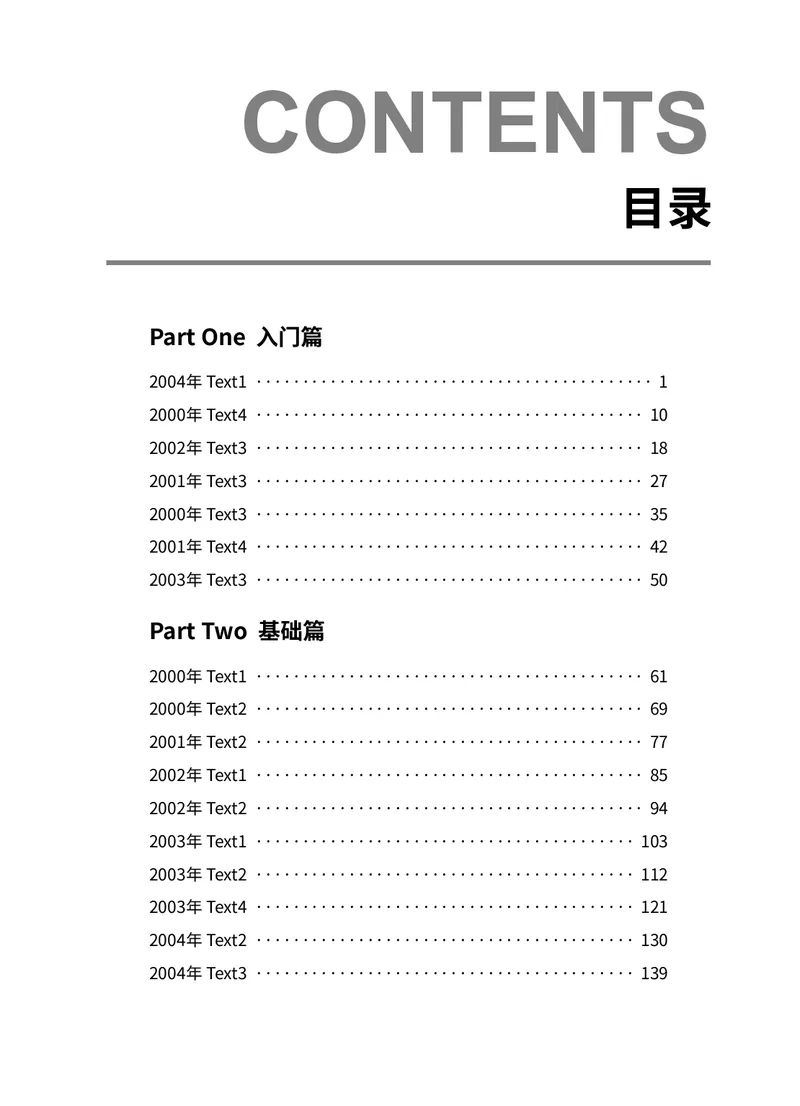
③ 篇章结构CONTENTS
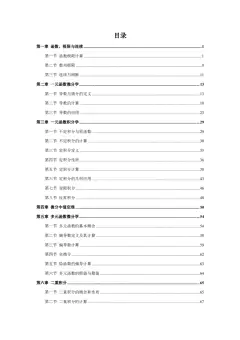
目录
Part One 入门篇
2004年 Text1 ··········································· 1
2000年 Text4 ·········································· 10
2002年 Text3 ·········································· 18
2001年 Text3 ·········································· 27
2000年 Text3 ·········································· 35
2001年 Text4 ·········································· 42
2003年 Text3 ·········································· 50
Part Two 基础篇
2000年 Text1 ·········································· 61
2000年 Text2 ·········································· 69
2001年 Text2 ·········································· 77
2002年 Text1 ·········································· 85
2002年 Text2 ·········································· 94
2003年 Text1 ········································· 103
2003年 Text2 ········································· 112
2003年 Text4 ········································· 121
2004年 Text2 ········································· 130
2004年 Text3 ········································· 139Part Three 进阶篇
2000年 Text5 ········································· 151
2001年 Text1 ········································· 159
2001年 Text5 ········································· 167
2002年 Text4 ········································· 175
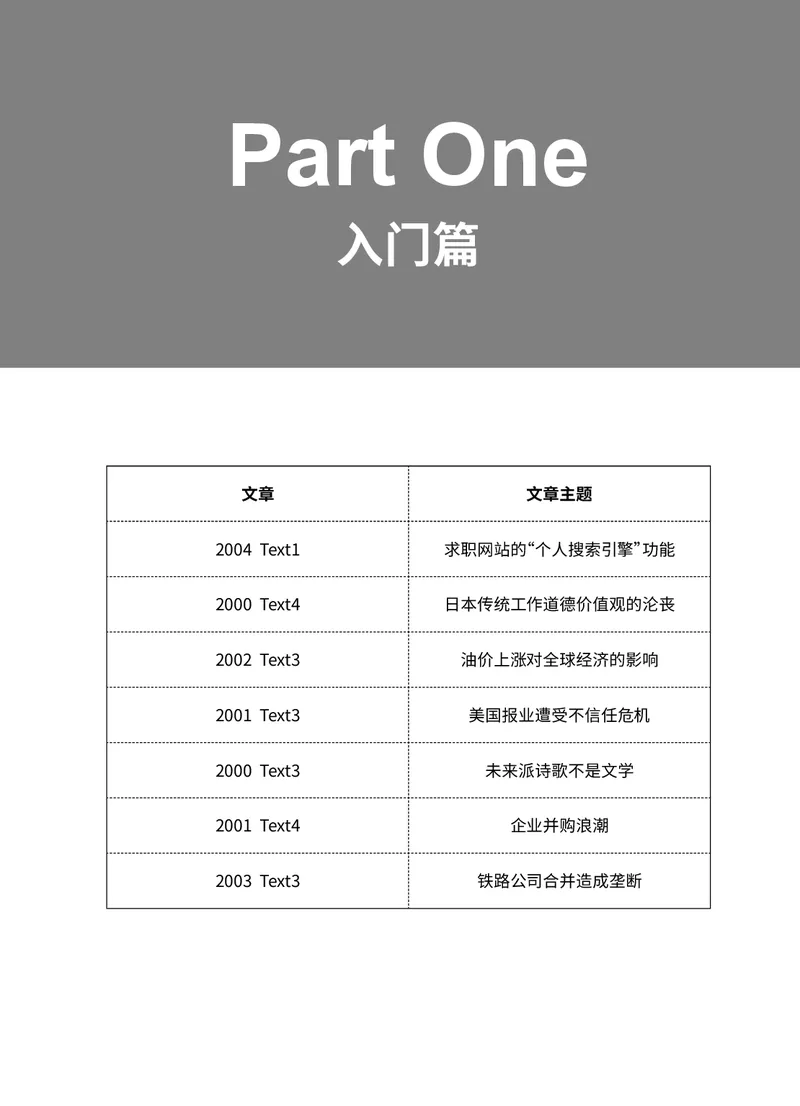
2004年 Text4 ········································· 184Part One
入门篇
文章 文章主题
2004 Text1 求职网站的“个人搜索引擎”功能
2000 Text4 日本传统工作道德价值观的沦丧
2002 Text3 油价上涨对全球经济的影响
2001 Text3 美国报业遭受不信任危机
2000 Text3 未来派诗歌不是文学
2001 Text4 企业并购浪潮
2003 Text3 铁路公司合并造成垄断更懂考研 更懂你
2004 Text1
年
学习日期: 学习时长: 开心指数:☆☆☆☆☆
词汇学习
序号 词汇 音标 词性 词义
01 criteria /kraɪˈtɪəriə/ n. 标准
02 intellectual /ˌɪntəˈlektʃuəl/ adj. 智力的
03 property /ˈprɒpəti/ n. 产权
04 notification /ˌnəʊtɪfɪˈkeɪʃn/ n. 通知
05 resume /rɪˈzjuːm/ n. 简历
06 counsel /ˈkaʊnsl/ n. 顾问
07 drawback /ˈdrɔːbæk/ n. 缺点
08 eliminate /ɪˈlɪmɪneɪt/ v. 消除
09 narrow /ˈnærəʊ/ adj. 精确的
10 broaden /ˈbrɔːdn/ v. 拓宽
11 implicit /ɪmˈplɪsɪt/ adj. 内涵的
12 strategy /ˈstrætədʒi/ n. 策略
13 tempt /tempt/ v. 引诱
14 potential /pəˈtenʃ(ə)l/ adj. 潜在的
15 match /mætʃ/ n. 相匹配的人或物
16 traffic /ˈtræfɪk/ n. 信息流量
17 vice /vaɪs/ adj. 副的
18 worthwhile /ˌwɜːθˈwaɪl/ adj. 重要的,值得做的
19 compensation /ˌkɒmpenˈseɪʃ(ə)n/ n. 补偿金
20 negotiate /nɪˈɡəʊʃieɪt/ v. 协商
1篇章学习
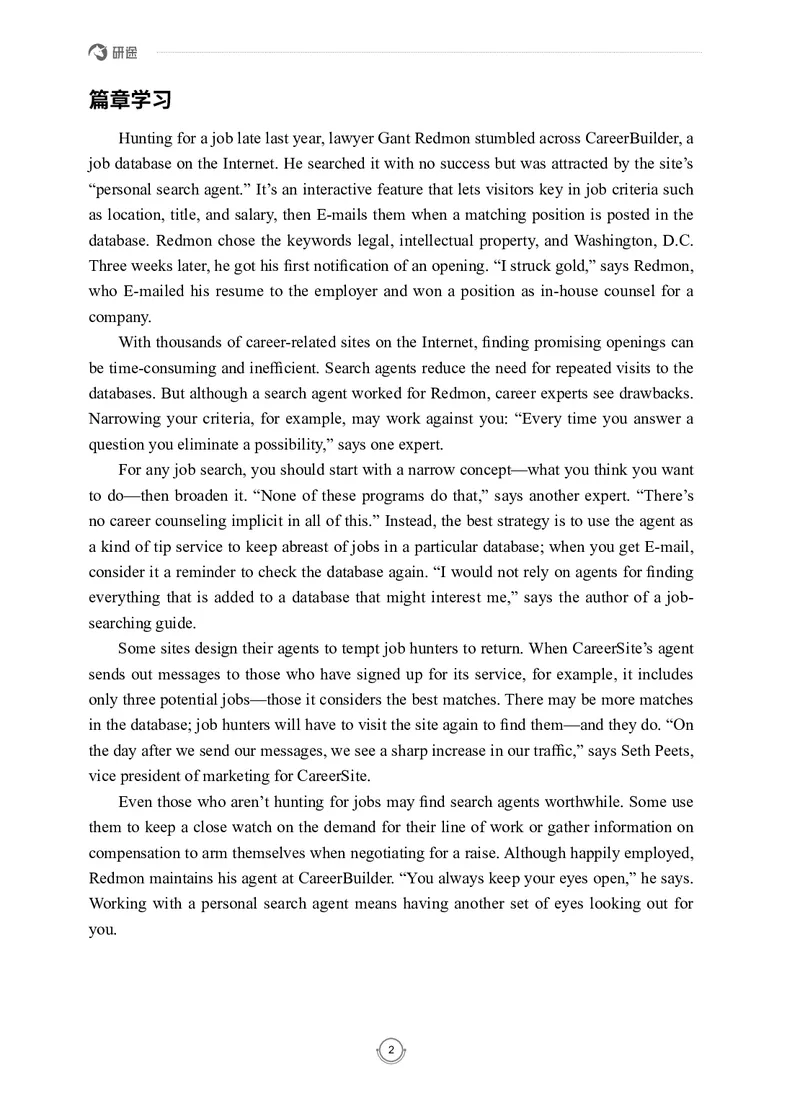
Hunting for a job late last year, lawyer Gant Redmon stumbled across CareerBuilder, a
job database on the Internet. He searched it with no success but was attracted by the site’s
“personal search agent.” It’s an interactive feature that lets visitors key in job criteria such
as location, title, and salary, then E-mails them when a matching position is posted in the
database. Redmon chose the keywords legal, intellectual property, and Washington, D.C.
Three weeks later, he got his first notification of an opening. “I struck gold,” says Redmon,
who E-mailed his resume to the employer and won a position as in-house counsel for a
company.
With thousands of career-related sites on the Internet, finding promising openings can
be time-consuming and inefficient. Search agents reduce the need for repeated visits to the
databases. But although a search agent worked for Redmon, career experts see drawbacks.
Narrowing your criteria, for example, may work against you: “Every time you answer a
question you eliminate a possibility,” says one expert.
For any job search, you should start with a narrow concept—what you think you want
to do—then broaden it. “None of these programs do that,” says another expert. “There’s
no career counseling implicit in all of this.” Instead, the best strategy is to use the agent as
a kind of tip service to keep abreast of jobs in a particular database; when you get E-mail,
consider it a reminder to check the database again. “I would not rely on agents for finding
everything that is added to a database that might interest me,” says the author of a job-
searching guide.
Some sites design their agents to tempt job hunters to return. When CareerSite’s agent
sends out messages to those who have signed up for its service, for example, it includes
only three potential jobs—those it considers the best matches. There may be more matches
in the database; job hunters will have to visit the site again to find them—and they do. “On
the day after we send our messages, we see a sharp increase in our traffic,” says Seth Peets,
vice president of marketing for CareerSite.
Even those who aren’t hunting for jobs may find search agents worthwhile. Some use
them to keep a close watch on the demand for their line of work or gather information on
compensation to arm themselves when negotiating for a raise. Although happily employed,
Redmon maintains his agent at CareerBuilder. “You always keep your eyes open,” he says.
Working with a personal search agent means having another set of eyes looking out for
you.
2更懂考研 更懂你
21. How did Redmon find his job?
[A] By searching openings in a job database.
[B] By posting a matching position in a database.
[C] By using a special service of a database.
[D] By E-mailing his resume to a database.
22. Which of the following can be a disadvantage of search agents?
[A] Lack of counseling.
[B] Limited number of visits.
[C] Lower efficiency.
[D] Fewer successful matches.
23. The expression “tip service” (Line 4, Paragraph 3) most probably means____.
[A] advisory
[B] compensation
[C] interaction
[D] reminder
24. Why does CareerSite’s agent offer each job hunter only three job options?
[A] To focus on better job matches.
[B] To attract more returning visits.
[C] To reserve space for more messages.
[D] To increase the rate of success.
25. Which of the following is true according to the text?
[A] Personal search agents are indispensable to job-hunters.
[B] Some sites keep E-mailing job seekers to trace their demands.
[C] Personal search agents are also helpful to those already employed.
[D] Some agents stop sending information to people once they are employed.
3篇章翻译
精译区 词汇区
第一段
Hunting for a job late last year, lawyer
①
Gant Redmon stumbled across CareerBuilder,
a job database on the Internet.
He searched it with no success but was
②
attracted by the site’s “personal search agent.”
It’s an interactive feature that lets
③
visitors key in job criteria such as location,
title, and salary, then E-mails them when a
matching position is posted in the database.
Redmon chose the keywords legal,
④
intellectual property, and Washington, D.C.
Three weeks later, he got his first
⑤
notification of an opening.
“I struck gold,”says Redmon,who E-mailed
⑥
his resume to the employer and won a position
as in-house counsel for a company.
第二段
With thousands of career-related sites
①
on the Internet, finding promising openings
can be time-consuming and inefficient.
Search agents reduce the need for
②
repeated visits to the databases.
But although a search agent worked for
③
Redmon, career experts see drawbacks.
Narrowing your criteria, for example,
④
may work against you:
4更懂考研 更懂你
精译区 词汇区
“Every time you answer a question you
⑤
eliminate a possibility,” says one expert.
第三段
For any job search, you should start with
①
a narrow concept—what you think you want
to do—then broaden it.
“None of these programs do that,” says
②
another expert.
“There’s no career counseling implicit
③
in all of this.”
Instead, the best strategy is to use the
④
agent as a kind of tip service to keep abreast
of jobs in a particular database; when you
get E-mail, consider it a reminder to check
the database again.
“I would not rely on agents for finding
⑤
everything that is added to a database that
might interest me,” says the author of a job-
searching guide.
第四段
Some sites design their agents to tempt
①
job hunters to return.
When CareerSite’s agent sends out
②
messages to those who have signed up for
its service, for example, it includes only
three potential jobs—those it considers the
best matches.
5精译区 词汇区
There may be more matches in the
③
database; job hunters will have to visit the
site again to find them—and they do.
“On the day after we send our messages,
④
we see a sharp increase in our traffic,” says
Seth Peets, vice president of marketing for
CareerSite.
第五段
Even those who aren’t hunting for jobs
①
may find search agents worthwhile.
Some use them to keep a close watch
②
on the demand for their line of work or
gather information on compensation to arm
themselves when negotiating for a raise.
Although happily employed, Redmon
③
maintains his agent at CareerBuilder.
“You always keep your eyes open,” he
④
says.
Working with a personal search agent
⑤
means having another set of eyes looking
out for you.
6更懂考研 更懂你
题目翻译
21. How did Redmon find his job?
[A] By searching openings in a job database.
[B] By posting a matching position in a database.
[C] By using a special service of a database.
[D] By E-mailing his resume to a database.
题干翻译
选项 选项
翻译 分析
22. Which of the following can be a disadvantage of search agents?
[A] Lack of counseling.
[B] Limited number of visits.
[C] Lower efficiency.
[D] Fewer successful matches.
题干翻译
选项 选项
翻译 分析
723. The expression “tip service” (Line 4, Paragraph 3) most probably means____.
[A] advisory
[B] compensation
[C] interaction
[D] reminder
题干翻译
选项 选项
翻译 分析
24. Why does CareerSite’s agent offer each job hunter only three job options?
[A] To focus on better job matches.
[B] To attract more returning visits.
[C] To reserve space for more messages.
[D] To increase the rate of success.
题干翻译
选项 选项
翻译 分析
8更懂考研 更懂你
25. Which of the following is true according to the text?
[A] Personal search agents are indispensable to job-hunters.
[B] Some sites keep E-mailing job seekers to trace their demands.
[C] Personal search agents are also helpful to those already employed.
[D] Some agents stop sending information to people once they are employed.
题干翻译
选项 选项
翻译 分析
92000 Text4
年
学习日期: 学习时长: 开心指数:☆☆☆☆☆
词汇学习
序号 词汇 音标 词性 词义
01 harmony /ˈhɑːməni/ n. 和谐
02 typical /ˈtɪpɪkl/ adj. 典型的
03 productivity /ˌprɒdʌkˈtɪvəti/ n. 生产率
04 traditional /trəˈdɪʃənl/ adj. 传统的
05 moral /ˈmɒrəl/ adj. 道德的
06 value /ˈvæljuː/ n. 价值观
07 primary /ˈpraɪməri/ adj. 首要的
08 boom /buːm/ n. 繁荣
09 dominate /ˈdɒmɪneɪt/ v. 主导
10 opportunity /ˌɒpəˈtjuːnəti/ n. 机会
11 rigid /ˈrɪdʒɪd/ adj. 森严的
12 counterpart /ˈkaʊntəpɑːt/ n. 职位(或作用)相当的人
13 praise /preɪz/ v. 表扬
14 mechanical /məˈkænɪkl/ adj. 机械的
15 democratic /ˌdeməˈkrætɪk/ adj. 民主的
16 assault /əˈsɔːlt/ n. 攻击
17 amid /əˈmɪd/ prep. 在...之中
18 outcry /ˈaʊtkraɪ/ n. 抗议
19 conservative /kənˈsɜːvətɪv/ adj. 保守的
20 commute /kəˈmjuːt/ n. 通勤
10更懂考研 更懂你
篇章学习
Aimlessness has hardly been typical of the postwar Japan whose productivity and
social harmony are the envy of the United States and Europe. But increasingly the Japanese
are seeing a decline of the traditional work-moral values. Ten years ago young people
were hardworking and saw their jobs as their primary reason for being, but now Japan has
largely fulfilled its economic needs, and young people don’t know where they should go
next.
The coming of age of the postwar baby boom and an entry of women into the male-
dominated job market have limited the opportunities of teenagers who are already
questioning the heavy personal sacrifices involved in climbing Japan’s rigid social ladder to
good schools and jobs. In a recent survey, it was found that only 24.5 percent of Japanese
students were fully satisfied with school life, compared with 67.2 percent of students in the
United States. In addition, far more Japanese workers expressed dissatisfaction with their
jobs than did their counterparts in the 10 other countries surveyed.
While often praised by foreigners for its emphasis on the basics, Japanese education
tends to stress test taking and mechanical learning over creativity and self-expression.
“Those things that do not show up in the test scores—personality, ability, courage or
humanity—are completely ignored,” says Toshiki Kaifu, chairman of the ruling Liberal
Democratic Party’s education committee. “Frustration against this kind of thing leads kids
to drop out and run wild.” Last year Japan experienced 2,125 incidents of school violence,
including 929 assaults on teachers. Amid the outcry, many conservative leaders are seeking
a return to the prewar emphasis on moral education. Last year Mitsuo Setoyama, who was
then education minister, raised eyebrows when he argued that liberal reforms introduced
by the American occupation authorities after World War II had weakened the “Japanese
morality of respect for parents.”
But that may have more to do with Japanese life-styles. “In Japan,” says educator Yoko
Muro, “it’s never a question of whether you enjoy your job and your life, but only how
much you can endure.” With economic growth has come centralization; fully 76 percent of
Japan’s 119 million citizens live in cities where community and the extended family have
been abandoned in favor of isolated, two-generation households. Urban Japanese have
long endured lengthy commutes (travels to and from work) and crowded living conditions,
but as the old group and family values weaken, the discomfort is beginning to tell. In the
past decade, the Japanese divorce rate, while still well below that of the United States, has
increased by more than 50 percent, and suicides have increased by nearly one-quarter.
1133. In the Westerner’s eyes, the postwar Japan was____.
[A] under aimless development
[B] a positive example
[C] a rival to the West
[D] on the decline
34. According to the author, what may chiefly be responsible for the moral decline of
Japanese society?
[A] Women’s participation in social activities is limited.
[B] More workers are dissatisfied with their jobs.
[C] Excessive emphasis has been placed on the basics.
[D] The life-style has been influenced by Western values.
35. Which of the following is true according to the author?
[A] Japanese education is praised for helping the young climb the social ladder.
[B] Japanese education is characterized by mechanical learning as well as creativity.
[C] More stress should be placed on the cultivation of creativity.
[D] Dropping out leads to frustration against test taking.
36. The change in Japanese life-style is revealed in the fact that____.
[A] the young are less tolerant of discomforts in life
[B] the divorce rate in Japan exceeds that in the U.S
[C] the Japanese endure more than ever before
[D] the Japanese appreciate their present life
12更懂考研 更懂你
篇章翻译
精译区 词汇区
第一段
Aimlessness has hardly been typical of
①
the postwar Japan whose productivity and
social harmony are the envy of the United
States and Europe.
But increasingly the Japanese are seeing
②
a decline of the traditional work-moral
values.
Ten years ago young people were
③
hardworking and saw their jobs as their
primary reason for being, but now Japan
has largely fulfilled its economic needs,
and young people don’t know where they
should go next.
第二段
The coming of age of the postwar baby
①
boom and an entry of women into the male-
dominated job market have limited the
opportunities of teenagers who are already
questioning the heavy personal sacrifices
involved in climbing Japan’s rigid social
ladder to good schools and jobs.
In a recent survey, it was found that only
②
24.5 percent of Japanese students were fully
satisfied with school life, compared with 67.2
percent of students in the United States.
In addition, far more Japanese workers
③
expressed dissatisfaction with their jobs
than did their counterparts in the 10 other
countries surveyed.
13精译区 词汇区
第三段
While often praised by foreigners for its
①
emphasis on the basics, Japanese education
tends to stress test taking and mechanical
learning over creativity and self-expression.
“Those things that do not show up in the
②
test scores—personality, ability, courage
or humanity—are completely ignored,”
says Toshiki Kaifu, chairman of the ruling
Liberal Democratic Party’s education
committee.
“Frustration against this kind of thing
③
leads kids to drop out and run wild.”
Last year Japan experienced 2,125
④
incidents of school violence, including 929
assaults on teachers.
Amid the outcry, many conservative
⑤
leaders are seeking a return to the prewar
emphasis on moral education.
Last year Mitsuo Setoyama, who was
⑥
then education minister, raised eyebrows
when he argued that liberal reforms
introduced by the American occupation
authorities after World War II had weakened
the “Japanese morality of respect for
parents.”
第四段
But that may have more to do with
①
Japanese life-styles.
14更懂考研 更懂你
精译区 词汇区
“In Japan,” says educator Yoko Muro,
②
“it’s never a question of whether you enjoy
your job and your life, but only how much
you can endure.”
With economic growth has come
③
centralization; fully 76 percent of Japan’s
119 million citizens live in cities where
community and the extended family have
been abandoned in favor of isolated, two-
generation households.
Urban Japanese have long endured
④
lengthy commutes (travels to and from work)
and crowded living conditions, but as the
old group and family values weaken, the
discomfort is beginning to tell.
In the past decade, the Japanese divorce
⑤
rate, while still well below that of the
United States, has increased by more than
50 percent, and suicides have increased by
nearly one-quarter.
15题目翻译
33. In the Westerner’s eyes, the postwar Japan was____.
[A] under aimless development
[B] a positive example
[C] a rival to the West
[D] on the decline
题干翻译
选项 选项
翻译 分析
34. According to the author, what may chiefly be responsible for the moral decline of Japanese
society?
[A] Women’s participation in social activities is limited.
[B] More workers are dissatisfied with their jobs.
[C] Excessive emphasis has been placed on the basics.
[D] The life-style has been influenced by Western values.
题干翻译
选项 选项
翻译 分析
16更懂考研 更懂你
35. Which of the following is true according to the author?
[A] Japanese education is praised for helping the young climb the social ladder.
[B] Japanese education is characterized by mechanical learning as well as creativity.
[C] More stress should be placed on the cultivation of creativity.
[D] Dropping out leads to frustration against test taking.
题干翻译
选项 选项
翻译 分析
36. The change in Japanese life-style is revealed in the fact that____.
[A] the young are less tolerant of discomforts in life
[B] the divorce rate in Japan exceeds that in the U.S
[C] the Japanese endure more than ever before
[D] the Japanese appreciate their present life
题干翻译
选项 选项
翻译 分析
172002 Text3
年
学习日期: 学习时长: 开心指数:☆☆☆☆☆
词汇学习
序号 词汇 音标 词性 词义
01 economic /ˌiːkəˈnɒmɪk/ adj. 经济的
02 decline /dɪˈklaɪn/ n. 下降,衰退
03 inflation /ɪnˈfleɪʃ(ə)n/ n. 通货膨胀
04 headline /ˈhedlaɪn/ n. 头条新闻
05 export /ɪkˈspɔːt/ n. 出口
06 strengthening /ˈstreŋθnɪŋ/ adj. 强劲的
07 growth /ɡrəʊθ/ n. 增长
08 expect /ɪkˈspekt/ v. 认为
09 consequence /ˈkɒnsɪkwəns/ n. 后果;影响
10 severe /sɪˈvɪə(r)/ adj. 严重的
11 cost /kɒst/ n. 花费
12 share /ʃeə(r)/ n. 份额
13 tax /tæks/ n. 税收
14 retail /ˈriːteɪl/ n. 零售
15 dependent /dɪˈpendənt/ adj. 依赖的;依靠的
16 sensitive /ˈsensətɪv/ adj. 敏感的
17 gloomy /ˈɡluːmi/ adj. 沮丧的;悲观的
18 consumption /kənˈsʌmpʃn/ n. 消耗,消费
19 production /prəˈdʌkʃn/ n. 生产,制造
20 against /əˈɡenst/ prep. 以...为背景
18更懂考研 更懂你
篇章学习
Could the bad old days of economic decline be about to return? Since OPEC agreed to
supply-cuts in March, the price of crude oil has jumped to almost $26 a barrel, up from less
than $10 last December. This near-tripling of oil prices calls up scary memories of the 1973
oil shock, when prices quadrupled, and 1979-1980, when they also almost tripled. Both
previous shocks resulted in double-digit inflation and global economic decline. So where
are the headlines warning of gloom and doom this time?
The oil price was given another push up this week when Iraq suspended oil exports.
Strengthening economic growth, at the same time as winter grips the northern hemisphere,
could push the price higher still in the short term.
Yet there are good reasons to expect the economic consequences now to be less severe
than in the 1970s. In most countries the cost of crude oil now accounts for a smaller share
of the price of petrol than it did in the 1970s. In Europe, taxes account for up to four-fifths
of the retail price, so even quite big changes in the price of crude have a more muted effect
on pump prices than in the past.
Rich economies are also less dependent on oil than they were, and so less sensitive
to swings in the oil price. Energy conservation, a shift to other fuels and a decline in the
importance of heavy, energy-intensive industries have reduced oil consumption. Software,
consultancy and mobile telephones use far less oil than steel or car production. For each
dollar of GDP (in constant prices) rich economies now use nearly 50% less oil than in
1973. The OECD estimates in its latest Economic Outlook that, if oil prices averaged $22 a
barrel for a full year, compared with $13 in 1998, this would increase the oil import bill in
rich economies by only 0.25-0.5% of GDP. That is less than one-quarter of the income loss
in 1974 or 1980. On the other hand, oil-importing emerging economies—to which heavy
industry has shifted—have become more energy-intensive, and so could be more seriously
squeezed.
One more reason not to lose sleep over the rise in oil prices is that, unlike the rises in
the 1970s, it has not occurred against the background of general commodity-price inflation
and global excess demand. A sizable portion of the world is only just emerging from
economic decline. The Economist’s commodity price index is broadly unchanging from a
year ago. In 1973 commodity prices jumped by 70%, and in 1979 by almost 30%.
1931. The main reason for the latest rise of oil price is____.
[A] global inflation
[B] reduction in supply
[C] fast growth in economy
[D] Iraq’s suspension of exports
32. It can be inferred from the text that the retail price of petrol will go up dramatically
if____.
[A] price of crude rises
[B] commodity prices rise
[C] consumption rises
[D] oil taxes rise
33. The estimates in Economic Outlook show that in rich countries____.
[A] heavy industry becomes more energy-intensive
[B] income loss mainly results from fluctuating crude oil prices
[C] manufacturing industry has been seriously squeezed
[D] oil price changes have no significant impact on GDP
34. We can draw a conclusion from the text that____.
[A] oil-price shocks are less shocking now
[B] inflation seems irrelevant to oil-price shocks
[C] energy conservation can keep down the oil prices
[D] the price rise of crude leads to the shrinking of heavy industry
35. From the text we can see that the writer seems____.
[A] optimistic
[B] sensitive
[C] gloomy
[D] scared
20更懂考研 更懂你
篇章翻译
精译区 词汇区
第一段
Could the bad old days of economic
①
decline be about to return?
Since OPEC agreed to supply-cuts in
②
March, the price of crude oil has jumped to
almost $26 a barrel, up from less than $10
last December.
This near-tripling of oil prices calls
③
up scary memories of the 1973 oil shock,
when prices quadrupled, and 1979-1980,
when they also almost tripled.
Both previous shocks resulted in double-
④
digit inflation and global economic decline.
So where are the headlines warning of
⑤
gloom and doom this time?
第二段
The oil price was given another push up
①
this week when Iraq suspended oil exports.
Strengthening economic growth, at the
②
same time as winter grips the northern
hemisphere, could push the price higher
still in the short term.
第三段
Yet there are good reasons to expect
①
the economic consequences now to be less
severe than in the 1970s.
21精译区 词汇区
In most countries the cost of crude oil
②
now accounts for a smaller share of the
price of petrol than it did in the 1970s.
In Europe, taxes account for up to four-
③
fifths of the retail price, so even quite big
changes in the price of crude have a more
muted effect on pump prices than in the
past.
第四段
Rich economies are also less dependent
①
on oil than they were, and so less sensitive to
swings in the oil price.
Energy conservation, a shift to other
②
fuels and a decline in the importance of
heavy, energy-intensive industries have
reduced oil consumption.
Software, consultancy and mobile
③
telephones use far less oil than steel or car
production.
For each dollar of GDP (in constant
④
prices) rich economies now use nearly 50%
less oil than in 1973.
The OECD estimates in its latest
⑤
Economic Outlook that, if oil prices
averaged $22 a barrel for a full year,
compared with $13 in 1998, this would
increase the oil import bill in rich economies
by only 0.25-0.5% of GDP.
22更懂考研 更懂你
精译区 词汇区
That is less than one-quarter of the
⑥
income loss in 1974 or 1980.
On the other hand, oil-importing
⑦
emerging economies—to which heavy
industry has shifted—have become more
energy-intensive, and so could be more
seriously squeezed.
第五段
One more reason not to lose sleep over
①
the rise in oil prices is that, unlike the rises
in the 1970s, it has not occurred against the
background of general commodity-price
inflation and global excess demand.
A sizable portion of the world is only
②
just emerging from economic decline.
The Economist’s commodity price
③
index is broadly unchanging from a year
ago.
In 1973 commodity prices jumped by
④
70%, and in 1979 by almost 30%.
23题目翻译
31. The main reason for the latest rise of oil price is____.
[A] global inflation
[B] reduction in supply
[C] fast growth in economy
[D] Iraq’s suspension of exports
题干翻译
选项 选项
翻译 分析
32. It can be inferred from the text that the retail price of petrol will go up dramatically
if____.
[A] price of crude rises
[B] commodity prices rise
[C] consumption rises
[D] oil taxes rise
题干翻译
选项 选项
翻译 分析
24更懂考研 更懂你
33. The estimates in Economic Outlook show that in rich countries____.
[A] heavy industry becomes more energy-intensive
[B] income loss mainly results from fluctuating crude oil prices
[C] manufacturing industry has been seriously squeezed
[D] oil price changes have no significant impact on GDP
题干翻译
选项 选项
翻译 分析
34. We can draw a conclusion from the text that____.
[A] oil-price shocks are less shocking now
[B] inflation seems irrelevant to oil-price shocks
[C] energy conservation can keep down the oil prices
[D] the price rise of crude leads to the shrinking of heavy industry
题干翻译
选项 选项
翻译 分析
2535. From the text we can see that the writer seems____.
[A] optimistic
[B] sensitive
[C] gloomy
[D] scared
题干翻译
选项 选项
翻译 分析
26更懂考研 更懂你
2001 Text3
年
学习日期: 学习时长: 开心指数:☆☆☆☆☆
词汇学习
序号 词汇 音标 词性 词义
01 credibility /ˌkredəˈbɪləti/ n. 可信度
02 head-scratching /hedˈskrætʃɪŋ/ adj. 令人挠头的
03 template /ˈtempleɪt/ n. 模板
04 conventional /kənˈvenʃən(ə)l/ adj. 依照惯例的,遵循习俗的
05 backbone /ˈbækbəʊn/ n. 支柱,骨干
06 structure /ˈstrʌktʃə(r)/ n. 结构
07 questionnaire /ˌkwestʃəˈneə(r)/ n. 问卷,调查表
08 upscale /ˌʌpˈskeɪl/ adj. 高消费阶层的,高档的
09 volunteer /ˌvɒlənˈtɪə(r)/ n. 志愿者,义务工作者
10 elite /eɪˈliːt/ n. 精英
11 media /ˈmiːdiə/ n. 新闻媒体,传媒
12 inaccuracy /ɪnˈækjərəsi/ n. 错误;不精确
13 clash /klæʃ/ n. 冲突
14 explosive /ɪkˈspləʊsɪv/ adj. 爆炸性的
15 sponsor /ˈspɒnsə(r)/ n. 赞助者,赞助商
16 flee /fliː/ v. 逃离,逃避,逃跑
17 symposium /sɪmˈpəʊziəm/ n. 专题研讨会
18 bias /ˈbaɪəs/ n. 偏见,成见
19 diversity /daɪˈvɜːsəti/ n. 多样性,多样化
20 outlook /ˈaʊtlʊk/ n. 看法,态度
27篇章学习
Why do so many Americans distrust what they read in their newspapers? The American
Society of Newspaper Editors is trying to answer this painful question. The organization is
deep into a long self-analysis known as the journalism credibility project.
Sad to say, this project has turned out to be mostly low-level findings about factual
errors and spelling and grammar mistakes, combined with lots of head-scratching
puzzlement about what in the world those readers really want.
But the sources of distrust go way deeper. Most journalists learn to see the world
through a set of standard templates (patterns) into which they plug each day’s events. In
other words, there is a conventional story line in the newsroom culture that provides a
backbone and a ready-made narrative structure for otherwise confusing news.
There exists a social and cultural disconnect between journalists and their readers,
which helps explain why the “standard templates” of the newsroom seem alien to many
readers. In a recent survey, questionnaires were sent to reporters in five middle-size cities
around the country, plus one large metropolitan area. Then residents in these communities
were phoned at random and asked the same questions.
Replies show that compared with other Americans, journalists are more likely to live
in upscale neighborhoods, have maids, own Mercedeses, and trade stocks, and they’re less
likely to go to church, do volunteer work, or put down roots in a community.
Reporters tend to be part of a broadly defined social and cultural elite, so their work
tends to reflect the conventional values of this elite. The astonishing distrust of the news
media isn’t rooted in inaccuracy or poor reportorial skills but in the daily clash of world
views between reporters and their readers.
This is an explosive situation for any industry, particularly a declining one. Here is a
troubled business that keeps hiring employees whose attitudes vastly annoy the customers.
Then it sponsors lots of symposiums and a credibility project dedicated to wondering why
customers are annoyed and fleeing in large numbers. But it never seems to get around to
noticing the cultural and class biases that so many former buyers are complaining about. If
it did, it would open up its diversity program, now focused narrowly on race and gender,
and look for reporters who differ broadly by outlook, values, education, and class.
28更懂考研 更懂你
29. What is the passage mainly about?
[A] Needs of the readers all over the world.
[B] Causes of the public disappointment about newspapers.
[C] Origins of the declining newspaper industry.
[D] Aims of a journalism credibility project.
30. The results of the journalism credibility project turned out to be____.
[A] quite trustworthy
[B] somewhat contradictory
[C] very illuminating
[D] rather superficial
31. The basic problem of journalists as pointed out by the writer lies in their____.
[A] working attitude
[B] conventional lifestyle
[C] world outlook
[D] educational background
32. Despite its efforts, the newspaper industry still cannot satisfy the readers owing to
its____.
[A] failure to realize its real problem
[B] tendency to hire annoying reporters
[C] likeliness to do inaccurate reporting
[D] prejudice in matters of race and gender
29篇章翻译
精译区 词汇区
第一段
Why do so many Americans distrust
①
what they read in their newspapers?
The American Society of Newspaper
②
Editors is trying to answer this painful
question.
The organization is deep into a long
③
self-analysis known as the journalism
credibility project.
第二段
Sad to say, this project has turned out to
①
be mostly low-level findings about factual
errors and spelling and grammar mistakes,
combined with lots of head-scratching
puzzlement about what in the world those
readers really want.
第三段
But the sources of distrust go way
①
deeper.
Most journalists learn to see the world
②
through a set of standard templates (patterns)
into which they plug each day’s events.
In other words, there is a conventional
③
story line in the newsroom culture that
provides a backbone and a ready-made
narrative structure for otherwise confusing
news.
30更懂考研 更懂你
精译区 词汇区
第四段
There exists a social and cultural
①
disconnect between journalists and their
readers, which helps explain why the
“standard templates” of the newsroom
seem alien to many readers.
In a recent survey, questionnaires
②
were sent to reporters in five middle-size
cities around the country, plus one large
metropolitan area.
Then residents in these communities
③
were phoned at random and asked the same
questions.
第五段
Replies show that compared with other
①
Americans, journalists are more likely
to live in upscale neighborhoods, have
maids, own Mercedeses, and trade stocks,
and they’re less likely to go to church, do
volunteer work, or put down roots in a
community.
第六段
Reporters tend to be part of a broadly
①
defined social and cultural elite, so their
work tends to reflect the conventional
values of this elite.
The astonishing distrust of the news
②
media isn’t rooted in inaccuracy or poor
reportorial skills but in the daily clash of
world views between reporters and their
readers.
31精译区 词汇区
第七段
This is an explosive situation for any
①
industry, particularly a declining one.
Here is a troubled business that keeps
②
hiring employees whose attitudes vastly
annoy the customers.
Then it sponsors lots of symposiums
③
and a credibility project dedicated to
wondering why customers are annoyed and
fleeing in large numbers.
But it never seems to get around to
④
noticing the cultural and class biases that
so many former buyers are complaining
about.
If it did, it would open up its diversity
⑤
program, now focused narrowly on race and
gender, and look for reporters who differ
broadly by outlook, values, education, and
class.
32更懂考研 更懂你
题目翻译
29. What is the passage mainly about?
[A] needs of the readers all over the world.
[B] causes of the public disappointment about newspapers.
[C] origins of the declining newspaper industry.
[D] aims of a journalism credibility project.
题干翻译
选项 选项
翻译 分析
30. The results of the journalism credibility project turned out to be____.
[A] quite trustworthy
[B] somewhat contradictory
[C] very illuminating
[D] rather superficial
题干翻译
选项 选项
翻译 分析
3331. The basic problem of journalists as pointed out by the writer lies in their____.
[A] working attitude
[B] conventional lifestyle
[C] world outlook
[D] educational background
题干翻译
选项 选项
翻译 分析
32. Despite its efforts, the newspaper industry still cannot satisfy the readers owing to
its____.
[A] failure to realize its real problem
[B] tendency to hire annoying reporters
[C] likeliness to do inaccurate reporting
[D] prejudice in matters of race and gender
题干翻译
选项 选项
翻译 分析
34更懂考研 更懂你
2000 Text3
年
学习日期: 学习时长: 开心指数:☆☆☆☆☆
词汇学习
序号 词汇 音标 词性 词义
01 consequently /ˈkɒnsɪkwəntli/ adv. 因此,所以
02 emotion /ɪˈməʊʃn/ n. 情绪
03 corresponding /ˌkɒrəˈspɒndɪŋ/ adj. 相当的,对应的
04 expression /ɪkˈspreʃn/ n. 表达
05 literature /ˈlɪtrətʃə(r)/ n. 文学
06 interpret /ɪnˈtɜːprət/ v. 解释;说明
07 essential /ɪˈsenʃl/ adj. 基本的;必要的
08 hamper /ˈhæmpər/ v. 妨碍,阻碍
09 stop /stɒp/ n. 句号
10 imitate /ˈɪmɪteɪt/ v. 模仿
11 upsetting /ʌpˈsetɪŋ/ adj. 令人心烦意乱的
12 explanatory /ɪkˈsplænətri/ adj. 解释的,说明的
13 movement /ˈmuːvmənt/ n. 运动
14 advisable /ədˈvaɪzəb(ə)l/ adj. 明智的;可取的
15 principle /ˈprɪnsəp(ə)l/ n. 准则;信条
16 class /klɑːs/ v. 分类,归类
17 attain /əˈteɪn/ v. 获得
18 fulfill /fʊlˈfɪl/ v. 履行;实现
19 proposition /ˌprɒpəˈzɪʃ(ə)n/ n. 主张,建议
20 advocate /ˈædvəkeɪt/ n. 倡导者
35篇章学习
When a new movement in art attains a certain fashion, it is advisable to find out what
its advocates are aiming at, for, however farfetched and unreasonable their principles may
seem today, it is possible that in years to come they may be regarded as normal. With
regard to Futurist poetry, however, the case is rather difficult, for whatever Futurist poetry
may be—even admitting that the theory on which it is based may be right—it can hardly be
classed as Literature.
This, in brief, is what the Futurist says: for a century, past conditions of life have
been conditionally speeding up, till now we live in a world of noise and violence and
speed. Consequently, our feelings, thoughts and emotions have undergone a corresponding
change. This speeding up of life, says the Futurist, requires a new form of expression. We
must speed up our literature too, if we want to interpret modern stress. We must pour out
a large stream of essential words, unhampered by stops, or qualifying adjectives, or finite
verbs. Instead of describing sounds we must make up words that imitate them; we must use
many sizes of type and different colored inks on the same page, and shorten or lengthen
words at will.
Certainly their descriptions of battles are confused. But it is a little upsetting to read in
the explanatory notes that a certain line describes a fight between a Turkish and a Bulgarian
officer on a bridge off which they both fall into the river—and then to find that the line
consists of the noise of their falling and the weights of the officers: “Pluff! Pluff! A hundred
and eighty-five kilograms.”
This, though it fulfills the laws and requirements of Futurist poetry, can hardly
be classed as Literature. All the same, no thinking man can refuse to accept their first
proposition: that a great change in our emotional life calls for a change of expression. The
whole question is really this: have we essentially changed?
36更懂考研 更懂你
29. This passage is mainly____.
[A] a survey of new approaches to art
[B] a review of Futurist poetry
[C] about merits of the Futurist movement
[D] about laws and requirements of literature
30. When a novel literary idea appears, people should try to____.
[A] determine its purposes
[B] ignore its flaws
[C] follow the new fashions
[D] accept the principles
31. Futurists claim that we must____.
[A] increase the production of literature
[B] use poetry to relieve modern stress
[C] develop new modes of expression
[D] avoid using adjectives and verbs
32. The author believes that Futurist poetry is____.
[A] based on reasonable principles
[B] new and acceptable to ordinary people
[C] indicative of a basic change in human nature
[D] more of a transient phenomenon than literature
37篇章翻译
精译区 词汇区
第一段
When a new movement in art attains
①
a certain fashion, it is advisable to find
out what its advocates are aiming at, for,
however farfetched and unreasonable their
principles may seem today, it is possible
that in years to come they may be regarded
as normal.
With regard to Futurist poetry, however,
②
the case is rather difficult, for whatever
Futurist poetry may be—even admitting
that the theory on which it is based may be
right—it can hardly be classed as Literature.
第二段
This, in brief, is what the Futurist says:
①
for a century, past conditions of life have
been conditionally speeding up, till now we
live in a world of noise and violence and
speed.
Consequently, our feelings, thoughts and
②
emotions have undergone a corresponding
change.
This speeding up of life, says the Futurist,
③
requires a new form of expression.
We must speed up our literature too, if
④
we want to interpret modern stress.
We must pour out a large stream of
⑤
essential words, unhampered by stops, or
qualifying adjectives, or finite verbs.
38更懂考研 更懂你
精译区 词汇区
Instead of describing sounds we must
⑥
make up words that imitate them; we
must use many sizes of type and different
colored inks on the same page, and shorten
or lengthen words at will.
第三段
Certainly their descriptions of battles
①
are confused.
But it is a little upsetting to read in
②
the explanatory notes that a certain line
describes a fight between a Turkish and
a Bulgarian officer on a bridge off which
they both fall into the river—and then to
find that the line consists of the noise of
their falling and the weights of the officers:
“Pluff! Pluff! A hundred and eighty-five
③
kilograms.”
第四段
This, though it fulfills the laws and
①
requirements of Futurist poetry, can hardly
be classed as Literature.
All the same, no thinking man can
②
refuse to accept their first proposition: that
a great change in our emotional life calls
for a change of expression.
The whole question is really this: have
③
we essentially changed?
39题目翻译
29. This passage is mainly____.
[A] a survey of new approaches to art
[B] a review of Futurist poetry
[C] about merits of the Futurist movement
[D] about laws and requirements of literature
题干翻译
选项 选项
翻译 分析
30. When a novel literary idea appears, people should try to____.
[A] determine its purposes
[B] ignore its flaws
[C] follow the new fashions
[D] accept the principles
题干翻译
选项 选项
翻译 分析
40更懂考研 更懂你
31. Futurists claim that we must____.
[A] increase the production of literature
[B] use poetry to relieve modern stress
[C] develop new modes of expression
[D] avoid using adjectives and verbs
题干翻译
选项 选项
翻译 分析
32. The author believes that Futurist poetry is____.
[A] based on reasonable principles
[B] new and acceptable to ordinary people
[C] indicative of a basic change in human nature
[D] more of a transient phenomenon than literature
题干翻译
选项 选项
翻译 分析
412001 Text4
年
学习日期: 学习时长: 开心指数:☆☆☆☆☆
词汇学习
序号 词汇 音标 词性 词义
01 merger /ˈmɜːdʒə(r)/ n. 合并
02 acquisition /ˌækwɪˈzɪʃn/ n. 收购
03 might /maɪt/ n. 威力
04 concentration /ˌkɒnsnˈtreɪʃn/ n. 集中,聚集
05 multinational /ˌmʌltiˈnæʃnəl/ adj. 跨国的
06 corporation /ˌkɔːpəˈreɪʃn/ n. 公司
07 affiliate /əˈfɪliət/ n. 分公司
08 segment /ˈseɡmənt/ n. 部分
09 phenomenon /fəˈnɒmɪnən/ n. 现象
10 ultimate /ˈʌltɪmət/ adj. 根本的
11 stability /stəˈbɪləti/ n. 稳定
12 massive /ˈmæsɪv/ adj. 巨大的
13 underlie /ˌʌndəˈlaɪ/ v. 构成...的原因,构成...的基础
14 barrier /ˈbæriə(r)/ n. 障碍
15 enlarge /ɪnˈlɑːdʒ/ v. 扩大
16 detrimental /ˌdetrɪˈmentl/ adj. 有害的
17 scanty /ˈskænti/ adj. 不足的
18 supervise /ˈsuːpəvaɪz/ v. 监督
19 resort /rɪˈzɔːt/ v. 求助,诉诸
20 gigantic /dʒaɪˈɡæntɪk/ adj. 巨大的
42更懂考研 更懂你
篇章学习
The world is going through the biggest wave of mergers and acquisitions ever
witnessed. The process sweeps from hyperactive America to Europe and reaches the
emerging countries with unsurpassed might. Many in these countries are looking at
this process and worrying: “Won’t the wave of business concentration turn into an
uncontrollable anti-competitive force?”
There’s no question that the big are getting bigger and more powerful. Multinational
corporations accounted for less than 20% of international trade in 1982. Today the figure
is more than 25% and growing rapidly. International affiliates account for a fast-growing
segment of production in economies that open up and welcome foreign investment. In
Argentina, for instance, after the reforms of the early 1990s, multinationals went from 43%
to almost 70% of the industrial production of the 200 largest firms. This phenomenon has
created serious concerns over the role of smaller economic firms, of national businessmen
and over the ultimate stability of the world economy.
I believe that the most important forces behind the massive M&A wave are the same
that underlie the globalization process: falling transportation and communication costs,
lower trade and investment barriers and enlarged markets that require enlarged operations
capable of meeting customers’ demands. All these are beneficial, not detrimental, to
consumers. As productivity grows, the world’s wealth increases.
Examples of benefits or costs of the current concentration wave are scanty. Yet it is
hard to imagine that the merger of a few oil firms today could re-create the same threats to
competition that were feared nearly a century ago in the U.S., when the Standard Oil trust
was broken up. The mergers of telecom companies, such as WorldCom, hardly seem to
bring higher prices for consumers or a reduction in the pace of technical progress. On the
contrary, the price of communications is coming down fast. In cars, too, concentration is
increasing—witness Daimler and Chrysler, Renault and Nissan—but it does not appear that
consumers are being hurt.
Yet the fact remains that the merger movement must be watched. A few weeks ago,
Alan Greenspan warned against the megamergers in the banking industry. Who is going to
supervise, regulate and operate as lender of last resort with the gigantic banks that are being
created? Won’t multinationals shift production from one place to another when a nation
gets too strict about infringements to fair competition? And should one country take upon
itself the role of “defending competition” on issues that affect many other nations, as in the
U.S. vs. Microsoft case?
4333. What is the typical trend of businesses today?
[A] to take in more foreign funds.
[B] to invest more abroad.
[C] to combine and become bigger.
[D] to trade with more countries.
34. According to the author, one of the driving forces behind M&A wave is ________.
[A] the greater customer demands
[B] a surplus supply for the market
[C] a growing productivity
[D] the increase of the world’s wealth
35. From paragraph 4 we can infer that ________.
[A] the increasing concentration is certain to hurt consumers
[B] WorldCom serves as a good example of both benefits and costs
[C] the costs of the globalization process are enormous
[D] the Standard Oil trust might have threatened competition
36. Toward the new business wave, the writer’s attitude can be said to be ________.
[A] optimistic
[B] objective
[C] pessimistic
[D] biased
44更懂考研 更懂你
篇章翻译
精译区 词汇区
第一段
The world is going through the biggest
①
wave of mergers and acquisitions ever
witnessed.
The process sweeps from hyperactive
②
America to Europe and reaches the emerging
countries with unsurpassed might.
Many in these countries are looking
③
at this process and worrying: “Won’t the
wave of business concentration turn into an
uncontrollable anti-competitive force?”
第二段
There’s no question that the big are
①
getting bigger and more powerful.
Multinational corporations accounted
②
for less than 20% of international trade in
1982.
Today the figure is more than 25% and
③
growing rapidly.
International affiliates account for a
④
fast-growing segment of production in
economies that open up and welcome
foreign investment.
In Argentina, for instance, after the
⑤
reforms of the early 1990s, multinationals
went from 43% to almost 70% of the
industrial production of the 200 largest
firms.
45精译区 词汇区
This phenomenon has created serious
⑥
concerns over the role of smaller economic
firms, of national businessmen and over the
ultimate stability of the world economy.
第三段
I believe that the most important forces
①
behind the massive M&A wave are the same
that underlie the globalization process: falling
transportation and communication costs, lower
trade and investment barriers and enlarged
markets that require enlarged operations
capable of meeting customers’ demands.
All these are beneficial, not detrimental, to
②
consumers.
As productivity grows, the world’s wealth
③
increases.
第四段
Examples of benefits or costs of the
①
current concentration wave are scanty.
Yet it is hard to imagine that the merger
②
of a few oil firms today could re-create the
same threats to competition that were feared
nearly a century ago in the U.S., when the
Standard Oil trust was broken up.
The mergers of telecom companies,
③
such as WorldCom, hardly seem to bring
higher prices for consumers or a reduction
in the pace of technical progress.
46更懂考研 更懂你
精译区 词汇区
On the contrary, the price of
④
communications is coming down fast.
In cars, too, concentration is increasing—
⑤
witness Daimler and Chrysler, Renault
and Nissan—but it does not appear that
consumers are being hurt.
第五段
Yet the fact remains that the merger
①
movement must be watched.
A few weeks ago, Alan Greenspan
②
warned against the megamergers in the
banking industry.
Who is going to supervise, regulate and
③
operate as lender of last resort with the
gigantic banks that are being created?
Won’t multinationals shift production
④
from one place to another when a nation
gets too strict about infringements to fair
competition?
And should one country take upon itself
⑤
the role of “defending competition” on
issues that affect many other nations, as in
the U.S. vs. Microsoft case?
47题目翻译
33. What is the typical trend of businesses today?
[A] to take in more foreign funds.
[B] to invest more abroad.
[C] to combine and become bigger.
[D] to trade with more countries.
题干翻译
选项 选项
翻译 分析
34. According to the author, one of the driving forces behind M&A wave is ________.
[A] the greater customer demands
[B] a surplus supply for the market
[C] a growing productivity
[D] the increase of the world’s wealth
题干翻译
选项 选项
翻译 分析
48更懂考研 更懂你
35. From paragraph 4 we can infer that ________.
[A] the increasing concentration is certain to hurt consumers
[B] WorldCom serves as a good example of both benefits and costs
[C] the costs of the globalization process are enormous
[D] the Standard Oil trust might have threatened competition
题干翻译
选项 选项
翻译 分析
36. Toward the new business wave, the writer’s attitude can be said to be ________.
[A] optimistic
[B] objective
[C] pessimistic
[D] biased
题干翻译
选项 选项
翻译 分析
492003 Text3
年
学习日期: 学习时长: 开心指数:☆☆☆☆☆
词汇学习
序号 词汇 音标 词性 词义
01 monopoly /məˈnɒpəli/ n. 垄断
02 freight /freɪt/ n. 货运
03 substantial /səbˈstænʃl/ adj. 大量的
04 fierce /fɪəs/ adj. 激烈的
05 bulk /bʌlk/ n. 大宗货物
06 commodity /kəˈmɒdəti/ n. 商品
07 grain /ɡreɪn/ n. 粮食
08 vast /vɑːst/ adj. 巨大的
09 consolidation /kənˌsɒlɪˈdeɪʃən/ n. 合并
10 overcharge /əʊvəˈtʃɑːdʒ/ v. 向...索费太多
11 appeal /əˈpiːl/ v. 申诉
12 federal /ˈfedərəl/ adj. 联邦的
13 justify /ˈdʒʌstɪfaɪ/ v. 证明...正确
14 discrimination /dɪˌskrɪmɪˈneɪʃn/ n. 歧视
15 shoulder /ˈʃəʊldə(r)/ v. 承担
16 flourish /ˈflʌrɪʃ/ v. 繁荣;发展
17 arbiter /ˈɑːbɪtə(r)/ n. 仲裁人;裁决人
(需求、利润、价格等)急剧增加,
18 surge /sɜːdʒ/ v.
飞涨
19 transaction /trænˈzækʃ(ə)n/ n. 交易
20 grip /ɡrɪp/ n. 抓牢;控制
50更懂考研 更懂你
篇章学习
In recent years, railroads have been combining with each other, merging into
supersystems, causing heightened concerns about monopoly. As recently as 1995, the top
four railroads accounted for under 70 percent of the total ton-miles moved by rails. Next
year, after a series of mergers is completed, just four railroads will control well over 90
percent of all the freight moved by major rail carriers.
Supporters of the new supersystems argue that these mergers will allow for substantial
cost reductions and better coordinated service. Any threat of monopoly, they argue, is
removed by fierce competition from trucks. But many shippers complain that for heavy
bulk commodities traveling long distances, such as coal, chemicals, and grain, trucking is
too costly and the railroads therefore have them by the throat.
The vast consolidation within the rail industry means that most shippers are served by
only one rail company. Railroads typically charge such “captive” shippers 20 to 30 percent
more than they do when another railroad is competing for the business. Shippers who feel
they are being overcharged have the right to appeal to the federal government’s Surface
Transportation Board for rate relief, but the process is expensive, time-consuming, and will
work only in truly extreme cases.
Railroads justify rate discrimination against captive shippers on the grounds that in
the long run it reduces everyone’s cost. If railroads charged all customers the same average
rate, they argue, shippers who have the option of switching to trucks or other forms of
transportation would do so, leaving remaining customers to shoulder the cost of keeping
up the line. It’s a theory to which many economists subscribe, but in practice it often
leaves railroads in the position of determining which companies will flourish and which
will fail. “Do we really want railroads to be the arbiters of who wins and who loses in the
marketplace?” asks Martin Bercovici, a Washington lawyer who frequently represents
shippers.
Many captive shippers also worry they will soon be hit with a round of huge rate
increases. The railroad industry as a whole, despite its brightening fortunes, still does not
earn enough to cover the cost of the capital it must invest to keep up with its surging traffic.
Yet railroads continue to borrow billions to acquire one another, with Wall Street cheering
them on. Consider the $10.2 billion bid by Norfolk Southern and CSX to acquire Conrail
this year. Conrail’s net railway operating income in 1996 was just $427 million, less than
half of the carrying costs of the transaction. Who’s going to pay for the rest of the bill?
Many captive shippers fear that they will, as Norfolk Southern and CSX increase their grip
on the market.
5131. According to those who support mergers, railway monopoly is unlikely because ____.
[A] cost reduction is based on competition
[B] services call for cross-trade coordination
[C] outside competitors will continue to exist
[D] shippers will have the railway by the throat
32. What is many captive shippers’ attitude towards the consolidation in the rail industry?
[A] Indifferent.
[B] Supportive.
[C] Indignant.
[D] Apprehensive.
33. It can be inferred from Paragraph 3 that____.
[A] shippers will be charged less without a rival railroad
[B] there will soon be only one railroad company nationwide
[C] overcharged shippers are unlikely to appeal for rate relief
[D] a government board ensures fair play in railway business
34. The word “arbiters” (Line 6, Paragraph 4) most probably refers to those____.
[A] who work as coordinators
[B] who function as judges
[C] who supervise transactions
[D] who determine the price
35. According to the text, the cost increase in the rail industry is mainly caused by_____.
[A] the continuing acquisition
[B] the growing traffic
[C] the cheering Wall Street
[D] the shrinking market
52更懂考研 更懂你
篇章翻译
精译区 词汇区
第一段
In recent years, railroads have been
①
combining with each other, merging into
supersystems, causing heightened concerns
about monopoly.
As recently as 1995, the top four
②
railroads accounted for under 70 percent of
the total ton-miles moved by rails.
Next year, after a series of mergers is
③
completed, just four railroads will control
well over 90 percent of all the freight
moved by major rail carriers.
第二段
Supporters of the new supersystems
①
argue that these mergers will allow for
substantial cost reductions and better
coordinated service.
Any threat of monopoly, they argue, is
②
removed by fierce competition from trucks.
But many shippers complain that
③
for heavy bulk commodities traveling
long distances, such as coal, chemicals,
and grain, trucking is too costly and the
railroads therefore have them by the throat.
第三段
The vast consolidation within the rail
①
industry means that most shippers are
served by only one rail company.
53精译区 词汇区
Railroads typically charge such
②
“captive” shippers 20 to 30 percent more
than they do when another railroad is
competing for the business.
Shippers who feel they are being
③
overcharged have the right to appeal
to the federal government’s Surface
Transportation Board for rate relief, but the
process is expensive, time-consuming, and
will work only in truly extreme cases.
第四段
Railroads justify rate discrimination
①
against captive shippers on the grounds
that in the long run it reduces everyone’s
cost.
If railroads charged all customers the
②
same average rate, they argue, shippers who
have the option of switching to trucks or
other forms of transportation would do so,
leaving remaining customers to shoulder the
cost of keeping up the line.
It’s a theory to which many economists
③
subscribe, but in practice it often leaves
railroads in the position of determining which
companies will flourish and which will fail.
“Do we really want railroads to be the
④
arbiters of who wins and who loses in
the marketplace?” asks Martin Bercovici,
a Washington lawyer who frequently
represents shippers.
54更懂考研 更懂你
精译区 词汇区
第五段
Many captive shippers also worry they
①
will soon be hit with a round of huge rate
increases.
The railroad industry as a whole, despite
②
its brightening fortunes, still does not earn
enough to cover the cost of the capital it
must invest to keep up with its surging
traffic.
Yet railroads continue to borrow billions
③
to acquire one another, with Wall Street
cheering them on.
Consider the $10.2 billion bid by
④
Norfolk Southern and CSX to acquire
Conrail this year.
Conrail’s net railway operating income in
⑤
1996 was just $427 million, less than half of
the carrying costs of the transaction.
Who’s going to pay for the rest of the
⑥
bill?
Many captive shippers fear that they
⑦
will, as Norfolk Southern and CSX
increase their grip on the market.
55题目翻译
31. According to those who support mergers, railway monopoly is unlikely because ____.
[A] cost reduction is based on competition
[B] services call for cross-trade coordination
[C] outside competitors will continue to exist
[D] shippers will have the railway by the throat
题干翻译
选项 选项
翻译 分析
32. What is many captive shippers’ attitude towards the consolidation in the rail industry?
[A] Indifferent.
[B] Supportive.
[C] Indignant.
[D] Apprehensive.
题干翻译
选项 选项
翻译 分析
56更懂考研 更懂你
33. It can be inferred from Paragraph 3 that____.
[A] shippers will be charged less without a rival railroad
[B] there will soon be only one railroad company nationwide
[C] overcharged shippers are unlikely to appeal for rate relief
[D] a government board ensures fair play in railway business
题干翻译
选项 选项
翻译 分析
34. The word “arbiters” (Line 6, Paragraph 4) most probably refers to those____.
[A] who work as coordinators
[B] who function as judges
[C] who supervise transactions
[D] who determine the price
题干翻译
选项 选项
翻译 分析
5735. According to the text, the cost increase in the rail industry is mainly caused by_____.
[A] the continuing acquisition
[B] the growing traffic
[C] the cheering Wall Street
[D] the shrinking market
题干翻译
选项 选项
翻译 分析
58