人教版(新标准)初中英语九年级上册 Unit 4
I used to be afraid of the dark.
我过去常常怕黑。
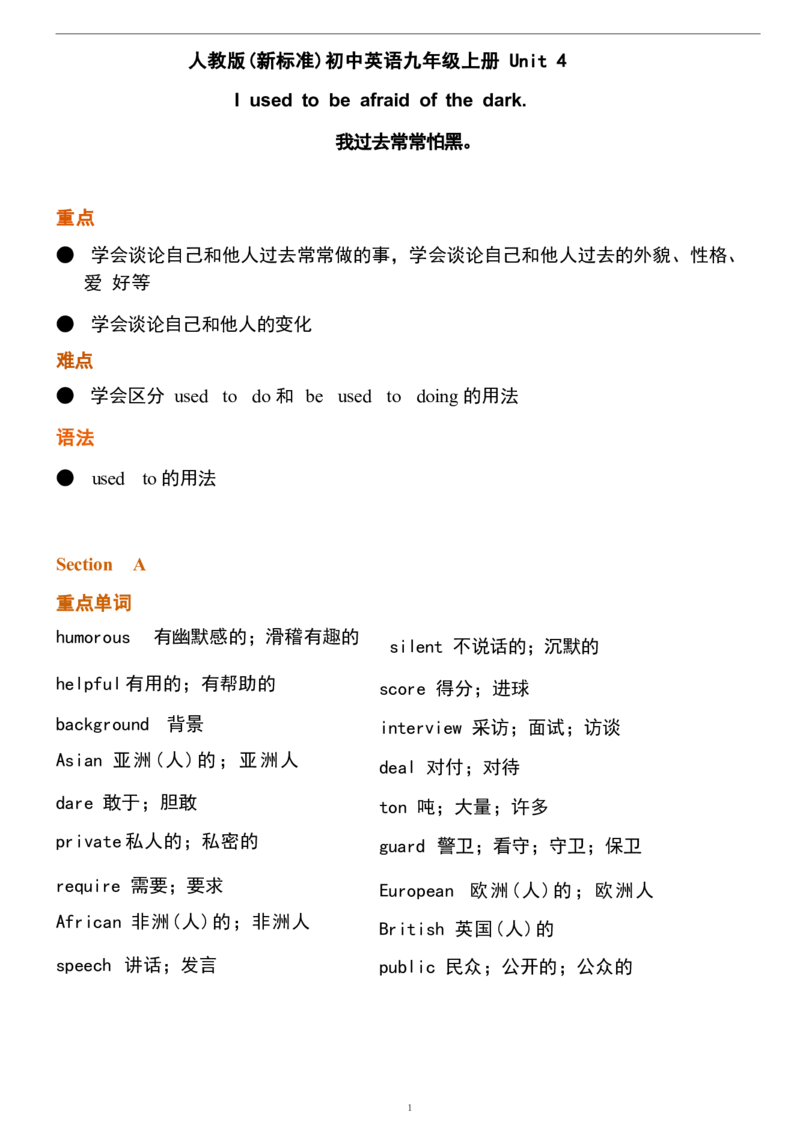
重点
● 学会谈论自己和他人过去常常做的事,学会谈论自己和他人过去的外貌、性格、
爱 好等
● 学会谈论自己和他人的变化
难点
● 学会区分 used to do 和 be used to doing 的用法
语法
● used to 的用法
Section A
重点单词
humorous 有幽默感的;滑稽有趣的
silent 不说话的;沉默的
helpful有用的;有帮助的
score 得分;进球
background 背景 interview 采访;面试;访谈
Asian 亚洲(人)的;亚洲人
deal 对付;对待
dare 敢于;胆敢
ton 吨;大量;许多
private私人的;私密的
guard 警卫;看守;守卫;保卫
require 需要;要求
European 欧洲(人)的;欧洲人
African 非洲(人)的;非洲人
British 英国(人)的
speech 讲话;发言 public 民众;公开的;公众的
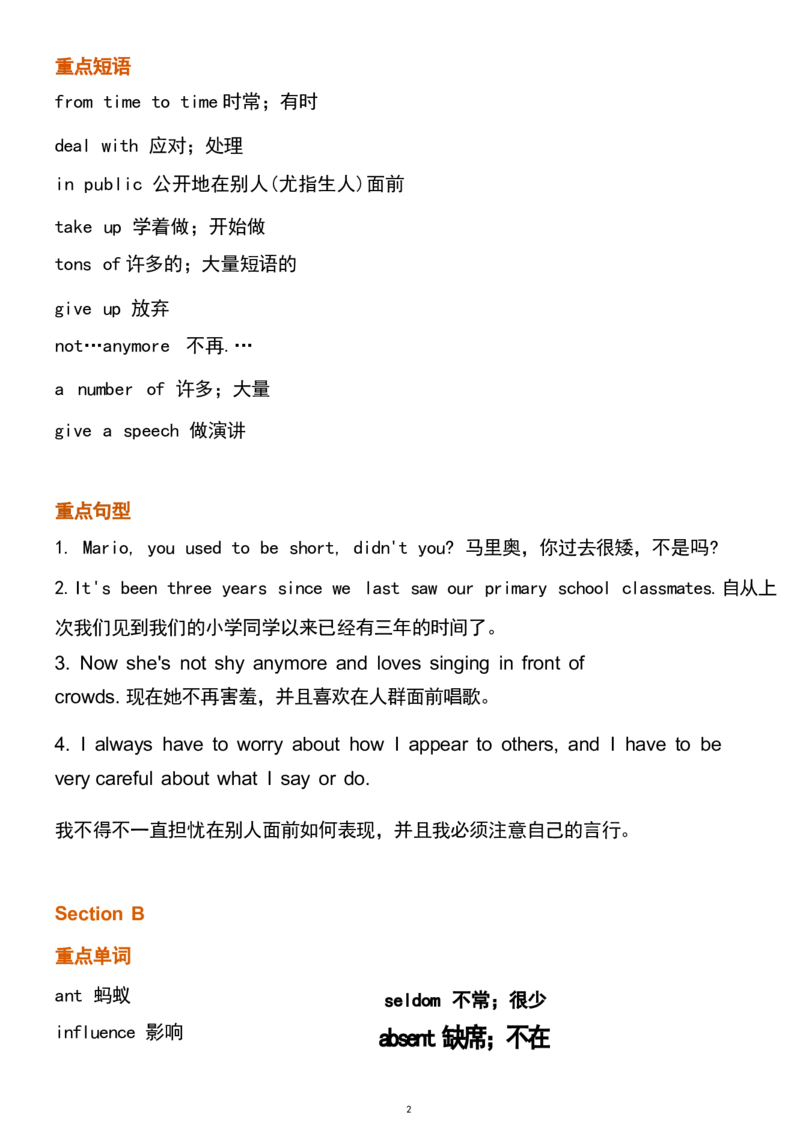
1重点短语
from time to time 时常;有时
deal with 应对;处理
in public 公开地在别人(尤指生人)面前
take up 学着做;开始做
tons of 许多的;大量短语的
give up 放弃
not…anymore 不再.…
a number of 许多;大量
give a speech 做演讲
重点句型
1. Mario, you used to be short, didn't you? 马里奥,你过去很矮,不是吗?
2.It's been three years since we last saw our primary school classmates.自从上
次我们见到我们的小学同学以来已经有三年的时间了。
3. Now she's not shy anymore and loves singing in front of
crowds. 现在她不再害羞,并且喜欢在人群面前唱歌。
4. I always have to worry about how I appear to others, and I have to be
very careful about what I say or do.
我不得不一直担忧在别人面前如何表现,并且我必须注意自己的言行。
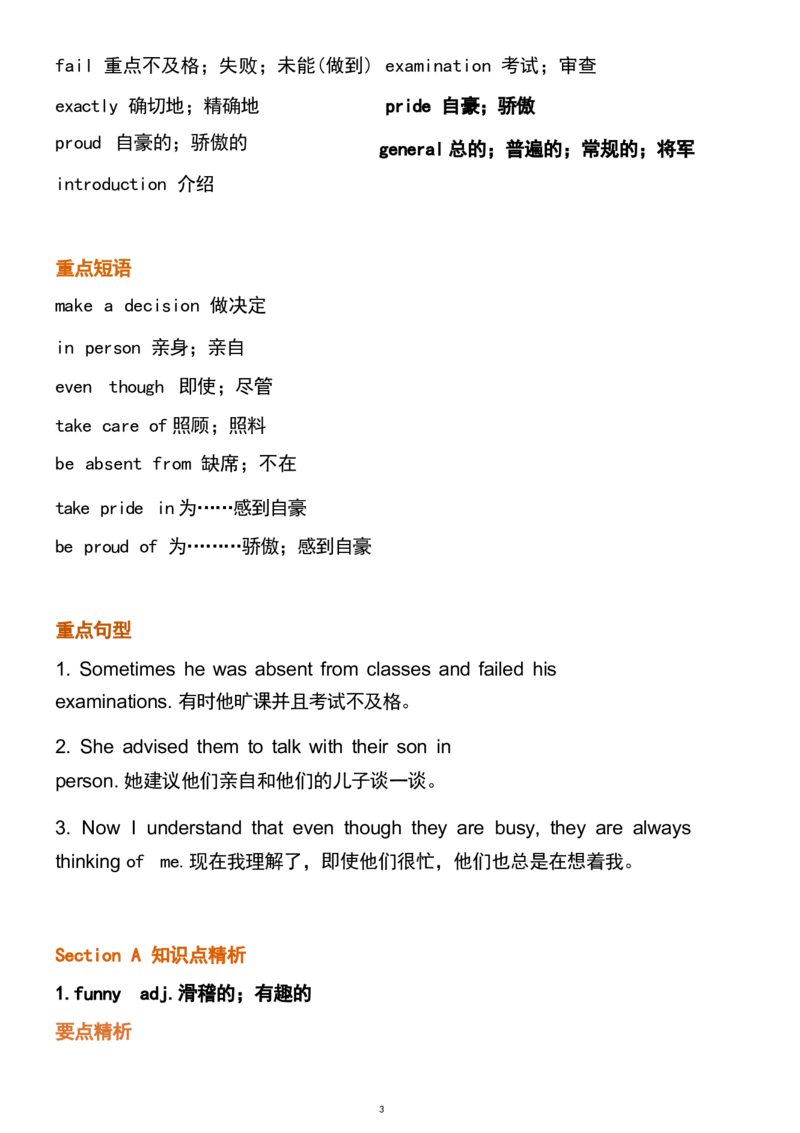
Section B
重点单词
ant 蚂蚁
seldom 不常;很少
influence 影响 absent 缺席;不在
2fail 重点不及格;失败;未能(做到) examination 考试;审查
exactly 确切地;精确地 pride 自豪;骄傲
proud 自豪的;骄傲的
general 总的;普遍的;常规的;将军
introduction 介绍
重点短语
make a decision 做决定
in person 亲身;亲自
even though 即使;尽管
take care of 照顾;照料
be absent from 缺席;不在
take pride in 为……感到自豪
be proud of 为………骄傲;感到自豪
重点句型
1. Sometimes he was absent from classes and failed his
examinations. 有时他旷课并且考试不及格。
2. She advised them to talk with their son in
person. 她建议他们亲自和他们的儿子谈一谈。
3. Now I understand that even though they are busy, they are always
thinking of me.现在我理解了,即使他们很忙,他们也总是在想着我。
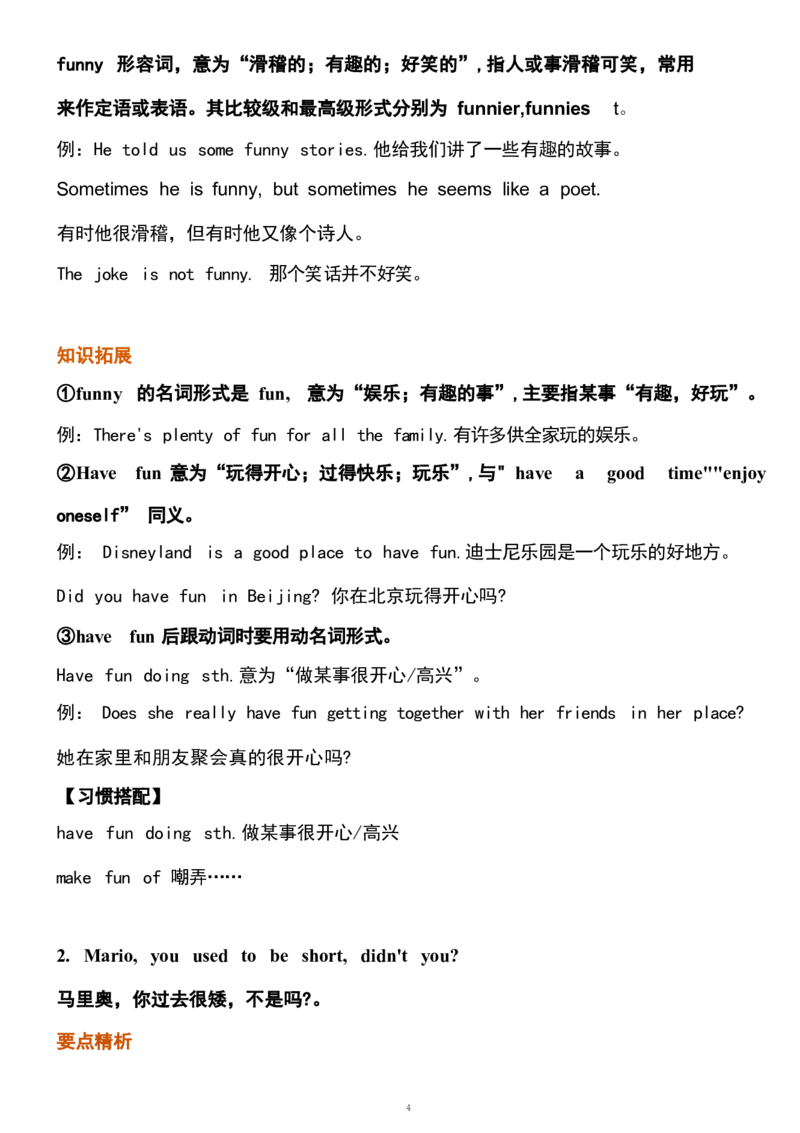
Section A 知识点精析
1.funny adj.滑稽的;有趣的
要点精析
3funny 形容词,意为“滑稽的;有趣的;好笑的”,指人或事滑稽可笑,常用
来作定语或表语。其比较级和最高级形式分别为 funnier,funnies t。
例:He told us some funny stories.他给我们讲了一些有趣的故事。
Sometimes he is funny, but sometimes he seems like a poet.
有时他很滑稽,但有时他又像个诗人。
The joke is not funny. 那个笑话并不好笑。
知识拓展
①funny 的名词形式是 fun, 意为“娱乐;有趣的事”,主要指某事“有趣,好玩”。
例:There's plenty of fun for all the family.有许多供全家玩的娱乐。
②Have fun 意为“玩得开心;过得快乐;玩乐”,与" have a good time""enjoy
oneself” 同义。
例: Disneyland is a good place to have fun.迪士尼乐园是一个玩乐的好地方。
Did you have fun in Beijing? 你在北京玩得开心吗?
③have fun 后跟动词时要用动名词形式。
Have fun doing sth.意为“做某事很开心/高兴”。
例: Does she really have fun getting together with her friends in her place?
她在家里和朋友聚会真的很开心吗?
【习惯搭配】
have fun doing sth.做某事很开心/高兴
make fun of 嘲弄……
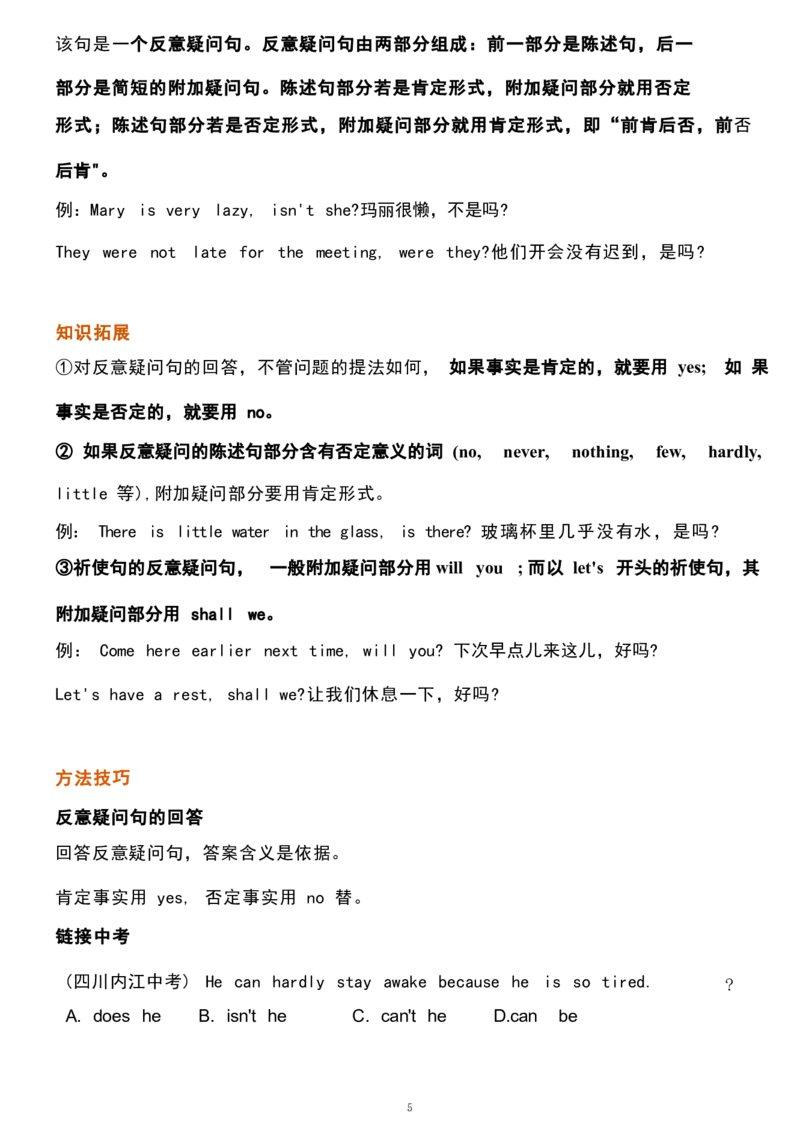
2. Mario, you used to be short, didn't you?
马里奥,你过去很矮,不是吗?。
要点精析
4该句是一个反意疑问句。反意疑问句由两部分组成:前一部分是陈述句,后一
部分是简短的附加疑问句。陈述句部分若是肯定形式,附加疑问部分就用否定
形式;陈述句部分若是否定形式,附加疑问部分就用肯定形式,即“前肯后否,前否
后肯"。
例:Mary is very lazy, isn't she?玛丽很懒,不是吗?
They were not late for the meeting, were they?他们开会没有迟到,是吗?
知识拓展
①对反意疑问句的回答,不管问题的提法如何, 如果事实是肯定的,就要用 yes; 如 果
事实是否定的,就要用 no。
② 如果反意疑问的陈述句部分含有否定意义的词 (no, never, nothing, few, hardly,
little 等),附加疑问部分要用肯定形式。
例: There is little water in the glass, is there? 玻璃杯里几乎没有水,是吗?
③祈使句的反意疑问句, 一般附加疑问部分用 will you ; 而以 let's 开头的祈使句,其
附加疑问部分用 shall we。
例: Come here earlier next time, will you? 下次早点儿来这儿,好吗?
Let's have a rest, shall we?让我们休息一下,好吗?
方法技巧
反意疑问句的回答
回答反意疑问句,答案含义是依据。
肯定事实用 yes, 否定事实用 no 替。
链接中考
(四川内江中考) He can hardly stay awake because he is so tired. ?
A. does he B. isn't he C. can't he D.can be
5解析:句中关键词 hardly (几乎不)表否定含义,故附加疑问部分用肯定形式,
可排除 B、C 两项;由主句中的情态动词 can 可知选 D。
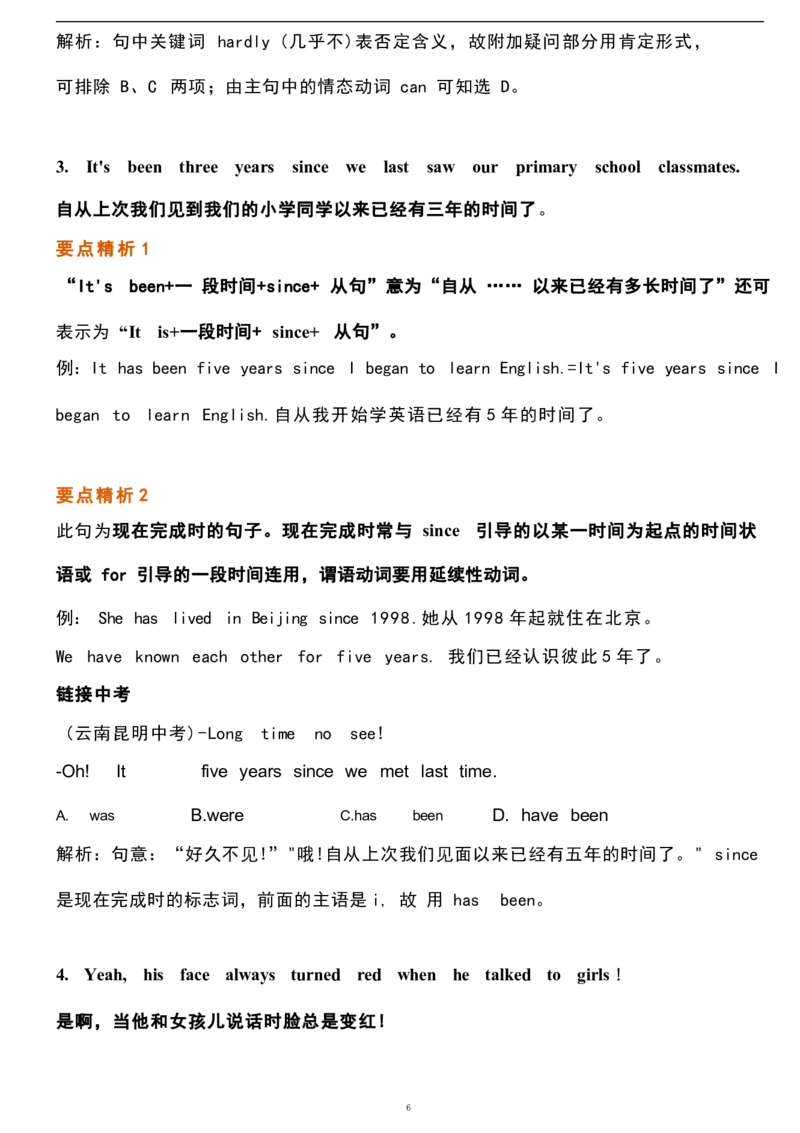
3. It's been three years since we last saw our primary school classmates.
自从上次我们见到我们的小学同学以来已经有三年的时间了。
要点精析 1
“It's been+一 段时间+since+ 从句”意为“自从 …… 以来已经有多长时间了”还可
表示为 “It is+一段时间+ since+ 从句”。
例:It has been five years since I began to learn English.=It's five years since I
began to learn English.自从我开始学英语已经有 5 年的时间了。
要点精析 2
此句为现在完成时的句子。现在完成时常与 since 引导的以某一时间为起点的时间状
语或 for 引导的一段时间连用,谓语动词要用延续性动词。
例: She has lived in Beijing since 1998.她从 1998 年起就住在北京。
We have known each other for five years. 我们已经认识彼此 5 年了。
链接中考
(云南昆明中考)-Long time no see!
-Oh! It five years since we met last time.
A. was B.were C.has been D. have been
解析:句意:“好久不见!”"哦!自从上次我们见面以来已经有五年的时间了。" since
是现在完成时的标志词,前面的主语是 i, 故 用 has been。
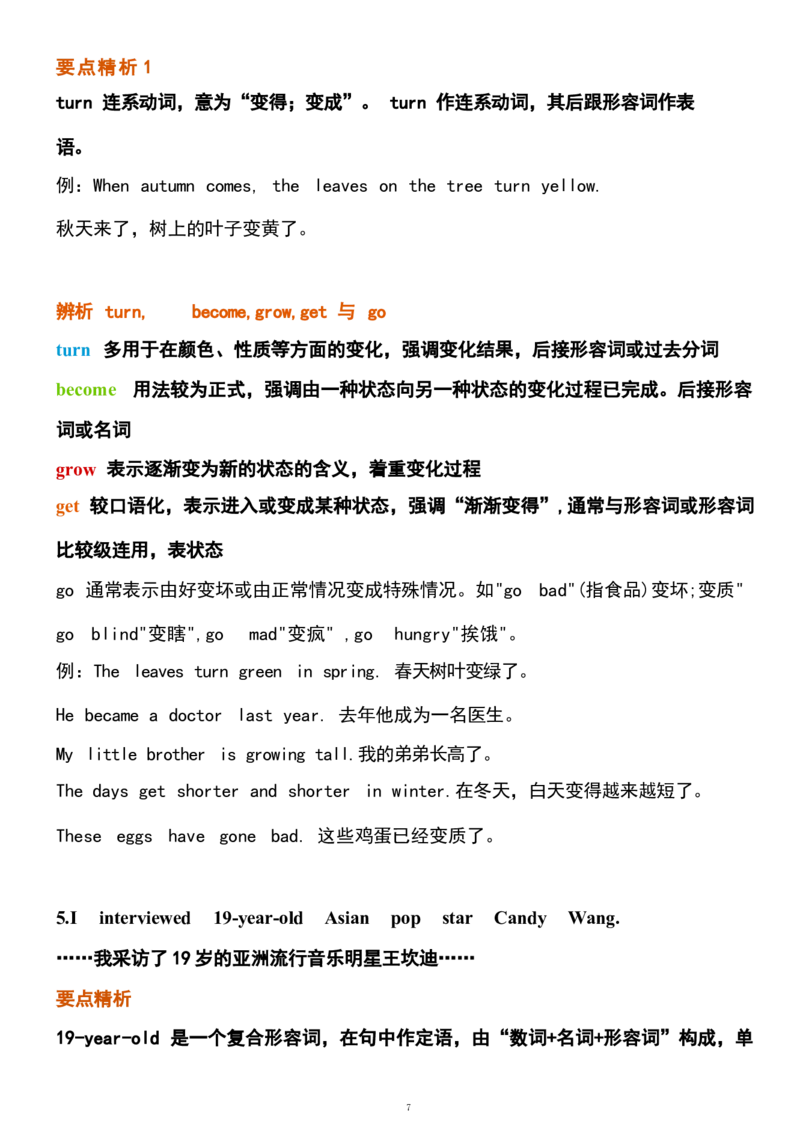
4. Yeah, his face always turned red when he talked to girls !
是啊,当他和女孩儿说话时脸总是变红!
6要点精析 1
turn 连系动词,意为“变得;变成”。 turn 作连系动词,其后跟形容词作表
语。
例:When autumn comes, the leaves on the tree turn yellow.
秋天来了,树上的叶子变黄了。
辨析 turn, become,grow,get 与 go
turn 多用于在颜色、性质等方面的变化,强调变化结果,后接形容词或过去分词
become 用法较为正式,强调由一种状态向另一种状态的变化过程已完成。后接形容
词或名词
grow 表示逐渐变为新的状态的含义,着重变化过程
get 较口语化,表示进入或变成某种状态,强调“渐渐变得”,通常与形容词或形容词
比较级连用,表状态
go 通常表示由好变坏或由正常情况变成特殊情况。如"go bad"(指食品)变坏;变质"
go blind"变瞎",go mad"变疯" ,go hungry"挨饿"。
例:The leaves turn green in spring. 春天树叶变绿了。
He became a doctor last year. 去年他成为一名医生。
My little brother is growing tall.我的弟弟长高了。
The days get shorter and shorter in winter.在冬天,白天变得越来越短了。
These eggs have gone bad. 这些鸡蛋已经变质了。
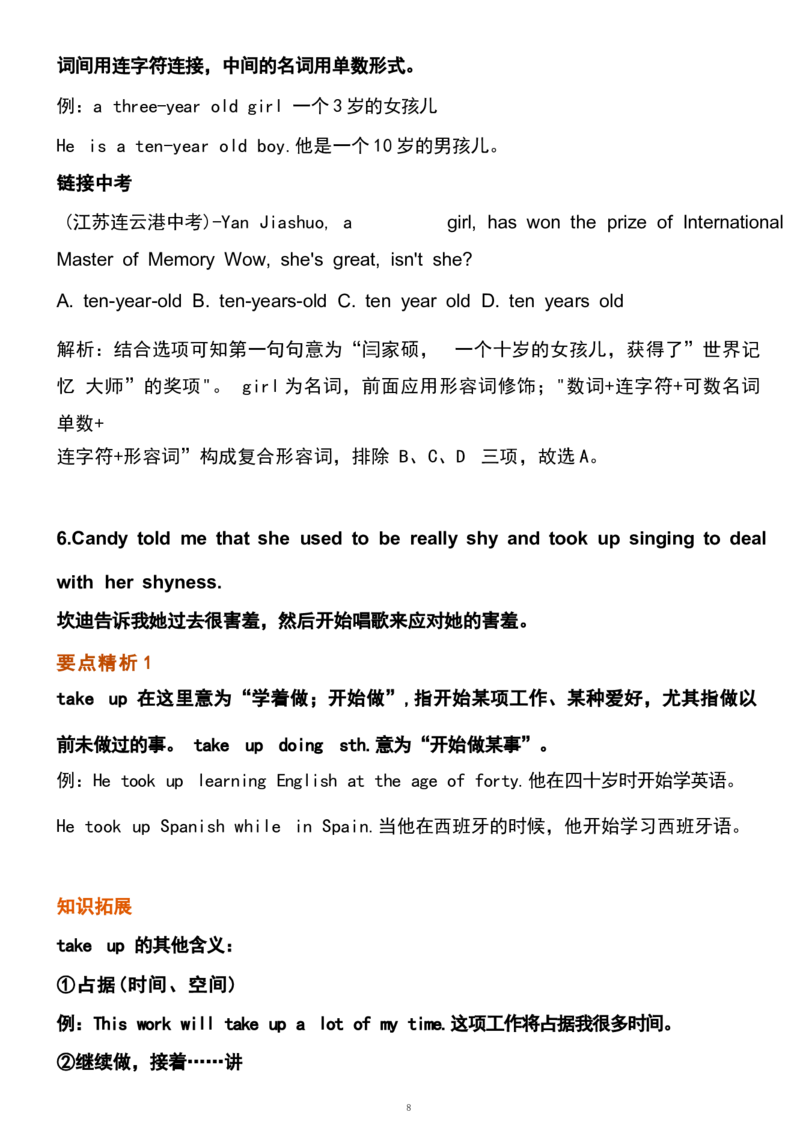
5.I interviewed 19-year-old Asian pop star Candy Wang.
……我采访了19岁的亚洲流行音乐明星王坎迪……
要点精析
19-year-old 是一个复合形容词,在句中作定语,由“数词+名词+形容词”构成,单
7词间用连字符连接,中间的名词用单数形式。
例:a three-year old girl 一个3岁的女孩儿
He is a ten-year old boy.他是一个10岁的男孩儿。
链接中考
(江苏连云港中考)-Yan Jiashuo, a girl, has won the prize of International
Master of Memory Wow, she's great, isn't she?
A. ten-year-old B. ten-years-old C. ten year old D. ten years old
解析:结合选项可知第一句句意为“闫家硕, 一个十岁的女孩儿,获得了”世界记
忆 大师”的奖项"。 girl 为名词,前面应用形容词修饰;"数词+连字符+可数名词
单数+
连字符+形容词”构成复合形容词,排除 B、C、D 三项,故选 A。
6.Candy told me that she used to be really shy and took up singing to deal
with her shyness.
坎迪告诉我她过去很害羞,然后开始唱歌来应对她的害羞。
要点精析 1
take up 在这里意为“学着做;开始做”,指开始某项工作、某种爱好,尤其指做以
前未做过的事。 take up doing sth.意为“开始做某事”。
例:He took up learning English at the age of forty.他在四十岁时开始学英语。
He took up Spanish while in Spain.当他在西班牙的时候,他开始学习西班牙语。
知识拓展
take up 的其他含义:
①占据(时间、空间)
例:This work will take up a lot of my time.这项工作将占据我很多时间。
②继续做,接着……讲
8例:I put the telephone down and took up the work again.
我放下电话,继续工作。
要点精析 2
deal 意为”应对;处理” ,其同义短语为 do with。
例:Have you dealt with these letters yet? 这些信件你已经处理了吗?
知识拓展
deal with 常和 how 连用, how 作 deal with 的状语; do with 常和 what 连用,
what 作 do 的宾语。
例:Teenagers want to ask for some advice on how to deal with the trouble.
青少年想询问一些如何解决这些烦恼的建议。
Mom, what can I do with the bad fish?妈妈,我应该怎样处理这条变质的鱼?
要点精析 3
shyness 不可数名词,意为“害羞;腼腆”。
例:Dancing helped her forget shyness. 跳舞帮助她忘记了羞怯。
【助记】
Shy (形容词,羞怯的;腼腆的)+ness(名词后缀)→ shyness (名词,害羞;腼腆)
知识拓展
以-ness 结尾的部分名词:
例:sadness 悲伤 kindness 善良 illness 疾病 darkness 黑暗
7. Now she's not shy anymore and loves singing in front of crowds.
现在她不再害羞,并且喜欢在观众面前唱歌。
9要点精析
not.anymore
意为“不再 … … ”,其同义短语有 no more,not…
any
longer, no longer.
例:He isn't a teacher anymore. 他不再是一位老师了。
辨析 not.any more 与 not.any longer
not.any more(=no more) 多指数量和程度上“不再”,常修饰非延续性动词。常
用于将来时态
not …any longer(=no longer) 表示时间上或距离的“不再”,常修饰延续性动词,
常用于现在时态
例:He will no more go there.他将不再去那里了。
We don't live here any longer.=We no longer live here.我们不再住在这里了。
8. She explained that there are many good things, like being able to travel
and meet new people all the time.
她解释说有许多好的事情,像能够旅行和总是见新面孔。
要点精析 1
that there are many good things 是由 that 引导的宾语从句,在句中作 explained
的宾语。
要点精析 2
able 意为“能干的,有能力的”。 ability名词,意为“能力”。 be able to意为“能,
会" 。
例:He is a very able businessman. 他是一个很有才干的商人。
He is a man of many abilities. 他是一个有多方面才能的人。
10You must be able to speak French for this job.做这项工作你必须会讲法语
辨析 be able to 与 can
be able to表示客观能力,可用于各种时态
can 强调主观能力,仅用于一般现在时和一般过去时两种时态
9. I always have to worry about how I appear to others, and I have to be
very careful about what I say or do.
我不得不一直担忧在别人面前如何表现,并且我必须注意自己的言行。
要点精析 1
have to 意 为 " 不 得 不 "。
例:Please be quiet. I have to read the book for a test tomorrow.
请安静。为了明天的测试我不得不看书。
辨析 have to 与 must
have to具有客观性,即不以人的主观意志而转移,意为”不得不”;可用于各种时态
must 强调主观性,即以人的主观意志而改变
例:I will have to finish my homework tomorrow.
我明天将不得不完成我的家庭作业。
I think I must work hard. 我想我必须努力学习。
要点精析 2
worry about sb./sth.意为“为某人/某事而焦虑、烦恼、担心”,强调”担心”的
动作。
例:She worried about some little things.她为一些小事而烦恼。
11知识拓展
①be worried about 表示“担心”的状态。
例:I'm really worried about my brother.我真的很担心我弟弟。
②be worrying about 表示“担心”的动作正在进行。
例:It is late, but Daming doesn't come back. So his parents are worrying about
him. 天已经晚了,但是大明还没有回来。所以他的父母正在担心他。
要点精析 3
how I appear to others 是宾语从句,作 worry about 的宾语。
10. you have to be prepared to give up your normal life.
……你必须准备好放弃你的正常生活。
要点精析 1
be prepared to do sth.意为“准备好做某事;愿意做某事”,尤指做难做或通常不
做的事情。
例:Are you prepared to give up freedom? 你愿意放弃自由吗?
知识拓展
be prepared for sth. 意为“为某事做好准备”。
例:I'm prepared for the exam. 我为考试做好了准备。
要点精析 2
give up 意为“放弃”,其后接名词、代词或动名词作宾语。give up 是“动词+副
词” 型短语,后接代词作宾语时,代词应置于 give 与 up 之间。 give up doing
sth.意
为“放弃做某事”。
12例:I can't answer that puzzle. I give it up.我猜不出那个谜语。我放弃它了。
Don't give up studying English. 不要放弃学习英语。
链接中考
(四川泸州中考) You should smoking. It's really bad for your health.
A.put up B.give up C. get up D. set up
解析:句意:你应该戒烟。吸烟真的对你的健康有害。 put up 搭起,建起; give up
放弃; get up 起床; set up 成立;建立。 give up smoking"戒烟"。故选 B。
11.Only a very small number of people make it to the top.
只有很少的人能攀上成功之巅。
要点精析 1
a very small number 意为“极少数”,后接复数名词。 A number of 意为“许
多 的”,相当于 a lot of,起修饰作用,"a number of+可数名词复数"作主语时,
谓
语动词要用复数形式。
例:There are a number of ants on the ground.地上有很多蚂蚁。
知识拓展
the number of.意为“……的数量”,作主语时,谓语动词用单数形式。
例:The number of visitors to France has now increased.
去法国的游客数量现在已经增加了。
The number of the apples is 40. 这些苹果的数量是四十。
链接中考
(湖南益阳)-How many women doctors are there in your hospital?
them over twenty.
A. A number of; are B. The number of; are C. The number of; is
13解析:句意:"在你们医院有多少名女医生?""她们的数量超过二十。”表示".…
的数量”用 the number of,作主语时,谓语动词用单数形式。 选 C。
12.giving a speech in public 当众做演讲。
要点精析 1
give a speech 意为“做演讲”,相当于 make a speech。speech为可数名词,意
为 “讲话;发言 ”。
例:They invited her to give a speech.他们邀请她做演讲。
要点精析 2
in public 意为“当众,在公共场合”。
例:It is not polite to stare at others in public.在公共场合盯着别人看是不礼貌的。
即学即试
根据句意及首字母或汉语提示完成单词
1. That British teacher is very h .He always tells interesting jokes
2. It is (有帮助的)to discuss your problems with your friends.
3. People are usually required to give a general self-introduction in a job
.
4. He is afraid of giving a (讲话;发言) in public.
5. She didn't ( 敢 于 ) to open her mouth.
单项填空
1.-Don't be late for school next time, ?
-No, I won't.
A. are you B. will you C. do you D.did you
142. A woman was saved from the ship on June 2nd, 2015.
A. 65 year old B.65-year-olds C.65-year-old D.65-vears-old
3. Jane is very busy these days, for she has a lot of problems to
A. deal with B. keep up with C.agree with D. come up with
4. As we know, many successful people never no matter what
difficulties they've had.
A. stay up B. cheer up C. take up D. give up
5-What the number of the students in your school?
-About two thousand. A number of them from the countryside.
A. is; are B. is; is C.are; is D.are; are
Section B 知识点精析
1.It is hard to believe that he used to have difficulties in school.
很难相信他过去在学校里有困难。
要点精析
"It is hard to believe that 从句”意为"很难相信 …… ",其中 it 是形式主语,真
正
的主语是动词不定式结构,其中 that 引导的从句作 believe 的宾语。
例:It is hard to believe that she's only nine. 很难相信她只有 9 岁。
2.When he was a little boy, he seldom caused any problems, and his family
spent a lot of time together.
当他是一个小男孩儿时,他很少惹麻烦,并且他一家人一起度过了很多时光。
要点精析
seldom 副词,意为“不常;很少”。 一般放在实意动词之前,连系动词、助动词或情
态动词之后。
15例:He seldom asked his parents for money when he was at school.
他上学的时候很少向他父母要钱。
I've seldom seen such a big apple.我很少看到这么大的苹果。
链接中考
(江苏南京中考)This kind of plant is seen in our city because it lives 4, 500
m above sea level and is hard to find.
A. commonly B.always C.seldom D.easily
解析: commonly 意为“通常地; 一般地”;always: 意为“总是”;seldom 意为
"不常;很少";easily 意为“容易地”。由原因状语从句句意“因为它生长在海 4500
米的地方,很难被发现”可推知,主句句意为“这种植物在我们城市很少见到” , 故
选 C。
3.His parents moved to the city to look for jobs and his grandparents came
to take care of him. 他的父母搬到城市去找工作,他的祖父母来照顾他。
要点精析
take care of 意为“照顾照料”,同义短语为 look after“好好照顾”可用 take good
care of 或 look after.well表示。
例:Who's taking care of the child while you're away?
你外出时谁来照料这个孩子?
【助记】
take care of her kid 照顾她的孩子
知识拓展
take care 意为“当心;小心”,与 be careful,look out同义。常用于祈使句或警
告对方时的用语。 take care that/ to do sth.“小心,当心……/做某事”。
16例:Take care that you don't drink too much! 你当心别喝得太多!
Take care not to break the glass. 小心别打碎玻璃杯。
Be careful not to lose the key. 当心不要丢了钥匙。
Look out! There's danger ahead.当心!前面有危险。
4. Sometimes he was absent from classes and failed his examinations.有时
他旷课并且考试不及格。
要点精析 1
absent 形容词,意为“缺席的;不在场的”,常与介词 from 连用。
例:They were absent from work that day. 他们那天没有上班。
知识拓展
① ,意为“缺席;不在”。
例:The decision was made in my absence.
这个决定是我 absence 名词不在的时候做出的。
②absent 的反义词为 present, 意为“出席的;到场的”。
例:Many famous writers are present at the meeting.
许多著名作家都出席了这次会议点。
要点精析 2
fail此处用作及物动词,意为"不及格;未通过" ,也可用作不及物动词,因此 fail
examination (考试不及格)也可表示为 fail in an examination.
例: Bob always fails (in) his examinations.鲍勃总是考试不及格。
知识拓展
17fail作动词,还可意为“失败;未能(做到)”。常用于搭配 fail to do sth.“做
某事失败;未能做成某事”。
例: Doctors failed to save the girl's life.医生们没能救活这个女孩儿。
要点精析 3
examination 可数名词,意为”考试”相当于 exam, 但比较正式。其动词形式为
examine。
例:Everyone is waiting for the examination results.
每个人都在等待考试成绩。
小贴士
表示“参加考试”,要用 take an examination exam。表示“通过考试”,要用 pass
the examination/exam。
5. She advised them to talk with their son in person.
她建议他们亲自和他们的儿子谈一谈。
要点精析 1
advice 动词,意为“向……提出意见/忠告/建议”。 advice 意为“建议”,是不可数
名词。
例:Could you advise me on the problem? I really need some advice about it.
关于这个问题你能给我些建议吗?我真的需要一些关于它的建议。
知识拓展
advise 常用于下列结构:
①advise+doing
例:I'd advise buying your tickets in advance.我建议你提前订票。
18②advise sb.(not) to do sth.
例:I advise you to be cautious. 我建议你要小心谨慎。
I advise you not to tell him.我建议你不要告诉他。
③advise+ 定语+介词
例:The doctor can advise you on health.医生能就你的健康提一些建议。
链接中考
(江苏苏州中考)Our teacher often advises us the habit of making notes
while reading.
A. to develop B. develop C.to developing D.developing
解析:advise sb.to do sth.意为“建议某人做某事”,动词不定式(短语)作宾语补
足语。故选 A。
要点精析 2
in person 意为“亲身;亲自”,相当于 by oneself,在句中作状语。
例:You had better come in person and say sorry to her.
你最好亲自过来并向她道。
知识拓展
in person 在很多情况下相当于 by oneself。
例:Do you need to do it in person/by yourself? 你需要亲自做这件事吗?
You may get the form in person or by letter.
你可以亲自来领取表格或通过信件(获得)。
6. It was exactly what I needed….这正是我所需要的……
要点精析 1
19exactly 副词,意为”确切地;精确地”,单独使用表示“赞同”,意为“确实
如此”。
例:That's exactly what I want to buy. 那正是我想买的。
Tell me exactly where he is. 确切地告诉我他在哪里。
-So you think that we should spend more money on education?
所以你就认为我们应该在教育上多花些钱?
-Exactly.确实如此。
知识拓展
exact 形容词,意为“确切的;精确的”。
例:We need to know the exact time the incident occurred.
我们需要了解事故发生的确切时间点。
要点精析 2
what 引导的句子在句中作表语,叫作表语从句。表语从句由引导词引导,引导词的选
用由句意决定。
例:China is no longer what it was thirty years ago.
中国不再是 30 年前的样子了。
7. Now I understand that even though they are busy , they are always
thinking of me.现在我理解了,即使他们很忙,他们也总是在想着我。
要点精析 1
这是一个复合句,that 引导的是宾语从句。该宾语从句中又含有一个由 even though
引导的让步状语从句。
20要点精析 2
even though 相当于 even
if,表示“即使;尽管”,引导让步状语从句。
例:Even though you take a taxi you will miss the train.
即使你乘坐出租车,你也将赶不上火车了。
要点精析 3
be always doing sth.意为“总是做某事” ,常用于表达说话人的某种情绪,如赞扬、
不满、责备等。
例:He was always asking his parents for money.他总是向他父母要钱。
She is always thinking of her parents. 她总是想着她的父母。
8.They take pride in everything good that I do.
他们为我做的每一件好事感到自豪。
要点精析 1
take pride in 意为“为……感到自豪”,常用于因取得某种成绩或荣誉而感到自豪。
例: His father takes great pride in what he has done.
他父亲对他做的事情感到非常自豪。
要点精析 2
everything good 意为“每一件好事”。形容词 good 在这里作定语,修饰前面的
不定代词 everything。 形 容 词 作 定 语 修 饰 something, anything,
nothing,
everything 等不定代词时,形容词要放在这些不定代词的后面。
例:Here isn't anything Interesting in today's newspaper.
今天的报纸上没有任何有趣的东西。
I have something important to tell you.我有一 些 重 要的事情要告诉你。
21There is nothing new in
house.他家里没有什么新的东西。
his
链接中考
please tell me in today's newspaper.
(四川眉山中考)- Would you
-Sorry, I haven't read it yet.
A. something important
B.important
something C. anything
important
D.important anything
解析:不定代词 something,anything 等被形容词修饰时,形容词要放在不定代词
后面,排除 B、D 两项;在表示客气地请求的疑问句中要用 something。 选 A。
9.I know my parents love me and they're always proud of me..
我知道我的父母爱我并且他们总是为我感到骄傲… …
要点精析 1
be proud of 意为“以……为骄傲;感到自豪”与 take pride in 同义,但 be proud
of 通常用于因为某人而感到骄傲与自豪。
例:They are very proud of their son.他们为他们的儿子感到非常骄傲。
知识拓展
proud 是形容词,意为“自豪的;骄傲的”其名词形式是 pride, 意为“自豪,骄傲”
以 proud 构成的词组是 be proud of;以 pride 构成的词组是 take pride in。
链接中考
(湖北孝感中考) Jenny's uncle is him a scientist. She is proud him.
A.from B. at C. in D. of
解析:句意:珍妮的叔叔是一位科学家,她为他感到骄傲。 be proud of 是固定词组,
22故选 D。
10. What do you think Li Wen and his parents talked about in their
conversation? 你认为李文和他的父母在他们的谈话中谈了什么?
要点精析 1
conversation 名词,意为“谈话:交谈”。
例:You may have a telephone conversation with her.
你可以与她进行一次电话交谈。
【助记】
have a conversation 谈话
【习惯搭配】
a friendly conversation 一次友好的交淡
make a conversation 会话
have a conversation with 与...交谈
知识拓展
a private conversation 意为“一次私人交谈”。
例:It's none of your business. It's a private conversation.
这不关你的事。这是一次私人交谈。
11.My life has changed a lot in the last few years.
在过去的几年里,我的生活变化很大。
要点精析 1
in the last few years 意为“在最近几年;在过去的几年里” ,也可以说成 in the
past few years,指到目前为止的过去几年,句子用现在完成时。
23例:I have learned a lot in the last few years.在过去的几年里,我学到了许
多知识。
Great changes have taken place in our village in the past few years.
在过去的几年里,我们的村庄发生了巨大变化。
链接中考
(湖北宜昌中考)
Internet business traditional business in the past few years?
-Not really.
A Does; beat B. Will; beat C Has; beaten D.Is; beating
解析:句意:"在过去的几年里互联网商业已经击败了传统商业吗?""不见得。"由时
间状语 in the past few years 可判断用现在完成时。选C。
12. require v.需要;要求。
要点精析 1
require 动词,意为“需要;要求”,其后跟名词、代词或从句等作宾语。其常用结构
为 require sb. to do sth.意为“要求某人做某事”。
例:They required us to carry out the plan.他们要求我们执行这项计划。
We required her to attend the opening ceremony. 我们要求她出席开幕式。
小贴士
require 通常不用于进行时态。
即学即试
I 单项填空
1.-Is there in today's newspaper?
-Yes, quite a lot.
A.anything interesting
24B.something
interesting
C.interesting
anything
D.interesting something
2. Your mother always in you,
right? A. take pride B. take
proud
C. takes pride D. takes proud
3. It is hard to believe the well-mannered gentleman is the bad boy who
put his parents in shame 15 years ago
A.who B. that C.what D.where
4.-Excuse me, does Mr. Zhang's son live here?
-He be here, but he has moved.
A.used for B.used to C. was used to D.got used to
5. Every possible means to prevent the water pollution, but the river is
still not clean.
A. has to use B.are used C. has been used D. have used
Ⅱ 根据汉语意思完成句子
1.尽管天在下雨,她还是出去了。
She went out it was raining.
2.你应该亲自问他。
You should ask him .
3.很难相信海伦可以讲日语如此好。
It is hard Helen can speak Japanese so well.
4.最后她决定去旅游。
Finally she to have a trip.
5.上周末她替妈妈在家照顾奶奶。
25She
grandm instead of her mother at home
a
her
last weekend.人教版(新标准)初中英语九年级上册 Unit 4
I used to be afraid of the dark.我过去常常怕黑。
参考答案与解析
Section A
即学即试
I
2.helpful 3.interview 4. speech 5. dare
1.humorous
Ⅱ .
1.B 祈使句变反意疑问句时,附加疑问部分要用 will you。故选 B。
2.C 复合形容词中间要用连字符,名词必须用单数形式,故选 C。
3.A 句意为"简这些天很忙,因为她有许多问题要处理"。表示“处理”用 deal with,
故选 A。
4. D stay up "熬夜";cheer up"振作起来";take up"学着做;开始做";give
up "放弃"。根据句意“众所周知,许多成功的人从来都不放弃,无论他们遇到什么困
难。”
可知选 D。
5.the number 意为”……的数量”,此处问句询问"你们学校学生的数量是多少?",
故 be 动词用单数形式,排除 C、D 两项; number of 意为“许多;大量”,作主语
时,
谓语动词用复数形式,故选 A。
Section B
即学即试
I
1.A 形容词修饰不定代词时形容词应该后置疑问句用 anything 而不用 something,
故选 A。
272.take pride in为固定短语,意为“为…感到自豪”,主语 your
mother是
第三人称单数形式,故选C。
3.B句意:很难相信这个彬彬有礼的绅士就是那个15年前让他的父母无地自容的坏男
孩儿。"It is hard to believe +that 从句"为固定句式,故选B。
4.B句意:“打扰了,张先生的儿子住在这里吗?""他过去是住在这里,但是他已经搬
走了。”used to 意为“过去常常”,符合题意。故选B。
5. be used to do sth.意为“被用来做某事”。句意:每一种可能的方法都被用来制
止 水污染,但是这条河仍然不干净。 means 意为“方式,方法”,单复数同形,且有
every
修饰,故选C。
Ⅱ
1.even though/if
2.in person/by yourself
3. to believe that
4. makes/made a decision5. took care of