文档文本内容
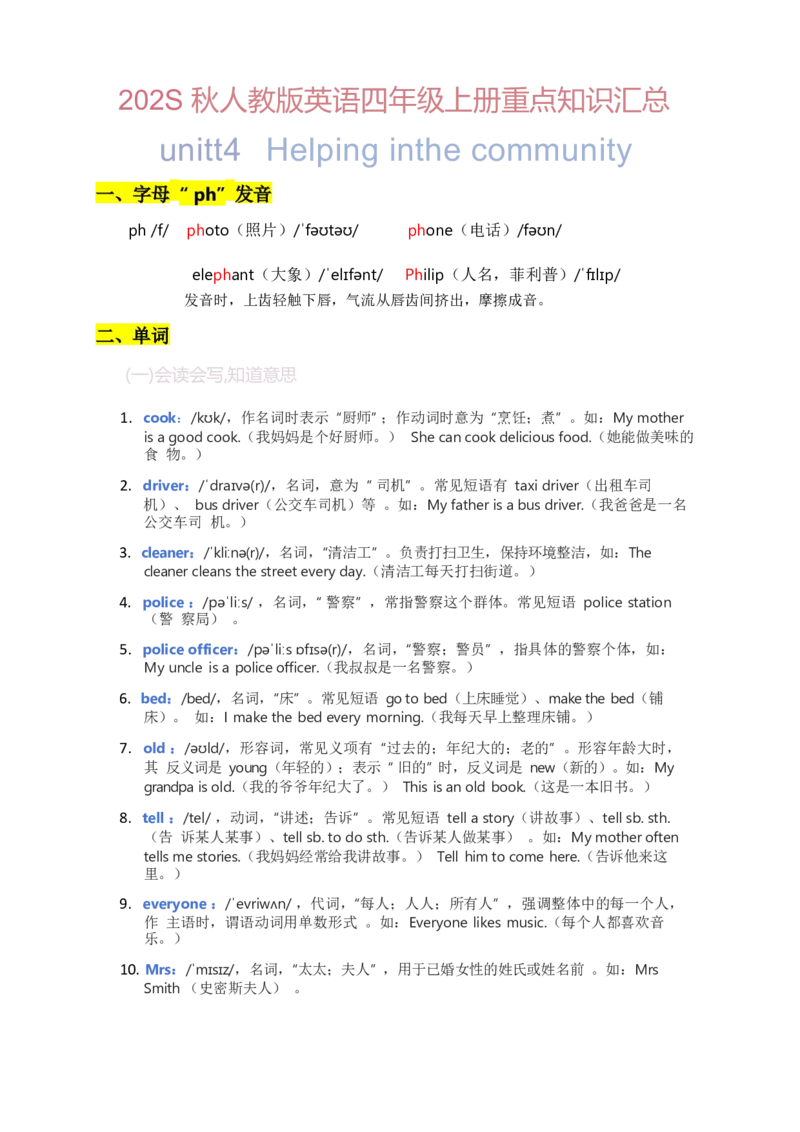
202S 秋人教版英语四年级上册重点知识汇总
unitt4 Helping inthe community
一、字母 “ ph” 发音
ph /f/ photo(照片)/ˈfəʊtəʊ/ phone(电话)/fəʊn/
elephant(大象)/ˈelɪfənt/ Philip(人名,菲利普)/ˈfɪlɪp/
发音时,上齿轻触下唇,气流从唇齿间挤出,摩擦成音。
二、单词
(一)会读会写,知道意思
1. cook:/kʊk/,作名词时表示 “厨师” ;作动词时意为 “烹饪;煮” 。如:My mother
is a good cook.(我妈妈是个好厨师。) She can cook delicious food.(她能做美味的
食 物。)
2. driver:/ˈdraɪvə(r)/,名词,意为 “ 司机” 。常见短语有 taxi driver(出租车司
机)、 bus driver(公交车司机)等 。如:My father is a bus driver.(我爸爸是一名
公交车司 机。)
3. cleaner:/ˈkliːnə(r)/,名词,“清洁工” 。负责打扫卫生,保持环境整洁,如:The
cleaner cleans the street every day.(清洁工每天打扫街道。)
4. police :/pəˈliːs/ ,名词,“ 警察” ,常指警察这个群体。常见短语 police station
(警 察局) 。
5. police officer:/pəˈliːs ɒfɪsə(r)/,名词,“警察;警员” ,指具体的警察个体,如:
My uncle is a police officer.(我叔叔是一名警察。)
6. bed:/bed/,名词,“床” 。常见短语 go to bed(上床睡觉)、make the bed(铺
床)。 如:I make the bed every morning.(我每天早上整理床铺。)
7. old :/əʊld/,形容词,常见义项有 “过去的;年纪大的;老的” 。形容年龄大时,
其 反义词是 young(年轻的);表示 “ 旧的” 时,反义词是 new(新的)。如:My
grandpa is old.(我的爷爷年纪大了。) This is an old book.(这是一本旧书。)
8. tell :/tel/ ,动词,“讲述;告诉” 。常见短语 tell a story(讲故事)、tell sb. sth.
(告 诉某人某事)、tell sb. to do sth.(告诉某人做某事) 。如:My mother often
tells me stories.(我妈妈经常给我讲故事。) Tell him to come here.(告诉他来这
里。)
9. everyone :/ˈevriwʌn/ ,代词,“每人;人人;所有人” ,强调整体中的每一个人,
作 主语时,谓语动词用单数形式 。如:Everyone likes music.(每个人都喜欢音
乐。)
10. Mrs:/ˈmɪsɪz/,名词,“太太;夫人” ,用于已婚女性的姓氏或姓名前 。如:Mrs
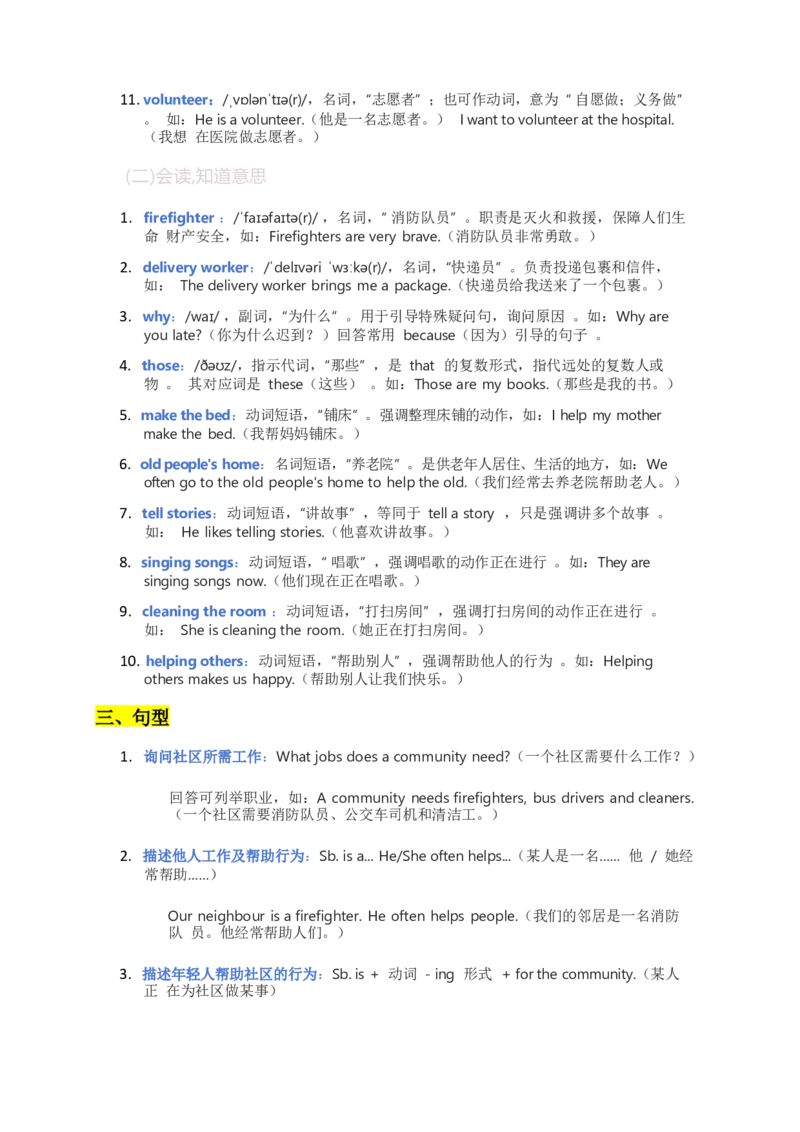
Smith (史密斯夫人) 。11. volunteer:/ˌvɒlənˈtɪə(r)/,名词,“志愿者” ;也可作动词,意为 “ 自愿做;义务做”
。 如:He is a volunteer.(他是一名志愿者。) I want to volunteer at the hospital.
(我想 在医院做志愿者。)
(二)会读,知道意思
1. firefighter :/ˈfaɪəfaɪtə(r)/ ,名词,“ 消防队员” 。职责是灭火和救援,保障人们生
命 财产安全,如:Firefighters are very brave.(消防队员非常勇敢。)
2. delivery worker:/ˈdelɪvəri ˈwɜːkə(r)/,名词,“快递员” 。负责投递包裹和信件,
如: The delivery worker brings me a package.(快递员给我送来了一个包裹。)
3. why:/waɪ/ ,副词,“为什么” 。用于引导特殊疑问句,询问原因 。如:Why are
you late?(你为什么迟到?)回答常用 because(因为)引导的句子 。
4. those:/ðəʊz/,指示代词,“那些” ,是 that 的复数形式,指代远处的复数人或
物 。 其对应词是 these(这些) 。如:Those are my books.(那些是我的书。)
5. make the bed:动词短语,“铺床” 。强调整理床铺的动作,如:I help my mother
make the bed.(我帮妈妈铺床。)
6. old people's home:名词短语,“养老院” 。是供老年人居住、生活的地方,如:We
often go to the old people's home to help the old.(我们经常去养老院帮助老人。)
7. tell stories:动词短语,“讲故事” ,等同于 tell a story ,只是强调讲多个故事 。
如: He likes telling stories.(他喜欢讲故事。)
8. singing songs:动词短语,“ 唱歌” ,强调唱歌的动作正在进行 。如:They are
singing songs now.(他们现在正在唱歌。)
9. cleaning the room :动词短语,“打扫房间” ,强调打扫房间的动作正在进行 。
如: She is cleaning the room.(她正在打扫房间。)
10. helping others:动词短语,“帮助别人” ,强调帮助他人的行为 。如:Helping
others makes us happy.(帮助别人让我们快乐。)
三、句型
1. 询问社区所需工作:What jobs does a community need?(一个社区需要什么工作?)
回答可列举职业,如:A community needs firefighters, bus drivers and cleaners.
(一个社区需要消防队员、公交车司机和清洁工。)
2. 描述他人工作及帮助行为:Sb. is a... He/She often helps...(某人是一名…… 他 / 她经
常帮助……)
Our neighbour is a firefighter. He often helps people.(我们的邻居是一名消防
队 员。他经常帮助人们。)
3. 描述年轻人帮助社区的行为:Sb. is + 动词 - ing 形式 + for the community.(某人
正 在为社区做某事)Chen Jie is making the bed for the old people in the old people's home.(陈杰
正 在养老院为老人们铺床。)
4. 询问某人正在做什么:What are you/they doing?(你 / 他们正在做什么?)
回答:I'm/They're + 动词 - ing 形式.(我 / 他们正在…… ) ,如:What are
they doing? - They're cleaning the room.(他们正在做什么? - 他们正在打扫房
间。)
5. 表达自己是社区志愿者及活动内容:We are community volunteers. We often...(我们
是社区志愿者。我们经常……)
We are community volunteers. We often help children and old people.(我们是
社 区志愿者。我们经常帮助儿童和老人。)
四、重难点
(-)职业类词汇的掌握与运用: 牢记表示职业的单词(如 firefighter、driver、cleaner
等), 并能准确拼写和运用。注意区分相似职业词汇的含义,如 police(警察群
体)和 police officer(具体警员) 。在描述人物职业时,正确使用句型 Sb. is a...
。
(二)现在进行时的理解与运用: 现在进行时表示现在正在进行的动作或存在的状态,其
结 构为 “be 动词(am/is/are) + 动词的现在分词形式(动词 - ing)” 。掌握
be 动 词与主语的搭配(I 用 am ,you 用 are ,he/she/it 等第三人称单数用 is
)以及 动词变现在分词的规则:
1. 一般情况下,直接在动词后加 - ing ,如:clean - cleaning 、play - playing 。
2. 以不发音的字母 e 结尾的动词,去掉 e 再加 - ing ,如:make - making
、 write - writing 。
3. 以重读闭音节结尾,且末尾只有一个辅音字母的动词,双写末尾辅音字母再加
- ing ,如:run - running 、swim - swimming 。学会运用现在进行时描述人
们 正在进行的活动,如:He is singing.(他正在唱歌。) They are playing
football.
(他们正在踢足球。)
(三)动词短语的搭配与使用: 熟练掌握本单元出现的动词短语(如 make the bed 、
tell stories、clean the room 等)的含义和用法,能在句子中正确运用这些短语描
述相 关活动 。注意短语中名词的单复数形式和动词的形式变化(如现在进行时中
的动词 - ing 形式) 。
(四)询问原因及回答: 学会用 why 引导特殊疑问句询问原因,并能用 because 引导的
句子回答 。如:Why do you like this book? - Because it's very interesting.(你
为 什么喜欢这本书? - 因为它非常有趣。)