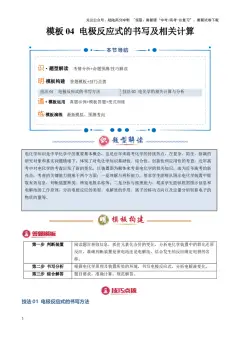
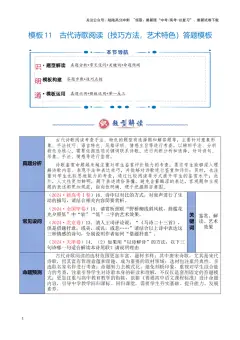
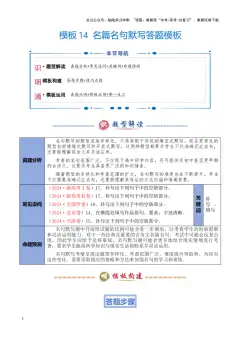
模板 05 阅读理解推理判断题
本节导航
本节导航:
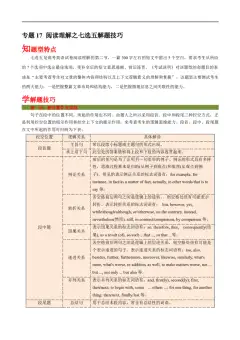
模识板·0题1 型段首解句读 真 题 分 析 + 常模见板设0问2 /段 关中键句词 + 命题预测 / 技巧解读
模板03 段尾句
明·模板构建 答题模板 + 技巧点拨
模板01 段首句 模板02 段中句
模板03 段尾句
·模板运用 真题示例 + 思路点拨 / 模板运用 + 规范答题 + 举一反三
通
练·模板演练 最新模拟、预测考向
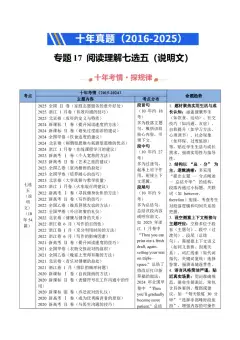
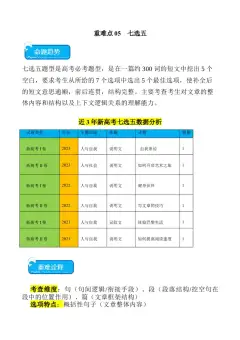
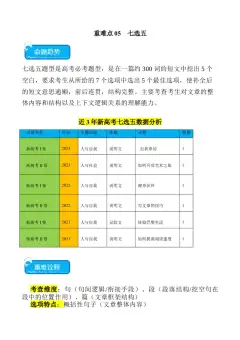
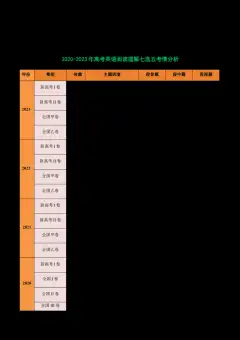
年份 卷别 段首句 段中句题号 段尾句题号
题号
2024 新高考I卷 38 36、37、39、40 /
新高考II卷 39 36、38、40 37
2023 新高考I卷 / 36、37、39、40 38
新高考II卷 39 36、38、40 37
2022 新高考II卷 36 37、38、39、40 /
2021 新高考I卷 39 36、37 、38、 /
40
新高考Ⅱ卷 38 39、40 36、37
题型 真题示例 常见设问/关键词
【2024 年新高考全国 I 卷】 38 It 设问关键词:
should give you a precise definition of 1.指代关系:题目中可能会涉及代词指代的问
模板01 段首句 each word, thus differentiating it from 题,要求考生通过上下文推断代词所指代的对
other words whose meanings are similar, 象。
but not identical. It will also usuallyshow how the word is pronounced. 2.逻辑关系:题目可能要求考生分析句子之间的
【2024 年新高考全国 I 卷】I keep two 逻辑关系,如因果、转折、并列、递进等,并
据此选择正确的选项。
reference books close-by on my desk:
3.上下文衔接:关注文章的过渡部分,如段落开
dictionary and thesaurus (同义词词典). I 头或结尾的总结句,以及带有转折词或连接词
的句子,考查考生对文章结构的理解和把握。
don't trust my laptop's spellchecker. 37
模板02 段中句 Of course, these days there are plenty of
online dictionaries and thesauruses, but I'm
old-fashioned enough to prefer a hard cover
and pages I can leaf through with my
fingers.
【2023年新高考全国I卷】
At the top of a second page, put the heading
考点关键词:
“Acts of kindness.” On this one, list all the
1.篇章结构:分析段落之间的层次和段落内部的
positive things you’ve done for others. It
层次,是确定答案的关键。考生需要理解文章
might be the time when you helped a friend
的整体结构,包括段落划分、主题句和中心句
with their homework, when you did the
的位置等。
ironing without being asked, or when you
2.语境线索:语境线索是解题的重要依据,包括
baked cookies after the family had had a
篇章结构、词语重现、逻辑关系、连接、指
tiring day. 38
称、同构等。考生需要学会识别这些线索,并
据此推断出正确答案。
3.关键词匹配:考生需要在选项中寻找与题干中
关键词相匹配的内容。这些关键词可能包括核
模板03 段尾句
心名词、专有名词、时间数字、代词、连词
等。
4.逻辑关系识别:识别句子之间的逻辑关系是解
题的关键。考生需要掌握常见的逻辑关系词,
如因果关系的“so, therefore”等,转折关系的
“but, however”等,并列关系的“and, first,
second”等,以及递进关系的“also, further”
等。
5.主题句和中心句:理解并找出段落的主题句和
中心句,有助于考生更好地理解文章的主旨大
意和段落之间的逻辑关系。
一、命题预测
1.体裁方面:说明文仍会是主要考查的体裁,因其结构清晰、逻辑严谨,便于设置各种逻辑关系和
信息匹配的考点。同时,记叙文的考查也可能会维持一定的比例,通过故事发展来考查学生对上
下文连贯性和细节理解的把握。
2.题材方面:会更加注重贴近生活实际、关注社会热点和体现文化内涵等,如环保、科技发展、心
理健康、文化交流等话题,使学生能够运用所学英语知识理解和解决实际生活中的问题,增强文
命 题 预 化意识和社会责任感。
测/考情揭
3.设题位置:设题将继续保持在段首、段中、段尾的多样化分布。段首句多为主题句或引出下文的
秘
句子,考查学生对段落主旨的概括能力;段中句侧重考查句子之间的逻辑衔接和过渡;段尾句则
可能是对前文的总结或引出新的话题。
4.选项特点:选项的语言难度和长度将与原文保持一致,且干扰项的设置会更加巧妙,更具迷惑
性。干扰项可能会在主题、逻辑、词汇等方面与正确选项相似,需要考生仔细甄别。
二、考情揭秘
1.对文章整体内容和结构的把握:要求考生能够准确理解文章的主旨大意,把握文章的结构框架,如总分、总分总、分总等结构形式。例如,通过文章的标题、首段、尾段以及各段的主题句来确
定文章的中心思想和整体脉络。
2.上下文逻辑意义的理解:注重考查句子之间、段落之间的逻辑关系,如因果、转折、并列、递
进、让步等。考生需要根据逻辑连接词、代词指代、词汇复现等线索来判断选项与上下文的逻辑
衔接是否紧密、合理。
3.词汇衔接与语义连贯:词汇的复现、同近义词、反义词、上下义词等的运用是重要的考点之一。
同时,选项的语义要与上下文连贯一致,形成一个有机的整体,使文章在内容和表达上都通顺流
畅。
4.对细节信息的理解和运用:部分题目会涉及到对文中具体细节信息的理解和运用,考生需要在阅
读过程中关注关键信息,如人名、地名、时间、数字、事件等,并能够根据这些细节信息来选择
与之相符的选项。
5.综合语言运用能力的考查:该题型不仅考查学生的阅读理解能力,还涉及到词汇、语法、语篇等
多方面的语言知识和运用能力。考生需要具备扎实的语言基础,能够准确理解和运用各种语言表
达形式,如不同句式、时态、语态等,来完成选项的选择和文章的理解。
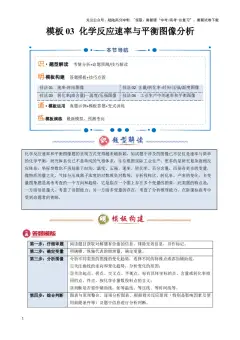
一、先看文章标题和小标题(如果有)
标题往往能够揭示文章的主题。例如,如果标题是 “Tips for Effective Studying(有效学习的小
窍门)”,你就可以大致知道文章是围绕学习方法展开的。小标题则可以帮助你快速了解文章各
部分的主要内容,构建文章的框架结构。
二、通读全文,把握文章大意和结构
快速浏览全文,了解文章是记叙文、说明文还是议论文,以及大致的内容。比如,对于说明文,
要明确它是在介绍某个事物的特点、功能,还是在阐述某个现象的原因、影响等。同时,注意文
章的段落结构,是总分、分总还是总分总结构。
1)分析设空位置的特点和作用
1.段首:
通常是主题句,用来引出段落的主题。这个主题句可能是对下文内容的概括,也可能是提出一个
问题,引出后续的解决方法。例如,设空处位于段首,后面的句子是在讲不同的运动方式对健康
的好处,那么这个空可能是一个关于运动和健康关系的总述句子,如 “Regular exercise is crucial
for maintaining good health.(经常锻炼对保持健康至关重要。)”
2.段中:
起到承上启下的作用,需要关注前后句子的逻辑关系。可能是因果关系,比如前面说某种现象,
后面解释原因;也可能是转折关系,如前面讲优点,后面讲缺点。
技巧解读
3.段尾:
可能是对段落内容的总结,或者是引出下一段的内容。如果是总结,句子会概括前面所讲的重
点;若是引出下文,会有一些提示性的词语。
2)利用词汇线索
1.词汇复现:
寻找上下文中相同的单词或者同根词。比如,上文出现了 “environment”,选项中有
“environmental” 或者 “environmentalists” 相关的内容,就可能是正确答案。这是因为文章为
了保持连贯性,会在不同地方重复关键的词汇。
2.同义词和近义词:
注意意思相近的词汇。例如,上文提到 “happy”,选项中可能会出现 “pleased”“delighted”
等近义词来保持语义的连贯。
3.反义词:
利用上下文中的反义词来确定选项。如果前面句子是 “Most people like this new product
because it's easy to use.(大多数人喜欢这个新产品,因为它容易使用。)” 而后面出现了转
折,设空处可能会出现和 “easy” 相反的词,如 “However, a few customers find it difficult tooperate.(然而,有一些顾客觉得它很难操作。)”
3)关注逻辑关系线索
1.因果关系:
寻找表示因果的关键词,如 “because”“since”“as a result”“therefore”“so” 等。如果前
面是原因,后面可能是结果;反之亦然。例如,“The weather was extremely bad.(天气非常糟
糕。)” 后面可能会跟 “So, we had to cancel the outdoor activity.(所以,我们不得不取消户
外活动。)”
2.转折关系:
注意 “but”“however”“yet”“although”“while” 等表示转折的词。例如,“He is very
rich.(他非常富有。)” 后面如果有转折,可能是 “But he doesn't feel happy.(但是他并不感
到快乐。)”
3.并列和递进关系:
像 “and”“also”“in addition”“moreover”“furthermore” 等词表示并列或递进。如果前面
在讲一个事物的一个优点,后面可能会用这些词来引出另一个优点。
三、代入选项进行验证
把选项代入到空白处,看文章是否通顺、逻辑是否连贯、语义是否完整。这一步很关键,有时候
某个选项单独看似乎合理,但代入后会发现与上下文的衔接不自然,或者不符合文章的整体风格
和逻辑。
高考英语阅读理解细节理解题主要考查学生根据文章内容获取特定信息的能力。以下是一个详细的做
题模板,旨在帮助学生高效、准确地解答这类题目:
步骤+解题思路
第一步:通读全文,理解大意
快速浏览全文,初步了解文章的主题、结构和主要内容。特别注意文章的首尾段和段落主题句,这些通常
是理解文章大意的关键。
第二步:浏览选项,标记关键词
仔细阅读七个选项,用笔标注出每个选项中的关键词,如指示代词、关系连词以及和文章内容相关的实词
(名词、动词、形容词)或短语。
第三步:分析空白处前后文
回到原文,仔细阅读每个空白处前后的句子,理解其语境和逻辑关系。特别注意空白处前后的关键词和中
心词,以及文章中的衔接手段,如词语复现、代词指代、语篇标记语等。
第四步:匹配选项与空白处
根据空白处前后的语境和逻辑关系,从七个选项中选择最合适的句子填入。特别注意选项中的关键词或中
心词是否与空白处前后的关键词或中心词一致或相关。
第五步:复读全文,验证答案
将所选句子代入文中,再次通读全文,检查所选句子是否与上下文连贯、逻辑是否合理。特别注意所选句
子与前后文的衔接是否自然顺畅。模板01 段首句
【2024新课标II卷】Overtourism Is For Real: How Can You Help?
Travel promotes understanding, expands our minds, makes us better people, and boosts local economies and
communities, but the rapid growth of travel has led to overtourism in certain regions and destinations. ___16___
Certainly not. The loss of what travel offers would be unacceptable in today’s world. Here are some tips on making
wise decisions to minimize pressure on the places we visit and improve our experience.
●Choose mindfully. Overvisited destinations are that way for a reason: they’re special. With so many online
posts featuring the same places, it’s easy to feel like you’re missing out. Go somewhere only when the landscape,
culture or food deeply draws you. ___17___
●Get creative. The best way to ease pressure on over-touristed destinations is to go somewhere else. Though
overtourism is described as a problem affecting the entire world, it’s actually concentrated to a small number of
extremely popular spots. That means you have tons of less-visited options to choose from. ___18___ Why not try a
regional alternative or check out a popular destination’s lesser-known sights?
● ___19___ Minimize impact and maximize experience by skipping major holidays or rush hour. You’ll
compete with fewer tourists, save money, experience a different side of a popular place, and boost the economy
when tourism is traditionally slower.
Visiting a place that others call home is a privilege(荣幸). Do your part to preserve what makes a destination
special in the first place. ___20___ You may be amazed how much closer you’ll feel to the people there.
A. Visit during off-peak times.
B. So, should we stop traveling?
C. Travel for you and no one else.
D. Can overtourism be avoided then?
E. You can still find relatively undiscovered places.
F. You’ll find yourself virtually alone, or close to it.
G. Consider giving back to the communities you’re visiting.第 16 题
1.通读全文,理解大意:文章围绕 “过度旅游”(Overtourism)这一现象展开,先是指出旅游虽有诸多好
处,但过度旅游在某些地区已成为问题,然后给出了一些帮助缓解过度旅游压力、做出明智旅行决策的建
议,如用心选择目的地、另辟蹊径选择小众地点以及避开高峰时段出行等。
2.浏览选项,标记关键词:
B 选项:关键词 “should”“stop traveling”,涉及是否应该停止旅行的疑问表述。
3.分析空白处前后文:前文提到 “the rapid growth of travel has led to overtourism in certain regions and
destinations.(旅游业的快速增长导致了某些地区和目的地出现过度旅游现象。)” 指出了过度旅游的问
题,空白处后 “Certainly not. The loss of what travel offers would be unacceptable in today’s world.(当然不是。
在当今世界,失去旅行所带来的东西是不可接受的。)” 是对前面疑问的否定回答以及解释原因。
4.匹配选项与空白处:B 选项 “So, should we stop traveling?(那么,我们应该停止旅行吗?)” 提出了
一个基于前文提到过度旅游问题而产生的疑问,与后文的回答及解释逻辑连贯,能够自然地引出后文内容,
符合此处上下文的语境衔接。
5.复读全文,验证答案:将 B 选项代入文中,通读后发现句子与上下文衔接顺畅,符合文章围绕过度旅游
现象探讨应对办法的逻辑顺序。
第 17 题
1.通读全文,理解大意:(同上文整体文章大意,此处略)
2.浏览选项,标记关键词:
C 选项:关键词 “Travel”“for you”,强调旅行要从自身出发的意思。
3.分析空白处前后文:前文 “Go somewhere only when the landscape, culture or food deeply draws you.(只有
当那里的风景、文化或食物深深吸引你时,再去那个地方。)” 在建议要依据自身喜好选择旅行目的地,
空白处应是对这种基于自身感受选择旅行地的进一步阐述或总结。
4.匹配选项与空白处:C 选项 “Travel for you and no one else.(为自己而旅行,而非为其他人。)” 与前
文所表达的按照自己内心被吸引的因素去选择旅行地点的意思相符,进一步强调了旅行要以自己的感受为
主,逻辑合理,使上下文衔接自然。
5.复读全文,验证答案:代入 C 选项后,全文在此处的逻辑通顺,语句衔接自然,符合文章对于用心选择
旅行目的地这一建议的论述逻辑。
第 18 题
1.通读全文,理解大意:(同上文整体文章大意,此处略)
2.浏览选项,标记关键词:
E 选项:关键词 “relatively undiscovered places”,与小众、未被充分发现的地点相关。3.分析空白处前后文:前文 “That means you have tons of less-visited options to choose from.(这意味着你有
大量游客较少的选择可供挑选。)” 提到有很多游客少的地方可供选择,空白处后 “Why not try a
regional alternative or check out a popular destination’s lesser-known sights?(为什么不尝试选择一个地区性的
替代地点或者去看看热门目的地中那些不太知名的景点呢?)” 进一步举例说明可以选择的小众地点类
型。
4.匹配选项与空白处:E 选项 “You can still find relatively undiscovered places.(你仍然可以找到相对未被
发现的地方。)” 承接了前文提到的有很多游客少的选择这一内容,对其进行进一步说明,同时也与后
文举例说明小众地点相呼应,逻辑连贯,使文章此处的叙述更流畅。
5.复读全文,验证答案:将 E 选项代入文中,通读后能感觉到此处衔接自然,符合文章对于寻找小众旅行
地点以缓解过度旅游压力这一建议的阐述逻辑。
第 19 题
1.通读全文,理解大意:(同上文整体文章大意,此处略)
2.浏览选项,标记关键词:
A 选项:关键词 “Visit”“off-peak times”,关乎避开高峰时段出行的内容。
3.分析空白处前后文:后文 “Minimize impact and maximize experience by skipping major holidays or rush
hour.(通过避开主要节假日或高峰时段来尽量减少影响并最大化旅行体验。)” 具体阐述了避开高峰时
段旅行的好处,空白处作为这部分内容的小标题,应该概括这一建议的核心,即选择在非高峰时段出行。
4.匹配选项与空白处:A 选项 “Visit during off-peak times.(在非高峰时段出行参观。)” 能够准确概括
后文所表达的避开高峰时段旅行的意思,起到了提纲挈领的作用,在逻辑上与后文紧密相连,使文章关于
这一旅行建议的论述更清晰。
5.复读全文,验证答案:把 A 选项代入文中后,通读发现句子与上下文衔接顺畅,符合文意围绕缓解过度
旅游压力给出不同建议的逻辑结构。
第 20 题
1.通读全文,理解大意:(同上文整体文章大意,此处略)
2.浏览选项,标记关键词:
G 选项:关键词 “giving back”“communities”,涉及回馈所到访社区的内容。
3.分析空白处前后文:前文 “Do your part to preserve what makes a destination special in the first place.(尽自
己的一份力去保护使一个目的地最初变得特别的东西。)” 强调要为保护目的地做贡献,空白处后
“You may be amazed how much closer you’ll feel to the people there.(你可能会惊讶于自己与那里的人们感
觉亲近了许多。)” 说明这样做的好处。
4.匹配选项与空白处:G 选项 “Consider giving back to the communities you’re visiting.(考虑回馈你正在访问的社区。)” 承接了前文要为保护目的地出力的意思,具体指出可以通过回馈社区的方式来做贡献,
同时也能合理地引出后文提到的与当地人更亲近的好处,逻辑连贯,使文章此处的论述更完整。
5.复读全文,验证答案:将 G 选项代入文中,通读全文,句子与上下文衔接自然流畅,符合文章整体的
文意和逻辑。
It’s an important rule that you cannot ask family members for recommendation letters. 1 . In other
words, it’s a conflict of interest. It’s also likely that your family members do not know how you perform in a school
environment, so their input might not be so relevant to your application. 2
Asking personal friends for a recommendation is not a definite no-no. It’s not automatically a conflict of interest.
However, you should have a good reason for asking your friend. For example, is your friend an alumnus (男校友)
or alumna (女校友) of the school you are applying for? If so, it would be acceptable to ask them for a letter of
recommendation. For example, they will be able to include meaningful anecdotes that speak to your character and
potential. 3 .Someone you volunteered with
If you’ve done some volunteering, you can reach out to the supervisor of your volunteer program and ask for a
letter of recommendation. 4 , they will still be able to comment on your work ethic (职业道德) and your
ability to work with a team. Including a letter from someone you volunteered with will show school admissions
officers that you care about giving back to the community. Volunteering is a great way to prove you are a well-
rounded person. Your volunteer program supervisor can be a helpful resource, even if your volunteer experience
was not in the field you want to pursue a career in.Someone you worked with or for
If you have any work experience, whether it be a part-time job or an internship, reaching out to your
supervisor or manager can be a good idea. 5 . Including a letter from someone you worked with will show
school admissions officers that you are responsible and capable of handling tasks and responsibilities. It is
important to note that if you were fired or had a bad experience at this job, it may not be the best idea to ask for a
recommendation letter from this employer.
A.Be careful when asking personal friends
B.You’d better not ask personal friends for recommendation
C.As long as you have a good impression on them
D.They will be able to comment on your work ethic and ability
E.School admission officers believe their views of you are biased
F.If not, they might not be the best person to ask for a recommendation letterG.Even though your volunteer program supervisor was not technically your boss
模板02 段中句
【2024新课标Ⅰ卷】Not all great writers are great spellers. If you want to be published, it's vital to submit a
perfect, professionally presented manuscript (原稿). ____36____ No editor is likely to tolerate a writer who does
not take the trouble to spell words correctly.
I keep two reference books close-by on my desk: dictionary and thesaurus (同义词词典). I don't trust my
laptop's spellchecker. ____37____ Of course, these days there are plenty of online dictionaries and thesauruses, but
I'm old-fashioned enough to prefer a hard cover and pages I can leaf through with my fingers. I use the Concise
Oxford Dictionary and the Collins Thesaurus.
____38____ It should give you a precise definition of each word, thus differentiating it from other words
whose meanings are similar, but not identical. It will also usually show how the word is pronounced.
In addition, I have an old two-volume copy of the Shorter Oxford Dictionary, picked up a few years ago in a
bookshop sale for just 99 pence. Of course, with its 2,672 pages, it's not exactly short. It contains around 163,000
words, plus word combinations and idiomatic phrases. ____39____ However, if I need to check the origin of a
word or to look up examples of its usage, there's nothing better.
For well over a hundred years the most influential English dictionary was Samuel Johnson's Dictionary of the
English Language published in 1755. "To make dictionaries is dull (乏味) work," wrote Johnson, illustrating one
definition of "dull". ____40____ A few minutes spent casting your eye over a page or two can be a rewarding
experience.
A. I don't often use this dictionary.
B. It takes no account of the context.
C. But I still don't want to replace them.
D. But a dictionary can be a pleasure to read.
E. Of course, a dictionary is not only for spelling.
F. That means good grammar and no spelling mistakes.
G. Dictionaries don't always give you enough information.
第 36 题1.通读全文,理解大意:文章主要围绕写作过程中使用字典等参考书籍来确保稿件准确无误这一主题展开,
介绍了作者桌上常备的字典、同义词词典,以及不同字典的特点和用途等内容。
2.浏览选项,标记关键词:
F 选项:关键词 “good grammar”“spelling mistakes”,涉及语法和拼写错误方面的内容,与写作稿件的准
确性相关。
3.分析空白处前后文:前文 “If you want to be published, it's vital to submit a perfect, professionally presented
manuscript (原稿).(如果你想发表作品,提交一份完美的、专业呈现的稿件是至关重要的。)” 强调稿件
要完美,空白处后 “No editor is likely to tolerate a writer who does not take the trouble to spell words correctly.
(没有编辑可能会容忍一个不费心正确拼写单词的作者。)” 突出了拼写正确的重要性。
4.匹配选项与空白处:F 选项 “That means good grammar and no spelling mistakes.(这意味着良好的语法和
没有拼写错误。)” 对前文提到的 “完美稿件” 进行了具体说明,解释了完美稿件需要具备的要素,
同时与后文强调拼写正确相呼应,逻辑连贯,使文意衔接自然。
5.复读全文,验证答案:将 F 选项代入文中,通读后发现句子与上下文衔接顺畅,符合文章围绕写作稿件
准确性进行论述的逻辑。
第 37 题
1.通读全文,理解大意:(同上文整体文章大意,此处略)
2.浏览选项,标记关键词:
C 选项:关键词 “replace”“them”,涉及替换相关事物的内容,这里 “them” 应指代前文提到的参考书籍。
3.分析空白处前后文:前文 “I don't trust my laptop's spellchecker.(我不相信我笔记本电脑的拼写检查程
序。)” 表明作者对电脑拼写检查程序的态度,空白处后 “Of course, these days there are plenty of online
dictionaries and thesauruses, but I'm old-fashioned enough to prefer a hard cover and pages I can leaf through with
my fingers.(当然,如今有大量的在线词典和同义词词典,但我很守旧,更喜欢能手指翻阅的纸质封面和
书页。)” 进一步强调了作者对纸质参考书籍的偏爱。
4.匹配选项与空白处:C 选项 “But I still don't want to replace them.(但我仍然不想替换它们。)” 中的
“them” 指代前文提到的像字典、同义词词典这类纸质参考书籍,承接了前文对电脑拼写检查程序的不信
任,又引出后文对纸质书籍的喜爱,逻辑合理,使上下文过渡自然。
5.复读全文,验证答案:代入 C 选项后,全文在此处的逻辑通顺,语句衔接自然,符合文章对于作者选择
参考书籍偏好的阐述。
第 38 题
1.通读全文,理解大意:(同上文整体文章大意,此处略)
2.浏览选项,标记关键词:E 选项:关键词 “dictionary”“not only for spelling”,点明字典的用途不止于拼写这一点。
3.分析空白处前后文:后文 “It should give you a precise definition of each word, thus differentiating it from
other words whose meanings are similar, but not identical. It will also usually show how the word is pronounced.
(它应该给你每个单词一个精确的定义,从而将其与意思相似但不完全相同的其他单词区分开来。它通常
也会显示这个单词的发音。)” 详细介绍了字典除拼写之外的其他作用,如释义、发音等。
4.匹配选项与空白处:E 选项 “Of course, a dictionary is not only for spelling.(当然,字典不仅仅是用于拼
写的。)” 能够很好地引出后文关于字典其他功能的介绍,起到了承上启下的作用,在逻辑上与后文紧
密相连,使文章关于字典作用的论述更完整。
5.复读全文,验证答案:把 E 选项代入文中后,通读发现句子与上下文衔接顺畅,符合文意围绕字典功能
展开介绍的逻辑。
第 39 题
1.通读全文,理解大意:(同上文整体文章大意,此处略)
2.浏览选项,标记关键词:
A 选项:关键词 “this dictionary”,应指代前文提到的某本字典,此处大概率是指两卷本的《牛津简明词
典》,且体现使用频率相关内容。
3.分析空白处前后文:前文 “It contains around 163,000 words, plus word combinations and idiomatic phrases.
(它包含大约 163,000 个单词,以及单词组合和习惯用语。)” 介绍了这本词典的内容,空白处后
“However, if I need to check the origin of a word or to look up examples of its usage, there's nothing better.(然
而,如果我需要查看一个单词的起源或查找其用法示例,没有比它更好的了。)” 说明在特定情况下会
使用它,暗示平时使用频率不高。
4.匹配选项与空白处:A 选项 “I don't often use this dictionary.(我不经常使用这本词典。)” 与前文介
绍词典内容后,后文说明特定使用情况相呼应,解释了使用频率的问题,逻辑连贯,使文章此处的叙述更
自然。
5.复读全文,验证答案:将 A 选项代入文中,通读后能感觉到此处衔接自然,符合文章对于不同词典使用
情况介绍的逻辑。
第 40 题
1.通读全文,理解大意:(同上文整体文章大意,此处略)
2.浏览选项,标记关键词:
D 选项:关键词 “dictionary”“pleasure to read”,涉及字典阅读方面的乐趣。
3.分析空白处前后文:前文 “To make dictionaries is dull (乏味) work,"wrote Johnson, illustrating one
definition of"dull".(约翰逊写道:“编纂词典是乏味的工作”,说明了 “乏味” 的一种定义。)” 提到了词典编纂工作的乏味,空白处后 “A few minutes spent casting your eye over a page or two can be a
rewarding experience.(花几分钟浏览一两页可能是一种有益的体验。)” 则强调了阅读词典的好处。
4.匹配选项与空白处:D 选项 “But a dictionary can be a pleasure to read.(但字典也可以是一种阅读的乐
趣。)” 通过转折,将前文的 “乏味” 与后文的 “有益体验”“乐趣” 联系起来,使逻辑连贯,很
好地衔接了上下文,符合文章对于词典不同方面特点的论述。
5.复读全文,验证答案:把 D 选项代入文中,通读全文,句子与上下文衔接自然流畅,符合文章整体的
文意和逻辑。
(24-25 高三上·湖南长沙·阶段练习)There is little, it seems, that people won’t do for their pets.
Americans spent $186bn on them last year, according to the Bureau of Economic Analysis, covering everything
from food and vet visits to toys and grooming. That is more than they spent on childcare.
56 Mars, a company best known for its chocolate bars, made two-thirds of its revenue last year
from pet care. Besides owning the Royal Canin pet-food brand, the company also operates thousands of vet clinics.
Nestle and Colgate, two other consumer-products giants, also make around a fifth of their revenue from their pet
market.
Spending on pets rocketed through the COVID-19 pandemic. 57 Between 2019 and 2023, pet
spending grew by a compound annual rate of 11%, in nominal terms, compared with 6% for consumer spending
overall and 5% for pet spending over the preceding decade. 58
Unlike virtual yoga classes or meal-kit subscriptions, animals weren’t easy to drop once lockdowns ended.
Consumers, wrestling lately with higher prices and a cooling job market, have been reluctant to employ tight
budgets on their pets. Morgan Stanley, a bank, estimates pet spending in America, compared with other personal
expenses, will grow by 2.5% this year. 59 The pet business proved similarly strong during the global
financial crisis of 2007-2009.
And analysts hold the pet business will soon go viral again. Morgan Stanley forecasts that annual spending
will rise to around $260bn by 2030, consistent with its pre-pandemic growth trend. 60 Owners
increasingly see themselves as parents, not masters. “Pets have gone from the backyard to the living room to the
bedroom,” says Loic Moutault, head of the pet division at Mars.
A.Plenty more growth is yet to come.
B.Catering to pets has become big business.
C.Owners are now giving their pets yummier food.D.That is attracting plenty of newcomers to the pet industry.
E.It is well ahead of estimates for other spending like clothes.
F.Lonely people adopted animals and invested heavily in them at that time.
G.Behind that is a shift in the relationship between pets and humans.
模板03 段尾句
【2024全国甲卷】What is moderation (适度)? Basically, it means eating only as much food as your body
needs. You should feel satisfied at the end of a meal, but not too full. ____16____ But it doesn't mean saying
goodbye to the foods you love.
Take your time. It's important to slow down and think about food as something nutritious rather than just
something to eat in between meetings. ____17____ It actually takes a few minutes for your brain to tell your body
that it has had enough food, so eat slowly and stop eating before you feel full.
Eat with others whenever possible. Eating alone, “specially in front of the TV or computer, often leads to
mindless overeating. And be careful about the foods you keep at hand. It's more challenging to eat in moderation if
you have unhealthy snacks at the ready, like cookies. ____18____
Control emotional (情绪的) eating. ____19____ Many of us also turn to food to deal with unpleasant
emotions such as sadness, loneliness, or boredom. But by learning healthier ways to manage emotions, you can
regain control over the food you eat and your feelings.
____20____ A healthy breakfast can start your metabolism (新陈代谢), while eating small, healthy meals
keeps your energy up all day. Avoid eating late at night. Try to eat dinner earlier and fast for 14 — 16 hours until
breakfast the next morning. Studies suggest that eating only when you're most active and giving your digestive
system a long break each day may help to regulate weight.
.
A Eat properly throughout the day.
B. We don't always eat just to satisfy hunger.
C. Don't swallow a meal on the way to work.
D. Most of us need to double the amount we eat.
E. Instead, surround yourself with healthy choices.
F. For many of us, moderation means eating less than we do now.
G. That won't lead to cheating or giving up on your new eating plan.第 16 题
1.通读全文,理解大意:文章围绕 “适度”(moderation)这一饮食概念展开,阐述了在饮食方面做到适
度的多种方式,像控制食量、慢慢进食、与人一起用餐、控制情绪性进食以及合理安排一天饮食等内容,
旨在引导人们养成健康适度的饮食习惯。
2.浏览选项,标记关键词:
F 选项:关键词为 “moderation”“eating less”,紧扣文章主题 “适度” 以及涉及适度饮食中食量方面的
内容。
3.分析空白处前后文:前文提到 “Basically, it means eating only as much food as your body needs. You should
feel satisfied at the end of a meal, but not too full.(基本上,它意味着只吃身体所需的食物量。用餐结束时你
应该感到满足,但不要太饱。)” 对适度饮食的食量要求做了初步说明,空白处后 “But it doesn't mean
saying goodbye to the foods you love.(但这并不意味着要和你喜欢的食物告别。)” 进行了进一步补充说
明,表明适度饮食并非极端地摒弃某些食物。
4.匹配选项与空白处:F 选项 “For many of us, moderation means eating less than we do now.(对我们很多
人来说,适度意味着比我们现在吃得少。)” 在逻辑上很好地承接了前文关于适度饮食对食量控制的阐
述,进一步解释了适度饮食在食量方面的体现,同时与后文说明适度饮食并非完全舍弃喜爱食物的内容相
呼应,使文意连贯顺畅。
5.复读全文,验证答案:将 F 选项代入文中,再次通读全文,可发现句子融入上下文后,整体逻辑合理,
从对适度饮食基本的食量概念阐释,到后续围绕适度饮食展开的各方面论述,过渡自然,衔接紧密。
第 17 题
1.通读全文,理解大意:(同上文整体文章大意,此处略)
2.浏览选项,标记关键词:
C 选项:关键词 “swallow a meal” 形象地体现快速进食的意思,“on the way to work” 点明进食场景,
整体围绕进食方式展开。
3.分析空白处前后文:前文 “Take your time. It's important to slow down and think about food as something
nutritious rather than just something to eat in between meetings.(慢慢来。重要的是放慢速度,把食物看作是
有营养的东西,而不仅仅是会议间隙用来吃的东西。)” 着重强调要放慢进食速度,空白处后 “It
actually takes a few minutes for your brain to tell your body that it has had enough food, so eat slowly and stop
eating before you feel full.(实际上,你的大脑需要几分钟才能告诉你的身体已经吃饱了,所以慢慢吃,在
感觉饱之前就停止进食。)” 进一步解释了慢慢进食的原因所在。
4.匹配选项与空白处:C 选项 “Don't swallow a meal on the way to work.(不要在上班路上狼吞虎咽地吃
饭。)” 从反面举例,以一种常见的不良进食场景为例,呼应了前文强调的要放慢速度进食的观点,强化了慢慢进食这一要求,且与后文继续阐述慢慢进食的相关内容逻辑连贯,让上下文衔接自然流畅。
5.复读全文,验证答案:代入 C 选项后,通读文章此处部分,语句通顺,逻辑合理,符合围绕慢慢进食这
一适度饮食要点展开论述的行文逻辑。
第 18 题
1.通读全文,理解大意:(同上文整体文章大意,此处略)
2.浏览选项,标记关键词:
E 选项:关键词 “surround”“healthy choices”,突出了营造健康食物环境,做出健康食物选择的意思。
3.分析空白处前后文:前文 “And be careful about the foods you keep at hand. It's more challenging to eat in
moderation if you have unhealthy snacks at the ready, like cookies.(并且要留意你手头存放的食物。如果你手
头准备的是像饼干这样不健康的零食,那么适度饮食就更具挑战性了。)” 指出身边存放不健康零食不
利于适度饮食,空白处后需要给出相应解决办法或进一步的合理建议。
4.匹配选项与空白处:E 选项 “Instead, surround yourself with healthy choices.(相反,让自己周围都是健
康的食物选择。)” 通过 “Instead” 进行转折,针对前文提到的不健康零食问题,给出了积极的应对策
略,使文章此处的论述得以延续并更加完整,逻辑上与前后文紧密契合,能够自然地承接上文并引出后续
内容。
5.复读全文,验证答案:将 E 选项代入文中,通读后可明显感觉到此处上下文衔接自然,符合围绕适度饮
食从食物选择方面进行阐述的整体文意和逻辑顺序。
第 19 题
1.通读全文,理解大意:(同上文整体文章大意,此处略)
2.浏览选项,标记关键词:
B 选项:关键词 “eat”“satisfy hunger”,直接关联进食的目的这一内容,且表达出进食目的的多样性。
3.分析空白处前后文:前文 “Control emotional (情绪的) eating.(控制情绪性进食。)” 点明了要对因情
绪而产生的进食行为加以控制这一主题,空白处后 “Many of us also turn to food to deal with unpleasant
emotions such as sadness, loneliness, or boredom.(我们很多人也会通过吃东西来应对不愉快的情绪,比如悲
伤、孤独或无聊。)” 进一步具体说明了人们确实存在通过吃东西来处理情绪问题的现象。
4.匹配选项与空白处:B 选项 “We don't always eat just to satisfy hunger.(我们并不总是仅仅为了满足饥饿
而吃东西。)” 起到了承上启下的关键作用,既承接了前面提出的要控制情绪性进食这一话题,又自然
地引出了后文关于人们会因各种不愉快情绪而吃东西的内容,使前后文在逻辑上连贯顺畅,让关于情绪性
进食这部分的论述更加完整清晰。
5.复读全文,验证答案:把 B 选项代入文中相应位置后,通读全文,此处的过渡自然流畅,符合文章对于
控制情绪性进食相关内容的阐述逻辑,与整体围绕适度饮食展开的论述也相互呼应。第 20 题
1.通读全文,理解大意:(同上文整体文章大意,此处略)
2.浏览选项,标记关键词:
A 选项:关键词 “Eat properly” 强调合理饮食,“throughout the day” 点明是一整天的时间范围,整体围
绕一天中合理饮食的安排展开。
3.分析空白处前后文:后文 “A healthy breakfast can start your metabolism (新陈代谢), while eating small,
healthy meals keeps your energy up all day. Avoid eating late at night. Try to eat dinner earlier and fast for 14 — 16
hours until breakfast the next morning. Studies suggest that eating only when you're most active and giving your
digestive system a long break each day may help to regulate weight.(一顿健康的早餐可以启动你的新陈代谢,
而吃少量健康的餐食能让你一整天都精力充沛。避免在深夜进食。尽量早点吃晚餐,禁食 14 - 16 小时直
到第二天早上吃早餐。研究表明,只在自己最活跃的时候进食,并让消化系统每天有较长的休息时间,可
能有助于调节体重。)” 详细介绍了一天内不同时段合理饮食的具体建议和好处。
4.匹配选项与空白处:A 选项 “Eat properly throughout the day.(一整天都要合理饮食。)” 能够很好地
概括后文所阐述的一天中各个时段饮食安排的相关内容,起到了提纲挈领的作用,在逻辑上与后文紧密相
连,使得文章关于适度饮食中一天饮食规划这部分的论述条理更加清晰,行文更加流畅。
5.复读全文,验证答案:将 A 选项代入文中后,通读全文,可发现句子与上下文衔接自然顺畅,符合文章
整体围绕适度饮食从多方面给出建议的逻辑结构和文意表达。
(24-25 高三上·北京朝阳·期中)Considering they are the world’s most numerous areas of water, it is
surprising that ponds are poorly understood. There are millions — possibly billions — of them. 1
This neglect might not have mattered if it were not for increasing evidence that ponds are extremely
important habitats for wildlife as they have rich, diverse and distinctive communities with varied rare and
endangered species. Across many landscapes, they are being shown to support far greater variation of species than
rivers and streams. 2 It allows them to have a wider range of conditions compared with rivers and
streams where flowing water tends to homogenise (同质化) water chemistry.
So why have we failed to notice such a vital part of the natural world? A key reason appears to be what
freshwater scientist John Downing has called “a saliency error”: the misjudgment where we humans naturally
assume that if something is small, it can’t be all that important. 3 We don’t realise that these waters have
a deeply ancient origin and have existed on Earth as long as there has been land and water.
These misunderstandings within freshwater science have had a big impact on our ability to protect theirwildlife. In Europe, for example, the Water Framework Directive mostly excludes any bodies of water smaller than
50 hectares.
4 Last year, the Ramsar Convention, an international agreement, introduced a resolution on small
wetlands, including ponds, giving crucial recognition to them. And the European Union-funded PONDERFUL
project is gathering data on Europe’s ponds. However, there remains much to do. As the effects of climate change
deepen, plants and animals will increasingly need to move across the landscape to survive. 5 They are
easy to make and they colonize rapidly, which can help freshwater species adapt over short timescales.
A.Viewpoints are changing, fortunately, to the benefit of ponds.
B.This biodiversity seems to be partly due to the small size of ponds.
C.A study shows they make up much of the global water environment.
D.Yet for a century or so, scientists have paid them very little attention.
E.We can create ponds in considerable numbers as one of the few habitats.
F.There is increasing evidence of the importance of ponds for biodiversity.
G.Most of us also devalued ponds because we regard them as artificial habitats.
Passage 1
(24-25高三上·山东聊城·期中)A primary goal of culturally responsive education is to help all students
become respectful of various cultures and people that they’ll interact with. However, the world is more complex
and diverse than the environment that students inhabit. 1 Then what might an educator do to promote
diverse cultures in the classroom?
Classroom activities often work well. For example, educators can show students photographs of people from
different cultures every day. 2 In this process, they’ll gradually learn to know and accept each kind of
looks. It’s important to avoid teaching students about the same role models repeatedly.
3 Wall spaces can be used to display posters about cultural groups. Students can mark the countries
from which their ancestors immigrated on a world map. And classroom signs can be hung in several languages.
Such cultural exposure helps remind the students that people from diverse backgrounds are all born equal,
protecting students from the cultural stereotypes (刻板印象).
Another important goal of education is to teach students to appreciate their own culture. 4 To fit in
with the social order, they sometimes have to change or remove their cultural behaviors. To avoid this situation.investigating unique characteristics of their community is one effective way to help students gain a greater
appreciation of their own culture. Educators can encourage students to interview their family members about
cultural practices and traditions and then share them with pride. 5
A.This can be a challenging task for educators.
B.Over time, wall spaces will expose students to rich diversity.
C.This activity can motivate students to show themselves bravely.
D.Students can see various appearances and find beauty from each.
E.Gradually, they will start to build confidence in their own culture.
F.Minority students may feel pressured to live in a multicultural group.
G.Providing a culturally responsive learning environment is also critical.
Passage 2
(24-25高三上·湖北·期中)It’s safe to say that with the many stressors that make up our day-to-day lives,
we could all use a little more light and a little more calm. Enter “saving the day” — a mood-boosting idea. 6
You just need to find some peace amidst the chaos. If you spend the whole day working, you can do one thing that
reclaims the day as your own.
Saving the day can be any activity and doesn’t have to be time-consuming. By doing something that you
love, you’re not only making the day have some space of your own but also improving your mood. Similarly, it can
help you cope with stress and nurture your well-being. 7 As therapists put it, “saving the day” has serious
mental health benefits.
8 Bad days will exist whether or not you “save the day”. But if you do something that adds some
relief and clarity and joy to your day, it can not only make the day a little better but help you connect with yourself,
too. “Could I end the day on the note that’s like, ‘Oh, well, it wasn’t a good day, but I took care of myself?’” said
Danica Harris, a somatic therapist, “This idea improves trust and safety with the self. ”
Saving the day can help prepare you for hard times, too. 9 And since life isn’t easy, such days will
inevitably happen. If you have a bad day but do two things to “save the day”, you may go to bed feeling like it
wasn’t a great day. But you’ll also know that you did everything you could to make it OK. By contrast, if you are
going to bed and you’ve done nothing for yourself, you could feel like it was a bad day. The lack of self-care can
lead to self-criticism and a sense of failure. 10
In conclusion, saving the day is a powerful tool for managing stress and enhancing mental health. It’s a
reminder that even on the most challenging days, there’s always something you can do to make a positive impact onyour well-being.
A.This concept is simple.
B.It seems like a groundbreaking concept.
C.It can also help you find a sense of fulfillment.
D.Saving the day allows you to establish trust in yourself.
E.Saving the day can be of great benefit to physical and mental health.
F.Remember that taking care of yourself is not a luxury but a necessity.
G.In other words, it can help you become more ready to handle future bad days.
Passage 3
(24-25高三上·山西运城·期中)While a hobby is anything you do in your leisure time that brings you joy
or pleasure, not all hobbies are good for you when it comes to health and happiness. To choose how you spend your
time, ask yourself how you feel when you finish doing a particular activity.
Many hobbies enhance your sense of satisfaction. 11 I know many people’s hobby is just scrolling
through social media, but the reality is that they feel lost or even worse afterward. 12 When you play video
and mobile games, you just sit still or lie down without any movement, which increases your risk of many health
issues. You need to be aware of that and strive for balance.
So how do you choose a hobby? Just look at it through the lens of the seven pillars of health: sleep, nutrition,
movement, emotional mastery, thoughts, relationships and purpose. We need them all for an ideal lifestyle. 13
What hobbies are right for you will vary greatly based on your personality, interests, abilities and resources,
but most people have a gut instinct of likes and dislikes. 14 For instance, if you’d like to add more
movement to your life, improve your memory and build friendships, you might enjoy a group exercise hobby like
Zumba, paddleboard, yoga or “star tour” night hikes. Your options are limited only by your imagination.
15 The answer is individual. Some people focus all their energies on the one thing they are super
passionate about, while others enjoy a variety of activities. Regardless, it’s good to try something new every once in
a while, as the novelty is good for refreshing boring life.
A.Is there a right number of hobbies to have?
B.How do hobbies benefit our body, brain and spirit?
C.However, some only add to your emptiness and tiredness.
D.The other downside of electronic hobbies is little or no exercising.
E.A good way to pick a hobby is by considering what you want to improve.
F.Luckily, nearly all hobbies can provide measurable positive health benefits.G.Doing a hobby that engages you in these aspects will make you happy and healthy.
Passage 4
(24-25高二上·山东青岛·期中)Random Acts of Kindness for Friends
Be kind to friends. After all, friends are the family we choose for ourselves. The very best friends better our
lives with their incredible love and support. You can do many things to be kind to friends. 16
There are many examples of random acts of kindness ideas for friends. Put a smile on your friend’s face
because doing so feels good and brightens both of your days. 17 Or even take the time to help a single
friend fall in love with someone wonderful.
These small gestures can have a profound impact on someone’s life. Imagine waking up on a particularly
gloomy morning, feeling down and out, and then receiving a text from a friend that simply says, “Hey, I was
thinking about you and wanted to let you know you’ re awesome.” 18
Random acts of kindness don’t have to be grand or expensive. 19 Or perhaps it’s just taking the time
to listen when a friend needs to talk, offering a shoulder to lean on without judgment or advice unless it’s asked for.
20 When you do something kind for a friend, it not only makes them feel good but also inspires
them to pay it forward. This creates a ripple effect of positivity that can spread through your social circle and
beyond. It’s a beautiful reminder that even the smallest acts of generosity can have a significant impact.
So, the next time you think about reaching out to a friend, consider doing so with an act of kindness.
A.So fill your friendships with care and help today.
B.Moreover, random acts of kindness can be infectious.
C.One of them is to do random acts of kindness for friends.
D.They can be as simple as helping a friend organize their garage.
E.Hand a friend a great book you know your friend would love to read.
F.This simple act of kindness can instantly lift your spirits and brighten your day.
G.When it comes to kindness, we are limited only by the extent of our imaginations.
Passage 5
(24-25高三上·重庆·期中)As kids, we’ re constantly introduced to new activities in school: art, exercise,
exploration and so much more. But exposure to things we may love doesn’t come quite as easily when we’ re
adults. 21 Here’s how to connect with one you’ re enthusiastic about.
● Be open to new experiences
Don’t get discouraged if you don’t find the perfect hobby immediately. 22 “When you shop for a
pair of shoes, you try them on before you buy them,” says Sanam Hafeez, a psychologist in New York City. “Youhave to see if they are a fit. This is the same mindset to have when trying something new.”
● Channel your inner child
Let’s circle back to all the new things you got to try out in primary school. If you loved art class but chose a
career that isn’t visually creative, select a hobby that brings out your inner Picasso. 23 Get a used
keyboard and start pressing those keys again. Did you ride your bike every day? Explore your neighborhood on
wheels.
● Pick a worry-free activity
If you don’t want a hobby just to pass time, find something that makes you forget about the stresses of your
day. A physical hobby, like exercise or gardening, can be a great mind-clearing activity. Losing yourself in it gives
you the chance to focus on what’s in front of you and nothing else. 24
● 25
When you sense a hobby you might like, Hafeez recommends Meetup to check it out. “Meetup groups allow
you to find people who have common interests and meet regularly,” she says. “This leads to new friendships and
the exchange of new ideas. When you share an interest with others, you are always encouraged to continue that
hobby.”
A.Did you play the piano?
B.Did you really admire Picasso?
C.Search for new interests online.
D.This improves calmness and mood.
E.Join Meetup to meet former friends.
F.Still, it’s well worth finding a beloved hobby.
G.We don’t all pick the right things from the start.
Passage 6
(24-25高三上·广东·阶段练习)How to Get a Life
Feeling happy with your life can be difficult. 26 If you are currently unhappy with some aspects of
your life, you can commit to making changes throughout the year that will make you happier and healthier. Here
are some tips to help get a life.
Define what a life is to you. This concept of “a life” is subjective. 27 What do you want to achieve in
life? What makes you happy? While certain aspects like having children, enjoyable experiences, or fulfilling work
are often seen as indicators of a “life well-lived,” it’s ultimately your personal values that define what truly matters.Discuss your life with others. Sometimes, the act of expressing yourself to another can give you an in-depth
view into what you want and need. In addition, other people may have insight into your life that you may be blind
to. You can share your problem with family or friends. 28 Talk therapy (疗法) can effectively address
emotional problems and clarify your thoughts.
29 List the main areas of your life, such as social, work, spiritual, family, leisure, health, community
and charity. Once you have divided your life into these domains, reflect on whether you are happy with these
aspects of your life. Getting a life usually means creating a balance among the fields of life you find to be
important.
Reassess your life every few months. Review the state of your life and decide if your life is more fulfilling
with the changes you have made. The best way to decide is if you personally feel happier about your life.
Remember not to think too much about what others may think about your life. 30
Give yourself time to change your life, as it won’t be easy. Try to focus on making small changes over a year.
After a year is over, you should have a better idea of what makes you happy.
A.You are the one living it, after all.
B.Break your life down into domains.
C.Address stressful domains head-on.
D.Talking to a consultant will also do the trick.
E.You need to reflect on what is important to you.
F.The pursuit of happiness is a fundamental human goal.
G.It is easy to get upset by duties, work, technology and health problems.
Passage 7
(2024·浙江湖州·一模)Sometimes it can feel like your head is too cluttered. With work, school, or a busy
schedule, things are bound to get jumbled (乱糟糟的) every once and a while! 31 From focusing to
journaling, we’ll teach you how to mindfully distract yourself from worrying thoughts.
Focus on the present moment. Practice mindfulness daily to help clear your mind and be more focused.
Mindfulness is all about letting all other thoughts come and go. Observe your thoughts and feelings without
judgement, as if you’re an outsider in your own mind. 32
Take a walk. 33 When you’re being mindful, you’re fully engaging in the present moment, letting
feelings come and go as you focus on what’s in front of you. Combining this state of mind with walking produces
an extra special stress reliever that improves mental and physical health. Try scheduling a walk around the block,
on the treadmill, or through a local park every day.34 Take a moment to breathe and come back to the present moment. Life can easily become go, go,
go, and in the process, you can easily forget to breathe. Settling down wherever you are to take controlled breaths
can calm your racing mind and heartbeat, helping you feel more relaxed.
Journal your thoughts. Writing down your worries can help you sort through them. Try reaching for a
notebook or phone when a million thoughts are racing through your mind. 35 Journaling can help you be
more aware of your emotions and reflect on what’s troubling you.
A.Do deep breathing exercises.
B.Take a moment to slow down.
C.Moving your body mindfully can help things seem clearer.
D.But you can do something to clear your mind and calm things down.
E.Set down everything that comes to mind, letting all pour out onto the page.
F.Then let those thoughts and feelings go and focus on what you’re currently doing instead.
G.Here are some tips on how to protect your head from brain injury and then start your work.
Passage 8
(24-25高三上·重庆沙坪坝·阶段练习)We've all heard those people who say “running gives you a high
“or” exercise is addictive,” but for many of us, it's hard to love exercise. 36 Why do some of us hate
exercise? And how can we overcome this to reap the lifesaving benefits of getting the body moving?
Identify your “why” — do you want to exercise for your health? Is it for your kids? Is it for how working out
makes you feel? Exercise has long-term benefits for health and function, flow-on benefits for your children, and
can boost your mood and promote vitality. 37
38 Starting a new exercise habit is hard enough. Increase your chances of sticking with it by doing an
activity you find enjoyable. Also, you may exercise more intensively without even realizing it, if you are doing a
form of exercise you enjoy. If you hate running, don’t do it. 39 Start small. Leave yourself wanting more,
rather than overdoing it. You are also less likely to feel sore or injure yourself.
Arrange to meet a friend to exercise together. It’s very easy not to go and exercise when you' re relying on
yourself — but with a friend, you can use him or her for motivation to make sure you stick at what you set out to
do. 40 Meanwhile, research suggests people exercise for longer when they exercise with family members
and friends compared with those exercising alone.
A.Do an activity you take pleasure in.
B.Go for a long walk in nature instead.
C.Some might even say they hate it or dread it.D.You’ll enjoy exercising by rewarding yourself.
E.A fitness professional can be a reliable friend to provide suggestions.
F.Being clear about what you want to gain from exercising can help you get started.
G.You’ll be more likely to follow through since you don’t want to disappoint each other.
Passage 9
(24-25高三上·江苏常州·期中)Have you ever wished there were a magic method to make learning easier
and more efficient? 41 Named after a Nobel winner in physics known for simplifying complex ideas, this
method can help you unlock your potential and gain a deep understanding of various topics.
Step 1: Start by getting a blank sheet of paper. Write down everything you already know about a topic. This
serves as your initial knowledge base. As you dive deeper into the topic, continue to add new information and
insights to your sheet. Be patient during this process. 42
Step 2: Explain your topic in a way that a 12-year-old child could understand. 43 Begin by
simplifying your notes. It’s easy to complicate a subject. However, the true challenge, and the true demonstration of
understanding, is in simplification. Only someone who truly comprehends a subject can break it down into its
simplest terms, making it accessible to people of all ages.
Step 3: Write down your explanations. It is a powerful tool in the learning process. This activity facilitates
reflection, through which we identify areas where further learning is needed. The learning process is iterative (迭代
的). Never hesitate to go back to the source materials, especially the parts you don’t fully grasp yet. 44
Repeat this process until your explanations are simple and clear.
Step 4: Save the page where you have documented simplified explanations. This is an important step, as this
document will serve as a valuable reference in the future. By applying this technique to all new concepts you learn,
you will gradually build up a comprehensive folder (文件夹) of knowledge. 45 This way, not only will you
be strengthening what you have learned, but you will also have the chance to improve your understanding over
time.
A.This is an effective test of your understanding.
B.Look no further than the Feynman Technique.
C.Learning is not a race, but a journey of discovery.
D.Make it a habit to review this folder a few times a year.
E.This folder contains other people’s complicated explanations.
F.Review these parts, reflect on them, and improve your understanding.
G.The Feynman technique breaks the learning process into four broad steps.Passage 10
(24-25高三上·江西赣州·期中)Do We Really Need Cash Anymore?
Most of us don’t consider forests a source of pollution. 46 But a recent study in Japan shows that
some plantations (种植园), especially older cedar and cypress plantations (雪松和柏树林) are causing as much
pollution as a poorly managed agricultural field or urban setting. According to Masaaki Chiwa, the lead author of
the study, the pollution is not the fault of the trees. 47 In Japan, as in other countries, natural forests
usually play a significant role in maintaining water quality.
“Many Japanese cedar and Japanese cypress plantations were established in the 1950s and 1960s — 60% of
those on private land,” according to Chiwa. “These are not natural forests. 48 ”
At the time of their planting, there was a short supply of these trees. However, an increase in imports of other
woods has affected prices of Japanese cedar and cypress and led to the decline in active plantation management.
49
These older plantations are now a source of non-point nitrogen pollution according to the study. “Non-point”
pollution comes from a more widespread area, such as these plantations. The nitrogen is flowing from the
plantations during rainfalls or snow melts into nearby bodies of water, causing algae blooms.
50 Just like in a natural forest, needles fall from the aging trees and accumulate on the plantation
floor. This is part of Mother Nature’s way of recycling nutrients. Earthworms and soil microbes decompose the
needles and return the nutrients to the soil. Younger growth nearby finishes the process and takes up the nutrients.
A.It’s the management of the plantations.
B.Sometimes such pollution is easily ignored.
C.Where does all this nitrogen come from?
D.They were meant for commercial purposes.
E.The result was overcrowded land with aging trees.
F.As natural bodies, they should be good for the environment.
G.The age of the trees in these plantations means they are growing more slowly.