《2024年高考英语名校真题二轮零失误规范训练》(九省专用)
专题 10 阅读理解说明文 3 年 32 题+最新模拟 16 篇(真题+模拟)
原卷版
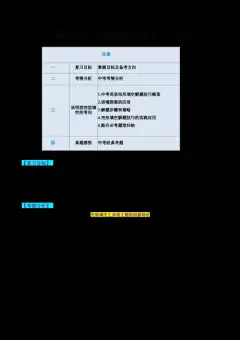
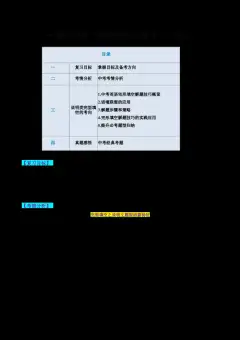
目 录
技能专区 1
真题专区 1
模拟专区 11
技能专区:冲刺备考名师提醒,洞悉高考命题规律,提供高效提分干
货
一、阅读理解说明文细节理解题注意落实“定位原文”和“同义替换”技巧。
二、数据计算题注重“原文定位”和“细节理解”,弄清来龙去脉再计算。
三、重视说明文“倒三角形”结构,特别是首段和段首的独特作用。
四、标题概括题重视三性:概括性、简洁性和新颖性;同时联系首段和关键词。
五、说明文长难句较多增加了理解的难度,落实“括号法”,(从句)(非谓
语)
(介词短语)(名词短语)。六、规范训练目标:做标记,留痕迹;零失误;限时 6 分钟/每篇。
真题专区:练真题,明方向;练技巧,提能力;练速度,提分数!
(2024九省联考)Parrots are prey animals, which means that other predators (捕食者) in the wild,
such as hawks or snakes, are looking to make them into a meal. This one factor influences parrots’
behavior in your house more than any other.
Parrots are most easily hurt when feeding on the ground; membership in a group plays an important function in
ensuring their safety and improving their chances of survival from attacks by predators. The most common predators
of parrots include hawks, snakes, cats, monkeys, and bats. Some predators make attacks only during the day while
others hunt in the night.
As prey animals, parrots are constantly watching out for danger and they instinctively (本能地) react
to risks. Their first choice is to take flight. However, if this is not possible, they will fight with their
powerful beaks to defend themselves.
Because their biggest enemy is the hawk, parrots are especially reactive to quick movements from above and
behind. For this reason, it is wise to avoid quick, sudden movements near your bird. This is a built-in reaction not
subject to logic or reason. Simple and relatively harmless household objects can draw extreme fear responses
from a bird. For example, a balloon may represent a hawk or a vacuum hose (吸尘器软管) may be the
same as a snake in your bird’s mind.
As prey animals, parrots are often frightened by exposure to new household items or strangers. It is important to
expose your bird to safe experiences and changes starting at a very young age to build flexibility and improve their
adaptability. Variety in diet and toys, travel, and exposure to new people and places all help to make your bird more
flexible and adaptable to change.
24. What is important for parrots to better survive from attacks in the wild?
A. Living in a group. B. Growing beautiful feathers.
C. Feeding on the ground. D. Avoiding coming out at night.
25. What is parrots’ first response to an immediate risk?
A. To attack back. B. To get away.
C. To protect the young. D. To play dead.
26. Why would a balloon frighten a parrot?
A. It may explode suddenly. B. It may be in a strange shape.C. It may have a strong color. D. It may move around quickly.
27. What is the author’s purpose of writing the text?
A. To explain wild parrots' behavior. B. To give advice on raising a parrot.
C. To call for action to protect animals. D. To introduce a study on bird ecology.
(2024九省联考)In his 1936 work How to Win Friends and Influence People, Dale Carnegie wrote: “I have
come to the conclusion that there is only one way to get the best of an argument — and that is to avoid it.” This
distaste for arguments is common, but it depends on a mistaken view of arguments that causes problems for our
personal and social lives — and in many ways misses the point of arguing in the first place.
Carnegie would be right if arguments were fights, which is how we often think of them. Like physical fights,
verbal (言语的) fights can leave both sides bloodied. Even when you win, you end up no better off. You would be
feeling almost as bad if arguments were even just competitions — like, say, tennis tournaments. Pairs of opponents
hit the ball back and forth until one winner comes out from all who entered. Everybody else loses. This kind of
thinking explains why so many people try to avoid arguments.
However, there are ways to win an argument every time. When you state your position, formulate (阐述) an
argument for what you claim and honestly ask yourself whether your argument is any good. When you talk with
someone who takes a stand, ask them to give you a reason for their view and spell out their argument fully. Assess
its strength and weakness. Raise objections (异议) and listen carefully to their replies. This method will require
effort, but practice will make you better at it.
These tools can help you win every argument — not in the unhelpful sense of beating your opponents but in the
better sense of learning about what divides people, learning why they disagree with us and learning to talk and work
together with them. If we readjust our view of arguments — from a verbal fight or tennis game to a reasoned
exchange through which we all gain respect and understanding from each other — then we change the very nature of
what it means to “win” an argument.
28. What is the author’s attitude toward Carnegie’s understanding of argument?
A. Critical. B. Supportive. C. Tolerant. D. Uncertain,
29. Why do many people try to avoid arguments?
A. They lack debating skills.
B. They may feel bad even if they win.
C. They fear being ignored.
D. They are not confident in themselves.
30. What does the underlined phrase “spell out” in paragraph 3 probably mean?
A. Defend. B. Explain. C. Conclude. D. Repeat.31. What is the key to “winning” an argument according to the author?
A. Sense of logic. B. Solid supporting evidence.
C. Proper manners. D. Understanding from both sides.
(2024九省联考)For lots of kids, toddlerhood (幼儿期) is an important time for friendship. Studies
show that the earlier kids learn to form positive relationships, the better they are at relating to others as
teenagers and adults. Playing together also helps these kids practice social behaviors, such as kindness, sharing,
and cooperation.
Even so, how quickly your child develops into a social creature may also depend on his temperament
(性格). Some toddlers are very social, but others are shy. In addition, the way' that toddlers demonstrate
that they like other children is markedly different from what adults think of as expressions of friendship.
Research at Ohio State University in Columbus found that a toddler’s way of saying “I like you” during play is likely
to come in the form of copying a friend’s behavior.
This seemingly unusual way of demonstrating fondness can result in unpleasant behavior, Regardless of how
much they like a playmate, they may still grab his toys, refuse to share, and get bossy. But experts say that this is a
normal and necessary part of friendship for kids this age. Through play experiences, toddlers learn social rules.
That’s why it's so important to take an active role in your toddler’s social encounters by setting limits and offering
frequent reminders of what they are. When you establish these guidelines, explain the reasons behind them.
Begin by helping your child learn sympathy (“Ben is crying. What's making him so sad?”), then
suggest how he could resolve the problem (“Maybe he would feel better if you let him play the ball.”).
When your child shares or shows empathy (同理心) toward a friend, praise him (“Ben stopped crying! You
made him feel better.”).
Another way to encourage healthy social interaction is by encouraging kids to use words -- not fists -- to
express how they feel. It's also important to be mindful of how your child's personality affects playtime. Kids are
easy to get angry when they’re sleepy or hungry, so schedule playtime when they’re refreshed.
32. What does it indicate when toddlers copy their playmates’ behavior?
A. They are interested in acting. B. They are shy with the strangers.
C. They are fond of their playmates. D. They are tired of playing games.
33. What does the author suggest parents do for their kids?
A. Design games for them. B. Find them suitable playmates.
C. Play together with them. D. Help them understand social rules.
34. What is the function of the quoted statements in paragraph 4?
A. Giving examples. B. Explaining concepts.C. Providing evidence. D. Making comparisons.
35. Which of the following is the best title for the text?
A. How Children Adapt to Changes B. How to Be a Role Model for Children
C. How Your Baby Learns to Love D. How to Communicate with Your Kid
(2023新高考II卷)Reading Art: Art for Book Lovers is a celebration of an everyday object — the book,
represented here in almost three hundred artworks from museums around the world. The image of the reader appears
throughout history, in art made long before books as we now know them came into being. In artists’ representations
of books and reading, we see moments of shared humanity that go beyond culture and time.
In this “book of books,” artworks are selected and arranged in a way that emphasizes these connections between
different eras and cultures. We see scenes of children learning to read at home or at school, with the book as a focus
for relations between the generations. Adults are portrayed (描绘) alone in many settings and poses —absorbed in a
volume, deep in thought or lost in a moment of leisure. These scenes may have been painted hundreds of years ago,
but they record moments we can all relate to.
Books themselves may be used symbolically in paintings to demonstrate the intellect (才智), wealth or faith of
the subject. Before the wide use of the printing press, books were treasured objects and could be works of art in their
own right. More recently, as books have become inexpensive or even throwaway, artists have used them as the raw
material for artworks — transforming covers, pages or even complete volumes into paintings and sculptures.
Continued developments in communication technologies were once believed to make the printed page outdated.
From a 21st-century point of view, the printed book is certainly ancient, but it remains as interactive as any battery-
powered e-reader. To serve its function, a book must be activated by a user: the cover opened, the pages parted, the
contents reviewed, perhaps notes written down or words underlined. And in contrast to our increasingly networked
lives where the information we consume is monitored and tracked, a printed book still offers the chance of a wholly
private, “off-line” activity.
8. Where is the text most probably taken from?
A. An introduction to a book. B. An essay on the art of writing.
C. A guidebook to a museum. D. A review of modern paintings.
9. What are the selected artworks about?
A. Wealth and intellect. B. Home and school.
C. Books and reading. D. Work and leisure.
10. What do the underlined words “relate to” in paragraph 2 mean?
A. Understand. B. Paint.
C. Seize. D. Transform.11. What does the author want to say by mentioning the e-reader?
A. The printed book is not totally out of date. B. Technology has changed the way we read.
C. Our lives in the 21st century are networked. D. People now rarely have the patience to read.
(2023 新高考 II 卷)As cities balloon with growth, access to nature for people living in urban areas is
becoming harder to find. If you’re lucky, there might be a pocket park near where you live, but it’s unusual to find
places in a city that are relatively wild.
Past research has found health and wellness benefits of nature for humans, but a new study shows that wildness
in urban areas is extremely important for human well-being.
The research team focused on a large urban park. They surveyed several hundred park-goers, asking them to
submit a written summary online of a meaningful interaction they had with nature in the park. The researchers then
examined these submissions, coding (编码) experiences into different categories. For example, one participant’s
experience of “We sat and listened to the waves at the beach for a while” was assigned the categories “sitting at
beach” and “listening to waves.”
Across the 320 submissions, a pattern of categories the researchers call a “nature language” began to emerge.
After the coding of all submissions, half a dozen categories were noted most often as important to visitors. These
include encountering wildlife, walking along the edge of water, and following an established trail.
Naming each nature experience creates a usable language, which helps people recognize and take part in the
activities that are most satisfying and meaningful to them. For example, the experience of walking along the edge of
water might be satisfying for a young professional on a weekend hike in the park. Back downtown during a workday,
they can enjoy a more domestic form of this interaction by walking along a fountain on their lunch break.
“We’re trying to generate a language that helps bring the human-nature interactions back into our daily lives.
And for that to happen, we also need to protect nature so that we can interact with it,” said Peter Kahn, a senior
author of the study.
12. What phenomenon does the author describe at the beginning of the text?
A. Pocket parks are now popular.
B. Wild nature is hard to find in cities.
C. Many cities are overpopulated.
D. People enjoy living close to nature.
13. Why did the researchers code participant submissions into categories?
A. To compare different types of park-goers.
B. To explain why the park attracts tourists.
C. To analyze the main features of the park.D. To find patterns in the visitors’ summaries.
14. What can we learn from the example given in paragraph 5?
A. Walking is the best way to gain access to nature.
B. Young people are too busy to interact with nature.
C. The same nature experience takes different forms.
D. The nature language enhances work performance.
15. What should be done before we can interact with nature according to Kahn?
A. Language study.
B. Environmental conservation.
C. Public education.
D. Intercultural communication.
(2022新高考II卷)Over the last seven years, most states have banned texting by drivers, and public service
campaigns have tried a wide range of methods to persuade people to put down their phones when they are behind the
wheel.
Yet the problem, by just about any measure, appears to be getting worse. Americans are still texting while
driving, as well as using social networks and taking photos. Road accidents, which had fallen for years, are now
rising sharply.
That is partly because people are driving more, but Mark Rosekind, the chief of the National Highway Traffic
Safety Administration, said distracted(分心)driving was "only increasing, unfortunately."
"Big change requires big ideas." he said in a speech last month, referring broadly to the need to improve road
safety. So to try to change a distinctly modern behavior, lawmakers and public health experts are reaching back to an
old approach: They want to treat distracted driving like drunk driving.
An idea from lawmakers in New York is to give police officers a new device called the Textalyzer. It would
work like this: An officer arriving at the scene of a crash could ask for the phones of the drivers and use the
Textalyzer to check in the operating system for recent activity. The technology could determine whether a driver had
just texted, emailed or done anything else that is not allowed under New York's hands-free driving laws.
"We need something on the books that can change people's behavior,” said Félix W. Ortiz, who pushed for the
state's 2001 ban on hand-held devices by drivers. If the Textalyzer bill becomes law, he said, "people are going to be
more afraid to put their hands on the cell phone."
28. Which of the following best describes the ban on drivers' texting in the US?
A. Ineffective. B. Unnecessary.
C. Inconsistent. D. Unfair.29. What can the Textalyzer help a police officer find out?
A. Where a driver came from. B. Whether a driver used their phone.
C. How fast a driver was going. D. When a driver arrived at the scene.
30. What does the underlined word "something" in the last paragraph refer to?
A. Advice. B. Data. C. Tests. D. Laws.
31. What is a suitable title for the text?
A. To Drive or Not to Drive? Think Before You Start
B. Texting and Driving? Watch Out for the Textalyzer
C. New York Banning Hand-Held Devices by Drivers.
D. The Next Generation Cell Phone: The Textalyzer.
(2022新高考II卷)As we age, even if we’re healthy, the heart just isn’t as efficient in processing oxygen as
it used to be. In most people the first signs show up in their 50s or early 60s. And among people who don’t exercise,
the changes can start even sooner.
“Think of a rubber band. In the beginning, it is flexible, but put it in a drawer for 20 years and it will become
dry and easily broken,” says Dr. Ben Levine, a heart specialist at the University of Texas. That’s what happens to the
heart. Fortunately for those in midlife, Levine is finding that even if you haven’t been an enthusiastic exerciser,
getting in shape now may help improve your aging heart.
Levine and his research team selected volunteers aged between 45 and 64 who did not exercise much but were
otherwise healthy. Participants were randomly divided into two groups. The first group participated in a program of
nonaerobic (无氧) exercise—balance training and weight training—three times a week. The second group did high-
intensity aerobic exercise under the guidance of a trainer for four or more days a week. After two years, the second
group saw remarkable improvements in heart health.
“We took these 50-year-old hearts and turned the clock back to 30-or 35-year-old hearts,” says Levine. “And the
reason they got so much stronger and fitter was that their hearts could now fill a lot better and pump (泵送) a lot
more blood during exercise.” But the hearts of those who participated in less intense exercise didn’t change, he says.
“The sweet spot in life to start exercising, if you haven’t already, is in late middle age when the heart still has
flexibility,” Levine says. “We put healthy 70-year-olds through a yearlong exercise training program, and nothing
happened to them at all.”
Dr. Nieca Goldberg, a spokeswoman for the American Heart Association, says Levine’s findings are a great
start. But the study was small and needs to be repeated with far larger groups of people to determine exactly which
aspects of an exercise routine make the biggest difference.
32. What does Levine want to explain by mentioning the rubber band?A. The right way of exercising. B. The causes of a heart attack.
C. The difficulty of keeping fit. D. The aging process of the heart.
33. In which aspect were the two groups different in terms of research design?
A. Diet plan. B. Professional background.
C. Exercise type. D. Previous physical condition.
34. What does Levine’s research find?
A. Middle-aged hearts get younger with aerobic exercise.
B. High-intensity exercise is more suitable for the young.
C. It is never too late for people to start taking exercise.
D. The more exercise we do, the stronger our hearts get.
35. What does Dr. Nieca Goldberg suggest?
A. Making use of the findings. B. Interviewing the study participants.
C. Conducting further research. D. Clarifying the purpose of the study.
(2021 新高考 II 卷)A British woman who won a S1 million prize after she was named the World's Best
Teacher will use the cash to bring inspirational figures into UK schools.
Andria Zafirakou,a north London secondary school teacher, said she wanted to bring about a classroom
revolution (变革). “We are going to make a change, ”she said.“I’ve started a project to promote the teaching of the
arts in our schools.”
The project results from the difficulties many schools have in getting artists of any sort - whether an up-and-
coming local musician or a major movie star - into schools to work with and inspire children.
,
Zafirakou began the project at Alperton Community School her place of work for the past twelve years. “I've
seen those magic moments when children are talking to someone they are inspired by - their eyes are shining and
their faces light up,” she said. “We need artists . more than ever in our schools."
Artist Michael Craig-Martin said: “Andria's brilliant project to bring artists from all fields into direct contact
with children is particularly welcome at a time when the arts are being downgraded in schools." It was a mistake to
see the arts as unnecessary, he added.
Historian Sir Simon Schama is also a supporter of the project. He said that arts education in schools was not just
an add-on. “It is absolutely necessary. The future depends on creativity and creativity depends on the young. What
will remain of us when artificial intelligence takes over will be our creativity, and it is our creative spirit, our
visionary sense of freshness,that has been our strength for centuries."
28. What will Zafirakou do with her prize money?
A. Make a movie. B. Build new schools.C. Run a project. D. Help local musicians.
29. What does Craig-Martin think of the teaching of the arts in UK schools?
A. It is particularly difficult. B. It increases artists' income.
C. It opens children's mind. D. It deserves greater attention.
30. What should be stressed in school education according to Schama?
A. Moral principles. B. Interpersonal skills.
C. Creative abilities. D. Positive worldviews.
31. Which of the following is a suitable title for the text?
A. Bring Artists to Schools B. When Historians Meet Artists
C. Arts Education in Britain D. The World's Best Arts Teacher
(2021新高考II卷)An Australian professor is developing a robot to monitor the health of grazing cattle, a
development that could bring big changes to a profession that's relied largely on a low-tech approach for decades but
is facing a labor shortage.
Salah Sukkarieh, a professor at the University of Sydney, sees robots as necessary given how cattlemen are
aging. He is building a four-wheeled robot that will run on solar and electric power. It will use cameras and sensors
to monitor the animals. A computer system will analyze the video to determine whether a cow is sick. Radio tags (标
签) on the animals will measure temperature changes. The quality of grassland will be tracked by monitoring the
shape, color and texture (质地) of grass. That way, cattlemen will know whether they need to move their cattle to
another field for nutrition purposes.
Machines have largely taken over planting, watering and harvesting crops such as com and wheat, but the
monitoring of cattle has gone through fewer changes.
For Texas cattleman Pete Bonds, it's increasingly difficult to find workers interested in watching cattle. But
Bonds doesn't believe a robot is right for the job. Years of experience in the industry - and failed attempts to use
technology - have convinced him that the best way to check cattle is with a man on a horse. Bonds, who bought his
first cattle almost 50 years ago, still has each of his cowboys inspect 300 or 400 cattle daily and look for signs that an
animal is getting sick.
Other cattlemen see more promise in robots. Michael Kelsey Paris, vice president of the Oklahoma Cattlemen's
Association, said a robot could be extremely useful given rising concerns about cattle theft. Cattle tend to be kept in
remote places and their value has risen, making them appealing targets.
32. What is a problem with the cattle-raising industry?
A. Soil pollution. B. Lack of workers.
C. Aging machines. D. Low profitability.33. What will Sukkarieh's robot be able to do?
A. Monitor the quality of grass. B. Cure the diseased cattle.
C. Move cattle to another field. D. Predict weather changes.
34. Why does Pete Bonds still hire cowboys to watch cattle?
A. He wants to help them earn a living.
B. He thinks men can do the job better.
C. He is inexperienced in using robots.
D. He enjoys the traditional way of life.
35. How may robots help with cattle watching according to Michael Kelsey?
A. Increase the value of cattle. B. Bring down the cost of labor.
C. Make the job more appealing. D. Keep cattle from being stolen.
模拟专区:做好题才有好成绩!练技能,补漏洞,提分数,强信心!
(2024·河南南阳·一模)Do you want to ensure your child hits their expected developmental milestones? New
UBC research suggests living in areas with high exposure to green space can help set them up for success.
For the study, the researchers at UBC analyzed the developmental scores of 27,372 children in Metro Vancouver
who attended kindergarten between 2005 and 2011.They estimated the amount of green space around each child’s
residence from birth to age five. They also assessed levels of traffic-related air pollution and community noise.
The results highlight the fundamental importance of natural green spaces like street trees, parks and community
gardens. “Most of the children were doing well in their development, in terms of language skills, cognitive (认知的)
capacity, socialization and other outcomes,” says Ingrid Jarvis, a PhD candidate in the department of forest and
conservation sciences at UBC. “But what’s interesting is that those children living in a residential location with
more vegetation and richer natural environments showed better overall development than their peers with less green
space.”
According to the researchers, the reason for this is partly green spaces’ ability to reduce the harmful effects of
air pollution and noise - environmental challenges that have been shown to adversely (不利地) affect children’s
health and development through increased stress, sleep disturbances and central nervous system damage. “Few
studies have investigated this pathway linking green space and developmental outcomes among children,” adds
Jarvis.
The researchers assessed early childhood development using the Early Development Instrument (EDI), a survey
completed by kindergarten teachers for each child. The tool measures a child’s ability to meet age-appropriate
developmental expectations.“More research is needed, but our findings suggest that urban planning efforts to increase green space in
residential neighbourhoods and around schools are beneficial for early childhood development, with potential health
benefits throughout life,” says the study’s senior author Matilda Bosch. “Time in nature can benefit everyone, but if
we want our children to have a good head start, it’s important to provide an enriching environment through nature
contact.”
1.Which is a key factor in the researchers’ study?
A.The kids’ scores from school exams.
B.The average IQ score of the subjects.
C.The green space where the kids lived.
D.The air pollution level of the whole city.
2.What’s the message implied in Paragraph 4?
A.Air pollution is largely to blame for kids’ failures.
B.Kids living in a noisy area tend to feel more stressed.
C.Pollution harms kids’ nervous system more than noise.
D.Greenspace is directly linked to kids’ mental development.
3.What does Matilda Bosch stress in the last paragraph?
A.The importance of nature in kids’ growth.
B.The role of research in scientific work.
C.The proper way of giving a good start to kids.
D.The urgency of expanding greenspace in cities.
4.What could be a suitable title for the text?
A.What Are the Health Effects of Noise Pollution?
B.Green Spaces: A guarantee for Kids’ Future Success
C.Urban Green Space and Its Impact on Human Health
D.Time in Nature Aids Early Childhood Development
(2024·河南周口·一模)Though known for being violent, six-foot-long Humboldt squid (鱿鱼) in the Pacific
Ocean, are good communicators,
It is not news that the squid can rapidly change the color of their skin-making different patterns for
communication something other squid species are also known to do.
Bot it is totally dark where the Humboldt squid live, more than one thousand feet below the ocean surface. So
their pattern is invisible. Instead, a new study suggests that they create backlighting for the patterns by making their
bodies glow, like the screen of an ereader.“Right now, what blows my mind in there’s probably squid talking to each other in the deep ocean and they’re
probably sharing all sorts of cool information.” said Ben Burford, a graduate student at Stanford University.
Burford and his fallow researchers studied deep-water recordings made by remotely operated vehicles off the
California coast. They found the squid make around 30 different patterns, some of which are only used around other
squid, suggesting they’re used for communication, The squid also appear to reorder the patterns, almost like words in
a sentence.
“That’s really exciting because then you can say a whole lot more based on their arrangement,” Burford said.
“So, they could for instance say, hey, that fish over there is mine, and I’m the ruling squid.”
The findings could change the way scientists think about bioluminescence (生物荧光), which is used by many
deep-sea animals to attract prey or a mate.
“We generally think of deep: sea stuff as having very simple displays because it’s a low-light environment,”
said Mike Vecchione, a zoologist from the National Museum of Natural Museum of Natural History. “This turns
some of our ideas about bioluminescence almost around upside down.”
The deep ocean is a challenging place to study, so Vecchione said there may be much more complexity to
discover.
5.Which of the following is right about the Humboldt squid?
A.They are quite friendly to deep-sea animals.
B.They are much bigger than any other squid.
C.They can communicate in a low-light environment.
D.They have better ability to survive the violent ocean.
6.How did Burford and his team study the Humboldt squid living deep in the ocean?
A.By studying former recordings. B.By discussing with other scientists.
C.By comparing different types of squid. D.By using machines of high rechnology.
7.What do scientists commonly think of the use of bioluminescence by deep-sea animals?
A.It is used by deep-sea animals in a simple way.
B.It makes deep-sea animals more mysterious.
C.It makes the Humboldt squid easy to be found.
D.It makes it easy for the Humboldt sqord to communicate.
8.What is these scientists’ biggest discovery of the Humboldt squid?
A.Their ability to ling deep in the water. B.Their unique use of bioluminescence.
C.Their hard living conditions in the sea. D.Their ways to attract preys or mates.
(2024·安徽淮北·一模)There are two distinctive types of electric buses making their way along Nanjing XiLu, one of Shanghai’s busiest roads. The first is a fleet of blue trolleybuses that serve bus route number 20, a line set
up by a British-run transport company in 1928. They use poles to receive electricity from wires overhead and have
kept the route running in this way for nearly a century. But while the historic electric buses are a reminder of
Europe’s past technological innovation, the new buses traveling alongside them are symbols of China’s
contemporary net-zero ambition. These modern electric buses powered by lithium batteries ( 锂电池) , were
introduced in Shanghai in 2014. They offer a smoother ride, especially during starts and stops. Widely used across
China, these buses are key to the country’s EV transition and are influencing the global shift towards green
transportation.
The most recent data available shows that China in 2018 was still the second largest source of carbon dioxide
emissions in the global transport sector, responsible for 11%, and behind only the United States, which accounted for
21%. After around two decades of government support, China now boasts the world’s largest market for e-buses,
making up more than 95% of global stock. At the end of 2022, China’s Ministry of Transport announced that more
than three-quarters (77% or 542, 600) of all urban buses in the country were new energy vehicles. The speed of this
transition was remarkable.
So far, however, the Chinese cities with the most successful e-bus introduction — such as Shenzhen, Beijing
and Shanghai — all have moderate weather and are relatively flat. To take its e-bus campaign to the next level, China
faces challenges. For one thing, it is difficult to bring fleets to cities such as Hong Kong, which — like London —
have double-deckers. These two-storeyed vehicles are “very hard” to electrify, because they are heavier, use more
energy, and so need bigger batteries, reducing the number of passengers they can carry. Cold weather is a problem,
too, as it can make a battery’s charging time longer and its range shorter. The reason China has not achieved 100%
electrification for its buses is its northern regions, which have cold winters, says Xue Lulu, a transportation expert at
the World Resources Institute China.
9.How does the author describe the two types of electric buses in the first paragraph?
A.By contrasting their historical significance and technological advancements.
B.By highlighting their roles in protecting the environment and lasting use.
C.By focusing merely on their technical details and performance.
D.By explaining their operational challenges and requirements.
10.What do the numbers in paragraph 2 mainly show?
A.The global impact of carbon dioxide emissions.
B.The progress of China in reducing CO emissions.
2
C.The different emission levels of China and the USA.
D.The need for more government support in e-bus market.11.What factor contributes to the slow adoption of electric buses in China’s northern regions?
A.Poor winter weather conditions. B.Lack of transportation experts.
C.Short charging time of the battery. D.Heavier and bigger bus bodies.
12.Which column is the text most probably taken from?
A.Worklife. B.Culture. C.Travel. D.Earth.
(2024·安徽淮北·一模)As I write this, a Bob Seger song is stuck in my head. It’s been playing on repeat ever
since I heard it in a movie. I hated it a lot when it first came out years ago, and I still really hate it now. Why, oh why,
does an earworm happen? This phenomenon, known as an earworm, is both fascinating and annoying. Earworms are
a type of auditory imagery, where we perceive a tone without actually hearing it. When a familiar song is heard and
suddenly stopped, some areas of the brain become overly activated in expectation of hearing the rest of the song, and
then it fills in the missing pieces.
Anyone can experience earworms, but certain personality characteristics, like openness to experience, may
increase their frequency. You may have seen a popular TikTok recently of a guy saying earworms aren’t normal but
are instead symptoms of ADHD (多动症) or OCD (强迫症). That’s generally not the case. “It is entirely normal to
experience earworms: Over 90% of participants in large-scale surveys report having had earworms at least once a
week, and they are not a symptom of any other underlying mental condition,” says Jakubowski. Interestingly,
earworms aren’t all bad. Research indicates that they can enhance our ability to recall past events, as the repetitive
nature of the song strengthens our memory.
There are several strategies to get rid of earworms. Listening to the entire song can help resolve the unfinished
loop. Alternatively, distracting yourself with another melody or engaging in activities that require focus can also be
effective. Chewing gum or eating something crunchy may interrupt the song playing in your head. Despite these
strategies, sometimes the best approach is to simply accept the presence of the earworm and let it fade away
naturally. In my case, trying to actively rid myself of the song only made it more persistent. It seems patience is key
when dealing with these stubborn musical guests in our minds.
13.What is an earworm?
A.A type of insect that affects hearing. B.A song that gets stuck in your head.
C.A medical condition related to the ears. D.An element missing in a song.
14.Which of the following statement is true about earworms?
A.They cannot be controlled or stopped. B.They indicate underlying illness.
C.They only occur in certain individuals. D.They are normal phenomena.
15.What benefit can be expected of earworms?A.To enhance memory recall of earlier incidents.
B.To increase musical creativity and imagination.
C.To expand openness to new experiences.
D.To improve focus and concentration.
16.How does the author feel about earworms?
A.Concerned and worried. B.Scientific but negative.
C.Annoyed but accepting. D.Excited and fascinated.
(2024·甘肃·一模)The printed book is back. Recent studies have shown that students absorb more
information when they read a hard-copy book compared to reading on a digital device. One school responded to
these findings by abandoning its e-readers. The students found that it was convenient to look through the pages when
using a traditional book. E-books may come with a “suite of navigational tools”, but it turns out that the best
navigational devices are your forefinger and thumb. You can use them to flip the pages forward and backward. All
this time, those devices have just been sitting there at the ends of your arms.
Can a traditional book offer all the features of an e-book? Unfortunately, no. It lacks a “progress bar” indicating
what percentage of the book has been read. Luckily, a traditional book will naturally form two halves joined in the
middle. If the left-hand chunk is thicker than the right-hand one, you are more than halfway through.
Fans of the e-book point out that digital text is easy to annotate. Some devices even feature a little image of a
pencil to guide the reader through the process of note-taking. Traditional-book users have a similar system called a
“pencil”. With it, favoured passages can be underlined and, comments can be written in the margin.
The printed book, of course, has other advantages. A full bookshelf is a store of knowledge. It’s a map of your
life as a reader: the passions that passed and those that endured. There are books that introduced you to other books,
like friends at a party, and books that nursed you through difficult times.
17.Why do printed books return?
A.They are cheaper. B.They can last longer.
C.They can store knowledge. D.They are easier to look through.
18.What does the underlined word “annotate” in Paragraph 3 probably mean?
A.To add notes. B.To copy and paste.
C.To sign your name. D.To analyze sentences.
19.What’s the last paragraph mainly about?
A.The importance of having a bookshelf. B.The ways to introduce books to friends.
C.The reasons why you need a bookshelf. D.The life experience hidden behind books.
20.What’s the author’s opinion about books?A.E-books are better than printed books. B.Books should be stored on bookshelves.
C.Features in e-books are extremely helpful. D.Traditional books can serve the readers well enough.
(2024·甘肃·一模)Why are polar bears white? Why do rabbits have long ears? Why do zebras have stripes
(条纹)? It’s all about survival. Wild animals normally focus their efforts on two important tasks. One task is to look
for things to eat. While they do that, they have to avoid getting eaten! They can’t afford to ignore any dangers around
them. Life is just one long game of hide-and-seek. Luckily for them, the way they look usually helps them. The zebra
is a very good example.
Zebras usually travel in large groups. Imagine a hundred zebras moving together across the grassland: in Africa.
Not far away, a lioness is lying on a tree branch, resting. She is waiting for her chance to attack. The zebras are
getting nearer, but they’ re running very close together. Now she’s seen them, and she’s getting ready: she knows
she’ll soon have a zebra to kill.
The lioness’s goal is to catch a zebra for breakfast. There is no place to hide, but the zebras have a secret line of
defence; their stripes.
Lions are colour-blind. As the zebras move in a large group, it’s hard for the lioness to see which zebra to
attack. All she sees is a big mass of black and white stripes. She’s not sure what to do. Breakfast must wait. The
animals are always trying to hide from her.
But do zebras’ stripes cause problems for other zebras as they do for lions? No, they don’t. Actually, the purpose
of the stripes in this case is to help zebras recognize each other. Every zebra has an individual pattern of stripes and
zoologists believe this is how zebras know who is who in the group. A mother zebra always recognizes her child
among the crowd because its stripes are just a little different from the others.
21.Why are zebras and lions mentioned?
A.To give examples. B.To make comparisons.
C.To stress the importance of animals. D.To encourage people to protect animals.
22.Why does the lioness fail to catch a zebra for breakfast?
A.The lioness is colour-blind. B.The lioness is hiding from others.
C.The lioness is afraid of the zebras. D.The lioness is waiting for another chance.
23.What do we know about zebras’ stripes?
A.The stripes help them hide in the forest.
B.Some zebras share the same stripe pattern.
C.Zebras can recognize each other by their stripes.
D.The stripes can sometimes cause problems for zebras.
24.What’s the best title for the text?A.Hide and Seek B.Attack and Defence
C.Zebras and Lionesses D.Appearance and Survival
(2024·甘肃兰州·一模)The ability to track animals and plants is up in the air —literally —thanks to help
from an unexpected source.
Around the globe, many air quality control stations filter (过滤) air through small paper disks on a daily or
weekly basis, allowing scientists to ensure concentrations of harmful pollutants such as heavy metals are below
certain levels. But the filters also pick up plant and animal DNA having been scattered (播撒) into the wind.
The eDNA, short for environmental DNA, on those filters could make air quality control stations a treasure
house of samples cataloging local animals and plants. Such records could help researchers track biodiversity at a
larger scale and more easily catch species declines or track how ecosystems are changing overall.
“We’re effectively carrying on with it for a totally new use,” says Elizabeth Clare, a molecular ecologist at York
University.
“It never occurred to us that these filters capturing particulate (微粒的) matter could even be analyzed for
eDNA,” says James Allerton, an air quality scientist in England. That changed when Allerton read a news story about
two studies where scientists cleared animal DNA out of thin air at two zoos, one in England —led by Clare —and
another in Denmark.
Learning about the potential for capturing eDNA sparked a “light bulb moment,” Allerton says, and he reached
out to Clare to cooperate.
Clare, Allerton and colleagues analyzed filters from the Teddington facility that were exposed to surrounding air
for one hour, one day or one week. The team also examined eight-month-old filters from an air quality control station
in Scotland that had each been exposed to air for a week.
Genetic material in the filters revealed the presence of more than 180 different types of local animal groups
including pine trees, badgers, owls, fungi and news. That volume is surprising given that the filters and storage
conditions weren't set up with eDNA in mind. That the researchers recovered so much eDNA from a system designed
to monitor air quality shows how common airborne (空气中的) DNA is and how much biodiversity data could be up
for grabs.
25.What is the new use of air quality control stations?
A.To purify air by decreasing pollutants in it.
B.To study the links between man and animals.
C.To concentrate on effects of animals on climate.
D.To help track the categories of animals and plants.
26.How does James Allerton react to the technology of capturing eDNA?A.He felt doubtful and hesitant to use it.
B.He felt useful but reluctant to admit it.
C.He felt unimaginable but ready to accept it.
D.He felt amazed but refused to have an attempt.
27.What can we learn from the last paragraph?
A.Airborne DNA is quite uncommon in the system.
B.Over 180 types of living plants have been detected.
C.It is not easy for researchers to collect biodiversity data.
D.Researchers didn't take eDNA into account in the first place.
28.Which of the following is the best title for the text?
A.Air Pollutants are Found in Animals and Plants
B.Tracking Evolution of Living Things Benefits eDNA
C.Air Pollution Monitoring May Help Track Biodiversity
D.eDNA Technology Proves a Big Success in Air Detection
(2024·甘肃兰州·一模)The oceans play a crucial role in lightening global warming by absorbing carbon
dioxide emissions. However, in a study conducted by the University of Texas, researchers found that the oceans’
capacity to absorb carbon dioxide (CO ) would reach its maximum by 2100 and decrease to half of its current
efficiency by 2300, based on a climate sim₂ ulation (模拟) that was set for a worst-case emissions scenario (设想).
The decline happens because of a surface layer of low-alkalinity (碱度) water that can hinder the ability of the
oceans to absorb CO . Alkalinity affects how much CO can dissolve in seawater. Although the emissions scenario
used in the study is₂ unlikely because of global efforts₂ to limit greenhouse gas emissions, the findings reveal a
previously unknown tipping point that if activated would release an important brake on global warming.
“We need to think about these worst-case scenarios to understand how our CO emissions might affect the
oceans not just this century, but next century and the following centuries. Climate simu₂lations had previously shown
that the oceans slow their absorption of CO over time, but none had considered alkalinity as an explanation. We
recalculated pieces of a 450-year simulation ₂until we hit on alkalinity as a key cause of the slowing.” said Megumi
Chikamoto, who led the research at the University of Texas Institute.
The effect begins with extreme climate change, which slows ocean currents. This leaves the surface of the
oceans covered in a warm layer of fresh water that won’t mix easily with the cooler, more al kaline waters below it.
That means more of it is left behind in the atmosphere. This in turn produces faster warming, which sustains and
strengthens the low-alkalinity surface layer. Co-author, Pedro DiNezio, said that the discovery was a powerful
reminder that the world needs to reduce its CO emissions to avoid crossing this and other tipping points.
₂29.What may happen after the year 2300?
A.More CO will be absorbed by the oceans.
B.The ocean₂s will lose all their current efficiency.
C.The world will face even more severe warming.
D.The oceans will be less crucial to global warming.
30.What does the underlined word “hinder” in paragraph 2 probably mean?
A.Improve. B.Weaken. C.Protect. D.Control.
31.What does Megumi Chikamoto say about the oceans?
A.Finding why they slow CO intake is hard.
B.Their ability to absorb CO ₂ is at their maximum.
C.They will decide on the fut₂ure of human beings.
D.They will slow down CO absorption very quickly.
32.Where is this text probably ta₂ken from?
A.A biology textbook. B.A government report.
C.Science fiction. D.An environmental journal.
(2024·广西南宁·一模)A study has found that smiling at London bus drivers increases their happiness. The
finding feels obvious and unexpected at the same time. For decades, passengers and drivers in London greet each
other in an unfriendly mood; any affection feels disgust. While, the authors of the research, which was conducted by
the University of Sussex and others, hope it will lead to “more interaction and kindness on buses”. However,
Londoners are sceptical.
It might seem impossible that a report on London’s buses could change behaviour. But it has happened before.
London’s buses have an underappreciated role in the history of medical science. In the 1940s, a single study of
London’s transport workers transformed epidemiology(流行病学), medicine and the way we live now. Every time
you go on a run, check your steps, or take the stairs instead of the lift, you are following a path established by the
feet of the workers on London’s buses.
In the late 1940s, Britain, like many rich countries, was suffering from an “epidemic” of heart disease and no
one knew why. Various hypotheses (猜想), such as stress, were suggested; but no one noticed exercise. The idea that
health and exercise were linked “wasn’t the accepted fact that we know today”: Some even felt that “too much
physical activity was a bad thing for your health”.
At this time, Jerry Morris started to suspect that the too many deaths from heart disease might be linked to
occupation. He began studying the medical records of 31,000 London transport workers. His findings were
breathtaking: conductors, who spent their time running up and down stairs, had an approximately 30% lowerincidence of disease than drivers. He also looked at postal workers, and found a similar pattern: postmen had far
lower rates of disease than telephonists.
Morris’s research was eventually published in 1953, and his work had consequences both big and small. Morris
now took up exercise, handing his jacket to his daughter and just running. “People initially thought I went bananas.”
But slowly, the rest of the world took off its jacket and followed.
33.What impact did the study of London’s transport workers in the 1940s have on the field of medicine?
A.It led to the discovery of a new virus.
B.It proved the main cause of heart disease.
C.It showed the relationship between exercise and health.
D.It corrected the misunderstanding of London bus drivers.
34.How did Morris conduct his study?
A.By carrying out a survey. B.By study their occupation.
C.By analyzing the medical data. D.By doing medical examination.
35.What’s the meaning of “went bananas” in the last paragraph?
A.Falling ill. B.Saving energy.
C.Starting running. D.Becoming crazy.
36.Which can be the best title of this passage?
A.How to Increase Drivers’ Happiness
B.How to Transform the Way We Live
C.How Exercise Influenced Heart Health
D.How London Bus Drivers Led the World to Exercise
(2024·广西南宁·一模)For Caribbean box jellyfish (水母), learning is literally a no-brainer.
In a new experiment, these animals learned to spot and avoid obstacles (障碍物) despite having no central
brain, researchers report in Current Biology. This is the first evidence that jellyfish can make mental connections
between events and change their behavior accordingly. “Maybe learning doesn’t need a very complex nervous
system, but rather, learning is an essential part of nerve cells,” says Jan Bielecki, a neuroethologist at Kiel University
in Germany. If so, the new finding could help trace how learning evolved in animals.
Bielecki and his colleagues wondered if Caribbean box jellyfish could learn that low-contrast objects, which
might at first seem distant, were actually close by. The team put 12 jellyfish into a round tank surrounded by low-
contrast, gray and white stripes. A camera filmed the animals’ behavior for about seven minutes.
At first, the jellyfish seemed to interpret the gray stripes as distant roots and swam into the tank wall. But those
collisions (碰撞) seemed to lead the jellyfish to treat the gray stripes more like close roots in dirty water, and theanimals started avoiding them. The jellies’ average distance from the tank wall increased from about 2.5 centimeters
in the first couple of minutes to about 3.6 centimeters in the final couple of minutes. Their average collisions into the
wall dropped from 1.8 per minute to 0.78 per minute.
“I found that really amazing,” says Nagayasu Nakanishi, an evolutionary biologist at the University of Arkansas
in Fayetteville, who has studied jellyfish nervous systems but was not involved in the new work. “I never thought
jellyfish could really learn.”
Neurobiologist Björn Brembs views the results more cautiously, noting the small number of jellyfish tested and
the variability in their performance. “I want this to be true, as it would be very cool,” says Brembs. Experiments with
more jellyfish could convince him that the animals really do learn.
37.What can we know about the jellyfish in paragraph 2?
A.They can avoid obstacles with a central brain.
B.They can change their behaviour after evolution.
C.They may have learning abilities with nerve cells.
D.They may develop a very complex nervous system.
38.What change in behavior did the jellyfish show in the experiment?
A.They completely ignored the gray stripes.
B.They gradually started avoiding the gray stripes.
C.They could avoid collisions if given enough time.
D.They increased their collisions with the tank wall.
39.What conclusion can be drawn from the experiment?
A.Jellyfish preferred the gray stripes over other things.
B.Jellyfish were unable to learn from their environment.
C.Jellyfish relied on the distant objects to change their behavior.
D.Jellyfish showed a learning process and adjusted their behavior.
40.What does Brembs imply in the last paragraph?
A.He believes more testing is needed to confirm the results.
B.He is excited by the potential implications of the findings.
C.He dismisses the findings as irrelevant to jellyfish behavior.
D.He is doubtful due to the consistent performance of the jellyfish.
(2024·吉林长春·一模)It’s a race against time, as generations of cultural heritage conservators at the
Dunhuang Academy make a great effort to protect the artistic charm of the Mogao Caves, a UNESCO World
Heritage Site, despite erosion (侵蚀) by sand and wind.The team is devoted to protecting the 45,000 square meters of murals (壁画) and more than 2,400 painted
sculptures of the 735 caves of the site, the construction of which spans about a thousand years, from the 4th century
to the 14th century. The cultural relics are the product of the cultural exchanges that took place over centuries on the
ancient Silk Road. “Our work, repairing murals and painted sculptures, is to better preserve the caves, which
promotes the great Dunhuang spirit of inclusiveness to the world and inspires modern people,” says Su Bomin,
director of the Dunhuang Academy.
Commonly seen “diseases” affecting the murals include cracking and flaking, as well as erosion that is caused
by changes in temperature and humidity of the caves, and the deposition of salts. To restore a mural requires an all-
rounder. Restorers should know painting, master the skills of a mason and have some knowledge of chemistry and
physics, to be able to recognize the problems and their corresponding causes and deliver a solution. They must also
select proper materials and tools, and conduct experiments, before formally carrying out the restoration and
evaluating the effect afterward.
The restoration should respect the original work and aim to maintain the status quo of the murals rather than
repainting them. When the restorers find some parts of murals missing or fading away, they never repaint them to
create a “perfect” appearance in restoration. “Cultural relics are witnesses of history,” explains Su. “When you
pursue the so-called intact (完好无损的) look for artistic reasons, you will lose their key meaning.”
Cave conservation is about continuously solving problems. “It needs a long-term research to better preserve the
caves, over a much wider time span that goes beyond our lifetimes,” Su says. But at least, they can keep the current
look of the murals for as long as possible.
41.What is the main purpose of paragraph 2?
A.To show the popularity of Dunhuang murals.
B.To explain the history of the ancient Silk Road.
C.To stress the significance of the restoration work.
D.To present the ways of protecting cultural heritage.
42.Which of the following best describes the restoration work?
A.Demanding. B.Well-paid. C.Interesting. D.Creative.
43.What should restoring murals focus on according to paragraph 4?
A.Spotting the faded murals in time.
B.Fixing the missing parts of murals.
C.Maintaining the current look of murals.
D.Repainting to perfect the appearance of murals.
44.Which can be the best title for the text?
A.The Artistic Charm of Mural PaintingsB.The Mural Restoration in the Mogao Caves
C.The Successful Experiment on Cave Conservation
D.The Role of the Dunhuang Spirit in Chinese Culture
(2024·新疆·一模)In 2011, artist Grimanesa Amorós stepped off a boat made of totora reeds (芦苇) onto an
island—also made of totora reeds — in the northwest portion of Lake Titicaca. It’s home to one of the world’s most
innovative achievement of human engineering: the Uros Islands.
The man-made floating islands, which are home to the native Uros people, are created by putting layers upon
layers of totora roots and reeds. This water-resistant plant grows in the lake and is the lifeblood of the Uros
community. It is used to make boats, houses, roofs, mattresses (床垫) and more. The plant is also eaten and serves as
medicine, and its flowers are used to make tea.
However, the Uros weren’t always dependent on the totora. More than 500 years ago, the growing Inca Empire
began to invade the Uros’ mainland villages. To beat this threat, the Uros began to build the islands, which could be
launched deep into Lake Titicaca, away from danger. Hundreds of years later, there are now about 120 of these
constructed islands, with around 1,300 people living on them.
To build the islands, the Uros first gather large blocks of totora roots. Multiple blocks are pulled together, and
the roots and reeds mix naturally to form a layer about 1 to 2m thick. The totora reed is laid on top of this floating
base. The Uros use a long tool to reach deep down into the water and cut the plant above the base. Then, the reeds
are dried in the sun for one to four weeks and bundled (捆绑) together using a rope. Once dried, totora reeds are
placed in alternating directions on top of the root blocks and become the ground that the Uros walk and build their
homes on.
Today, urban influences are evident on the islands: Solar panels power bedroom lights and small TVs; a radio
station operates on the main island. It’s evident that these modern changes and tourism have changed the Uros’ life
on the lake. One thing remains certain, though. As long as there is totora growing at Lake Titicaca, the islands’ rooted
foundation will stay the same.
45.Which word can best describe the role totora reeds play in the Uro’s life?
A.Essential. B.Symbolic. C.Protective. D.Sustainable.
46.What was the original purpose of building the floating island?
A.To develop tourism. B.To maintain their lifestyle.
C.To escape from enemies’ attack. D.To be separated from the world.
47.What does the fourth paragraph mainly focus on?
A.The key to selecting building materials. B.The procedure of building the islands.C.The difficulty of living on the island. D.The method of spotting reeds.
48.What might be the best title for the text?
A.Fancy Lifestyles of the Uros B.Innovative Building Materials
C.Floating Homes on Lake Titicaca D.A Must-see Tourist Attraction of Lake Titicaca
(2024·新疆·一模)Research indicates that Tai Chi, a traditional Chinese exercise that combines slow, gentle
movements with deep breathing and relaxation, may provide long-term relief from Parkinson’s disease symptoms.
Those who practised the martial art twice a week had fewer complications (并发症) and better quality of life than
those who didn’t, the researchers say.
Parkinson’s is a progressive brain disease characterized by slowness of movement, tremors (颤抖), and stiff and
inflexible muscles. It is the fastest-growing neurological condition in the world, with the number of those affected
projected to reach nearly 5 million by 2030 in China alone. In the UK 2 people are diagnosed with the disease every
hour. So far, there has been no cure for Parkinson’s.
Previously published research suggests that Tai Chi eases Parkinson’s symptoms in the short term, but whether
this improvement can be maintained over the long term isn’t known.
The new study, from Shanghai Jiao Tong University School of Medicine, monitored the health of hundreds of
Parkinson’s patients for up to five years. One group of 147 people practised regular Tai Chi while another group of
187 did not.
The researchers found that the disease progressed more slowly in the Tai Chi group on measurements of
symptoms, movement and balance. This group also saw fewer falls, less back pain and dizziness, with memory and
concentration problems also lower than in the other group. At the same time, sleep and quality of life continuously
improved.
However, this is an observational study, which can’t establish cause and effect. And the researchers
acknowledge that the number of study participants was relatively small.
Prof Alastair Noyce, professor in neurology at Queen Mary University of London, called it “an important
study” but said there were limitations in its design, and more trials were needed.
Prof K Ray Chaudhuri, professor of movement disorders and neurology at King’s College London, said, “It is
too early to claim any neuroprotection based on this study, although the positive effects on aspects of motor and non-
motor functions are impressive.”
49.What do we know about Parkinson’s?
A.It’s severe but curable now. B.It may lead to a low-quality life.
C.It’s more common in China than in the UK. D.It’s the fastest-growing disease in the world.
50.What is the new study different from the previous one?A.It covers more aspects of the disease.
B.It collects data from more study participants.
C.It focuses on the long-term effect of Tai Chi on Parkinson’s.
D.It first proves the positive effect Tai Chi has on Parkinson’s.
51.What can be inferred from paragraphs 5 and 6?
A.The results of the study are not clear.
B.The researchers are unaware of the problems of the study.
C.The methods that the researchers use in the study are inappropriate.
D.The study gives hope to Parkinson’s patients though with its limitations.
52.What is Prof K Ray Chaudhuri’s attitude towards the conclusion of the new study?
A.Disapproving. B.Supportive. C.Indifferent. D.Objective.
(2024·新疆乌鲁木齐·一模)There’s a song in your head. You keep hearing it repeatedly. You can’t make it
stop, and it’s driving you crazy! Has this happened to you? Maybe you have suffered from an earworm, which is a
memory of a song.
Earworms are common. A study showed that 90 percent of people experience them. Why do we get earworms?
According to neurologist Oliver Sacks, music affects us whether we pay attention to it or not. We’re surrounded by
music all the time in our everyday lives. Sacks wonders if there is a higher incidence of earworms today because of
all this music in our environment.
Research on the primary auditory cortex supports Sack’s ideas. The auditory cortex is the part of the brain that
processes sound. It’s a short-term storage system for small amounts of auditory information. Some of this auditory
information is forgotten, and some of it goes into long-term memory. However, songs appear to stay in the auditory
cortex for a long time.
James Kellaris, a professor of marketing at the University of Cincinnati, thinks that only certain types of songs
become earworms. These songs are repetitive, simple, and incongruous — something unexpected such as uneven
rhythm. Your brain pays a lot of attention to a song like this, Kellaris says. Because it is repetitive and unusual, it
stays longer in the auditory cortex. At that point, Kellaris believes, it becomes an annoying earworm.
Advertisers often use jingles — short songs that are easy to remember to promote sales. Advertisers want
jingles to stick in people’s minds to keep them thinking about their products. It seems that advertisers have learned
what Kellaris has found out in his research.
Is there any way to get rid of an earworm? Here are some tips Kellaris collected: replace the earworm song with
another song, try to distract yourself by doing an intense activity such as exercising, or tell someone about your
earworm. What if none of these strategies work? Then perhaps you should just sit back and try to enjoy the music inyour head!
53.How does the author lead to the topic?
A.By giving a definition. B.By describing a phenomenon.
C.By drawing a conclusion. D.By clarifying a question.
54.What does the author want to explain by mentioning “auditory cortex”?
A.The mechanism of earworms. B.The lasting effect of memory.
C.The necessity of the research. D.The significance of music.
55.In which paragraph does the author explain the features of the earworm music?
A.Paragraph 2. B.Paragraph 3. C.Paragraph 4. D.Paragraph 5.
56.What can be the best title for the text?
A.Earworms — the Songs in Your Head B.Jingles — the Typical Earworms
C.How Do Earworms Change Our Life? D.How Do We Live with Earworms?
(2024·新疆乌鲁木齐·一模)The Greek philosopher Heraclitus once said that you can’t step into the same
river twice, for you aren’t the same person at each visit and the water is ever flowing. It is a powerful way to show
the reality that everything is always changing. Yet so many people have unpleasant relationships with change. We
resist it or attempt to control it, the result of which is almost always some combination of stress, anxiety, and
burnout. It doesn’t have to be that way.
No doubt, change can, and often does, hurt; but with the right mindset, it can also be a force for growth. A
concept called allostasis can help. Developed in the late 1980s by neuroscientist Peter Sterling and biologist Joseph
Eyer, allostasis is based on the idea that rather than being rigid, our healthy baseline is a moving target. Allostasis is
defined as “stability through change”—the way to stay stable through the process of change is by changing.
From neuroscience to pain science and psychology, allostasis has become the dominant model for
understanding change in the scientific community. The brain is at its best when it is constantly rewiring itself and
making new connections. Overcoming pain is not about resistance or trying to get back to where you were but about
balancing acceptance with problem-solving and moving forward to normal.
The time to start practicing is now. Over the past few years, the river of change has been flowing, and it shows
no signs of letting up. Our ability to work with these changes is directly related to our life satisfaction. Given all
this, simply creating a stable expectancy around change goes a long way. So does realizing that the allostasis mindset
doesn’t ask us to do nothing. Rather, it asks us to partake in change by focusing on what we can control and trying to
let go of what we can’t. When I catch myself resisting change, in my head I say the following: “This is what is
happening right now. I’m doing the best that I can. What, if any, skillful actions can I take?” Do this repeatedly andfinally you start to get better at it.
To thrive in our lifetime — and not just survive —we need to transform our relationship with change, leaving
behind rigidity and resistance. We are always shaping and being shaped by change, often at the very same time.
57.What’s the common practice toward change?
A.To welcome it. B.To reject it.
C.To overlook it. D.To adapt to it.
58.Which of the following can best interpret “allostasis”?
A.One size fits all. B.Time works great changes.
C.Respond to change by changing. D.It’s never too late to change.
59.What does the underlined phrase “letting up” in paragraph 4 probably mean?
A.Stopping. B.Dashing down.
C.Going up. D.Widening.
60.What might the author agree with?
A.Repetition makes up for rigidity. B.It matters to focus on what we can’t.
C.Changes promote life satisfaction. D.It makes sense to embrace changes.
(2024·贵州安顺·一模)One of the most productive architects of the 20th century, Frank Lloyd Wright had no
shortage of ideas. Throughout his life, he designed 1,171 architectural works. Many of them, like the Guggenheim
Museum and Fallingwater, were eventually built. But over half — 660 to be exact — never moved beyond paper.
Now, thanks to the Frank Lloyd Wright Foundation, we are finally getting a look at what his unbuilt architecture
would have looked like. Working with digital artist David Romero, the organization has been building an impressive
library of works that show Wright’s creative genius.
The reasons that these pieces of incredible architecture were never built vary. Wright’s homage to his adopted
home state of Arizona was rejected for several reasons. While Wright considered his avant-garde (前卫的) design for
the Arizona State Capitol Building to be a gift to the city, officials felt otherwise. With a price of $5 million, too
costly, he was passed over for the project.
In the case of the cliffside (悬崖边) Morris House, it’s not completely clear why the family did not go with
Wright’s design. But, in examining his ideas for the home, it’s clear that Wright successfully combines the
architecture and nature. The design uses rounded forms that fit into the cliffs and merge the home and the natural
surroundings.
In 1947, he was asked to rebuild Roy Wetmore’s service station. What Wright provided was a futuristic design
that included a ramp (斜坡) allowing a car to be displayed on the roof. Unfortunately, Wetmore wished to simply
remodel the existing structure rather than demolish it and start over, so the project was never done. Later, Wetmoredid incorporate the car ramp on the roof.
Romero has been able to bring these ideas to life and give a new generation of architecture lovers a reminder of
why Wright had such a long, influential career.
61.Why was the design for Arizona State Capitol Building refused?
A.The government wanted a perfect design.
B.It was originally designed for other states.
C.It needed much more money than expected.
D.The design didn’t go with the surroundings.
62.What’s the author’s attitude toward Wright’s design about Morris House?
A.Favorable. B.Intolerant. C.Doubtful. D.Unclear.
63.What does the underlined word “demolish” in paragraph 4 mean?
A.Redesign. B.Pull down. C.Improve. D.Put up.
64.What’s the text mainly about?
A.Wright’s productive architecture wasn’t recognized.
B.Many good productive architects didn’t come to light.
C.Wright’s excellent designs for some famous buildings.
D.Modern technology makes a genius’ designs come true.
(2024·贵州贵阳·一模)Step aside, blue collar. And white collar, pink collar and green collar. There’s a new
collar in town. “New collar” jobs are those that require advanced skills but not necessarily advanced degrees,
especially in emerging high-tech fields like artificial intelligence, cybersecurity (网络安全), electric vehicles and
robotics.
There are real fears that workers will lose jobs to technology, especially artificial intelligence, in the coming
years. But “new collar” optimists think in a more positive way: There are also real opportunities ahead for skilled
workers who know how to handle machines.
“Somebody has to program, monitor and maintain those robots,” said Sarah Boisvert, the founder of the New-
Collar Network.
Even if millions of high-tech jobs are created in the coming years, the impact on workers who lose jobs may be
significant. For many Americans without four-year college degrees, according to census (人口普查) data, the new
job market will require training.
Ginni Rometty, a former chief executive of IBM, is believed to have created a “new collar” in 2016. At the
time, she said, IBM was having trouble filling cybersecurity jobs, partly because outdated criteria required that
candidates have college degrees.“Due to our high qualifications in these online jobs, we overlooked a large number of qualified and available
candidates,” she wrote in an email. “Unless millions of people are trained in the skills employers need now,” she
added, “they risk being unemployed even as millions of good-paying jobs go unfilled.”
Christopher M. Cox, a researcher who has written about the new-collar economy, said, “The alternative model
of four-year universities is really great.” However, he added that “new collar” may also be a clever term that relieves
the anxiety of workers by defining the constantly changing labor market and technology companies as more ideal
rather than “terminators (终结者).”
65.What does “new collar” mean?
A.People engaged in cybersecurity.
B.People working at electric vehicles.
C.People closely connected with artificial intelligence.
D.People with advanced skills regardless of degrees.
66.What made IBM’s cybersecurity jobs unfilled?
A.Much stress. B.Low salaries.
C.High qualifications. D.Few candidates.
67.What is the benefit of the “new collar” economy to the society?
A.It gives more opportunities to the workers.
B.It helps artificial intelligence develop better.
C.It rebuilds the confidence of the white collar.
D.It changes the system of technology companies.
68.What is the purpose of the text?
A.To explain the anxiety of workers. B.To state the electric vehicle industry.
C.To emphasise the college education. D.To introduce the new-collar phenomenon.