清单 07 阅读理解之推理判断题
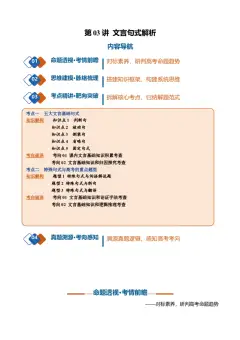
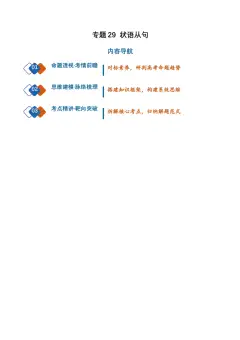
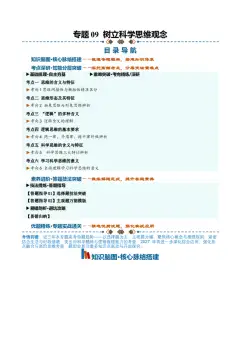
目 录 导 航
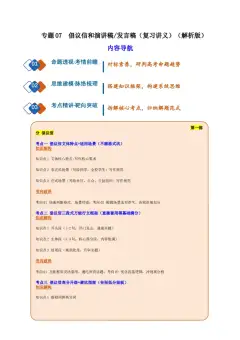
01知识脑图·核心脉络搭建——梳理专题框架,搭建知识体系
02 考点深研·知能分层突破——深挖高频考点,分层突破重难点
考点一 推理隐含意义
知识点1. 设问形式;
知识点2. 设题特点;
知识点3. 解题技巧;
考点二 推理观点态度
知识点1. 设问形式;
知识点2. 设题特点;
知识点3. 解题技巧;
考点三 推理写作意图
知识点1. 设问形式;
知识点2. 设题特点;
知识点3. 解题技巧;
考点四 推理文章来源,文章类型,读者对象
知识点1. 设问形式;
知识点2. 设题特点;
知识点3. 解题技巧;
03优题精练·专题实战通关——精选优质试题,强化实战应用知识脑图·核心脉络搭建
考点深研●知能分层突破
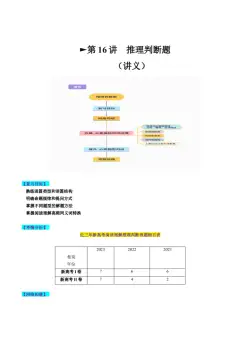
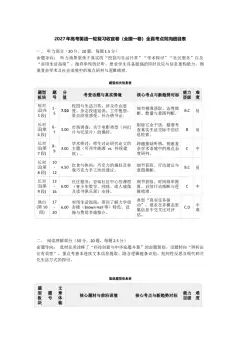
2026年阅读理解题量统计
题型/题量 全国I 全国II 北京 浙江1月
细节理解题 9 9 6 10
推理判断题 5 3 6 4
词义猜测题 1 1 1 1
主旨大意题 0 2 1 0
推理判断属于主观性较强的高层次阅读理解题,是指在理解原文字面意义的基础上,通过对语篇逻辑
关系的分析和细节的暗示,作出一定的判断和推理,从而得出文章的深层含义及隐含意义。高考对于推理
判断的考查要求考生根据文章所提供的事实及自己的一些常识进行合理的推断,判断作者的意图、人物的
动机及性格特征和事件发生的前因后果等。解答该类型题目时要从整体上把握语篇内容,在语篇的表面含
义与隐含意义、已知信息与未知信息间架起桥梁,透过字里行间,去体会作者的“弦外音”。
考点一 推理隐含意义
1. 设问形式
What can we infer/ conclude from the passage?
The author suggests that…
2. 设题特点
推理隐含意义的隐含推断题是高考阅读理解中的常见题型,难易程度不等。解答此类题目常在理解原
文表面文字信息的基础之上。读懂原文,理解弦外之音。做出最合理的推断。
3. 解题技巧
第一 定位信息。确定题干关键词。利用跳读在文中定位相关信息。这样能够进行推理的依据。
第二 综合分析。抓住原文关键信息。以全文主旨和中心为依据,在理解字面意义的基础之上进行有逻辑
的推断,理解作者的言外之意。第三 正确选项。正确选项中的意思与原文信息点属于同义表达的意思相近。是立足原文推断出的内容,
不是原文直接叙述的信息。
高考例题分析
(2026·浙江省1月·阅读B)When you’re a teacher, a big part of your job is battling student misconceptions.
Often students come to the classroom believing that learning can’t be fun and that what they learn isn’t relevant to
the real world — much less to their personal interests. I’ve discovered that if I show students how what they learn is
relevant to my hobbies, they’re much more willing to make connections to their personal interests and develop their
own hobbies.
No matter what subject I’m teaching, I find ways to bring my hobbies into the classroom. For example, I’m a
car enthusiast, so when I teach physics, I contextualize concepts with my knowledge about cars. If we’re covering
friction, for example, I bring different tires(轮胎) into my classroom so that my students can conduct lab
experiments with them to see how friction works in real-life applications.
When I first brought my hobbies to my classroom, I was focused on how doing so would build engagement
and help my students understand concepts in science. But I quickly learned that the practice also helped me build
stronger relationships with them. When I let them see an aspect of my life outside of school, some students who
were also interested in cars connected with me more and became more engaged in my courses. Even those who
didn’t share that interest with me seemed more engaged once I showed a different side of myself.
What started as an experiment is now more of a philosophy. Even when I’m planning classes, I tend to think
about how I can bring in my hobbies. I find that doing so energizes my instruction, engages my students, and
demonstrates to them how abstract concepts play out in the real world. Best of all, my passion for my hobbies
seems to inspire them to be passionate about finding their own.
27. Which of the following best describes the author as a teacher?
A. Innovative. B. Humorous. C. Decisive. D. Sympathetic.
【答案】27. A
27. 推理判断题。通读全文,尤其根据作者打破传统教学模式,主动将自己的汽车爱好融入物理课堂,通
过第二段“If we’re covering friction, for example, I bring different tires into my classroom so that my students
can conduct lab experiments with them to see how friction works in real-life applications (例如,如果我们要讨论
摩擦,我会把不同的轮胎带到教室里,这样我的学生就可以用它们进行实验室实验,看看摩擦在现实生活
中是如何工作的)”和最后一段“What started as an experiment is now more of a philosophy.Even when I'm
planning classes,I tend to think about how I can bring in my hobbies.I find that doing so energizes my
instruction,engages my students,and demonstrates to them how abstract concepts play out in the real world.Best
of all,my passion for my hobbies seems to inspire them to be passionate about finding their own.(最初的尝试如
今已演变成一种教学理念。即使在备课的时候,我也会思考如何把爱好融入教学。我发现这样做能让我的
课堂更有活力,吸引学生的注意力,并向他们展示抽象概念在现实世界中的具体体现。最重要的是,我对
爱好的热情似乎能激励他们满怀热情地去寻找属于自己的兴趣所在)”可知,作者作为教师,敢于创新教学
方式,打破学生对学习的固有认知,是富有创新精神的。故选A。
考点二 推理观点态度1. 设问形式
What’s the author’s attitude towards…?
2. 设题特点
在高考阅读理解当中,对观点态度题的设置越来越灵活,题目的难度也有所增加。
第一 推断文章作者对某事所持有的观点或态度;
第二 推断文章当中的人物对文中事物或者内容的观点或者态度。
3. 解题技巧
看清楚是作者还是文中人物对什么观点或态度,再定位关键信息进行分析。利用文中描写环境以及表
达感情色彩、观点或态度的词语或者句子,推断作者的观点或态度。利用文中人物的话来判断作者或者人
物观点或态度。
切勿用自己的观点代替作者和文中人物的观点。
附:情感态度词:
支持肯定 favorable 赞同的,有利的; approving 赞成的; positive 积极的,肯定的; reasonable 合理的;
enthusiastic热情的
反对否定 critical 批评的; negative 否定的; disapproving 不赞成的; impractical 不切实际的; radical激进的;
prejudiced有成见的;
中立客观 objective 客观的; natural 中立的; unconcerned 漠不关心的; indifferent 漠然的
高考例题分析
(2026·全国一卷·阅读B篇)
…
I took down one of the dictionaries, and we read it together for a few minutes before I handed it to him. It took
him a few tries to find the word in question. While going through the pages, he kept saying, wide-eyed: “How can
there be this many words?” After a while, he looked at me and asked, “Do you know all these words, Mom?” I
smiled, “I definitely do not know all these words,” I said. “But that’s why this is one of my favorite books.”
…
25. How did Kevin feel while looking up the word in the dictionary?
A. Annoyed. B. Disappointed. C. Encouraged. D. Astonished.
25.D 观点态度题 根据第二段中的wide-eyed 以及Kevin的问句How can there be this many words? T Do you
know all these words, Mom?可知,Kevin在查阅词典时被词条数量震撼,表现出惊讶的情绪。
考点三 推理写作意图
1. 设问形式
What is the purpose of the passage?
The writer uses the example of…to..
2. 设题特点
推断写作意图,要通过文中所列事物使读者感受到其所传递的想法。
3. 解题技巧看主旨 看句子根据不同文体特点确定主题句,把握文章主旨,推断写作意图。
看细节 立足题干所指段落,锁定关键信息,利用该段上下文内容确定某一个段落或细节的写作意图题。
看写作手法。在文章开头提出问题或。介绍与主题有关的其他事物。举例或者引用某人说过的话
高考例题分析
(2026·北京·高考真题)The 21st century has created a whole range of new types of professionals that we
have never had before — or if not quite new, at least newly repackaged. The world has always had influential
people, for instance, but only now do we have “Influencer”. Similarly, the corporate world has certainly known its
fair share of disruption, yet it is only in the last couple of decades that the “Disruptor” has become a recognisable
figure in the way we talk about big business.
In an earlier era, the Disruptor would have been called an Innovator. Yet while an Innovator creates
something new, the Disruptor is defined as much by what they destroy as by what they create. The Disruptor forces
change; the clean-up is somebody else’s problem. It’s an attitude best summed up as “Move fast and break things.”
Back in 1929, G. K. Chesterton identified the core problem with moving fast and breaking things through a
thought experiment. Imagine there is a fence along a road. Suppose it’s been there a long time, and was put there
for some purpose. But that purpose is lost over time. To us, now, the fence seems to be nothing but an impediment.
Why not remove it?
When faced with such a fence, Chesterton thinks the fact that we can’t see the point of the fence is why we
should not tear it down. Some fences keep foxes out of henhouses, for instance. If you think you can do without the
fence because you’ve never seen a fox, consider if the existence of the fence is precisely why you’ve never seen
one.
Importantly, Chesterton is not saying that things can never be reformed. His is a preventive principle rather
than an outright prohibition. We could rephrase it like this: understand the wisdom in past decisions before you
reject them. If we’re too impetuous, we can end up tearing out things we don’t yet realise we rely upon. But
uncritical devotion to the “way things are done” can also deny us the possibility of better days.
What is required, then, is not the fearlessness of the Disruptor, but the humility (谦卑) to stop and ask
questions and to know that our own perspective is neither unique nor comprehensive. Disruption can be a force for
good. It can also just leave a big mess. We need the ability to work out which messes are worth avoiding —
because however impressively fast you move, some things can’t be easily unbroken.
1. What does the author intend to tell us?
A. Humility should be a driving force for human progress.
B. Innovation should move forward the wheel of tradition.
C. Reform should draw from the wellspring of past wisdom.
D. Disruption should be given priority in social development.
【答案】1. C
1. 推理判断题。根据第五段“We could rephrase it like this: understand the wisdom in past decisions before you
reject them.(我们可以这样概括:在否定过往决策之前,先领会其中蕴含的智慧。)”可知,全文核心观点是
进行改革前,先要挖掘、借鉴过去决策中的智慧。
考点四 推理文章来源、文章类型、读者对象1. 设问形式
From which is the text probably taken?
The passage is probably intended for…
What is the text?
2. 设题特点
做文章来源、文章类型以及读者对象题的时候,要根据文章的主要内容和关键信息推断文章的出处和
类型。;要根据文章内容和措辞推断文章的读者对象。
3. 解题技巧
推断文章的来源出处题 文章前面有日期、地点或通讯社名称,这样我们就可以推断出是报纸
(newspaper)。
推销介绍新产品,我们称它为广告(advertisement)。文章当中如果有单词click, here等网络用语时,我
们推断出是网络(website)。旅游胜地方面的介绍通常是旅游向导(travel guide)。时尚、名人或娱乐方面的介
绍。通常是杂志(magazine, journal, entertainment。科普知识通常是科学报道(science report),文化教育类的文
章通常是(education)
推断文章类型 利用标志词确定文章内容,根据文章主旨确定文章主要内容,根据内容特点,结合文章类
型特点确定文章类型。
确定读者对象 先确定文章主题或话题;根据主题段、话题段并结合作者所使用的语言,确定适合哪类的
群体。根据群体特点对号入座。
高考例题分析
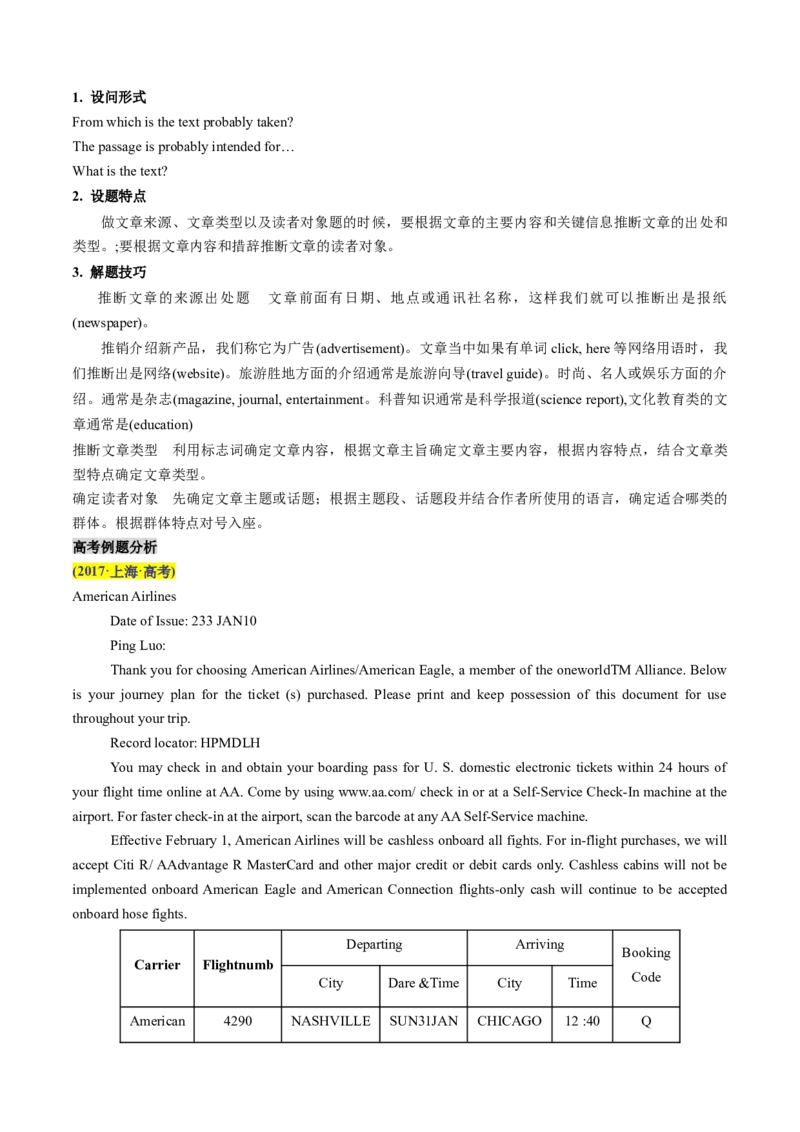
(2017·上海·高考)
American Airlines
Date of Issue: 233 JAN10
Ping Luo:
Thank you for choosing American Airlines/American Eagle, a member of the oneworldTM Alliance. Below
is your journey plan for the ticket (s) purchased. Please print and keep possession of this document for use
throughout your trip.
Record locator: HPMDLH
You may check in and obtain your boarding pass for U. S. domestic electronic tickets within 24 hours of
your flight time online at AA. Come by using www.aa.com/ check in or at a Self-Service Check-In machine at the
airport. For faster check-in at the airport, scan the barcode at any AA Self-Service machine.
Effective February 1, American Airlines will be cashless onboard all fights. For in-flight purchases, we will
accept Citi R/ AAdvantage R MasterCard and other major credit or debit cards only. Cashless cabins will not be
implemented onboard American Eagle and American Connection flights-only cash will continue to be accepted
onboard hose fights.
Departing Arriving
Booking
Carrier Flightnumb
Code
City Dare &Time City Time
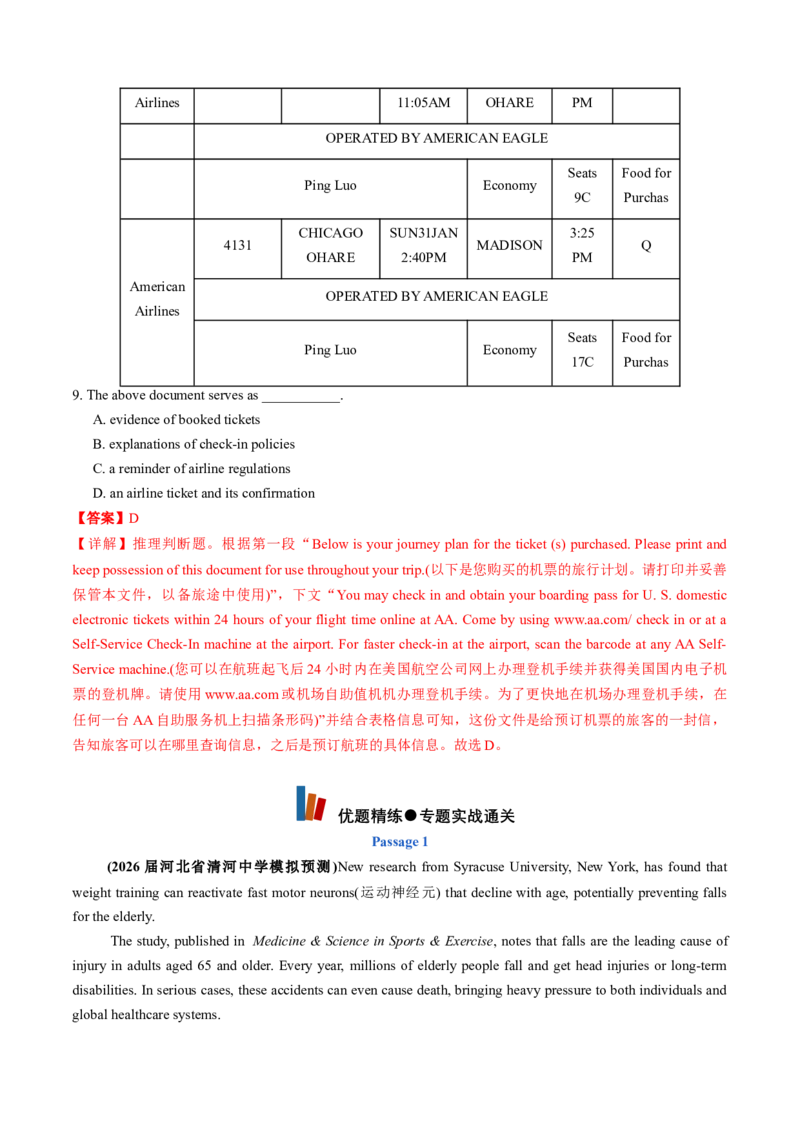
American 4290 NASHVILLE SUN31JAN CHICAGO 12 :40 QAirlines 11:05AM OHARE PM
OPERATED BY AMERICAN EAGLE
Seats Food for
Ping Luo Economy
9C Purchas
CHICAGO SUN31JAN 3:25
4131 MADISON Q
OHARE 2:40PM PM
American
OPERATED BY AMERICAN EAGLE
Airlines
Seats Food for
Ping Luo Economy
17C Purchas
9. The above document serves as ___________.
A. evidence of booked tickets
B. explanations of check-in policies
C. a reminder of airline regulations
D. an airline ticket and its confirmation
【答案】D
【详解】推理判断题。根据第一段“Below is your journey plan for the ticket (s) purchased. Please print and
keep possession of this document for use throughout your trip.(以下是您购买的机票的旅行计划。请打印并妥善
保管本文件,以备旅途中使用)”,下文“You may check in and obtain your boarding pass for U. S. domestic
electronic tickets within 24 hours of your flight time online at AA. Come by using www.aa.com/ check in or at a
Self-Service Check-In machine at the airport. For faster check-in at the airport, scan the barcode at any AA Self-
Service machine.(您可以在航班起飞后24小时内在美国航空公司网上办理登机手续并获得美国国内电子机
票的登机牌。请使用www.aa.com或机场自助值机机办理登机手续。为了更快地在机场办理登机手续,在
任何一台AA自助服务机上扫描条形码)”并结合表格信息可知,这份文件是给预订机票的旅客的一封信,
告知旅客可以在哪里查询信息,之后是预订航班的具体信息。故选D。
优题精练●专题实战通关
Passage 1
(2026 届河北省清河中学模拟预测)New research from Syracuse University, New York, has found that
weight training can reactivate fast motor neurons(运动神经元) that decline with age, potentially preventing falls
for the elderly.
The study, published in Medicine & Science in Sports & Exercise, notes that falls are the leading cause of
injury in adults aged 65 and older. Every year, millions of elderly people fall and get head injuries or long-term
disabilities. In serious cases, these accidents can even cause death, bringing heavy pressure to both individuals and
global healthcare systems.The reason for this is that our muscles gradually weaken with age, which in turn slows down the
neuromuscular response. This is called neuro-muscular decrement (功能衰退), and is common for adults in their
70s and 80s. It slows down their reaction time and reduces their muscle control — reasons that directly make it
more likely for them to lose balance and fall.
However, in a recently published study that specifically explored the effects of resistance training on nerve
conduction velocity (NCV), a measure of how quickly electrical signals travel along a nerve. With a group of 48
adults between the ages of 18—84, researchers recorded NCV in the forearm, both before and after four weeks of
handgrip resistance training. The results showed that every senior improved their nerve conduction after taking part
in weight training.
“When nerve conduction for fast-twitch fibers(快肌纤维) is damaged, your power and the speed activated
by these fibers will decrease,” says researcher Jason Fried. “These neurons are supposed to drive fast-twitch muscle
fibers. If you cannot reactivate these neurons, you won’t be able to regain that fast movement speed — and this has
important implications, because it can prevent a simple slip or trip from turning into a bad fall.”
1. Why are elderly people over 65 likely to fall?
A. Their fast-twitch fibers are mostly lost.
B. Their bones are weaker than young people’s.
C. They have decreased neuro-muscular function.
D. They are more likely to do intense weight training.
2. How did the recent study obtain its result?
A. By comparing data.
B. By interviewing seniors.
C. By analyzing medical records.
D. By reviewing previous studies.
3. What does the damage of fast-twitch nerve conduction result in?
A. Increased risk of heart disease.
B. Slower recovery from injuries.
C. Improved neuro-muscular response.
D. Reduced muscle power and activation speed.
4. What is the positive significance of this research?
A. To promote weight training.
B. To uncover the secret of aging.
C. To give guidance to the weightlifters.
D. To offer a way to prevent the elderly falling.
Passage 2
(2026届江苏南京市部分学校“零模”考前训练题)You know exercise is heart smart and good for you.
But do you really know how much physical activity you’re getting? Studies show that using a fitness tracker-a
device that tracks your movement—can increase your steps per day by more than a mile.
“Fitness trackers are a great tool for heart health,” says cardiologist(心脏病医生) Seth Martin. “Being moreactive and changing your habits is important but difficult. Tracking likely helps people when combined with a clear
goal to shoot for.”
Having an objective daily record can open people’s eyes to how little exercise they’re getting, Martin says,
which can recalibrate their mindset(心态) and get motivated. People find ways to incorporate(融入) more
activities into their day, walking during meetings, or simply taking the stairs instead of an elevator. “Fitness
tracking gives people information and enables them to start making changes for heart health,” Martin says.
Try a few trackers until you find one that’s comfortable for you and your budget. Martin suggests, “Once
you’ve made a match, you can try the next steps: Use the tracker consistently every day. Set a goal and then find
activities you enjoy that also fit into your daily life and can be sustained over the long term. Finally, encourage
friends and family to use trackers as well. It can create a social support network and even foster a sense of
competition. Follow these tips, and you’ll be on your way to a healthier lifestyle and a healthier heart.”
So be ready, as doctors learn and introduce even better ways to use these devices. In a randomized clinical
trial, Martin and his colleagues tested an automated, real-time, personalized program that sent coaching text
messages to cardiology patients based on data from a wearable device paired with their phone. Over the short term,
this coaching system helped increase step counts by over a mile a day beyond tracking alone. “I think technology
can be a very powerful tool to get people moving more,” says Martin.
5. According to paragraphs 1-2, what do people fail to do when exercising?
A. Integrate movement into work. B. Maintain a daily exercise schedule.
C. Kick improper habits of exercising. D. Monitor the amount of physical activity.
6. What does the underlined word “recalibrate” in paragraph 3 mean?
A. Adjust. B. Abandon. C. Strengthen. D. Evaluate.
7. What does Martin suggest people do?
A. Encourage the family to attend competitions.
B. Take exercise under the guidance of a coach.
C. Purchase a proper device and use it every day.
D. Consult a doctor and decide on suitable activities.
8. What does Martin think of the future of fitness trackers?
A. Uncertain. B. Promising. C. Doubtful. D. Sustainable.
Passage 3
(2026届浙江宁波市镇海中学高三上学期模拟预测)Some people think they are immune to ads. They
might not have heard of the mere exposure effect — a psychological phenomenon where we tend to like things the
more we are exposed to them.
When we plot the mere exposure effect on a graph with preferences on one axis(轴) and repetitions on the
other, we will see that it takes about 15 repeats for the effect to reach its full potential. If the exposure is too
excessive(过度), people get annoyed. And if they didn’t like the thing initially, repeating it can make it worse.
There are two main explanations for the phenomenon. The first is certainty. Our minds naturally learn to be
careful around new things that could potentially harm us. If we see something repeatedly without bad
consequences, we are led to believe it is safe. The second is perceptual(知觉的) fluency. We are also hardwired toprefer simple things that take little mental load. Difficult tasks like figuring out something new take lots of attention
and time, which is why we try to avoid them.
Known for discovering the effect was psychologist Robert Zajonc, who tested how subjects responded to
specific symbols. A group of people were shown a series of random shapes which changed so quickly that it was
impossible to notice that some were repeated. When the subjects were asked which shapes they found most
pleasing, they chose those to which they had been exposed the most often, even though they had no conscious
awareness of that.
The results showed that changes in preferences caused by repeated exposures depend not on any prior
subjective and conscious evaluations of the stimulus but rather on results from the objective history of exposures
alone.
Now tell us what you think about ads. If mere exposure to them makes us like things we otherwise wouldn’t,
should billboards(广告牌) be banned from the public area?
9. Which of the following graphs best illustrates the mere exposure effect?
A. B.
C. D.
10. According to Zajonc’s experiment, what drives changes in preferences?
A. Random variation. B. Objective analysis.
C. Subjective judgment. D. Subconscious familiarity.
11. Which activity shows the application of the mere exposure effect?
A. A novelist organizes a book signing event.
B. A game studio develops a challenging mode.
C. A singer buys hot recommendations on a music app.
D. A fashion brand reintroduces certain classic designs.
12. Why does the author mention ads at the end of the text?
A. To criticize fake advertising. B. To oppose outdoor advertising.C. To point out the drawbacks of ads. D. To caution against the influence of ads.
Passage 4
(2026届安徽六安市毛坦厂中学东部新城校区名校名师信息卷)As people start new fitness routines in the
new year, new research suggests that even a short burst of intense exercise could play a role in protecting against
cancer. Scientists report that as little as 10 minutes of intense physical activity may help slow cancer growth.
Researchers at Newcastle University discovered that exercise raises the levels of several small molecules(分
子) in the blood. When scientists exposed bowel cancer cells in the lab to blood containing these exercise-driven
molecules, they observed widespread genetic changes. More than 1,300 genes shifted their activity, including genes
involved in DNA repair, energy production, and cancer cell growth. The findings help clarify how physical activity
may lower bowel cancer risk. The research shows that exercise sends molecular signals through the bloodstream
that influence genes controlling tumor(肿瘤) growth and genetic stability.
The research team further found that exercise increased the activity of genes that support cell energy
production. This helps cells use oxygen more efficiently. At the same time, genes linked to rapid cell division were
down-regulated, which may make cancer cells less harmful. Blood collected after exercise also boosted DNA
repair, turning on a key repair gene.
To test these molecular processes, the study included 30 volunteers, both men and women between the ages
of 50 and 78. All participants were overweight but otherwise healthy. Each volunteer completed a short but intense
cycling test that lasted about 10 minutes. Researchers then collected blood samples and examined 249 proteins.
Thirteen of those proteins increased after exercise.
Dr. Sam, lead author of the study, said: “What’s remarkable is that exercise doesn’t just benefit healthy
tissues; it also sends powerful signals through the bloodstream that can directly influence thousands of genes in
cancer cells. It’s an exciting insight because it opens the door to finding ways that copy or augment the biological
effects of exercise, potentially improving cancer treatment and, crucially, patient outcomes. In the future, these
insights could lead to new treatments that copy the beneficial effects of exercise on how cells repair damaged DNA
and use fuel for energy.”
13. What is the author’s purpose in writing paragraph 1?
A. To lead in a topic. B. To explain data.
C. To highlight one example. D. To introduce the background.
14. How may intense exercise help slow cancer growth?
A. By directly killing cancer cells. B. By changing gene activity in cells.
C. By increasing oxygen levels in blood. D. By reducing overweight people’s cancer risks.
15. What is the third paragraph mainly about?
A. Why cancer cells become less harmful. B. How exercise improves cell energy use.
C. The role of proteins in cancer prevention.D. Exercise’s effects on genes and DNA repair.
16. What is Dr. Sam’s attitude towards the research?
A. Slightly doubtful. B. Objectively neutral. C. Highly enthusiastic. D. Cautiously
optimistic.Passage 5
(2026年建南平市高三下学期命题趋势预测)“When I think of England, I think of the queen taking her
dogs for walk in the countryside,” says Carsten Haferkamp, a dog-owning German working in London. Data from
Tractive, a firm that provides GPS tracking for pets, show that Britons walk their dogs more than their European
neighbors do.
The British love for dog-walking may have more to do with the walking than the dogs. Britons are big
walkers –they came fifth in the world in a study in 2017, the highest in Europe. Dogs provide walkers with
company and a purpose, so it may be that walking encourages dog-ownership.
But Julien Dugnoille, an expert at Exeter University, suspects dog-walking has a deeper significance. Dogs,
he suggests, are a useful aid to a socially awkward nation. “Britons tend to have a chat with strangers and exchange
a few jokes and comments about the weather without putting themselves in danger.”
A tradition among the British nobles of owning and training dogs also leads Dr Dugnoille to assume that
dog-walking is a way to keep ancient honor. “When people in the park say Max is very well-behaved,” says Dr
Dugnoille, “that is a way to show their authority in the art of dog training compared to those dog owners who are
not in control of their own dog.”
But it’s not just about showing off, in his view. He believes walking with one’s best friend creates a time and
space where dogs and humans meet as species and connect as individuals.
Still, Britons should not congratulate themselves too much on their behavior towards their dog companions.
According to Dr Carri Westgarth of Liverpool University, “People say that a dog needs a walk every day, but they
will find reasons why their dog doesn’t need a walk. They’ll say: he’s got company indoors, he’s nervous or he
doesn’t like the rain.”
17. The queen is mentioned in paragraph 1 to show _______.
A. the queen’s love for dogs B. a foreigner’s impression of England
C. the British devotion to walking dogs D. the importance of dog-walking for Europeans
18. What does Dr Dugnoille most probably agree with?
A. Britons see dogs as protectors from danger.
B. Dog-walking is related to the British traditional culture.
C. Britons prefer to walk rather than walk the dog.
D. Dog-walking is a close link between the British and nature.
19. Dr Westgarth’s comment on the British dog-walking suggests that_______.
A. Britons are proud of dog-walking B. dogs are a good companion for Britons
C. he is doubtful of the British love for dogsD. weather is a popular topic among Britons
20. What would be the best title for the text?
A. Love Your Dog, Walk Your Dog B. How Do Britons Walk Their Dogs?
C. Opinions on Dog-Walking in Britain D. Why Do Britons Love to Walk Dogs?
Passage 6
(2026届江西三九校联考高三联合质量检测)In early 2026, a major study from the Université de Montréal
— one of the largest of its kind — sparked heated discussion in global art and literary circles. The researchcompared creative abilities between 100,000 human participants and top AI models, covering tasks from painting
drafts to short poem writing. It offered fresh evidence for the long-running debate over AI’s role in creative work.
The study delivered a mixed conclusion. On standard divergent thinking tests, which assess basic creative
potential, generative AI outperformed the average human participant. These tests measure the ability to produce
multiple new ideas, a basic skill widely used in artistic and literary creation. Yet the result showed a clear gap in
more complex, expressive tasks.
When it came to poetry and storytelling, the top 10 percent of human creators held a noticeable lead. AI
works often lacked personal voice and emotional depth that comes from real life experience, though they followed
formal rules neatly. This finding matched observations from writing teachers and art critics across different regions.
A separate 2026 report from the Savannah College of Art and Design (SCAD) added further insights. It
surveyed hundreds of professional artists and writers about their daily use of AI tools in creation. Most respondents
viewed AI as a helpful assistant rather than a replacement for human effort.
The report also noted a rising “authenticity economy” in global creative markets. Audiences now place
higher value on works with clear human authorship and real emotional resonance. Works with visible personal
touches, even small imperfections, often win more public recognition than polished AI outputs.
Overall, the research points to a future of collaboration, not replacement. AI handles repetitive or technical
steps, freeing creators to focus on core judgment and emotional expression. This ongoing shift is gradually
reshaping training and career expectations in art and literature fields.
21. What is a finding of the Montréal study?
A. AI produces top poetic works. B. AI outperforms average human participants.
C. AI masters deep emotional expression. D. AI replaces most professional writers.
22. What can we infer from the SCAD report?
A. AI saves little working time. B. Artists refuse all AI tools.
C. AI lifts work quality greatly. D. Creative judgment weighs most now.
23. Why do audiences prefer human-created works?
A. They cost much less money. B. They follow strict formal rules.
C. They look very perfectly polished. D. They hold real emotional depth.
24. What conclusion can we draw from the text?
A. AI will dominate creative fields. B. Human creators face unemployment risks.
C. Human-AI cooperation represents the future. D. Training for creators becomes useless.
Passage 7
(2026届山东省九五高中协作体高考最后一卷)A new study offers fresh insight into how people assess the
environmental impact of the foods they eat, and the results suggest many are getting it wrong. These
misunderstandings point to a clear need for simple environmental impact labels to help guide better choices.
Researchers from the University of Nottingham’s School of Psychology asked 168 participants in the UK to
sort a wide variety of supermarket foods into environmental impact categories of their own making. Participants
were also shown scientific estimates of each product’s environmental impact and asked whether the results were
higher or lower than they expected.The study found that people tend to assess the impact of food using two main factors: whether the food
comes from animals or plants, and how processed it is. In general, participants assumed that meat and dairy
products, as well as highly processed foods, are worse for the environment.
However, these assumptions sometimes belie reality. Many participants overestimated the environmental
impact of processed foods while underestimating the impact of water-intensive(高耗水的) products. They were
also surprised to learn how much higher the environmental impact of beef is compared to other meats like chicken.
Food production plays a major role in environmental issues, including greenhouse gases and biodiversity
loss. Encouraging more sustainable eating habits depends in part on understanding how people perceive the
environmental footprint of different foods.
Daniel Fletcher, lead author of the study, said, “We found participants would be willing to change their
purchasing behavior based on this task, but they may struggle to compare the environmental impact of animal-
based products and highly processed foods because they see their effects as too different to weigh against each
other. Environmental impact data on food products is opening up new possibilities for this research, and labels that
give foods a single overall grade (such as A-E) could help make these comparisons easier for consumers, thus
allowing people to make sustainable food choices.”
25. What do the researchers hope to find out about the participants?
A. Their understanding of food quality.
B. Their preferences for popular food.
C. Their methods for food categorization.
D. Their view of food’s ecological cost.
26. What does the underlined word “belie” in paragraph 4 mean?
A. Ignore. B. Affect.
C. Disclose. D. Mismatch.
27. What do consumers require according to Daniel Fletcher?
A. Change of shopping behavior.
B. A uniform grading system.
C. More data on food consumption.
D. A comparison of different foods.
28. What is the purpose of the text?
A. To advise on food choices.
B. To call for food eco-labels.
C. To advocate good eating habits.
D. To show dietary carbon footprint.
Passage 8
(2025-2026学年河南名校新高三下学期7月学期联考模拟预测)Pat the Bunny the 1940 classic touch-
and-feel book, is still in print, which shows the value of touch in helping babies and young children get into the
world of reading.
Later, when children reach school age, a common technique for teaching the alphabet(字母表) is usinghands-on handling, such as forming letters out of clay. But as these students get older, the role of touch reduces,
which is bad for the students. Today’s reading assignments are heavily digital, and use of computer keyboards for
writing shows no sign of decreasing, especially given the appeal of AI tools for editing and composing.
I’m a linguist(语言学家) who investigates the differences between print and digital reading and how writing
supports thinking. My colleague Anne Mangen and I asked more than 500 secondary students at an international
school in Amsterdam about their experiences when reading print versus digital texts. Separately, I surveyed 100
university students and young adults in the US and Europe on their likes and dislikes about handwriting versus
typing.
Together, their responses demonstrate that teenagers and young adults continue to value touch in their
encounters with the written word. The research offers important lessons for educators and parents.
In the studies, students wrote enthusiastically about touch when asked for the one thing they liked most about
reading in print or writing by hand. On a physical level, the feeling of holding a book or writing instrument in their
hands mattered to students. These are some of their observations: “You actually feel like you are reading because
the book is in your hands,” and “I like feeling the paper and pen under my hands, being able to physically form
words.”
What students say about the importance of touch mirrors what researchers have found: Touch is an effective
way to build early reading and writing skills, as well as to support how more developed readers and writers interact
with the written word. Psychologists and reading specialists continue to report higher comprehension in children
and young adults when reading in print versus digitally, for both academic and leisure reading.
29. Why did the author mention Pat the Bunny in the first paragraph?
A. To call on readers to read the book.
B. To introduce a classic children’s book.
C. To compare the book with digital reading.
D. To show the value of touch in early reading experiences.
30. What is a common technique for teaching the alphabet to school-age children?
A. Reading digital texts. B. Forming letters out of clay.
C. Using computer keyboards. D. Using touch-and-feel books.
31. What’s Paragraph 5 mainly about?
A. Shortcomings of the studies. B. The future of the studies.
C. The discoveries of the studies. D. Difficulties met in the studies.
32. Where can we read the text?
A. In a book review. B. In a guidebook.
C. In a science magazine. D. In a dictionary.
Passage 9
(2026届湖北黄冈市黄梅县第一中学高考模拟考试)Most of us have an “inner voice,” and we assume
everybody does. Recent evidence suggests people vary widely in the extent to which they experience inner speech.
The study by cognitive(认知的) scientists Gary Lupyan and Johanne Nedergaard shows these differences are real
and impact our cognition.As part of their ongoing research, Lupyan previously assessed 1,037 people using a measure called the
Internal Representations Questionnaire (IRQ). For the verbal(口头的) part of the IRQ, participants indicated
agreement with statements like: “I think about problems in my mind in the form of a conversation with myself” on
a one-to-five rating.
For their new study, Lupyan and Nedergaard selected 47 participants who scored high for having an inner
voice and 46 who scored low. They then gave participants four language-related tasks they thought might be
influenced by the use of inner speech.
In the first, participants were shown five words and asked to repeat them back. The second involved saying
whether the names of objects in two pictures rhymed. In both tasks, the group with less inner speech was less
accurate. For the rhyme judgments, people with more inner speech were also faster.
“This study really tests what inner speech gives us in terms of cognitive benefits,” says psychologist Charles
Fernyhough. The other two experiments tested task switching and participants’ ability to spot differences between
two silhouettes (轮廓图形) that were from either the same or a different category. The groups showed no
differences on these tasks. “People can probably employ numerous other strategies for task switching,” suggests
Lupyan.
The research may have medical implications. “Someone with more inner speech might be more reliant on
language in their thinking,” Lupyan says, “so language difficulty from a stroke(中风) could have a more severe
effect.”
Understanding how inner speech develops has implications for education, says neuroscientist Ladislas
Nalborczyk. “Variations in children’s ability to represent speech sounds may impact their ability to learn the
relation between sounds and writing,” he says. This may affect the way they learn to read and write, which
probably has a huge impact on education.
The researchers propose giving a lack of inner speech a name: “anendophasia.” “It helps scientists find and
integrate research on a topic,” Lupyan says. “If people studying something are calling it by different names, the
research becomes more disorganized.”
33. What was the purpose of using IRQ?
A. To change people’s experience of inner speech.
B. To find out how many people have an inner voice.
C. To measure people’s agreement with certain statements.
D. To make people think about problems in a conversation form.
34. How does inner speech help with tasks?
A. It offers more inspiration. B. It aids in better performance.
C. It makes people more patient. D. It changes the way of thinking.
35. What does Lupyan suggest about task switching?
A. Inner speech is the primary strategy for it.
B. It is mainly affected by external environment.
C. It can be achieved through various methods.
D. Inner speech has little influence on its complexity.
36. Why do the researchers try to name the lack of inner speech?A. To make it easier to remember. B. To create a new concept for study.
C. To tell it apart from other speech forms. D. To assist scientists in arranging research on it.
Passage 10
(2027届湖南长沙市珺琟高级中学有限公司考前模拟)At the beginning of every school year, a new crop of
15-year-olds pile into my classroom. Some are excited for the new year, while others are unmotivated. Regardless
of their attitude, I’m always embarrassed to admit I am scared.
Just fake(假装) it until you make it, my fellow teachers advised. But no matter how much I faked it, and how
many years spent teaching the same course, the fear has continued. As the relationships with my students deepen, I
naturally grow comfortable, but even then, I feel nervous when something unexpected happens in class.
One might expect that this would cause me to be ashamed, to practice even harder, or to study public
speaking methods. But I have learned another way.
This year, I was given a group of 10th graders, and on the first day of class, over half shared in their self-
introduction paragraph that they were shy and afraid to speak up in class. My replies on their papers were personal:
Did you notice how I held my hands to keep them from shaking today? Did you hear how my voice trembled when
I noticed everyone looking at me?
And slowly but surely, my students began to open up about the root of their fears. When they saw me, their
experienced teacher, trembling, they had more courage during their presentation. When they heard me stumble(磕
绊) over my words, they accepted their own pauses trying to find the right ones.
Fear of public speaking rarely goes away completely. So many students are silenced by it in the classroom,
but we as teachers have the chance to encourage by leading with empathy instead of pushing or disappointment.
That starts with finding the courage to be honest about our own flaws(瑕疵). We must then teach ourselves, and by
extension, our students to reframe those flaws as strengths rather than weaknesses.
37. What does the author say about her fear of public speaking?
A. It becomes easier to hide with practice.
B. It prevents her from teaching effectively.
C. It remains despite her teaching experience.
D. It appears when students are less motivated.
38. How did the author deal with her fear this year?
A. She studied public speaking skills. B. She used it to bond with her students.
C. She switched to a different course. D. She asked her fellow teachers for advice.
39. How were the students affected by the author’s change?
A. They became brave speakers. B. They lost respect for her.
C. They found their own flaws. D. They made academic progress.
40. What message does the author want to convey?
A. Fear is only as deep as the mind allows. B. Profession is more important than honesty.
C. Sharing personal struggles can empower others. D. Public speaking skills make a successful teacher.