专题 02 阅读理解——记叙文
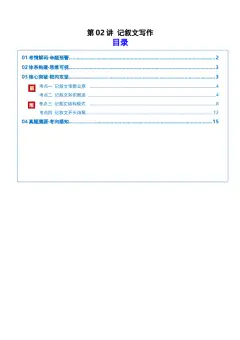
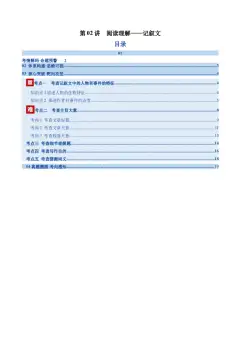
目 录
模拟·基础演练.......................................................................................................................................1
重难·创新演练.......................................................................................................................................7
真题·实战演练.....................................................................................................................................13
模拟·基础演练
考查重点:记叙文作者自身感受,记叙文文中人物评价,事件评价或态度,写作目的,细
节理解,推理判断,主旨大意
记叙文专项训练
1.考查作者自身感受
1.(2026·吉林白山市高三二模)My undergraduate student needed advice after yet another failed experiment.
Sitting across from me, she looked exhausted — frustrated even. I heard myself say, “This is part of research. You
just have to push through.” But even as the words left my mouth, I felt uneasy. She nodded silently and shifted her
posture. Afterward, she began showing up less frequently and eventually stopped coming altogether. I tried to
explain it away: undergraduates sometimes get busy with coursework, lose interest or change direction, but deep
down, I wondered what I could have done differently.
I became a mentor (导师) during my second year of Ph. D.but didn’t get much guidance on how to do it. I
learned only by doing. There were moments I felt proud of. One student started out quiet and unsure, but over time
grew into a most independent and confident young researcher. Before graduating, she told me, “You are the reason I
stuck with this.” That moment stayed with me. But so did the other one — the silence, the absences, the slow fade-
out. Had I failed her?
It wasn’t until the final year of my Ph. D.that I came across a leaflet for a mentorship training workshop.
Skeptical at first, I decided to try it. The program, called Entering Mentoring, brought together graduate studentsfor weekly discussions. For the first time, I had the space to explore the invisible labor and emotional complexity of
mentoring. One session asked us to reflect on our own practices. I began to realize what might have been missing in
my relationship with the student who had drifted away. I had never invited her to share her goals or concerns. I
could have been more attentive to her unspoken struggles.
After the workshop, I began changing how I interacted with students. I now start by asking how they’re
doing, not just experimental details. This shift has led to more honest conversations. I’ve learned that good mentors
are built through reflection and training. I wish I’d attended that workshop earlier, but I’m grateful I did at all.
1.What primarily caused the student’s withdrawal according to paragraph 1?
A.Demanding research challenges. B.Heavy academic workload.
C.Unaddressed inner struggles. D.Repetitive failures in research.
2.Why did the author mention the change of another student?
A.To explain his own research breakthrough.B.To illustrate his lack of proper guidance.
C.To showcase his pride in her achievement.D.To highlight the contrast in mentoring outcomes.
3.What did the workshop mainly focus on?
A.Developing academic research skills.
B.Encouraging discussions among graduate students.
C.Exploring the interpersonal aspects of mentoring.
D.Demonstrating diverse personal mentoring approaches.
4.Which of the following can best describe the author?
A.Strict and intelligent. B.Disciplined but inexperienced.
C.Thoughtful but self-doubting. D.Responsible and reflective.
【答案】1.C 2.D 3.C 4.D
【解析】本文是一篇记叙文。主要讲述了作者作为导师,因缺乏指导受挫,后通过培训反思并改变方法,
体现其成长与担当。
1.细节理解题。根据第三段“I began to realize what might have been missing in my relationship with the
student who had drifted away. I had never invited her to share her goals or concerns. I could have been more
attentive to her unspoken struggles.(我开始意识到,在我和那个逐渐疏远的学生的关系中,可能缺少了些什
么。我从未邀请她分享自己的目标或担忧。我本可以更关注她未说出口的挣扎。)”可知,学生退出的主要
原因是未被关注的内心挣扎。故选C项。
2.推理判断题。根据第二段“One student started out quiet and unsure, but over time grew into a most
independent and confident young researcher. Before graduating, she told me, “You are the reason I stuck with this.”That moment stayed with me. But so did the other one — the silence, the absences, the slow fade-out. (有一个学生
一开始沉默寡言、缺乏自信,但随着时间的推移,她成长为一名非常独立和自信的年轻研究者。毕业前,
她告诉我:“是你让我坚持了下来。”那一刻一直萦绕在我心头。但另一个时刻也同样萦绕在我心头——
沉默、缺席、逐渐淡出。)”可知,作者提及另一位学生的转变,是为了对比两种不同的指导结果。故选D
项。
3.细节理解题。根据第三段“The program, called Entering Mentoring, brought together graduate students for
weekly discussions. For the first time, I had the space to explore the invisible labor and emotional complexity of
mentoring.( 这个名为“入门指导”的项目每周都会召集研究生进行讨论。我第一次有机会探索指导的无形
劳动和情感复杂性。)”可知,该研讨会主要聚焦于指导工作中的人际方面。故选C项。
4.推理判断题。根据全文,尤其是第一段“I tried to explain it away: undergraduates sometimes get busy with
coursework, lose interest or change direction, but deep down, I wondered what I could have done differently.(我试
图为自己辩解:本科生有时会忙于课程作业、失去兴趣或改变方向,但在内心深处,我想知道自己本可以
做些不同的事情。)”、第三段“Skeptical at first, I decided to try it. The program, called Entering Mentoring,
brought together graduate students for weekly discussions. For the first time, I had the space to explore the invisible
labor and emotional complexity of mentoring. One session asked us to reflect on our own practices. I began to
realize what might have been missing in my relationship with the student who had drifted away. (起初我持怀疑态
度,决定尝试一下。这个名为“入门指导”的项目每周都会召集研究生进行讨论。我第一次有机会探索指
导的无形劳动和情感复杂性。一次会议要求我们反思自己的做法。我开始意识到,我和那个渐渐疏远的学
生的关系中可能缺少了什么。)”以及第四段“After the workshop, I began changing how I interacted with
students.(研讨会之后,我开始改变与学生互动的方式。)”可知,作者在学生退出后反思自身问题,主动参
加指导培训并改变方法,由此可知,作者既负责又善于反思。故选D项。
2.(2026·江苏常州市金坛区第一中学质量调研)We were sailing on a white boat through the clear waters
of Turks and Caicos. The view was so beautiful that even my teenage daughter, Kavya, paused her usual rudeness
to admire the scenery and breathe in the salty air.
Instead of relaxing by the pools, we had spent the previous day training for our big scuba (潜水) trip. We
took a course with written tests and did two exhausting pool practices. Now, the moment had arrived. Our instructor
was about to place the helmets (头盔) on our heads. I took a deep breath. This was it — my chance to connect with
Kavya through a new experience, something we could finally share.
But suddenly, Kavya pulled my arm. Her face showed the same worried look she had during math
homework. I could sense her emotions tightening under her diving suit. Just as the instructor approached, shewhispered, “Dad, can I quit?” The waves sounded louder, the gear (设备) heavier. Surprisingly, I didn’t say what I
normally would: “Quitting is not an option!” I even stopped myself from thinking, “But this was my plan.” Trying
to give her a gentle hug in the heavy gear only resulted in me splashing water all over her and making us both laugh
awkwardly.
When she was little, connecting with Kavya was effortless. I knew everything about her, and she always
joined my adventures with pure excitement. But as she grew older, she discovered her own interests, drifting away
from mine. What followed were sighs, eye-rolls, and half- hearted “I guess so” replies. I had hoped this scuba
course would bring us closer again. I didn’t expect her quitting to hit me so hard or so suddenly.
Even without the dive, we enjoyed our vacation. We swam, collected seashells, and played word games. In
those slow, quiet moments, I realized joy isn’t only in big adventures. It wasn’t the moment of closeness I had
imagined — but it turned out to be exactly the one we needed.
1.Why did the author train hard for the diving trip?
A.To impress the instructor. B.To relax in natural beauty.
C.To grow closer to his daughter. D.To challenge himself physically.
2.Which of the following best describes the author according to paragraph 3?
A.Strict and determined. B.Insightful and inspiring.
C.Resourceful and encouraging. D.Thoughtful and understanding.
3.Which could be a suggestion from the author to parents of teenagers?
A.Be adaptive. B.Be courageous. C.Be protective. D.Be adventurous.
4.What key message is expressed in the story?
A.Nature helps to bridge generation gaps. B.Bonding happens naturally in shared moments.
C.Scheduled adventures ruin true happiness. D.Connections rely heavily on thoughtful planning.
【答案】1.C 2.D 3.A 4.B
【解析】这是一篇记叙文。文章讲述了父亲原本计划通过潜水旅行拉近与青春期女儿的距离,当女儿表示
想要放弃时,他选择理解与尊重,最终在日常相处的平凡时刻里,父女俩收获了自然而温暖的亲密关系。
1.细节理解题。根据第二段“Instead of relaxing by the pools, we had spent the previous day training for our
big scuba (潜水) trip. (我们没有在游泳池边放松,而是在前一天为我们的大型潜水之旅进行了训练。)”和“I
took a deep breath. This was it — my chance to connect with Kavya through a new experience, something we could
finally share. (我深吸一口气。就是这一刻——我通过一次全新经历与卡维亚建立联结的机会,一件我们终
于能共同拥有的事。)”可知,作者努力训练潜水是为了和女儿变得更亲近。故选C。
2.推理判断题。根据第三段“Surprisingly, I didn’t say what I normally would: ‘Quitting is not an option!’ Ieven stopped myself from thinking, ‘But this was my plan.’ (令人惊讶的是,我没有说出平常会说的话:‘不能
放弃!’我甚至阻止自己去想‘但这是我的计划’。)”可知,面对女儿想放弃潜水,作者没有强迫、没有
指责,而是体贴且理解女儿。故选D。
3.推理判断题。通读全文,尤其根据最后一段“Even without the dive, we enjoyed our vacation. We swam,
collected seashells, and played word games. In those slow, quiet moments, I realized joy isn’t only in big
adventures. It wasn’t the moment of closeness I had imagined — but it turned out to be exactly the one we needed.
(即使没有潜水,我们也很享受假期。我们游泳,收集贝壳,玩文字游戏。在那些缓慢而安静的时刻里,我
意识到快乐不只存在于盛大的冒险中。这不是我想象中的亲密时刻——但结果却是我们真正需要的。)”可
知,作者原本计划用潜水拉近与女儿的距离,当计划无法实现时,他接受现实,并在日常小事中享受与女
儿的相处,最终收获了想要的亲密感。由此可推知,作者给青少年父母的建议是学会随机应变、灵活适应。
故选A。
4.主旨大意题。根据最后一段“In those slow, quiet moments, I realized joy isn’t only in big adventures. It
wasn’t the moment of closeness I had imagined — but it turned out to be exactly the one we needed. (在那些缓慢
而安静的时刻里,我意识到快乐不只存在于盛大的冒险中。这不是我想象中的亲密时刻——但结果却是我
们真正需要的。)”可知,故事想要传递的关键信息是:陪伴与亲密会在共享的平凡时光里自然发生。故选
B。
3.(2026·山东济宁市一模)For most of my life, I treated taste as fixed. There were things I liked and
things I didn’t, and that was that.
Sticking to that belief had left me in a bit of a standstill. I stopped making time for new hobbies or trying
anything new. Salsa lessons? No, thanks. Interactive theatre? Not for me. But my automatic “no” to anything that
“wasn’t my thing” only kept me trapped in the same routine of work, sleep, eating, and that left me feeling listless
and a little empty.
So, in an effort to break the boredom, I began to question whether my taste was fixed at all, or whether it
might be something I could train. I had read that children need 8 to 15 tries to accept a new food. Why shouldn’t the
same principle apply to social activities for adults?
I started small. When a friend invited me to a book club, I resisted the urge to dismiss it, despite my
longstanding dislike of reading due to dyslexia (阅读障碍症). But I went anyway. I listened to the first book on
audio book and, to my surprise, enjoyed the discussion and the people. Now I spend mornings reading. Then came
music and performance: jazz clubs, line dancing, contemporary performance — all things I had previously ignored.
Trying things you thought you wouldn’t enjoy, I found, became oddly addictive. I didn’t love everythingstraight away, but I stopped saying no before I had even begun. Most recently, I tried out my local library’s chess
club. I was easily 30 years younger than everyone else, but that didn’t matter. Honestly, there was nothing quite like
being wiped off the board by someone who had been playing since before your parents met. I felt more of a
connection with others there than at any organized twenty-something social event I’ve attended.
Putting “try something new” in my diary once a week broke up the work-commute-collapse cycle I had
accidentally built my life around. Now I simply count to five, approach the friendliest-looking person with a
“hello”, and any initial awkwardness quickly fades. Next week? Who knows. Maybe magic lessons. Maybe life
drawing. Maybe both.
1.How did the author’s fixed idea affect her?
A.It simplified her daily routine. B.It left her more time for work.
C.It flattened her life into dullness. D.It spared her unwanted socializing.
2.Why did the author accept her friend’s invitation to a book club?
A.To make a conscious shift in her life. B.To revisit a former interest in reading.
C.To meet her friend’s repeated requests. D.To occupy a blank in her personal calendar.
3.How did the author feel when losing the chess game?
A.Totally relieved. B.Slightly puzzled.
C.Rather embarrassed. D.Somewhat delighted.
4.What message does the author try to convey?
A.Learn to say no. B.Break out of your shell.
C.Look before you leap. D.Let go of the past.
【答案】1.C 2.A 3.D 4.B
【解析】这是一篇记叙文。讲述了作者曾认为喜好固定,拒绝新事物,生活单调空虚。为改变现状,她主
动尝试读书、下棋等,逐渐走出舒适区,生活变得充实有趣。
1.细节理解题。根据第二段“But my automatic “no” to anything that “wasn’t my thing” only kept me trapped
in the same routine of work, sleep, eating, and that left me feeling listless and a little empty.(但我对任何不属于自
己的事物都本能地拒绝,这使我陷入了重复的工作、睡眠、饮食的循环之中,这让我感到无精打采,内心
也有些空虚)”可知,这位作者的固执想法使她的生活变得毫无生气,变得枯燥乏味。故选C。
2.细节理解题。根据第三段“So, in an effort to break the boredom, I began to question whether my taste was
fixed at all, or whether it might be something I could train.(因此,为了摆脱这种无聊的感觉,我开始思考自己
的品味到底是否是固定不变的,还是说这或许是可以通过训练来改变的)”可知,作者接受朋友邀请参加读
书俱乐部是为了有意地改变自己的生活状态。故选A。3.细节理解题。根据倒数第二段“Honestly, there was nothing quite like being wiped off the board by someone
who had been playing since before your parents met. I felt more of a connection with others there than at any
organized twenty-something social event I’ve attended. (老实说,那种被人在你还没出生的时候就就开始下棋
的人面前就被淘汰出局的感觉,是前所未有的。在那里,我与他人的联系比我在任何一场有组织的二十多
岁年轻人参加的社交活动中所建立的联系都要紧密得多)”可知,当作者输掉那场棋局时,他当时的心情稍
许感到高兴。故选D。
4.推理判断题。根据最后一段“Putting “try something new” in my diary once a week broke up the work-
commute-collapse cycle I had accidentally built my life around. Now I simply count to five, approach the
friendliest-looking person with a “hello”, and any initial awkwardness quickly fades. Next week? Who knows.
Maybe magic lessons. Maybe life drawing. Maybe both.(每周在我日程表上安排一次“尝试新事物”的环节,
打破了我原本无意间构建起来的以工作、通勤和崩溃为循环的生活模式。现在,我只需数到五,然后以
“你好”向看起来最友善的人走去,随后任何最初的尴尬都会很快消失。下周?谁知道呢。或许是魔法课。
或许是人体素描课。又或许是两者兼而有之)”可知,作者想要表达的是放开自己内心的束缚。故选B。
2.考查记叙文中人物评价
1.(2026届湖南张家界市高三二模)When Wang Yue quit her well-paid job in a Shanghai design company in
2021, her family and friends were all shocked. The 28-year-old young woman decided to go back to her hometown,
a small village in Shanxi Province, to learn and inherit paper-cutting, a traditional Chinese folk art with a history of
over 1500 years.
Wang Yue’s grandma was a well-known paper-cutting artist in the village. When she was a little girl, she
would sit beside grandma for hours, watching her turn a piece of red paper into vivid pictures of flowers, animals
and folk stories with a pair of scissors. However, as she grew up, she found fewer and fewer young people were
interested in this old art. Most of the paper-cutting artists were elderly people, and the skills were at risk of dying
out.
After quitting her job, Wang Yue spent two years learning the basic skills from her grandma and other old
artists in the village. She not only mastered the traditional skills, but also brought her modern design ideas into the
art. She created paper-cutting works with new themes, such as aerospace heroes, winter sports and rural
revitalization. She also made paper-cutting into stickers, bookmarks and lamp decorations, which were popular
among young people.
In 2023, Wang Yue opened an online shop to sell her paper-cutting products. To her surprise, her works were
very popular, with monthly sales of over 10,000 yuan. She also set up a free paper-cutting training class in thevillage, teaching over 50 left-behind women and young people the skills. “Paper-cutting is not just an old art. It
carries the culture and memory of our nation,” Wang Yue said. “I want to make it alive in the modern times, and
help more people in my hometown live a better life with this art.”
1.Why did Wang Yue quit her job in Shanghai?
A.She was tired of the busy city life.
B.She wanted to inherit the paper-cutting art.
C.Her grandma asked her to go back home.
D.She couldn’t find a good development in the company.
2.What did Wang Yue do to make paper-cutting popular among young people?
A.She taught paper-cutting in primary schools.
B.She held paper-cutting exhibitions in big cities.
C.She added modern elements to the traditional art.
D.She invited famous artists to create works together.
3.Which of the following best describes Wang Yue?
A.Caring and creative.
B.Patient and strict.
C.Brave and honest.
D.Humorous and hard-working.
4.What is the main idea of the text?
A.The history of traditional Chinese paper-cutting.
B.A young woman’s effort to revive paper-cutting art.
C.The development of folk art in modern China.
D.Ways to protect traditional folk arts from dying out.
【答案】1.B 2.C 3.A 4.B
【解析】本文是一篇记叙文。文章主要讲述了王悦放弃上海高薪工作,回到家乡山西的小村庄学习并传承
剪纸这一传统民间艺术,她不仅将现代设计理念融入其中,还通过开设网店和免费培训班让剪纸艺术焕发
生机,并帮助家乡人过上更好的生活。
1.细节理解题。根据第一段中“The 28-year-old young woman decided to go back to her hometown, a small
village in Shanxi Province, to learn and inherit paper-cutting, a traditional Chinese folk art with a history of over
1500 years. (这位28岁的年轻女子决定回到家乡山西的一个小村庄,学习并继承剪纸这一有着1500多年历
史的中国传统民间艺术。)”可知,王悦放弃上海的工作是为了继承剪纸艺术。故选B项。2.细节理解题。根据第三段中“She not only mastered the traditional skills, but also brought her modern design
ideas into the art. She created paper-cutting works with new themes, such as aerospace heroes, winter sports and
rural revitalization. She also made paper-cutting into stickers, bookmarks and lamp decorations, which were
popular among young people. (她不仅掌握了传统技艺,还将现代设计理念融入其中。她创作了以航天英雄、
冬季运动和乡村振兴等为主题的剪纸作品。她还把剪纸做成了贴纸、书签和灯饰,深受年轻人的喜爱。)”
可知,王悦将现代元素融入传统艺术,使剪纸在年轻人中流行起来。故选C项。
3.推理判断题。根据第三段中“She not only mastered the traditional skills, but also brought her modern design
ideas into the art. (她不仅掌握了传统技艺,还将现代设计理念融入其中。)”可知,王悦具有创造性;根据最
后一段中“She also set up a free paper-cutting training class in the village, teaching over 50 left-behind women
and young people the skills.(她还在村里开设了一个免费的剪纸培训班,教授50多名留守妇女和年轻人剪纸
技艺。)”可知,王悦关心他人。因此,王悦是一个有爱心和创造力的人。故选A项。
4.主旨大意题。通读全文,结合第一段中“The 28-year-old young woman decided to go back to her
hometown, a small village in Shanxi Province, to learn and inherit paper-cutting, a traditional Chinese folk art with
a history of over 1500 years. (这位28岁的年轻女子决定回到家乡山西的一个小村庄,学习并继承剪纸这一有
着1500多年历史的中国传统民间艺术。)”和最后一段中“I want to make it alive in the modern times, and help
more people in my hometown live a better life with this art. (我想让它在现代焕发生机,并用这门艺术帮助家乡
更多的人过上更好的生活。)”可知,文章主要讲述了一位年轻女子为复兴剪纸艺术所做的努力。故选B项。
2.(2026·山东东营市一模)When the bell rang for recess, children quickly poured out. However, ragged
Vincent Sabella was left out. He didn’t join the boys gathering around the horizontal bar, or the ones whispering in
a far corner, nor the larger group chasing in circles. Initially, he pretended to be busy with his shoelaces, bending to
undo and retie them. After repeating this for five minutes, he began casting stones at an invisible target— another
five minutes gone, with five still left. Then he just stood there, hands in pockets, then on hips.
Miss Price stood watching, wondering whether to intervene. Knowing the new boy was adopted from an
orphanage filled her with a sense of mission. She managed to control the urge that day and every day that week.
Her anxiety showed in class, though. His schoolwork errors were excused publicly, while his achievements got
special mention. Her campaign to build him up was painfully obvious. For instance, she would say, “Suppose
Vincent Sabella went to the store with fifteen cents. Candy bars cost five cents each. How many would he have?”
He was well on the way to becoming a teacher’s pet.
On Friday, Miss Price decided to speak to him privately. But lunchtime was trying for Vincent. Unlike others
who went home, he had lunch in the classroom from a wrinkled paper bag, which made for awkwardness. And hervisit didn’t help. The room still half full, she sat beside him, obviously sacrificing her lunch break. Mumbling (嘟
囔), he shifted his eyes to the departing children. With the door closed behind the last child, he finally gave her his
full attention. The more she talked, the more he seemed to relax. She went right on, feeling it was as simple and
satisfying as stroking a cat.
1.What do the three “five minutes” imply?
A.Vincent failed to integrate. B.Miss Price observed keenly.
C.Vincent followed a routine. D.Vincent’s school life was boring.
2.The underlined phrase in paragraph 2 probably refers to someone ________ by the teacher.
A.highly valued for nobility B.overly pitied for misfortune
C.deeply admired for excellence D.sharply criticized for misbehavior
3.What can we infer about the talk from paragraph 3?
A.It embarrassed Vincent. B.It finally put Vincent at ease.
C.It didn’t satisfy Miss Price. D.It was interrupted by others.
4.Which words best describe Miss Price?
A.Patient and empathetic. B.Optimistic and creative.
C.Humble and responsible. D.Caring and courageous.
【答案】1.A 2.B 3.B 4.A
【解析】本文是一篇记叙文,主要讲的是新转来的男孩文森特·萨贝拉在学校的孤独处境,以及老师普莱斯
小姐试图帮助他融入集体、建立自信的过程。
1.推理判断题。根据第一段“He didn’t join the boys gathering around the horizontal bar, or the ones
whispering in a far corner, nor the larger group chasing in circles. Initially, he pretended to be busy with his
shoelaces, bending to undo and retie them. After repeating this for five minutes, he began casting stones at an
invisible target— another five minutes gone, with five still left. Then he just stood there, hands in pockets, then on
hips.(他没有跟围在横杆旁的男孩们一起,也没有跟在远处角落里窃窃私语的人群中,更没有跟围着圈子追
逐的人群一起。起初,他假装在忙着解系鞋带,弯腰去解开又重新系好。这样重复了五分钟之后,他开始
向一个看不见的目标投掷石子——又过去了五分钟,还剩下五分钟。然后他就只是站在那里,双手插在口
袋里,接着又叉在腰间)”可知,这三个“五分钟”分别意味着文森特未能融入到孩子们中。故选A。
2.词句猜测题。根据第二段“Knowing the new boy was adopted from an orphanage filled her with a sense of
mission. She managed to control the urge that day and every day that week. Her anxiety showed in class, though.
His schoolwork errors were excused publicly, while his achievements got special mention. Her campaign to build
him up was painfully obvious.(得知这个新来的男孩是从孤儿院被领养来的,这让她心中涌起一种使命感。那几天以及那一周的每一天,她都努力克制住自己的冲动。不过,她的焦虑在课堂上还是有所体现。他的
作业错误被公开原谅了,而他的成绩却得到了特别的表扬。她为提升他的自信心所采取的行动显而易见)”
可知,Miss Price知道Vincent Sabella是从孤儿院被领养来之后努力帮助Vincent Sabella建立信心,对他呈
现出偏爱,他正逐渐成为被老师偏爱的学生,a teacher’s pet的意思是“被老师偏爱的学生”,在文中指“因
为不幸而倍受同情的人”,和overly pitied for misfortune意思相近。故选B。
3.推理判断题。根据最后一段“The more she talked, the more he seemed to relax. She went right on, feeling it
was as simple and satisfying as stroking a cat.(她越说,他似乎就越放松。她继续滔滔不绝,感觉这就像抚摸
一只猫一样简单而令人满足)”可知,这次谈话让文森特放下了紧张的心情。故选B。
4.推理判断题。根据第二段“Knowing the new boy was adopted from an orphanage filled her with a sense of
mission.(得知这个新来的男孩是从孤儿院被领养来的,这让她心中涌起一种使命感)”可知,Miss Price是有
同情心的;根据最后一段“The more she talked, the more he seemed to relax. She went right on, feeling it was as
simple and satisfying as stroking a cat.(她越说,他似乎就越放松。她继续滔滔不绝,感觉这就像抚摸一只猫
一样简单而令人满足)”可知,她在谈话中滔滔不绝,说明她是有耐心的,因此可用patient“有耐心的”和
empathetic“有同情心的”来形容Miss Price。故选A。
3.(2026·山东菏泽市一模)Ms. Gupta’s eighth-grade history class were afraid of the annual “Living
History” project. This year’s theme was “The Industrial Revolution: Human Cost”. Students typically recycled
Wikipedia facts for a poster. But Ms. Gupta raised a different requirement: each student would spend a week
performing the dull, minute-by-minute task of a specific historical worker, logging their physical and emotional
responses.
Skeptical Sam drew “Linen Mill Doffer (落纱工), age 12”. His task:every 45 minutes, for an hour after
school, he must stop whatever he was doing and perform ten minutes of rapid, repetitive motion — acting out
replacing bobbins (纱线筒) on a spinning machine. He set a phone timer. The first interruption came during an
engaging video game. Annoyed, he hit hard at the air. The next during homework. Frustration grew. By day three, a
deep sense of powerlessness set in. He couldn’t immerse in anything, anticipating the next interruption. His log
entry read: “I feel overwhelmed. I can’t think a full thought.”
His research into actual doffers revealed more: lung diseases from dust, deafening noise, 14-hour days. A
statistic — the average life expectancy of a mill worker in 1830 was just 42 — stopped him cold. It was no longer
an abstract “cost”. It was stolen time, stolen focus, stolen childhoods. For his final project, Sam didn’t make a
poster. He wrote a simple program called “The Interruption”. When activated, it would freeze the screen every 45
minutes with an image of a child worker for exactly ten minutes.When he presented it, the class was silent. A girl who had embodied a “matchbox seller” spoke through tears
about chemical poisoning. A boy who had simulated a coal carrier described the severe ache in his back.
Ms. Gupta’s goal to bridge the gap between historical data and human ache was achieved. The students had
moved from memorizing facts to feeling consequence. The project’s real lesson was that empathy isn’t just feeling
but the courageous act of voluntarily giving up your own control, even for a moment, to understand another’s
misery.
1.What made this year’s Living History project special?
A.It featured role play. B.It created fine posters.
C.It referred to Wikipedia. D.It had different themes.
2.How did Sam’s emotional change during the task?
A.Curious → calm → excited. B.Doubtful → upset → shocked.
C.Frightened → nervous → relieved. D.Uninterested → anxious → disappointed.
3.Why did Sam design the program “The Interruption”?
A.To play a trick. B.To share his feeling.
C.To learn history. D.To record his discovery.
4.What lesson might Sam and his classmates learn from the project?
A.History is a mirror. B.Suffering builds character.
C.Walk a mile in someone’s shoes. D.Every cloud has a silver lining.
【答案】1.A 2.B 3.B 4.C
【解析】这是一篇记叙文。主要说明了Gupta老师让学生体验工业革命时期工人的重复劳作,Sam通过亲
身感受深受震撼,设计程序分享体会。同学们由此理解历史背后的苦难,学会换位思考与共情。
1.细节理解题。根据第一段“But Ms. Gupta raised a different requirement: each student would spend a week
performing the dull, minute-by-minute task of a specific historical worker, logging their physical and emotional
responses.(但古普塔女士提出了另一项要求:每位学生都要花一周时间扮演一位特定历史人物的角色,记
录下自己在这一过程中身体和情绪上的反应)”可知,今年的“历史再现”项目采用了角色扮演的方式。故
选A。
2.细节理解题。根据第二段“Skeptical Sam drew “Linen Mill Doffer (落纱工), age 12”.(怀疑的萨姆抽到了
12 岁的亚麻纺织厂落纱工这一角色)”;“Annoyed, he hit hard at the air. The next during homework.
Frustration grew.(他感到十分恼怒,用力地朝空中挥拳。紧接着,在做作业的时候也是如此。他的情绪愈发
沮丧了)”以及第三段“A statistic — the average life expectancy of a mill worker in 1830 was just 42 — stopped
him cold.(一个数据让他震惊不已:1830年,一名工厂工人的平均预期寿命仅为42岁)”可知,萨姆在完成任务的过程中情绪变化是:怀疑→沮丧→惊讶。故选B。
3.细节理解题。根据第三段“It was stolen time, stolen focus, stolen childhoods. For his final project, Sam
didn’t make a poster. For his final project, Sam didn’t make a poster. He wrote a simple program called “The
Interruption”. When activated, it would freeze the screen every 45 minutes with an image of a child worker for
exactly ten minutes. (那是被偷走的时间、被偷走的专注力、被偷走的童年。山姆的期末作业没有做海报,
而是写了一个简单的程序,名叫“中断时刻”。 一旦启动,该程序会每 45 分钟冻结一次屏幕,精准地
显示童工的图片并持续整整十分钟。)”以及第四段“When he presented it, the class was silent.(当他展示出来
的时候,全班都鸦雀无声)”可知,萨姆设计了“干扰”这个程序是为了分享自己的感受。故选B。
4.细节理解题。根据最后一段“The project’s real lesson was that empathy isn’t just feeling but the courageous
act of voluntarily giving up your own control, even for a moment, to understand another’s misery.(该项目的真正
启示在于:同理心并非仅仅是情感上的感受,而是一种勇敢的行为,即自愿放弃自己的控制权,哪怕只是
一瞬间,以便去理解他人的痛苦)”可知,萨姆和他的同学们从这个项目中学会了换位思考、体会他人苦难。
故选C。
3.考查主旨大意
1.(2026届江西三九校联考高三联合质量检测)It was a Saturday afternoon, and I was rushing to the
city library to return three books. The due date was that evening, and I knew I would be fined if I handed them in
even one day late. Dark clouds rolled in suddenly, and a heavy rain poured down before I could find shelter. As I
ran forward with my head down, I noticed an old man standing still by the bus stop. His umbrella was broken, with
its frame bent, and his shoulders were already wet through.
I slowed down for a second, but then kept walking. I was already tight on time, and stopping to help might
make me miss the library’s closing hour. For a moment, I told myself that someone else would stop, and that the
man could wait for the bus inside the small shelter. But the image of his trembling shoulders stuck in my mind. I
took a deep breath, turned around, and walked back toward him.
I held my umbrella over his head and offered him the spare one I kept in my school bag. He thanked me
warmly, explaining that he was on his way to the hospital to visit his wife, who had been ill for weeks. When the
bus arrived, he waved with a bright smile before getting on. Standing in the rain, I felt a warm and soft feeling
spread in my chest, even though I knew I would surely pay the fine now.
That evening, as I thought about the experience, I realized how often we let “being busy” stop us from small
kind acts. We always fill our days with tasks and deadlines, and we treat every minute as something we cannot
afford to waste. We walk past people in need with our heads down, believing our own matters are far moreimportant.
Actually, true kindness does not require grand plans or much time. A ten-minute stop, a shared umbrella, or
even a warm smile can light up someone’s dark day. In giving a little, we receive far more in return—a peaceful
heart and the knowledge that we have made a difference, no matter how small.
1.Why did the writer rush to the library?
A.To avoid being fined. B.To get more books.
C.To meet his friends. D.To escape heavy rain.
2.What can we infer from Paragraph 2?
A.The writer was warm-hearted. B.The bus came quickly.
C.The man refused help. D.The library closed early.
3.How did the writer feel after helping the old man?
A.Regretful B.Warm C.Confused D.Tired
4.What is the main idea of the last paragraph?
A.Small kind acts are really meaningful. B.Helping others takes us much time.
C.Great plans give us real happiness. D.Bad days will pass very soon.
【答案】1.A 2.A 3.B 4.A
【解析】文章主要讲述了作者在匆忙赶去图书馆还书的路上,停下脚步帮助一位老人,从而感悟到小小的
善举非常有意义。
1.细节理解题。根据第一段中“It was a Saturday afternoon, and I was rushing to the city library to return three
books. The due date was that evening, and I knew I would be fined if I handed them in even one day late. (那是一
个周六的下午,我正匆忙赶往市图书馆去还三本书。截止日期是那天晚上,我知道即使晚一天还也会被罚
款)”可知,作者匆忙赶去图书馆是为了避免被罚款。
2.推理判断题。根据第二段中“I was already tight on time, and stopping to help might make me miss the
library’s closing hour. For a moment, I told myself that someone else would stop, and that the man could wait for
the bus inside the small shelter. But the image of his trembling shoulders stuck in my mind. I took a deep breath,
turned around, and walked back toward him. (我已经时间很紧了,停下来帮忙可能会让我错过图书馆的闭馆
时间。有那么一会儿,我告诉自己会有别人停下来的,而且那个人可以到小小的候车亭里等车。但他颤抖
的双肩的画面却留在了我的脑海里。我深吸一口气,转身向他走去)”可推知,尽管作者赶时间,但还是决
定停下来帮助老人,说明作者是一个热心肠的人。
3.细节理解题。根据第三段中“When the bus arrived, he waved with a bright smile before getting on. Standing
in the rain, I felt a warm and soft feeling spread in my chest, even though I knew I would surely pay the fine now.(当公交车到达时,他带着灿烂的笑容挥手告别,然后上了车。站在雨中,我感到一股温暖而柔软的感觉在
胸中弥漫开来,尽管我知道现在肯定要付逾期罚款了)”可知,帮助老人后作者感到温暖。
4.主旨大意题。根据最后一段中“Actually, true kindness does not require grand plans or much time. A ten-
minute stop, a shared umbrella, or even a warm smile can light up someone’s dark day. In giving a little, we receive
far more in return — a peaceful heart and the knowledge that we have made a difference, no matter how small.(事
实上,真正的善意不需要宏大的计划或很多时间。十分钟的停留、一把共撑的伞,甚至一个温暖的微笑,
都能照亮某人灰暗的一天。在付出一点点的同时,我们得到的回报却要多得多——一颗平静的心,以及我
们曾带来改变的那份认知,无论这种改变有多么微小)”可知,本段主要说明小小的善举非常有意义。
2.(2026·四川绵阳南山中学高三第六次教学质量检测)Ahmed Muhammad, an 18-year-old high school
student from California, realized how difficult it can be for some kids to engage in science. He discovered this
when taking care of his younger cousins. One day, he asked them whether they wanted to do a science experiment,
but their response was disappointing.
“Every time I take care of them, we usually play chess, play video games, or watch TV. But when I tried to
get them to do science experiments, they said, ‘No, I hate science. I’m not good at it,’” Muhammad recalled. This
moment inspired him to create a non-profit organization called “Kits Cubed”, which was intended to expose kids to
science in a fun, affordable and accessible way.
“I went back to my room, pulled out some science books, and started researching online. I came up with a
few science experiments that could be done at home using everyday, inexpensive materials, and the kids loved
them,” Muhammad said.
Seeing how happy his cousins were, he realized that other kids could benefit from the same experience. “I
noticed that schools often lacked science experiments, and I thought kids needed access to science kits,”
Muhammad explained.
He then took $200 he had saved up to create a website and started producing science kits for sale, with the
profit donated to children in need. “I had enough money to build the website and make about 10–15 kits. Initially,
my objective was just to see my cousins happy. I wanted to share that joy with more kids,” Muhammad said.
Today, Muhammad has been accepted into Stanford University, and he is proud to have changed his cousins’
view on science while inspiring other kids.
1.What inspired Muhammad to create “Kits Cubed”?
A.His cousins’ lack of interest in science.
B.His passion for doing science experiments.
C.His inability to get along well with his cousins.D.His desire to help schools with science resources.
2.Why did Muhammad produce science kits at the beginning?
A.To donate them to schools. B.To make his cousins happy.
C.To run his website smoothly. D.To promote scientific research.
3.Which of the following words can best describe Muhammad?
A.Optimistic. B.Creative. C.Accessible. D.Modest.
4.Which can be the best title for this passage?
A.“Kits Cubed” Helps Kids in Need B.Science Experiments Matter to Kids
C.Science Kits Bring Happiness to Kids D.Teen Inspires Kids’ Curiosity in Science
【答案】1.A 2.B 3.B 4.D
【解析】本文是一篇记叙文。文章主要讲述了Ahmed Muhammad如何通过自己的努力和创意,激发孩子们
对科学的兴趣,并创建了一个非营利组织Kits Cubed,旨在向孩子们介绍科学。
1.细节理解题。根据第二段““Every time I take care of them, we usually play chess, play video games, or
watch TV. But when I tried to get them to do science experiments, they said, ‘No, I hate science. I’m not good at
it,’” Muhammad recalled. This moment inspired him to create a non-profit organization called “Kits Cubed”, which
was intended to expose kids to science in a fun, affordable and accessible way.(“每次我照顾他们的时候,我们通
常会下棋、玩电子游戏或看电视。但当我试图让他们做科学实验时,他们说,‘不,我讨厌科学。我不擅
长这个,’”穆罕默德回忆道。这一时刻激发了他的灵感,他创建了一个名为“Kits Cubed”的非营利组织,
旨在以一种有趣、负担得起、容易接近的方式让孩子们接触科学)”可知,表兄弟对科学缺乏兴趣启发穆罕
默德创造了“Kits Cubed”。故选A。
2.细节理解题。根据第四段“Seeing how happy his cousins were, he realized that other kids could benefit from
the same experience. “I noticed that schools often lacked science experiments, and I thought kids needed access to
science kits,” Muhammad explained.(看到他的表兄弟们如此开心,他意识到其他孩子也可以从同样的经历中
受益。‘我注意到学校经常缺乏科学实验,我认为孩子们需要获得科学工具包,’穆罕默德解释说)”可知,
穆罕默德一开始要制作科学工具包是为了让他的表兄弟高兴。故选B。
3.推理判断题。根据第二段“This moment inspired him to create a non-profit organization called “Kits
Cubed”, which was intended to expose kids to science in a fun, affordable and accessible way.(这一时刻激发了他
的灵感,他创建了一个名为‘Kits Cubed’的非营利组织,旨在以一种有趣、负担得起、容易接近的方式让
孩子们接触科学)”可知,穆罕默德因为表兄弟对科学缺乏兴趣的经历建立了“Kits Cubed”非营利组织,说
明他具有创造性。故选B。
4.主旨大意题。根据第二段“This moment inspired him to create a non-profit organization called “KitsCubed”, which was intended to expose kids to science in a fun, affordable and accessible way.(这一时刻激发了他
的灵感,他创建了一个名为‘Kits Cubed’的非营利组织,旨在以一种有趣、负担得起、容易接近的方式让
孩子们接触科学)”结合文章主要讲述了Ahmed Muhammad如何通过自己的努力和创意,激发孩子们对科学
的兴趣,并创建了一个非营利组织Kits Cubed,旨在向孩子们介绍科学。可知,D选项“青少年激发孩子
对科学的好奇心”最符合文章标题。故选D。
4.考查写作目的和意图
1.(2026·江苏省常州中学,南通中学,启东中学等校调研)On a chilly night in January 1990, Avianca
Flight 052 crashed on Long Island, causing great damage. Among the few survivors was eight-year-old Andrea,
severely injured and orphaned — she lost her mother and younger brother; only her father survived, horrified by
grief.
At the hospital, child psychiatrist Dr. Victor Fornari was called in to help. In a temporary emergency room,
he met Andrea, pale but alert. “Am I going to die?” she whispered. Without hesitation, he replied, “No, you’re not.”
Her quiet courage moved him deeply.
With her father returning to Colombia to bury his family, Andrea had to recover alone in a foreign country.
Each day brought a fresh wave of loneliness and confusion, the ache of her injuries mixing with the deeper pain of
loss. Dr. Fornari noticed her isolation and, moved by something beyond professional responsibility, decided to step
in.
He visited her three times a day, sometimes just to sit quietly by her bedside while she stared out the window
at the gray winter sky. He brought her small comforts — books, crayons, stuffed animals — and encouraged her to
talk about her mother and brother when she was ready. Before Andrea left the U.S., Dr. Fornari pressed his number
into her palm, assuring her she could reach him at any time.
Years passed. Nine years later, now seventeen, Andrea wrote to tell him she wanted to become a child
psychiatrist — inspired by his kindness. Every January 25th, Dr. Fornari thought of her, wondering how she was
doing.
Then, in 2024, he received a video call. Andrea explained that her youngest daughter had just turned eight
and that moment brought back vivid memories of the stranger who had given her hope. For Dr. Fornari, the call was
profoundly moving. He realized that one act of genuine care could echo across decades, shaping a life in ways he
never imagined.
1.What do we know about Andrea?
A.She was the only survivor. B.She lost her parents and brother.C.She was injured but remained calm. D.She viewed Dr. Fornari as a lifesaver.
2.Why did Andrea decide to become a child psychiatrist?
A.To honor her lost family members.
B.To pay it forward to other children.
C.To work alongside Dr. Fornari someday.
D.To study the mental effects of the disaster.
3.Which of the following can best describe Dr. Fornari?
A.Professional and strict. B.Reserved and skilled.
C.Ambitious and selfless. D.Empathetic and caring.
4.What is the main purpose of this passage?
A.To highlight cross-cultural medical cooperation.
B.To promote post-emergency psychological support.
C.To demonstrate how a kind act can make a difference.
D.To raise awareness of long-term impacts on survivors.
【答案】1.C 2.B 3.D 4.C
【解析】这是一篇记叙文。文章讲述1990年空难中受伤的小女孩安德烈娅得到医生福纳里的暖心陪伴与鼓
励,多年后受其影响成为医生,2024年重逢让医生明白善意可改变一生。
1.推理判断题。根据第二段“In a temporary emergency room, he met Andrea, pale but alert. “Am I going to
die?” she whispered. (在临时急诊室里,他见到了安德烈娅,脸色苍白但很警觉。“我会死吗?”她轻声问
道。)”可知,安德烈娅虽然受伤,但依然冷静清醒。故选C项。
2.推理判断题。根据第五段“Nine years later, now seventeen, Andrea wrote to tell him she wanted to become a
child psychiatrist — inspired by his kindness.(九年后,17岁的安德烈娅写信告诉他,她想成为一名儿童精神
病医生 —— 受他的善良所鼓舞。)”可知,她想把这份善意传递下去,帮助更多孩子。故选B项。
3.推理判断题。根据第三段“Dr. Fornari noticed her isolation and, moved by something beyond professional
responsibility, decided to step in.(福纳里医生注意到了她的孤独,出于一种超越职业责任的触动,他决定伸
出援手。)”、第四段“He visited her three times a day, sometimes just to sit quietly by her bedside while she
stared out the window at the gray winter sky. He brought her small comforts — books, crayons, stuffed animals —
and encouraged her to talk about her mother and brother when she was ready.(他一天去看她三次,有时只是静静
地坐在她床边,她则望着窗外灰蒙蒙的冬日天空。他给她带去一些小小的慰藉 —— 书本、蜡笔、毛绒玩
具,并鼓励她在愿意的时候,聊聊她的妈妈和弟弟。)”可知,福纳里医生非常有同理心、关心他人。故选
D项。4.推理判断题。通读全文,尤其是根据最后一段“He realized that one act of genuine care could echo across
decades, shaping a life in ways he never imagined.(他意识到,一次真诚的关怀可以延续数十年,以他从未想
象过的方式塑造一个人的一生。)”可知,文章讲述空难中受伤的小女孩安德烈娅得到医生福纳里的暖心陪
伴与鼓励,多年后受其影响成为医生。所以文章旨在说明一个善举可以改变人的一生。故选C项。
2.(2026·浙江强基联盟3月高三下学期二模联考)Dear Mom,
It’s me, Faisal Abdullah Malik, your son from Pakistan, who crossed the border for a heart transplant. You
saved my life a decade ago by making a decision that only a mother as extraordinary as you could make.
On 26 December 2014, both our lives changed forever. Karthick, your beloved son, was brought to Tirupur
Government Hospital, near Coimbatore, in southern India, after a tragic road accident. He was later transferred to
G. Kuppusamy Naidu Memorial (GKNM) Hospital. When the doctors declared him brain dead, you had to face the
unthinkable, holding his hand, saying your silent goodbyes.
In the depths of that unimaginable grief, Mom, you made a choice that speaks of boundless courage and
selflessness. You not only gave me Karthick’s heart but also donated five other organs, giving the gift of life to six
strangers. You made this difficult decision without ever questioning the race, religion, or nationality. Your decision
was solely about saving lives.
Today, as a father of two growing children, I can truly understand the magnitude of your sacrifice. I can only
imagine the storm of emotions you must have battled. Did you question if it was the right decision? Did you fear it
was too much to bear? And yet, in the darkest hour of your life, you chose life for others. You chose hope. I know
Karthick must be so proud of you, as am I, Mom. I am alive today because of your strength.
Tearing apart the political divide, I have longed to meet you, Mom. I have travelled to Chennai several times
since receiving Karthick’s heart, always hoping to somehow find a way to Coimbatore. But my medical visa
restricts me from travelling outside Chennai. You might be wondering why I don’t even call you? Names of donors
and recipients are kept confidential, and I feel helpless.
Allah tells us in The Qur’an, “Whoever saves a life, it is as if they saved all of humanity.” Mom, you
embody it. I love you, Mom, forever and always.
Yours always,
Faisal
1.What can we learn about Karthick from the text?
A.He donated all his organs to six strangers. B.He received treatment in GKNM Hospital.
C.He died immediately in the road accident. D.He was a man of courage and selflessness.
2.Which of the following words can best describe the mother?A.Noble and open-minded. B.Friendly and hard-working.
C.Loyal and strong-willed. D.Modest and warm-hearted.
3.Why did Faisal feel “helpless” in the letter?
A.His poor health prevented his traveling. B.He lost touch with his mother in India.
C.He was limited in his travel and contact. D.The government banned border crossing.
4.What is the author’s primary purpose in writing this letter?
A.To ask for medical assistance. B.To advocate for organ donation.
C.To record his transplant experience. D.To express his sincere gratitude.
【答案】1.B 2.A 3.C 4.D
【解析】本文是一篇记叙文。巴基斯坦男子Faisal Abdullah Malik写信给一位印度母亲,感谢她十年前在痛
失爱子Karthick后,毅然决定捐献儿子器官,使包括Faisal在内的六人重获新生。信中表达了Faisal对这
位母亲无私大爱的深深感激,以及因签证限制无法亲自登门致谢的遗憾。
1.细节理解题。根据第二段中的“Karthick, your beloved son, was brought to Tirupur Government Hospital,
near Coimbatore, in southern India, after a tragic road accident. He was later transferred to G. Kuppusamy Naidu
Memorial (GKNM) Hospital.( Karthick,您心爱的儿子,在一场悲惨的交通事故后被送往了印度南部
Coimbatore附近蒂鲁普尔的政府医院。之后,他又被转至古·库普苏马·奈杜纪念医院(GKNM 医院))”可
知,Karthick在GKNM医院接受过治疗。故选B。
2.推理判断题。根据第三段中的“In the depths of that unimaginable grief, Mom, you made a choice that
speaks of boundless courage and selflessness.(在那难以想象的悲痛深渊中,妈妈,您做出了一个彰显无限勇
气与无私的选择)”及“You made this difficult decision without ever questioning the race, religion, or nationality.
(您做出这一艰难决定时,从未质疑过受捐者的种族、宗教或国籍)”可推知,这位母亲既高尚又思想开明,
跨越国界与宗教藩篱拯救生命。故选A。
3.细节理解题。根据第五段中的“But my medical visa restricts me from travelling outside Chennai. (但我的
医疗签证限制了我,使我无法前往金奈以外的地方)”及“Names of donors and recipients are kept confidential,
and I feel helpless.(捐献者与受捐者的姓名是保密的,这让我感到无助)”可知,Faisal的无助源于双重限制:
旅行范围受限(签证限制)以及联系方式受限(信息保密)。故选C。
4.推理判断题。通读全文,特别是开篇“You saved my life a decade ago by making a decision that only a
mother as extraordinary as you could make.(十年前,是您做出了一个只有像您这样非凡的母亲才会做出的决
定,从而救了我的命)”以及结尾“I love you, Mom, forever and always.(妈妈,我永远爱您)”可知,本文是一
封饱含深情的感谢信,核心目的是向这位印度母亲表达真挚谢意。故选D。
5.考查推理判断1.(2026·广东湛江市八校联考)In the morning, when mist still hangs over the old stone streets of the
coastal town of Seabrook, Thaddeus Flint is already at work in his workshop. For decades, the elderly clockmaker,
known for his complicated handmade timepieces, had worked alone. That changed last spring when Leo, a quiet
transfer student with no friends in his new school, wandered into the shop by accident, drawn by the steady ticking
(嘀嗒作响) from within.
Seeing Leo interested in clocks, Thaddeus, a man of few words, simply handed the boy a dusty small gear
(齿轮) and a clean cloth. To his surprise, Leo returned the next day, having polished it to a shine. Recognizing his
uncommon attentiveness, Thaddeus offered him a simple task: sorting screws. Week by week, Thaddets’ tasks grew
more complex. Leo learned to adjust tiny pendulums (钟摆) and carefully position delicate gears.
The real turning point came with the specially ordered Clock Project for the town hall — a piece that had
defeated Thaddeus for months due to a faulty bell sound mechanism. Leo, after observing for weeks, suggested a
different design for the spring tension setup using a method from an old physics book. Doubtful but impressed,
Thaddeus let him try. To the old man’s astonishment, it worked. The deep, clear-sounding bell that now marks each
hour in Seabrook is partly Leo’s creation. News of their successful work together spread. Many locals bring their
hard-to-fix antique shelf clock for repair.
Leo, once an outsider, gradually became a familiar face. Thaddeus often speaks proudly of Leo’s “steady
hands and a steadier mind”. Leo plans to study engineering after graduation. “A clock isn’t just gears and time,”
Thaddeus told him. “It’s a promise that every piece has its place. All we need is to observe and study calmly and
steadily.” In a world that often feels rushed, their unlikely partnership reminds the town that some of the best
connections are built slowly, one careful tick at a time.
1.Which word best describes both Thaddeus and Leo?
A.Reserved. B.Strong-willed. C.Easy-going. D.Flexible.
2.What can be inferred about Thaddeus from paragraph 2?
A.He displayed strong devotion to clocks.
B.He aimed to impress Leo more quickly.
C.He intended to train Leo in clock making.
D.He got inspiration from his prior experience.
3.What surprised Thaddeus about Leo’s skills in clock making?
A.An old physics book. B.A solution to a bottleneck.
C.Leo’s careful modesty. D.Leo’s challenge to authority.
4.What does the author want to convey in the last paragraph?A.Precision is key. B.Patience matters.
C.Every detail counts. D.Teamwork is essential.
【答案】1.A 2.C 3.B 4.B
【解析】本文是一篇记叙文。在海边小镇,老钟表匠Thaddeus偶遇对钟表感兴趣的转学生Leo。Thaddeus
从简单任务开始训练他,随着时间推移任务逐渐变复杂。在市政厅钟表项目中,Leo提出的新设计解决了
难题。原本孤僻的Leo逐渐融入小镇。他们的故事表明,在快节奏的世界里,耐心很重要。
1.推理判断题。根据第一段“For decades, the elderly clockmaker, known for his complicated handmade
timepieces, had worked alone. That changed last spring when Leo, a quiet transfer student with no friends in his
new school, wandered into the shop by accident, drawn by the steady ticking (嘀嗒作响) from within. (几十年来,
这位以复杂的手工时计而闻名的老钟表匠一直独自工作。去年春天,当Leo,一个在新学校没有朋友的安
静的转学生,被来自内部的稳定滴答声吸引,偶然走进商店时,情况发生了变化)”以及第二段“Seeing Leo
interested in clocks, Thaddeus, a man of few words, simply handed the boy a dusty small gear (齿轮) and a clean
cloth. (看到Leo对钟表感兴趣,沉默寡言的Thaddeus简单地递给男孩一个满是灰尘的小齿轮和一块干净的
布)”可知,两人都性格内敛、寡言少语。故选A。
2.推理判断题。根据第二段“Seeing Leo interested in clocks, Thaddeus, a man of few words, simply handed
the boy a dusty small gear (齿轮) and a clean cloth. To his surprise, Leo returned the next day, having polished it to
a shine. Recognizing his uncommon attentiveness, Thaddeus offered him a simple task: sorting screws. Week by
week, Thaddets’ tasks grew more complex. Leo learned to adjust tiny pendulums (钟摆) and carefully position
delicate gears. (看到Leo对钟表感兴趣,沉默寡言的Thaddeus简单地递给男孩一个满是灰尘的小齿轮和一
块干净的布。令他惊讶的是,Leo第二天就回来了,把齿轮擦得锃亮。Thaddeus看出他不同寻常的专注,
于是给了他一个简单的任务:整理螺丝。一周又一周,Thaddeus布置的任务越来越复杂。Leo学会了调整
微小的钟摆,并小心地放置精密的齿轮)”可知,Thaddeus从简单的任务开始,逐渐给Leo更复杂的任务,
目的是训练Leo制作钟表。故选C。
3.细节理解题。根据第三段“The real turning point came with the specially ordered Clock Project for the town
hall — a piece that had defeated Thaddeus for months due to a faulty bell sound mechanism. Leo, after observing
for weeks, suggested a different design for the spring tension setup using a method from an old physics book.
Doubtful but impressed, Thaddeus let him try. To the old man’s astonishment, it worked. (真正的转折点出现在市
政厅特别订购的时钟项目上——由于钟声机制故障,这件作品已经让Thaddeus困扰了好几个月。Leo观察
了几个星期后,建议用一本旧物理书上的方法对弹簧张力装置采用不同的设计。Thaddeus半信半疑,但印
象深刻,便让他试试。令老人惊讶的是,这个方法奏效了)”可知,Leo解决了困扰Thaddeus几个月的铃铛声音机制问题,这让Thaddeus感到惊讶。故选B。
4.推理判断题。根据最后一段“In a world that often feels rushed, their unlikely partnership reminds the town
that some of the best connections are built slowly, one careful tick at a time. (在一个常常感觉匆忙的世界里,他
们不太可能的合作关系提醒着这个小镇,一些最好的关系是慢慢建立起来的,每一次谨慎的滴答声都是一
次积累)”可知,作者想传达的是耐心很重要。故选B。
2.(2027·江苏南京市江宁高级中学一模)Krystal Sheehan, 23 years old, loves walking dogs, feeding
them cream, and cuddling (拥抱,搂抱) with them on her couch. However, she does not keep a dog, as she cannot
commit to its daily care. Instead, nearly every week, she borrows a dog from a local animal shelter through a
program called Shelter Skip Day, run by the Brandywine Valley SPCA.This service lets people take shelter dogs
out for a few hours without making a lifelong commitment. It is one of many similar programs spreading across the
United States. Psychologist Kerri Rodriguez explains that just five or ten minutes with a dog can lift people’s
moods and lower stress. When humans and dogs interact, levels of oxytocin — often called the “love hormone” —
rise in both. The unconditional love dogs offer, she says, can be deeply therapeutic (有疗愈作用的).
Most shelters provide volunteers with leashes (拴狗链), waste bags, treats, toys, and water bowls. New York
City’s shelter program, called BoroughBreak, even uses bingo cards with fun activities and offers small rewards for
participants. These outings also help crowded shelters: dogs who spend time in public, wearing “Adopt Me” vests,
become more visible and more likely to find permanent homes.
Krystal first joined Shelter Skip Day after seeing a post on Facebook. Growing up, she had a dog named
Angel, and she missed having a canine (犬的) companion. After spending two hours with a puppy named Jetta, she
and her boyfriend Tycho Janssen were bewitched. They have since borrowed dogs nearly 20 times. They follow
one simple rule: every dog gets a pup cup of cream. If the dog is energetic, they go hiking or playing at the park. If
the dog is calm, they stay home and cuddle. By 4 p.m., they must return the dog to the shelter. Many dogs are so
tired that they fall asleep on the ride back. Krystal often sits in the back seat to cuddle them a little longer. Each
time she returns a dog, Krystal feels sad. But she knows she does not have to wait long. The following week, she
can do it all again — walking, feeding, and loving a new four-legged friend, one short, perfect day at a time.
1.What can we infer from the first two paragraphs?
A.The program gets support from well-known psychologists.
B.Most young people fail to look after a pet dog at home.
C.The shelters offer everything to the homeless dog.
D.The program creates a win-win situation for humans and dogs.2.What does the underlined word “bewitched” in Paragraph 3 probably mean?
A.Fascinated. B.Relieved. C.Concerned. D.Moved.
3.Which of the following best describes Krystal Sheehan based on her actions?
A.Loving and considerate. B.Disciplined and responsible.
C.Independent and patient. D.Merciful and ambitious.
4.What’s the best title for the passage?
A.Proper Ways: To Raise and Care for Dogs.B.A Special Practice: Shelter Skip Day.
C.Simple Methods: To Lower People’s Stress. D.Great Importance: Adopting Homeless Dogs.
【答案】1.D 2.A 3.A 4.B
【解析】本文是一篇说明文。文章主要讲述了“Shelter Skip Day”项目及其积极意义。
1.推理判断题。根据第一段中“This service lets people take shelter dogs out for a few hours without making a
lifelong commitment.(这项服务让人们可以带着收容所的狗出去几个小时,而无需做出终身承诺。)”以及第
二段中“These outings also help crowded shelters: dogs who spend time in public, wearing “Adopt Me” vests,
become more visible and more likely to find permanent homes.(这些外出活动也有助于拥挤的收容所:那些在
公共场合戴着“收养我”背心的狗更容易被看到,也更有可能找到永久的家。)”可知,这个项目既让人们
可以与狗相处,又帮助了收容所的狗,为人类和狗创造了一个双赢的局面。故选D。
2.词句猜测题。根据第三段中“After spending two hours with a puppy named Jetta, she and her boyfriend
Tycho Janssen were bewitched. They have since borrowed dogs nearly 20 times.(在和一只名叫Jetta的小狗相处
了两个小时后,她和男友Tycho Janssen bewitched。从那以后,他们借了近20次狗。)”可知,她和男友与
小狗相处后,很喜欢小狗,所以借了很多次狗,由此可推测出bewitched意为“着迷的”,与Fascinated意
思相近。故选A。
3.推理判断题。根据第三段中“They follow one simple rule: every dog gets a pup cup of cream. If the dog is
energetic, they go hiking or playing at the park. If the dog is calm, they stay home and cuddle.(他们遵循一个简单
的规则:每只狗都能得到一杯奶油。如果狗精力充沛,他们就去远足或在公园里玩。如果狗很安静,他们
就呆在家里拥抱。)”以及“Krystal often sits in the back seat to cuddle them a little longer.(Krystal经常坐在后
座上,多抱它们一会儿。)”可知,Krystal很爱狗,并且很体贴,根据狗的状态来选择不同的相处方式。故
选A。
4.主旨大意题。通读全文,尤其是根据第一段中“Instead, nearly every week, she borrows a dog from a local
animal shelter through a program called Shelter Skip Day, run by the Brandywine Valley SPCA.(相反,她几乎每
周都会通过一个名为“Shelter Skip Day”的项目从当地动物收容所借一只狗,该项目由Brandywine Valley
SPCA运营。)”可知,文章主要介绍了一个名为“Shelter Skip Day”的项目,这个项目让人们可以带着收容所的狗出去几个小时,而无需做出终身承诺,既让人们可以与狗相处,又帮助了收容所的狗。所以B选项
“A Special Practice: Shelter Skip Day(一个特殊的做法:Shelter Skip Day)”最符合文章主旨。故选B。
3.(2026·广东广州市天河区二模)There’s always one nonexistent friend in the group chat, loitering in the
background, whose contribution to the chat remains minimal, if not extinct. That friend is me.
As long as I can remember having a phone, I’ve been a terrible replier. The phrase “Sorry I missed this”
became my go-to line. When a new group chat is created, the members will always come to laugh at my inability to
respond to a simple question within hours.
But I’m not terrible at replying to everyone. I pride myself on quick responses to work emails, my manager,
and my mom — she even says, “I feel privileged to be on my daughter’s quick list.” To friends, I say, “Call me
instead.” They know if it’s urgent, I’ll pick up right away. But if I mark a message as “non-urgent,” it’s a different
story.
Group chats are even harder: conversations move so fast that missing just five minutes means I’m behind on
67 messages about parties, movies or dates. Once, I set aside 15 minutes to respond to friends’ texts. But by the
time I responded, they had messaged back. And I filed those new messages as non-urgent again. All of this was like
message quicksand.
Recently, I asked Billy about my bad texting. He’s that one friend you can always rely on to give you the
non-sugarcoated truth: “You take 3-5 days to reply if we’re lucky.” Ouch — but probably not wrong. Then he
added, “But you always show up, never cancel, and drive 40 minutes to see us.”
Now I think about our group roles — the chatty one, the caller, the non-responder. All contribute and express
love in different ways.
As I write this article, I wonder if my terrible texting could be a sign of my old age? Or I’m just bad at
replying to messages? There’s a lot to think about — and I can promise you this thinking will take my attention
away from the 219 messages I haven’t answered yet.
1.What can be inferred about the author as a responder from paragraphs 2 and 3?
A.She feels stressed to reply. B.She puts the vital first.
C.She prefers calling to texting. D.She fails to reply to friends.
2.What does the underlined word “quicksand” in paragraph 4 refer to?
A.A list often ignored. B.An endless cycle.
C.A game of rapid replies. D.A tool for classification.
3.Why does the author mention Billy in paragraph 5?
A.To praise her friends are tolerant. B.To stress she’s made erforts in texting.C.To prove her texting habit causes problems. D.To show her texting doesn’t hurt her friendship.
4.What is the author’s tone?
A.Humorous. B.Formal. C.Doubtful. D.Concerned.
【答案】1.B 2.B 3.D 4.A
【解析】本文是一篇记叙文。主要讲述作者回复消息很慢,但只优先回复重要的人,虽不擅长文字聊天却
用行动维系友谊。
1.推理判断题。根据第二段中的“As long as I can remember having a phone, I’ve been a terrible replier.(从我
记得有手机开始,我就一直是个糟糕的回复者。)”和第三段中的“I pride myself on quick responses to work
emails, my manager, and my mom — she even says, “I feel privileged to be on my daughter’s quick list.” To
friends, I say, “Call me instead.” They know if it’s urgent, I’ll pick up right away. But if I mark a message as “non-
urgent,” it’s a different story. (我为自己能快速回复工作邮件、经理和妈妈的消息而感到自豪——她甚至说:
“能在我女儿的快速回复名单里,我觉得很荣幸。”我对朋友们说:“有事打电话给我吧。”他们知道,
如果事情紧急,我会立刻接听。但如果我把一条消息标记为“不紧急”,那就是另一回事了。)”可知,作
者会把重要的、紧急的事情优先处理。故选B项。
2.词句猜测题。根据第四段中的“Once, I set aside 15 minutes to respond to friends’texts. But by the time I
responded, they had messaged back. And I filed those new messages as non-urgent again. All of this was like
message quicksand.(有一次,我留出15分钟回复朋友的短信。但等我回复时,他们又发来了消息。而我又
把这些新消息归为不紧急。这一切就像消息quicksand。)”可知,这是一种回复不完、不断循环的状态,因
此quicksand指的是“一种无休止的循环”。故选B项。
3.推理判断题。根据第五段中的“Then he added, “But you always show up, never cancel, and drive 40
minutes to see us.”(然后他补充道:“但你总会出现,从不爽约,还会开40分钟的车来看我们。”)”可知,
作者提到Billy是为了表明自己不擅长发消息的习惯并没有伤害到友谊。故选D项。
4.推理判断题。通读全文,尤其是最后一段中的“As I write this article, I wonder if my terrible texting could
be a sign of my old age? Or I’m just bad at replying to messages? There’s a lot to think about — and I can promise
you this thinking will take my attention away from the 219 messages I haven’t answered yet.(当我写这篇文章时,
我在想我糟糕的短信回复能力是不是我年纪大了的标志?还是我就是不擅长回消息?有很多事情要思考
——而且我可以向你保证,这种思考会让我的注意力从还没回复的219条消息上移开。)”可知,作者用轻
松自嘲的方式讲述自己的情况,语气幽默。故选A项。
6.考查对事件的态度或评价
1.(2026·广东深圳某校第二次调研)When Li Linxuan was a freshman at Zhounan Middle School inChangsha, he often helped his family with farm work. “Peanut shells were always burned after harvest, filling the
air with smoke,” he recalled. But during a biology class, he learned how decomposers turn plant waste into
nutrient-rich soil. “If nature recycles waste, why can’t we turn peanut shells into something valuable?” he
wondered.
This thought connected with what he learned about “carbon neutrality” in environmental science. His teacher
explained that super capacitors (电容器) — critical for new energy vehicles and smart grids — rely on electrode
materials from oil or metals, which are costly and polluting. Li teamed up with his classmate Zeng Zijun to research
alternatives. After reading dozens of journals, they found peanut shells are rich in carbon, ideal for making
activated carbon used in energy storage.
Their experiment began with collecting 50 kilograms of peanut shells from local farms. First, they dried and
crushed the shells, then tried heating them and treating them with chemicals like KOH to create porous structures
— a key step for energy storage. “We failed over 100 times,” Zeng said. “Sometimes the carbon cracked; other
times it couldn’t conduct electricity.” With guidance from Zhang Zhigang, an experienced coach of youth tech
competitions, they adjusted heating time and chemical ratios, finally mastering material modification and process
optimization (优化).
Tests showed their material stored nearly as much energy as commercial electrodes but cost 60% less. “We
want farmers to sell peanut shells instead of burning them, and explore flexible electronics applications,” Li said.
Zhang noted it “reflects teenagers’ deep thinking on environmental protection and energy crises”. Now, they’re
competing for the 20th Song Qingling Children’s Invention Award — one of China’s top youth tech honors with
46,000 entries this year — and talking to factories about mass production. “This is ‘treating waste with waste,’
forming a ‘resource-product-recycled resource’ green loop,” environmental experts said.
1.What directly inspired Li to think about reusing peanut shells?
A.The pollution from burning peanut shells.
B.The idea of carbon neutrality from class.
C.The natural recycling of plant waste.
D.His interest in creating new technologies.
2.What did Li and Zeng find about peanut shells from journals?
A.They reduce environmental pollution.
B.They can be used as super capacitors.
C.They are more effective for energy storage.
D.They are a potential source for energy storage.3.What can we learn from Li and Zeng’s experiment?
A.Their tendency to seek professional help.
B.Their persistence in overcoming failures.
C.Their desire to learn electrical conduction.
D.Their focus on finding financial support.
4.What is environmental experts’ attitude towards Li and Zeng’s project?
A.Critical. B.Supportive.
C.Doubtful. D.Disapproving.
【答案】1.C 2.D 3.B 4.B
【解析】本文是一篇记叙文,主要讲述了长沙周南中学的学生李林轩和曾梓君,因看到花生壳焚烧造成污
染,结合课堂所学知识,想到将花生壳变废为宝的创意。
1.细节理解题。根据第一段“But during a biology class, he learned how decomposers turn plant waste into
nutrient-rich soil. “If nature recycles waste, why can’t we turn peanut shells into something valuable?” he
wondered. (但在一堂生物课上,他了解到分解者是如何将植物废料转化为营养丰富的土壤。他想:“如果
大自然能回收废物,为什么我们不能把花生壳变成有价值的东西呢?”)”可知,是大自然对植物废料的回
收利用直接启发李林轩思考重新利用花生壳,故选C项。
2.细节理解题。根据第二段“After reading dozens of journals, they found peanut shells are rich in carbon, ideal
for making activated carbon used in energy storage. (在阅读了几十本期刊后,他们发现花生壳富含碳,是制作
用于储能的活性炭的理想材料。)”可知,李林轩和曾梓君从期刊中发现花生壳是一种潜在的储能材料来源,
故选D项。
3.推理判断题。根据第三段““We failed over 100 times,” Zeng said. “Sometimes the carbon cracked; other
times it couldn’t conduct electricity.” With guidance from Zhang Zhigang, an experienced coach of youth tech
competitions, they adjusted heating time and chemical ratios, finally mastering material modification and process
optimization (优化). (“我们失败了100多次”曾梓君说。“有时碳会破裂;有时它不能导电”,在青年科技
竞赛经验丰富的教练张志刚的指导下,他们调整了加热时间和化学比例,最终掌握了材料改性和工艺优
化。)”可知,李林轩和曾梓君在实验中面对多次失败没有放弃,坚持不懈最终取得成功,故选B项。
4.推理判断题。根据最后一段““This is ‘treating waste with waste,’ forming a ‘resource-product-recycled
resource’ green loop,” environmental experts said. (环保专家说:“这是以废治废,形成了一个 “资源—产品
—再生资源” 的绿色循环”)”可知,环保专家对李林轩和曾梓君的项目是支持的态度,故选B项。
2.(2026·山东省青岛市期中)It was probably five years ago when I was asked to work with a young
comedian called Chris. At that time, he came up with this fun idea of a fictional character called Duncan.When I met ‘Duncan’ for the first time, he was wearing a Heart of Midlothian shirt — the team I never
supported. He then started eating a packet of crisps right next to me, which is one of my pet hates. He was a
complete disappointment to me and I knew immediately that we were going to have some fun.
Before the performance, he handed me the lines, I said I couldn’t say half the things as they were too mean.
He convinced me it was fine and I went with it, and honestly, it was so funny. I struggled to keep a straight face. It
went viral (迅速走红). He was approached by the Edinburgh Festival Fringe — way beyond my comfort zone. But
I was so comfortable with Chris by this point, I agreed to do it. I never knew what Chris was going to do onstage. I
just had to go along with it, and then I’d tell funny tennis stories when he went offstage to get ready. Making people
laugh gave me the greatest pleasure. I thought back to sitting in the audience many times before and I couldn’t
believe that I was up there onstage. For many years, my life was just tennis and it was so lovely to go into someone
else’s world.
Before I partnered with Chris, my sons started winning big in tennis, which made us famous. I had a hard
time from the media, seen as the pushy mum, overbearing and never smiling. The fact is not so. Being in the tennis
players’ box is not fun. It’s really stressful and there’s a reason why I wasn’t smiling. When I meet people in
everyday life now, they point out that I’m always smiling. It’s really nice that people see that side of me.
1.What’s the author’s first impression of Duncan?
A.Annoying. B.Polite. C.Talented. D.Funny.
2.What’s paragraph 3 mainly about?
A.Growth in different careers. B.Struggle during performances.
C.An embarrassing experience in theater. D.An unexpected journey on comedy stage.
3.What’s the author’s attitude to this experience?
A.Discouraged. B.Regretful. C.Relieved. D.Grateful.
4.Which of the following might be the best title of the text?
A.The Price of Viral Fame B.A New Stage Beyond Tennis
C.The Intense Pressure on Stage D.Courtside Tears of a Tennis Mum
【答案】1.A 2.D 3.D 4.B
【解析】本文是一篇记叙文。本文主要讲述了作者从网球领域跨界到喜剧舞台的经历,不仅收获了快乐,
也让人们看到了她不同的一面。
1.细节理解题。根据第二段中“When I met ‘Duncan’ for the first time, he was wearing a Heart of Midlothian
shirt — the team I never supported. He then started eating a packet of crisps right next to me, which is one of my
pet hates.(当我第一次见到‘Duncan’时,他穿着Heart of Midlothian队的球衣——那是我从不支持的球队。然后他开始在我旁边吃一包薯片,这是我最讨厌的事情之一。)”可知,作者对Duncan的第一印象是令人讨
厌的。故选A。
2.主旨大意题。根据第三段中“Before the performance, he handed me the lines, I said I couldn’t say half the
things as they were too mean.(演出前,他把台词递给我,我说有一半内容我没法说因为太刻薄了。)”以及“I
thought back to sitting in the audience many times before and I couldn’t believe that I was up there onstage. For
many years, my life was just tennis and it was so lovely to go into someone else’s world.(我回想起以前多次坐在
观众席的样子,不敢相信自己如今站在了舞台上。多年来,我的生活只有网球,能进入另一个人的世界真
是太好了。)”可知,这段主要讲述了作者意外开启的喜剧舞台之旅。故选D。
3.推理判断题。根据第三段中“Making people laugh gave me the greatest pleasure.(让人们笑给了我最大的
快乐。)”以及第四段中“It’s really nice that people see that side of me.(人们能看到我的这一面真的很好。)”可
知,作者对这段经历是心怀感激的。故选D。
4.主旨大意题。根据第一段中“It was probably five years ago when I was asked to work with a young
comedian called Chris.(大概是五年前,我受邀和一位名叫Chris的年轻喜剧演员合作。)”以及第三段中“For
many years, my life was just tennis and it was so lovely to go into someone else’s world.(多年来,我的生活只有
网球,能进入另一个人的世界真是太好了。)”可知,文章核心是作者跳出网球领域,开启喜剧舞台的新经
历。故选B。
7.考查细节理解
1.(2026·湖南长沙市大联考)When Anne and Dudley O’Sullivan decided to finally downsize (精减) at
the age of 89, they were surprised that the hardest part was saying goodbye to their beloved book collection. “We
had thousands of books we had collected over the years. Getting rid of some was hard. Choosing what to take was
the biggest decision,” says Anne.
With an ageing population, the “downsizing dilemma” is one confronting thousands of older Australians at
the moment — a difficult decision that involves saying goodbye to a family home that contains memories in every
room.
For the Sydney couple they weren’t forced to move — there was no urgent health crisis or emergency. But
instead of waiting for one, they made the choice to downsize into independent living before circumstances took the
decision away from them. “We knew we didn’t need the large space we had in our old house. We just decided it was
time to move. The house we were in met all our needs at the time, but we are not having big parties or anything
anymore so that’s mainly why we were ready,” says Dudley.For Anne and Dudley, the decision to move into “The Grove by Elysium”, a new benchmark (标杆) for
senior living which presents a lifestyle that promotes independence and active living in a safe and secure
environment, was an easy one. They could see their new apartment from the back balcony of their existing house.
Even when the decision is clear, the process of letting go is rarely simple. Their home was filled with items that
held sentimental value from Dudley’s mother’s 1927 dining table to furniture passed down from family. “Some of
it we passed down to our grandchildren. One of our granddaughters has the old dining table now,” says Anne.
Since moving into Elysium, life has become easier and more enjoyable for them. “Living in a smaller space,
it is so easy to keep clean. We don’t have to do any maintenance (维护). If anything goes wrong, we just call
somebody to come and fix it,” Anne says.
1.What usually troubles people in a “downsizing dilemma”?
A.Getting rid of limitations. B.Living away from relatives.
C.Parting with the old items. D.Adapting to a new environment.
2.Why did Anne and Dudley decide to move?
A.To pursue larger living space. B.To escape a severe health crisis.
C.To make it easier to hold parties. D.To live an independent later life.
3.What does the underlined word “sentimental” mean in paragraph 4?
A.Practical. B.Emotional. C.Economical. D.Recreational.
4.What’s Anne’s tone like in the last paragraph?
A.Concerned. B.Curious. C.Satisfied. D.Ambitious.
【答案】1.C 2.D 3.B 4.C
【解析】本文是一篇记叙文。文章主要讲述了89岁的悉尼夫妇Anne和Dudley O’Sullivan决定从大家庭住
宅搬到老年独立生活社区“The Grove by Elysium”的故事,展现了他们在精简生活过程中面临的情感挑战
以及搬迁后获得的便利与满足。
1.细节理解题。根据第二段“With an ageing population, the “downsizing dilemma” is one confronting
thousands of older Australians at the moment — a difficult decision that involves saying goodbye to a family home
that contains memories in every room.(随着人口老龄化,“精简困境”的难题正困扰着成千上万的澳大利亚
老年人——这是一个需要做出艰难抉择的问题,因为这意味着要告别那座承载着每个房间回忆的家)”可知,
“精简困境”通常困扰人们的是与旧物品说再见。故选C。
2.细节理解题。根据第三段中的“For the Sydney couple they weren’t forced to move — there was no urgent
health crisis or emergency. But instead of waiting for one, they made the choice to downsize into independent
living before circumstances took the decision away from them. (对于这对悉尼夫妇来说,他们并非被迫搬家——也没有出现紧急的健康问题或紧急情况。但他们并没有等待这些情况出现,而是主动选择了缩小居住
面积,实现独立生活,以免日后情况发生变化而被迫做出改变)”以及第四段中的“For Anne and Dudley, the
decision to move into “The Grove by Elysium”, a new benchmark (标杆) for senior living which presents a
lifestyle that promotes independence and active living in a safe and secure environment, was an easy one.(对于
Anne和Dudley而言,选择入住“艾利西亚庄园”(“The Grove by Elysium”)这一全新的高端养老社区是
件轻而易举的事。该社区代表了一种倡导独立生活和积极生活的生活方式,且营造出一个安全、舒适的居
住环境)”可知,Anne和Dudley决定搬家是为了过独立的晚年生活。故选D。
3.词句猜测题。根据划线词下文“from Dudley’s mother’s 1927 dining table to furniture passed down from
family.(从Dudley母亲1927年的餐桌到家族传下来的家具)”可知,这些传承下来的物品承载着家族情感和
回忆。由此可知,划线词sentimental与emotional “情感的”意思一致。故选B。
4.推理判断题。根据最后一段中的““Living in a smaller space, it is so easy to keep clean. We don’t have to
do any maintenance (维护). If anything goes wrong, we just call somebody to come and fix it,” Anne says.(“住在
一个较小的空间里,保持整洁简直易如反掌。我们无需进行任何维护工作。要是有什么问题出现,我们只
需叫人过来解决就行了,”Anne说道)”可推知,Anne的语气是满意的。故选C。
2.(2026·吉林省长春吉大附中实验学校月考)It’s 4:30 am on a Friday in August and beneath a sky
touched by dawn, the only ones awake seem to be me, riding my bike sleepily through the empty streets, and the
foxes who own them at this time of day. Just two things can force me out of bed this early: travel and food, and this
morning’s motivation is croissant (牛角面包). In June my friend invited me in a plan to visit the people who get up
at silly o’clock to bake our daily bread. And so here we are, avoiding the delivery riders already waiting outside
McDonald’s, heading down a path towards the sweet, and warm bakery with butter smell.
When she arrives, our guide, Daisy Terry, Dusty Knuckle’s owner, explains that the bakery now shuts down
from 1-5 a.m.. Their process is structured around the need to save energy and get more sleep. It’s a two-way street:
Daisy believes the quality of the bread is totally dependent on the mood in the bakery. They all laugh at me, she
says, but it’s why we have music on in here, and do good staff meals. Regular massages and yoga are also
mentioned.
Yet, even in this toasty-smelling bubble, the future is uncertain. The price of both butter and flour have gone
up substantially, and — as with energy — will rise again before the year is out. Wages will have to increase sharply
too. Small business as it is, it attracts famous customers when many people are struggling to afford white bread. It
was set up in 2014 in part to offer training and jobs to young people at risk of a prison sentence. Daisy says that she
spends half her time on the phone to oven engineers and the other half talking to probation officers (缓刑监督官).Oh, and I get my croissant, still warm from the oven. As I started eating eagerly, I saw a fox watching me
narrowly through the glass. It seems not all early birds catch the worm.
1.What drives the writer to get up early?
A.A travel plan with friends. B.The curiosity about wild life.
C.An invitation to go cycling. D.The desire for freshly-baked bread.
2.What is paragraph 2 mainly about?
A.Strict working rules in the bakery. B.Ways to improve the taste of bread.
C.The history and development of the bakery. D.The people-oriented management style of the owner.
3.Which of the following best describes Daisy?
A.Creative but impatient. B.Ambitious but rude.
C.Caring and responsible. D.Easy-going and humorous.
4.What do we know about Dusty Knuckle?
A.It only serves famous rich customers. B.It tries to help young people in trouble.
C.It opens all night long to meet demands.D.It is a large modern bakery with high profits.
【答案】1.D 2.D 3.C 4.B
【解析】文章主要讲述了作者为了新鲜出炉的牛角面包早起去面包店,了解到面包店以人为本的管理风格
和帮助年轻人的善举。
1.细节理解题。根据第一段中“Just two things can force me out of bed this early: travel and food, and this
morning’s motivation is croissant (牛角面包).(只有两件事能让我这么早起床:旅行和食物,而今天早上的动
力是牛角面包。)”可知,是新鲜出炉的面包的渴望驱使作者早起。
2.主旨大意题。根据第二段中“When she arrives, our guide, Daisy Terry, Dusty Knuckle’s owner, explains that
the bakery now shuts down from 1-5 a.m.. Their process is structured around the need to save energy and get more
sleep. It’s a two-way street: Daisy believes the quality of the bread is totally dependent on the mood in the bakery.
They all laugh at me, she says, but it’s why we have music on in here, and do good staff meals. Regular massages
and yoga are also mentioned.(当她到达时,我们的导游,Dusty Knuckle的老板Daisy Terry解释说,面包店现
在从凌晨1点到5点关门。他们的流程是围绕节省能源和获得更多睡眠的需要而设计的。这是双向的:
Daisy认为面包的质量完全取决于面包店的气氛。他们都在笑我,她说,但这就是为什么我们在这里放音
乐,为员工提供美味的餐食。还提到了定期按摩和瑜伽。)”可知,本段主要介绍了面包店老板以人为本的
管理风格。
3.推理判断题。根据第二段中“When she arrives, our guide, Daisy Terry, Dusty Knuckle’s owner, explains that
the bakery now shuts down from 1-5 a.m.. Their process is structured around the need to save energy and get moresleep. It’s a two-way street: Daisy believes the quality of the bread is totally dependent on the mood in the bakery.
They all laugh at me, she says, but it’s why we have music on in here, and do good staff meals. Regular massages
and yoga are also mentioned.(当她到达时,我们的导游,Dusty Knuckle的老板Daisy Terry解释说,面包店现
在从凌晨1点到5点关门。他们的流程是围绕节省能源和获得更多睡眠的需要而设计的。这是双向的:
Daisy认为面包的质量完全取决于面包店的气氛。他们都在笑我,她说,但这就是为什么我们在这里放音
乐,为员工提供美味的餐食。还提到了定期按摩和瑜伽。)”、第三段中“It was set up in 2014 in part to offer
training and jobs to young people at risk of a prison sentence. Daisy says that she spends half her time on the phone
to oven engineers and the other half talking to probation officers (缓刑监督官).(它成立于2014年,部分原因是
为有入狱风险的年轻人提供培训和就业机会。Daisy说,她一半的时间花在和烤箱工程师打电话上,另一
半时间花在和缓刑监督官交谈上。)”可知,Daisy很关心他人,很有责任感。
4.细节理解题。根据第三段中“It was set up in 2014 in part to offer training and jobs to young people at risk of
a prison sentence.(它成立于2014年,部分原因是为有入狱风险的年轻人提供培训和就业机会。)”可知,
Dusty Knuckle试图帮助陷入困境的年轻人。
8.考查猜测词义
In the autumn of 1993, Jed Motley was a high school senior and a star player on the school football team. He
also participated in other sports, and his mother had designed a special school team jacket for him — a symbol of
his achievements and her love. However, due to financial (财务的) difficulties, Jed never got to own the jacket he
had dreamed of. After graduation, he lost touch with the jacket completely and never thought he would see it again.
Years passed, and Jed pursued a career in rock music. Tragically, his mother passed away, and he drifted
apart from his older brother, Josh. Life took them down different paths, and they seldom communicated. The
unfulfilled wish of owning the jacket became a memory, tied to the love of his late mother.
In November 2021, Josh was browsing a thrift store (旧货店) in Arizona when a familiar jacket caught his
eye. The design, the details, and even the name tag with “Jed Motley” printed on it — everything matched the
jacket Josh’s mother had designed decades ago. Josh couldn’t believe his luck. He bought the jacket immediately
and reached out to Jed.
When Jed received the call from Josh and saw the jacket, he was overcome with emotion. The jacket fit him
perfectly, as if it had been stored just for him and never worn by anyone else. Putting it on felt like embracing his
mother again. Since then, Jed has worn the jacket often and even wrote a song about the experience. The lost jacket,
a small but precious gift from their mother, became a bridge that reunited (重聚) the two brothers. They started
communicating regularly, sharing memories of their mother and catching up on years of lost time. Jed often says,“This jacket isn’t just cloth and thread — it’s my mother’s love, and it brought my brother and me back together. I
know she’d be smiling in heaven.”
1.Why was the jacket special to Jed?
A.It was a valuable gift from his football coach.
B.It helped him become a star player on the team.
C.It was the most fashionable jacket in his school.
D.It was designed by his mother and symbolized her love.
2.What does the underlined phrase “drifted apart” in paragraph 2 probably mean?
A.Became closer. B.Lost contact. C.Fought hard. D.Lived together
3.Which of the following is true according to the text?
A.The jacket helped Jed forget the pain of his mother’s death.
B.Jed’s mother designed jackets for the entire football team.
C.The jacket was in good condition.
D.Josh and Jed have stayed in touch since their mother’s death.
4.What is the text mainly about?
A.A special jacket that reunited two brothers.
B.Jed’s successful career in rock music.
C.How Josh found a valuable jacket in a thrift store.
D.The hard life of Jed and his brother in their childhood.
【答案】1.D 2.B 3.C 16.A
【解析】文章讲述杰德因家境贫寒没能得到母亲设计的纪念夹克,多年后哥哥在旧货店寻回夹克,这件承
载母爱的衣物也让疏远的兄弟重归于好。
1.细节理解题。根据第一段“He also participated in other sports, and his mother had designed a special school
team jacket for him — a symbol of his achievements and her love.(他也参加了其他各类体育运动。母亲特意为
他定制了一件校队专属外套,这件衣服既见证着他取得的成绩,也饱含着母亲的爱意。)”可知,这件夹克
由母亲亲手设计,承载着母爱,因此对杰德而言意义特殊。
2.词句猜测题。根据第二段“Tragically, his mother passed away, and he drifted apart from his older brother,
Josh. Life took them down different paths, and they seldom communicated.(不幸的是,母亲离世了,他 drifted
apart哥哥乔希。两人人生轨迹不同,彼此很少联系。)” 可知,他们之间很少联系,应是疏远了,所以猜
测drifted apart表示“疏远、失去联系”,与Lost contact含义一致。
3.细节理解题。根据第四段“The jacket fit him perfectly, as if it had been stored just for him and never wornby anyone else.(这件夹克大小十分合身,仿佛一直为他珍藏着,从未被别人穿过。)”可知,这件夹克保存完
好。
4.主旨大意题。根据第四段“The lost jacket, a small but precious gift from their mother, became a bridge that
reunited (重聚) the two brothers.(这件遗失的夹克是母亲一份渺小却珍贵的礼物,它成为了让兄弟二人重归
于好的桥梁。)”并结合全文内容可知,文章主要讲述一件特殊的夹克让一对失散多年的兄弟重新团聚的故
事。
2.(2026·吉林省延边州教学质量检测)When I inherited (继承) my grandmother’s old wooden desk last
summer, I never expected it to change my relationship with writing. The desk, with its faded cherry finish and a
small drawer stuck shut, had sat in her attic for over a decade. My parents suggested donating it, but something
about the carved first letters of grandma’ name “E. M.” on the corner made me decide to bring it home.
I spent an entire weekend trying to open the stuck drawer. Nothing worked until I remembered Grandma’s
love for beeswax candles — she always lit them while writing letters to her sister. I rubbed a piece of beeswax
along the drawer’s edges, and it slid open. Inside was a tattered notebook filled with her poetry, a fountain pen with
dried ink, and a note that read: “For the one who will carry on the words.”
Grandma was a quiet woman who rarely talked about her writing. I had no idea she composed poetry, let
alone that she dreamed of having her work published. As I read her verses — about the beauty of rural sunsets, the
pain of losing her husband young, and the joy of watching her grandchildren grow — I felt a connection to her I
had never experienced before. Her words were simple but heartfelt, and they made me see the world through her
eyes.
Inspired by her notebook, I started writing again. I had abandoned my hobby of writing short stories years
ago, overwhelmed by schoolwork and the fear that my words were not good enough. But sitting at Grandma’s desk,
using her fountain pen, I found my voice again. I wrote about my childhood summers at her farm, about the way the
desk smelled like cedar and memories, and about the courage it took for Grandma to write in secret.
Last month, I submitted one of my stories to a local literary magazine. To my shock, it was accepted for
publication. When I received the acceptance letter, I placed it on the desk next to Grandma’s notebook. In that
moment, I knew she was smiling down on me. The desk was never just a piece of furniture — it was a bridge
between two generations, a reminder that our words can live on long after we are gone.
1.Why did the author refuse to donate the desk?
A.The author knew it could make a difference to writing.
B.The author was touched by the initials “E. M.”.C.The author thought it was an expensive piece of furniture.
D.The author discovered the secret in the drawer.
2.What does the underlined sentence in Para.2 imply?
A.Grandma left the desk to whoever found the notebook.
B.Grandma hoped to write letters to her sister.
C.Grandma expected the author to continue writing.
D.Grandma dreamed of publishing her poetry.
3.What does paragraph 3 mainly talk about?
A.The author’s understanding of grandma’s life. B.The beauty of grandma’s words.
C.Grandma’s writing style. D.Grandma’s early experiences.
4.What might be the best title for the text?
A.Unpublished Poetry B.Journey Back to Writing
C.Secret to a Long Life D.Gift in the Drawer
【答案】1.B 2.C 3.A 4.D
【解析】文章主要讲述作者继承奶奶的旧木桌,打开卡住的抽屉后发现了奶奶秘密创作的诗歌笔记本与留
言,受其鼓舞重新拾起了荒废多年的写作爱好,最终作品成功发表,感悟到这份遗物是连接两代写作者的
精神纽带。
1.细节理解题。根据第一段中“My parents suggested donating it, but something about the carved first letters
of grandma’ name “E. M.” on the corner made me decide to bring it home.(父母建议捐赠,但角落里刻着祖母名
字“E. M.”的首字母,却让我决定把它带回家)”可知,作者因为被奶奶名字首字母E.M.触动,所以拒绝捐
赠桌子。
2.词句猜测题。根据划线句“For the one who will carry on the words(留给那个会将文字延续下去的人)”并
结合第四段中“Inspired by her notebook, I started writing again.(受到她笔记本的启发,我又重新开始写作)”
提到作者受这份遗物激励重新开始写作的情节可推知,这句话暗示奶奶希望找到这份遗物的作者能够继续
写作。
3.主旨大意题。根据第三段内容,尤其是“As I read her verses — about the beauty of rural sunsets, the pain
of losing her husband young, and the joy of watching her grandchildren grow — I felt a connection to her I had
never experienced before. Her words were simple but heartfelt, and they made me see the world through her eyes.
(当我读着她的诗句——关于乡村日落的美丽、年轻时失去丈夫的痛苦,以及看着孙辈成长的喜悦——我忽
然感受到一种前所未有的情感联结。她的话语简单却真挚,让我得以透过她的目光看见世界)”可知,第三
段主要讲述了作者阅读奶奶的诗歌后,对奶奶的人生有了新的理解。4.主旨大意题。根据全文内容,结合最后一段中“The desk was never just a piece of furniture — it was a
bridge between two generations, a reminder that our words can live on long after we are gone.(这书桌从来不只是
家具——它是连接两代人之间的桥梁,提醒着我们:即使离开人世,我们的文字依然可以长久地留存)”可
知,文章主要讲述作者继承奶奶的旧木桌,打开卡住的抽屉后发现了奶奶秘密创作的诗歌笔记本与留言,
受其鼓舞重新拾起了荒废多年的写作爱好,最终作品成功发表,感悟到这份遗物是连接两代写作者的精神
纽带,D项“抽屉里的礼物”最贴合文章主旨。
重难·创新演练
设题创新: 李微漪保护野狼的故事(T1) 黑人女性韦斯特的故事(T2); 植物保护的故事
(T3); 创办社区图书馆(T4);左撇子的故事(T5)
阅读理解记叙文
Passage 1
【新情境·李微漪保护野狼的故事】(2026·浙江杭州第二中学最后一卷)A young artist sketching in
remote grasslands met a wounded wolf cub, and did not expect that this incident would rewrite her fate. The story
took place in April 2010. When she came to the Ruoerge Grassland in search of creative inspiration, something
unexpected happened.
At that time, Li Weiyi happened to hear the story of the wolf king from the mouths of the herders (牧民).
The she-wolf had just given birth to a litter of wolf cubs, and the wolf king ran out to hunt for her, but unfortunately
mistakenly fell into the herders’ trap and was eventually killed. The she-wolf was fatally poisoned and died as well.
Li Weiyi has a special affection for wild animals. She tracked down the orphaned cub, adopted it, named it
Green and brought it back to Chengdu to look after. Li deliberately retained the characteristics of Green, usually
feeding it live animals, and cultivating its hunting skills. But a bustling city is not an ideal place for a wild wolf to
thrive, so Li returned to the plains to follow the trails of the wolves. Li took three steps, placing Green first among
Tibetan Mastiffs, then into the wild and then into the wolf pack. All along, she acted with the wolf and trained it
like a mother wolf. After a winter of trying, Green successfully returned to its wolf pack.
In order to save the northwest wolves like Green and arouse people’s attention and protection of wild
animals, Li Weiyi turned her story into the book Let Me Accompany You Back to the Wolves, and later made the
videos she had shot for Green into documentaries named Back to the Wolf Pack. In 2020, China’s first wild wolf
reserve was established — a small but hopeful echo of Li Weiyi’s ten years of dedication.The story of Li Weiyi and Green has refreshed our view of wolves. She has proved that wild animals and
humans can live in harmony.
1.What did Li Weiyi gain unexpectedly?
A.A vivid story outline. B.A source of inspiration.
C.A new purpose in life. D.A better painting skill.
2.What is paragraph 2 mainly about?
A.The poor living conditions of herders.
B.The loyal love between the wolf couple.
C.The background story of Green’s adoption.
D.The courageous and tough image of wolves.
3.What does the underlined word “retained” in paragraph 3 mean?
A.improved. B.conserved. C.removed. D.adjusted.
4.How did Li Weiyi influence others to protect wild animals?
A.She trained more wolves to adapt to urban life.
B.She persuaded herders to give up hunting completely
C.She set up wolf reserves all over the country personally.
D.She took writings and videos as media to spread awareness.
【答案】1.C 2.C 3.B 4.D
【解析】本文讲述画家李微漪在若尔盖草原偶遇失去双亲的狼崽格林,悉心饲养并帮助它重返狼群,之后
写书、拍摄纪录片呼吁保护野狼,找到了新的人生方向的故事。
1.推理判断题。根据第一段“A young artist sketching in remote grasslands met a wounded wolf cub, and did
not expect that this incident would rewrite her fate.(一位年轻艺术家在偏远草原写生时遇到一只受伤的狼崽,
没想到这件事会改写她的命运)”以及最后一段“The story of Li Weiyi and Green has refreshed our view of
wolves. She has proved that wild animals and humans can live in harmony.(李微漪与格林的故事刷新了我们对狼
的认知,她用亲身经历证明:野生动物与人类能够和谐共处)”可知,李微漪从遇到狼崽开始,致力于狼的
保护工作,她的人生有了新的目标。
2.主旨大意题。根据第二段“At that time, Li Weiyi happened to hear the story of the wolf king from the
mouths of the herders (牧民). The she-wolf had just given birth to a litter of wolf cubs, and the wolf king ran out to
hunt for her, but unfortunately mistakenly fell into the herders’ trap and was eventually killed. The she-wolf was
fatally poisoned and died as well.(彼时,李微漪偶然从牧民口中听闻了狼王的往事:母狼刚产下一窝狼崽,
狼王外出觅食捕猎,却不慎误入牧民布设的陷阱,最终遇害;母狼也身中剧毒,没能活下来)”可知,主要讲述了狼王和母狼意外死亡,留下狼崽成为孤儿的事情,这是李微漪收养格林的背景故事。
3.词句猜测题。根据第三段“Li deliberately retained the characteristics of Green, usually feeding it live
animals, and cultivating its hunting skills.(李微漪刻意retained格林的特性,通常喂它活物,培养它的捕猎技
能)”可知,李薇伊是想保留格林作为狼的野性等特性,“retained”意思是“保留”。
4.细节理解题。根据第四段“In order to save the northwest wolves like Green and arouse people’s attention
and protection of wild animals, Li Weiyi turned her story into the book Let Me Accompany You Back to the Wolves,
and later made the videos she had shot for Green into documentaries named Back to the Wolf Pack.(为了拯救像格
林这样的西北狼,唤起人们对野生动物的关注和保护,李微漪把她的故事写成了《让我陪你重返狼群》这
本书,后来又把她为格林拍摄的视频制作成了名为《重返狼群》的纪录片。)可知,李薇漪通过写书和制
作纪录片来传播保护野生动物的意识。
Passage 2
【新情境·黑人女性韦斯特的故事】(2026届河北省部分学校高三毕业前适应性考试)That friendly
voice from your phone guiding you to new places is closely connected with Gladys West. Modern navigation (导
航) has its roots in the satellite science lab where West studied the Earth’s shape. As a determined Black woman,
she earned full scholarships to complete her math degrees at Virginia State University.
Electronics in guidance systems were in their early stage in 1955, when West began her career. She had
grown up on the family farm, and though she was self-motivated to study, she was a rarity in mathematics, not only
as a woman but as a Black mathematician. Not discouraged, she put her mind to solving problems.
She began by analyzing the Earth orbits of satellites. It might seem simple to calculate the distance around a
perfect ball, but the shape of the Earth is not perfect. It is egg-shaped and has geographical as well as gravitational
variations due to the tidal (潮汐的) forces that affect the course of a satellite. West developed algorithms (算法) to
account for the variations and, through the 1970s and 1980s, programmed an IBM computer to deliver ever-
increasingly accurate calculations for the shape of the Earth.
West seldom protested the unfairness around her, for she could not afford to lose her job. Instead, she kept
working to improve travel navigation. Her life and work not only give us daily directions but also inspire young
people to rise above difficult situations.
“I’m a doer, a hands-on kind of person,” West once said. “If I can see the road and see where it turns and see
where it goes, I am more sure.”
For all of us, we are grateful to West for making that map a little easier to follow. The next time you arrive
on time, having avoided construction and delays, and hear that friendly voice say, “You have arrived,” give a nodand respond, “Thank you, West. I have arrived at a better place because of you.”
1.What does paragraph 2 mainly tell us about Gladys West?
A.She was courageous. B.She was born poor.
C.She had many talents. D.She taught herself.
2.What belief did West hold?
A.Practice makes perfect. B.Actions speak louder.
C.Well begun is half done. D.Lost time is never found.
3.Which word can best describe West’s contribution in paragraph 6?
A.Record-breaking. B.Time-consuming.
C.Life-improving. D.Energy-wasting.
4.What is West’s main achievement?
A.She explores the space stars.
B.She helps us find our way.
C.She fights for women’s rights.
D.She uncovers the gravity of the Earth.
【答案】1.A 2.B 3.C 4.B
【解析】文章讲述黑人女性韦斯特潜心研究,助力现代导航技术发展的事迹。
1.主旨大意题。根据第二段中“Electronics in guidance systems were in their early stage in 1955, when West
began her career. She had grown up on the family farm, and though she was self-motivated to study, she was a
rarity in mathematics, not only as a woman but as a Black mathematician. Not discouraged, she put her mind to
solving problems.(1955年韦斯特开启职业生涯时,导航系统中的电子技术尚处于起步阶段。她在家庭农场
长大,尽管自学动力十足,但她在数学领域实属罕见——不仅是女性,更是黑人数学家。她没有气馁,而
是全心投入解决问题。)”可知,身处劣势的她勇敢坚持,十分果敢。
2.细节理解题。根据第五段中““I’m a doer, a hands-on kind of person,” West once said.(“我是个实干派,喜
欢亲力亲为,”韦斯特曾说。)”可知,她信奉实干,行胜于言。
3.推理判断题。根据第六段“For all of us, we are grateful to West for making that map a little easier to follow.
The next time you arrive on time, having avoided construction and delays, and hear that friendly voice say, “You
have arrived,” give a nod and respond, “Thank you, West. I have arrived at a better place because of you.”(我们所
有人都感激韦斯特让前行之路变得稍稍容易。下次当你避开施工与拥堵准时抵达,听到那个友好的声音说
“您已到达目的地”时,请点头致意并回应:“谢谢你,韦斯特。因为你,我抵达了更美好的地方。”)”
可知,她的贡献改善了人们的生活。4.细节理解题。根据第一段中“Modern navigation has its roots in the satellite science lab where West studied
the Earth’s shape.(现代导航源于韦斯特研究地球形状的卫星科学实验室。)”以及第六段“For all of us, we are
grateful to West for making that map a little easier to follow. The next time you arrive on time, having avoided
construction and delays, and hear that friendly voice say, “You have arrived,” give a nod and respond, “Thank you,
West. I have arrived at a better place because of you.”(我们所有人都感激韦斯特让前行之路变得稍稍容易。下
次当你避开施工与拥堵准时抵达,听到那个友好的声音说“您已到达目的地”时,请点头致意并回应:
“谢谢你,韦斯特。因为你,我抵达了更美好的地方。”)”可知,她的主要成就是助力导航技术,帮助人
们辨别方向。
Passage 3
【新情境·植物保护的故事】(2026·四川绵竹中学适应性考试)Raised in Alabama, Lybarger has
found unexpected internet fame by introducing his followers to the ignored world of southeastern plants.
A decade ago, he was managing a private land when the owner let him hunt. The land included an open,
rocky area, which he decided would be ideal for planting food to bring more deer and wild turkeys there. He then
sprayed it with herbicide (除草剂), added soil, put down a feed mix and cut down some trees to let in more light. In
the dry, shallow soil, the seeds didn’t take. But around the edges, where he hadn’t sprayed or seeded, the additional
sunlight brought a beautiful surprise.
“I came back up the next summer and it was just, like, color everywhere,” says Lybarger. “Just, like, really
crazy-looking plants that I saw.”
After he posted photos of the flowers on Facebook, a local botanist named Kevin England got in touch. On a
visit to the land, Lybarger was surprised as England pointed out rare and vulnerable species. Lybarger realized that
he had killed off an area with a wild seed bank of countless local species.
“That’s when I think managing for biodiversity is probably the best option.”
Lybarger found a mission: to save the remains of those lands. Near his friend Eaton’s property, a long strip of
dead grass showed where someone had sprayed herbicide along the road. Lybarger asked Eaton to hang a sign
instructing people not to mow or spray. A few miles away, Lybarger pointed out another endangered species, leafy
prairie clover, that his social media followers had been helpful in protecting. Then, he partnered with an artist to
design a T-shirt featuring the plant, hoping to raise awareness and help pay for preservation efforts.
Lybarger thinks his biggest contribution comes through education on social media, encouraging people to
grow the native plants that best support declining insects.
1.Why did Lybarger first make changes to the private land?A.To remove the weeds. B.To catch more wildlife.
C.To win followers online. D.To bring in new species.
2.How did Lybarger get to find the rare species?
A.By constant trials. B.By professional skills.
C.By considerate planning. D.By an unexpected mistake.
3.What is paragraph 6 mainly about?
A.How Lybarger protected the local plants.
B.Why natives supported Lybarger's plan.
C.Where Lybarger saved the plants.
D.What challenges Lybarger's mission posed.
4.Which of the following can best describe Lybarger?
A.Brave and ambitious. B.Proud and selfless.
C.Influential and responsible. D.Thoughtful and honest.
【答案】1.B 2.D 3.A 4.C
【解析】文章主要讲述了莱巴格尔因除草失误意外发现珍稀植物,转而投身植物保护的故事。
1.细节理解题。根据第二段中“The land included an open, rocky area, which he decided would be ideal for
planting food to bring more deer and wild turkeys there. (这片土地包括一块开阔的岩石地带,他认为在那里种
植食物以吸引更多的鹿和野生火鸡会很理想。)”可知,莱巴格尔最初改造这片私人土地是为了吸引更多的
野生动物。
2.推理判断题。根据第二段中的“He then sprayed it with herbicide (除草剂), added soil, put down a feed mix
and cut down some trees to let in more light. In the dry, shallow soil, the seeds didn’t take. But around the edges,
where he hadn’t sprayed or seeded, the additional sunlight brought a beautiful surprise.(于是,他在地上喷洒了除
草剂,添了土,撒下饲料混合物,还砍倒了一些树木以增加光照。然而,在干燥贫瘠的浅土里,种子没能
发芽。但在边缘那些他既没喷药也没播种的地方,额外的阳光却带来了一场美丽的惊喜。)”、第四段
“After he posted photos of the flowers on Facebook, a local botanist named Kevin England got in touch. On a visit
to the land, Lybarger was surprised as England pointed out rare and vulnerable species. Lybarger realized that he
had killed off an area with a wild seed bank of countless local species.(他在脸书上发布了这些花卉的照片后,当
地一位名叫凯文·英格兰的植物学家联系上了他。在探访那片土地时,英格兰指认出了稀有且濒危的物种,
这让莱巴格尔大为惊讶。他这才意识到,自己喷药毁掉的区域,原本蕴藏着一个拥有无数本地物种的野生
种子库。)”可知,莱巴格尔原本打算喷洒除草剂种植饲料,结果种子没长出来,反而在没喷洒的边缘地带
意外长出了美丽的植物,随后经植物学家提醒才发现那是珍稀物种。由此可知,他是因一次意外的错误而发现了稀有物种。
3.主旨大意题。根据第六段“Lybarger found a mission: to save the remains of those lands. Near his friend
Eaton's property, a long strip of dead grass showed where someone had sprayed herbicide along the road. Lybarger
asked Eaton to hang a sign instructing people not to mow or spray. A few miles away, Lybarger pointed out another
endangered species, leafy prairie clover, that his social media followers had been helpful in protecting. Then, he
partnered with an artist to design a T-shirt featuring the plant, hoping to raise awareness and help pay for
preservation efforts.(莱巴格尔找到了自己的使命:拯救那些土地的残余生机。在他朋友伊顿的地产附近,一
长条枯死的草地显示有人沿路喷洒了除草剂。莱巴格尔请求伊顿悬挂指示牌,告诫人们不要在此割草或喷
药。数英里外,莱巴格尔指出了另一种濒危物种——叶状草原三叶草,他的社交媒体粉丝们曾助力保护这
种植物。随后,他与一位艺术家合作设计了以此植物为主题的T恤,希望能提高人们的保护意识,并为保
护工作筹集资金。)”可知,本段主要讲述了他保护当地植物的具体做法。
4.推理判断题。根据第一段“Raised in Alabama, Lybarger has found unexpected internet fame by introducing
his followers to the ignored world of southeastern plants. (在阿拉巴马州长大的莱巴格尔通过向他的追随者介绍
被忽视的东南部植物世界,在网上意外走红。)”可知,他很有影响力;根据第五段““That’s when I think
managing for biodiversity is probably the best option.”(“那时我认为,管理生物多样性可能是最好的选
择。”)”及最后一段“Lybarger thinks his biggest contribution comes through education on social media,
encouraging people to grow the native plants that best support declining insects. (莱巴格尔认为他最大的贡献来
自于社交媒体上的教育,鼓励人们种植最能支持数量下降的昆虫的本地植物。)”可知,他非常有责任感。
Passage 4
【新情境·创办社区图书馆】(2026届贵州省毕节市高三考前预测适应性考试)James Mwangi, a
primary school teacher in rural Kenya, watched children wander with nothing to do after school. Teenagers who
had dropped out sat under trees, waiting for the day to end. He saw not just idleness, but lost potential. “I had a few
books in my house,” Mwangi recalls. “One day I thought: What if I just opened my door and let them come and
read?”
That idea, launched in 2014 with 50 donated books in a small rented mud hut, has grown into something far
larger. Today, the Kitui Community Library serves hundreds of visitors each week. By day, children crowd around
tables doing homework by solar lamp. By night, adults squeeze into the same space for literacy classes led by a
retired teacher. Shelves built by a local carpenter now hold nearly 5,000 books.
“People think poverty is about lack of money,” Mwangi says. “But it’s also about lack of hope. When
someone learns to read, you see something change in their eyes.” The library has helped transform lives. More than200 young people have passed national exams after studying there. Some have become nurses, teachers, or small
business owners. One former student even started a library in a neighboring village, inspired by what he
experienced.
Mwangi still works as a teacher to support his family, using part of his salary to cover the library’s rent and
electricity. But he is not alone in this effort. When the solar panels broke last year, community members raised
money to replace them. They donate books, help with repairs, or simply spread the word. For Mwangi, the library’s
value lies not in numbers, but in the quiet moments of progress — moments made possible by a community that
believes in what they are building together.
“A library is not just a building with books,” he reflects. “It’s a place where people learn that someone
believes in them. And once you know that, you can do anything.”
1.What inspired Mwangi to start the library?
A.The sight of aimless youth. B.The duty as a school teacher.
C.The need for a reading space. D.The help from a retired teacher.
2.What is paragraph 3 mainly about?
A.Mwangi’s insights into poverty. B.The achievements of young people.
C.The lasting influences of the library. D.Job opportunities created by the library.
3.What can be concluded from paragraph 4?
A.It’s never too old to learn. B.Rome wasn’t built in a day.
C.Every cloud has a silver lining. D.Many hands make light work.
4.What does Mwangi think of the library?
A.It stirs up interest. B.It lights up hope.
C.It spreads happiness. D.It sparks imagination.
【答案】1.A 2.C 3.D 4.B
【解析】这篇文章主要讲述了肯尼亚乡村教师詹姆斯·姆万吉见当地孩子无事可做,创办社区图书馆。它助
力民众学习成长、改变命运,也收获邻里助力,为当地人点亮生活希望。
1.细节理解题。根据第一段“James Mwangi, a primary school teacher in rural Kenya, watched children
wander with nothing to do after school. Teenagers who had dropped out sat under trees, waiting for the day to end.
He saw not just idleness, but lost potential. “I had a few books in my house,” Mwangi recalls. “One day I thought:
What if I just opened my door and let them come and read?”(詹姆斯·姆万吉是肯尼亚农村的一名小学教师,他
看到孩子们放学后无所事事地四处闲逛。那些辍学的青少年则坐在树下,等待这一天结束。他不仅看到了
孩子们的无所事事,还看到了他们潜在能力的丧失。“我家里有一些书,”姆万吉回忆道,“有一天我想:如果我把门打开,让他们进来读书,会怎么样呢?”)”可知,那些无所事事的年轻人的身影促使姆瓦吉创
办了这个图书馆。
2.主旨大意题。根据第三段““People think poverty is about lack of money,” Mwangi says. “But it’s also
about lack of hope. When someone learns to read, you see something change in their eyes.” The library has helped
transform lives. More than 200 young people have passed national exams after studying there. Some have become
nurses, teachers, or small business owners. One former student even started a library in a neighboring village,
inspired by what he experienced.( “人们认为贫困意味着缺乏金钱,”姆万吉说,“但贫困还意味着缺乏希望。
当有人学会阅读时,你会看到他们的眼神中出现某种变化。”这个图书馆帮助改变了人们的生活。超过
200 名年轻人在该图书馆学习后通过了国家考试。有些人成为了护士、教师或小企业主。有一位前学生甚
至在邻近的一个村庄里开办了一家图书馆,这源于他在那里所经历的事情的启发。)”可知,第三段主要讲
的是图书馆的持久影响。
3.推理判断题。根据第四段中“But he is not alone in this effort. When the solar panels broke last year,
community members raised money to replace them. They donate books, help with repairs, or simply spread the
word. For Mwangi, the library’s value lies not in numbers, but in the quiet moments of progress — moments made
possible by a community that believes in what they are building together.( 但并非只有他一人在为此努力。去年
太阳能电池板损坏时,社区成员筹集资金进行了更换。他们捐赠书籍、帮忙维修,或者只是传播相关信息。
对姆万吉来说,图书馆的价值不在于数字,而在于那些宁静的进步时刻——这些时刻得益于一个相信他们
正在共同建设的社区所创造的氛围。)”可知,虽然姆万吉用自己的工资维持图书馆运营,但他并非孤军奋
战:社区成员会筹钱更换损坏的太阳能板、捐赠书籍、帮忙维修或宣传图书馆。这体现了“众人拾柴火焰
高”的道理。
4.推理判断题。根据最后一段““A library is not just a building with books,” he reflects. “It’s a place where
people learn that someone believes in them. And once you know that, you can do anything.”(“图书馆不仅仅是一
座藏书的建筑,”他反思道,“它是一个让人们知道有人相信他们的地方。一旦你知道这一点,你就能做
任何事情。”)”可推知,姆万吉认为图书馆最核心的价值是点亮人们的希望。
Passage 5
【新情境·左撇子的故事】(2026届广东华南师范大学附属中学高三下学期考前综合测试)When I
was a little girl, my kindergarten teacher handed me child-safe scissors. As I squeezed my fingers into the handles,
the paper turned into a mess. She sighed, “Try harder.” What she didn’t know was that I had just begun my lifelong
fight against a world built for the right hand.
That fight follows me everywhere. Lecture seats with desks on the right twist my body like a knot and leavehandwriting that looks like a doctor’s notes. Scissors, zippers, notebooks and even door handles seem to work
against us. When I took up guitar in college, my instructor looked at me as if I had done something strange.
Apparently, left-handed guitars are “special order” — code for twice the price, half the sympathy.
You’d think a few legends would change things. Paul McCartney flipped his bass and changed music
forever. Rafael Nadal trained his left hand to become a tennis champion. Even Isaac Newton was left-handed. But
no. Despite all these famous lefties, the world still treats us like some kind of oddity. My grandmother, for instance,
once tied my left hand behind my back. “Use your right,” she ordered. I tried — and spilled a whole bowl of soup
on the floor. She gave up, muttering, “Maybe she’s special.” I think she meant “hopeless”.
Science, of course, has my back. Researchers say lefties are more creative and better at problem-solving. It’s
no surprise we’re common among artists, musicians, and athletes. When you’ve spent your life wrestling with
scissors and doorknobs that don’t fit, a blank page or a tennis racket feels like child’s play.
Even so, the daily comedy continues. At restaurants, I’ve developed a sixth sense for table positioning —
always to the left of right-handers. People still stare sometimes, but I’ve come to enjoy it. Being left-handed isn’t
just about using a different hand — it’s about thinking differently, adapting constantly, and laughing through the
chaos. After all, in a right-handed world, being left isn’t wrong — it’s just brilliantly inconvenient.
1.What do we know about the author’s guitar instructor?
A.He thought her playing odd. B.He placed a special guitar order.
C.He suggested changing her habit. D.He felt sympathy for left-handers.
2.Why does the author mention several celebrities?
A.To celebrate influential figures. B.To show fame fails to end bias.
C.To inspire disadvantaged groups. D.To prove ability earns recognition.
3.What advantage do left-handers have according to researchers?
A.Natural talent for children’s games. B.Smooth adaptation to surroundings.
C.Good command of regularly-used tools. D.Outstanding ability in solving problems.
4.Which of the following best describe the author?
A.Helpless and unconcerned. B.Adaptable and optimistic.
C.Competitive and ambitious. D.Self-pitying and frustrated.
【答案】1.A 2.B 3.D 4.B
【解析】文章主要讲述了作者作为左撇子在以右手为主的世界中所经历的种种不便,以及她如何积极适应
并保持乐观态度的故事。
1.细节理解题。根据第二段中“When I took up guitar in college, my instructor looked at me as if I had donesomething strange.(当我在大学开始学吉他时,我的导师看着我,好像我做了什么奇怪的事情)”可知,作者
的吉他导师认为她弹吉他的方式很奇怪。
2.推理判断题。根据第三段中“You’d think a few legends would change things. Paul McCartney flipped his
bass and changed music forever. Rafael Nadal trained his left hand to become a tennis champion. Even Isaac
Newton was left-handed. But no. Despite all these famous lefties, the world still treats us like some kind of oddity.
(你可能会认为一些传奇人物的出现能够改变一切。保罗·麦卡特尼摇动了一下他的贝斯,从而彻底改变了
音乐的走向。拉斐尔·纳达尔通过训练左手成为了网球冠军。就连艾萨克·牛顿也是左撇子。但事实并非如
此。尽管有这么多著名的左撇子,这个世界却仍然把我们当作某种怪异的存在来对待)”可知,作者提到几
位名人是为了说明名气并不能消除偏见。
3.细节理解题。根据第四段中“Researchers say lefties are more creative and better at problem-solving.(研究人
员表示,左撇子更有创造力,更擅长解决问题)”可知,左撇子的优势在于出色的解决问题能力。
4.推理判断题。通读全文,作者面对各种不便时,不仅没有被击垮,反而发展出了“第六感”来调整座
位,并最终享受这种与众不同;最后一段中“Being left-handed isn’t just about using a different hand — it’s
about thinking differently, adapting constantly, and laughing through the chaos. (左撇子不仅仅是使用不同的手
——它还意味着以不同的方式思考,不断适应,在混乱中笑对生活)”更体现了作者的适应性和乐观精神。
真题·实战演练
高频考点:记叙文作者自身感受,记叙文文中人物评价,事件评价或态度,写作目的,细
节理解,推理判断,主旨大意
1.【2025年全国II卷】Kathy Ho teaches high school inside Lucile Packard Children’s Hospital Stanford
(LPCH). “Sometimes I don’t like saying that I’m a teacher,” says Ho. “People get in their minds an idea of what
teachers do, but that’s not really what it is here.”
“Here” is room 386, where each year, about 500 LPCH patients also become students. The hospital school is
free of parents, doctors, and medical procedures. It’s a place of learning. About half of Ho’s students stay for a
week or less; others are there for more than a year. Most of Ho’s students will recover, which means that preparing
them to return to school is an increasingly important component of care.
Still, in room 386, academics don’t come first. Physical health and mental health are the priority. “If you’re
scared about something and thinking only about that, there’s no way you’re going to be able to learn,” Ho says.
“I’m a coach, an adviser, and a comforter, and that’s what it means to be a hospital teacher.”There are up to 30 students at any given time in Ho’s class. She generally works with their regular teachers to
get lessons and tests being used at their home schools. Some teachers don’t give the kids any assignments; they
express sympathy instead. “I feel like it is a disservice to the kids,” Ho says. “They think their teachers don’t care
about their schoolwork.”
Ho recognizes the psychological benefit of helping kids keep up with their peers (同龄人) outside the hospital.
“I actually think the medicine is only a small piece for some problems,” says Julie Good, director of pain
management services at LPCH. “It’s about problem-solving around what it means to have a full life. Those kids
have dreams. School can keep those dreams alive by giving kids a way to learn and grow.”
4. Who does Ho teach at LPCH?
A. Sick children. B. Young nurses.
C. Medical students. D. Patients’ parents.
5. What is a characteristic of Ho’s job?
A. Prioritizing academics. B. Encouraging innovation.
C. Treating various diseases. D. Playing multiple roles.
6. What does the underlined word “it” refer to in paragraph 4?
A. Offering regular lessons. B. Paying extra attention.
C. Assigning no schoolwork. D. Showing no sympathy.
7. How does the hospital school benefit the students according to Good?
A. It eases peer pressure. B. It helps them live in hope.
C. It frees them from aches. D. It entertains them with stories.
【答案】4. A 5. D 6. C 7. B
【解析】本文是一篇记叙文,主要讲述了Kathy Ho在斯坦福露西尔・帕卡德儿童医院(LPCH)担任教师
的工作情况,介绍了医院学校学生的情况、她工作的特点以及医院学校对学生的益处。
4. A细节理解题。根据文章第二段中““Here” is room 386, where each year, about 500 LPCH patients also
become students. The hospital school is free of parents, doctors, and medical procedures. It’s a place of learning.
About half of Ho’s students stay for a week or less; others are there for more than a year. Most of Ho’s students will
recover, which means that preparing them to return to school is an increasingly important component of care. (“这
里”指的是386 室,每年约有500名露西尔・帕卡德儿童医院(LPCH)的患者在这里成为学生。这所医
院学校里没有家长、医生,也没有医疗程序。它是一个学习的地方。Ho老师的学生中,约有一半只待一周
或更短时间,其他人则会待一年以上。大多数学生最终会康复,这意味着,帮助他们做好重返学校的准备
正成为护理工作中日益重要的组成部分)” 可知,Ho在露西尔・帕卡德儿童医院(LPCH)教生病的孩子。故选A。
5. D细节理解题。根据文章第三段中“I’m a coach, an adviser, and a comforter, and that’s what it means to be a
hospital teacher. (我是一名教练、一名顾问和一名安慰者,这就是作为一名医院教师的意义)”可知,Ho工
作的一个特点是扮演多种角色。故选D。
6. C词句猜测题。根据文章第四段划线词所在句“Some teachers don’t give the kids any assignments; they
express sympathy instead. “I feel like it is a disservice to the kids,” Ho says. (一些老师不给孩子们布置任何作业,
而是表达同情。Ho说:“我觉得这对孩子们是一种伤害”)” 可推知,其中的“it”指的是不给孩子们布置
作业这件事。故选C。
7. B推理判断题。根据文章最后一段中Julie Good所说的“It’s about problem-solving around what it means to
have a full life. Those kids have dreams. School can keep those dreams alive by giving kids a way to learn and
grow. (这关乎围绕 “何为充实人生” 展开的问题解决。那些孩子拥有梦想,而学校能通过为他们提供学
习与成长的途径,让这些梦想得以延续)”可推知,Good认为医院学校通过让孩子保持学习和成长,帮助他
们维系梦想,即帮助他们生活在希望中。故选B。
2. 【2025年全国I卷】In my ninth-grade writing class last year, I met a cowboy who saved his town, a strict
father who demanded his son earn straight A’s, and a modern-day Juliet who died of heartbreak after her parents
rejected the love of her young life. More than once, I found myself wondering just how my students, who’d created
these people, knew their subjects so well.
But things were different for their first essay, which was about the question: “Why is writing important?” Most
of the essays filled less than one page, and few contained a sentence that could be interpreted as a thesis (论点)
statement. I was shocked. Then I realized that the problem was the question itself. They could have written pages
on the necessity of computers, but writing, in and of itself, simply didn’t strike them as important. This would have
to change.
As a new unit started, I asked everyone to write a persuasive piece on a health-related topic of their choice.
This time they found the exercise much more interesting. For the next two assignments, a personal-narrative unit
followed by a creative-writing workshop, I only required that the piece meet the specifications of its genre (体裁)
and that it contain a thesis. The results were staggering. The students took on diverse topics and turned in stories,
10 to 20 pages each, with characters that broadened my view and touched my heart.
I walked into class believing that writing is important as a means of communication. However, my students
demonstrated something more important to me. When the final bell rang in June, I walked away with a yearbook
full of messages about writing’s most powerful significance — the ability to connect people, to put us in another’sskin, to teach us what it means to be human.
4. Who are the people mentioned at the beginning of paragraph 1?
A. Ninth graders. B. Students’ parents.
C. Modern writers. D. Fictional characters.
5. Why did the students perform poorly in writing their first essay?
A. They were not given enough time. B. They had a very limited vocabulary.
C. They misunderstood the question. D. They had little interest in the topic.
6. What does the underlined word “staggering” in paragraph 3 mean?
A. Mixed. B. Amazing. C. Similar. D. Disturbing.
7. What does the author’s experience show?
A. Teaching is learning. B. Still waters run deep.
C. Knowledge is power. D. Practice makes perfect.
【答案】4. D 5. D 6. B 7. A
【解析】本文是一篇记叙文。文章主要讲述了作者作为一名写作课老师,通过教学实践逐渐认识到学生写
作动力的来源以及写作真正意义的成长故事。
4. D细节理解题。根据第一段中“In my ninth-grade writing class last year, I met a cowboy who saved his town,
a strict father who demanded his son earn straight A’s, and a modern-day Juliet who died of heartbreak after her
parents rejected the love of her young life. More than once, I found myself wondering just how my students, who’d
created these people, knew their subjects so well. (去年,在我九年级的写作课上,我结识了一位拯救了自己小
镇的牛仔、一位要求儿子门门功课全得A的严厉父亲,还有一位现代版的朱丽叶——因父母反对她年少的
爱情而心碎离世。不止一次,我暗自琢磨,这些塑造了这些人物的学生,究竟是如何如此深谙他们笔下的
角色的)”可知,这里提到的牛仔、严厉的父亲和现代版的朱丽叶都是学生在写作中创造出来的虚构人物。
故选D。
5. D推理判断题。根据第二段中“Most of the essays filled less than one page, and few contained a sentence that
could be interpreted as a thesis (论点) statement. I was shocked. Then I realized that the problem was the question
itself. They could have written pages on the necessity of computers, but writing, in and of itself, simply didn’t strike
them as important.(大多数文章篇幅不足一页,几乎没有包含可被视为论点的句子。我感到震惊。随后我意
识到问题出在题目本身。他们本可以就电脑的必要性写下数页内容,但写作本身根本没让他们觉得重要)”
可推知,学生们在写第一篇作文时表现不佳,是因为他们对写作这个话题本身不感兴趣。故选D。
6. B词句猜测题。根据第三段中“The results were staggering. The students took on diverse topics and turned in
stories, 10 to 20 pages each, with characters that broadened my view and touched my heart. (结果是staggering。学生们选取了多样的主题,交上来的故事每篇都有10到20页长,其中的人物拓宽了我的视野,也触动了
我的心)”可知,学生们写出了内容丰富、打动人心的故事,与之前的表现形成强烈对比。staggering意为
“令人震惊的、惊人的”,与B选项“Amazing(惊人的)”语义一致。故选B。
7. A推理判断题。根据最后一段“I walked into class believing that writing is important as a means of
communication. However, my students demonstrated something more important to me. When the final bell rang in
June, I walked away with a yearbook full of messages about writing’s most powerful significance — the ability to
connect people, to put us in another’s skin, to teach us what it means to be human. (我走进教室时坚信写作作为
一种交流方式至关重要。然而,学生们向我展示了更为重要的东西。当六月的下课铃响起时,我带着一本
满是留言的年鉴离开——这些留言诉说着写作最强大的意义:它能连接人与人,让我们换位思考,教会我
们身为人类的真谛)”结合全文内容可知,文章通过作者的教学经历,说明她在教导学生的同时,自己也领
悟到写作的真正意义,这一过程体现了“教学相长”的理念。选项A“Teaching is learning(教学相长)”符合
文中描述的作者通过教学获得的新认识。故选A。
3.【2024浙江1月卷】When was the last time you used a telephone box? I mean to make an actual phone
call — not to shelter from the rain. Ages ago, right? The last time I used a phone box for its intended purpose
was…2006. I was conducting auditions (试演) for my play in my tiny old shared house in London. Hoping to
impress some talented actors to come and work for me for nothing, I spread some throws over the sofas and lit
candles to make it seem a bit more ”young professional”.
As I rushed outdoors to empty the wastepaper baskets, the door swung shut behind me. Suddenly I was locked
outside. My mobile phone was inside, but luckily there was a telephone box across the street. So, I called Directory
Assistance, got put through to our landlady’s managing agent, and had a spare key sent to me with just enough time
to get back in before the actors arrived.
As it has been many years since I last used one, I should hardly be surprised that then are no longer any public
telephones near my house. The last one standing has just been turn into a “mini community library”: any passer-by
can “borrow” a book from its shelves return it later, or replace it with another title from their own collection.
For a few months after the “library” opened, I didn’t bother taking a look, as I had assumed that it would be
stuffed full of cheese love stories. Then I noticed fork conducting spring cleans dropping boxes of voluminous
books on various subjects there. And these books were free. This unbeatable price-point encouraged me to
experiment with dozens of titles that I would never normally consider buying. And I’ve discovered some great
books!
If I ever get trapped outside my house again, my local telephone box will, sadly no longer be able to connectme with my keys. But it can certainly keep me entertained while I wait for my wife to rescue me.
4. What does the underlined word “it” in the first paragraph refer to?
A. The play. B. The shared house.
C. The sofa. D. The telephone box.
5. Why did the author use the telephone box in 2006?
A. To place an urgent call. B. To put up a notice.
C. To shelter from the rain. D. To hold an audition.
6. What do we know about the “mini community library”?
A. It provides phone service for free. B. Anyone can contribute to its collection.
C. It is popular among young readers. D. Books must be returned within a month.
7. Why did the author start to use the “library”?
A. He wanted to borrow some love stories.
B. He was encouraged by a close neighbour.
C. He found there were excellent free books.
D. He thought it was an ideal place for reading.
【答案】4. B 5. A 6. B 7. C
【解析】这是一篇记叙文。随着手机的普及,电话亭渐渐地被人们遗忘,作者家附近的最后一个电话亭被
改造成了“迷你图书馆”,作者偶然发现那里有很多不错的免费书籍,这让作者觉得很棒。
4.词句猜测题。根据第一段第五句“I was conducting auditions (试演) for my play in my tiny old shared house
in London.(我当时在伦敦我那狭小的合租房子里为我的剧本进行试演。)”可知,此处是指使“我”的合租
房看起来更“年轻专业”一点,所以it代指“合租房”。故选B。
5.细节理解题。根据第二段第四句“So, I called Directory Assistance, got put through to our landlady’s
managing agent, and had a spare key sent to me with just enough time to get back in before the actors arrived.(所以,
我打电话给电话查号台,接通了女房东的经纪人,他们给了我一把备用钥匙,刚好来得及在演员们到来之
前回去。)”可知,作者在2006年使用电话亭是为了拨打紧急电话。故选A。
6.细节理解题。根据第三段第二句“The last one standing has just been turn into a “mini community library”:
any passer-by can “borrow” a book from its shelves return it later, or replace it with another title from their own
collection.(最后一个被改造成了一个“迷你社区图书馆”:任何路过的人都可以从它的书架上“借”书,
以后还回来,或者用自己收藏的另一本书来替换。)”可知,任何人都可以为“迷你社区图书馆”的捐赠图
书。故选B。
7.细节理解题。根据第四段最后四句“Then I noticed fork conducting spring cleans dropping boxes ofvoluminous books on various subjects there. And these books were free. This unbeatable price-point encouraged me
to experiment with dozens of titles that I would never normally consider buying. And I’ve discovered some great
books!(然后我注意到福克正在进行春季大扫除,把各种主题的大书一箱箱地扔到那里。而且这些书是免费
的。这个无与伦比的价格点鼓励我尝试许多我通常不会考虑购买的标题。我还发现了一些很棒的书!)”可
知,作者发现“迷你图书馆”里有很多免费的很棒的书,所以开始使用。故选C。
4.【2021年新高考全国Ⅱ 卷】I have worked as a keeper at the National Zoo, Paris for 11 years. Spot and
Stripe are the first tiger cubs that have ever been born here. Globally, a third of Sumatran cubs in zoos don't make it
to adulthood, so I decided to give them round-the-clock care at home.
I've got two children—the younger one, Kynan, was extremely happy about the tigers arriving - but all of us
really looked forward to being part of their lives and watching them grow. I wasn't worried about bringing them
into my home with my wife and kids. These were cubs. They weighed about 2.5 kg and were so small that there
was absolutely no risk.
As they grew more mobile, we let them move freely around the house during the day, but when we were
asleep we had to contain them in a large room, otherwise they'd get up to mischief. We'd come down in the
morning to find they'd turned the room upside down, and left it looking like a zoo.
Things quickly got very intense due to the huge amount of energy required to look after them. There were
some tough times and I just felt extremely tired. I was grateful that my family was there to help. We had to have a
bit of a production line going, making up “tiger milk”, washing baby bottles, and cleaning the floors.
When Spot and Stripe were four months old, they were learning how to open doors and jump fences, and we
knew it really was time for them to go. It was hard for us to finally part with them. For the first few days, Kynan
was always a bit disappointed that the cubs weren't there.
I'm not sad about it. I'm hands-on with them every day at the zoo, and I do look back very fondly on the time
that we had them.
4. Why did the author bring the tiger cubs home?
A. To ensure their survival. B. To observe their differences.
C. To teach them life skills. D. To let them play with his kids.
5. What do the underlined words “get up to mischief” mean in paragraph 3?
A. Behave badly. B. Lose their way. C. Sleep soundly. D. Miss their mom.
6. What did the author think of raising the tiger cubs at home?
A. Boring. B. Tiring. C. Costly. D. Risky.
7. Why did the author decide to send Spot and Stripe back to the zoo?A. They frightened the children. B. They became difficult to contain.
C. They annoyed the neighbours. D. They started fighting each other.
【答案】4. A 5. A 6. B 7. B
【解析】这是一篇记叙文。讲述了作者为了保证两只老虎幼崽的存活,决定在家里全天候照顾它们。介绍
了老虎在作者家生活的情况以及作者照顾老虎的感受。
4.细节理解题。根据第一段中“Globally, a third of Sumatran cubs in zoos don't make it to adulthood, so I
decided to give them round-the-clock care at home. (在全球范围内,动物园里三分之一的苏门答腊老虎幼崽活
不到成年,所以我决定在家里全天候照顾它们)”可知,作者把老虎幼崽带回家是为了确保他们的存活。故
选A。
5.词句猜测题。根据画线词上文“As they grew more mobile, we let them move freely around the house during
the day, but when we were asleep we had to contain them in a large room, otherwise they'd ”(随着它们的活动越
来越多,我们白天让它们在房子里自由活动,但当我们睡觉时,我们必须把它们关在一个大房间里,否则
它们会)以及后文“We'd come down in the morning to find they'd turned the room upside down, and left it
looking like a zoo.”(我们早上下楼时发现他们把房间弄得乱七八糟,让它看起来像个动物园。)可知,作
者不得不把老虎们关在一个大房间里,否则它们就会调皮捣蛋,表现不好。早上下楼时发现他们把房间弄
得乱七八糟,看起来像个动物园。故画线词意思是“表现不好”。故选A。
6.推理判断题。根据倒数第三段中“Things quickly got very intense due to the huge amount of energy required
to look after them. There were some tough times and I just felt extremely tired.(由于需要大量的精力来照顾它们,
事情很快变得非常紧张。有一段艰难的日子,我只是觉得非常累)”可推知,作者认为在家里养小老虎累人。
故选B。
7.细节理解题。根据倒数第二段中“When Spot and Stripe were four months old, they were learning how to
open doors and jump fences, and we knew it really was time for them to go.(当Spot和Stripe四个月大的时候,
他们正在学习如何开门和跳栅栏,我们知道是时候让他们离开了)”可知,作者决定把Spot 和Stripe送回动
物园是因为他们变得难以控制。故选B。
5.【2021年全国甲卷】When I was 9, we packed up our home in Los Angeles and arrived at Heathrow,
London on a gray January morning. Everyone in the family settled quickly into the city except me. Without my
beloved beaches and endless blue—sky days, I felt at a loss and out of place. Until I made a discovery.
Southbank, at an eastern bend in the Thames, is the center of British skateboarding, where the continuous
crashing of skateboards left your head ringing .I loved it. I soon made friends with the local skaters. We spoke our
own language. And my favorite: Safe. Safe meant cool. It meant hello. It meant don't worry about it. Once, whentrying a certain trick on the beam(横杆), I fell onto the stones, damaging a nerve in my hand, and Toby came
over, helping me up: Safe, man. Safe. A few minutes later, when I landed the trick, my friends beat their boards
loud, shouting: “ Safe! Safe! Safe!” And that's what mattered—landing tricks, being a good skater.
When I was 15, my family moved to Washington. I tried skateboarding there, but the locals were far less
welcoming. Within a couple of years, I'd given it up.
When I returned to London in 2004, I found myself wandering down to Southbank, spending hours there. I've
traveled back several times since, most recently this past spring. The day was cold but clear: tourists and Londoners
stopped to watch the skaters. Weaving(穿梭)among the kids who rushed by on their boards, I found my way to
the beam. Then a rail—thin teenager, in a baggy white T—shirt, skidded(滑)up to the beam. He sat next to me.
He seemed not to notice the man next to him. But soon I caught a few of his glances. “I was a local here 20 years
ago,” I told him. Then, slowly, he began to nod his head. “Safe, man. Safe.”
“Yeah,” I said. “Safe.”
8. What can we learn about the author soon after he moved to London?
A. He felt disappointed. B. He gave up his hobby.
C. He liked the weather there. D. He had disagreements with his family.
9. What do the underlined words “Safe! Safe! Safe!” probably mean?
A. Be careful! B. Well done! C. No way! D. Don't worry!
10. Why did the author like to spend time in Southbank when he returned to London?
A. To join the skateboarding. B. To make new friends.
C. To learn more tricks. D. To relive his childhood days
11. What message does the author seem to convey in the text?
A. Children should learn a second language.
B. Sport is necessary for children's health.
C. Children need a sense of belonging
D. Seeing the world is a must for children.
【答案】8. A 9. B 10. D 11. C
【解析】本文属于记叙文。本文讲述作者自己的经历,起初搬到伦敦很不适应,但是由于找到了玩滑板的
地方,结识了玩滑板的朋友,因此很好的适应了。作者回到伦敦之后,经常去之前玩滑板的地方寻找自己
的回忆,在与一个玩滑板的孩子打招呼的时候,终于找到了自己久违的熟悉感。
8.推理判断题。根据第一段“Everyone in the family settled quickly into the city except me. Without my beloved
beaches and endless blue -sky days, I felt at a loss and out of place.(除了我之外的家里人都很快适应这个城市,没有了我喜爱的沙滩和蓝天,我感到迷茫和无措)”可知,作者刚到伦敦的时候因为没有喜爱的沙滩,不能
很好的融入到新的城市,感到很沮丧,故选A。
9.词义猜测题。根据画线词后文“And that's what mattered—landing tricks, being a good skater. (那才是真正重
要的——滑板的落地技巧掌握了才是一名好的滑板玩家)”可知,作者掌握了滑板落地技巧,因此他的朋友
大声欢呼,因此可以推出本句的Safe是赞美的含义,结合选项,故选B。
10.推理判断题。根据第四段““I was a local here 20 years ago," I told him. Then, slowly, he began to nod his
head. “Safe, man. Safe.””(我告诉他:“我20年前经常在这里玩滑板,”他缓慢地开始向我点头:“嗨,你
好!”)”可推知,作者去Southbank这个地方是为了寻找自己玩滑板的回忆,故选D。
11.推理判断题。根据全文可知,作者起初搬到伦敦很不适应,但是由于找到了玩滑板的地方,结识了玩滑
板的朋友,因此很好的适应了。但是搬去华盛顿,因为没有遇到很好的玩滑板的朋友,几年之后就不再玩
滑板,作者回到伦敦之后,经常去之前玩滑板的地方寻找自己的回忆,在于一个孩子打招呼的时候,终于
找到了自己久违的回忆。通过作者的经历,作者要表达的是,归属感对于孩子是很重要的,故选C。
6.【2021年浙江卷6月】We live in a town with three beaches. There are two parts less than 10 minutes’
walk from home where neighborhood children gather to play. However, what my children want to do after school is
pick up a screen — any screen — and stare at it for hours. They are not alone. Today's children spend an average of
four and a half hours a day looking at screens, split between watching television and using the Internet.
In the past few years, an increasing number of people and organisations have begun coming up with plans to
counter this trend. A couple of years ago film-maker David Bond realised that his children, then aged five and three,
were attached to screens to the point where he was able to say “chocolate” into his three-year-old son’s ear without
getting a response. He realised that something needed to change, and, being a London media type, appointed
himself “marketing director from Nature”. He documented his journey as he set about treating nature as a brand to
be marketed to young people. The result was Project Wild Thing, a film which charts the birth of the World
Network, a group of organisations with the common goal of getting children out into nature.
“Just five more minutes outdoors can make a difference,” David Bond says. “There is a lot of really interesting
evidence which seems to be suggesting that if children are inspired up to the age of seven, then being outdoors will
be on habit for life.” His own children have got into the habit of playing outside now: “We just send them out into
the garden and tell them not to come back in for a while.”
Summer is upon us. There is an amazing world out there, and it needs our children as much as they need it. Let
us get them out and let them play.
4. What is the problem with the author’s children?A. They often annoy their neighbours. B. They are tired of doing their homework.
C. They have no friends to play with D. They stay in front of screens for too long.
5. How did David Bond advocate his idea?
A. By making a documentary film. B. By organizing outdoor activities.
C. By advertising in London media. D. By creating a network of friends.
6. Which of the following can replace the underlined word “charts” in paragraph 2?
A. records B. predicts C. delays D. confirms
7. What can be a suitable title for the text?
A. Let Children Have Fun B. Young Children Need More Free Time
C. Market Nature to Children D. David Bond: A Role Model for Children
【答案】4. D 5. A 6. A 7. C
【解析】本文是一篇记叙文。文章主要讲述了电影制作人 David Bond为了让孩子们远离屏幕,拍摄自己的
旅行,并将自然当作一个品牌,推销给年轻人。
4.细节理解题。根据第一段中的“However, what my children want to do after school is pick up a screen — any
screen — and stare at it for hours. (然而,我的孩子们放学后想做的是拿起一个屏幕——任何屏幕——盯着它
看几个小时)”可知,作者的孩子在屏幕前呆的时间太长了。故选D项。
5.细节理解题。根据第二段“He documented his journey as he set about treating nature as a brand to be marked
to young people. (他记录了他的旅程,他开始把大自然当作一个品牌,让年轻人看到)”可知,David Bond通
过拍一个纪录片宣传他的想法。故选A项。
6.词句猜测题。根据划线词上文“a film”可知,本句主语是一部电影,下文“the birth of the World Network
(世界网络的诞生)”解释了这部电影的主旨。由此推知,划线词charts意为“记录、描绘”,与“records”意
思一致。故选A项。
7.主旨大意题。根据第二段中的“He documented his journey as he set about treating nature as a brand to be
marketed to young people. The result was Project Wild Thing, a film which charts the birth of the World Network,
a group of organisations with the common goal of getting children out into nature. (他把自己的旅行记录下来,
开始把自然当作一个品牌,推销给年轻人。其结果是Project Wild Thing,一部记录了World Network (世界
网络)诞生的电影,World Network (世界网络)是以让孩子们接触大自然为共同目标的团体)”可推知,本文主
要讲述了电影制作人David Bond为了让孩子们远离屏幕,拍摄自己的旅行,并将自然当作一个品牌,推销
给年轻人。由此可知,C项Market Nature to Children(把自然推销给年轻人)适合作本文标题。故选C项。
7.【2020年新高考全国Ⅰ 卷(山东卷)】Jenifer Mauer has needed more willpower than the typical
college student to pursue her goal of earning a nursing degree. That willpower bore fruit when Jennifer graduatedfrom University of Wisconsin-Eau Claire and became the first in her large family to earn a bachelor's degree.
Mauer, of Edgar, Wisconsin, grew up on a farm in a family of 10 children. Her dad worked at a job away from
the farm, and her mother ran the farm with the kids. After high school, Jennifer attended a local technical college,
working to pay her tuition(学费), because there was no extra money set aside for a college education. After
graduation, she worked to help her sisters and brothers pay for their schooling.
Jennifer now is married and has three children of her own. She decided to go back to college to advance her
career and to be able to better support her family while doing something she loves: nursing. She chose the UW-Eau
Claire program at Ministry Saint Joseph's Hospital in Marshfield because she was able to pursue her four-year
degree close to home. She could drive to class and be home in the evening to help with her kids. Jenifer received
great support from her family as she worked to earn her degree: Her husband worked two jobs to cover the bills,
and her 68-year-old mother helped take care of the children at times.
Through it all, she remained in good academic standing and graduated with honors. Jennifer sacrificed(牺牲)to
achieve her goal, giving up many nights with her kids and missing important events to study. ''Some nights my
heart was breaking to have to pick between my kids and studying for exams or papers,'' she says. However, her
children have learned an important lesson witnessing their mother earn her degree. Jennifer is a first-generation
graduate and an inspiration to her family-and that's pretty powerful.
4. What did Jennifer do after high school?
A. She helped her dad with his work.
B. She ran the family farm on her own.
C. She supported herself through college.
D. She taught her sisters and brothers at home.
5. Why did Jennifer choose the program at Ministry Saint Joseph's Hospital in Marshfield?
A. To take care of her kids easily. B. To learn from the best nurses.
C. To save money for her parents. D. To find a well-paid job there.
6. What did Jennifer sacrifice to achieve her goal?
A. Her health. B. Her time with family.
C. Her reputation. D. Her chance of promotion.
7. What can we learn from Jenifer's story?
A. Time is money. B. Love breaks down barriers.
C. Hard work pays off. D. Education is the key to success.
【答案】4. C 5. A 6. B 7. C【解析】这是一篇记叙文。文章主要讲述了Jennifer在家里不能提供大学教育的情况下,通过自己的努力,
以及家人的帮助完成了四年学位。她的努力不仅让自己以优异的成绩毕业,还给家人,尤其是她的三个孩
子树立了榜样,让他们得到了激励。
4. 细节理解题。根据第二段的After high school, Jennifer attended a local technical college, working to pay her
tuition, because there was no extra money set aside for a college education.(高中毕业后,Jennifer上了一所当地
的技术学院来支付她的学费,因为家里没有额外的钱用来支付大学教育)可知,高中毕业后Jennifer通过自
己挣钱来完成大学教学,因为家里没有额外的钱。C. She supported herself through college.(她自食其力读完
了大学)符合以上说法,故选C项。
5. 细节理解题。根据第三段的She chose the UW-Eau Claire program at Misnistry Saint Joseph’s Hospital in
Marshfield because she was able to pursue her four-year degree close to home. She could drive to class and be
home in the evening to help with her kids.(她选择了位于马什菲尔德的圣约瑟夫医院的UW-Eau Claire项目,
因为她可以在离家近的地方攻读四年的学位。她可以开车去上课,晚上可以回家照顾孩子)可知,Jennifer
选择位于马什菲尔德的圣约瑟夫医院的UW-Eau Claire项目是因为离家近,这样便于照顾她的三个孩子。
A. To take care of her kids easily.(为了方便照顾她的孩子)符合以上说法,故选A项。
6. 细节理解题。根据最后一段的Jennifer sacrificed to achieve her goal, giving up many nights with her kids and
missing important events to study.(Jennifer为了实现自己的目标牺牲了很多,她放弃了很多个和孩子待在一起
的晚上,错过了很多重要的活动)可知,为了实现自己的目标Jennifer放弃了和家人待在一起的时光。B.
Her time with family.(她与家人的时光)符合以上说法,故选B项。
7. 推理判断题。根据最后一段的Through it all, she remind in good academic standing and graduated with
honors.(虽然经历了这些,但她一直保持着良好的学术地位,并以优异的成绩毕业)和However, her children
have learned an important lesson witnessing their mother earn her degree. Jennifer is a first-generation graduate and
an inspiration to her family-and that’s the pretty powerful.(然而,她的孩子们在见证母亲获得学位的过程中得
到了重要的一课。Jennifer是第一代毕业生,这对她的家庭来说是一种激励--这是非常强大的。)可知,
Jennifer在艰苦的环境中通过自己的努力不仅以优异的成绩毕业,还给孩子树立了榜样,同时也让家人得到
了激励。由此推测,我们可以从Jennifer的故事中学到:努力总会有回报。C. Hard work pays off.(努力会得到
回报)符合以上说法,故选C项。
8.【2019年全国卷 Ⅰ】For Canaan Elementary’s second grade in Patchogue, N.Y.,today is speech day ,and
right now it’s Chris Palaez’s turn. The 8-year-old is the joker of the class. With shining dark eyes, he seems like the
of kid who would enjoy public speaking.
But he’s, nervous.“I’m here to tell you today why you should … should…”Chris trips on the“-ld,”a.pronunciation difficulty for many non-native English speakers. His teacher ,Thomas Whaley ,is next to him,
whispering support.“…Vote for …me …”Except for some stumbles, Chris is doing amazingly well. When he
brings his speech to a nice conclusion ,Whaley invites the rest of the class to praise him.
A son of immigrants, Chris stared learning English a little over three years ago. Whaley recalls(回想起)how at
the beginning of the year,when called upon to read,Chris would excuse himself to go to the bathroom.
Learning English as a second language can be a painful experience. What you need is a great teacher who lets
you make mistakes. “It takes a lot for any student,” Whaley explains,“especially for a student who is learning
English as their new language,to feel confident enough to say,‘I don’t know,but I want to know.’”
Whaley got the idea of this second-grade presidential campaign project when he asked the children one day to
raise their hands if they thought they could never be a president. The answer broke his heart. Whaley says the
project is about more than just learning to read and speak in public. He wants these kids to learn to boast(夸
耀)about themselves.
“Boasting about yourself,and your best qualities,” Whaley says,“is very difficult for a child who came into
the classroom not feeling confident.”
24. What made Chris nervous?
A. Telling a story. B. Making a speech.
C. Taking a test. D. Answering a question.
25. What does the underlined word “stumbles” in paragraph 2 refer to?
A. Improper pauses. B. Bad manners. C. Spelling mistakes. D. Silly jokes.
26. We can infer that the purpose of Whaley’s project is to _________.
A. help students see their own strengths
B. assess students’ public speaking skills
C. prepare students for their future jobs
D. inspire students’ love for politics
27. Which of the following best describes Whaley as a teacher?
A. Humorous. B. Ambitious. C. Caring. D. Demanding.
【答案】24. B 25. A 26. A 27. C
【解析】本文属于记叙文,讲述Thomas Whaley为了帮助学生学英语以及树立信心专门开展了一个演讲课
程。
24. B细节理解题。根据第一段 today is speech day和本段最后一句with shining dark eyes, he seems like the
kind of kids who would enjoy public speaking. 以及第二段第一句But he’s nervous.可知,Chris眼睛黑亮,似乎是那种喜欢公共演讲的孩子,但是他却很紧张,故可知Chris是因为做演讲紧张,故选B。
25.A 词义猜测题。根据第二段 “I’m here to tell you today why you should…should…” Chris trips on the “-
ld”, a pronunciation difficulty for many non-native English speakers. 以及后文except for some stumbles, Chris is
doing amazingly well 可知, Chris 发ld比较困难,这对于英语不是母语的学习者来说都是一个困难,总体
来说Chris做得出奇的好。根据前文可知,ld发音不准,因此有些结巴,停顿得不准,故选A。
26. A推理判断题。根据倒数第二段Whaley says the project is about more than just learning to read and speak in
public. He wants these kids to learn to boast about themselves.以及最后一段 “boasting about yourself, and your
best qualities,” Whaley says, “is very difficult for a child who came into the classroom not feeling confident.”可知,
这个课程不仅仅教孩子阅读以及公共演讲,还要让孩子学会夸耀自己,而夸耀自己对于那些进入教室没有
信心的学生来说很困难,故可知,Whaley老师这么做是为了帮助学生认识自己的优势增加信心,故选A。
27. C 推理判断题。根据倒数第二段 Whaley got the idea of this second-grade presidential campaign project
when he asked the children one day to raise their hands if they thought they could never be a president.和最后一段
He wants these kids to learn to boast about themselves可知,当他有一天问学生认为自己当不了总统请举手的
时候,想到了一个想法,这个课程就是帮助学生树立自己的信心,故可以看出这位老师很关心学生的成长。
humorous 幽默的, ambitious 有雄心壮志的;caring 关心的;demanding要求高的。故选C。
9.【2019年全国卷Ⅱ】“You can use me as a last resort(选择), and if nobody else volunteers,then I will do
it.” This was an actual reply from a parent after I put out a request for volunteers for my kids lacrosse(长曲棍
球)club.
I guess that there's probably some demanding work schedule, or social anxiety around stepping up to help for
an unknown sport. She may just need a little persuading. So I try again and tug at the heartstrings. I mention the
single parent with four kids running the show and I talk about the dad coaching a team that his kids aren’t even on
… At this point the unwilling parent speaks up,“Alright. Yes, I’ll do it.”
I’m secretly relieved because I know there’s real power in sharing volunteer responsibilities among many. The
unwilling parent organizes the meal schedule, sends out emails, and collects money for end-of-season gifts.
Somewhere along the way, the same parent ends up becoming an invaluable member of the team. The coach is able
to focus on the kids while the other parents are relieved to be off the hook for another season. Handing out sliced
oranges to bloodthirsty kids can be as exciting as watching your own kid score a goal.
Still, most of us volunteers breathe a sigh of relief when the season comes to a close. That relief is coupled
with a deep understanding of why the same people keep coming back for more: Connecting to the community(社
区)as you freely give your time, money, skills, or services provides a real joy. Volunteering just feels so good.In that sense, I’m pretty sure volunteering is more of a selfish act than I’d freely like to admit. However, if
others benefit in the process, and I get some reward too, does it really matter where my motivation lies?
24. What can we infer about the parent from her reply in paragraph l?
A. She knows little about the club.
B. She isn't good at sports.
C. She just doesn't want to volunteer.
D. She's unable to meet her schedule.
25. What does the underlined phrase“tug at the heartstrings”in paragraph 2 mean ?
A. Encourage team work.
B. Appeal to feeling.
C. Promote good deeds.
D. Provide advice.
26. What can we learn about the parent from paragraph 3?
A. She gets interested in lacrosse.
B. She is proud of her kids.
C. She’ll work for another season.
D. She becomes a good helper.
27. Why does the author like doing volunteer work?
A. It gives her a sense of duty.
B. It makes her very happy.
C. It enables her to work hard.
D. It brings her material rewards.
【答案】24. C 25. B 26. D 27. B
【解析】本文是一篇记叙文。文中讲述了作者成功说服了一个家长参加志愿者团队,作为一名志愿者作者
发挥了自己的作用,并获得了快乐。
24.C 推理判断题。根据文章第一段中的 You can use me as a last resort(选择), and if nobody else
volunteers,then I will do it.可知,你可以当我是最后的候选人,如果没有其他的志愿者,那么我就做。由
此可推断出,她不想做自愿者。故选C。
25.B 词义猜测题。根据划线前句 she may just need a little persuading.和下面的一句话I mention the single
parent with four kids running the show and I talk about the dad coaching a team that his kids aren't even on ...可知,
作者为了劝服这位家长,举了两个例子。故可知,划线句此处应是“煽情”之意。故选B。
26.D 细节理解题。根据第三段中这位家长作出的贡献及the same parent ends up becoming an invaluablemember of the team可知,她最终成为了志愿者队伍中的重要的一员,也即是说,她成了一个好帮手。故选
D。
27.B 细节理解题。题干问作者为什么喜欢做志愿者工作。根据第四最两句 Connecting to the community
(社区)as you freely give your time, money, skills, or services provides a real joy. Volunteering just feels so
good.可知,为社区做贡献可以带来真正的快乐, 参加志愿者活动活动能让人感觉快乐。故选B。
10.【2018年浙江卷11月】I start every summer with the best of intentions:to attack one big book from the
past, a classic that I was supposed to have read when young and ambitious. Often the pairings of books and settings
have been purely accidental: "Moby Dick" on a three-day cross-country train trip: “The Magic Mountain” in a New
England beachside cottage with no locks on the doors, no telephones or televisions in the rooms, and little to do
beyond row on the salt pond. Attempting "The Man Without Qualities" on a return to Hawaii, my native state,
however, was less fruitful: I made it through one and a quarter volumes (册), then decided that I'd got the point and
went swimming instead.
But this summer I find myself at a loss. I’m not quite interested in Balzac, say, or “Tristram Shandy.” There’s
always War and Peace, which I've covered some distance several times, only to get bogged down in the "War"
part, set it aside for a while, and realize that I have to start over from the beginning again, having forgotten
everyone’s name and social rank. How appealing to simply fall back on a favorite-once more into “The Waves” or
“Justine,” which feels almost like cheating, too exciting and too much fun to properly belong in serious literature.
And then there’s Stendhal’s “The Red and the Black,” which happens to be the name of my favorite cocktail
(鸡尾酒) of the summer, created by Michael Cecconi at Savoy and BackForty. It is easy to drink, and knocking
back three or four seems like such a delightful idea. Cecconi's theory: "I take whatever’s fresh at the green market
and turn it into liquid." The result is a pure shot of afternoon in the park, making one feel cheerful and peaceful all
at once, lying on uncut grass with eyes shut, sun beating through the lids...
27.What can we infer about the author from the first paragraph?
A.He has a cottage in New England. B.He shows talents for literature.
C.He enjoys reading when traveling. D.He admires a lot of great writers.
28.What do the underlined words "get bogged down" in paragraph 2 mean?
A.Get confused. B.Be carried away.
C.Be interrupted. D.Make no progress.
29.Why does the author say reading his favorite books feels like cheating?
A.He finishes them quickly. B.He should read something serious.
C.He barely understands them. D.He has read them many times before.30.What can be a suitable title for the text?
A.The Books of Summer B.My Summer Holidays
C.To Read or Not to Read D.It’s Never Too Late to Read
【答案】27.C 28.D 29.B 30.A
【解析】这是一篇记叙文。作者喜欢暑期旅游读书,并和我们分享了自己读书的体会。
27.推理判断题。根据第一段中"Moby Dick" on a three-day cross-country train trip: “The Magic Mountain” in a
New England beachside cottage……"The Man Without Qualities"on a return to Hawaii,等内容可知,作者在旅行
中喜欢读名著,故选C。
28.猜测词义题。根据句中covered some distance several times和set it aside for a while及读后的结果having
forgotten everyone’s name and social rank.可知,作者在读“战争”部分时几次合上书,把书放一边。句中画
线的“get bogged down”指的是陷入困境,停滞不前,没有进展。与Make no progress同义,故选D。
29.推理判断题。根据第二段How appealing to simply fall back on a favorite-once more into “The Waves” or
“Justine,” which feels almost like cheating, too exciting and too much fun to properly belong in serious literature.可
知,作者再次读到自己最喜欢的书时,感到非常刺激和兴奋。同时感觉自己兴奋的心情与严肃的作品不适
合,所以这时候会有cheating的感觉,认为自己应该读一些严肃的东西。故选B。
30.主旨大意题。文章第一段开头作者就点明every summer,谈到了每年暑假旅行时喜欢读名著。第二段
But this summer I find myself at a loss.谈到今年夏天读书的困惑,第三段my favorite cocktail (鸡尾酒)of the
summer,再次把读书和鸡尾酒联系,谈自己读书的感受。所以全文都和夏天读书有关,The Books of
Summer适合作为标题,故选A。