1
大招课内部资料
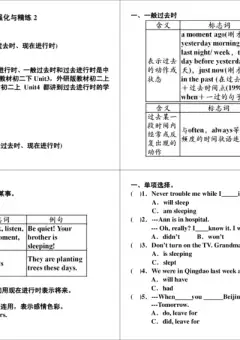
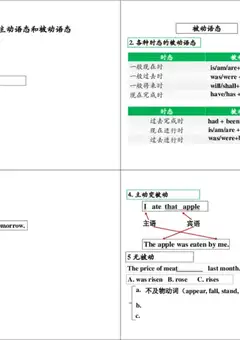
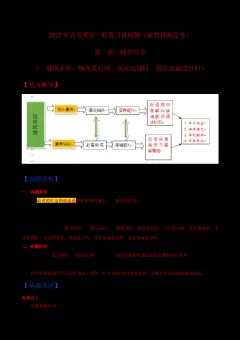
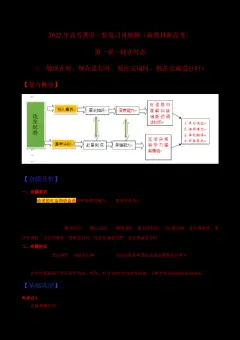
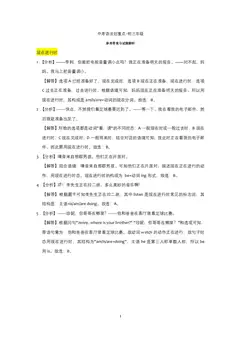
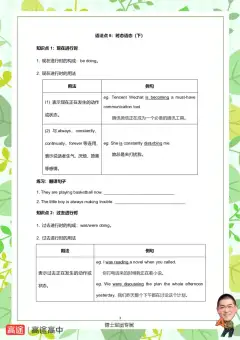
现在进行时
①现在(指说话人说话时)正在发生的事情  常和now, this week,
at the moment,right now 等时间状语连用,有时和动词look, listen
等连用,表示“现在”这一概念
They are playing basketball now.
现在他们正在打篮球。
Look!  The boy is flying a kite.     看!那个男孩正在放风筝。
②现阶段正在进行的动作(不一定指说话时正在进行着的动作)
常和at present 目前,this week, these days, recently 最近等时间
状语连用
We are enjoying our boat trip very much these days.
这些天我们乘船旅游非常开心。
be+doing
③
表示将来   用arrive, come, go, leave 等动词的现在进
行时描写行程安排,有“将到达”和“将离去”的意思
Are you working   next week?   你下星期工作吗?
They are arriving in two days.   他们在两天内就要到了。
I’m leaving Nanjing and going to live in Chengdu. 我将离开南京去成都定居。
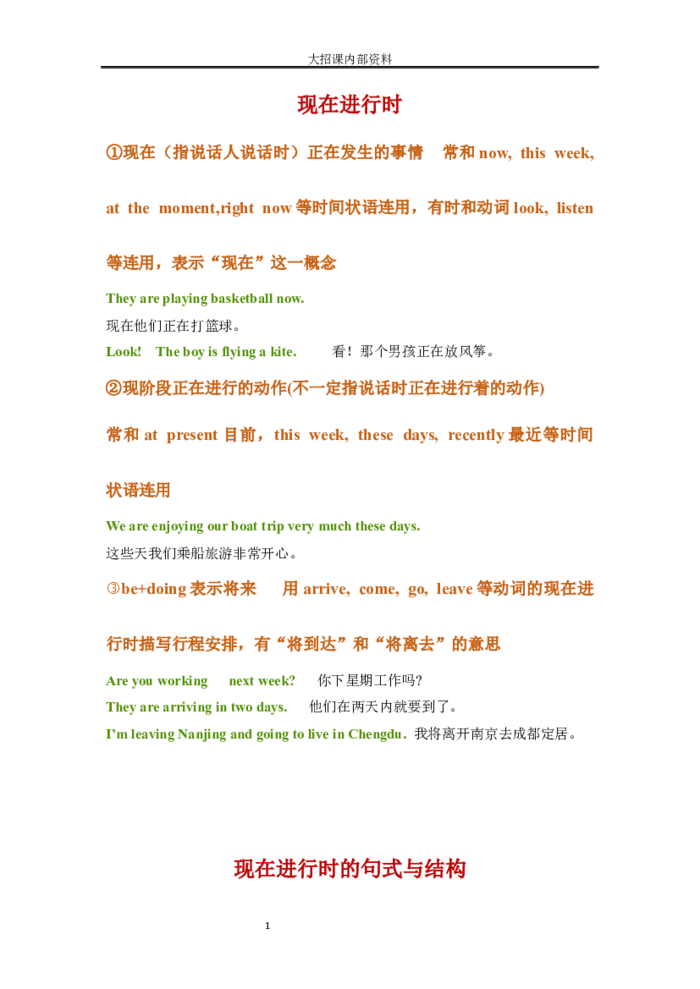
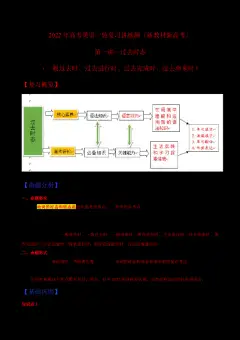
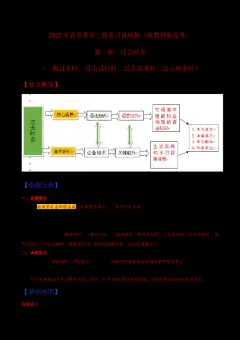
现在进行时的句式与结构
2
大招课内部资料
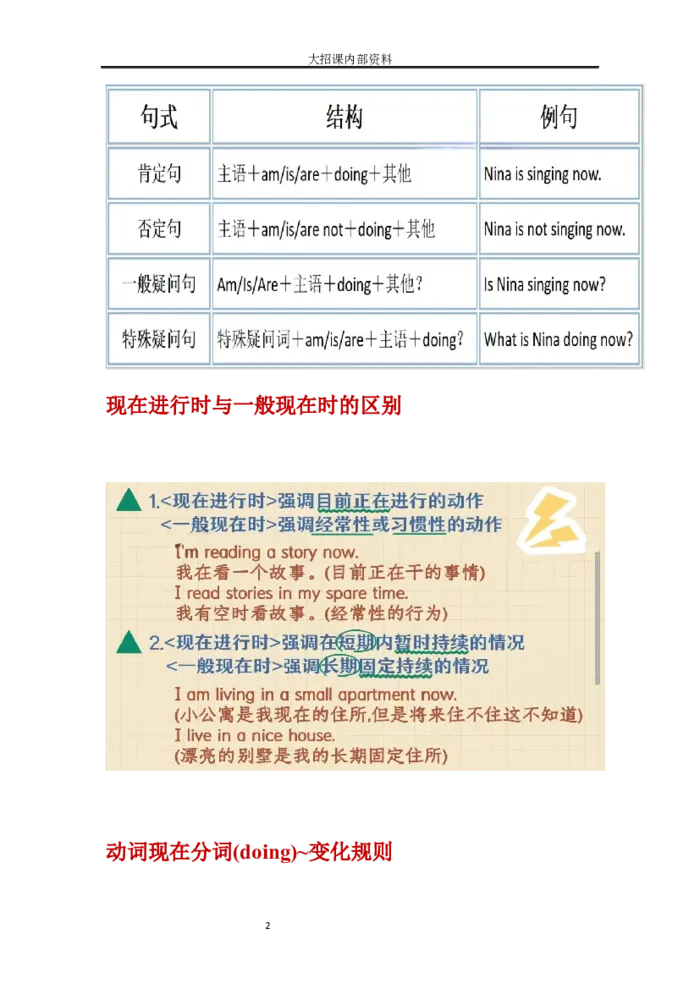
现在进行时与一般现在时的区别
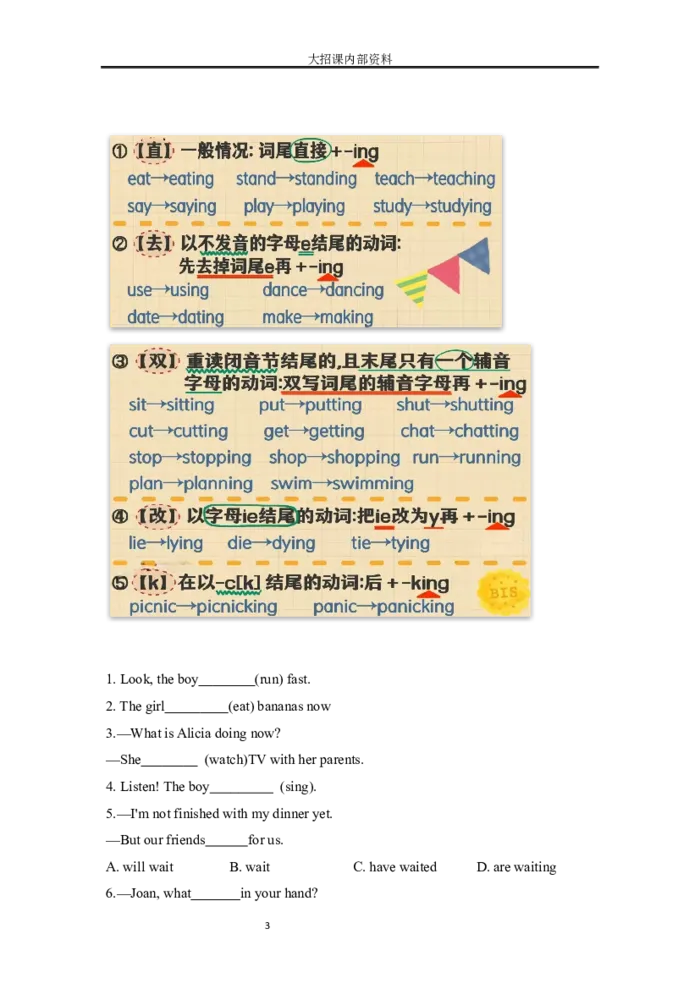
动词现在分词(doing)~变化规则
3
大招课内部资料
1. Look, the boy


 (run) fast.
2. The girl


 (eat) bananas now
3.—What is Alicia doing now?
—She


   (watch)TV with her parents.
4. Listen! The boy


  (sing).
5.—I'm not finished with my dinner yet.
—But our friends      for us.
A. will wait
B. wait
C. have waited
D. are waiting
6.—Joan, what       in your hand?
4
大招课内部资料
——Look! It's a birthday gift for my grandma.
A. had you held
B. are you holding
C. do you hold
D. will you hold
7.—What's that terrible noise?
—The neighbors          for a party.
A. have prepared
B. are preparing
C. prepare
D. will prepare
8.—Are you still busy?
—Yes,I


  my work and it won't take long.
A. just finish
B. am just finishing
B. C. have just finished
D. am just going to finish
9.—Have you got any job offers?
——No. I


 .
A. waited
B. had been waiting
C. have waited
D. am waiting
10. That piece of music sounds quite familiar. Who        the piano upstairs?
A. has played
B. played
C. plays
D. is playing
1.is running   2.is eating   3.is watching   4.is singing   5.D
6.B   7.B   8.B   9.D   10.D
请写出下列单词的进行时态
go—
stand—
sleep—    like—
sing—
drink—
get—
read—
swim—
walk—
cut—
draw—
fly—
forget—
use—
begin—
kick—
run—
cook—
chat—
love—
shop—
live—
ride—
learn—
stop—
climb—
count—
clean—
fish—
die—
come—
dance—
close—
picnic—
tie—
panic—
lie—
make—
write—
take—
move—
have—
sit—
see—
答案:
go— going
stand—standing
sleep—sleeping
like—liking     sing
—singing
drink—drinking
get—getting
read—reading
swim—swimming
walk—walking
cut—cutting
draw—drawing
5
大招课内部资料
fly—flying
forget—forgetting
use—using
begin—beginning
kick—kicking
run—running
cook—cooking
chat—chatting
love—loving
shop—shopping
live—living
ride—riding
learn—learning
stop—stopping
climb—climbing
count—counting
clean—cleaning
fish—fishing
die—dying
come—coming
dance—dancing
close—closing
picnic—picnicking
tie—tying
panic—panicking
lie—lying
make—making
write—writing
take—taking
move—moving
have—having
sit—sitting
see—seeing
过去进行时
①过去某段时间内持续进行的动作或事情   this morning, the
whole morning, all day yesterday, from nine to ten last night,
when/while
We were watching TV from seven to ten last night.
昨晚七点到十点的时候我们在看电视。
②在过去某个时间点正在进行的动作   at nine o’clock yesterday,
at eight last night, at that moment, at that time, at this time
yesterday, when 引导的时间状语从句
What were you doing at eight last night?  昨晚八点你正在做什么?
I was playing games.  我在玩游戏。
③过去的反复性或习惯性的动作,常常带有说话人人感情色彩,常
6
大招课内部资料
与频率副词always, constantly, frequently 连用
Her mother was always working like that. 她妈妈总是那样工作。
④按计划、安排过去将要发生的事,常与come, go, leave, start,
arrive 等表示位置转移的动词连用。
Teacher Chun asked him whether he was coming back for supper.
春花老师问他是否回来吃晚饭。
⑤复合句中,如果主要动作和背景动作都是延续的或同时发生的,
那么主从句的动词都可用过去进行时
While he was waiting for the bus, he was reading a newspaper. 他边等车边看
报。
(两个动作都是延续的)
⑥于故事的开头交代故事的背景
One night, he was typing in his study. Suddenly, a man broke into his house and
cut off the electricity...
 一天晚上,他正在书房里打字。突然,一个人闯进屋来,切断了电源……
过去进行时的句式与结构
7
大招课内部资料
when/while 在过去进行时中的区别
When she came into my room, I was reading a book. 当她走进我房间时,我正
在看书。(从句为一般过去时,come 为非延续性动词)
While Tom was doing his homework, Jim came to see him.
当汤姆在做作业时吉姆来看他了。(从句为过去进行时,doing 为延续性动词)
Jack was singing while his mother was watching TV.
8
大招课内部资料
杰克在唱歌,而他的妈妈在看电视。(强调动作同时发生)
1. While we


 (wait) for the bus, a girl


 (run)up to us.
2. I


  (telephone) a friend when Bob


  (come) in.
3. Jim

 (jump) on the bus as it


 (move) away.
4. -----


 they


  (have) a meeting at 4 yesterday afternoon.
-----No, they


 . They


 (clean) the classroom.
5.—Did you hear someone knock at the door just now?
—Sorry, I       to my friend on the phone.
A. was talking  B. talked
C. am talking
D. talk
6. Linda was busy when I went to see her yesterday.  She

 for an exam.
A. will study
B. was studying
C. has studied  D. is studying
7.—We will go for a picnic if it


  tomorrow.
—But nobody knows if it


  tomorrow.
A. won't rain; rains
B. doesn't rain; will rain
C. doesn't rain; rains.
D. won't rain; will rain
8. We were reading the newspaper        suddenly the light went out.
A.when
B.for
C.before
D.after
1.were waiting; ran   2.was telephoning;came   3.jumped; was moving
4.Were; having; weren’t; were cleaning    5.A   6.B   7.B   8.A