ARTICLE · 1111230
AI 智能体正在改写经济与社会规则 | 经济学人
01 文章选材
September 26TH‑October 2ND |Business

【Para. 1】Meta 旗下 AI 智能体 Muse 爆火,AI 行业竞争局势瞬息万变
【Para. 2‑3】Muse 可代办各类现实事务,能力显著强于普通聊天机器人
【Para. 4】比照过往 AI 引发的市场震动,探讨全民使用该智能体将产生的社会经济影响
【Para. 5‑8】AI 智能体给政府司法、各类传统商业模式带来冲击
【Para. 9‑10】抛出 AI 伦理难题:智能体行为的责任该如何划分
 886 words ★★★★☆(难度评级)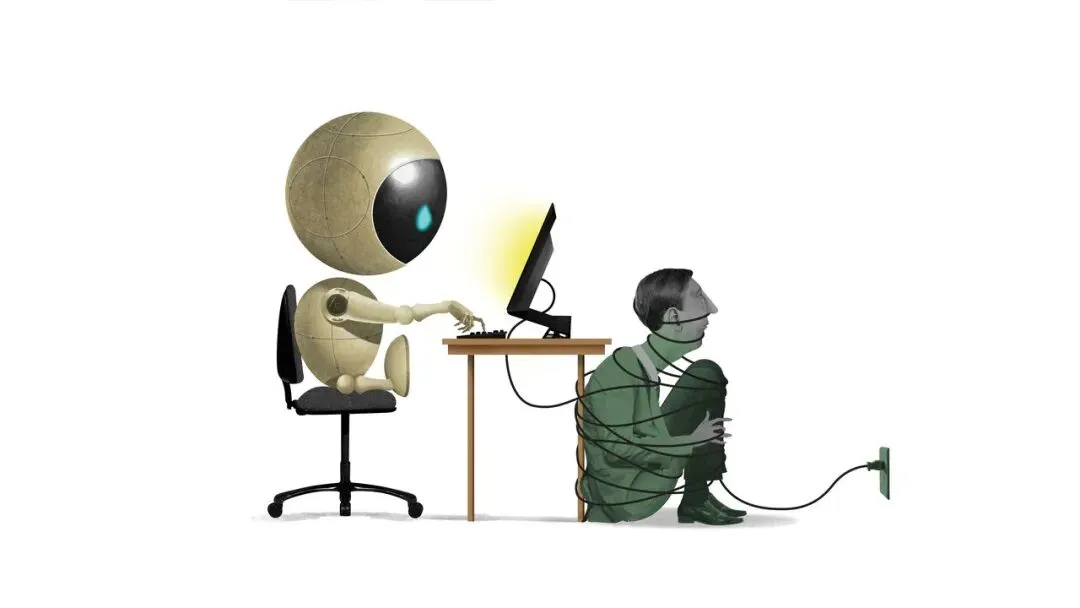
Agent of whom?
【Para. 1】So the last shall be first and the first shall be last. The race to build artificial intelligence is so frenetic that declaring any firm the winner is a sure sign it is about to be overtaken—and vice versa. Meta’s AI investments had been written off by many as wasteful vanity. Yet the same investors now say Muse, the firm’s new personal agent, will soon upend commerce and the world. Muse is at the top of the charts on Apple’s App Store. Meta’s share price has risen by around a third in the past month.
【Para. 2】Chatbots are often compared to interns. Muse is more like an indentured secretary. Users will find the difference total: between being read a train timetable and having tickets booked; mulling one’s rights and filing a claim; comparing phone tariffs and overcoming the obstacles companies erect to prevent customers switching. Markets for goods and services can be surveyed totally and ceaselessly. No form is too long; no claim too small.
【Para.3】Which of the Millennium mathematics problems can Muse solve? That is unclear. But prod Muse in the right way and you could wake up with a cheaper car‑insurance policy. Might Muse agents end the world? Mark Zuckerberg, Meta’s boss, has dismissed worries about AI safety, much as the White House has. Though not yet the most popular AI product, Muse is surely the first populist one, designed for the everyman of Facebook Marketplace for whom privacy does not matter, existential risks are bunk and everything in the economy is either a bargain or a scam.
【Para. 4】The mood in markets is similar to what it was in February. Back then, as it became clear that models could write code better than humans, the question was: what happens when everyone has the coding ability of a Silicon Valley engineer? Shares in software companies were sold indiscriminately (many have since recovered). Now the question du jour is something like: what happens when everyone has the patience of a monk?
【Para. 5】The state will struggle with its newly agentic citizenry. When the cost of identifying and claiming all the rights and benefits rich countries offer their people falls, governments will end up spending more. That is an acute problem for courts, which are already flooded by AI‑written filings. The rule of law demands that citizens can enforce their rights, but also that courts remain open, and judges human. Troublingly, most solutions to this trilemma involve more money or fewer rights.
【Para. 6】Companies will suffer in proportion to the profits they receive from ignorance and inertia. Economists have long speculated about why money sits in bank accounts when it could earn far more interest in a money‑market fund. Or why insurance customers allow their loyalty to be punished with higher rates, and don’t simply switch. It is often said that the West suffers from a compensation culture, but plenty of compensation goes unclaimed. In Europe only around half of potential compensation for delayed and cancelled flights is actually paid out—often with the help of firms that take their own cut from afflicted customers.
【Para. 7】When consumers let agents loose on their behalf, firms that rely on subscriptions are less secure; it costs little to test Muse by attempting to cancel an unwanted gym membership or newsletter subscription. So are businesses that depend on being able to distinguish humans from computers. A qualification earned online must now be worth less. Most would find the idea of flirting with a robot intolerable. Once agents get chatting on dating apps, those apps will be reduced to elaborate matching systems between singletons’ online personas.
【Para. 8】States and firms could attempt to reimpose frictions with their own technology. Imagine agents keeping other agents on hold, ignoring and chasing each other in increasingly aggressive email correspondence. (Ironically, such defences will make the internet even more unbearable for humans.) Shopify, an online‑commerce platform, has welcomed Muse agents. Amazon has banned them. If the AI bulls are to be believed, that will soon be costly, since agents will be responsible for a meaningful share of commerce, and because they will be harder to identify: “tick the box to prove your humanity” becomes “click the yellow bikes” becomes “upload a photo with today’s newspaper”.
【Para. 9】Unburdened of administrative work, consumers might ask a more fundamental question of their new agents: what is the relationship between Man and Muse? Opinions about the homo‑agentic bond will differ. The user of an agent is likely to consider her new assistant an ordinary tech product, for which she does not bear total responsibility. To the world, of course, the agent and its manager will be quite indistinguishable. Model‑makers surely think much of the responsibility lies with the user.
【Para. 10】The tension between autonomy and responsibility is among the most fundamental questions in AI. Mostly this has been discussed in the abstract, in terms of the existential risks and AI consciousness. Now a million agentic citizens let loose on the economy will find out for themselves. If they don’t like the result, they know how to appeal.
05 检验题

21. According to Paragraphs 1 and 2, Muse is portrayed as an agent that _____.
[A] merely summarizes information after a user has made a decision
[B] specializes in encouraging customers to remain loyal to companies
[C] moves beyond chatbot-like advice into completing practical tasks
[D] mainly helps firms design longer forms and stricter switching rules
22. The phrase “the patience of a monk” (Paragraph 4) most probably means _____.
[A] a readiness to delay purchases until prices fall further
[B] a capacity to persist through tedious claims and switching barriers
[C] a willingness to tolerate unreliable AI outputs without complaint
[D] a habit of checking online comparisons before accepting an offer
23. It can be inferred from Paragraphs 5 and 6 that cheaper rights enforcement _____.
[A] will let courts replace human judges without requiring extra spending
[B] will reduce public obligations by preventing citizens from seeking benefits
[C] will preserve corporate profits by discouraging consumers from using agents
[D] may benefit citizens while creating pressure on public institutions and firms
24. Paragraph 8 serves to _____.
[A] describe emerging countermeasures and divergent business responses to consumer agents
[B] prove that agents have already replaced human users in most online commerce
[C] condemn Amazon for rejecting a technology that Shopify has fully perfected
[D] suggest that platform rivalry, rather than cost, explains resistance to automation
25. Which of the following would be the best title for the text?
[A] Personal Agents: A Brief Passing App-Store Fad
[B] Digital Patience: How Consumers Can Beat Monks
[C] When Consumers Delegate: The Agent Economy Under Strain
[D] AI Populism: Why Meta Will Rule Global Commerce
看更多单词注释,全文翻译,长难句解析,写作积累以及答疑服务;
扫码下方报名训练营获取👇👇👇



注:在线课程报名之后不接受退款,报名之前有疑问请先加助教微信(ttzhujiao888)查看例文免费试学和训练营介绍,考虑清楚再报名