ARTICLE · 1320104
初中英语 300 个词形变化常考点 + 130 组固定搭配,答案版 + 默写版一套带走
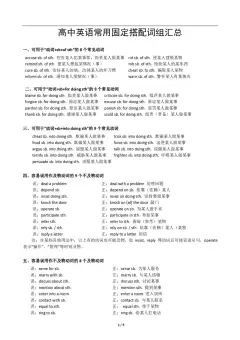
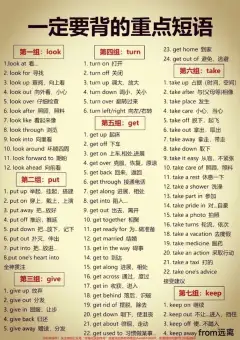
紧扣中考英语的命题习惯,把词形变化与固定搭配两块最容易丢分的考点拆开整理:第一部分按变名词、变形容词、变反义词、变副词四类编排,附易混辨析与解题信号词;第二部分按只接 to do、只接 doing、接 sb to do、to 作介词等九个板块排列,每组配一句记忆口诀。前文是答案版,文末是默写版——遮住中文自测,或让家长念中文孩子写英文,都比反复看一遍有效。

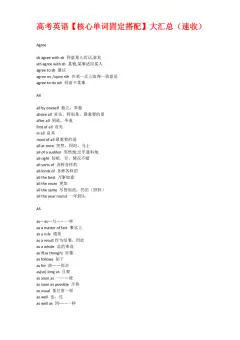
第一部分 · 词形变化常考点(300 个)
一、变名词
1. 动词 → 名词
admit → admission(承认 / 准许进入)
decide → decision(决定)
discuss → discussion(讨论)
invent → invention(发明)
invite → invitation(邀请)
produce → production(生产 / 产量)
protect → protection(保护)
suggest → suggestion(建议)
attract → attraction(吸引力 / 景点)
celebrate → celebration(庆祝)
educate → education(教育)
explain → explanation(解释)
express → expression(表达 / 表情)
introduce → introduction(介绍)
prepare → preparation(准备)
pronounce → pronunciation(发音)
translate → translation(翻译)
compete → competition(比赛)
communicate → communication(交流)
elect → election(选举)
direct → direction(方向)
collect → collection(收藏品)
connect → connection(联系)
graduate → graduation(毕业)
imagine → imagination(想象力)
organize → organization(组织)
pollute → pollution(污染)
desire → desire(愿望)
achieve → achievement(成就)
agree → agreement(同意)
develop → development(发展)
govern → government(政府)
improve → improvement(改进)
argue → argument(争论 / 论据)
judge → judgement / judgment( judgement 判断)
fail → failure(失败)
depart → departure(离开)
press → pressure(压力)
pleasure → pleasure(愉快)
arrive → arrival(到达)
approve → approval(批准)
survive → survival(生存)
perform → performance(表演)
appear → appearance(外貌 / 出现)
guide → guidance(指导)
complain → complaint(抱怨)
weigh → weight(重量)
choose → choice(选择)
lose → loss(损失)
succeed → success(成功)
think → thought(想法)
2. 形容词 → 名词
happy → happiness(幸福)
sad → sadness(悲伤)
kind → kindness(善良)
dark → darkness(黑暗)
ill → illness(疾病)
weak → weakness(弱点)
busy → business(生意)
safe → safety(安全)
difficult → difficulty(困难)
possible → possibility(可能性)
able → ability(能力)
active → activity(活动)
true → truth(真相)
warm → warmth(温暖)
strong → strength(力量)
long → length(长度)
high → height(高度)
wide → width(宽度)
deep → depth(深度)
young → youth(青年)
free → freedom(自由)
brave → bravery(勇敢)
curious → curiosity(好奇心)
similar → similarity(相似处)
special → specialist(专家)
quiet → quietness(安静)
rich → richness(丰富)
popular → popularity(受欢迎)
3. 动词 / 名词 → 指人名词
teach → teacher(教师) / drive → driver(司机)
visit → visitor(参观者) / invent → inventor(发明家)
swim → swimmer(游泳者) / sing → singer(歌手)
report → reporter(记者) / manage → manager(经理)
music → musician(音乐家) / science → scientist(科学家)
art → artist(艺术家) / piano → pianist(钢琴家)
tour → tourist(游客) / translate → translator(翻译者)
employ → employer / employee(雇主 / 雇员)
train → trainer / trainee(教练 / 受训者)
apply → applicant(申请者) / assist → assistant(助手)
二、变形容词
1. 名词 → 形容词
sun → sunny(晴朗的)
rain → rainy(下雨的)
wind → windy(有风的)
cloud → cloudy(多云的)
health → healthy(健康的)
luck → lucky(幸运的)
care → careful / careless(细心的 / 粗心的)
use → useful / useless(有用的 / 无用的)
help → helpful(有帮助的)
success → successful(成功的)
nature → natural(自然的)
nation → national(国家的)
tradition → traditional(传统的)
culture → cultural(文化的)
person → personal(个人的)
medicine → medical(医学的)
chemistry → chemical(化学的)
danger → dangerous(危险的)
fame → famous(著名的)
value → valuable(有价值的)
comfort → comfortable(舒适的)
science → scientific(科学的)
energy → energetic(精力充沛的)
friend → friendly(友好的)
love → lovely(可爱的)
month → monthly(每月的)
wonder → wonderful(精彩的)
peace → peaceful(和平的)
2. 动词 → 形容词
differ → different(不同的)
create → creative(有创造力的)
attract → attractive(有吸引力的)
act → active(积极的)
please → pleasant / pleased(令人愉快的 / 感到高兴的)
interest → interesting / interested(有趣的 / 感兴趣的)
surprise → surprising / surprised(令人惊讶的 / 感到惊讶的)
worry → worried(担心的)
satisfy → satisfied(满意的)
excite → exciting / excited(令人激动的 / 激动的)
tire → tiring / tired(累人的 / 疲倦的)
amaze → amazing / amazed(惊人的 / 惊叹的)
bore → boring / bored(无聊的 / 感到无聊的)
follow → following(接下来的)
live → lively / alive(活泼的 / 活着的)
三、变反义词
1. 否定前缀 un-(最常见,形容词为主)
un + happy(不快乐的)
un + lucky(不幸的)
un + usual(不寻常的)
un + able(不能的)
un + important(不重要的)
un + comfortable(不舒服的)
un + friendly(不友好的)
un + known(未知的)
un + fair(不公平的)
un + certain(不确定的)
un + clear(不清楚的)
un + common(不常见的)
un + pleasant(不愉快的)
un + safe(不安全的)
un + healthy(不健康的)
un + interesting(无趣的)
un + believable(难以置信的)
un + necessary(不必要的)
un + polite(不礼貌的)
2. 否定前缀 in- / im- / il- / ir-(看首字母选形态)
in + correct(不正确的)
in + direct(间接的)
in + expensive(不贵的)
in + visible(看不见的)
in + active(不活跃的)
in + complete(不完整的)
im + possible(不可能的)
im + polite(不礼貌的)
im + patient(不耐烦的)
im + perfect(不完美的)
il + legal(非法的)
il + logical(不合逻辑的)
ir + regular(不规则的)
ir + responsible(不负责任的)
3. 否定前缀 dis-
dis + agree(不同意)
dis + appear(消失)
dis + like(不喜欢)
dis + honest(不诚实的)
dis + obey(不服从)
dis + order(混乱)
dis + cover(发现)
dis + advantage(不利条件)
dis + comfort(不适)
dis + trust(不信任)
4. 其他否定前缀 mis- / non-
mis + understand(误解)
mis + take(弄错)
mis + lead(误导)
mis + spell(拼错)
non + stop(不停歇的)
non + sense(胡说)
四、变副词
1. 直接加 -ly
quick → quickly(迅速地)
slow → slowly(缓慢地)
real → really(真正地)
usual → usually(通常)
wonderful → wonderfully(极好地)
strong → strongly(强烈地)
careful → carefully(小心地)
sudden → suddenly(突然)
actual → actually(实际上)
final → finally(最后)
exact → exactly(确切地)
correct → correctly(正确地)
quiet → quietly(安静地)
recent → recently(最近)
polite → politely(礼貌地)
loud → loudly(大声地)
bright → brightly(明亮地)
deep → deeply(深深地)
wide → widely(广泛地)
perfect → perfectly(完美地)
2. 以 y 结尾:y → ily
happy → happily(快乐地)
easy → easily(容易地)
heavy → heavily(沉重地)
angry → angrily(生气地)
busy → busily(忙碌地)
lucky → luckily(幸运地)
noisy → noisily(吵闹地)
healthy → healthily(健康地)
lazy → lazily(懒散地)
3. 以 -le 结尾:去 e 加 y
simple → simply(简单地)
possible → possibly(可能地)
terrible → terribly(可怕地)
gentle → gently(温柔地)
comfortable → comfortably(舒适地)
probable → probably(大概)
4. 以 -ic 结尾:加 -ally
basic → basically(基本上)
scientific → scientifically(科学地)
automatic → automatically(自动地)
energetic → energetically(精力充沛地)
specific → specifically(具体地)
5. 特殊变化(易错重点)
true → truly(真正地)
full → fully(完全地)
whole → wholly(完全地)
good → well(好地)
fast → fast(不变)(快地)
hard → hard(不变)(努力地)
late → late / lately(迟 / 最近)
near → near / nearly(近 / 几乎)
high → high / highly(高 / 高度地)
五、易混辨析
-ing 与 -ed(interesting 令人感兴趣 / interested 感到感兴趣)
-ful 与 -less(careful 细心的 / careless 粗心的)
-ic 与 -ical(historic 有历史意义的 / historical 历史相关的)
living 与 alive(living 作定语多 / alive 作表语)
hardly 与 hard(hardly 几乎不 ≠ hard 努力)
respectful 与 respectable(表示尊敬 / 值得尊敬)
sensible 与 sensitive(明智的 / 敏感的)
economic 与 economical(经济的 / 节约的)
六、高频词形变化速记表
| 动词 | 名词 | 形容词 | 副词 |
|---|---|---|---|
七、语法填空解题信号词
空格前是 a / an / the,后无名词 → 大概率填名词
空格前是 be / stay / feel / become → 填形容词
空格后紧跟名词 → 填形容词
空格修饰动词或整句 → 填副词
空格位于句首且后有逗号 → 多为副词或句首连词
空格前有 the + 序数词 / 最高级 → 常需名词
and / or 连接两处 → 前后词性一致
所给词与主语是被动关系 → 优先考虑-ed形式
提示词后已有名词且前有介词 → 考虑派生形容词
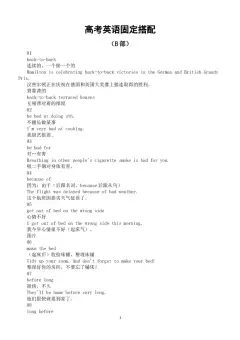
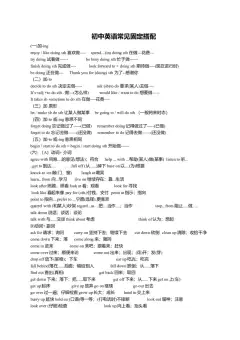
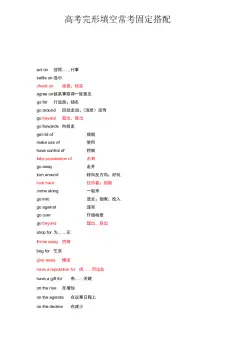
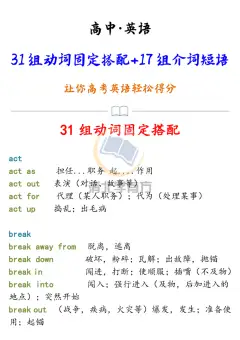
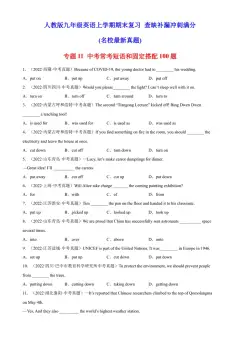
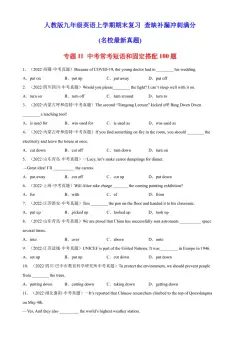
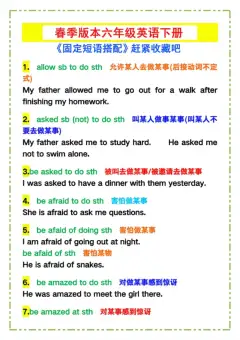
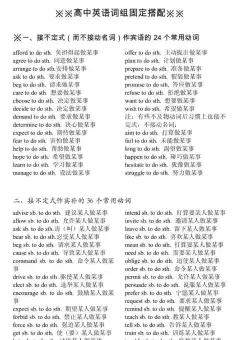
第二部分 · 固定搭配全清单(130 组)
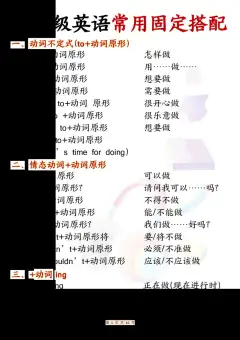
【1】核心判断口诀
找谓语 → 判主被动 → 定形式。看见两个动词而句中只有一个真正谓语,剩下的就是非谓语;逻辑主语自己做,用 doing / to do;被做,用 done。
| 形式 | 核心含义 | 记忆口诀 |
|---|---|---|
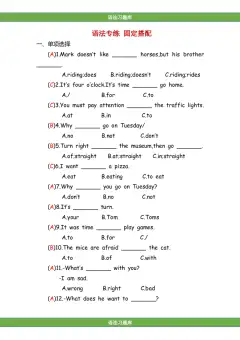
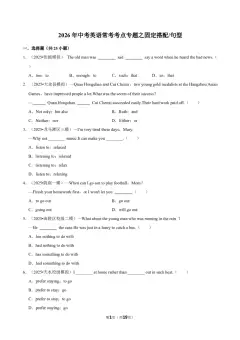
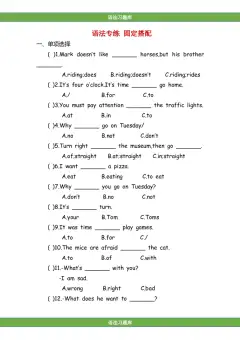
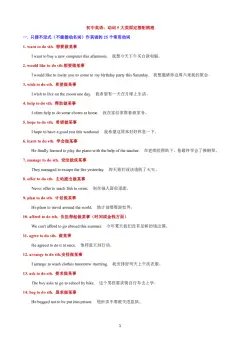
【2】只接 to do 作宾语的动词(18 组)
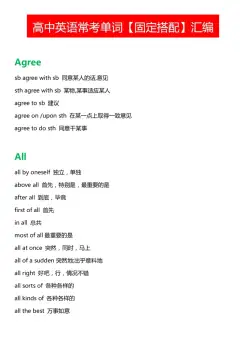
agree to do(同意做)
decide to do(决定做)
hope to do(希望做)
wish to do(想要做)
plan to do(计划做)
intend to do(打算做)
promise to do(承诺做)
refuse to do(拒绝做)
offer to do(主动提出做)
fail to do(未能做)
manage to do(设法做成)
prepare to do(准备做)
learn to do(学着做)
choose to do(选择做)
ask to do(请求做)
expect to do(预计做)
afford to do(负担得起做)
pretend to do(假装做)
口诀:同意计划做决定,希望拒绝来帮忙——agree, plan, decide, hope, refuse, help
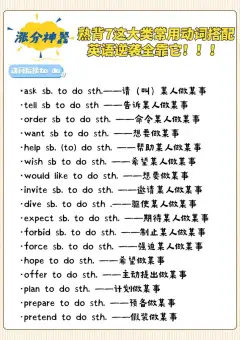
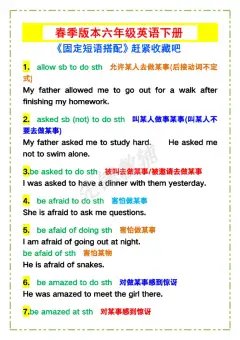
【3】接 sb to do sth 作宾补(14 组)
ask sb to do(请某人做)
tell sb to do(告诉某人做)
want sb to do(想要某人做)
allow sb to do(允许某人做)
advise sb to do(建议某人做)
invite sb to do(邀请某人做)
order sb to do(命令某人做)
force sb to do(强迫某人做)
teach sb to do(教某人做)
encourage sb to do(鼓励某人做)
warn sb to do(警告某人做)
remind sb to do(提醒某人做)
persuade sb to do(说服某人做)
expect sb to do(期望某人做)
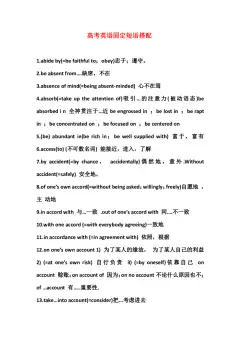
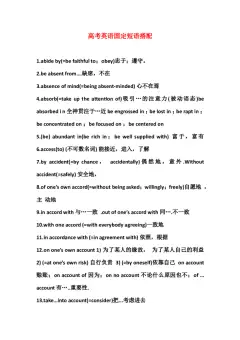
【4】to 为介词的固定搭配(to doing)——易错重点
look forward to doing(期待做)
be used to doing(习惯于做)
be addicted to doing(沉迷于做)
devote oneself to doing(致力于做)
pay attention to doing(注意做)
get down to doing(着手做)
object to doing(反对做)
be accustomed to doing(习惯于做)
stick to doing(坚持做)
prefer doing to doing(比起……更喜欢……)
lead to doing(导致做)
contribute to doing(促成做)
口诀:期待习惯和沉迷,注意坚持与反对——to 后面一律跟 doing,不看前文是不是动词。
【5】只接 doing 作宾语的动词(16 组)
enjoy doing(喜欢做)
finish doing(完成做)
mind doing(介意做)
practice doing(练习做)
suggest doing(建议做)
avoid doing(避免做)
keep doing(持续做)
miss doing(错过做)
imagine doing(想象做)
consider doing(考虑做)
admit doing(承认做过)
deny doing(否认做过)
allow doing(允许做(泛指))
give up doing(放弃做)
put off doing(推迟做)
can't help doing(忍不住做)
【6】接 sb doing sth 的动词
see sb doing(看见某人正在做)
hear sb doing(听见某人正在做)
watch sb doing(观察某人正在做)
find sb doing(发现某人正在做)
keep sb doing(使某人一直做)
catch sb doing(撞见某人正在做)
leave sb doing(让某人继续做)
notice sb doing(注意到某人正在做)
【7】意思不同的对比搭配(高频陷阱)
remember to do 记得要做|remember doing 记得做过()
forget to do 忘记要做|forget doing 忘记做过()
stop to do 停下来去做|stop doing 停止做()
try to do 努力去做|try doing 试着做()
mean to do 打算做|mean doing 意味着做()
regret to do 遗憾要告知|regret doing 后悔做过()
go on to do 接着做另一件|go on doing 继续做同一件()
【8】接 sth done 的动词
have sth done(让某事被做)
get sth done(使某事完成)
make oneself heard(让自己被听见)
keep sth hidden(把某物藏着)
leave sth undone(把某事搁着没做)
find sth damaged(发现某物被损坏)
【9】固定句式中的非谓语
| 句式 | 中文 | 注意 |
|---|---|---|
第三部分 · 默写自测版
遮住上文,看中文写英文;或家长念中文,孩子写英文。写完对照答案版逐条打勾,错两次以上的抄进错题本。
一、词形变化
admit → ______(承认)
decide → ______(决定)
discuss → ______(讨论)
explain → ______(解释)
pronounce → ______(发音)
achieve → ______(成就)
argue → ______(争论)
fail → ______(失败)
weigh → ______(重量)
happy → ______(幸福)
difficult → ______(困难)
able → ______(能力)
strong → ______(力量)
long → ______(长度)
deep → ______(深度)
safe → ______(安全)
true → ______(真相)
curious → ______(好奇心)
二、反义词与前缀
______ + happy(不快乐的)
______ + possible(不可能的)
______ + legal(非法的)
______ + regular(不规则的)
______ + agree(不同意)
______ + honest(不诚实的)
______ + understand(误解)
______ + stop(不停歇的)
三、副词变化
happy → ______(快乐地)
simple → ______(简单地)
basic → ______(基本上)
true → ______(真正地)
full → ______(完全地)
good → ______(好地)
hard → ______(努力地)
near → ______(几乎)
四、固定搭配
look forward to ______(期待做)
be used to ______(习惯于做)
pay attention to ______(注意做)
get down to ______(着手做)
enjoy ______(喜欢做)
mind ______(介意做)
give up ______(放弃做)
can't help ______(忍不住做)
remember ______(要做)(记得要做)
remember ______(做过)(记得做过)
stop ______(停下来去做)(停下来去做)
stop ______(停止做)(停止做)
spend time ______(花时间做)
be busy ______(忙于做)
这些词中考每年都在考,差别只在于孩子是「见过一遍」还是「默写过三遍」。建议打印出来,每周默写一节,一个月过完全部。