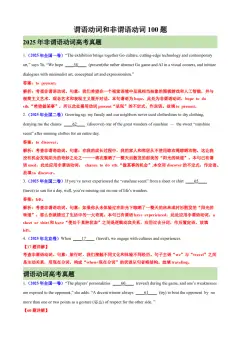
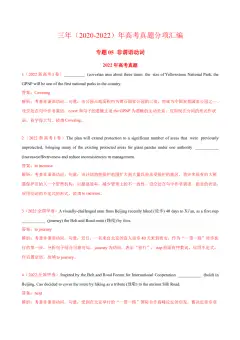
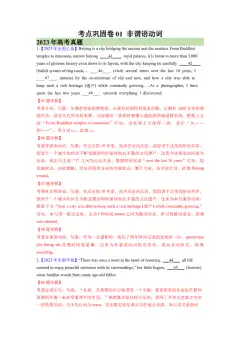
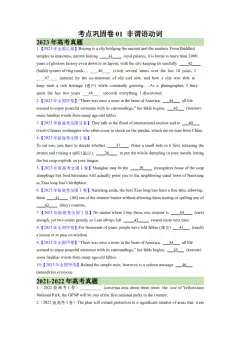
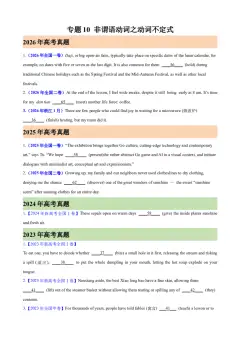
第一部分 非谓语动词核心精讲
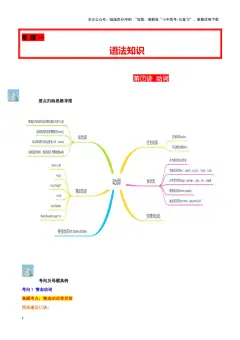
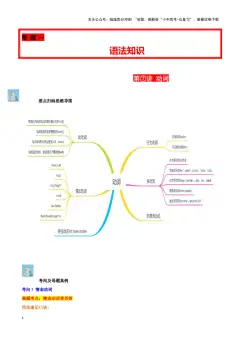
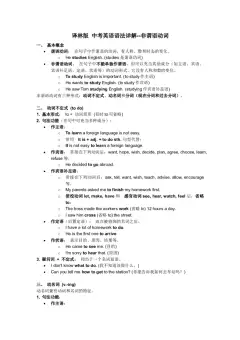
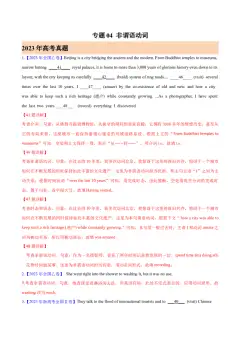
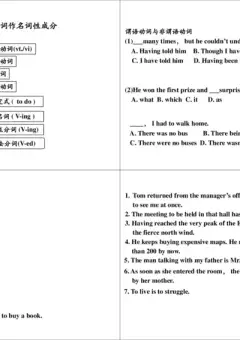
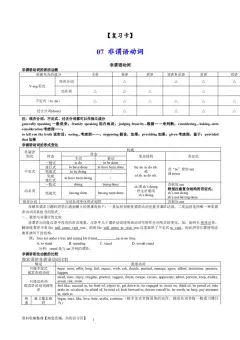
一、基本概念
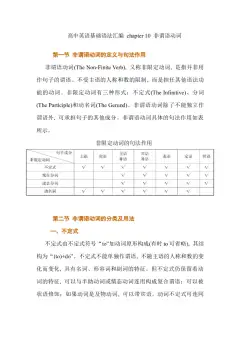
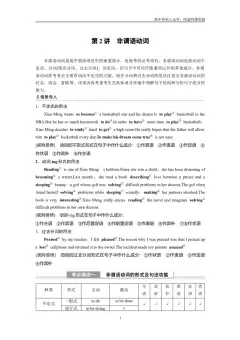
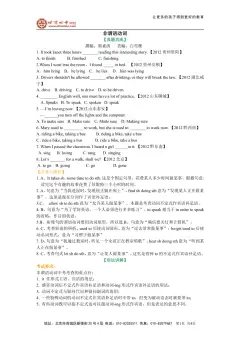
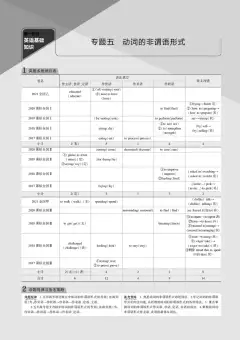
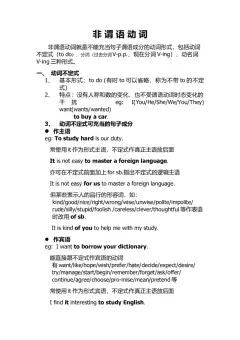
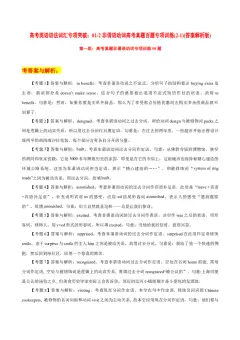
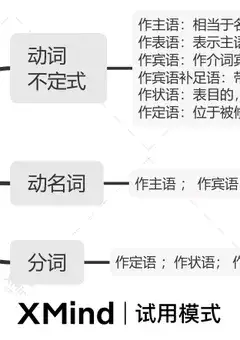
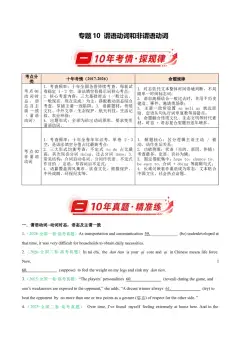
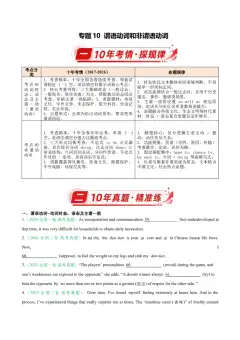
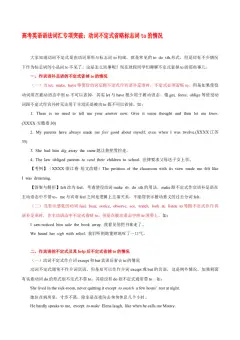
非谓语动词不能单独充当句子谓语,但保留动词特征,可以带宾语、状语;无人称和数的变化,必须依附主句谓语。
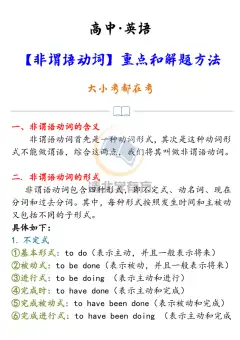
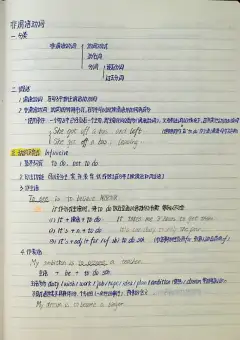
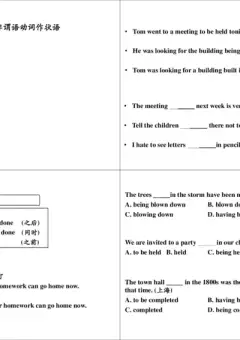
三大基本形式:
二、三大形式核心本质
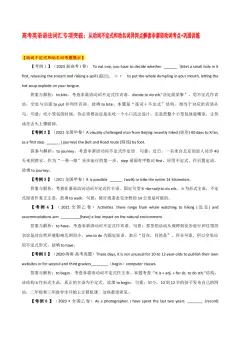
1. to do:多表目的、将来、具体动作;可主动,也可构成被动 to be done。完成式 to have done表示动作发生在主句谓语之前。2. doing:常表主动、进行、伴随、常态;完成式 having done表主动且先发生;being done表被动进行;having been done表被动且先发生(多用于状语)。3. done:表被动、已完成的状态,无独立时态变化。三、高考三步解题法
① 判断谓语 / 非谓语:句中已有谓语,且无并列连词连接,空格大概率填非谓语;
② 找准逻辑主语,判断主被动;
③ 比对时间先后:同步 / 将来用一般式;先于谓语发生用完成式。
四、高频句法功能
目的状语:常用 to do;
自然结果:doing;意外结果:to do;
伴随、原因、时间:主动用 doing,被动状态用 done。
doing:主动、正在进行;
done:被动、已完成;
to be done:将来被动;
being done:正在被……。
只接 to do:decide,plan,hope,refuse,promise,afford,manage,pretend;
只接 doing:finish,enjoy,practice,mind,avoid,suggest,keep,consider,imagine;
易混辨析:
remember to do(记得要做)/ remember doing(记得做过)
forget to do(忘记要做)/ forget doing(忘记做过)
regret to do(遗憾地告知)/ regret doing(后悔做过)
stop to do(停下来去做)/ stop doing(停止做)。
感官动词:see / watch / hear 等,sb. do(全过程);sb. doing(正在进行);被动语态时要还原 to;
使役动词:make / have / let,主动常省略 to;
want / ask / allow:sb. to do。
with 复合结构:with +名词+ doing(主动)/ done(被动)/ to do(将来待完成);
独立主格:逻辑主语和主句主语不一致;
固定句式:It is + adj. + to do;There is no doing sth.。
五、高频易错点
1. having been done一般不作定语;2. 分词形容词:‑ing多修饰事物(令人……);‑ed多修饰人(感到……);3. 固定插入语:generally speaking,judging from,considering,形式固定,不必判主被动;4. belong to,consist of 等无被动形式;第二部分 练习试题
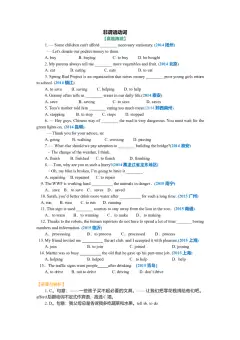
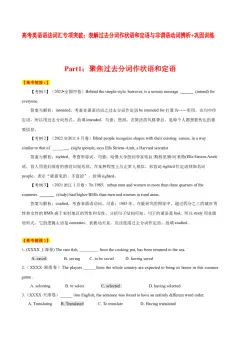
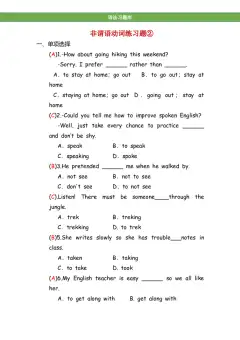
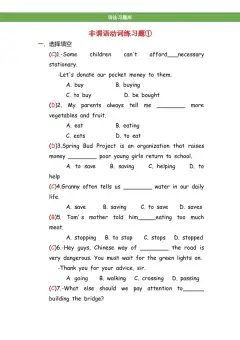
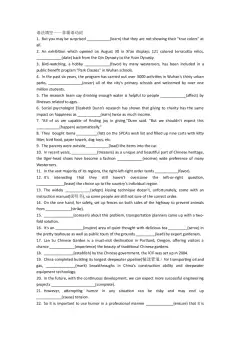
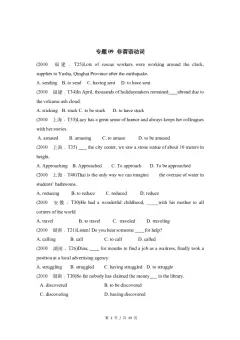
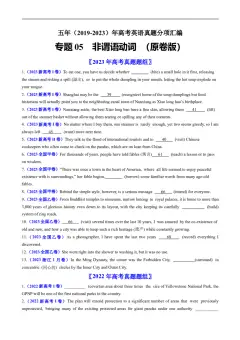
基础过关 1–30
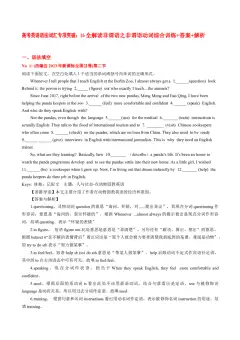
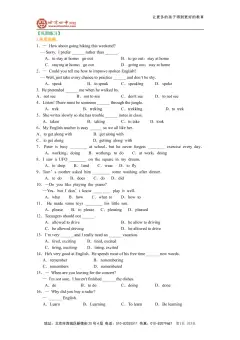
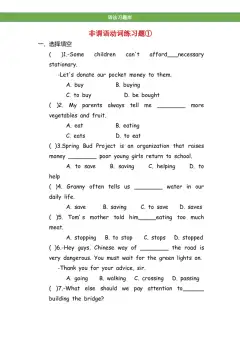
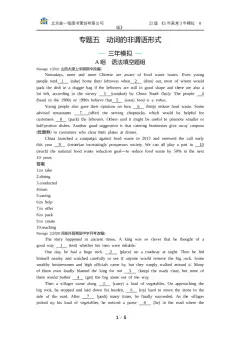
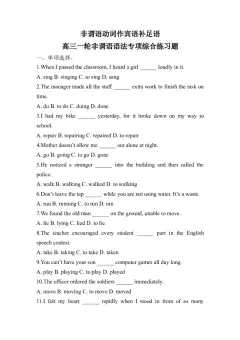
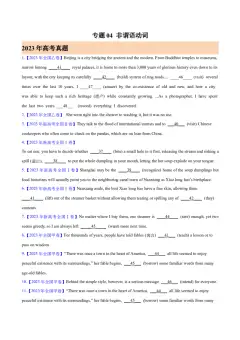
1. To improve students' practical ability, schools encourage students ______ (take) part in social practice.2. The girl sitting by the window is my deskmate, ______ (love) reading poetry.3. ______ (face) with heavy pressure, many teenagers learn to relax themselves.4. I finished ______ (do) my homework before watching TV every day.5. The teacher asked us ______ (not be) late for the meeting.6. There is a new bridge ______ (build) over the river now.7. He pretended ______ (know) nothing about the accident.8. ______ (walk) along the street, I saw a lost dog.9. The broken window ______ (repair) tomorrow belongs to our classroom.10. She minds ______ (disturb) while studying.11. We spent the whole afternoon ______ (clean) the community park.12. Let me ______ (help) you carry the heavy box.13. The news is very ______ (excite), and we are all ______ (excite).14. He decided ______ (not give) up his dream of being a teacher.15. ______ (complete) the work ahead of time, we worked day and night.16. I saw him ______ (play) basketball when I passed the playground.17. The book ______ (write) by Mo Yan is popular worldwide.18. She avoids ______ (make) the same mistake again.19. With the problem ______ (solve), we felt very relaxed.20. He seems ______ (know) the truth already.21. Practicing every day is the best way ______ (master) English.22. ______ (judge) from his smile, he is satisfied with the result.23. I regret ______ (tell) you that you failed the exam.24. The little girl stood there, ______ (cry) loudly.25. Have you finished the report ______ (hand) in this afternoon?26. We are looking forward to ______ (visit) the museum.27. The boss had the workers ______ (work) overtime yesterday.28. ______ (not know) what to do, he turned to his teacher for help.29. The film is worth ______ (watch) twice.30. I remember ______ (meet) him at a party last year.进阶提升 31–70
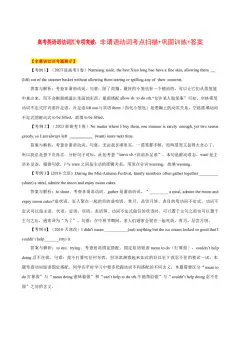
31. ______ (have) finished his homework, he went out to play basketball.32. The building ______ (build) for two years will be a new library.33. He is said ______ (study) abroad for three years.34. ______ (invite) to the party, she felt very honored.35. The question ______ (discuss) at the meeting now is very important.36. I would rather ______ (stay) at home than go out.37. It is necessary for us ______ (learn) to protect traditional culture.38. The manager ordered the work ______ (finish) before dark.39. ______ (fail) many times, he never gives up.40. She pretended ______ (sleep) when her mother came in.41. With a lot of homework ______ (do), I can't go out to play.42. The novel ______ (translate) into English last month sells well.43. I can't help ______ (laugh) when I see the funny face.44. ______ (be) ill, he didn't attend the class.45. The meeting ______ (hold) tomorrow is about environmental protection.46. He stopped ______ (smoke) to protect his health.47. 判断正误:Having been told many times, he still made the same mistake.48. The teacher found him ______ (read) novels in class.49. It's no use ______ (cry) over spilt milk.50. We have no choice but ______ (wait) for the next bus.51. ______ (devote) to teaching, she won high praise from students.52. The bird was lucky enough to escape ______ (catch).53. Weather ______ (permit), we will go hiking this weekend.54. He is the first student ______ (finish) the task.55. I suggest ______ (take) a break after long‑time study.56. ______ (see) from the top of the hill, the city looks beautiful.57. She was heard ______ (sing) in the next room just now.58. 判断正误:Having finished the work, the desk was cleaned up.59. The problem is difficult ______ (solve).60. He keeps ______ (practice) speaking English every morning.61. ______ (lack) experience, he failed in the interview.62. The house ______ (belong) to my grandfather is very old.63. I prefer ______ (walk) rather than drive.64. ______ (prepare) well for the exam, he got a good grade.65. The goods ______ (transport) by truck are all fresh fruits.66. She can't help but ______ (admit) her mistake.67. ______ (live) in the city for 10 years, he knows it very well.68. The meeting was put off, ______ (make) us very disappointed.69. All things ______ (consider), the plan is practical.70. He promised ______ (not break) his promise again.高考冲刺 71–100
71. Traditional Chinese culture, ______ (preserve) for thousands of years, is attracting global attention.72. ______ (improve) public service, the government has built more community centers.73. Whether ______ (bite) the dumpling first or eat it whole is a personal habit.74. The scientist is known ______ (devote) all his life to medical research.75. ______ (not receive) any reply, he decided to write another letter.76. The project ______ (complete) next month will benefit local people.77. Reading is a good habit ______ (form) in childhood.78. He is busy ______ (prepare) for the coming competition.79. ______ (base) on real life, the movie is very touching.80. I would like ______ (invite) to attend your birthday party.81. The little boy ran to his mother, ______ (hold) a flower in his hand.82. 判断正误:To learn English well, constant practice is needed.83. The rule ______ (make) to protect students has worked well.84. She regretted ______ (not take) her teacher's advice earlier.85. With his homework ______ (finish), he went out to play.86. The man ______ (talk) with our headmaster is our new teacher.87. It took him two hours ______ (solve) the difficult problem.88. ______ (tell) the truth, I don't like the new plan at all.89. Avoid ______ (eat) too much junk food to keep healthy.90. The sports meeting ______ (hold) last week was very successful.91. He insisted on ______ (send) to the remote village to teach.92. ______ (grow) up in a big family, he is very outgoing.93. The technique ______ (introduce) last year has improved production greatly.94. I have a lot of things ______ (deal) with today.95. ______ (fail) twice, he didn't give up and tried again.96. The speech ______ (give) by the professor tomorrow will be wonderful.97. Seeing the dog ______ (run) towards her, the girl was scared.98. ______ (consider) all factors, we finally made a decision.99. The boy is old enough ______ (take) care of himself.100. ______ (have been) in Beijing for 5 years, she is familiar with the city's culture and customs.第三部分 答案+详细解析
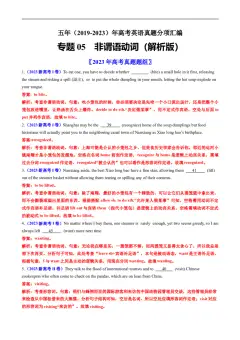
解析:固定搭配 encourage sb. to do sth.,鼓励某人做某事。
解析:现在分词作伴随状语;逻辑主语 the girl 和 love 为主动关系。
解析:固定结构 be faced with;省略 be 动词,用过去分词作状语。
解析:finish 后接动名词作宾语。
解析:ask sb. not to do sth.,不定式否定形式为 not to do。
解析:now 提示动作正在进行;bridge 和 build 被动,现在分词被动作定语。
解析:pretend to do sth. 假装做某事。
解析:逻辑主语 I 和 walk 主动,动作同步,现在分词作时间状语。
解析:tomorrow 表将来;window 和 repair 被动,不定式被动作定语。
解析:mind 后接 doing;she 和 disturb 被动,故用 being disturbed。
解析:spend time (in) doing sth. 花费时间做某事。
解析:使役动词 let sb. do sth.,省略 to。
解析:‑ing 修饰事物(令人……);‑ed 多描述人的感受(感到……)。
解析:decide to do,否定式 not to do。
解析:不定式放句首,表目的状语。
解析:see sb. doing 看见某人正在做某事。
解析:book 和 write 被动且完成,过去分词作后置定语。
解析:avoid 后接 doing。
解析:with 复合结构;problem 和 solve 被动完成。
解析:already 表明动作先于 seems,不定式完成式。
解析:the way to do sth. 做某事的方法。
解析:judging from 固定插入语,形式固定。
解析:regret to do 遗憾地告知(尚未发生 / 刚发生)。
解析:主动伴随状语,现在分词。
解析:this afternoon 表将来;report 和 hand in 被动。
解析:look forward to 中 to 是介词,后接 doing。
解析:have sb. do sth. 让某人做某事。
解析:主动原因状语;否定词 not 置于分词前。
解析:be worth doing,主动形式表被动含义。
解析:remember doing 记得曾经做过某事。
解析:finish 发生在 went 之前,主动,用 having done。
解析:build 和 building 被动,且持续进行,现在分词被动作定语。
解析:be said to have done 据说已经完成某事。
解析:invite 先于 felt,且是被动,完成被动式作状语。
解析:now 提示正在进行;question 和 discuss 被动。
解析:would rather do sth. 宁愿做某事。
解析:It is + adj. + for sb. to do,形式主语。
解析:order 后接不定式被动,表工作有待完成。
解析:多次失败发生在主句动作之前,主动完成。
解析:pretend to be doing 假装正在做。
解析:with 复合结构,表将来待完成。
解析:last month,被动完成,过去分词作定语。
解析:can't help doing 情不自禁做某事。
解析:现在分词作原因状语,表状态。
解析:tomorrow 将来;meeting 和 hold 被动。
解析:stop doing 停止正在做的事。
解析:having been done 作状语,表示先发生且被动,用法合规。
解析:find sb. doing 发现某人正在做。
解析:It's no use doing sth. 做某事没有用处。
解析:have no choice but to do 别无选择,只能……。
解析:be devoted to 致力于;省略 be,用 done 作状语。
解析:escape 后接 doing;bird 和 catch 被动。
解析:独立主格;weather 和 permit 主动。
解析:序数词修饰名词时,常用不定式作后置定语。
解析:suggest doing sth. 建议做某事。
解析:city 和 see 被动,过去分词作状语。
解析:感官动词用于被动语态时,必须还原 to。
解析:逻辑主语不匹配;主句主语 desk 不能发出 finish 动作。
解析:adj. + to do,主动形式表被动含义。
解析:keep doing 持续做某事。
解析:he 和 lack 主动;lack 一般无被动,现在分词作原因状语。
解析:belong to 无被动,现在分词作定语。
解析:prefer to do rather than do 宁愿……而不愿……。
解析:准备动作先于拿到成绩,主动完成。
解析:goods 和 transport 被动完成,过去分词作定语。
解析:can't help but do 不得不做某事。
解析:居住十年持续到主句时间点,主动完成。
解析:整件事带来自然结果,现在分词作结果状语。
解析:独立主格;all things 和 consider 被动。
解析:promise not to do 承诺不做某事。
解析:culture 和 preserve 被动完成,过去分词作定语。
解析:不定式置于句首,表目的状语。
解析:疑问词+不定式结构在句中作主语。
解析:毕生付出是已经完成的动作,不定式完成式。
解析:未收到回复先于写信;主动,否定置于前面。
解析:next month 将来被动。
解析:habit 和 form 被动完成。
解析:be busy doing sth. 忙于做某事。
解析:be based on 基于;省略 be,过去分词作状语。
解析:I 和 invite 被动,不定式被动。
解析:主动伴随状语。
解析:逻辑主语不匹配;practice 不能发出 learn 的动作。
解析:rule 和 make 被动完成。
84. not taking / not having taken解析:regret doing 后悔过去没有做。
解析:with 复合结构;homework 和 finish 被动完成。
解析:主动进行,现在分词后置定语。
解析:It takes sb. some time to do sth.。
解析:固定插入语 to tell the truth(说实话)。
解析:avoid 后接 doing。
解析:last week,被动完成,过去分词作定语。
解析:insist on 后接 doing;he 和 send 被动。
解析:主动原因状语。
解析:technique 和 introduce 被动完成。
解析:不定式后置定语,主动表被动含义。
解析:两次失败发生在主句之前,主动完成。
解析:tomorrow 将来被动。
解析:see sb./sth. doing 看见……正在进行。
解析:considering 已经介词化,固定用法。
解析:adj. / adv. + enough to do,足够……从而能够……。
解析:持续状态先于主句谓语,完成式。