2026 人教版英语八下学霸预习单词批注
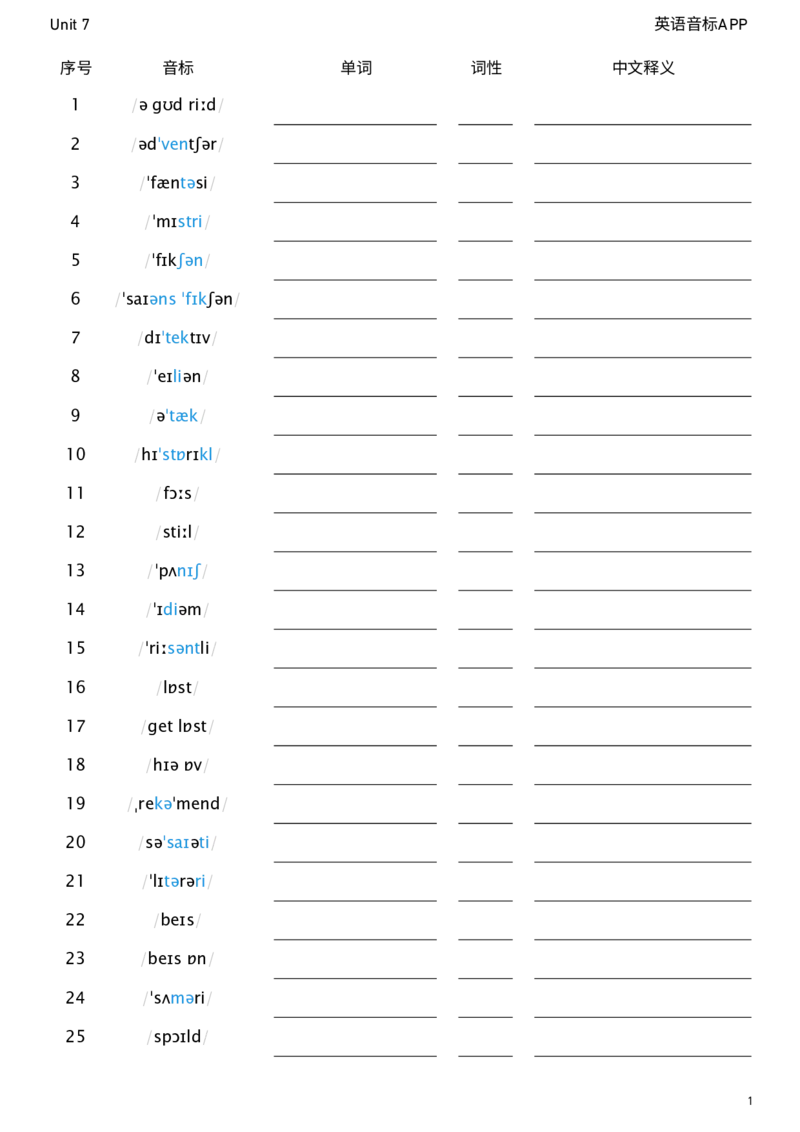
Unit 7 A Good Read 单词批注
a good read 好的读物;好书(或文章等)
. 用法:用于形容内容优质、值得阅读的书籍或文章等。
. 搭配:find a good read(找到一本好书)、recommend a good read(推荐一本好的读物)
. 例句:This novel is a really good read.(这本小说真是本好书。);She always shares
good reads with her friends.(她总是和朋友们分享好的读物。)
adventure /əd .ventʃə (r)/n. 冒险;冒险经历
. 用法:指充满刺激、探索的冒险活动或经历。
. 搭配:an adventure story(冒险故事)、go on an adventure(去冒险)
. 例句:He had many adventures during his travels.(他旅行期间有很多冒险经历。);
Children love adventure stories.(孩子们喜欢冒险故事。)
. 同义:n. exploration(探索;探险,如 “exploration of the unknown(对未知的探索)” )
、 venture(冒险;风险项目,如 “a business venture(商业冒险)” )
. 反义:n. safety(安全;平安,如 “long for safety(渴望安全)” )
. 词形变换:形容词 adventurous(爱冒险的;大胆的,如 “an adventurous person(爱冒险
的人)”) , 副词 adventurously(冒险地;大胆地,如 “travel adventurously(冒险旅
行)”)
fantasy / .fæntəsi/n. 幻想;幻想作品
. 用法:指想象出来的、不真实的情境或相关的文学、艺术作品。
. 搭配:a fantasy world(幻想世界)、fantasy literature(幻想文学)
. 例句:The movie is set in a fantasy land.(这部电影以一个幻想世界为背景。);She
enjoys reading fantasy novels.(她喜欢读幻想小说。)
. 同义:n. imagination(想象;想象力,如 “a work of imagination(想象的作品)”) 、
fiction (小说;虚构,如 “science fiction(科幻小说)” )
. 反义:n. reality(现实;实际,如 “face reality(面对现实)”)
. 词形变换:形容词 fantastic(极好的;奇异的,如 “a fantastic idea(极好的主意)” ) ,
副词 fantastically(极好地;奇异地,如 “work fantastically(极好地工作)”)
mystery / .mɪstri/n. 悬疑小说(或电影、戏剧);神秘的事物;奥秘
第 1 页 共 20 页2026 人教版英语八下学霸预习单词批注
. 用法:可指以悬疑为主题的文学、影视等作品,也可指本身神秘、难以理解的事物或现
. 搭配:a mystery novel(悬疑小说)、solve a mystery(解开一个奥秘)
. 例句:This mystery film keeps you guessing until the end.(这部悬疑电影让你一直猜直到
结尾。);The origin of the universe is a great mystery.(宇宙的起源是一个巨大的奥
秘。)
. 同义:n. enigma(谜;不可思议的东西,如 “an enigma of nature(自然之谜)” ) 、
puzzle (谜;难题,如 “a crossword puzzle(填字游戏谜)”)
. 反义:n. clarity(清楚;明晰,如 “clarity of thought(思路清晰)”)
. 词形变换:形容词 mysterious(神秘的;不可思议的,如 “a mysterious smile(神秘的微
笑)” ) , 副词 mysteriously(神秘地;不可思议地,如 “disappear mysteriously(神秘
地消失)”)
fiction /.fɪkʃn/n. 小说
. 用法:指通过想象创作的文学体裁,与 “非虚构” 相对。
. 搭配:science fiction(科幻小说)、literary fiction(文学小说)
. 例句:She writes fiction for a living.(她以写小说为生。);Fiction can help us
understand different worlds.(小说能帮助我们了解不同的世界。)
. 同义:n. novel(小说;长篇小说,如 “a historical novel(历史小说)” ) 、story(故
事;小说,如 “a short story(短篇小说)” )
. 反义:n. non-fiction(非虚构作品,如 “read non-fiction(读非虚构作品)”)
. 词形变换:形容词 fictional(虚构的;小说的,如 “a fictional character(虚构的人物)”
) ,副词 fictionally(虚构地;小说地,如 “ presented fictionally(虚构地呈现)”)
science fiction 科幻小说(或影片等)
. 用法:指以科学幻想为主题的小说、电影等作品。
. 搭配:a science fiction movie(科幻电影)、write science fiction(写科幻小说)
. 例句:Many science fiction stories predict future technologies.(许多科幻小说预测未来的
技术。);He is a big fan of science fiction.(他是科幻作品的忠实粉丝。)
detective /dɪ .tektɪv/n. 侦探
. 用法:指从事调查、侦破案件工作的人员。
. 搭配:a private detective(私家侦探)、detective story(侦探故事)
第 2 页 共 20 页2026 人教版英语八下学霸预习单词批
. 例句:The detective solved the case quickly.(侦探很快侦破了案件。);She likes
reading detective novels.(她喜欢读侦探小说。)
. 同义:n. investigator(调查者;侦探,如 “a criminal investigator(刑侦侦探)”)
. 反义:n. criminal(罪犯;犯人,如 “catch a criminal(抓住罪犯)” )
. 词形变换:形容词 detective(侦探的;探测的,如 “detective work(侦探工作)” ) , 动
词detect(发现;探测,如 “detect a mistake(发现错误)”)
alien / .eɪliən/n. 外星人
. 用法:指来自地球之外其他星球的智慧生物。
. 搭配:an alien spaceship(外星飞船)、believe in aliens(相信有外星人)
. 例句:The movie is about aliens visiting Earth.(这部电影是关于外星人访问地球
的。); Some people claim to have seen aliens.(一些人声称见过外星人。)
. 同义:n. extraterrestrial(外星人;天外来客,如 “extraterrestrial life(外星生命)” )
. 反义:n. human(人类;人,如 “human beings(人类)” )
. 词形变换:形容词 alien(外国的;陌生的,如 “an alien culture(外国文化)”) , 副词
alienly (相异地;陌生地,如 “feel alienly(感觉陌生)”)
attack /ə .tæk/v. & n. 攻击;进攻
. 用法:作动词表示对人、物等发起攻击;作名词指攻击的行为或过程。
. 搭配:attack sb.(攻击某人)、a surprise attack(突袭)
. 例句:The enemy attacked the city at dawn.(敌人在黎明时攻击了这座城市。);The
attack caused many injuries.(这次攻击造成了许多伤亡。)
. 同义:v. assault(袭击;攻击,如 “assault the enemy(袭击敌人)”) ;n. assault(袭
击;攻击,如 “an armed assault(武装袭击)” )
. 反义:v. defend(保卫;防御,如 “defend the castle(保卫城堡)” ) ;n. defense(防
御;保卫,如 “build up defense(加强防御)”)
. 词形变换:形容词 attacking(攻击的;进攻的,如 “an attacking player(进攻型球员)” )
,名词 attacker(攻击者;进攻者,如 “identify the attacker(确认攻击者)”)
historical /hɪ .stɒrɪkl/adj. 历史的;有关历史的
. 用法:用于描述与历史相关、基于历史事实的人、事、物。
第 3 页 共 20 页2026 人教版英语八下学霸预习单词批注
. 搭配:historical events(历史事件)、historical figures(历史人
. 例句:This novel is based on historical facts.(这部小说基于历史事实。);We visited
many historical sites during the trip.(旅行中我们参观了许多历史遗迹。)
. 同义:adj. historic(有历史意义的;历史上著名的,如 “a historic moment(有历史意义的
时刻)”)
. 反义:adj. modern(现代的;当代的,如 “ modern technology(现代技术)”)
. 词形变换:名词 history(历史;历史学,如 “study history(学习历史)”) , 副词
historically (历史上地;从历史观点上说,如 “ historically important(历史上重要的)”)
force /fɔ:s/v. 强迫;迫使;用力推动 ;n. 力;武力
. 用法:作动词表示通过强力让某人做某事或推动某物;作名词指力量、武力等。
. 搭配:force sb. to do sth.(强迫某人做某事)、use force(使用武力)
. 例句:He forced the door open.(他用力把门推开。);No one can force you to change
your mind.(没人能强迫你改变主意。);The force of the wind blew down the tree.(风
力把树吹倒了。)
. 同义:v. compel(强迫;迫使,如 “compel obedience(强迫服从)” ) ;n. power(力
量;能力,如 “the power of nature(自然的力量)” )
. 反义:v. persuade(说服;劝说,如 “persuade him to stay(说服他留下)” ) ;n.
peace (和平;平静,如 “seek peace(寻求和平)”)
. 词形变换:形容词 forceful(强有力的;有说服力的,如 “a forceful speech(有说服力的演
讲)”) , 副词 forcefully(强有力地;激烈地,如 “argue forcefully(激烈地争论)”)
steal /sti:l/v. (stole /stəʊl/, stolen / .stəʊlən/) 偷;窃取
. 用法:表示非法占有他人的财物。
. 搭配:steal sth. from sb.(从某人那里偷某物)、steal money(偷钱)
. 例句:Someone stole my bike yesterday.(昨天有人偷了我的自行车。);He was caught
stealing a book from the shop.(他从商店偷书时被抓住了。)
. 同义:v. rob(抢劫;盗取,如 “ rob a bank(抢劫银行)”) 、pilfer(偷窃;小偷小摸,如 “
pilfer office supplies(偷窃办公用品)”)
. 反义:v. return(归还;返回,如 “return the stolen goods(归还赃物)”)
. 词形变换:名词 theft(偷窃;盗窃,如 “report a theft(报案盗窃)” ) , 形容词 stolen
(偷来的;被盗的,如 “a stolen car(被盗的汽车)”)
第 4 页 共 20 页2026 人教版英语八下学霸预习单词批注
punish /.pʌnɪʃ/v. 惩罚;处罚
. 用法:表示对犯错、违法等行为进行处罚。
. 搭配:punish sb. for sth.(因某事惩罚某人)、punish a crime(处罚犯罪)
. 例句:The teacher punished the student for being late.(老师因学生迟到而惩罚了
他。); The law punishes such actions severely.(法律严厉处罚这类行为。)
. 同义:v. discipline(惩罚;训导,如 “discipline the children(训导孩子)” ) 、chastise
(惩罚;责骂,如 “chastise for misbehavior(因行为不端而惩罚)” )
. 反义:v. reward(奖励;奖赏,如 “ reward good behavior(奖励良好行为)” )
. 词形变换:名词 punishment(惩罚;处罚,如 “a severe punishment(严厉的惩罚)” )
,形容词 punitive(惩罚性的;刑罚的,如 “punitive measures(惩罚性措施)” )
idiom / .ɪdiəm/n. 习语;成语
. 用法:指语言中约定俗成、具有特定含义的固定短语。
. 搭配:a common idiom(常用习语)、learn idioms(学习习语)
. 例句:"Break a leg" is an idiom meaning "good luck".(“ Break a leg” 是一个习语,意思是
“祝你好运” 。);Idioms can be difficult for language learners.(习语对语言学习者来说可
能很难。)
. 同义:n. phrase(短语;习语,如 “a set phrase(固定短语)”) 、proverb(谚语;格
言,如 “a Chinese proverb(中国谚语)” )
. 词形变换:形容词 idiomatic(符合习语的;成语的,如 “an idiomatic expression(符合习
语的表达)” ) , 副词 idiomatically(符合习语地;成语地,如 “use language
idiomatically (符合习语地使用语言)”)
recently /.ri:sntli/adv. 最近;不久前
. 用法:用于表示时间上距离现在不远的过去。
. 搭配:recently published(最近出版的)、happen recently(最近发生)
. 例句:I saw him recently at the supermarket.(我最近在超市见过他。);The company
has expanded recently.(公司最近扩张了。)
. 同义:adv. lately(近来;最近,如 “ lately, she's been busy(近来,她一直很忙)”) 、of
late (最近;近来,如 “of late, there's been rain(最近,一直下雨)”)
. 反义:adv. long ago(很久以前,如 “ long ago, in a faraway land(很久以前,在一个遥
远的地方)”)
第 5 页 共 20 页2026 人教版英语八下学霸预习单词批注
. 词形变换:形容词 recent(最近的;近来的,如 “a recent event(最近的事件)” ) , 名词
recency (最近;新近,如 “the recency of the news(新闻的新近)” )
lost /lɒst/adj. 迷路的;丢失的;失去的
. 用法:可表示人处于迷路的状态,或物品是丢失的,也可指失去了某物、某种状态等。
. 搭配:get lost(迷路)、a lost wallet(丢失的钱包)、lost opportunity(失去的机会)
. 例句:We got lost in the forest.(我们在森林里迷路了。);She found her lost keys
under the bed.(她在床底下找到了丢失的钥匙。);ItIs a lost chance for him.(对他来说
这是一次失去的机会。)
. 同义:adj. missing(失踪的;缺少的,如 “a missing person(失踪的人)” ) 、gone(离
去的;失去的,如 “a gone era(逝去的时代)”)
. 反义:adj. found(找到的;发现的,如 “the found object(找到的物品)” ) 、present
(存在的;在场的,如 “be present(在场)”)
. 词形变换:动词 lose(丢失;失去,如 “ lose oneIs way(迷路)”) , 名词 loss(损失;
丢失,如 “a great loss(重大损失)” )
get lost 迷路
. 用法:表示在某个地方找不到方向,处于迷路的状态。
. 搭配:easily get lost(容易迷路)、get lost in the city(在城市里迷路)
. 例句:Tourists often get lost in this old town.(游客经常在这个古镇迷路。);I got lost
on my way to the museum.(我在去博物馆的路上迷路了。)
. 同义:phr. lose oneIs way(迷路,如 “ lose oneIs way in the mountains(在山里迷路)” )
. 反义:phr. find oneIs way(找到路;认路,如 “find oneIs way home(找到回家的路)”)
hear of 听说;得知
. 用法:表示通过他人等途径听说、知道某事或某人。
. 搭配:hear of sb.(听说某人)、hear of a place(听说一个地方)
. 例句:Have you heard of the new movie?(你听说那部新电影了吗?);IIve never heard
of such a thing.(我从没听说过这样的事。)
. 同义:phr. be told about(被告知;听说,如 “be told about the accident(被告知事
故)”)、 learn of(听说;获悉,如 “learn of his success(听说他的成功)” )
第 6 页 共 20 页2026 人教版英语八下学霸预习单词批注
. 反义:phr. be unaware of(不知道;未意识到,如 “be unaware of the plan(不知道这个
计划)”)
recommend / ˌ rekə .mend/v. 推荐;建议
. 用法:表示向他人介绍、推荐好的人、事、物,或给出建议。
. 搭配:recommend sth. to sb.(向某人推荐某物)、recommend doing sth.(建议做某事)
. 例句:Can you recommend a good restaurant?(你能推荐一家好餐馆吗?);I
recommend taking a break.(我建议休息一下。)
. 同义:v. suggest(建议;提议,如 “suggest a solution(建议一个解决方案)”) 、
advocate (提倡;推荐,如 “advocate healthy living(提倡健康生活)”)
. 反义:v. discourage(劝阻;使气馁,如 “discourage smoking(劝阻吸烟)” )
. 词形变换:名词 recommendation(推荐;建议,如 “follow the recommendation(遵循建
议)” ) , 形容词 recommendable(值得推荐的;可推荐的,如 “a recommendable
book (值得推荐的书)”)
society /sə .saɪəti/n. 社会;社团
. 用法:可指由人组成的大的社会群体,也可指特定的社团组织。
. 搭配:modern society(现代社会)、a literary society(文学社团)
. 例句:We should adapt to the changes in society.(我们应该适应社会的变化。);He
joined a music society at school.(他在学校加入了一个音乐社团。)
. 同义:n. community(社区;群体,如 “ local community(当地社区)” ) 、association
(协会;社团,如 “an art association(艺术协会)”)
. 词形变换:形容词 social(社会的;社交的,如 “social issues(社会问题)”) , 副词
socially (在社会上;在社交方面,如 “socially active(在社交方面活跃)” )
literary /.lɪtərəri/adj. 文学的;文学上的
. 用法:用于描述与文学创作、文学研究等相关的。
. 搭配:literary works(文学作品)、literary criticism(文学批评)
. 例句:She has a great interest in literary history.(她对文学史有极大的兴趣。);This
magazine focuses on literary topics.(这本杂志关注文学话题。)
. 同义:adj. bookish(书本的;好读书的,如 “a bookish person(好读书的人)”) 、
literate (有文化的;精通文学的,如 “a literate writer(精通文学的作家)” )
第 7 页 共 20 页2026 人教版英语八下学霸预习单词批
. 反义:adj. non-literary(非文学的;与文学无关的,如 “non-literary materials(非文学材
料)”)
. 词形变换:名词 literature(文学;文献,如 “study literature(学习文学)” ) , 副词
literarily (在文学上;从文学方面,如 “appreciate literarily(从文学上欣赏)” )
base /beɪs/v. 把(总部等)设在 ;n. 根基;基础;根据地
. 用法:作动词表示将总部、基地等设立在某地;作名词指事物的根基、基础或根据地。
. 搭配:base sth. on sth.(以… … 为基础;把… … 建立在… … 上)、a military base(军事
基地)
. 例句:The company bases its operations in New York.(这家公司把运营总部设在纽
约。); A good education is the base of a successful career.(良好的教育是成功事业的基
础。)
. 同义:v. establish(建立;设立,如 “establish a branch(设立分部)” ) ;n. foundation
(基础;地基,如 “the foundation of a building(建筑物的地基)”)
. 反义:v. remove(移除;搬走,如 “ remove the base(移除基地)” ) ;n. top(顶部;
顶端,如 “the top of the mountain(山顶)” )
. 词形变换:形容词 basic(基本的;基础的,如 “basic knowledge(基础知识)”) , 副词
basically (基本上;主要地,如 “basically correct(基本上正确)” )
base on 以…… 为基础;以…… 为根据
. 用法:表示将某事、某物建立在另一事、另一物的基础上。
. 搭配:base on facts(以事实为基础)、base a theory on research(以研究为根据建立理论)
. 例句:The movie is based on a true story.(这部电影以一个真实故事为基础。);He
based his argument on scientific data.(他以科学数据为根据建立论点。)
. 同义:phr. be founded on(建立在… … 基础上,如 “ be founded on principles(建立在
原则基础上)”)
. 反义:phr. have no basis in(无… … 根据,如 “ have no basis in reality(无现实根据)”)
summary /.sʌməri/n. 总结;概要
. 用法:指对文章、讲话等内容的简要概括。
. 搭配:a brief summary(简要总结)、write a summary(写总结)
. 例句:Can you give a summary of the meeting?(你能对会议做个总结吗?);The book
has a summary at the end of each chapter.(这本书每章末尾都有概要。)
第 8 页 共 20 页2026 人教版英语八下学霸预习单词批
. 同义:n. synopsis(梗概;提要,如 “a synopsis of the novel(小说梗概)”) 、abstract
(摘要;抽象,如 “an abstract of the article(文章摘要)”)
. 反义:n. detail(细节;详情,如 “go into detail(详述)” )
. 词形变换:形容词 summery(夏天的;如夏季的,如 “a summery dress(夏季的连衣
裙)”),动词 summarize(总结;概述,如 “summarize the report(总结报告)” )
spoiled /spɔɪld/adj. ( = spoilt /spɔɪlt/) 宠坏的;娇惯坏的
. 用法:用于描述人(常指孩子)因被过度宠爱而变得任性、娇气。
. 搭配:a spoiled child(宠坏的孩子)、be spoiled by parents(被父母宠坏)
. 例句:The spoiled kid always gets what he wants.(这个宠坏的孩子总是能得到他想要
的。); She was spoiled by her grandparents.(她被祖父母宠坏了。)
. 同义:adj. pampered(娇惯的;纵容的,如 “a pampered pet(娇惯的宠物)” ) 、
overindulged (过度纵容的;溺爱过度的,如 “overindulged teenager(溺爱过度的青少
年)” )
. 反义:adj. well-behaved(行为端正的;循规蹈矩的,如 “a well-behaved student(行为端
正的学生)”)
. 词形变换:动词 spoil(宠坏;破坏,如 “spoil the child(宠坏孩子)” ) , 名词
spoilage (损坏;糟蹋,如 “food spoilage(食物损坏)” )
selfish /.selfɪʃ/adj. 自私的
. 用法:用于描述人只考虑自己,不顾及他人的利益或感受。
. 搭配:a selfish person(自私的人)、selfish behavior(自私的行为)
. 例句:It's selfish of him to take all the cookies.(他把所有饼干都拿走,真是自私。);Her
selfish decision hurt many people.(她自私的决定伤害了很多人。)
. 同义:adj. egocentric(自我中心的;自私自利的,如 “an egocentric attitude(自我中心的
态度)” ) 、self-centered(自我中心的; 自私的,如 “a self-centered friend(自我中心
的朋友)”)
. 反义:adj. selfless(无私的;忘我的,如 “a selfless volunteer(无私的志愿者)” ) 、
altruistic (利他的;无私心的,如 “altruistic actions(利他的行为)” )
. 词形变换:副词 selfishly(自私地;自利地,如 “act selfishly(自私地行动)”) , 名词
selfishness (自私; 自利,如 “the selfishness of his act(他行为的自私)”)
lock /lɒk/v. 用锁锁上 ;n. 锁
第 9 页 共 20 页2026 人教版英语八下学霸预习单词批注
. 用法:作动词表示用锁将某物锁住;作名词指锁这种器
. 搭配:lock the door(锁门)、a key lock(钥匙锁)
. 例句:Remember to lock the window when you leave.(离开时记得锁窗户。);ThereIs a
lock on the drawer.(抽屉上有把锁。)
. 同义:v. fasten(系牢;锁上,如 “fasten the door(锁门)” ) ;n. latch(门闩;锁,如
“a door latch(门闩)”)
. 反义:v. unlock(开锁;解锁,如 “unlock the bike(开自行车锁)”) ;
. 词形变换:形容词 locked(锁着的;锁定的,如 “a locked room(锁着的房间)” ) , 名
词locker(寄物柜;锁柜,如 “a gym locker(健身房寄物柜)”)
lock up 锁好(建筑物的)门
. 用法:表示将建筑物的门用锁锁好,确保安全。
. 搭配:lock up the house(锁好房子的门)、lock up the office(锁好办公室的门)
. 例句:She always locks up before going to bed.(她睡觉前总是锁好门。);The
caretaker locked up the school at 6 p.m.(管理员下午 6 点锁好了学校的门。)
. 同义:phr. secure the door(锁好门;使门安全,如 “secure the door with a lock(用锁锁
好门)”)
. 反义:phr. open the door(开门;打开门,如 “open the door for guests(为客人开门)”)
unlock /ˌʌn .lɒk/v. 开…… 的锁;发现;揭开
. 用法:表示打开锁,也可引申为发现、揭开秘密、真相。
. 搭配:unlock the door(开门锁)、unlock a mystery(揭开一个谜团)
. 例句:He used a key to unlock the car.(他用钥匙打开汽车锁。);Scientists are trying to
unlock the secrets of the universe.(科学家们正试图揭开宇宙的秘密。)
. 同义:v. open(打开;开启,如 “open the lock(打开锁)”) 、reveal(揭示;揭露,如
“reveal the truth(揭示真相)” )
. 反义:v. lock(锁上;锁住,如 “ lock the box(锁盒子)”)
. 词形变换:形容词 unlocked(未锁的;开启的,如 “an unlocked cabinet(未锁的橱
柜)”),名词 unlocking(开锁;解密,如 “the unlocking of the code(密码解密)”)
hidden /.hɪdn/adj. 隐藏的;秘密的
第 10 页 共 20 页2026 人教版英语八下学霸预习单词批注
. 用法:用于描述人、物等被隐藏起来,不被轻易发现,或具有秘密性质
. 搭配:a hidden treasure(隐藏的宝藏)、hidden feelings(秘密的情感)
. 例句:There's a hidden compartment in the desk.(书桌里有个隐藏的隔间。);She has
hidden talents that few people know about.(她有很少有人知道的秘密才能。)
. 同义:adj. concealed(隐藏的;隐蔽的,如 “a concealed weapon(隐藏的武器)” ) 、
secret (秘密的;机密的,如 “secret information(秘密信息)”)
. 反义:adj. visible(可见的;明显的,如 “visible marks(明显的痕迹)”) 、obvious(明显
的;显著的,如 “an obvious mistake(明显的错误)”)
. 词形变换:动词 hide(隐藏;躲藏,如 “hide the money(藏钱)” ) , 名词 hiding(隐
藏;躲藏,如 “go into hiding(躲藏起来)” )
nobody /.nəʊbədi/pron. 没有人;谁也不
. 用法:用于表示没有任何人,常作主语或宾语。
. 搭配:nobody knows(没人知道)、see nobody(没看见任何人)
. 例句:Nobody answered the phone.(没人接电话。);I told nobody about my plan.(我
没告诉任何人我的计划。)
. 同义:pron. no one(没有人,如 “ no one came(没人来)” )
. 反义:pron. everybody(每个人;所有人,如 “everybody likes it(每个人都喜欢它)” )
therefore /.ðeəfɔ:(r)/adv. 因此;所以
. 用法:用于引出由前面内容推出的结论,表 “ 因此、所以”。
. 搭配:therefore, ...(因此,…… ) 、therefore, we decided(所以,我们决定)
. 例句:He was ill, therefore he couldn't come.(他生病了,因此他不能来。);The
weather was bad, therefore the flight was canceled.(天气不好,所以航班取消了。)
. 同义:adv. thus(因此;从而,如 “thus, the problem was solved(因此,问题解决了)”)
、 hence(因此;从此,如 “ hence, we left(因此,我们离开了)” )
. 反义:adv. however(然而;可是,如 “ however, he disagreed(然而,他不同意)”)
state /steɪt/n. 状态;国家;州 ;v. 陈述;说明
. 用法:作名词可指人或事物的状态,也可指国家、美国的州;作动词表示用语言陈述、说明
某事。
第 11 页 共 20 页2026 人教版英语八下学霸预习单词批
. 搭配:in a good state(处于良好状态)、the United States(美国)、state oneIs opinion
(陈述观点)
. 例句:The room was in a messy state.(房间处于凌乱的状态。);He comes from a
European state.(他来自一个欧洲国家。);She stated her reasons clearly.(她清楚地说
明了她的理由。)
. 同义:n. condition(状况;状态,如 “ poor condition(糟糕的状况)”) 、nation(国
家;民族,如 “a developing nation(发展中国家)”) ;v. declare(宣布;声明,如
“declare the result(宣布结果)” )
. 词形变换:形容词 stated(规定的;声明的,如 “the stated goal(规定的目标)” ) , 副
词statedly(声明地;规定地,如 “statedly follow the rules(声明地遵守规则)”)
weak /wi:k/adj. 虚弱的;(能力)弱的
. 用法:用于描述人身体虚弱,或某人、某物在某方面能力弱。
. 搭配:feel weak(感觉虚弱)、be weak in math(数学方面弱)
. 例句 :After the illness, he was very weak. (生病后 ,他非常虚弱 。 ) ;She is
weak at remembering names.(她记名字的能力弱。)
. 同义:adj. frail(虚弱的;脆弱的,如 “a frail old man(虚弱的老人)” ) 、feeble(虚弱
的;无力的,如 “a feeble attempt(无力的尝试)” )
. 反义:adj. strong(强壮的;强大的,如 “a strong person(强壮的人)” ) 、powerful
(强大的;有力的,如 “a powerful machine(强大的机器)” )
. 词形变换:副词 weakly(虚弱地;无力地,如 “smile weakly(虚弱地微笑)”) , 名词
weakness (虚弱;弱点,如 “admit oneIs weakness(承认自己的弱点)” )
secretly / .si:krətli/adv. 秘密地
. 用法:用于描述动作是在不被他人知道的情况下秘密进行的。
. 搭配:do sth. secretly(秘密地做某事)、meet secretly(秘密见面)
. 例句:They planned the surprise party secretly.(他们秘密地策划了惊喜派对。);He left
the room secretly.(他秘密地离开了房间。)
. 同义:adv. covertly(秘密地;隐蔽地,如 “act covertly(秘密行动)” ) 、privately(私
下地;秘密地,如 “talk privately(私下交谈)”)
. 反义:adv. openly(公开地;坦率地,如 “speak openly(公开讲话)” )
第 12 页 共 20 页2026 人教版英语八下学霸预习单词批注
. 词形变换:形容词 secret(秘密的;机密的,如 “a secret plan(秘密计划)” ) , 名词
secrecy (秘密;保密,如 “maintain secrecy(保持保密)” )
prove /pru:v/v. (proved, proved 或 proven /.pru:vn/) 证明;证实;显示是
. 用法:表示通过事实、证据等证明某事的真实性,或通过实际表现显示某人 / 某物具备某
种特质。
. 搭配:prove sth. to sb.(向某人证明某事)、prove to be(显示是;证明是)
. 例句:He proved his innocence with evidence.(他用证据证明了自己的清白。);The
plan proved to be successful.(这个计划显示是成功的。)
. 同义:v. confirm(确认;证实,如 “confirm the news(确认消息)” ) 、verify(核实;
查证,如 “verify the data(核实数据)” )
. 反义:v. disprove(反驳;证明… … 是错的,如 “disprove the theory(反驳理论)” )
. 词形变换:名词 proof(证明;证据,如 “a proof of identity(身份证明)” ) , 形容词
proven (已证实的;公认的,如 “a proven method(已证实的方法)” )
get to one's feet 站起身来
. 用法:表示从坐着、躺着等姿势变为站立的状态。
. 搭配:struggle to get to one's feet(挣扎着站起身来)、quickly get to one's feet(迅速站
起身来)
. 例句:He got to his feet and walked out of the room.(他站起身来,走出了房间。);
After the fall, she slowly got to her feet.(摔倒后,她慢慢站起身来。)
. 同义:phr. stand up(站起来;起立,如 “stand up from the chair(从椅子上站起来)”)
. 反义:phr. sit down(坐下;就座,如 “sit down at the table(在桌旁坐下)”)
day by day 一天天;逐日
. 用法:用于描述事物随着时间推移,一天天地发生变化。
. 搭配:improve day by day(一天天进步)、change day by day(一天天变化)
. 例句:The weather is getting warmer day by day.(天气一天天变暖。);She learned
new things day by day.(她一天天学到新东西。)
. 同义:phr. little by little(逐渐地;一点一点地,如 “improve little by little(逐渐进步)” )
. 反义:phr. all at once(突然;一下子,如 “change all at once(突然变化)” )
第 13 页 共 20 页2026 人教版英语八下学霸预习单词批注
build-up /.bɪld ʌp/n. 准备期;准备过程
. 用法:指为某件事(如活动、项目等)进行准备的时期或过程。
. 搭配:the build-up to an event(活动的准备期)、a long build-up(漫长的准备过程)
. 例句:The build-up to the concert took months.(音乐会的准备期花了好几个月。);We
are in the build-up phase of the project.(我们处于项目的准备过程阶段。)
. 同义:n. preparation(准备;预备,如 “ preparation for the exam(考试准备)” )
. 反义:n. conclusion(结论;结束,如 “the conclusion of the project(项目结束)”)
. 词形变换:动词 build up(逐步建立;增进,如 “build up strength(增强力量)” )
climax /.klaɪmæks/n. 高潮;极点
. 用法:可指故事、事件等发展到最紧张、最精彩的部分(高潮),也可指程度达到的最高点
(极点)。
. 搭配:the climax of a story(故事的高潮)、reach a climax(达到高潮 / 极点)
. 例句:The movie reaches its climax in the final scene.(电影在最后一幕达到高潮。);His
anger reached a climax when he heard the news.(听到这个消息时,他的愤怒达到了极
点。)
. 同义:n. peak(高峰;顶点,如 “the peak of popularity( popularity 的顶点)”)、
culmination (顶点;高潮,如 “the culmination of his efforts(他努力的高潮)” )
. 反义:n. anti-climax(令人失望的结局;突降法,如 “an anti-climax after the excitement
(兴奋后的令人失望的结局)”)
. 词形变换:动词 climax(达到高潮;达到顶点,如 “the story climaxes here(故事在此达到
高潮)”) , 形容词 climactic(高潮的;顶点的,如 “a climactic moment(高潮时刻)” )
effect /ɪ .fekt/n. 影响;结果
. 用法:指事物产生的作用、影响或最终的结果。
. 搭配:have an effect on(对… … 有影响)、side effect(副作用)
. 例句:The medicine has a good effect on his illness.(这种药对他的病有很好的疗
效。); The new law will take effect next month.(新法律下个月生效。)
. 同义:n. influence(影响;作用,如 “a great influence(很大的影响)” ) 、result(结
果;成效,如 “the result of the experiment(实验结果)”)
. 反义:n. cause(原因;起因,如 “the cause of the problem(问题的原因)”)
第 14 页 共 20 页2026 人教版英语八下学霸预习单词批
. 词形变换:动词 affect(影响;感动,如 “affect his mood(影响他的情绪)”) , 形容词
effective (有效的;起作用的,如 “an effective method(有效的方法)” )
in time 来得及;及时
. 用法:表示在规定的时间之前,或在需要的时候正好赶上。
. 搭配:arrive in time(及时到达)、finish in time(及时完成)
. 例句:We got to the station in time to catch the train.(我们及时到达车站赶上了火
车。); She handed in her homework in time.(她及时交了作业。)
. 同义:phr. on time(按时;准时,如 “arrive on time(准时到达)”)
. 反义:phr. late(迟;晚,如 “ be late for class(上课迟到)” )
reader / .ri:də(r)/n. 读者;简易读物
. 用法:作 “读者” 时,指阅读书籍、文章等的人;作 “ 简易读物” 时,指为初学者等编写
的简单易懂的读物。
. 搭配:a loyal reader(忠实的读者)、a childrenIs reader(儿童简易读物)
. 例句:The magazine has thousands of readers.(这本杂志有成千上万的读者。);This is
a good reader for English learners.(这是一本适合英语学习者的简易读物。)
. 同义:n. reader(“读者” 同义:viewer(读者;观众,如 “ book viewer(书籍读者)” )
;“简易读物” 同义:easy reader(简易读物,如 “an easy reader for kids(儿童简易读
物)” ) )
. 词形变换:动词 read(阅读;朗读,如 “ read a book(读书)” ) , 形容词 readable
(易读的;可读的,如 “a readable article(易读的文章)” )
librarian /laɪ .breəriən/n. 图书管理员;图书馆馆长
. 用法:指在图书馆工作,负责管理图书、帮助读者等的人员,可指普通管理员或馆长。
. 搭配:a school librarian(学校图书管理员)、the chief librarian(图书馆馆长)
. 例句:The librarian helped me find the book I needed.(图书管理员帮我找到了我需要的
书。);He is the librarian of this city library.(他是这座城市图书馆的馆长。)
. 同义:n. library worker(图书馆工作人员,如 “a dedicated library worker(敬业的图书馆
工作人员)”)
. 词形变换:名词 library(图书馆;图书室,如 “a public library(公共图书馆)”)
consider /kən .sɪdə(r)/v. 认为;仔细考虑
第 15 页 共 20 页2026 人教版英语八下学霸预习单词批注
. 用法:作 “认为” 时,表达对人、事、物的看法;作 “仔细考虑” 时,指认真思考、权
. 搭配:consider sb./sth. as(把某人 / 某物认为是)、consider doing sth.(考虑做某事)
. 例句:I consider him my best friend.(我认为他是我最好的朋友。);We need to
consider the cost before making a decision.(在做决定前,我们需要仔细考虑成本。)
. 同义:v. regard(把… … 视为;看待,如 “regard him as a hero(把他视为英雄)” ) ;v.
think over(仔细考虑;认真思考,如 “think over the plan(仔细考虑计划)” )
. 反义:v. ignore(忽视;不理睬,如 “ignore his advice(忽视他的建议)” )
. 词形变换:名词 consideration(考虑;关心,如 “take into consideration(考虑到)”) ,
形容词 considerable(相当大的;重要的,如 “a considerable sum(相当大的一笔钱)”)
enemy /.enəmi/n. 敌人
. 用法:指与自己或自己一方对立、敌对的人或群体。
. 搭配:a common enemy(共同的敌人)、defeat the enemy(击败敌人)
. 例句:The soldiers fought bravely against the enemy.(士兵们勇敢地与敌人作战。);He
used to be my friend, but now he's my enemy.(他过去是我的朋友,但现在是我的敌
人。)
. 同义:n. foe(敌人;仇敌,如 “a deadly foe(致命的敌人)”)
. 反义:n. friend(朋友;友人,如 “a lifelong friend(终身朋友)” )
. 词形变换:复数 enemies(敌人;仇敌,如 “ many enemies(许多敌人)” )
naughty /.nɔ:ti/adj. 淘气的
. 用法:用于描述孩子、动物等调皮、不听话的行为或性格。
. 搭配:a naughty child(淘气的孩子)、naughty behavior(淘气的行为)
. 例句:The naughty boy broke the window.(那个淘气的男孩打破了窗户。);The dog is
very naughty when left alone.(这只狗独处时很淘气。)
. 同义:adj. mischievous(淘气的;顽皮的,如 “a mischievous kitten(顽皮的小猫)” )
、 bad(坏的;调皮的,如 “a bad kid(调皮的孩子)”)
. 反义:adj. well-behaved(行为端正的;循规蹈矩的,如 “a well-behaved student(行为端
正的学生)”) 、good(好的;乖的,如 “a good puppy(乖的小狗)” )
. 词形变换:副词 naughtily(淘气地;顽皮地,如 “smile naughtily(淘气地笑)” ) , 名
词naughtiness(淘气;顽皮,如 “the naughtiness of the child(孩子的淘气)”)
gentle /.dʒentl/adj. 温柔的
第 16 页 共 20 页2026 人教版英语八下学霸预习单词批注
. 用法:用于描述人或事物的性情、动作等温和、轻
. 搭配:a gentle person(温柔的人)、gentle wind(微风)
. 例句:She has a gentle voice.(她的声音很温柔。);The gentle touch of her hand
comforted him.(她手的轻柔抚摸安慰了他。)
. 同义:adj. mild(温和的;温柔的,如 “a mild manner(温和的举止)”) 、soft(柔软
的;温和的,如 “a soft smile(温和的微笑)” )
. 反义:adj. rough(粗暴的;粗糙的,如 “a rough man(粗暴的人)”) 、harsh(严厉
的;刺耳的,如 “harsh words(刺耳的话)” )
. 词形变换:副词 gently(温柔地;轻轻地,如 “speak gently(温柔地说话)”) , 名词
gentleness (温柔;温和,如 “the gentleness of her nature(她天性的温柔)” )
defeat /dɪ .fi:t/v. 击败;战胜 ;n. 失败;击败
. 用法:作动词表示在竞争、战斗等中战胜对手;作名词指被打败的状态或击败的行为。
. 搭配:defeat the enemy(击败敌人)、suffer a defeat(遭受失败)
. 例句:Our team defeated theirs in the game.(我们队在比赛中击败了他们队。);The
defeat was a hard blow for them.(这次失败对他们是沉重的打击。)
. 同义:v. beat(打败;战胜,如 “ beat the opponent(打败对手)” ) ;n. loss(失败;损
失,如 “a heavy loss(惨重的失败)” )
. 反义:v. win(获胜;赢得,如 “win the match(赢得比赛)” ) ;n. victory(胜利;成
功,如 “achieve victory(取得胜利)” )
. 词形变换:形容词 defeated(被击败的;受挫的,如 “a defeated army(被击败的军
队)”),副词 defeatedly(被击败地;受挫地,如 “walk defeatedly(受挫地走着)”)
recommendation /ˌrekəmen .deɪʃn/n. 推荐;提议
. 用法:指对人、事、物的推荐意见或提议。
. 搭配:a letter of recommendation(推荐信)、follow oneIs recommendation(听从某人的
提议)
. 例句:I bought the book on his recommendation.(我根据他的推荐买了这本书。);The
manager made a recommendation to improve efficiency.(经理提出了提高效率的提议。)
. 同义:n. suggestion(建议;提议,如 “a helpful suggestion(有用的建议)”) 、proposal
(提议;建议,如 “a proposal for change(变革的提议)” )
. 反义:n. criticism(批评;批判,如 “face criticism(面对批评)” )
第 17 页 共 20 页2026 人教版英语八下学霸预习单词批
. 词形变换:动词 recommend(推荐;建议,如 “recommend a movie(推荐一部电影)” )
,形容词 recommendatory(推荐的;劝告的,如 “a recommendatory letter(推荐信)”)
basic / .beɪsɪk/adj. 基本的;初步的
. 用法:用于描述事物最基础、最根本的部分或阶段。
. 搭配:basic knowledge(基础知识)、basic skills(基本技能)
. 例句:You need to master the basic rules first.(你首先需要掌握基本规则。);Water is a
basic necessity of life.(水是生活的基本必需品。)
. 同义:adj. fundamental(基础的;根本的,如 “fundamental principles(基本原则)” )
、 primary(主要的;初级的,如 “ primary education(初级教育)” )
. 反义:adj. advanced(高级的;先进的,如 “advanced technology(先进技术)”)
. 词形变换:副词 basically(基本上;主要地,如 “ basically correct(基本上正确)” ) ,
名词 basics(基础;基本原理,如 “learn the basics(学习基础知识)” )
American /ə .merɪkən/adj. 美国的;美洲的 ;n. 美国人;美洲人
. 用法:作形容词用于描述与美国或美洲相关的;作名词指美国人或美洲人。
. 搭配:American culture(美国文化)、an American person(一个美国人)
. 例句:She enjoys American movies.(她喜欢美国电影。);He is an American from New
York. (他是来自纽约的美国人。)
. 同义:adj. US(美国的;美国文化的,如 “US customs(美国习俗)” ) ;n. Yank(美国
人;美国佬,如 “a group of Yanks(一群美国人)” )
. 反义:adj. foreign(外国的;对外的,如 “foreign affairs(外交事务)” ) ;n. foreigner
(外国人;外地人,如 “a foreigner in China(在中国的外国人)”)
. 词形变换:名词 America(美国;美洲,如 “travel to America(去美国旅行)” ) , 形容
词American(本身为形容词)
bone /bəʊn/n. 骨头
. 用法:指人和动物体内的骨骼组织。
. 搭配:a broken bone(骨折)、animal bones(动物骨头)
. 例句:He broke a bone in his leg.(他摔断了腿骨。);Dogs like to chew on bones.(狗
喜欢啃骨头。)
. 同义:n. skeleton(骨骼;骨架,如 “a human skeleton(人体骨骼)” )
第 18 页 共 20 页2026 人教版英语八下学霸预习单词批注
. 反义:n. flesh(肉;果肉,如 “the flesh of the fruit(水果的果肉)”
. 词形变换:形容词 bony(多骨的;瘦骨嶙峋的,如 “a bony fish(多骨的鱼)”) , 副词
bonily (多骨地;瘦骨嶙峋地,如 “ look bonily(看起来瘦骨嶙峋)” )
doubt /daʊt/v. 怀疑 ;n. 疑惑;不确定
. 用法:作动词表示不相信某事的真实性;作名词指心里的疑惑、不确定感。
. 搭配:doubt sth.(怀疑某事)、in doubt(存在疑问;不确定)
. 例句:I doubt if he will come.(我怀疑他是否会来。);ThereIs no doubt about his
honesty. (他的诚实毋庸置疑。)
. 同义:v. suspect(怀疑;猜想,如 “suspect his motives(怀疑他的动机)” ) ;n.
uncertainty (不确定;无把握,如 “feel uncertainty(感到不确定)”)
. 反义:v. believe(相信;认为,如 “ believe his words(相信他的话)” ) ;n. certainty
(确定;必然,如 “with certainty(确定地)”)
. 词形变换:形容词 doubtful(可疑的;不确定的,如 “a doubtful result(可疑的结果)”
) ,副词 doubtfully(怀疑地;不确定地,如 “look doubtfully(怀疑地看)” )
destroy /dɪ .strɔɪ/v. 破坏;摧毁
. 用法:表示通过强力等手段使事物遭到严重破坏,无法恢复原状。
. 搭配:destroy a building(摧毁一座建筑)、destroy the environment(破坏环境)
. 例句:The earthquake destroyed many houses.(地震摧毁了许多房屋。);Pollution is
destroying the oceans.(污染正在破坏海洋。)
. 同义:v. ruin(毁坏;毁灭,如 “ruin oneIs reputation(毁坏某人的声誉)” ) 、demolish
(拆除;摧毁,如 “demolish the old bridge(拆除旧桥)”)
. 反义:v. build(建造;建设,如 “ build a new house(建造新房子)” ) 、create(创造;
创建,如 “create a masterpiece(创造杰作)”)
. 词形变换:名词 destruction(破坏;毁灭,如 “the destruction of the forest(森林的破
坏)”),形容词 destructive(破坏性的;毁灭性的,如 “a destructive storm(破坏性的风
暴)”)
introduction /ˌɪntrə .dʌkʃn/n. 介绍;序言;采用
. 用法:可指对人、事、物的介绍,书籍的序言部分,或某事物被采用的情况。
. 搭配:a brief introduction(简要介绍)、the introduction of a new policy(新政策的采用)
第 19 页 共 20 页2026 人教版英语八下学霸预习单词批
. 例句:Let me give you a brief introduction to our company.(让我给你简要介绍一下我们公
司。);The book has a long introduction.(这本书有一篇很长的序言。)
. 同义:n. presentation(介绍;陈述,如 “a presentation of the product(产品介绍)” )
、 preface(序言;前言,如 “the preface to the book(书的序言)”)
. 反义:n. conclusion(结论;结尾,如 “the conclusion of the report(报告的结尾)” )
. 词形变换:动词 introduce(介绍;引进,如 “introduce a new product(引进新产品)” )
,形容词 introductory(介绍的;引导的,如 “an introductory course(入门课程)”)
第 20 页 共 20 页