人教版(新标准)初中英语知识点精析
八年级下册 UNIT 7
What's the highest mountain in the world? 世界上最高的山是什么?
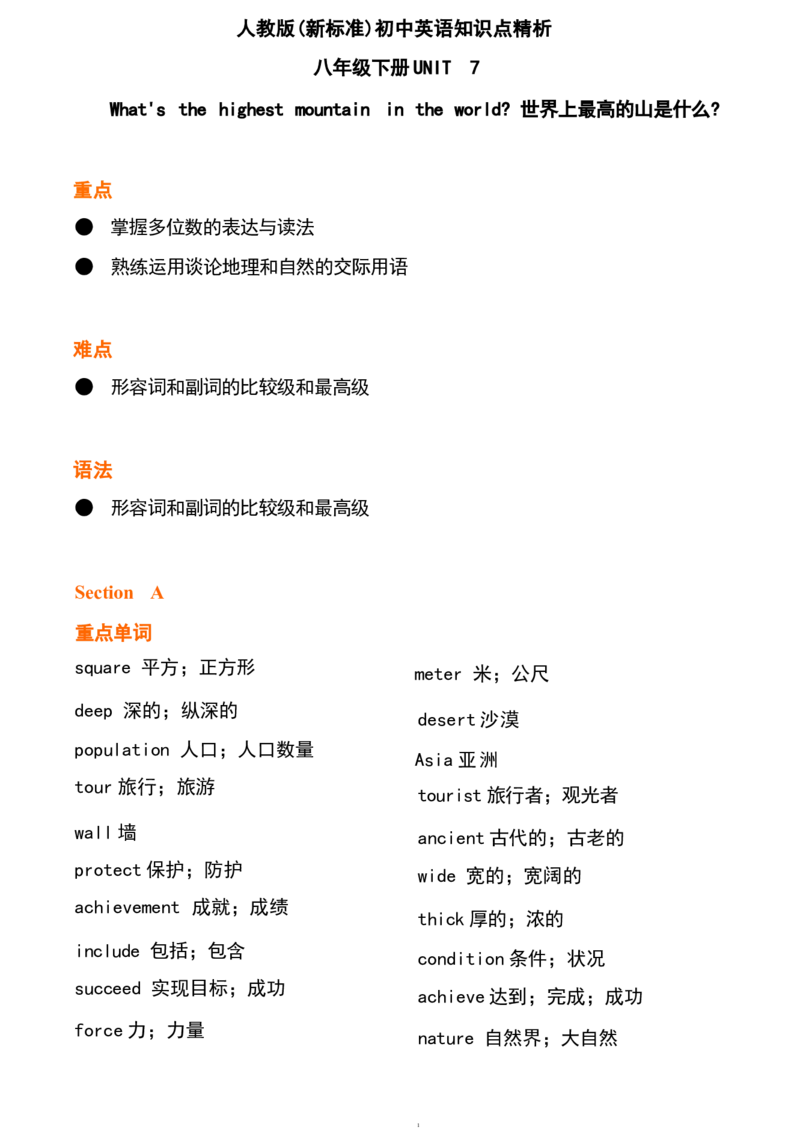
重点
● 掌握多位数的表达与读法
● 熟练运用谈论地理和自然的交际用语
难点
● 形容词和副词的比较级和最高级
语法
● 形容词和副词的比较级和最高级
Section A
重点单词
square 平方;正方形
meter 米;公尺
deep 深的;纵深的
desert 沙漠
population 人口;人口数量
Asia 亚洲
tour 旅行;旅游
tourist 旅行者;观光者
wall 墙
ancient 古代的;古老的
protect 保护;防护
wide 宽的;宽阔的
achievement 成就;成绩
thick 厚的;浓的
include 包括;包含
condition 条件;状况
succeed 实现目标;成功
achieve 达到;完成;成功
force 力;力量
nature 自然界;大自然
1ocean 大海;海洋
重点短语
feel free (可以)随便(做某事)
in the face of 面对(问题、困难等)
as far as know 就我所知
even though(= even if) 即使;虽然
take in 吸入;吞入(体内)
重点句型
1.Qomolangma is higher than any other mountain in the world.
珠穆朗玛峰比世界上其他任何一座山都高。
2. China has the biggest population in the world.
中国是世界上人口最多的国家。
3. The main reason was to protect their part of the country.
主要的原因是保护他们的那部分国土。
4. It is also very hard to take in air as you get near the top.
当你快登顶时,呼吸也是很困难的。
Section B
重点单词
birth 出生;诞生
weigh 重量是…… ;称……的重量
adult 成年的;成人的;成人;成年动物 bamboo 竹子
keeper 饲养员;保管人 awake 醒着
excitement 激动;兴奋 illness 疾病;病
wild 野生的 government 政府;内阁
oil 油;食用油;石油 protection 保护;保卫
huge 巨大的;极多的
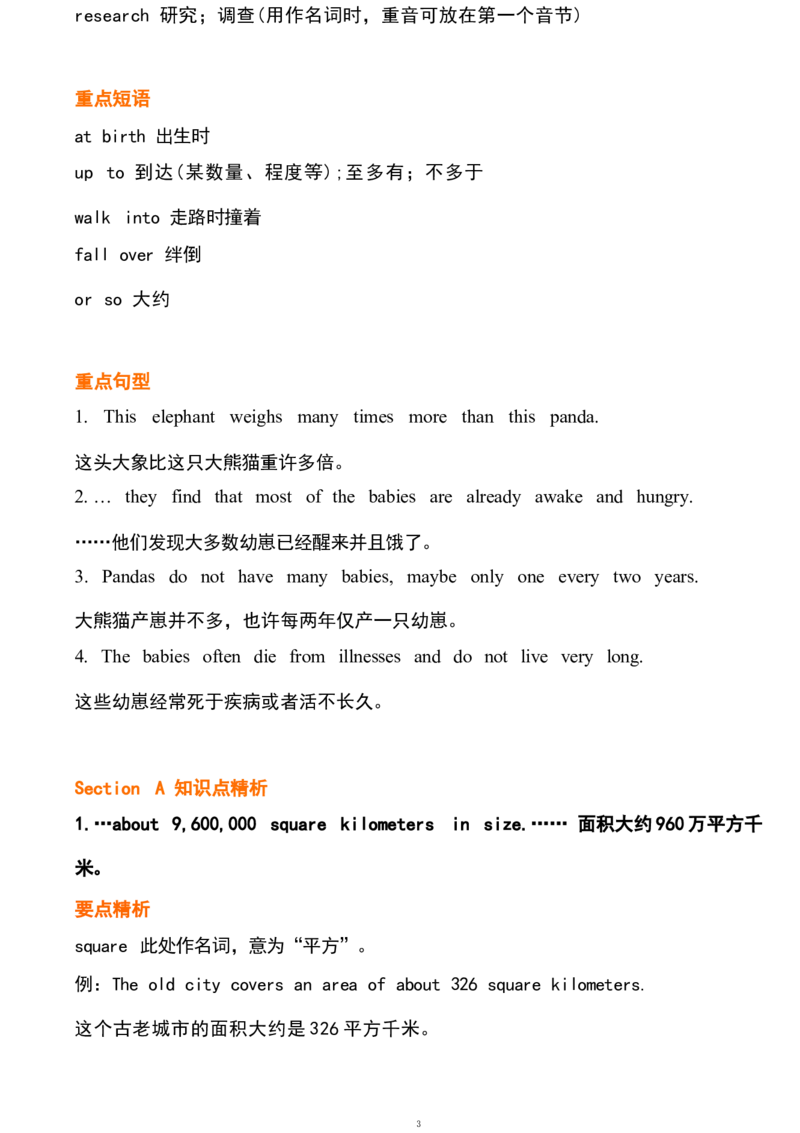
2research 研究;调查(用作名词时,重音可放在第一个音节)
重点短语
at birth 出生时
up to 到达(某数量、程度等);至多有;不多于
walk into 走路时撞着
fall over 绊倒
or so 大约
重点句型
1. This elephant weighs many times more than this panda.
这头大象比这只大熊猫重许多倍。
2. … they find that most of the babies are already awake and hungry.
……他们发现大多数幼崽已经醒来并且饿了。
3. Pandas do not have many babies, maybe only one every two years.
大熊猫产崽并不多,也许每两年仅产一只幼崽。
4. The babies often die from illnesses and do not live very long.
这些幼崽经常死于疾病或者活不长久。
Section A 知识点精析
1.…about 9,600,000 square kilometers in size.…… 面积大约960万平方千
米。
要点精析
square 此处作名词,意为“平方”。
例:The old city covers an area of about 326 square kilometers.
这个古老城市的面积大约是 326 平方千米。
3知识拓展
square 作名词,还可意为“正方形”。
例:First of all, draw a square.首先,画一个正方形。
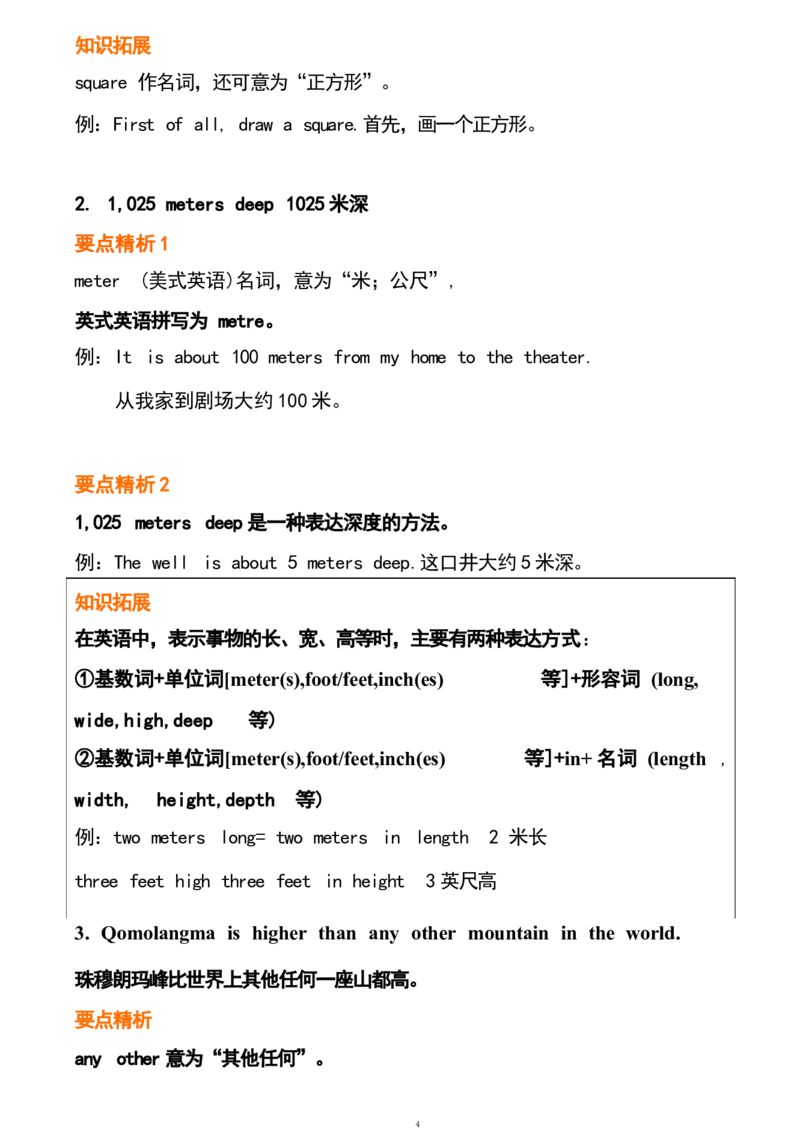
2. 1,025 meters deep 1025 米深
要点精析 1
meter (美式英语)名词,意为“米;公尺”,
英式英语拼写为 metre。
例:It is about 100 meters from my home to the theater.
从我家到剧场大约 100 米。
要点精析 2
1,025 meters deep 是一种表达深度的方法。
例:The well is about 5 meters deep.这口井大约 5 米深。
知识拓展
在英语中,表示事物的长、宽、高等时,主要有两种表达方式:
①基数词+单位词[meter(s),foot/feet,inch(es) 等]+形容词 (long,
wide,high,deep 等)
②基数词+单位词[meter(s),foot/feet,inch(es) 等]+in+ 名词 (length ,
width, height,depth 等)
例:two meters long= two meters in length 2 米长
three feet high three feet in height 3 英尺高
3. Qomolangma is higher than any other mountain in the world.
珠穆朗玛峰比世界上其他任何一座山都高。
要点精析
any other 意为“其他任何”。
4例:Tom runs faster than any other student in his class.
汤姆比他班上的其他任何学生跑得都快。
小贴士
any other 指在同一范围内除了某人或某物以外的其他人或物,其后一般跟可数名
词单数。
4. China has the biggest population in the world.
中国是世界上人口最多的国家。
要点精析
population 是一个集合名词,意为“人口;人口数量”。其常见用法如下:
①population 常与定冠词 the 连用,单独作主语时,谓语动词常用第三人称单数形
式。 例:The world's population is increasing faster and faster.
世界人口增长得越来越快。
②当分数或百分数修饰 population 作主语时,谓语动词常用复数形式。
例:About seventy percent of the population in this country are farmers.
这个国家大约百分之七十的人口是农民。
③表示“某地有多少人口”时用 “have/has a population of+数字”或 “the
population is+数字”。
例:China has a population of about 1.3 billion.=The population of China is
about 1.3 billion.中国大约有 13 亿人口。
④表示人口的“多”或“少”要用 big,large 或 small.
例:India has a large population and Singapore has a small population.
印度人口众多而新加坡人口少。
⑤询问某国、某地有多少人口时,不用 “How much.? 而 用 “What's the
population of … ?”
例:What is the population of the UK? 英国的人口有多少?
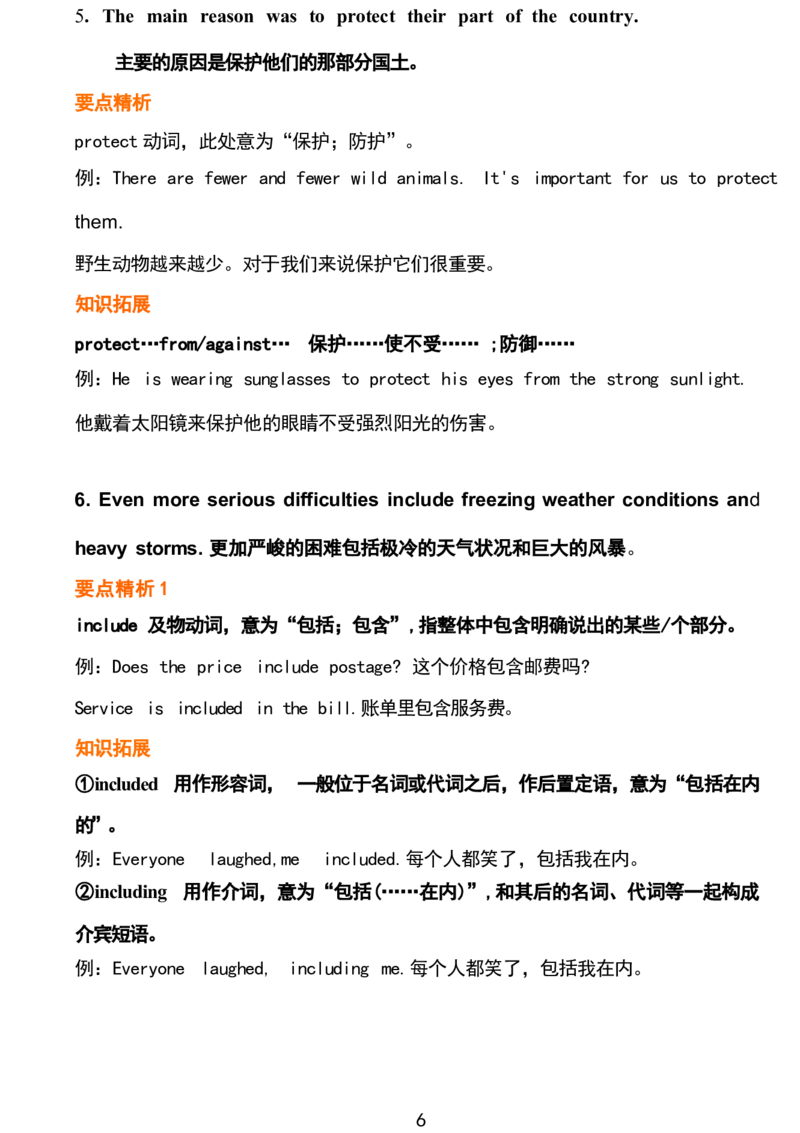
55. The main reason was to protect their part of the country.
主要的原因是保护他们的那部分国土。
要点精析
protect 动词,此处意为“保护;防护”。
例:There are fewer and fewer wild animals. It's important for us to protect
them.
野生动物越来越少。对于我们来说保护它们很重要。
知识拓展
protect…from/against… 保护……使不受…… ;防御……
例:He is wearing sunglasses to protect his eyes from the strong sunlight.
他戴着太阳镜来保护他的眼睛不受强烈阳光的伤害。
6. Even more serious difficulties include freezing weather conditions and
heavy storms. 更加严峻的困难包括极冷的天气状况和巨大的风暴。
要点精析 1
include 及物动词,意为“包括;包含”,指整体中包含明确说出的某些/个部分。
例:Does the price include postage? 这个价格包含邮费吗?
Service is included in the bill.账单里包含服务费。
知识拓展
①included 用作形容词, 一般位于名词或代词之后,作后置定语,意为“包括在内
的”。
例:Everyone laughed,me included.每个人都笑了,包括我在内。
②including 用作介词,意为“包括(……在内)”,和其后的名词、代词等一起构成
介宾短语。
例:Everyone laughed, including me.每个人都笑了,包括我在内。
6要点精析 2
condition 名词,意为“条件;状况”。既可作可数名词,也可作不可数名词。
例:We are interested in the work conditions in Africa.
我们对非洲的工作状况感兴趣。
He is overweight and out of condition.他体重超重并且健康状况不佳。
小贴士
表示“在……情况或环境下”,通常用介词 in 或 under。
知识拓展
“on condition that+从句”表示“如果…… ;在……条件下”。
例:He can use the bicycle on condition that he (should)return it tomorrow.
他可以使用自行车,条件是明天他必须归还。
7. It is also very hard to take in air as you get near the top.
当你快登顶时,呼吸也是很困难的。
要点精析
take in 为固定短语,意为“吸入;吞入(体内)”。
例:Open the window and take in fresh air.打开窗户,吸入新鲜空气。
知识拓展
由 take 组成的常见短语:
take down拆除;记录
take after (外貌或行为)像
take away拿走;拿开
take off脱掉;(飞机)起飞
take up开始做;占据
take out取出
78.. while the first woman to succeed was Junko Tabei from Japan
in 1975.
……而来自日本的田部井淳子在 1975 年成为第一个成功登顶的女登山者。
要点精析
succeed 用作不及物动词,意为“实现目标;成功”。
例:His plan succeeded.他的计划成功了。
知识拓展
succeed in doing sth.成功地做某事
例:The boy succeeded in passing the exam.
这个男孩儿成功地通过了考试。
9. One of the main reasons is that people want to challenge themselves
in the face of difficulties.一个主要的原因是人们想在面对困难时挑战自己。
要点精析 1
challenge 此处用作及物动词,意为“挑战;考验”。
例:He challenged me to play chess.他向我挑战下象棋。
I only like to study something that really challenges me.
我只喜欢研究真正对我有所考验的东西。
要点精析 2
in the face of 为固定短语,意为“面对(问题、困难等)”。
例:He keeps a sense of humor in the face of great difficulties.
面对极大的困难时,他仍保持幽默感。
He showed great bravery in the face of danger.
面对危险他表现得非常勇敢。
810.The spirit of these climbers shows us that we should never give
up trying to achieve our dreams.
这些攀登者的精神向我们表明:我们决不应该放弃,应尽力实现我们的梦想。
要点精析
achieve 用作及物动词,意为“达到;完成;成功”。其宾语可以是“实现”的目标、
目的等,也可以是“取得”的胜利、成功、名誉、地位等。
例:Everybody should be given the chance to achieve his aim.
每个人都应该被给予实现自己目标的机会。
He achieved no success.他没有获得成功。
辨析:achieve 与 come true
achieve 常用作及物动词,主语是人,宾语可以是“实现”的目标、目的,也可以
是“取得”的胜利、成功、地位等
come true 不及物动词短语,主语是希望、梦想等,不能用于被动语态
例:We all hope our dreams will come true though it is not easy to achieve
them. 尽管实现梦想不容易,但我们都希望梦想成真。
Section A 即学即试
根据汉语意思完成下列句子
1.世界上最高的山是什么?
What's mountain in the world?
2.请随便问关于这次旅行的情况。
Please to ask anything on the tour.
3.我们应该保护环境,防止环境污染。
We should the environment from being polluted.
4.登山者成功地到达了山顶。
9The mountain climbers to the top.
5. 只要你们努力,就能实现你们的梦想。
As long as you work hard, you can your .
Section B 知识点精析
1.weighs 5,000 kilos重 5000 干克
要点精析
weigh 动词,意为“重量是 …… ;称 …… 的重量”。
①表示“重量是 ……”时,是连系动词。
例 :How much does it weigh? 它的重量是多少?
②表示“称 …… 的重量”时,是及物动词。
例:He weighed the sheep.他称了这只羊。
知识拓展
weight 用作不可数名词,意为“重量;分量”。
例:What's the weight of the elephant? 这头大象的重量是多少?
2. This elephant weighs many times more than this panda.
这头大象比这只大熊猫重许多倍。
要点精析
many times more than意为“比……多许多倍”。常见的倍数表达法:
① “A+ 谓语动词+倍数+形容词或副词的比较级+than+B”, 表 示 “A 比 B... 多 少
倍”。 例:The car runs twice faster than that truck.
这辆小汽车的速度比那辆卡车的速度快一倍(是那辆卡车的速度的两倍)。
“A+ A B
② 谓语动词+倍数+as+ 形容词或副词的原级+as+B”, 表示 ” 是 的多少倍”。
例:This big stone is three times as heavy as that one.
这块大石头的重量是那块的三倍。
10③ “ …times +more+ (可数或不可数)名词+than+ 被比较对象”。
例:There are five times more books in our library than in yours.
我们图书馆里的书比你们图书馆的书多四倍。
3. At birth, a baby panda is about 0.1 to 0.2 kilos.
出生时, 一只大熊猫幼崽大约 0.1 到 0.2 千克重。
要点精析
at birth 意为“出生时”,在句中通常作时间状语。
例:The baby weighed three kilos at birth.那个婴儿出生时重量是 3 千克。
知识拓展
give birth(tosb./sth.) 生孩子;产崽
例:Mary gave birth to a healthy girl.玛丽生了一个健康的女孩儿。
4.A panda can live up to 20 to 30 years.大熊猫能活到 20 至 30 岁。
要点精析
up to 意为“到达(某数量、程度等);至多有;不多于”。
例:I can take up to four people in my car.我的小汽车最多能载四个人。
知识拓展
up to 的其他含义:
①直到;不多于;不迟于
例:Up to now he has been very quiet.到目前为止,他一直很安静。
②胜任
例:She's not up to the job.她胜任不了这项工作。
5. … they find that most of the babies are already awake and hungry.
……他们发现大多数幼崽已经醒来并且饿了。
11要点精析
awake 用作形容词,意为“醒着”,在句中常用作表语,不能用在名词前作定
语,也不能用very 修饰。 awake 的反义词为 asleep, 意为“睡着”。
例:It's eleven at night, and he is still awake.夜里十一点了,他还没有睡。
辨析:awake 与 wake
aw ake 形容词,意为“醒着”,常作表语
wake动词,意为“醒;叫醒”,常与副词 up 连用
例:The noise was keeping everyone awake.喧闹声吵得大家都睡不着。
I usually wake up at six every morning.我通常每天早上6点钟醒来。
6.Pandas do not have many babies, maybe only one every two years.
大熊猫产崽并不多,也许每两年仅产一只幼崽。
要点精析
every two years为固定短语,意为“每两年”。 every 与数词或few,other 等连
用,表示时间或空间的间隔, 其形式有:
① “every+ 基数词+名词复数”,意为“每……”。
例:I go there every three days.我每三天到那儿去一趟。
② “every+ other+可数名词单数”,意为“每隔……”。
例:She goes shopping every other day.她每隔一天去购物一次。
③ “every+few+ 名词复数”,意为“每隔几……”
例:He stopped and turned around every few meters.
他每走几米就停下来向四周看一看。
7.The babies often die from illnesses and do not live very long.
这些幼惠经常死于疾病或者活不长久。
要点精析 1
12die from 意为“死于”。
例:Those wild animals died from lack of food.那些野生动物死于食物缺
乏。
辨析:die from 与 die of
两者都表示“因……而死,死于……”,宾语都是表示死亡的原因。当表示因病而死
亡时,二者可通用
die from 常用于指由于外部原因造成的死亡,如缺乏食物、饮酒过度、事故等
die o f 一般用于指由于人体自身原因(年老、忧伤等)原因造成的死亡
例:His uncle died from an accident.他的叔叔死于一起事故。
She died of sorrow.她死于忧伤。
要点精析 2
illness名词,意为“疾病,病”,通常指因病而导致的不健康的状态。
例:She can't come because of illness.她因病不能来。
知识拓展
英语中有些形容词加后缓-ness 可构成名词。如:
kind—kindness (善良)
sad—sadness (悲伤)
happy—happiness (高兴)
8.risk 冒险
要点精析
risk 动词,意为“冒险”,常用短语 risk one's life,意为“冒着某人的生命危险”。
例:He would risk his life for his friend.他愿为朋友出生入死。
He prepared to risk everything to avoid the war.他准备不惜一切来避免这场战
争。
13知识拓展
risk doing sth.冒险做某事
例:They may even risk losing their houses.他们甚至有可能失去他们的房子。
Section B 即学即试
根据汉语意思完成下列句子
1. 她出生时是个非常健康的宝宝。
She was a very healthy baby .
2.玛丽是醒着还是睡着了?
Is Mary or asleep?
3.—匹马比一只猴子重好多倍。
A horse more than a monkey.
4.你想为聚会准备什么?
What would you like to the party?
5.她的叔叔死于 10 年前的一场车祸。
Her uncle a car accident ten years ago.即学即试参考答案与解析
Section A 即学即试
1.the highest 2. feel free 3. protect
4. succeeded in getting 5. achieve; dreams
Section B 即学即试
1.at birth 2.awake 3.weighs many times 4. prepare for 5. died from