文档文本内容
19·高二腾飞
期中复习
By ______
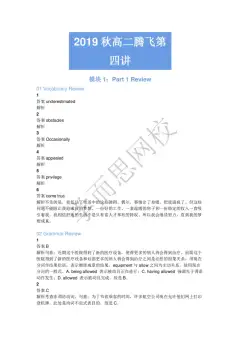
1. Vocabulary
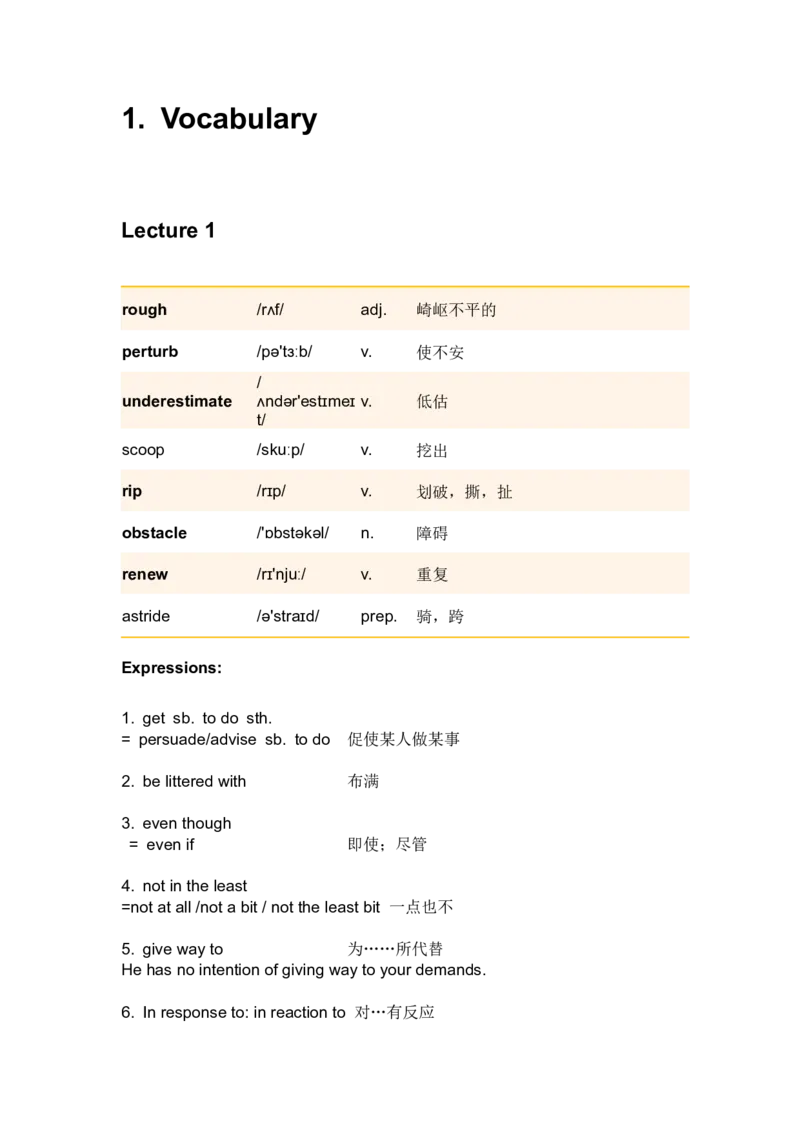
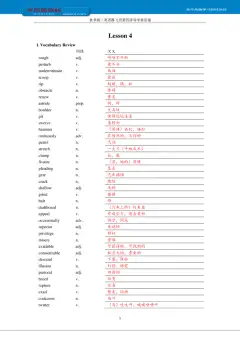
Lecture 1
rough
/rʌf/
adj.
崎岖不平的
perturb
/pə'tɜːb/
v.
使不安
underestimate
/
ʌndər'estɪmeɪ
t/
v.
低估
scoop
/skuːp/
v.
挖出
rip
/rɪp/
v.
划破,撕,扯
obstacle
/'ɒbstəkəl/
n.
障碍
renew
/rɪ'njuː/
v.
重复
astride
/ə'straɪd/
prep.
骑,跨
Expressions:
1. get sb. to do sth.
= persuade/advise sb. to do  促使某人做某事
2. be littered with
布满
3. even though
 = even if
即使;尽管
4. not in the least
=not at all /not a bit / not the least bit 一点也不
5. give way to
为……所代替
He has no intention of giving way to your demands.
6. In response to: in reaction to 对…有反应
7. hardly…..when…..
一……就
He had hardly had time to settle down when he sold the house.
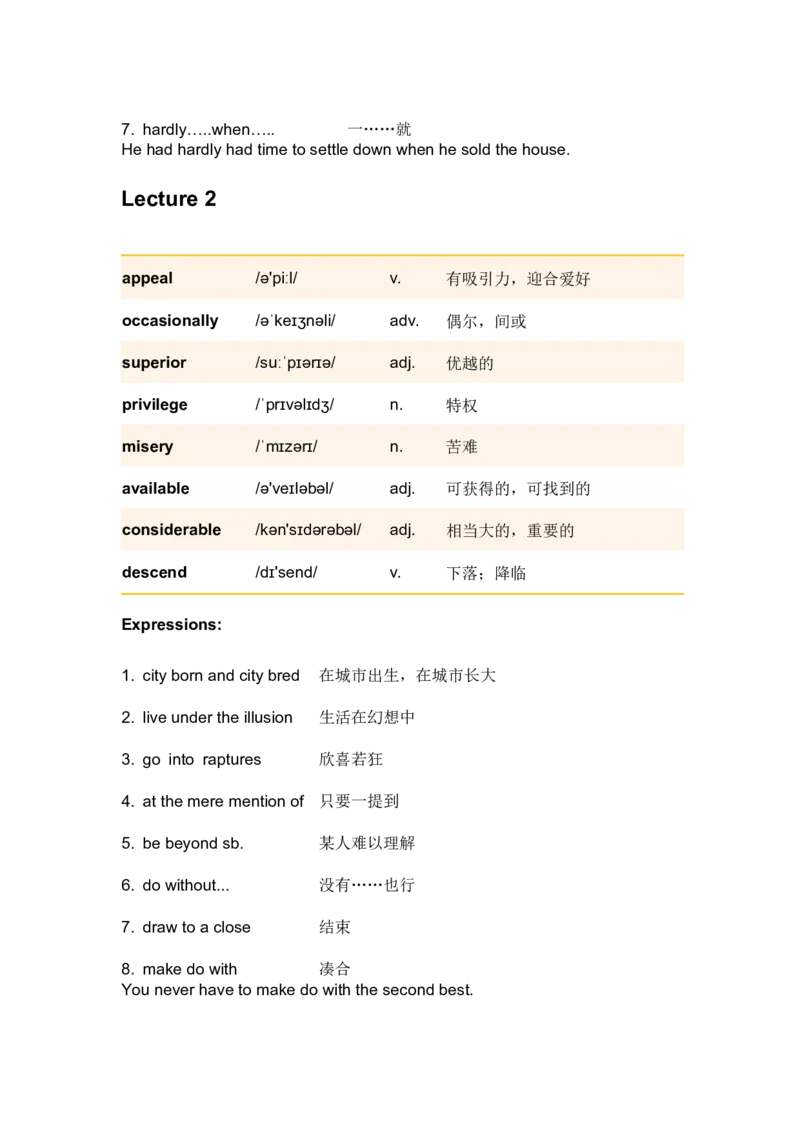
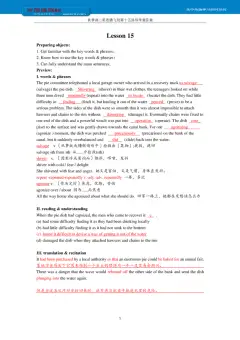
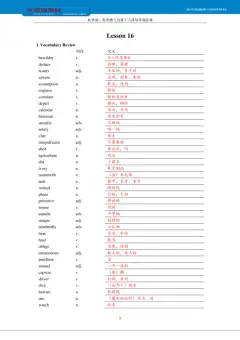
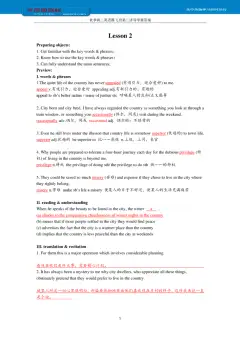
Lecture 2
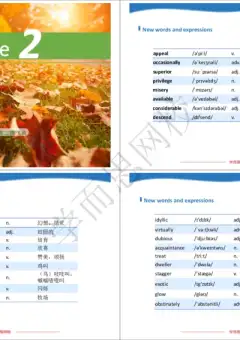
appeal
/ə'piːl/
v.
有吸引力,迎合爱好
occasionally
/əˈkeɪʒnəli/
adv.
偶尔,间或
superior
/suːˈpɪərɪə/
adj.
优越的
privilege
/ˈprɪvəlɪdʒ/
n.
特权
misery
/ˈmɪzərɪ/
n.
苦难
available
/ə'veɪləbəl/
adj.
可获得的,可找到的
considerable
/kən'sɪdərəbəl/
adj.
相当大的,重要的
descend
/dɪ'send/
v.
下落;降临
Expressions:
1. city born and city bred
在城市出生,在城市长大
2. live under the illusion
生活在幻想中
3. go into raptures
欣喜若狂
4. at the mere mention of 只要一提到
5. be beyond sb.
某人难以理解
6. do without...
没有……也行
7. draw to a close
结束
8. make do with
凑合
You never have to make do with the second best.
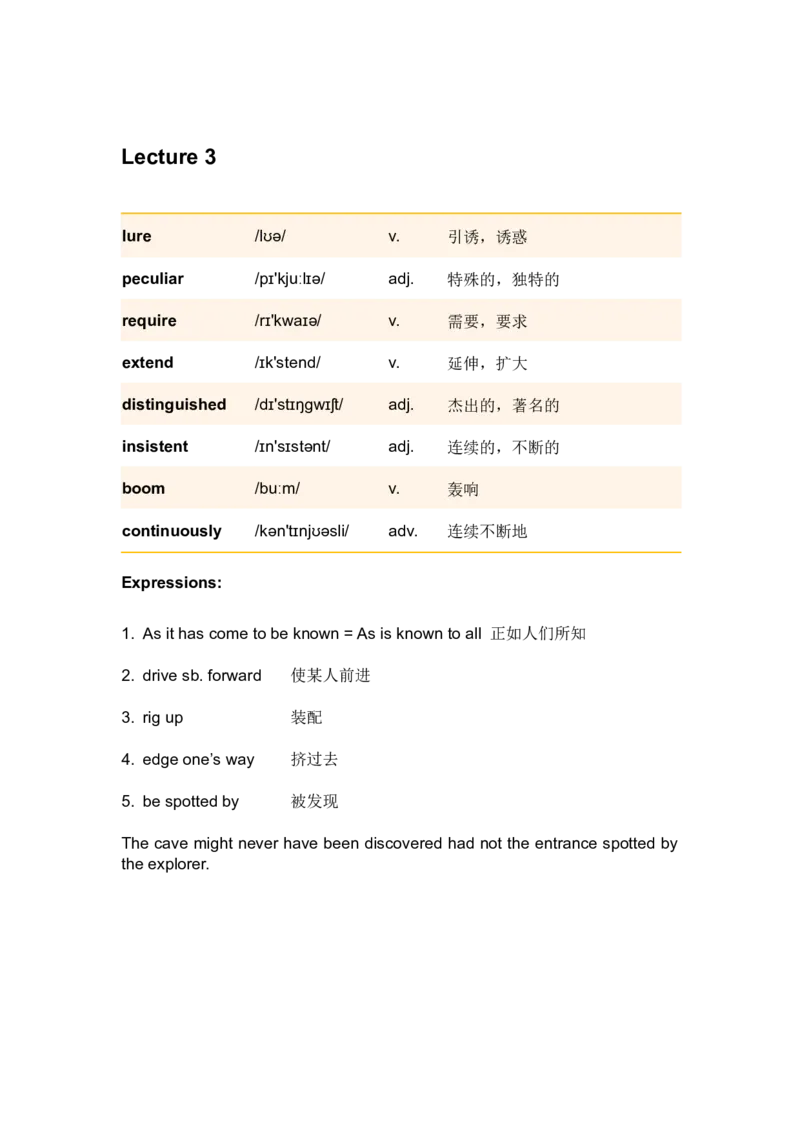
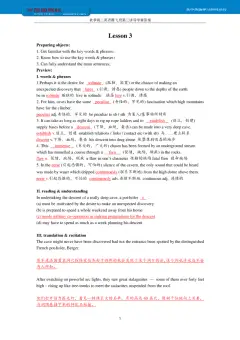
Lecture 3
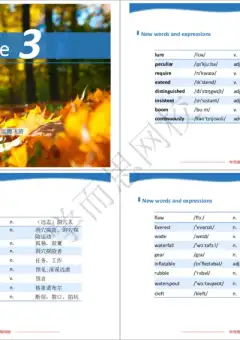
lure
/lʊə/
v.
引诱,诱惑
peculiar
/pɪ'kjuːlɪə/
adj.
特殊的,独特的
require
/rɪ'kwaɪə/
v.
需要,要求
extend
/ɪk'stend/
v.
延伸,扩大
distinguished
/dɪ'stɪŋgwɪʃt/
adj.
杰出的,著名的
insistent
/ɪn'sɪstənt/
adj.
连续的,不断的
boom
/buːm/
v.
轰响
continuously
/kən'tɪnjʊəsli/
adv.
连续不断地
Expressions:
1. As it has come to be known = As is known to all 正如人们所知
2. drive sb. forward
使某人前进
3. rig up
装配
4. edge one’s way
挤过去
5. be spotted by
被发现
The cave might never have been discovered had not the entrance spotted by
the explorer.
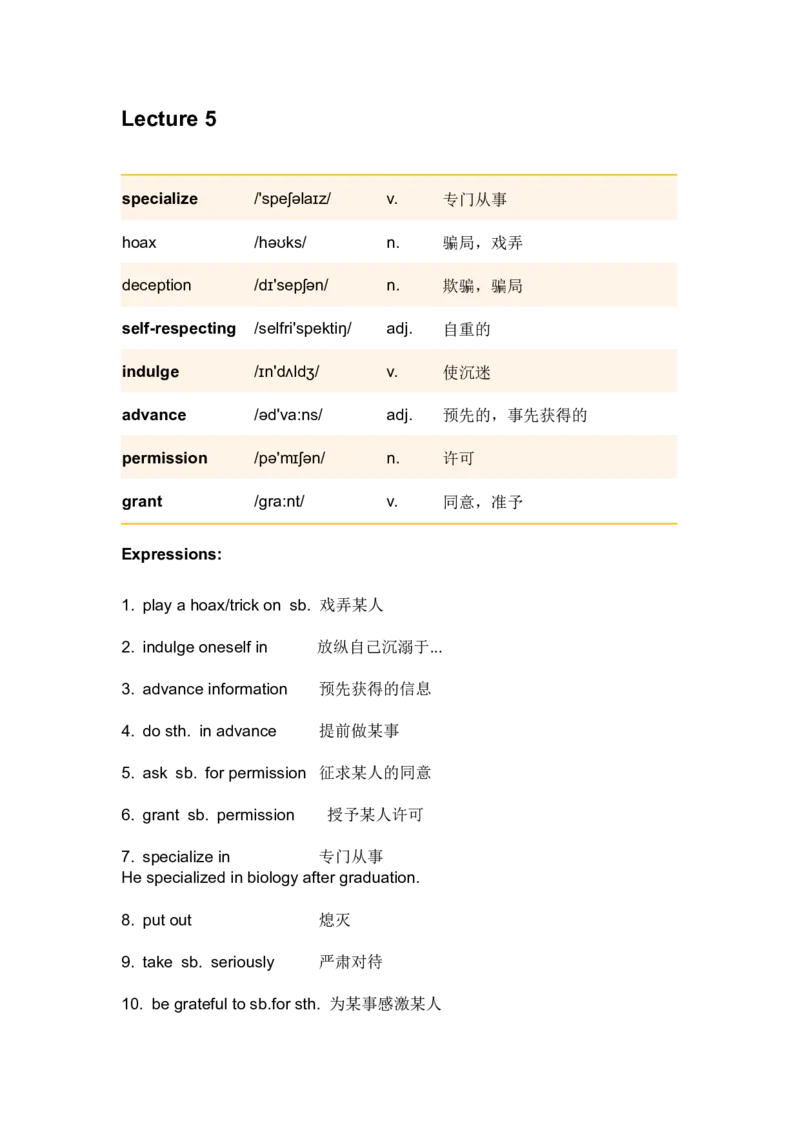
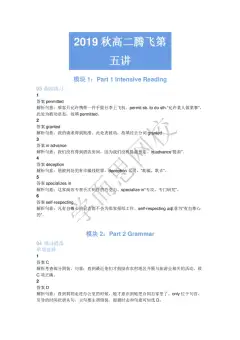
Lecture 5
specialize
/'speʃəlaɪz/
v.
专门从事
hoax
/həʊks/
n.
骗局,戏弄
deception
/dɪ'sepʃən/
n.
欺骗,骗局
self-respecting
/selfri'spektiŋ/
adj.
自重的
indulge
/ɪn'dʌldʒ/
v.
使沉迷
advance
/əd'va:ns/
adj.
预先的,事先获得的
permission
/pə'mɪʃən/
n.
许可
grant
/gra:nt/
v.
同意,准予
Expressions:
1. play a hoax/trick on sb. 戏弄某人
2. indulge oneself in      放纵自己沉溺于...
3. advance information
预先获得的信息
4. do sth. in advance
提前做某事
5. ask sb. for permission 征求某人的同意
6. grant sb. permission    授予某人许可
7. specialize in
专门从事
He specialized in biology after graduation.
8. put out
熄灭
9. take sb. seriously
严肃对待
10. be grateful to sb.for sth. 为某事感激某人
11. be under arrest
被逮捕
12. pointed out ironically
讥讽地指出
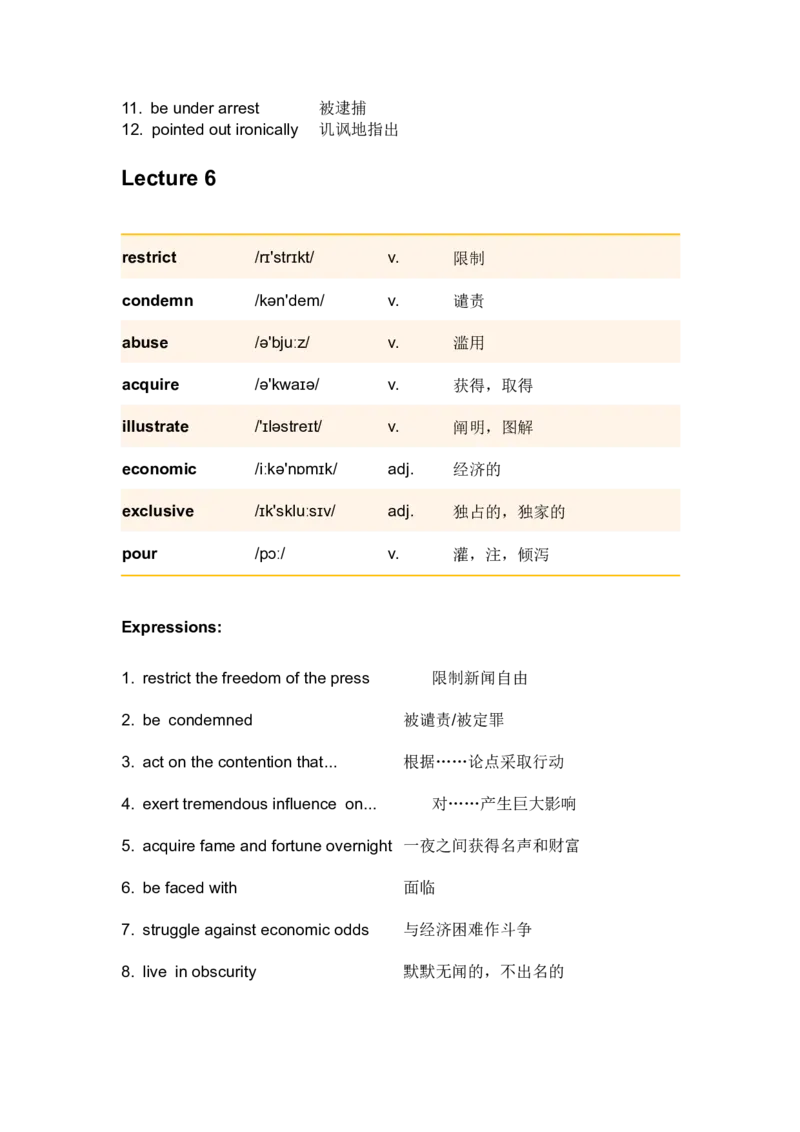
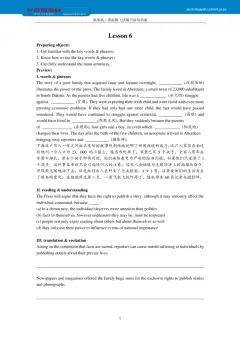
Lecture 6
restrict
/rɪ'strɪkt/
v.
限制
condemn
/kən'dem/
v.
谴责
abuse
/ə'bjuːz/
v.
滥用
acquire
/ə'kwaɪə/
v.
获得,取得
illustrate
/'ɪləstreɪt/
v.
阐明,图解
economic
/iːkə'nɒmɪk/
adj.
经济的
exclusive
/ɪk'skluːsɪv/
adj.
独占的,独家的
pour
/pɔː/
v.
灌,注,倾泻
Expressions:
1. restrict the freedom of the press
限制新闻自由
2. be condemned
被谴责/被定罪
3. act on the contention that...
根据……论点采取行动
4. exert tremendous influence on...
对……产生巨大影响
5. acquire fame and fortune overnight 一夜之间获得名声和财富
6. be faced with
面临
7. struggle against economic odds
与经济困难作斗争
8. live in obscurity
默默无闻的,不出名的
2. Grammar
非谓语动词
非谓语动词三大基本形式
动词不定式:to do(表示目的,将来)
动名词/动词现在分词:doing(表示主动,进行)
动词过去分词:done(表示被动,完成)
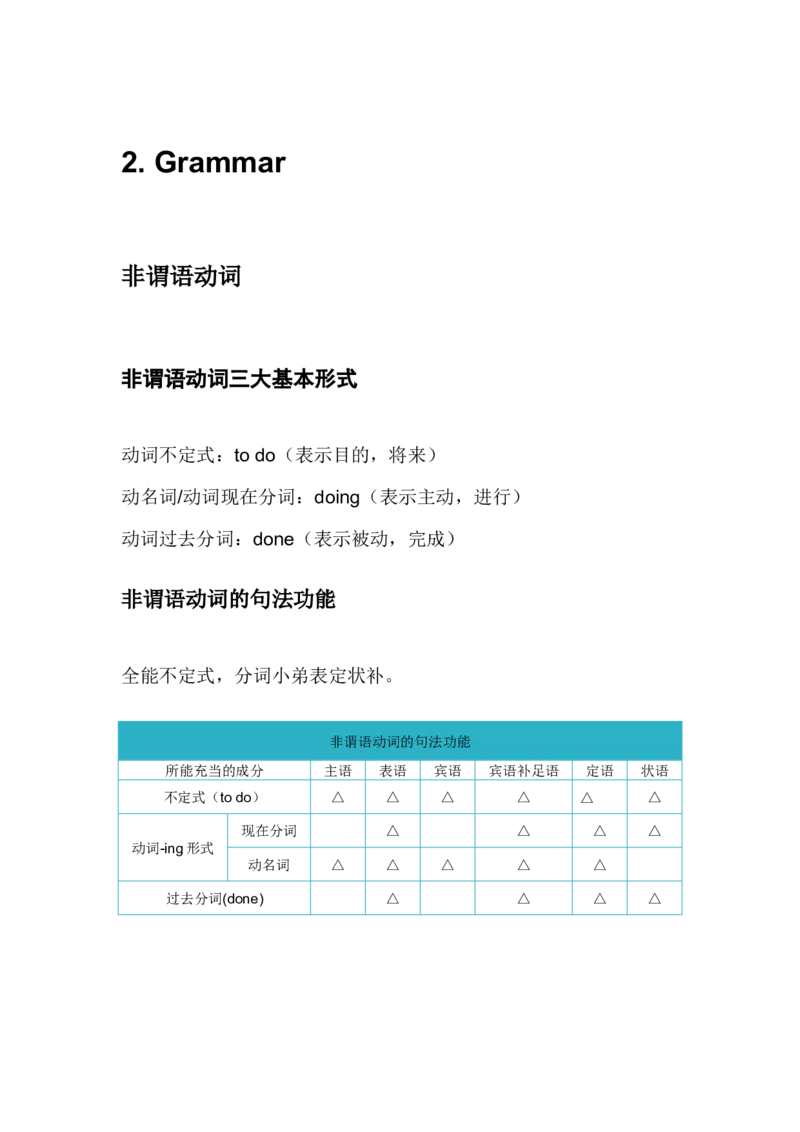
非谓语动词的句法功能
全能不定式,分词小弟表定状补。
非谓语动词的句法功能
所能充当的成分
主语
表语
宾语
宾语补足语
定语
状语
不定式(to do)
△
△
△
△
△
△
动词-ing 形式
现在分词
△
△
△
△
动名词
△
△
△
△
△
过去分词(done)
△
△
△
△
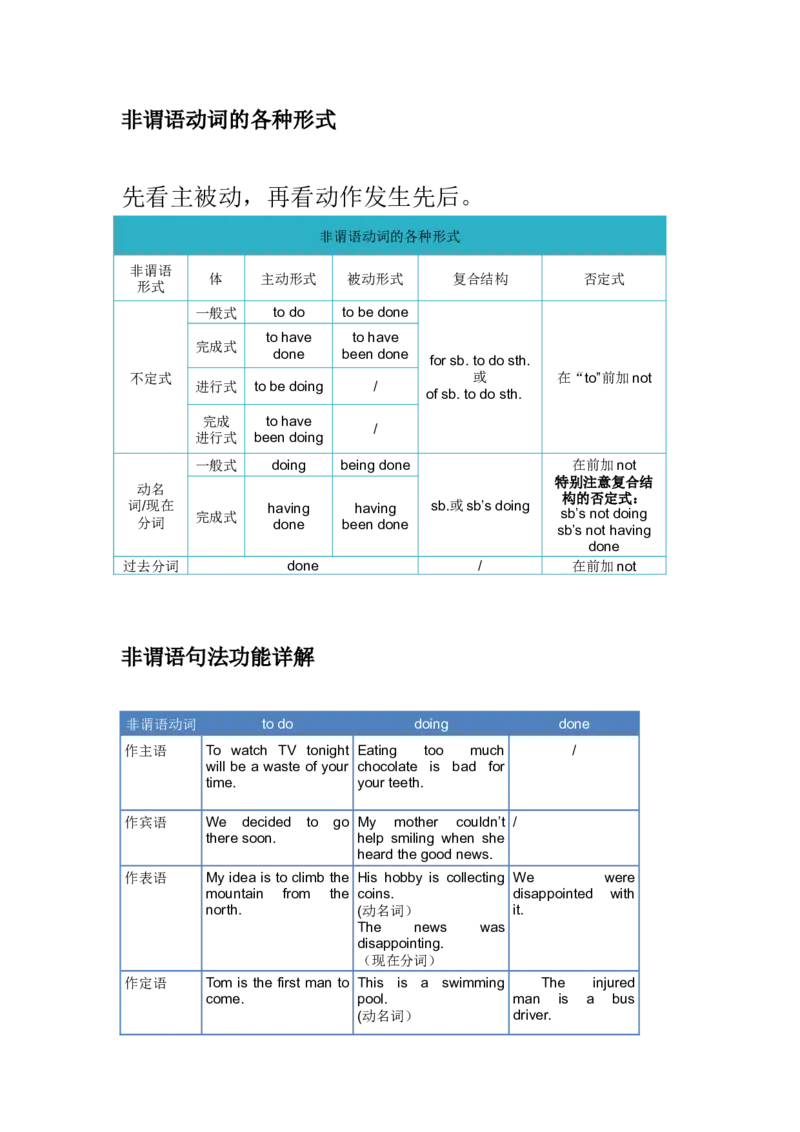
非谓语动词的各种形式
先看主被动,再看动作发生先后。
非谓语动词的各种形式
非谓语
形式
体
主动形式
被动形式
复合结构
否定式
不定式
一般式
to do
to be done
for sb. to do sth.
或
of sb. to do sth.
在“to”前加not
完成式
to have
done
to have
been done
进行式
to be doing
/
完成
进行式
to have
been doing
/
动名
词/现在
分词
一般式
doing
being done
sb.或sb’s doing
在前加not
特别注意复合结
构的否定式:
sb’s not doing
sb’s not having
done
完成式
having
done
having
been done
过去分词
done
/
在前加not
非谓语句法功能详解
非谓语动词
to do
doing
done
作主语
To watch TV tonight
will be a waste of your
time.
Eating

too

much
chocolate is bad for
your teeth.
/
作宾语
We decided to go
there soon.
My mother couldn’t
help smiling when she
heard the good news.
/
作表语
My idea is to climb the
mountain from the
north.
His hobby is collecting
coins.
(动名词)
The

news

was
disappointing.
(现在分词)
We

were
disappointed with
it.
作定语
Tom is the first man to
come.
This is a swimming
pool.
(动名词)
The

injured
man is a bus
driver.
Harry Potter is an
interesting book.
(现在分词)
作状语
To be a winner, you
need to give all you
have and try your
best.
He came back, only to
find his bag had been
stolen.
Seeing from the top of
the hill, we find the
park

even

more
beautiful.
(现在分词)
Seen from the
top

of

the
mountain, the city
is very beautiful.
作补语
The police warned us
not to go out at night.
We call the activity
swimming.
(动名词)
When I came in, I saw
her dancing happily.
(现在分词)
We heard the song
sung by her next
door.
独立主格中
的用法
Nobody to come
tomorrow, we will have
to put off the meeting.
With

so

much
homework to do, Bob
feels stressed out.
We shall play the
match
tomorrow,weather
permitting.
With so many people
looking at him, he felt
very nervous.
The job finished,
we went home.
She had to walk
home with her bike
stolen.
特殊句式
倒装句
NAOSHIB 原则
Never have I seen such a beautiful sunset.
Child as he is,he knows a lot.
Only then did he realize the truth.
So beautiful was she that I couldn’t help but gaze at her.
Here comes the bus.
Were I you, I wouldn’t go there.
Gone were the days when everything went so slow.
省略句
例句
做题口诀
1. 不定式的省略
省略to:
I could do nothing but wait.
I cannot but admire his courage.
省略do:
They may go if they wish to
(go).
可省略to do:
I consider him (to be) lazy.
① 两听三使五个看,知觉帮助和
发现,后跟省略to 的不定式,变
成被动还原to。
② 有do 无to,无do 带to 原则;
can’t help but do
 “ mcftf”
③
后直接加sb./sth. + adj.
2. 简单句的省略
(Is there) Anything else to say?
She is eight (years old).
能省则省。
3. 并列句的省略
John is playing football and Mary
(is) doing her homework.
能省则省。
4. 复合句的省略
It's important that we (should)
speak to the old politely.
The way (that) you answered the
questions was admirable.
Were I you (=If I were you), I
wouldn't believe him.
注意:
与非谓语动词的结合考察;
尤其if 所引导的状语从句的省略
强调句
It is +被强调的部分+that/who(强调人还可以用who) + 其他
解题技巧:去掉It is 和that/who,剩下的是完整的句子。
It is by working hard that he realized his dream.
1. Reading
考题方式
答题技巧
主旨大意类
1. What’s the topic of
the article?
2. The text (passage) is
mainly

about
______________.
3. What is the best title
for the passage?
4. The passage is meant
to _____
1. 找到主题句。
2. 注意文中高频
词,尤其是主题词。
观点态度类
1. What is the author’s
attitude towards XX?
2. What does the writer
think of XX?
1. 抓住关键词;
2. 理清上下文;
3. 重视逻辑线索。
表示态度的词语
支持肯定类: agree with; be with; favorable;
positive; approving; optimistic
反对否定类: disagree; be against; object to;
negative; disapproving; pessimistic
怀疑类:skeptical; doubtful
中立类:neutral; indifferent
4. Writing
介绍信
在高考中,介绍信主要用来介绍具体事物,属于应用文体之一。尤其在介绍文化习俗、历
史人物和地方特色事物的写作中经常用到。
求助信
求助信是写信人向收信人寻求帮助或建议的信件,
求助信常包括开头、主体、结尾三部分。
5. Rational Cloze 语法填空
有提示词:主要考查动词的时态、语态、非谓语动词、词类、词义转换等,解
题时只需要根据情况变化词形。
无提示词:主要考查考生对语篇和逻辑关系的把握情况,考查的主要是冠词﹑
介词﹑代词、连词等功能性词。
6. 短文改错
动词形,名词数,
还要注意形和副;
非谓语,细辨别,
代词用法前后顾;
介词短语需关注,
冠词连词常光顾。