专题 02 阅读理解 B 篇(记叙文)
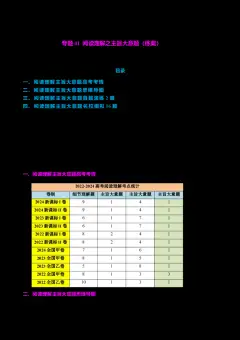
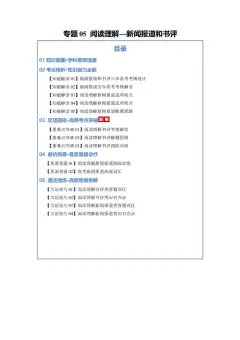
考情概览:解读近年命题思路和内容要求,统计真题考查情况。
2024年真题研析:分析命题特点,探寻常考要点,真题分类精讲。
近年真题精选:分类精选近年真题,把握命题趋势。
必备知识速记:归纳串联解题必备知识,总结易错易混点。
名校模拟探源:精选适量名校模拟题,发掘高考命题之源。
【考查要点】
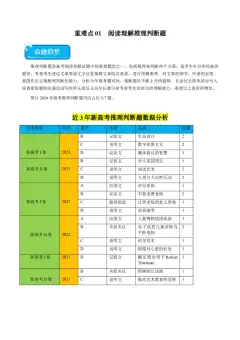
2024年新课标卷I卷阅读B篇为夹叙夹议文,II卷B篇为新闻报道,均主要考查学生定位信息能力、
细节理解能力和推理判断能力。2024年新课标I卷阅读B篇讲述了威廉·法伯博士在兽医界使用针灸和其
他非传统治疗方法治疗动物的经历。细节理解题2小题,推理判断题1小题,主旨大意题1小题。2024年
新课标II卷阅读B篇讲述旧金山湾区快速交通(BART)在午站内设置了短故事自助机,这举措不仪满足了乘
客的阅读需求,改善了他们的乘车体验,而且还有望旧金山湾区快速交通(BART)在午站内设置了短故事自
助机,这举措不仪满足了乘客的阅读需求,改善了他们的乘车体验,而且还有望增加公共交通乘客数量。
细节理解题32小题,推理判断题1小题。
2023年新课标I卷阅读B篇讲述一种新的科技发明,主要考查学生定位信息能力、细节理解能力和推
理判断能力;细节理解题2小题,推理判断题2小题。2023年新课标II卷阅读B篇,主要讲述了学校园艺
项目Urban Sprouts的发起目的以及对学生产生的积极影响。主要考查学生细节理解能力和推理判断能力、
把握主旨大意能力。细节理解题1道小题,推理判断题2道,主旨大意题1道。
【课标链接】
依据新课程标准阅读理解部分试题考查的就是对语篇重要细节信息和关键信息的理解和推断能力。深入考
查基础语言知识旨在引导中学教学依据课程标准,帮助学生掌握语音、词汇、语法、语篇和语用等基础语
言知识,了解基础文化知识;引导学生深入学习和理解语篇所表达的主题意义,养成一定的语言意识和英
语语感。
命题分析试卷所选阅读语篇围绕人与自我、人与社会、人与自然三大主题语境,进一步强调情境化设计,紧密联系
学生日常生活实际,扩展素材选取范围,在现实的问题情境中考查学生核心素养的发展水平,推动关键能
力和核心素养在教学和考试中的落实。不仅注重知识及能力的考查,而且考查学生的文化意识及思维品质。
试题精讲(2024·新高考卷I阅读理解B篇)
“I am not crazy,” says Dr. William Farber, shortly after performing acupuncture (针灸) on a rabbit. “I am
ahead of my time.” If he seems a little defensive, it might be because even some of his coworkers occasionally
laugh at his unusual methods. But Farber is certain he’ll have the last laugh. He’s one of a small but growing
number of American veterinarians (兽医) now practicing “holistic” medicine-combining traditional Western
treatments with acupuncture, chiropractic (按摩疗法) and herbal medicine.
Farber, a graduate of Colorado State University, started out as a more conventional veterinarian. He became
interested in alternative treatments 20 years ago when he suffered from terrible back pain. He tried muscle-relaxing
drugs but found little relief. Then he tried acupuncture, an ancient Chinese practice, and was amazed that he
improved after two or three treatments. What worked on a veterinarian seemed likely to work on his patients. So,
after studying the techniques for a couple of years, he began offering them to pets.
Leigh Tindale’s dog Charlie had a serious heart condition. After Charlie had a heart attack, Tindale says, she
was prepared to put him to sleep, but Farber’s treatments eased her dog’s suffering so much that she was able to
keep him alive for an additional five months. And Priscilla Dewing reports that her horse, Nappy, “moves more
easily and rides more comfortably” after a chiropractic adjustment.
Farber is certain that the holistic approach will grow more popular with time, and if the past is any indication,
he may be right: Since 1982, membership in the American Holistic Veterinary Medical Association has grown from
30 to over 700. “Sometimes it surprises me that it works so well,” he says. “I will do anything to help an animal.
That’s my job.”
24. What do some of Farber’s coworkers think of him?
A. He’s odd. B. He’s strict. C. He’s brave. D. He’s rude.
25. Why did Farber decide to try acupuncture on pets?
A. He was trained in it at university. B. He was inspired by another veterinarian.
C. He benefited from it as a patient. D. He wanted to save money for pet owners.
26. What does paragraph 3 mainly talk about?
A. Steps of a chiropractic treatment. B. The complexity of veterinarians’ work.
C. Examples of rare animal diseases. D. The effectiveness of holistic medicine.
27. Why does the author mention the American Holistic Veterinary Medical Association?
A. To prove Farber’s point. B. To emphasize its importance.
C. To praise veterinarians. D. To advocate animal protection.
语篇解读
主旨概要 本文是一篇记叙文,讲述了威廉·法伯博士在兽医界使用针灸和其他非传统治疗方法
治疗动物的经历。文章通过他的个人经历、对针灸的看法以及治疗效果的实例,展示了整体医学(holistic medicine)在兽医领域的潜力和应用。
原文出处 本 文 节 选 自 美 国 兽 医 院 VCA West Los Angeles Animal
Hospital 的网站
https://vcahospitals.com/west-los-angeles/primary/team/william-farber
语言知识
重难单词 defensive adj 存有戒心的;occasionally adv 偶尔,有时;
practice v 实行, 奉行/ n 惯常做法;holistic adj [医学术语] 功能整体性的(holistic
medicine 整体医学);graduate n (大学)毕业生;conventional adj 传统的;
relief n (痛苦等的 )减轻;condition n 疾病;ease v(使)减轻;suffering n 疼痛
;
approach n 方法;indication n 迹象;membership n 会员数;advocate v 提倡
重难词块 ahead of one’s time( 观念 ) 超前;have the last laugh 笑到最后, 取得最后胜
利;herbal medicine 草药疗法;start out as 起初是( 某身份);an alternative
treatment 替代疗法;a heart condition 心脏病;put ... to sleep给(患病动物)实施安
乐死
(2024·新高考卷II阅读理解B篇)
Do you ever get to the train station and realize you forgot to bring something to read? Yes, we all have our
phones, but many of us still like to go old school and read something printed.
Well, there’s a kiosk (小亭) for that. In the San Francisco Bay Area, at least.
“You enter the fare gates (检票口) and you’ll see a kiosk that is lit up and it tells you can get a one-minute, a
three-minute, or a five-minute story,” says Alicia Trost, the chief communications officer for the San Francisco Bay
Area Rapid Transit — known as BART. “You choose which length you want and it gives you a receipt-like short
story.”
It’s that simple. Riders have printed nearly 20,000 short stories and poems since the program was launched last
March. Some are classic short stories, and some are new original works.
Trost also wants to introduce local writers to local riders. “We wanted to do something where we do a call to
artists in the Bay Area to submit stories for a contest,” Trost says. “And as of right now, we’ve received about 120
submissions. The winning stories would go into our kiosk and then you would be a published artist.”
Ridership on transit (交通) systems across the country has been down the past half century, so could short
stories save transit?
Trost thinks so.
“At the end of the day all transit agencies right now are doing everything they can to improve the rider
experience. So I absolutely think we will get more riders just because of short stories,” she says.
And you’ll never be without something to read.
4. Why did BART start the kiosk program?
A. To promote the local culture. B. To discourage phone use.C. To meet passengers’ needs. D. To reduce its running costs.
5. How are the stories categorized in the kiosk?
A. By popularity. B. By length.
C. By theme. D. By language.
6. What has Trost been doing recently?
A. Organizing a story contest. B. Doing a survey of customers.
C. Choosing a print publisher. D. Conducting interviews with artists.
7. What is Trost’s opinion about BART’s future?
A. It will close down. B. Its profits will decline.
C. It will expand nationwide. D. Its ridership will increase.
语篇解读
主旨概要 本文是一篇新闻报道,主要讲述了旧金山湾区BART交通系统在火车站设置自动售
货机,提供一到五分钟短篇故事打印服务,以提升乘客体验。
原文出处 选自( 全国公共广播电台(NPR )2022 年 年 6 月 月 9 日名为 San Francisco’s
transit system is dispensing short stories to commuters 的文章
语言知识
重难单词 old school adj 传统的;chief adj [ 熟词生义] 首席的;length n 长度;launch v 发
起;classic adj 经典的;original adj [ 熟词生义] 原创的;call n [ 熟词生义] 请求,
呼吁;submit v 提交 ;submission n 提交 (物); ridership n 量 客流量(rider +
-ship);
agency n 机构;局; absolutely adv 完全地;discourage v 阻止(dis- + courage);
running costs n 运营成本; categorize v 将 …… 分类(category + -ize);popularity
n 受欢迎(popular+ -ity);theme n 主题;publisher n 出版商;profit n 利润 ;
decline v 减少;expand v 扩张;nationwide adv 在全国
重难词块 at least 至少;light up 照亮;as of 到 …… 为止;meet a need 满足需要;
conduct an interview 进行采访; close down 关闭 ,停业
We wanted to do something where we do a call to artists in the BayArea to submit stories
for a contest.
句意为:我们想要做一些事情,即向湾区的艺术家发起呼吁,让他们提交故事参
长难句分析
加比赛。
本句为主从复合句,主干是:We wanted to do something ;where 引导定语从句,修
饰先行词 something,说明其具体内容,即发起一个呼吁。不定式短语 to submit
stories for a contest 作目的状语,说明发起呼吁的目的,即让艺术家提交故事参加比
赛。
语篇解读
主旨概要 本文是一篇新闻报道,主要讲述了旧金山湾区BART交通系统在火车站设置自动售
货机,提供一到五分钟短篇故事打印服务,以提升乘客体验。原文出处 选自( 全国公共广播电台(NPR )2022 年 年 6 月 月 9 日名为 San Francisco’s
transit system is dispensing short stories to commuters 的文章
语言知识
重难单词 old school adj 传统的;chief adj [ 熟词生义] 首席的;length n 长度;launch v 发
起;classic adj 经典的;original adj [ 熟词生义] 原创的;call n [ 熟词生义] 请求,
呼吁;submit v 提交 ;submission n 提交 (物); ridership n 量 客流量(rider +
-ship);
agency n 机构;局; absolutely adv 完全地;discourage v 阻止(dis- + courage);
running costs n 运营成本; categorize v 将 …… 分类(category + -ize);popularity
n 受欢迎(popular+ -ity);theme n 主题;publisher n 出版商;profit n 利润 ;
decline v 减少;expand v 扩张;nationwide adv 在全国
重难词块 at least 至少;light up 照亮;as of 到 …… 为止;meet a need 满足需要;
conduct an interview 进行采访; close down 关闭 ,停业
We wanted to do something where we do a call to artists in the BayArea to submit stories
for a contest.
句意为:我们想要做一些事情,即向湾区的艺术家发起呼吁,让他们提交故事参
长难句分析
加比赛。
本句为主从复合句,主干是:We wanted to do something ;where 引导定语从句,修
饰先行词 something,说明其具体内容,即发起一个呼吁。不定式短语 to submit
stories for a contest 作目的状语,说明发起呼吁的目的,即让艺术家提交故事参加比
赛。
【1】(2023·新高考卷I阅读理解B篇)
When John Todd was a child, he loved to explore the woods around his house, observing how nature solved
problems. A ditry stream, for example, often became clear after flowing through plants and along rocks where tiny
creatures lived. When he got older, John started to wonder if this process could be used to clean up the messes
people were making.
After studying agriculture, medicine, and fisheries in college, John went back to observing nature and asking
questions. Why can certain plants trap harmful bacteria (细菌)? Which kinds of fish can eat cancer-causing
chemicals? With the right combination of animals and plants, he figured, maybe he could clean up waste the way
nature did. He decided to build what he would later call an eco-machine.
The task John set for himself was to remove harmful substances from some sludge ( 污泥). First, he
constructed a series of clear fiberglass tanks connected to each other. Then he went around to local ponds and
streams and brought back some plants and animals. He placed them in the tanks and waited. Little by little, thesedifferent kinds of life got used to one another and formed their own ecosystem. After a few weeks, John added the
sludge.
He was amazed at the results. The plants and animals in the eco-machine took the sludge as food and began to
eat it! Within weeks, it had all been digested, and all that was left was pure water.
,
Over the years John has taken on many big jobs. He developed a greenhouse-like facility that treated sewage
(污水) from 1,600 homes in South Burlington. He also designed an eco-machine to clean canal water in Fuzhou, a
city in southeast China.
“Ecological design” is the name John gives to what he does. “Life on Earth is kind of a box of spare parts for
the inventor,” he says. “You put organisms in new relationships and observe what’s happening. Then you let these
new systems develop their own ways to self-repair.”
24. What can we learn about John from the first two paragraphs?
A. He was fond of traveling. B. He enjoyed being alone.
C. He had an inquiring mind. D. He longed to be a doctor.
25. Why did John put the sludge into the tanks?
A. To feed the animals. B. To build an ecosystem.
C. To protect the plants. D. To test the eco-machine.
26. What is the author’s purpose in mentioning Fuzhou?
A. To review John’s research plans. B. To show an application of John’s idea.
C. To compare John’s different jobs. D. To erase doubts about John’s invention.
27. What is the basis for John’s work?
A. Nature can repair itself. B. Organisms need water to survive.
C. Life on Earth is diverse. D. Most tiny creatures live in groups.
【2】(2023·新高考卷II阅读理解B篇)
Turning soil, pulling weeds, and harvesting cabbage sound like tough work for middle and high school kids.
And at first it is, says Abby Jaramillo, who with another teacher started Urban Sprouts, a school garden program at
four low-income schools. The program aims to help students develop science skills, environmental awareness, and
healthy lifestyles.
Jaramillo’s students live in neighborhoods where fresh food and green space are not easy to find and fast food
restaurants outnumber grocery stores. “The kids literally come to school with bags of snacks and large bottles of
soft drinks,” she says. “They come to us thinking vegetables are awful, dirt is awful, insects are awful.” Though
some are initially scared of the insects and turned off by the dirt, most are eager to try something new.
Urban Sprouts’ classes, at two middle schools and two high schools, include hands-on experiments such as
soil testing, flower-and-seed dissection, tastings of fresh or dried produce, and work in the garden. Several times a
year, students cook the vegetables they grow, and they occasionally make salads for their entire schools.
Program evaluations show that kids eat more vegetables as a result of the classes. “We have students who say
they went home and talked to their parents and now they’re eating differently,” Jaramillo says.
She adds that the program’s benefits go beyond nutrition. Some students get so interested in gardening thatthey bring home seeds to start their own vegetable gardens. Besides, working in the garden seems to have a calming
effect on Jaramillo’s special education students, many of whom have emotional control issues. “They get outside,”
she says, “and they feel successful.”
24. What do we know about Abby Jaramillo?
A. She used to be a health worker. B. She grew up in a low-income family.
C. She owns a fast food restaurant. D. She is an initiator of Urban Sprouts.
25. What was a problem facing Jaramillo at the start of the program?
A. The kids’ parents distrusted her. B. Students had little time for her classes.
C. Some kids disliked garden work. D. There was no space for school gardens.
26. Which of the following best describes the impact of the program?
A. Far-reaching. B. Predictable.
C. Short-lived. D. Unidentifiable.
27. What can be a suitable title for the text?
A. Rescuing School Gardens B. Experiencing Country Life
C. Growing Vegetable Lovers D. Changing Local Landscape
【3】(2022·新高考卷I阅读理解B篇)
Like most of us, I try to be mindful of food that goes to waste. The arugula (芝麻菜)was to make a nice green
salad, rounding out a roast chicken dinner. But I ended up working late. Then friends called with a dinner
invitation. I stuck the chicken in the freezer. But as days passed, the arugula went bad. Even worse, I had
unthinkingly bought way too much; I could have made six salads with what I threw out.
In a world where nearly 800 million people a year go hungry, “food waste goes against the moral grain,” as
Elizabeth Royte writes in this month’s cover story. It’s jaw-dropping how much perfectly good food is thrown away
— from “ugly” (but quite eatable) vegetables rejected by grocers to large amounts of uneaten dishes thrown into
restaurant garbage cans.
Producing food that no one eats wastes the water, fuel, and other resources used to grow it. That makes food
waste an environmental problem. In fact, Royte writes, “if food waste were a country, it would be the third largest
producer of greenhouse gases in the world.”
If that’s hard to understand, let’s keep it as simple as the arugula at the back of my refrigerator. Mike Curtin
sees my arugula story all the time — but for him, it's more like 12 bones of donated strawberries nearing their last
days. Curtin is CEO of DC Central Kitchen in Washington, D.C., which recovers food and turns it into healthy
meals. Last year it recovered more than 807,500 pounds of food by taking donations and collecting blemished (有
瑕疵的) produce that otherwise would have rotted in fields. And the strawberries? Volunteers will wash, cut, and
freeze or dry them for use in meals down the road.
Such methods seem obvious, yet so often we just don’t think. “Everyone can play a part in reducing waste,
whether by not purchasing more food than necessary in your weekly shopping or by asking restaurants to not
include the side dish you won’t eat,” Curtin says.
24. What does the author want to show by telling the arugula story?A. We pay little attention to food waste. B. We waste food unintentionally at times.
C. We waste more vegetables than meat. D. We have good reasons for wasting food.
25. What is a consequence of food waste according to the test?
A. Moral decline. B. Environmental harm.
C. Energy shortage. D. Worldwide starvation.
26. What does Curtin’s company do?
A. It produces kitchen equipment. B. It turns rotten arugula into clean fuel.
C. It helps local farmers grow fruits. D. It makes meals out of unwanted food.
27. What does Curtin suggest people do?
A. Buy only what is needed. B. Reduce food consumption.
C. Go shopping once a week. D. Eat in restaurants less often.
【4】(2022·新高考卷II阅读理解B篇)
We journalists live in a new age of storytelling, with many new multimedia tools. Many young people don’t
even realize it’s new. For them, it’s just normal.
This hit home for me as I was sitting with my 2-year-old grandson on a sofa over the Spring Festival holiday.
I had brought a children’s book to read. It had simple words and colorful pictures — a perfect match for his age.
Picture this: my grandson sitting on my lap as I hold the book in front so he can see the pictures. As I read, he
reaches out and pokes (戳) the page with his finger.
What’s up with that? He just likes the pictures, I thought. Then I turned the page and continued. He poked the
page even harder. I nearly dropped the book. I was confused: Is there something wrong with this kid?
Then I realized what was happening. He was actually a stranger to books. His father frequently amused the
boy with a tablet computer which was loaded with colorful pictures that come alive when you poke them. He
thought my storybook was like that.
Sorry, kid. This book is not part of your high-tech world. It’s an outdated, lifeless thing. An antique, like your
grandfather. Well, I may be old, but I’m not hopelessly challenged, digitally speaking. I edit video and produce
audio. I use mobile payment. I’ve even built websites.
There’s one notable gap in my new-media experience, however: I’ve spent little time in front of a camera,
since I have a face made for radio. But that didn’t stop China Daily from asking me last week to share a personal
story for a video project about the integration of Beijing, Tianjin and Hebei province.
Anyway, grandpa is now an internet star — two minutes of fame! I promise not to let it go to my head. But I
will make sure my 2-year-old grandson sees it on his tablet.
24. What do the underlined words “hit home for me” mean in paragraph 2?
A. Provided shelter for me. B. Became very clear to me.
C. Took the pressure off me. D. Worked quite well on me.
25. Why did the kid poke the storybook?
A. He took it for a tablet computer. B. He disliked the colorful pictures.
C. He was angry with his grandpa. D. He wanted to read it by himself.26. What does the author think of himself?
A. Socially ambitious. B. Physically attractive.
C. Financially independent. D. Digitally competent.
27. What can we learn about the author as a journalist?
A. He lacks experience in his job. B. He seldom appears on television.
C. He manages a video department. D. He often interviews internet stars.
【5】(2021·新高考卷II阅读理解B篇)
By day, Robert Titterton is a lawyer. In his spare on stage beside pianist Maria Raspopova — not as a musician
but as her page turner. “I’m not a trained musician, but I’ve learnt to read music so I can help Maria in her
performance.”
Mr Titterton is chairman of the Omega Ensemble but has been the group’s official page turner for the past four
years. His job is to sit beside the pianist and turn the pages of the score so the musician doesn’t have to break the
flow of sound by doing it themselves. He said he became just as nervous as those playing instruments on stage.
“A lot of skills are needed for the job. You have to make sure you don’t turn two pages at once and make sure
you find the repeats in the music when you have to go back to the right spot.” Mr Titterton explained.
Being a page turner requires plenty of practice. Some pieces of music can go for 40 minutes and require up to
50 page turns, including back turns for repeat passages. Silent onstage communication is key, and each pianist has
their own style of “nodding” to indicate a page turn which they need to practise with their page turner.
But like all performances, there are moments when things go wrong. “I was turning the page to get ready for
the next page, but the draft wind from the turn caused the spare pages to fall off the stand,” Mr Titterton said,
“Luckily I was able to catch them and put them back.”
Most page turners are piano students or up-and-coming concert pianists, although Ms Raspopova has once
asked her husband to help her out on stage.
“My husband is the worst page turner,” she laughed. “He’s interested in the music, feeling every note, and I
have to say: ‘Turn, turn!’ “Robert is the best page turner I’ve had in my entire life.”
24. What should Titterton be able to do to be a page turner?
A. Read music. B. Play the piano.
C. Sing songs. D. Fix the instruments.
25. Which of the following best describes Titterton’s job on stage?
A. Boring. B. Well-paid.
C. Demanding. D. Dangerous.
26. What does Titterton need to practise?
A. Counting the pages. B. Recognizing the “nodding”.
C. Catching falling objects. D. Performing in his own style.
27. Why is Ms Raspopova’s husband “the worse page turner”?
A. He has very poor eyesight. B. He ignores the audience.
C. He has no interest in music. D. He forgets to do his job.【6】(2021·新高考卷II阅读理解B篇)
I have worked as a keeper at the National Zoo, Paris for 11 years. Spot and Stripe are the first tiger cubs that
have ever been born here. Globally, a third of Sumatran cubs in zoos don't make it to adulthood, so I decided to
give them round-the-clock care at home.
I've got two children—the younger one, Kynan, was extremely happy about the tigers arriving - but all of us
really looked forward to being part of their lives and watching them grow. I wasn't worried about bringing them
into my home with my wife and kids. These were cubs. They weighed about 2.5 kg and were so small that there
was absolutely no risk.
As they grew more mobile, we let them move freely around the house during the day, but when we were
asleep we had to contain them in a large room, otherwise they'd get up to mischief. We'd come down in the
morning to find they'd turned the room upside down, and left it looking like a zoo.
Things quickly got very intense due to the huge amount of energy required to look after them. There were
some tough times and I just felt extremely tired. I was grateful that my family was there to help. We had to have a
bit of a production line going, making up “tiger milk”, washing baby bottles, and cleaning the floors.
When Spot and Stripe were four months old, they were learning how to open doors and jump fences, and we
knew it really was time for them to go. It was hard for us to finally part with them. For the first few days, Kynan
was always a bit disappointed that the cubs weren't there.
I'm not sad about it. I'm hands-on with them every day at the zoo, and I do look back very fondly on the time
that we had them.
24. Why did the author bring the tiger cubs home?
A. To ensure their survival. B. To observe their differences.
C. To teach them life skills. D. To let them play with his kids.
25. What do the underlined words “get up to mischief” mean in paragraph 3?
A. Behave badly. B. Lose their way. C. Sleep soundly. D. Miss their mom.
26. What did the author think of raising the tiger cubs at home?
A. Boring. B. Tiring. C. Costly. D. Risky.
27. Why did the author decide to send Spot and Stripe back to the zoo?
A. They frightened the children. B. They became difficult to contain.
C. They annoyed the neighbours. D. They started fighting each other.
分析近几年的高考试题,可以发现阅读理解B篇都是考查记叙文为主,叙事记人相结合或夹叙夹议,但是
每年的话题侧重点不同,如:2023年新课标I卷阅读理解B篇讲述了John Todd从小就很爱思考且好学,
他建造了一个生态机器,利用自然可以自我修复的原理来净化污水,旨在培养崇尚发明创造的品质,同时
促进学生环境保护意识的形成。2023年新课标II卷阅读理解B篇讲述了Abby Jaramillo等老师在低收入学校发起的Urban Sprouts花园项目,该语篇旨在引导学生形成热爱劳动的观念,在实践中养成劳动意识和劳
动习惯。以及培养培养学环保意识以及健康生活方式,让学生通过体验乡村生活,对学生影响深远。2022·
新高考卷I阅读理解B篇,文章介绍了我们日常生活中的食物浪费现象以及华盛顿 DC中央厨房的首席执
行官科廷为解决食物浪费而采取的努力;2022·新高考卷II阅读理解B篇,文章主要讲述了作者曾经是一
名记者,在春节期间,作者给孙子拿了一本儿童读物,孙子却以为是平板电脑,不停地戳书;2021·新高考
卷I阅读理解B篇,文章主要讲述了为钢琴演奏者做翻页工作的Robert Titterton和他的工作情况; 2021·
新高考卷II阅读理解B篇,讲述了作者为了保证两只老虎幼崽的存活,决定在家里全天候照顾它们。介绍
了老虎在作者家生活的情况以及作者照顾老虎的感受。对于2025年高考题记叙文预测,很可能仍然会是记
人与叙事相结合,话题可能涉及到户外探险、环境保护、志愿者活动、励志奋斗、亲情友谊等主题相关,
需重点关注这些方面内容信息。
【1】【安徽省“江南十校”2023-2024学年高三下学期3月联考英语试题】
Hem an Bekele is not your typical high school student.Rather than spending his free time playing video
games or staring at his phone, this 14 year-old from Fairfax, Virginia was calling professors and conducting
experiments, all to create a soap that could treat skin cancer, and to make it affordable for everyone who needs it.
His work won him the grand prize in this year’s 3M Young Scientist’s Challenge, a competition that encourages
kids to think of unique ways to solve everyday problems.
Growing up in Ethiopia, Bekele found in pity that people working outside were likely to end up getting skin
cancer.Skin cancer did have cures and was treatable in most cases.However, the average price of skin cancer
treatment globally was almost $40,000.Those shocking statistics really inspired him to create a more accessible
solution.He started doing experiments and working on different things, and that turned into his bar of soap as a
project.
A lot of his research and development started in his family’s kitchen and in his basement.But as he reached
the final of the competition, he realized that he did need to do a little bit more outside of just his house.So he
reached out to people at University of Virginia and people at Georgetown, and he got a lot of assistance.The
number one person would be Deborah Isabelle, who helped him organize and structure his ideas during the finalist
competition.Bekele said that he definitely couldn’t have done that all by himself.
Bekele’s award-winning soap is a compound based bar of soap and it’s charged with different cancer fighting
chemicals.The color of the soap is a bit of a dark type of white and it has a rough surface, which could be a good
exfoliant(去角质剂).It does have a strong medicine smell and feel a bit stickier.The whole point of it is that
even once you wash off the soaps, the medicinal parts will stay on your skin.It can activate the body’s immune
cells to defend cancer.
Bekele won 25,000 prize money and he was going to use it to continue research.He said, “I still need a lot of
resources to be able to conduct this research, so this money will definitely help me achieve it.”
24.Why did Heman Bekele start working on creating the soap?A.Because he thought it was a fun project.
B.Because he wanted to win a science competition.
C.Because he found skin cancer treatment unaffordable.
D.Because he wanted to create a unique soap for everyone.
25.What can we learn from Bekele’s preparations for the final?
A.Well begun is half done. B.Learn humbly, ask willingly.
C.Actions speak louder than words. D.Hope for the best, prepare for the worst.
26.What is paragraph 4 of the text mainly about?
A.What features the soap has. B.How the soap is used.
C.What chemicals the soap contains. D.How the soap is produced.
27.Which words can be used to describe Bekele according to the passage?
A.Patient and talented. B.Friendly and ambitious.
C.Cautious and generous. D.Caring and devoted.
【2】 【湖南省2024届高三九校联盟第二次联考英语试题】
I was sitting in between my parents on a 15-hour flight from Toronto to Seoul, where I was going to negotiate
a book project. My Airbnb had enough room for us all. So when my parents brought it up as a half-joke that they
would come, too, I didn’t think it was unreasonable.
I was merely 8 when we embarked on our immigration journey. Korea was their country. They wouldn’t need
me there as they did in Canada. But the first week proved to be rough. We were upside down with the time change.
My father announced that the first thing they wanted to do was visit my grandma’s grave (坟墓). We had discussed
visiting a few relatives, but going to grandma’s grave had never come up. It was starting: family obligations seized
my work time. “You guys go,” I said. While my father showered, my mother took me aside. “Your dad has always
been counting the days for the moment when he can show her how well you grew up.” I laughed but I was deeply
moved. So I decided to accompany them.
As we approached the graveyard, I gathered some colored wildflowers from the parking lot and tied them with
a long piece of grass. My parents got busy weeding around the headstone. ”Your name is on the back, my father
said. “See here?” I looked, and there was my Korean name carved beside those of my siblings and cousins. It felt
odd to see our names on the headstone all of us, the living and dead, connected. I saw a link in a chain that stretches
generations back.
I didn’t know how to tell them that the trip was amazing. I realized how I was intertwined with them, and they
were interwoven into me. We don’t belong to languages or countries. My grandma died only four months before we
moved to Canada, when she was too frail (虚弱的) to make the trip. I hope she knows that we did take her, and that
maybe all we have is each other.
4. What was the main reason for the author’s trip to Seoul?
A. To visit grandma’s graveyard. B. To have a family reunion.
C. To work on a project. D. To accompany his parents.5. Why did the author initially decline to visit his grandma’s grave?
A. He was exhausted from the flight. B. He had work commitments.
C. He liked visiting other relatives better. D. He preferred exploring alone.
6. Why did the author’s father want to take him to grandma’s grave?
A. To introduce the author to relatives. B. To fulfil a long-awaited wish.
C. To observe a family ceremony. D. To help with weeding.
7. What did the author realize during the trip?
A. Never forget our home country. B. Family is a bridge to our future.
C. The world is one big family. D. Home is the bond with people.
【3】 【江苏省百校联考高三年级第二次考试英语试题】
It’s 1:30 am in Kenya’s populated north, and 50 people are lying on their backs on the shore of a dried-up
river, staring up at the night sky. These stargazers have travelled 250 miles to Samburu to witness the Perseid
meteor shower(英仙座流星雨). They are not disappointed: Every few minutes, arrows of light shoot across the sky
like silent fireworks.
The Star Safari is organised by a Kenyan astronomer, Susan Murabana, who has brought a 50 kg,170 cm-long
telescope to allow the group to view Mars and deep-sky objects. But here in Samburu, where light pollution is
minimal, the Perseid meteors—visible with the naked eye (裸眼)—steal the show.
Every two months, Murabana and her husband load their telescope on to the roof of their 4×4 and set off to
rural communities, where they give up to 300 children a chance to view the planets and learn about constellations
(星座) and the basics of astrophysics. They primarily targets schools in remote areas because of her mission to give
girls an opportunity that she wishes had been available to her.
“When I started this work, I didn’t see people who looked like me. I was a lone ranger and I wanted to change
that.” says Murabana.
“There is a common misconception in Kenya that astronomy in general is hard, boring, and only for boys,” she
adds. “I’d like to teach young girls that astronomy is neither of these things and that they, too, can become
astronomers,” says Murabana.
Murabana’s passion for astronomy began in her early 20s when her uncle invited her to join a similar outreach
session organized by the Cosmos Education. “That was a gamechanger. If an outreach group had come to me when
I was a young teenager, my attitude towards a career in astronomy would have been positive. I ended up studying
sociology and economics, but maybe I would have desired to be an astronomer,” she says.
Inspired by the Cosmos Education, Murabana completed an online master’s degree in astronomy with the
James Cook University in 201l and set up her own outreach programme. She looked to Dr Mae Jemison, the first
black woman in space, as a role model. “I hope that one day, through this work, I will spark a chain reaction that
leads to the first African woman in space.”
24. What do the underlined words “steal the show” in paragraph 2 mean?
A. Ruin the effort. B. Face the challenge.
C. Attract more attention. D. Keep the promise.25. Why does Murabana target girl students in remote areas?
A. To help them out of poverty. B. To inspire their love of astronomy.
C. To look for assistants for her work. D. To give them an edge over boys in studies.
26. What can we learn about Murabana from paragraph 6?
A. She enjoyed playing games.
B. She longed to be an astronomer.
C. She is an initiator of Cosmos Education.
D. She regretted not taking astronomy earlier.
27. What’s the passage mainly about?
A. The birth of a Kenyan woman astronomer.
B. The prejudice against girls in rural Kenyan.
C. The Kenyan astronomer bringing astronomy to the people.
D. The Kenyan stargazers watching the Perseid meteors shower.
【4】 【2024年湖北省七市州高三年级3月联合统一调研测试】
Every morning on the island of Oahu, students at Pu’ öhala Elementary gather on a field as towering
mountains watch them from the mist. Their day starts with songs in ‘ölelo Hawai’i, the islands’ native language,
restating values of respect and justice that their teachers hope will guide them through their education, and
throughout their lives.
Like most kids their age, they’re not concerned about the significance of the language they’re learning. Still,
they have a weighty responsibility: to receive the torch (火炬) and ensure the security of ‘ölelo Hawai’ i for future
generations.
It was only 50 years ago that the language was on the edge of extinction. Though the situation is much
improved, in many ways ‘ölelo Hawai’ i is still on life support. Teachers say there’s a huge enthusiasm for school
kids to learn the language, but as they grow up, they’re encouraged to focus on “more useful” subjects and use
English, which are believed to assist them in achieving success in their work. In 2016, there were 18, 610 Hawaiian
speakers on the islands.
“One hundred thousand is the approximate number of speakers needed to consider the language safe, ” says
Solomon, professor of Hawaiian language at University of Hawai’i at Manoa. “The idea is that there are enough
people passing it on to the next generation, socializing their children to use the language in all domains of life, to
express all thoughts and needs and desires. ”
Fortunately, the kids of Pu’ öhala Elementary will take the responsibility to continue the work of the current
young adults defending the language, expanding access to ‘ölelo Hawai’i in part through TikTok and Instagram,
and making the language a practical skill in adulthood. These youth, along with those committed to recovering the
language from previous generations, share their hopes for the better.
4. What are the students at Pu’ öhala Elementary expected to do?
A. To figure out the value of life. B. To go out of the island of Oahu.
C. To pass their native language down. D. To draw people’s attention to folk songs.5. What makes the students abandon ‘ölelo Hawai’i?
A. Career development. B. The improved situation.
C. Lack of enthusiasm. D. Little educational support.
6. What is the current situation of ‘ölelo Hawai’i according to professor Solomon?
A. It is used in all walks of life. B. It is considered a safe language.
C. It demands more speakers to be safe. D. It has one hundred thousand speakers.
7. What is the author’s attitude towards the future of ‘ölelo Hawai’i?
A. Worried. B. Hopeful. C. Unclear. D. Reserved.
【5】 【湘豫名校联考2024年2月高三第一次模拟考试】
So, I did it. I moved back home, despite all the disapproval. I left my good job, my relationship, and the
endless opportunities.
Some people questioned me, “Why did you move back?” It was hard at first to admit that I liked being home,
and that, actually, I didn’t prefer New York City (as so many people do). But after time, it became easier and less of
an issue. And when they asked me why I moved back home, I confidently said, “Because I wanted to.” Many
people welcomed me back into the community.
The first few months home were the most relaxing of my life. Every day I wake up to birds chirping, and
sunlight coming in from the window-no traffic sounds or people screaming on the streets. It sounds like a Disney
movie, but it’s so true! There is something about the air here-it’s clean. It smells good. I can also see the Grand
Mesa (the largest flat-top mountain in the world) from my bedroom window. My work commute (通勤) is a four-
minute car ride. And on summer nights, my favorite thing to do is watch the sunset from my porch because it’s the
most beautiful thing I have ever seen.
I’ve been home for almost three years now, much to the surprise of my friends and family. Some friends even
made bets on how long “this” would last. So far, I’m winning. But since I’ve been home my life has flourished. I
realized that home, for me, is a place that inspires me. Because before, in the city, I felt like I had to compete with
everyone to get ahead. Many times, forgetting what I was “fighting” for, I was clouded in competition and not
passion. I lost touch with the other parts of myself, never quite realizing that the quiet country life provided that to
me.
By coming home, I found myself again, the true me. I didn’t expect a city to give me opportunities because I
could make my own.
4. Why does the author mention “a Disney movie” in Paragraph 3?
A. To introduce a new topic. B. To provide more details.
C. To give a vivid description. D. To support an argument.
5. How did the author win the bets with her friends?
A. By staying home longer than expected. B. By getting used to country life quickly.
C. By wining competitions at workplace. D. By leading a better life than in the city.
6. What is it that the author dislikes about city life?A. Bad work relations. B. Few job opportunities.
C. Longer work commute. D. Too much competition.
7. What does the author refer to with the word “that” in Paragraph 4?
A. The goal she was fighting for. B. Living to be her true self.
C. The chance of getting ahead of others. D. A more comfortable life.
【技巧点拨】
推理判断题是高考阅读理解试题中的重要题型之一, 包括判断和推理两个方面,属于主观题, 是阅读
理解中层次较高的题目, 因此也是考生失分率较高的题型。需要在理解原文字面意义的基础上,通过对语
篇逻辑关系的分析和细节的暗示, 做出一定的判断和推理, 从而得出文章的深层意义及隐含意义。
推断则是指通过对文章进行符合逻辑的综合分析,推出文章未直接陈述的言外之意。推断正确与否,
很大程度上取决于是否能正确把握作者潜隐在字里行间的语气及观点。推理判断题主要有以下几种形式:
细节推断题、文章的来源或读者对象推断题、写作意图推断题、观点态度题等。