选择性必修第一册
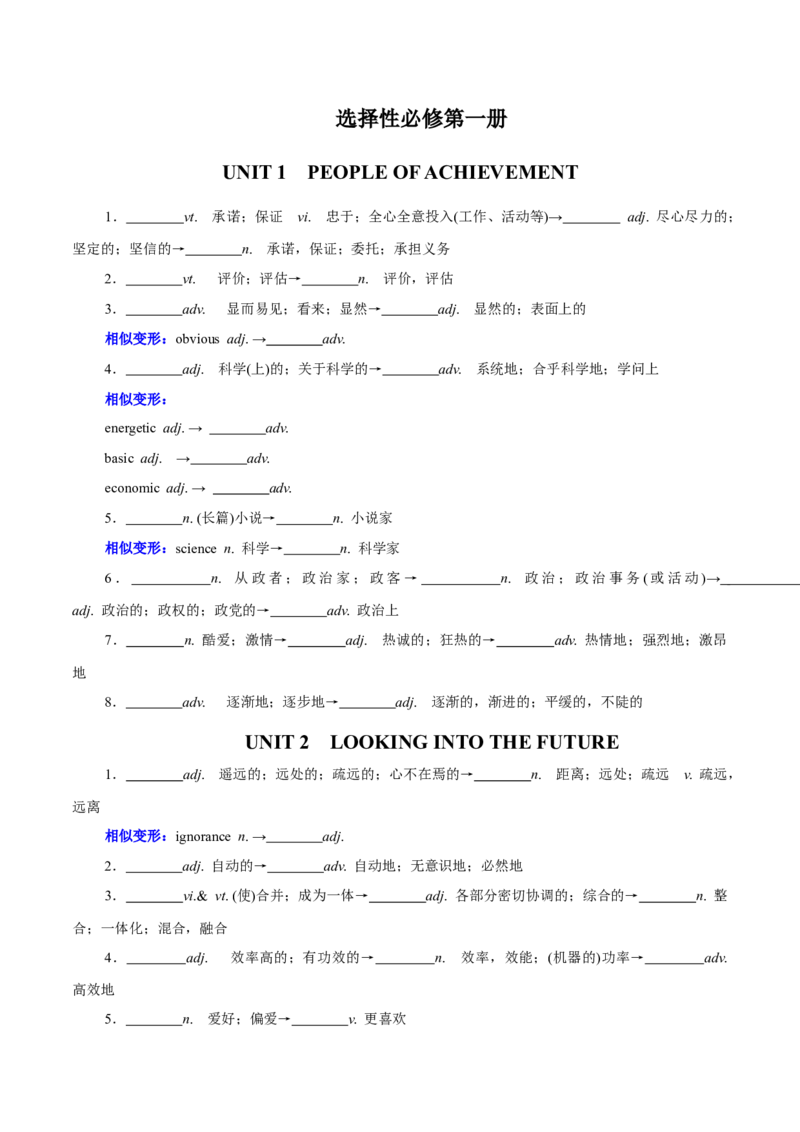
UNIT 1 PEOPLE OF ACHIEVEMENT
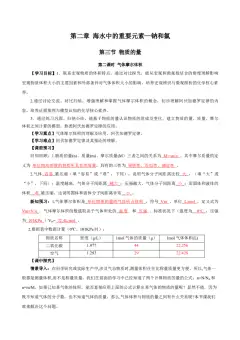
1. vt. 承诺;保证 vi. 忠于;全心全意投入(工作、活动等)→ adj. 尽心尽力的;
坚定的;坚信的→ n. 承诺,保证;委托;承担义务
2. vt. 评价;评估→ n. 评价,评估
3. adv. 显而易见;看来;显然→ adj. 显然的;表面上的
相似变形:obvious adj. → adv.
4. adj. 科学(上)的;关于科学的→ adv. 系统地;合乎科学地;学问上
相似变形:
energetic adj. → adv.
basic adj. → adv.
economic adj. → adv.
5. n. (长篇)小说→ n. 小说家
相似变形:science n. 科学→ n. 科学家
6. n. 从政者;政治家;政客→ n. 政治;政治事务(或活动)→
adj. 政治的;政权的;政党的→ adv. 政治上
7. n. 酷爱;激情→ adj. 热诚的;狂热的→ adv. 热情地;强烈地;激昂
地
8. adv. 逐渐地;逐步地→ adj. 逐渐的,渐进的;平缓的,不陡的
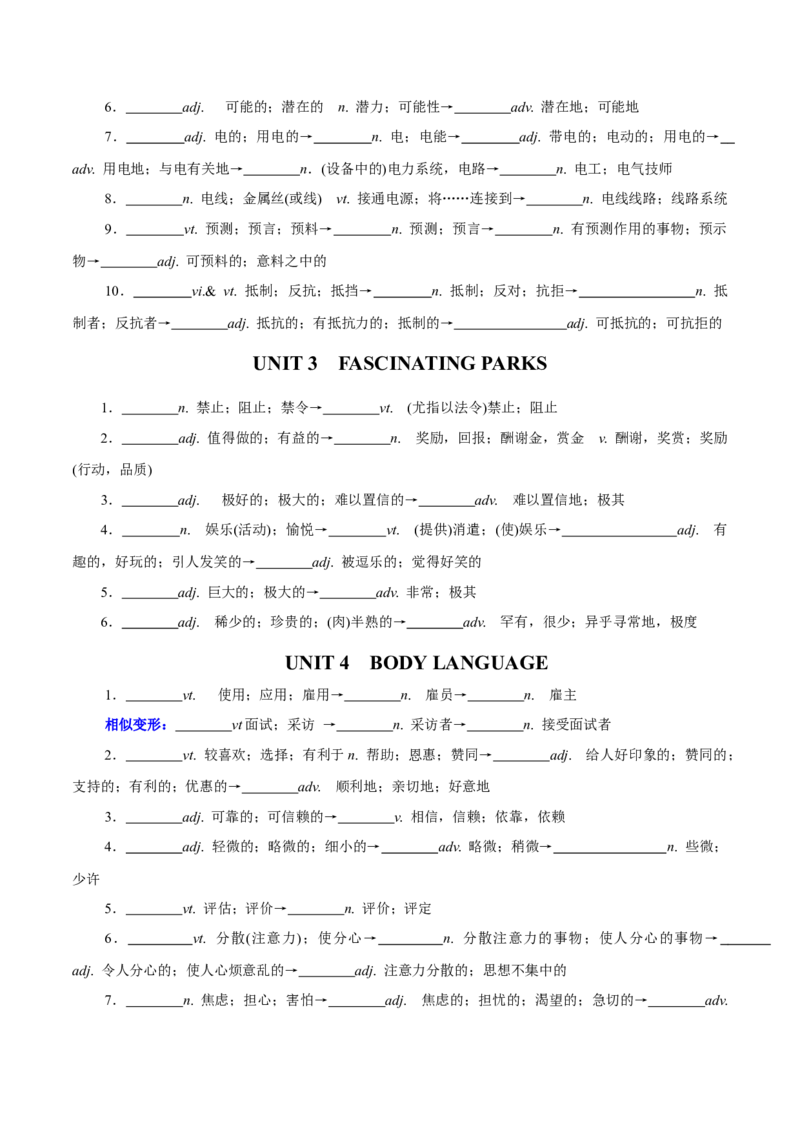
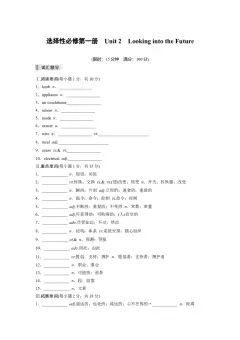
UNIT 2 LOOKING INTO THE FUTURE
1. adj. 遥远的;远处的;疏远的;心不在焉的→ n. 距离;远处;疏远 v. 疏远,
远离
相似变形:ignorance n. → adj.
2. adj. 自动的→ adv. 自动地;无意识地;必然地
3. vi.& vt. (使)合并;成为一体→ adj. 各部分密切协调的;综合的→ n. 整
合;一体化;混合,融合
4. adj. 效率高的;有功效的→ n. 效率,效能;(机器的)功率→ adv.
高效地
5. n. 爱好;偏爱→ v. 更喜欢6. adj. 可能的;潜在的 n. 潜力;可能性→ adv. 潜在地;可能地
7. adj. 电的;用电的→ n. 电;电能→ adj. 带电的;电动的;用电的→
adv. 用电地;与电有关地→ n.(设备中的)电力系统,电路→ n. 电工;电气技师
8. n. 电线;金属丝(或线) vt. 接通电源;将……连接到→ n. 电线线路;线路系统
9. vt. 预测;预言;预料→ n. 预测;预言→ n. 有预测作用的事物;预示
物→ adj. 可预料的;意料之中的
10. vi.& vt. 抵制;反抗;抵挡→ n. 抵制;反对;抗拒→ n. 抵
制者;反抗者→ adj. 抵抗的;有抵抗力的;抵制的→ adj. 可抵抗的;可抗拒的
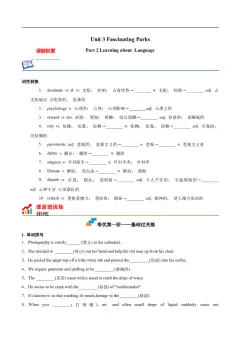
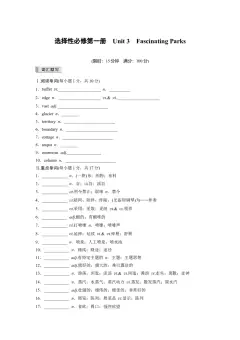
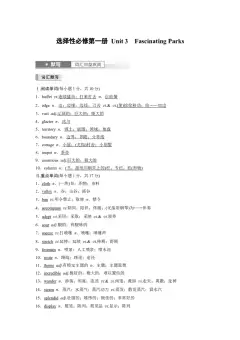
UNIT 3 FASCINATING PARKS
1. n. 禁止;阻止;禁令→ vt. (尤指以法令)禁止;阻止
2. adj. 值得做的;有益的→ n. 奖励,回报;酬谢金,赏金 v. 酬谢,奖赏;奖励
(行动,品质)
3. adj. 极好的;极大的;难以置信的→ adv. 难以置信地;极其
4. n. 娱乐(活动);愉悦→ vt. (提供)消遣;(使)娱乐→ adj. 有
趣的,好玩的;引人发笑的→ adj. 被逗乐的;觉得好笑的
5. adj. 巨大的;极大的→ adv. 非常;极其
6. adj. 稀少的;珍贵的;(肉)半熟的→ adv. 罕有,很少;异乎寻常地,极度
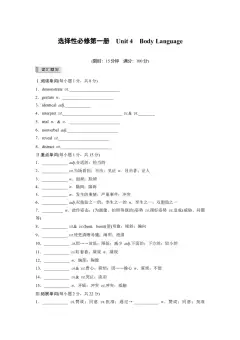
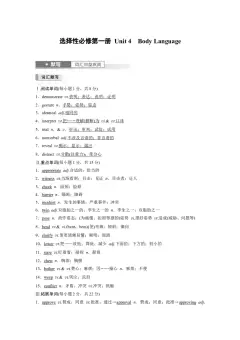
UNIT 4 BODY LANGUAGE
1. vt. 使用;应用;雇用→ n. 雇员→ n. 雇主
相似变形: vt面试;采访 → n. 采访者→ n. 接受面试者
2. vt. 较喜欢;选择;有利于n. 帮助;恩惠;赞同→ adj. 给人好印象的;赞同的;
支持的;有利的;优惠的→ adv. 顺利地;亲切地;好意地
3. adj. 可靠的;可信赖的→ v. 相信,信赖;依靠,依赖
4. adj. 轻微的;略微的;细小的→ adv. 略微;稍微→ n. 些微;
少许
5. vt. 评估;评价→ n. 评价;评定
6. vt. 分散(注意力);使分心→ n. 分散注意力的事物;使人分心的事物→
adj. 令人分心的;使人心烦意乱的→ adj. 注意力分散的;思想不集中的
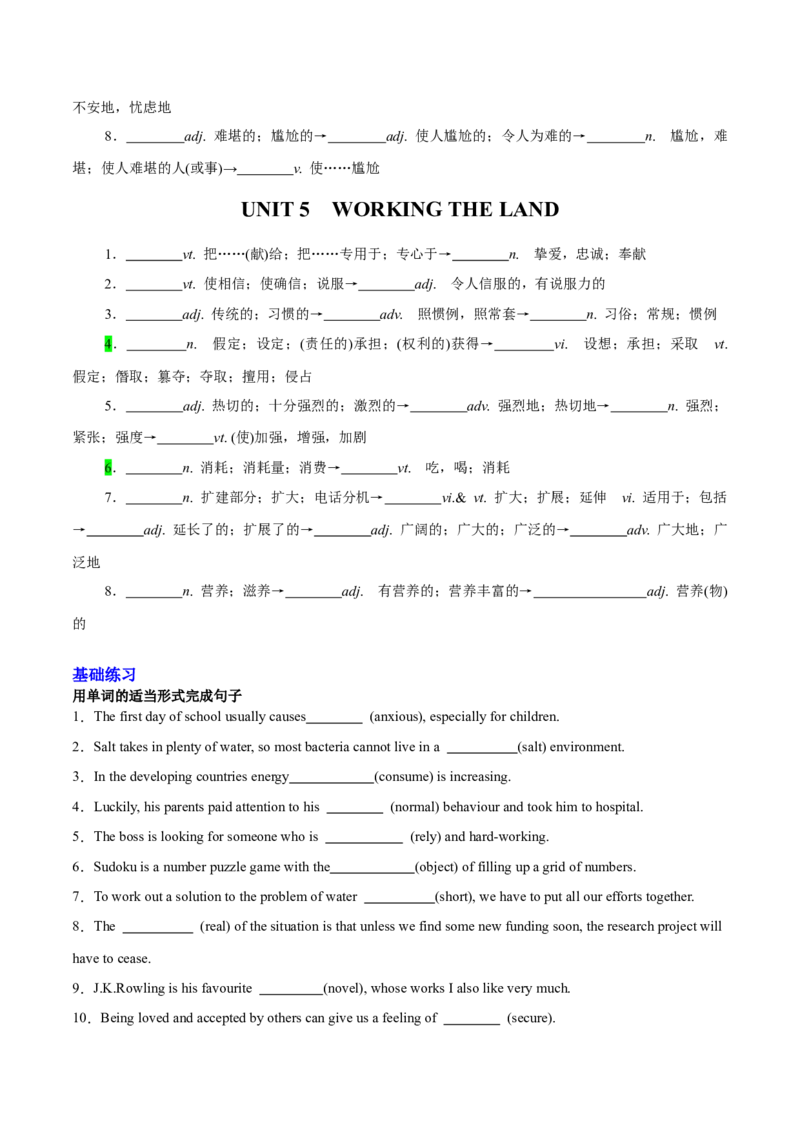
7. n. 焦虑;担心;害怕→ adj. 焦虑的;担忧的;渴望的;急切的→ adv.不安地,忧虑地
8. adj. 难堪的;尴尬的→ adj. 使人尴尬的;令人为难的→ n. 尴尬,难
堪;使人难堪的人(或事)→ v. 使……尴尬
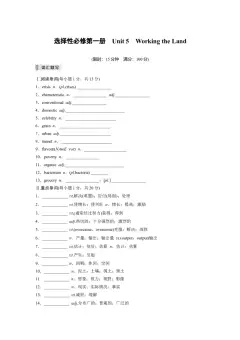
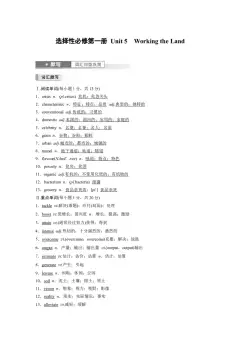
UNIT 5 WORKING THE LAND
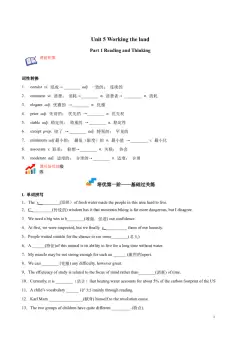
1. vt. 把……(献)给;把……专用于;专心于→ n. 挚爱,忠诚;奉献
2. vt. 使相信;使确信;说服→ adj. 令人信服的,有说服力的
3. adj. 传统的;习惯的→ adv. 照惯例,照常套→ n. 习俗;常规;惯例
4. n. 假定;设定;(责任的)承担;(权利的)获得→ vi. 设想;承担;采取 vt.
假定;僭取;篡夺;夺取;擅用;侵占
5. adj. 热切的;十分强烈的;激烈的→ adv. 强烈地;热切地→ n. 强烈;
紧张;强度→ vt. (使)加强,增强,加剧
6. n. 消耗;消耗量;消费→ vt. 吃,喝;消耗
7. n. 扩建部分;扩大;电话分机→ vi.& vt. 扩大;扩展;延伸 vi. 适用于;包括
→ adj. 延长了的;扩展了的→ adj. 广阔的;广大的;广泛的→ adv. 广大地;广
泛地
8. n. 营养;滋养→ adj. 有营养的;营养丰富的→ adj. 营养(物)
的
基础练习
用单词的适当形式完成句子
1.The first day of school usually causes (anxious), especially for children.
2.Salt takes in plenty of water, so most bacteria cannot live in a (salt) environment.
3.In the developing countries energy (consume) is increasing.
4.Luckily, his parents paid attention to his (normal) behaviour and took him to hospital.
5.The boss is looking for someone who is (rely) and hard-working.
6.Sudoku is a number puzzle game with the (object) of filling up a grid of numbers.
7.To work out a solution to the problem of water (short), we have to put all our efforts together.
8.The (real) of the situation is that unless we find some new funding soon, the research project will
have to cease.
9.J.K.Rowling is his favourite (novel), whose works I also like very much.
10.Being loved and accepted by others can give us a feeling of (secure).11.There are so many (adore) animals out there, but they all need a home.
12.In my spare time, I have a (prefer) for light music, which can make me relaxed.
13.Pat sounded very cold and (distance) on the phone.
14.Not until that moment did I realise its (deep). Never underestimate the power of your actions.
15.He devoted himself to (fight) for equal rights for Indians.
16.He was so (devote) to his work that he was named “Crazy Jack Ma”.
17.Making a (predict) is sometimes risky.
18.He lay still for a long time, as if (injure).
19.Everyone has fantastic dreams, but not everyone can turn them into (real).
20.She’ll cook up a (convince) explanation for her failure.
综合训练
阅读下面短文,在空白处填入1个适当单词或括号内单词的正确形式。
(一)
A groundbreaking new app from the Changsha IFS mall shows 21 much 5G is transforming the
shopping experience.
22 updating clothes or comparing prices, mobile technology has transformed the shopping habits of
23 (today) customers. 5G is bringing the mobile revolution into real-world shopping.
In China’s Changsha, Changsha IFS became the first 5G-enabled 24 (commerce) complex in the
country. And it’s using a new shopping navigator (导航), iGO, whose role isn’t just help users find their way
around the mall’s different 25 (level). Users can even enjoy a personalized shopping experience and
engage in an interactive treasure hunt game.
Common phone navigation tools can be tough 26 (use) within complex indoor environments.
However, the iGO system, which opens directly from WeChat, uses the smartphone camera to capture the user’s
precise 27 (locate).
Once a destination 28 (select), the navigator starts to guide shoppers through their environment step
by step. IGO combines 5G technology with Augmented Reality so that navigation markers appear on top of the real
environment, 29 (mean) shoppers can easily navigate, turn by turn and floor by floor, 30
having to puzzle out how the blocks on a map relate to where they are in the real world.
(二)
People need transportation to move from one place to another. As time went by, transportation methodsimproved. Especially after the invention of airplanes, they made travel more convenient and 31 (easy).
The airplane 32 (invent) by Orville and Wilbur Wright in 1903. 33 first airplane, Wright
Flyer I, flew 36.5 meters in 12 seconds. After that, the two brothers kept 34 (improve) their airplanes.
They 35 (fly) in public in France in 1908, and started taking passengers with them. Ever since, many other
people made great efforts to improve and develop airplanes. Thanks to their efforts, airplane technology developed
extremely fast.
Today, airplanes have many different 36 (apply). People can use airplanes to travel to other countries,
send urgent mails and help people 37 danger. They use airplanes to send water, food, medicine, etc. to
cities 38 need help. However, airplanes are not only used in positive ways, 39 they are also
used to fight wars.
Many things 40 (change) since the invention of the airplane. Airplanes have made travel or transport
faster. Airplanes have really changed our lives.
(三)
In the future, we 41 (live) in smart homes that will keep us secure, save us energy, and provide a
more comfortable environment. Smart homes will control just 42 everything in our home. They will use
integrated 43 (sensor) to go into an energy-efficient mode all by itself when we leave home. In 44 (add),
smart homes will be monitoring our health every day. If they find there is something 45 (normal) or you
have a critical illness, they will give you a 46 (warn) early on and 47 (potential) save our life.Smart
homes will also be able to prevent serious damage from accidents. If they find something wrong they will detect
48 and provide us with the relevant information for us 49 (fix) the problem. In a word, this smart
technology is not a fantasy, and it will take some years 50 most new homes begin to use this new technology.
(四)
As the working pressure is increasing, young people 51 (make) complaints about longer working hours
constantly. For example, they 52 (spend) less and less time staying with their parents, leaving them alone.
To solve this problem, our company 53 (develop) a household robot which can do many things for old
people in the past five years. Luckily, we 54 (succeed), even though the model is not perfect. It 55
(need) further modification in the future. The robot is so designed that once it breaks into the market and enters
ordinary families, it 56 (accompany) the old people, talking to them, playing chess and doing exercises with
them whenever they feel lonely. Also it 57 (cook) at a fixed time which can be set according to people’s
different needs. Besides, it 58 (address) some emergencies, especially when an old man falls ill suddenly.In a word, it 59 (be) of great help if you own such a great robot in your home. If you wanna to know
more relevant information, you can consult our director, who 60 (demonstrate) the model at 3 : 00
tomorrow afternoon in the hall.
(五)
Wu Jianxiong earned many nicknames throughout her years as a physicist, including “the First Lady of
Physics” and “Chinese Marie Curie.” Born on May 31,1912,Wu Jianxiong and her father were very close 61
her father was the one encouraged her to pursue (追求) her education as far as she could, even though few women
62 (encourage) to pursue higher education in China at the time. Wu’s father opened a school 63
she attended until she went to a boarding school in Suzhou.
Wu was awarded many times for her professional 64 (achieve) she was a pioneer in a male-
dominated (男性主导的) field 65 she turned her challenges in the sciences 66
opportunities at every turn. Regarded as a true heroine and as the “ 67 (great) female Chinese scientist
in the twentieth century”, Wu has encouraged future generations of physicists with her work. After retirement, Wu
focused on encouraging young girls to pursue careers through educational programs and 68 (speak)
about her struggle to acquire recognition for her work, hoping 69 (influence) women across the U.S.
and China. She passed away on February 16, 1997. She was buried in the courtyard of Mingde School in China,
70 school her father started and she attended as a young girl.