 夜雨聆风
夜雨聆风


中国园林·新刊导读|风景疗愈论(全文可下载)

风景疗愈论
Scenery Healing Theory
作者
李树华/LI Shuhua
清华大学建筑学院教授,博士生导师
林晨涛/LIN Chentao
清华大学建筑学院在读博士研究生
诸禹圻/ZHU Yuqi
清华大学建筑学院在读博士研究生
黄浩真/HUANG Haozhen
清华大学建筑学院在读博士研究生
高嘉阳/GAO Jiayang
清华大学建筑学院在读博士研究生
全文刊登于《中国园林》2026-04期P6-14
引文格式:李树华,林晨涛,诸禹圻,黄浩真,高嘉阳.风景疗愈论[J].中国园林,2026,42(4):6-14.
摘要
疗愈景观研究正日益聚焦于环境特征与人类健康之间的互动关系,从风景建构的视角提出了一种全新的研究思路——“风景疗愈”(scenery healing)。其核心在于将风景视为健康干预的重要媒介,大自然的治愈能量通过风景的感官刺激和空间-文化体验进入人体,从而改善人体免疫功能和提高身心自愈能力。将风景阐释为一系列物质和时空要素的集合,构建了一个基于“舞台-通道-机理”框架的理论模型,解释了风景类别、特征转化为健康效益的潜力。通过将现有的疗愈实践综合为一个连贯的理论系统,研究结果为确立“风景疗愈”作为风景园林学科分支提供了基础性支持,标志着风景从感知恢复到健康促进的重大演进。
关键词
风景园林;风景疗愈;大地风景;宇宙风景;疗愈机制
“风景疗愈”(Scenery Healing)是指从人体身心健康出发,以风景为舞台,通过五感刺激与空间文化体验,打开大自然治愈能量进入人体的通道,从而提高免疫力和激活自愈力,达到身心健康的目的。具有疗愈功能的风景则称为疗愈风景。
在词源上,风景较之景观(Landscape)更强调置身空间中的主体对客体的主观能动感受。风景不仅取决于视觉,更是通过嗅觉、触觉、味觉、听觉等五感进行整体感知,并在生活经验与思想知识的基础上形成的认知印象。
1 跨学科理论支撑:从生物本能到文化共鸣
风景疗愈的科学性构建于遗传进化、环境心理学、人文地理学及文化哲学等多学科的基础上。从遗传进化看,亲生物假说、瞭望-庇护理论与“绿色基因”假说揭示了人类对自然偏好的生物本能。环境心理学则通过注意力恢复理论(ART)与应激恢复理论(SRT)阐明了风景触发疗愈效应的具体机制,提出风景具有缓解精神疲劳与焦虑,使人产生积极的情绪的效益。
此外,人文地理学中的场所依恋与文化叙事,支撑了风景从物理空间向疗愈场所转化。这种修复作用在文化哲学维度得到升华。例如东方以“天人合一”思想实现修身养性;西方则通过“崇高”与“如画”理论引导精神升华与认知重建。这些理论支撑共同构成了从生物基础、心理机制到意义建构和文化表达的完整结构。
2 物质载体:大地与宇宙风景的协同
在物理载体上,风景疗愈由大地风景与宇宙风景共同组成的时空系统构成。大地风景以植物群落为核心载体,通过四季物候演替映射出生命的周期性节律;宇宙风景则依托天空、光影与气象的瞬时性变化,为人类提供强烈的感官刺激与时空暗示(图1)。研究显示,植物风景在各类愈合空间中占据主导地位,这种对绿色的天然偏好跨越了年龄与文化,构成了风景疗愈的坚实基础。
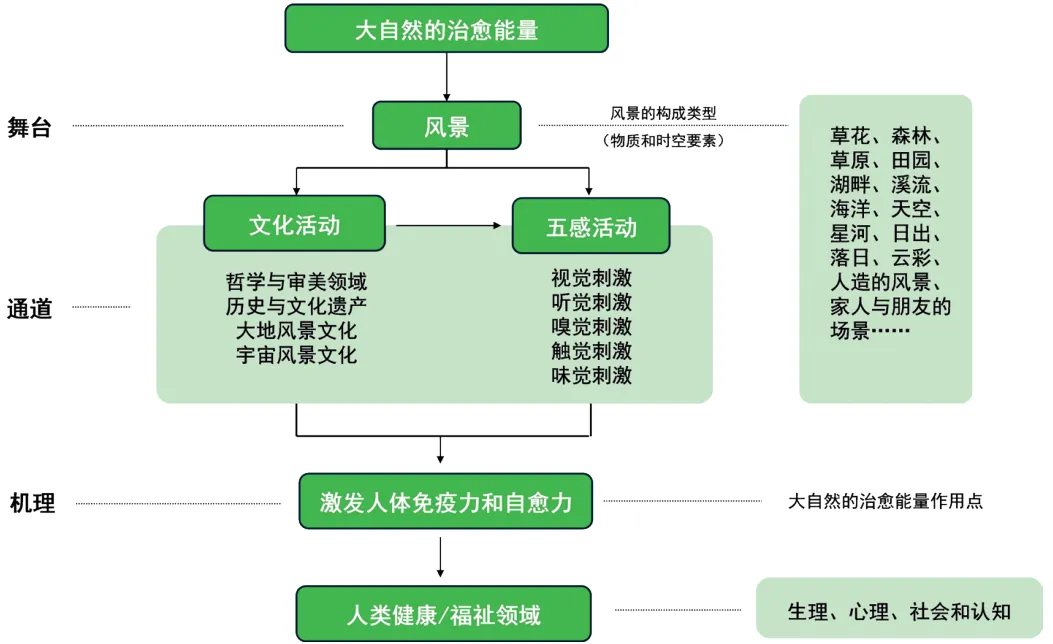
图1 大地风景与宇宙风景
3 核心模型:舞台-通道-机理
为了系统化阐释风景要素转化为健康效益的内在逻辑,研究构建了“舞台-通道-机理”模型框架(图2)。
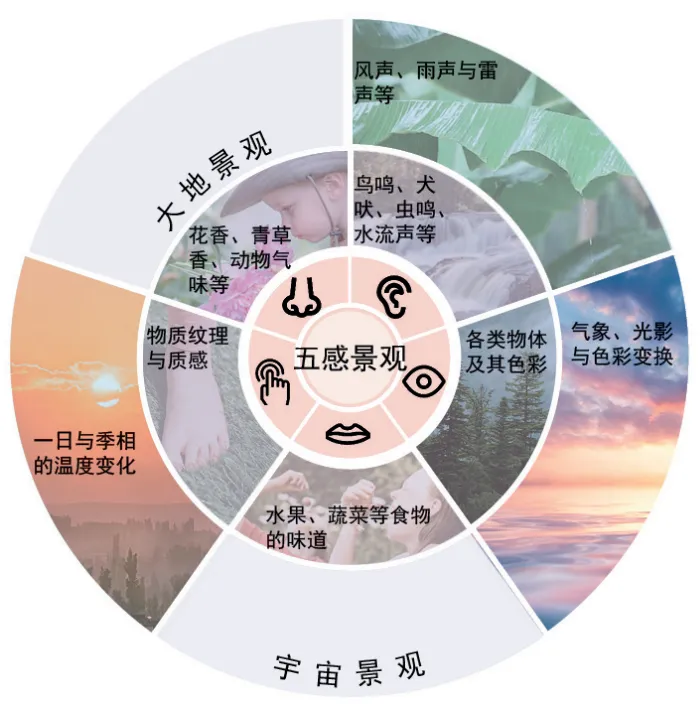
图2 风景疗愈的模型建构
“舞台”层是风景疗愈效益产生的物理场域,由大地风景和宇宙风景构成。作为传递大自然治愈能量的空间场域,该舞台需具备重要的环境约束条件,如提供庇护感的半围合空间、体现生命节律的动态演化空间,以及旨在消除紧张情绪、促进自我修悟的文化与美学空间等。这些空间特征为大自然的疗愈能量的传递提供了物质基础,它们共同构成能够产生疗愈效益的空间场域,即舞台。
“通道”层是连接外部风景舞台与人体内部系统的关键纽带,由感官系统的生物路径与文化体验的认知路径双向驱动。在此过程中,人体通过视、听、嗅、触、味五感捕获自然声景、光影律动,并摄入植物挥发性有机物等化感物质。此外,依托哲学审美与场所依恋,在意识层面重塑心理稳态,以及唤醒人体自愈潜能。总体而言,大自然的治愈能量通过风景提供的五感刺激与文化活动介入人体感官和精神感受。
“机理”层揭示了风景疗愈作用于人体的生物学效应(图3)。在调控层面,风景能量经感知通道深度介入神经、内分泌及免疫系统,通过激活人体与自然的节律共鸣来调节自主神经平衡。生理维度表现为皮质醇水平显著下降及NK细胞活性提升,从而增强免疫防御;认知维度则通过诱发非定向注意力缓解疲劳,消除应激性焦虑。最终,通过对免疫功能与自愈力的深度激活,实现了生理平衡、心理稳态与认知修复等多维度的身心健康。
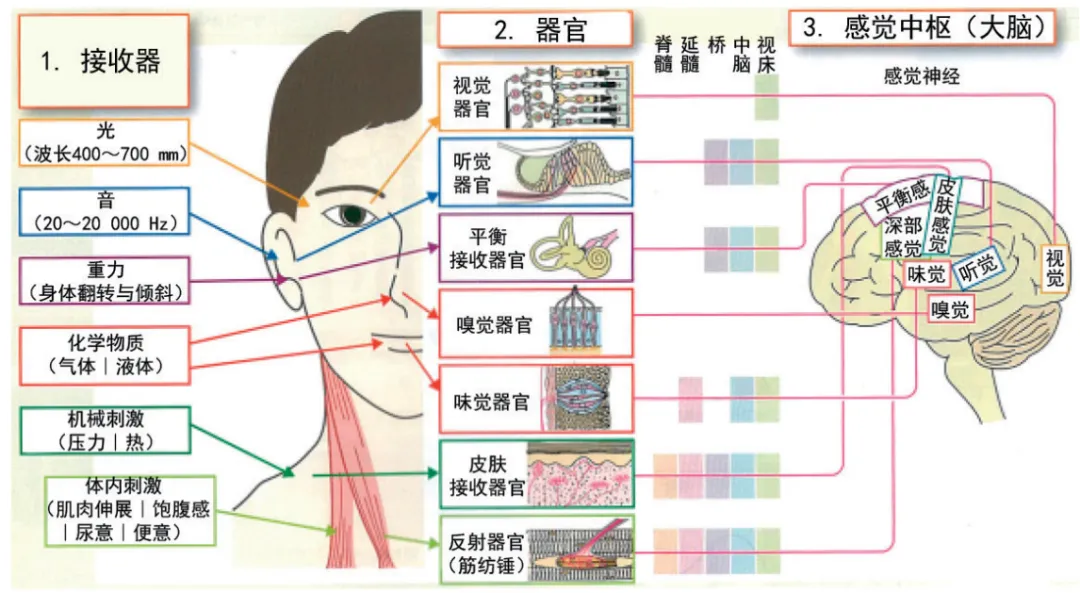
图3 刺激的接收与感觉的产生
4 风景疗愈的未来展望
风景疗愈正向系统的学科体系演进,致力于建构从生物基础、心理机制到意义建构、文化表达的多层次知识谱系。未来应突破局部场景局限,构建覆盖宏观生态、中观人居及微观感知的多尺度嵌入式健康机制,在空间层级上与“全健康”(One Health)理念形成结构性呼应,并通过园艺劳动、自然步行等身体参与方式强化人与大地的触觉联结。
在技术与人群层面,需加强园林学与神经科学、医学的深度交叉,利用AI、大数据及VR等前沿技术建立科学的证据链,并针对不同年龄段人群、亚健康人群和患病人群制定适配的“绿色处方”,确保疗愈资源的公平可达。此外,应深挖“天人合一”、“神游”等中国传统园林文化,守正创新,融合现代健康理念,构建具有中国特色的风景疗愈体系,以期在国际学术舞台上展现独特价值。
致谢:感谢清华大学建筑学院康宁老师和朱怀真同学在论文撰写中的辛勤付出,以及在文章结构、综述方面提供的宝贵建议。上述人员虽未列入作者名单,但对本文的完成亦有重要贡献,在此表示诚挚谢意。
Research on healing landscapes focuses on the interactive relationship between environmental characteristics and human health. From the perspective of scenery construction, this research proposes a theoretical framework of scenery healing. Natural healing energy enters the human body through sensory stimulation and spatial cultural experiences, improving immune functions and self-healing capacities. By synthesizing existing healing practices into a coherent theoretical system, this research provides foundational support for establishing scenery healing as a branch of landscape architecture, representing an evolution from perceptive restoration to health promotion.
1 Definition of Scenery Healing
-
1) Scenery: Compared to the term landscape, which implies physical forms and macro perspectives, scenery emphasizes human sensory experiences. Scenery integrates visual, olfactory, tactile, gustatory, and auditory perception with personal life experiences, thoughts, and knowledge. Based on primary stimulating elements, scenery is categorized into earth scenery, dominated by plants, and universe scenery, dominated by celestial phenomena.
-
2) Healing: Healing emphasizes the holistic recovery of life and the integration of physical and mental health. Scenery healing utilizes scenery as a spatial medium and five-sense experiences as pathways to facilitate the entry of natural healing energy into the human body, aiming to improve immunity and activate self-healing capacities.
2 Theoretical Support for Scenery Healing
-
1) Genetic evolution mechanism: The Biophilia Hypothesis, Prospect Refuge Theory, and Human Green Gene Hypothesis explain the human preference for natural environments with abundant vegetation and open views as an instinct shaped by natural selection.
-
2) Environmental psychology mechanism: The Attention Restoration Theory indicates that natural environments facilitate the recovery of directed attention. The Stress Recovery Theory states that exposure to natural scenery induces positive emotional responses and physiological changes.
-
3) Human geography mechanism: Place Theory and Place Attachment conceptualize how spatial environments transform into places with healing values through human interaction. Landscape narrative theory indicates that scenery serves as a carrier of historical and cultural narratives.
-
4) Cultural philosophy and aesthetics: Eastern philosophy emphasizes the unity of human and nature, framing scenery as a medium for psychological cultivation. Western aesthetic concepts such as the sublime and the picturesque explain the cognitive reconstruction of nature and its structural aestheticization.
3 Structure and System of Scenery Healing
-
1) Constituent elements: Material elements include natural scenery and artificial scenery. Spatiotemporal elements include earth scenery, which reflects ecological evolution, and universe scenery, which presents dynamic meteorological phenomena.
-
2) System construction: The origin layer is based on the biophilia hypothesis, primitive landscape theory, and place attachment theory. The perception layer is categorized by five senses, influencing physiological and psychological states through neural pathways. The intervention layer integrates natural ecological systems and artificial environmental management.
-
3) Theoretical model: The stage layer integrates material and spatiotemporal elements to form a physical field for health interventions. The channel layer comprises a biological five-sense activity pathway and a psychological cultural activity pathway. The mechanism layer involves the regulation of nervous, endocrine, and immune systems, resulting in physiological balance and psychological stability.
4 Prospects of Scenery Healing
-
1) Disciplinary framework: Scenery healing requires a knowledge system covering biological foundations, psychological mechanisms, meaning construction, and cultural expression.
-
2) Multi-scale environment: The healing mechanism operates across macro ecological systems, meso built environments, and micro individual perception scales. Physical participation and environmental embedding serve as pathways to restore the connection between humans and nature.
-
3) Methodology expansion: Research methods require interdisciplinary approaches combining landscape architecture with psychology, neuroscience, and medicine. Technologies, including big data, artificial intelligence, and virtual reality, provide tools for environmental assessment.
-
4) Cultural and social application: The integration of traditional Chinese garden philosophy with modern health concepts provides cultural value. Scenery healing applications correspond to public health needs and urban renewal strategies.
Translator / HUANG Haozhen
点击下载:风景疗愈论.pdf
//////END//////
编辑 | 金花
排版 校对 | 李旻
审核 | 金荷仙
▽
点击购买当期杂志