ARTICLE · 1257868
【高中英语语法】时间状语从句详解
点击蓝字
关注我们
概念
在复合句中,起状语作用的从句,就叫做状语从句。它的功能和单个的副词或介词短语一样,用来说明主句动作发生的时间、地点、原因、方式、条件等等。因此,我们可以把它看作一个“由句子充当的大号副词”。
简单句:
He runs quickly. 他跑得很快。(quickly是副词,修饰动词runs。)
复合句:
He runs as if a tiger is chasing him. 他跑得就像有只老虎在追他一样。(整个as if ...从句修饰动词runs,说明跑的方式。)
状语从句的引导词
状语从句不能独立存在,必须由一个从属连词来引导。这些引导词是识别和理解状语从句的关键。不同的引导词用于表达不同的逻辑关系(如时间、原因等)。
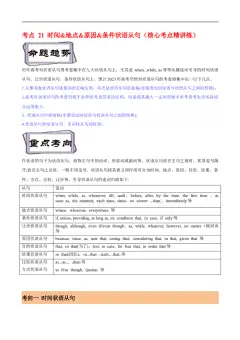
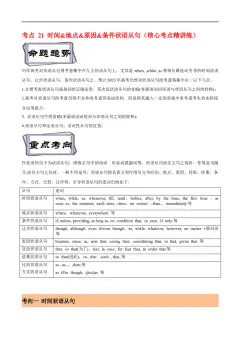
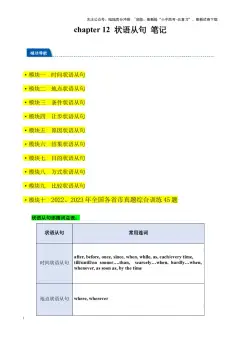
状语从句种类 | 引导词 |
时间状语从句 | when, whenever, while, as, till/until, before, after, since, as soon as |
条件状语从句 | if, unless, so/as long as, once, in case |
原因状语从句 | because, as, since, now (that) |
目的状语从句 | so that, in order that |
结果状语从句 | so ... that ..., such ... that ... |
让步状语从句 | though/although, as, even if/though, no matter wh- |
地点状语从句 | where, wherever |
方式状语从句 | as, as if/though |
比较状语从句 | as ... as, not so ... as, than |
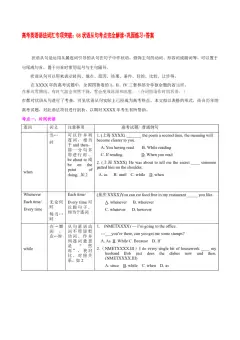
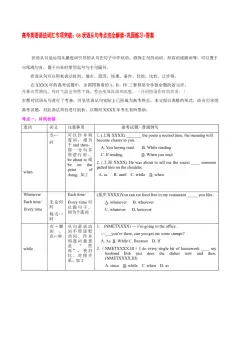
时间状语从句
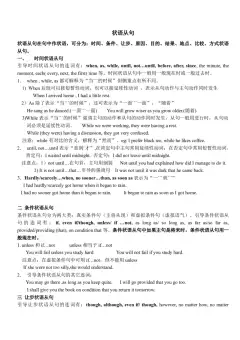
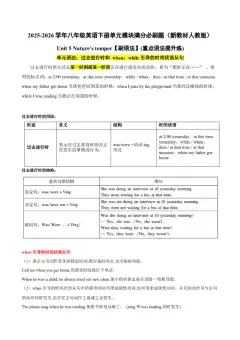
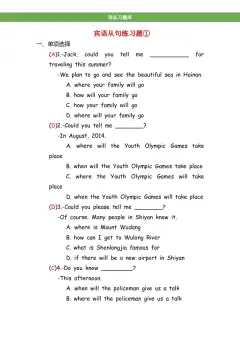
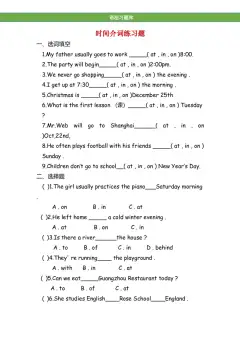
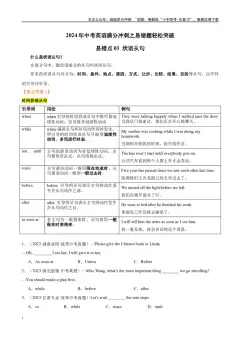
表示主句动作发生的时间。常用引导词:when, while, as, before, after, since, until/till, as soon as, the moment, every time等。
(1)When: 表示“当……时”,可指时间点或时间段,从句动词可以是瞬间动词或延续性动词。
When the teacher came in, all the students stood up.
当老师进来时,所有的学生都站了起来。
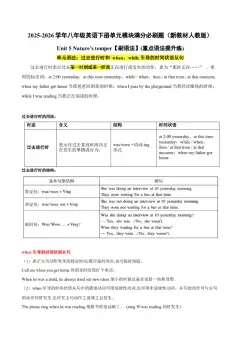
(2)While: 表示“在……期间”,强调一段时间,从句动词通常为延续性动词。
While I was reading, my brother was playing games.
当我在读书时,我弟弟在玩游戏。
(3)As: 表示“一边……一边……”,强调主句和从句的动作同时发生或伴随进行。
She sang as she walked along the river.
她一边沿着河边走,一边唱歌。
(4)Before / After: 分别表示“在……之前”和“在……之后”。
Turn off the lights before you leave the room.
离开房间前请关灯。
I found the book after you had left.
你离开之后,我找到了那本书。
(5)Since: 表示“自从……以来”,主句通常用现在完成时。
He has lived here since he was a child.
他从小就住在这里。
(6)Until/Till: 表示“直到……”,主句为延续性动词;若主句为瞬间动词,则用否定形式“not ... until”(直到……才)。
I will wait until you come back.
我会一直等到你回来。
He didn’t go to bed until he finished his homework.
他直到完成作业才睡觉。
(7)表示“一……就……”的引导词
① As soon as
用法:这是最常用、最口语化的表达,表示主句动作紧接在从句动作之后发生。它不强调动作的完成,只强调时间上的紧接着。
As soon as the bell rang, the students rushed out of the classroom.
铃声一响,学生们就冲出了教室。
Please reply as soon as you receive this email.
请你一收到这封邮件就回复。
② The moment / The minute / The instant
用法:这三个词组的意思和用法完全相同,都表示“就在那一刻”,语气比as soon as更强烈、更形象,强调两个动作几乎在同一瞬间发生。the moment最常用。
The moment I saw him, I knew something was wrong.
我一看到他,就知道出事了。
I recognized her the instant she started speaking.
她一开始说话,我就认出了她。
He called me the minute he got off the plane.
他刚一下飞机就给我打了电话。
③ Immediately / Instantly / Directly
用法:这三个词通常用作副词,但也可以作为连词引导时间状语从句,意为“立刻……就”。这种用法在英国英语中更常见。
I called her immediately I heard the news.
我一听到消息就给她打了电话。
The machine will start instantly you press the button.
你一按下按钮,机器就会立刻启动。
(8)表示“刚……就……”的引导词
①No sooner ... than ...
用法:这是一个固定搭配,表示“刚……就……”。
它有两个重要特点:
倒装:当no sooner位于句首时,其所在的主句要用部分倒装(即助动词/be动词提到主语前面)。
时态:主句通常用过去完成时,than引导的从句用一般过去时。
例句:
No sooner had I lain down than the telephone rang.
我刚躺下,电话就响了。
He had no sooner arrived than he was asked to leave again.
他刚到就被要求再次离开。
②Hardly/Scarcely ... when ...
用法:这个结构的含义和用法与no sooner ... than ...完全相同,可以互换。意思是“刚……就……”、“几乎没……就……”。
倒装:hardly或scarcely位于句首时,主句也要部分倒装。
时态:主句用过去完成时,when引导的从句用一般过去时。
例句:
Hardly had we started our journey when the car broke down.
我们刚出发,车就抛锚了。
She had scarcely walked in the door when the baby began to cry.
她刚走进门,婴儿就开始哭起来。