夜雨聆风
夜雨聆风
关于云栖对话


相辉学堂和学校未来学习中心智慧书房合作设立“云栖对话”主题活动,旨在邀请不同学科领域的专家、学者,通过对话、访谈、沙龙、工作坊等多种形式,打破专业壁垒,促进复旦大学各学科领域之间的思想碰撞与学术交流,构建深度互动的学术环境与生态,打造一个跨领域、跨学科、跨专业的学术活动品牌,引领学校和学堂学术交流的氛围。“云栖对话”主题活动重点面向相辉学堂学生,也面向全校所有学生开放。
讲座介绍


生成式人工智能的迅速崛起,正迫使作家、读者与文学研究者重新审视既有的创造力模型,以及评估艺术作品的传统标准。这场对话汇聚了中国当代著名科幻作家、AI写作先行者,与美国科幻文学研究者和AI文学的跨界教授。两位主讲人将结合各自的AI写作实验与文学研究项目,两位与谈人也将从AI与文学教学的前沿实践出发,共同探讨:在人机创造力混合的时代,文学创作与文学批评将走向何方?讨论将涉及AI生成文本与人类写作的边界、作者身份的重新定义、“原创性”概念的拓展,以及AI介入或赋能文学教育的变革可能。本场对话旨在为理解“后人类”时代的文学未来提供跨文化、跨学科的视角。
The rapid rise of generative AI is forcing writers, readers, and literary scholars to rethink established models of creativity and traditional criteria for evaluating artistic works. This dialogue brings together a renowned contemporary Chinese science fiction writer and pioneer of AI-assisted writing, alongside an American scholar of science fiction literature and professor of AI literature. The two keynote speakers will draw on their respective experiments with AI writing and ongoing research projects, while two discussants will contribute insights from cutting-edge practices in teaching AI and literature. Together, they will explore the following question: in an age of mixed human-machine creativity, where is literary creation and criticism heading? The discussion will address the boundaries between AI-generated and human-authored texts, the redefinition of authorship, the expansion of the concept of “originality,” and the potential transformation of literary education in the age of AI. This dialogue aims to offer a cross-cultural, interdisciplinary perspective on the future of literature in the posthuman era.
讲座信息


时间
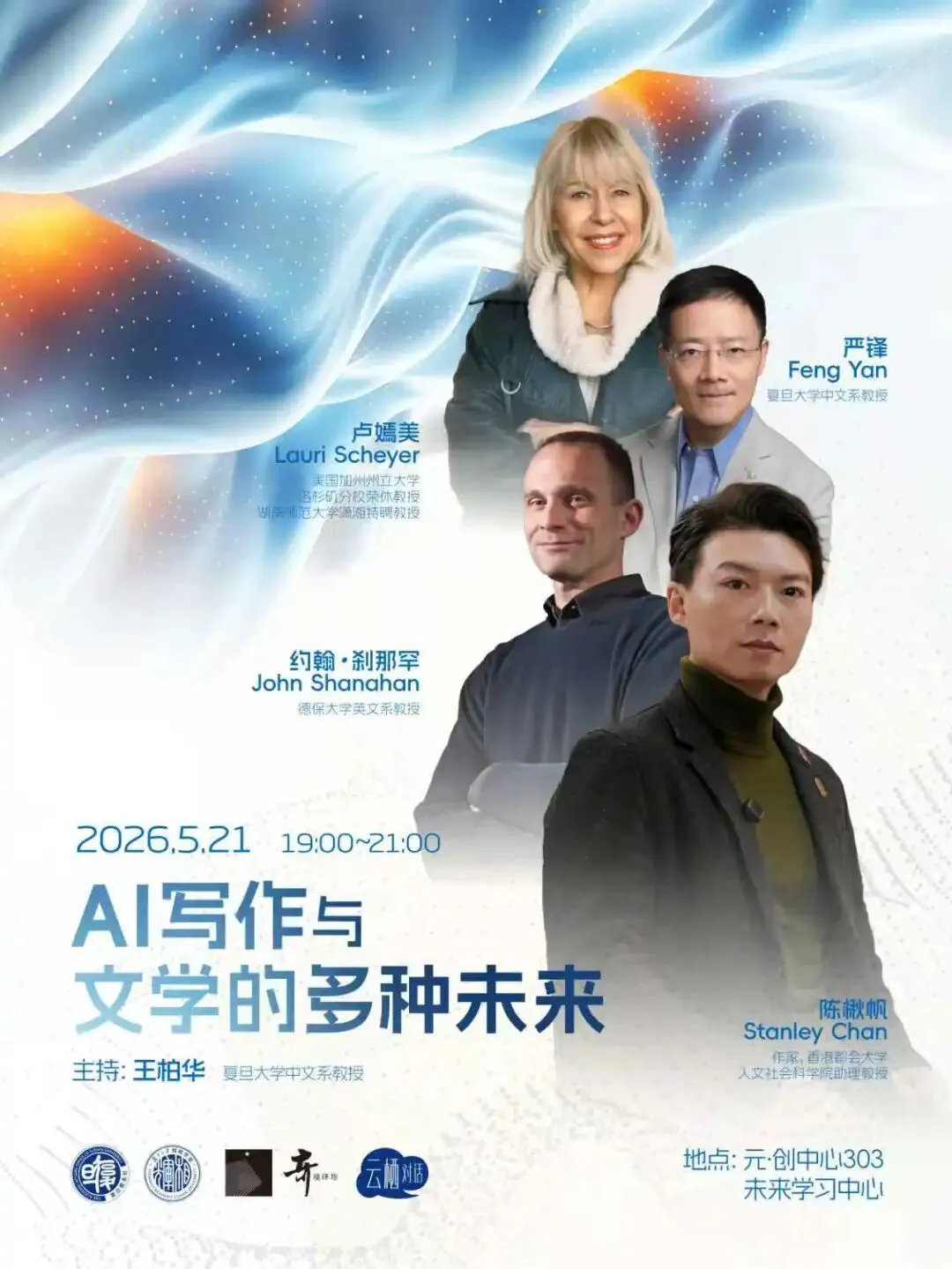
2026年5月21日(周四)
19:00-21:00
地点
元·创中心 303会议室
主讲人
陈楸帆(Qiufan Chen)
作家,香港都会大学人文社会科学院助理教授
(School of Art & Social Sciences, Hong Kong Metropolitan University)
约翰•刹那罕(John Shanahan)
美国德保罗大学英文系教授
(Department of English, DePaul University)
与谈人
严锋(Feng Yan)
复旦大学中文系教授
(Department of Chinese language and Literature, Fudan University)
卢嫣美(Lauri Scheyer)
美国加州州立大学洛杉矶分校荣休教授
& 湖南师范大学潇湘特聘教授
(Professor Emerita at California State University, Los Angeles & Xiaoxiang Distinguished Professor at Hunan Normal University)
主持人
王柏华(复旦大学中文系教授)
语言
英文(同步中文字幕)
主办
复旦相辉学堂、未来学习中心之智慧书房
协办
复旦文学翻译研究中心 & 奇境译坊
嘉宾介绍
陈楸帆
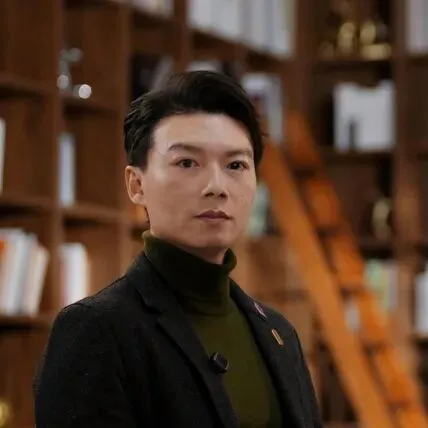
广东汕头人,九三学社成员,现任中国作家协会科幻文学委员会副主任,上海作家协会专业作家,广东作协科幻文学委员会主任,中国科普作协理事。主要作品包括长篇小说《荒潮》《刹海》、《AI未来进行式》(与李开复博士合著)、《人生算法》,青少年科幻《零碳中国》、《山歌海谣》等十余部作品,被翻译为二十多国语言,先后获得茅盾新人奖、全球华语科幻星云奖、中国科幻银河奖、十月文学奖、花地文学榜类型文学金奖、《亚洲周刊》年度十佳小说、法国想象文学大奖、德国年度商业图书等国内外诸多奖项。
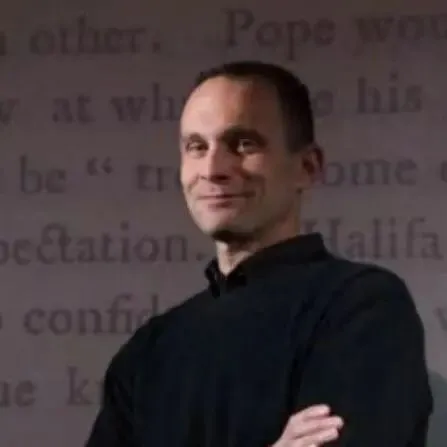
约翰•刹那罕(John Shanahan)
美国德保罗大学副教务长、英语系教授。他是科技文学领域学者,在近代早期文学、科幻文学与数字人文领域著述颇丰。近期及即将出版的研究成果包括:对刘慈欣《三体》中的意象分析、凯瑟琳・莱西小说中的情感数据研究,以及林韬作品中的社交媒体文化研究。其研究项目曾获美国国家人文基金会、莱拉西斯联盟、微软 Azure 平台及富布赖特项目资助。
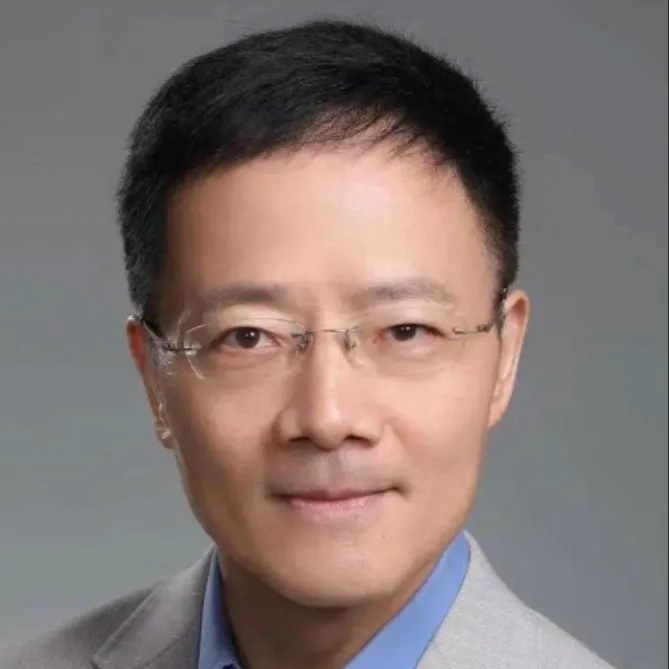
严锋
复旦大学中国语言文学系教授、博士生导师,曾担任科学杂志《新发现》主编、芝加哥大学东亚系客座教授、加州大学戴维斯分校客座教授及哈佛大学燕京学者。研究方向包括科幻文学、网络文学以及游戏研究等领域。

卢嫣美(Lauri Scheyer)
美国芝加哥大学创意写作及英美文学博士,曾任英国卡迪夫大学创意写作中心和创意与批评写作研究室主任,贝德福德大学创意写作中心的创始主任,美国汉普顿大学创意写作中心主任,荣休于美国加州州立大学洛杉矶分校。现任湖南师范大学潇湘特聘教授、英语创意写作项目首席教授、英美诗歌中心主任。已出版9部著作,发表近100篇学术文章,获得美国图书奖、林肯奖等多个奖项或提名,并在多个国际文学期刊上发表诗歌作品。
主讲内容


Qiufan Chen
The Future of Writing: Generative, Co-create and intermediation
In 2017, Qiufan Chen trained a language model on his own corpus and co-wrote the story "State of Trance" with the resulting output, becoming one of the first fiction writers to integrate neural text generation into published literary work. The experiment raised a question that has since governed his practice: what happens to authorship when the machine can mimic your voice? The collaboration with Kai-Fu Lee on AI 2041 (2021) expanded this inquiry from individual experimentation to systematic exploration of ten near-future scenarios across narrative and technological registers. His story "The Divine Pen, or An Imaginary History of Cybernetics" (2025) crystallized the methodology he calls adversarial generation, treating AI output as resistant material the writer must struggle against, reshape, and transcend rather than passively accept. Most recently, the development of AIgora, a multi-agent intellectual dialogue system involving over a hundred specialized AI interlocutors, has transformed his creative workflow into something closer to what N. Katherine Hayles theorizes as intermediation: a recursive feedback loop in which human cognition and computational processes continuously modify each other, producing emergent meaning irreducible to either party alone. This lecture traces the arc from tentative co-authorship to full intermedial practice, arguing that the future of literary creation lies in the deliberate cultivation of friction between human intentionality and machine pattern, where the writer's irreplaceable role is to introduce the unpredictable, the embodied, and the ethically situated into an otherwise frictionless generative flow.2017年,陈楸帆用自己的作品语料库训练了一个语言模型,并与模型生成的结果合著了短篇小说《出神状态》,成为首批将神经文本生成融入正式出版文学作品的小说家之一。这一实验引发了一个自此一直主导他创作实践的问题:当机器能够模仿你的声音时,作者身份将何去何从?2021年,他与李开复合著的《AI 2041》将这一追问从个人实验拓展为对十个近未来场景的系统性探索,同时涉及叙事与技术两个维度。2025年的短篇小说《神笔,或控制论幻想史》则结晶了他称之为“对抗生成”的方法——将AI输出视为一种抗拒性的材料,作家必须与之搏斗、重塑并超越,而非被动接受。而最近开发的AIgora——一个包含上百位专门化AI对话者的多智能体思想交流系统——已将他的创作流程转变为更接近N.凯瑟琳·海尔斯(N. Katherine Hayles)所理论化的“中介”(intermediation):一种递归的反馈回路,其中人类认知与计算过程持续相互改造,产生出任何一方单独都无法还原的涌现性意义。本次讲座将追溯从试探性的共同创作到完全的中介化实践的演变轨迹,并提出:文学创作的未来在于有意识地培养人类意图与机器模式之间的摩擦——作家的不可替代角色,正是将不可预测的、具身的、伦理处境化的元素引入一种原本平滑无阻的生成之流。


John Shanahan
Writing Machines: Humans Writing Like AI & AI Writing Like Humans
This lecture is about literary criticism in an age mixing human and machine creativity. The quick rise of generative AI has forced humanities scholars to re-examine our models of creativity and how to evaluate artistic works. Fully machine-generated AI works, although based upon prior human language, challenge well-known methods established to understand avant-garde works since high modernism. Building from work in progress and my classes on AI and literature, I will discuss notable writers along a spectrum from least to most AI-produced, from fully analog and print that imitates AI (Tao Lin and others), to machine-like rule-following (for example, the database poetry of Caroline Bergvall’s “Via: 48 Dante Variations” and Sheila Heti’s memoir Alphabetical Diaries), to interesting mixes of AI and human text (Chen Quifan and Mauro Javier Cardenas, for example), and finally, some fully generative-AI literary works. I invite a conversation about some of the challenges to our usual interpretation methods when we cannot make assumptions about the scope of human intention.
本次演讲探讨的是在人机创造力混合的时代背景下文学批评的演进。生成式人工智能的迅速崛起迫使人文学者重新审视我们的创造力模型以及评估艺术作品的方式。完全由机器生成的AI作品——尽管基于既有的人类语言——对自高度现代主义以来用于理解先锋派作品的成熟方法提出了挑战。基于正在进行的研究以及关于人工智能与文学的课程,我将讨论一系列作家作品,按照AI参与的程度排序(从最少到最多):首先是完全采用模拟方式(非数字)与印刷媒介且刻意模仿 AI 写作风格的作品(如林韬等),然后是那种像机器一样严守规则的写作方式(如卡罗琳·伯格沃尔的数据库诗歌《路径:但丁的48种变奏》和希拉·海蒂的回忆录《字母日记》),再到人机文本的有趣混合(例如陈楸帆和毛罗·哈维尔·卡德纳斯),最后是完全由生成式AI完成的文学作品。当无法对人类意图的边界做出假设时,我们惯用的阐释方法将面临诸多挑战——我期待就此展开对话。
相关文献阅读


1、陈楸帆《荒潮》,上海文艺出版社, 2019.
2、李开复&陈楸帆《AI未来进行式》,浙江人民出版社, 2022.
3、Stanley Chan. Waste Tide. Liu Yukun, trans. New York: Tor, 2019;London: Head of Zeus, 2020.
4、Kai-fu Lee & Stanley Chan. AI 2041: Ten Visions for Our Future.New York: Currency, 2021.
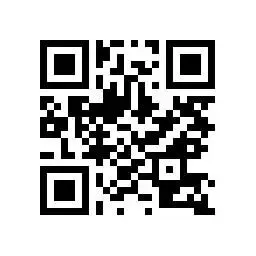
报名及提问链接


云栖对话希望给同学们更多与专家学者对话交流的机会,如果同学们在阅读文献后有对嘉宾提出的问题,可以在报名时提出,主办方将把你的问题提前给到嘉宾。
排版 | 张晓琪
审核 | 薛 磊