文档文本内容
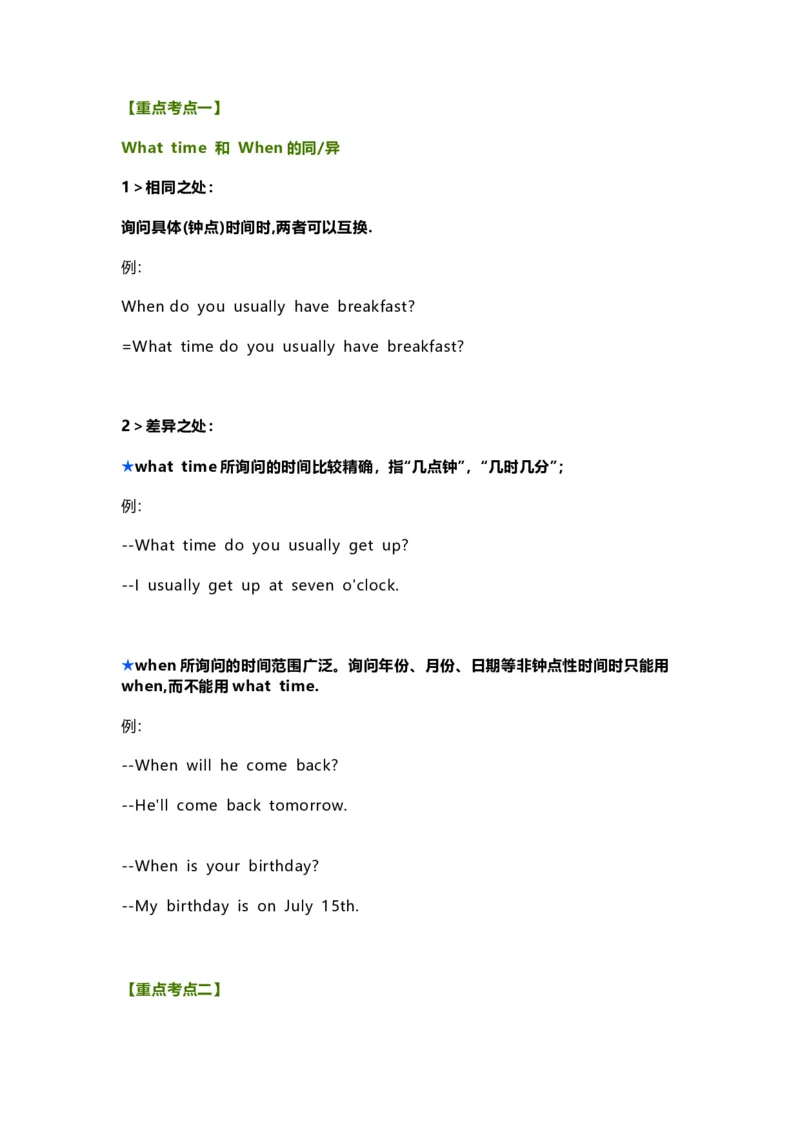
【重点考点一】
What time 和 When的同/异
1>相同之处:
询问具体(钟点)时间时,两者可以互换.
例:
When do you usually have breakfast?
=What time do you usually have breakfast?
2>差异之处:
★what time所询问的时间比较精确,指“几点钟”,“几时几分”;
例:
--What time do you usually get up?
--I usually get up at seven o'clock.
★when所询问的时间范围广泛。询问年份、月份、日期等非钟点性时间时只能用
when,而不能用what time.
例:
--When will he come back?
--He'll come back tomorrow.
--When is your birthday?
--My birthday is on July 15th.
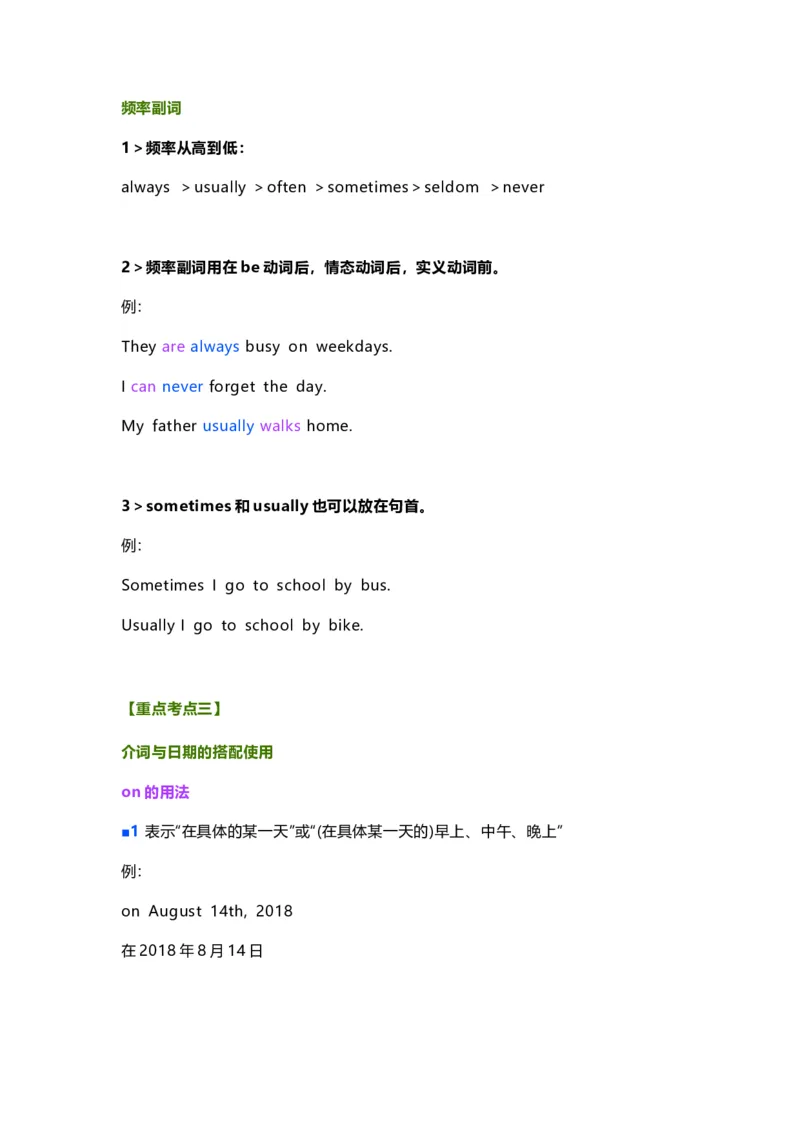
【重点考点二】频率副词
1>频率从高到低:
always >usually >often >sometimes>seldom >never
2>频率副词用在be动词后,情态动词后,实义动词前。
例:
They are always busy on weekdays.
I can never forget the day.
My father usually walks home.
3>sometimes和usually也可以放在句首。
例:
Sometimes I go to school by bus.
Usually I go to school by bike.
【重点考点三】
介词与日期的搭配使用
on的用法
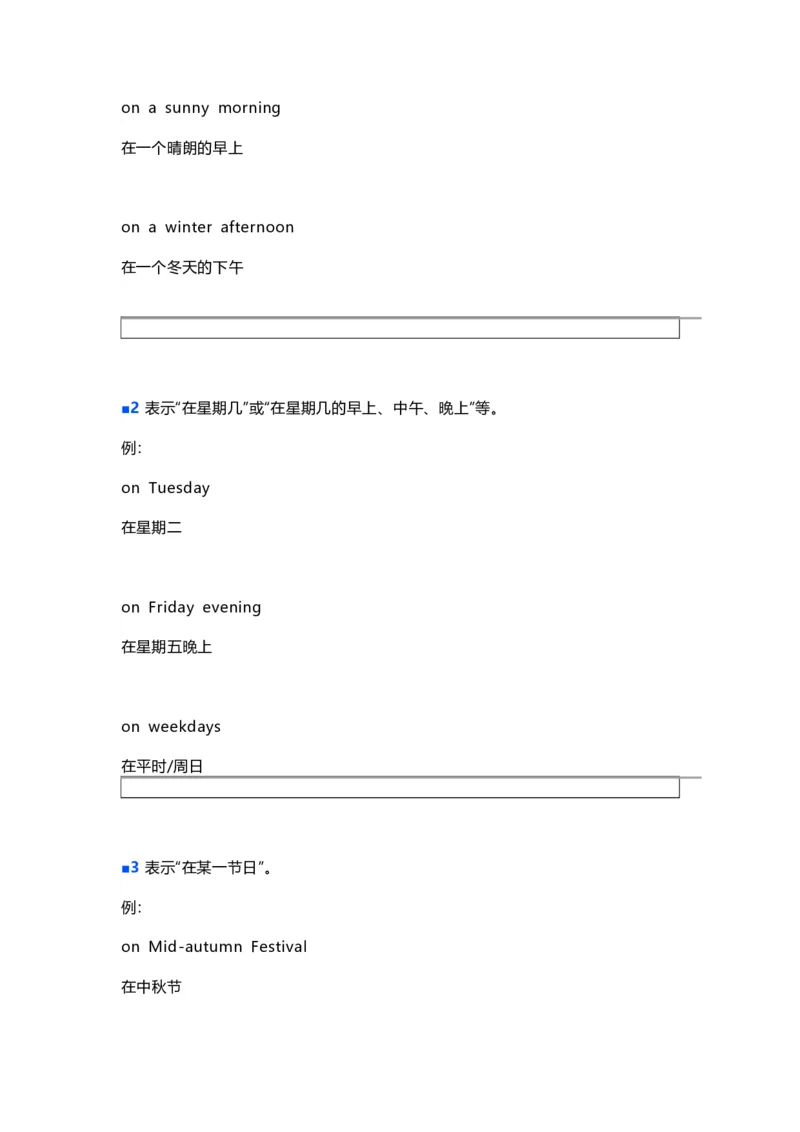
■1 表示“在具体的某一天”或“(在具体某一天的)早上、中午、晚上”
例:
on August 14th, 2018
在2018年8月14日on a sunny morning
在一个晴朗的早上
on a winter afternoon
在一个冬天的下午
■2 表示“在星期几”或“在星期几的早上、中午、晚上”等。
例:
on Tuesday
在星期二
on Friday evening
在星期五晚上
on weekdays
在平时/周日
■3 表示“在某一节日”。
例:
on Mid-autumn Festival
在中秋节on Teachers' Day
在教师节
注意:
on Christmas Day指圣诞节当天,
而at Christmas则表示“圣诞节期间”。
in的用法
■1 表示“在某年、月、季节”。
例:
in 2020
in July
in summer
■2 表示“在某世纪”。
例:
in the 21st century
在二十一世纪
■3 表示“在早上、下午、晚上”。
例:in the morning/ afternoon/ evening
在早上、下午、晚上
at的用法
■1 at noon
■2 at night
■3 at +钟表时间
例:at six o'clock
■4 at表示“在……岁时”。
例:
at the age of eighteen
【重点考点四】
exercise的用法
1>表示体育锻炼,是不可数名词
例:
I often take exercise after school.
2>表示练习,习题,是可数名词
例:Do Exercises 3 and 4 on Page 51 for homework.
3>注意
do exercise 做体育锻炼
= take exercise
【重点考点五】
homework,不可数名,无复数形式
例:
(√)Teachers gave us some homework.
(×)Teachers gave us some homeworks.
【重点考点六】
go 后面接动词ing形式:
■go boating
■go fishing
■go swimming
■go shopping
■go camping
■go hiking
■go running