《英语周报》高考二轮复习——语法项目讲解与练习
反意疑问句
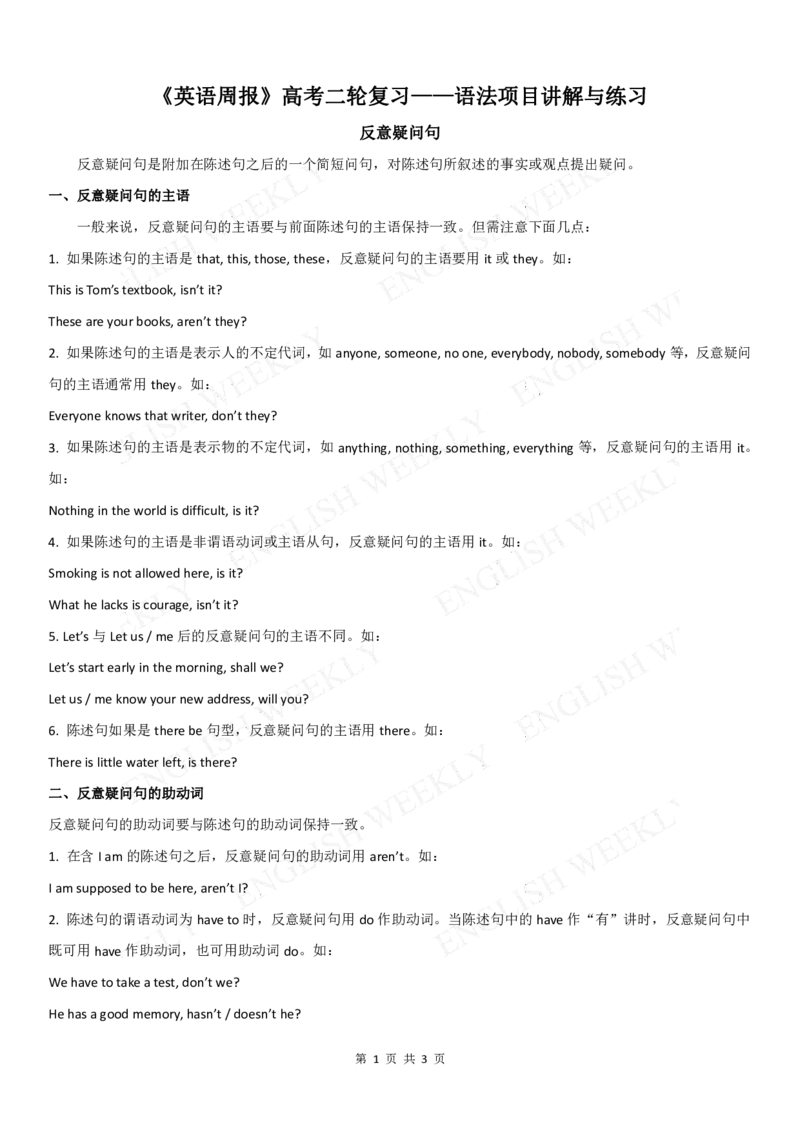
反意疑问句是附加在陈述句之后的一个简短问句,对陈述句所叙述的事实或观点提出疑问。
一、反意疑问句的主语
一般来说,反意疑问句的主语要与前面陈述句的主语保持一致。但需注意下面几点:
1. 如果陈述句的主语是that,this,those,these,反意疑问句的主语要用it或they。如:
ThisisTom’stextbook,isn’tit?
Theseareyourbooks,aren’tthey?
2. 如果陈述句的主语是表示人的不定代词,如anyone,someone,noone,everybody,nobody,somebody等,反意疑问
句的主语通常用they。如:
Everyoneknowsthatwriter,don’tthey?
3. 如果陈述句的主语是表示物的不定代词,如anything,nothing,something,everything等,反意疑问句的主语用it。
如:
Nothingintheworldisdifficult,isit?
4. 如果陈述句的主语是非谓语动词或主语从句,反意疑问句的主语用it。如:
Smokingisnotallowedhere,isit?
Whathelacksiscourage,isn’tit?
5.Let’s与Letus/me后的反意疑问句的主语不同。如:
Let’sstartearlyinthemorning,shallwe?
Letus/meknowyournewaddress,willyou?
6. 陈述句如果是therebe句型,反意疑问句的主语用there。如:
Thereislittlewaterleft,isthere?
二、反意疑问句的助动词
反意疑问句的助动词要与陈述句的助动词保持一致。
1. 在含Iam的陈述句之后,反意疑问句的助动词用aren’t。如:
Iamsupposedtobehere,aren’tI?
2. 陈述句的谓语动词为haveto时,反意疑问句用do作助动词。当陈述句中的have作“有”讲时,反意疑问句中
既可用have作助动词,也可用助动词do。如:
Wehavetotakeatest,don’twe?
Hehasagoodmemory,hasn’t/doesn’the?
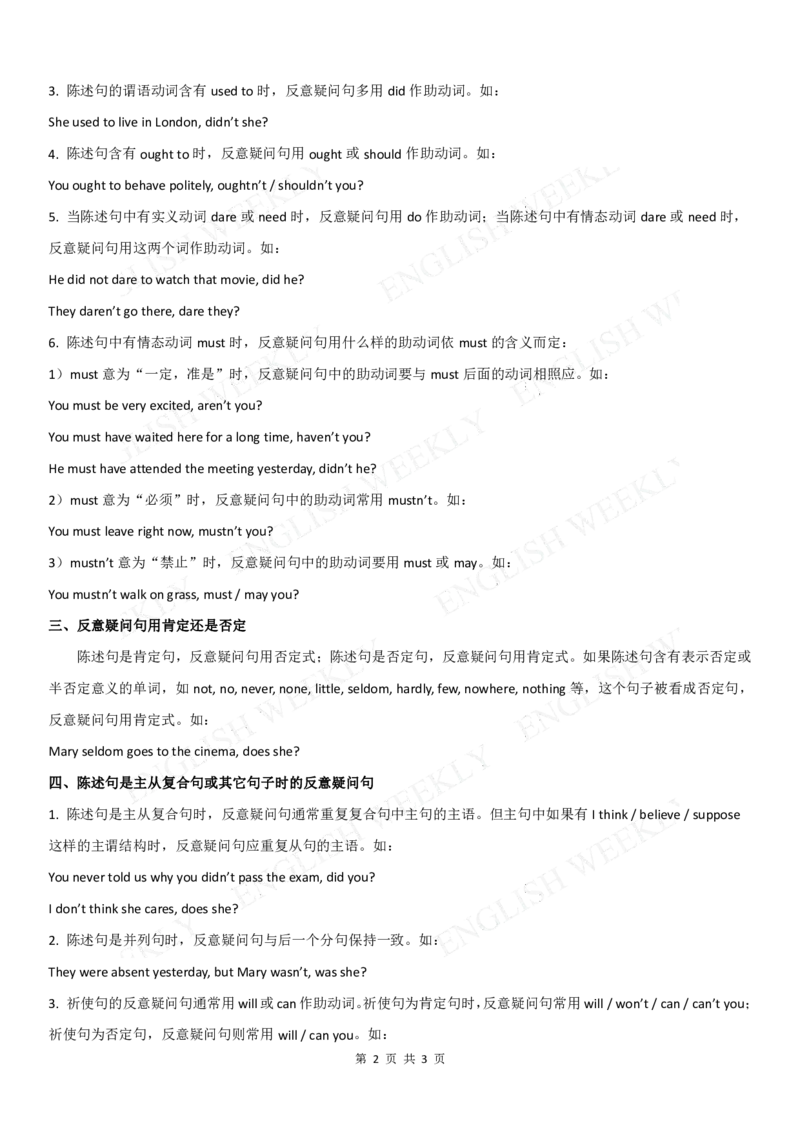
第 1 页 共 3 页3. 陈述句的谓语动词含有usedto时,反意疑问句多用did作助动词。如:
SheusedtoliveinLondon,didn’tshe?
4. 陈述句含有oughtto时,反意疑问句用ought或should作助动词。如:
Yououghttobehavepolitely,oughtn’t/shouldn’tyou?
5. 当陈述句中有实义动词dare或need时,反意疑问句用do作助动词;当陈述句中有情态动词dare或need时,
反意疑问句用这两个词作助动词。如:
Hedidnotdaretowatchthatmovie,didhe?
Theydaren’tgothere,darethey?
6. 陈述句中有情态动词must时,反意疑问句用什么样的助动词依must的含义而定:
1)must意为“一定,准是”时,反意疑问句中的助动词要与must后面的动词相照应。如:
Youmustbeveryexcited,aren’tyou?
Youmusthavewaitedhereforalongtime,haven’tyou?
Hemusthaveattendedthemeetingyesterday,didn’the?
2)must意为“必须”时,反意疑问句中的助动词常用mustn’t。如:
Youmustleaverightnow,mustn’tyou?
3)mustn’t意为“禁止”时,反意疑问句中的助动词要用must或may。如:
Youmustn’twalkongrass,must/mayyou?
三、反意疑问句用肯定还是否定
陈述句是肯定句,反意疑问句用否定式;陈述句是否定句,反意疑问句用肯定式。如果陈述句含有表示否定或
半否定意义的单词,如not,no,never,none,little,seldom,hardly,few,nowhere,nothing等,这个句子被看成否定句,
反意疑问句用肯定式。如:
Maryseldomgoestothecinema,doesshe?
四、陈述句是主从复合句或其它句子时的反意疑问句
1. 陈述句是主从复合句时,反意疑问句通常重复复合句中主句的主语。但主句中如果有Ithink/believe/suppose
这样的主谓结构时,反意疑问句应重复从句的主语。如:
Younevertolduswhyyoudidn’tpasstheexam,didyou?
Idon’tthinkshecares,doesshe?
2. 陈述句是并列句时,反意疑问句与后一个分句保持一致。如:
Theywereabsentyesterday,butMarywasn’t,wasshe?
3. 祈使句的反意疑问句通常用will或can作助动词。祈使句为肯定句时,反意疑问句常用will/won’t/can/can’tyou;
祈使句为否定句,反意疑问句则常用will/canyou。如:
第 2 页 共 3 页Pleaseclosethewindow,will/won’t/can/can’tyou?
Don’ttakephotosinthemeetingroom,will/canyou?
反意疑问句专项练习
I. 用反意疑问句补全下面句子。
1.Noonewantstoleave,________?
2.Youmustreadmorebooksnextterm,________?
3.Heusedtohave5mealsaday,________?
4.Let’stalkaboutyoursonnow,________?
5.Idon’tthinkyou’veheardofthisconceptbefore,________?
6.Peopleshouldmakethebestofwhatthey’velearnt,________?
7.Therehavebeensometerriblescenesontelevision,________?
II. 从B栏中找出A栏各句的后半句。(每项限用一次)。
A B
1. I was looking forward to that film, but it was a load of
a.isn'tit?
rubbish,
2.Hetalkedandtalkedaboutthesametopicforhours, b.areyou?
3.That'smycoat, c.didn'tit?
4.Youcouldhardlyhearherattheback, d.didn'the?
5.Isupposeyouarenotserious, e.hadwe?
6.Youwon'tbehometillaftermidnight, f.couldyou?
7.Wehadn'tbeenthereverylong, g.wasn'tit?
8.Itmusthaverainedlastnight, h.canyou?
9.Youcan'tswim, i.willyou?
参考答案
反意疑问句专项练习
I.1.dothey 2.mustn’tyou 3.didn’the 4.shallwe
5.haveyou 6.shouldn’tthey 7.haven’tthere
II.1-5gdafb 6-9iech
第 3 页 共 3 页