文档文本内容
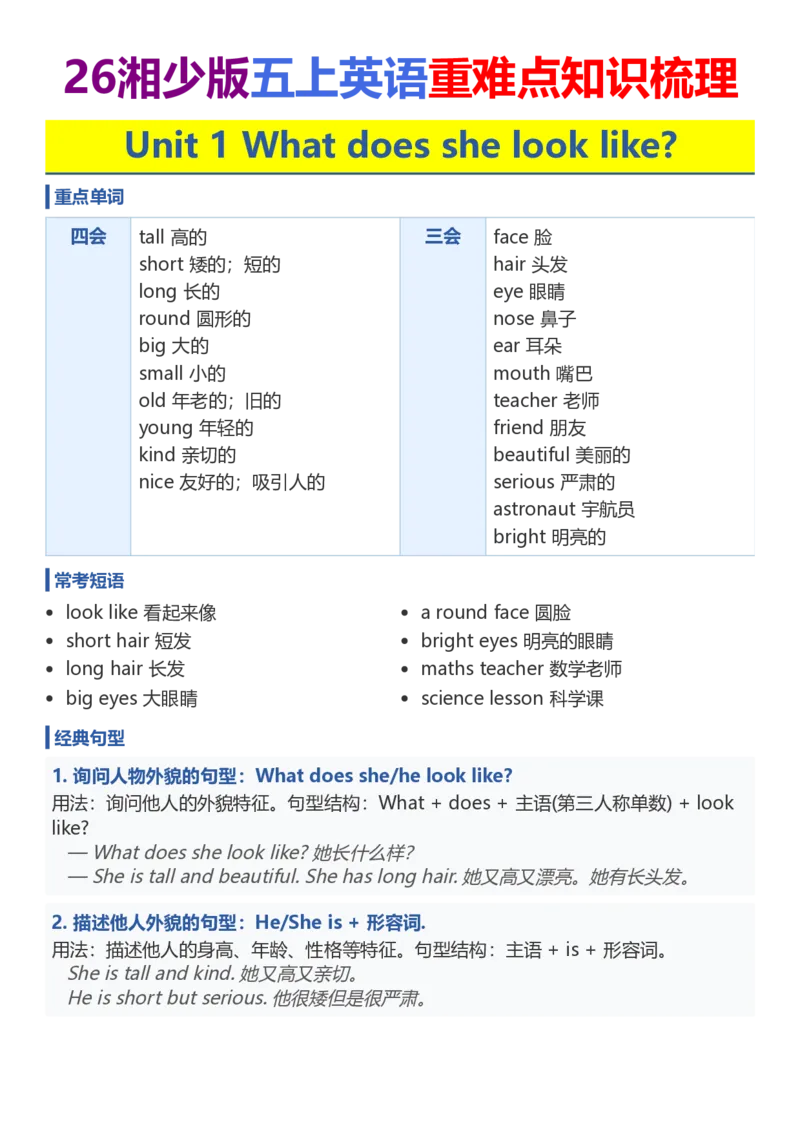
26湘少版五上英语重难点知识梳理
Unit 1 What does she look like?
重点单词
四会 tall 高的 三会 face 脸
short 矮的;短的 hair 头发
long 长的 eye 眼睛
round 圆形的 nose 鼻子
big 大的 ear 耳朵
small 小的 mouth 嘴巴
old 年老的;旧的 teacher 老师
young 年轻的 friend 朋友
kind 亲切的 beautiful 美丽的
nice 友好的;吸引人的 serious 严肃的
astronaut 宇航员
bright 明亮的
常考短语
look like 看起来像 a round face 圆脸
short hair 短发 bright eyes 明亮的眼睛
long hair 长发 maths teacher 数学老师
big eyes 大眼睛 science lesson 科学课
经典句型
1. 询问人物外貌的句型:What does she/he look like?
用法:询问他人的外貌特征。句型结构:What + does + 主语(第三人称单数) + look
like?
— What does she look like? 她长什么样?
— She is tall and beautiful. She has long hair. 她又高又漂亮。她有长头发。
2. 描述他人外貌的句型:He/She is + 形容词.
用法:描述他人的身高、年龄、性格等特征。句型结构:主语 + is + 形容词。
She is tall and kind. 她又高又亲切。
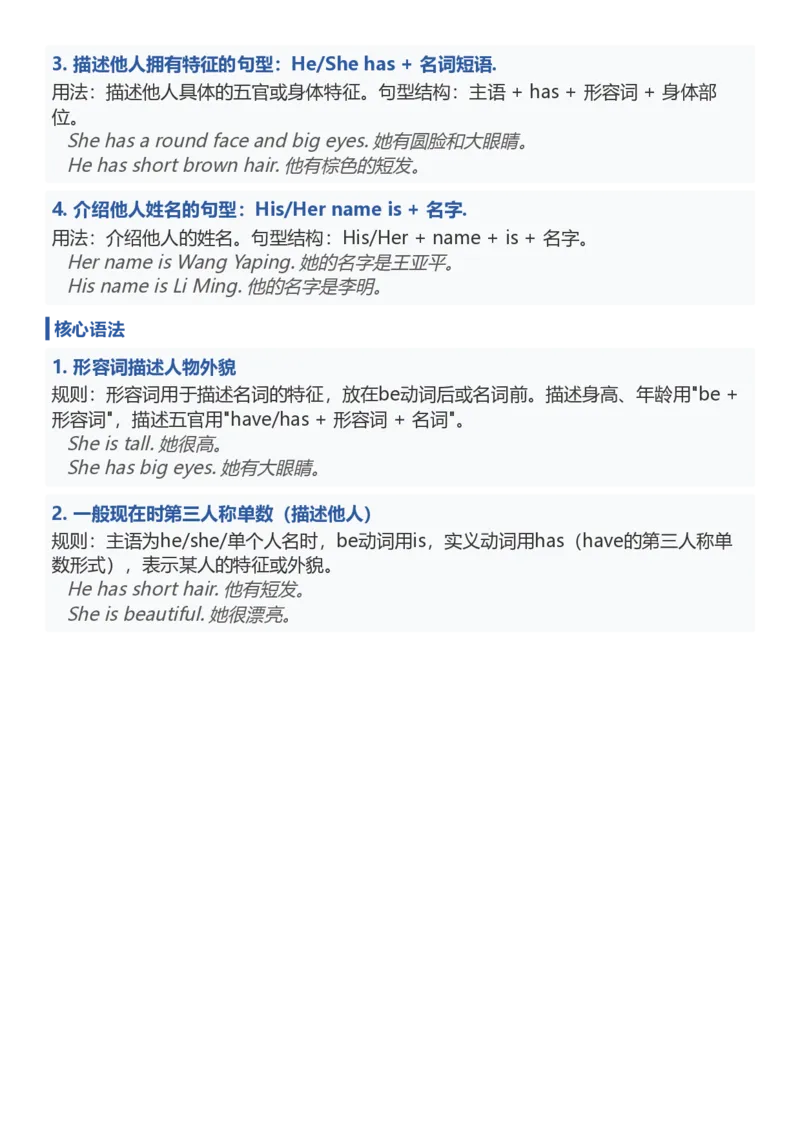
He is short but serious. 他很矮但是很严肃。3. 描述他人拥有特征的句型:He/She has + 名词短语.
用法:描述他人具体的五官或身体特征。句型结构:主语 + has + 形容词 + 身体部
位。
She has a round face and big eyes. 她有圆脸和大眼睛。
He has short brown hair. 他有棕色的短发。
4. 介绍他人姓名的句型:His/Her name is + 名字.
用法:介绍他人的姓名。句型结构:His/Her + name + is + 名字。
Her name is Wang Yaping. 她的名字是王亚平。
His name is Li Ming. 他的名字是李明。
核心语法
1. 形容词描述人物外貌
规则:形容词用于描述名词的特征,放在be动词后或名词前。描述身高、年龄用"be +
形容词",描述五官用"have/has + 形容词 + 名词"。
She is tall. 她很高。
She has big eyes. 她有大眼睛。
2. 一般现在时第三人称单数(描述他人)
规则:主语为he/she/单个人名时,be动词用is,实义动词用has(have的第三人称单
数形式),表示某人的特征或外貌。
He has short hair. 他有短发。
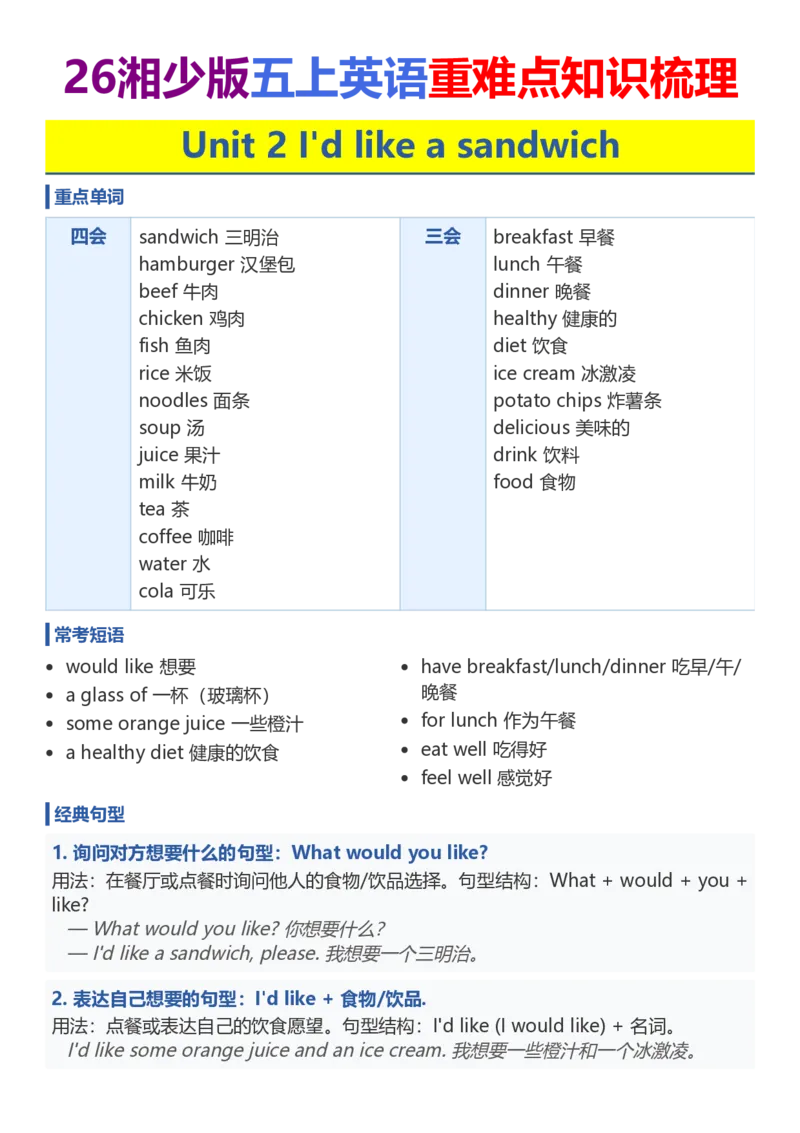
She is beautiful. 她很漂亮。26湘少版五上英语重难点知识梳理
Unit 2 I'd like a sandwich
重点单词
四会 sandwich 三明治 三会 breakfast 早餐
hamburger 汉堡包 lunch 午餐
beef 牛肉 dinner 晚餐
chicken 鸡肉 healthy 健康的
fish 鱼肉 diet 饮食
rice 米饭 ice cream 冰激凌
noodles 面条 potato chips 炸薯条
soup 汤 delicious 美味的
juice 果汁 drink 饮料
milk 牛奶 food 食物
tea 茶
coffee 咖啡
water 水
cola 可乐
常考短语
would like 想要 have breakfast/lunch/dinner 吃早/午/
a glass of 一杯(玻璃杯) 晚餐
some orange juice 一些橙汁 for lunch 作为午餐
a healthy diet 健康的饮食 eat well 吃得好
feel well 感觉好
经典句型
1. 询问对方想要什么的句型:What would you like?
用法:在餐厅或点餐时询问他人的食物/饮品选择。句型结构:What + would + you +
like?
— What would you like? 你想要什么?
— I'd like a sandwich, please. 我想要一个三明治。
2. 表达自己想要的句型:I'd like + 食物/饮品.
用法:点餐或表达自己的饮食愿望。句型结构:I'd like (I would like) + 名词。
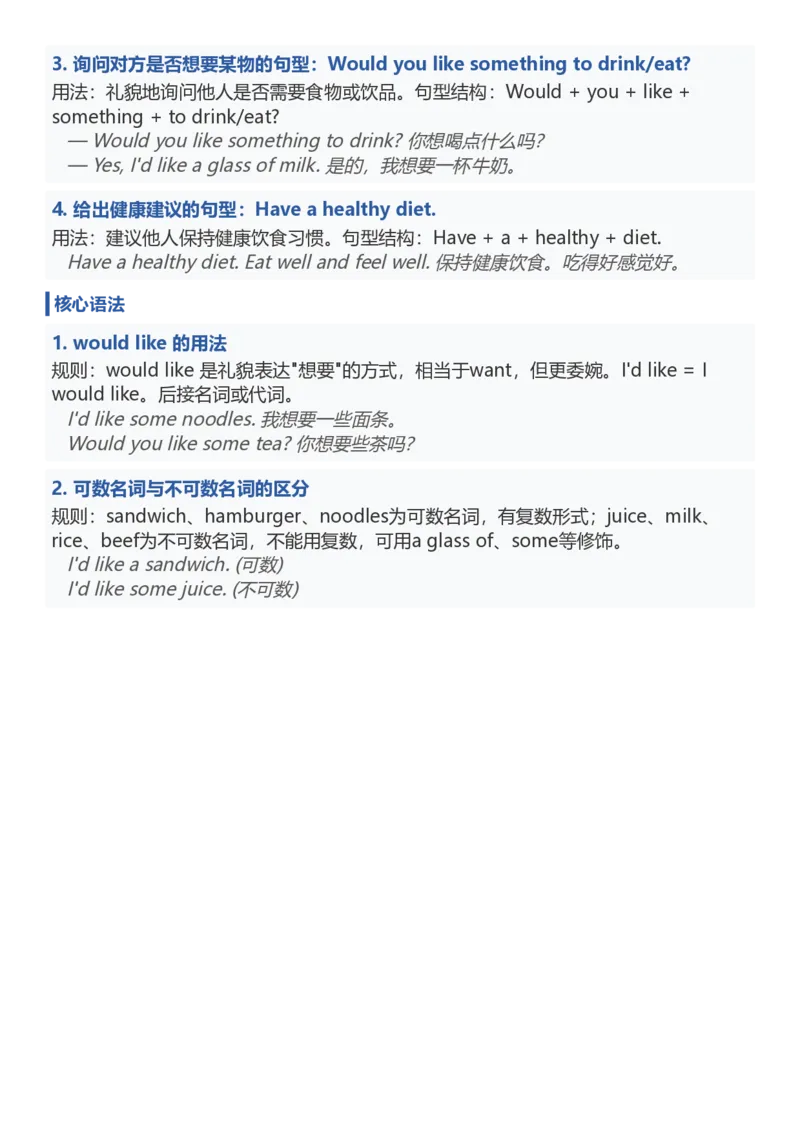
I'd like some orange juice and an ice cream. 我想要一些橙汁和一个冰激凌。3. 询问对方是否想要某物的句型:Would you like something to drink/eat?
用法:礼貌地询问他人是否需要食物或饮品。句型结构:Would + you + like +
something + to drink/eat?
— Would you like something to drink? 你想喝点什么吗?
— Yes, I'd like a glass of milk. 是的,我想要一杯牛奶。
4. 给出健康建议的句型:Have a healthy diet.
用法:建议他人保持健康饮食习惯。句型结构:Have + a + healthy + diet.
Have a healthy diet. Eat well and feel well. 保持健康饮食。吃得好感觉好。
核心语法
1. would like 的用法
规则:would like 是礼貌表达"想要"的方式,相当于want,但更委婉。I'd like = I
would like。后接名词或代词。
I'd like some noodles. 我想要一些面条。
Would you like some tea? 你想要些茶吗?
2. 可数名词与不可数名词的区分
规则:sandwich、hamburger、noodles为可数名词,有复数形式;juice、milk、
rice、beef为不可数名词,不能用复数,可用a glass of、some等修饰。
I'd like a sandwich. (可数)
I'd like some juice. (不可数)26湘少版五上英语重难点知识梳理
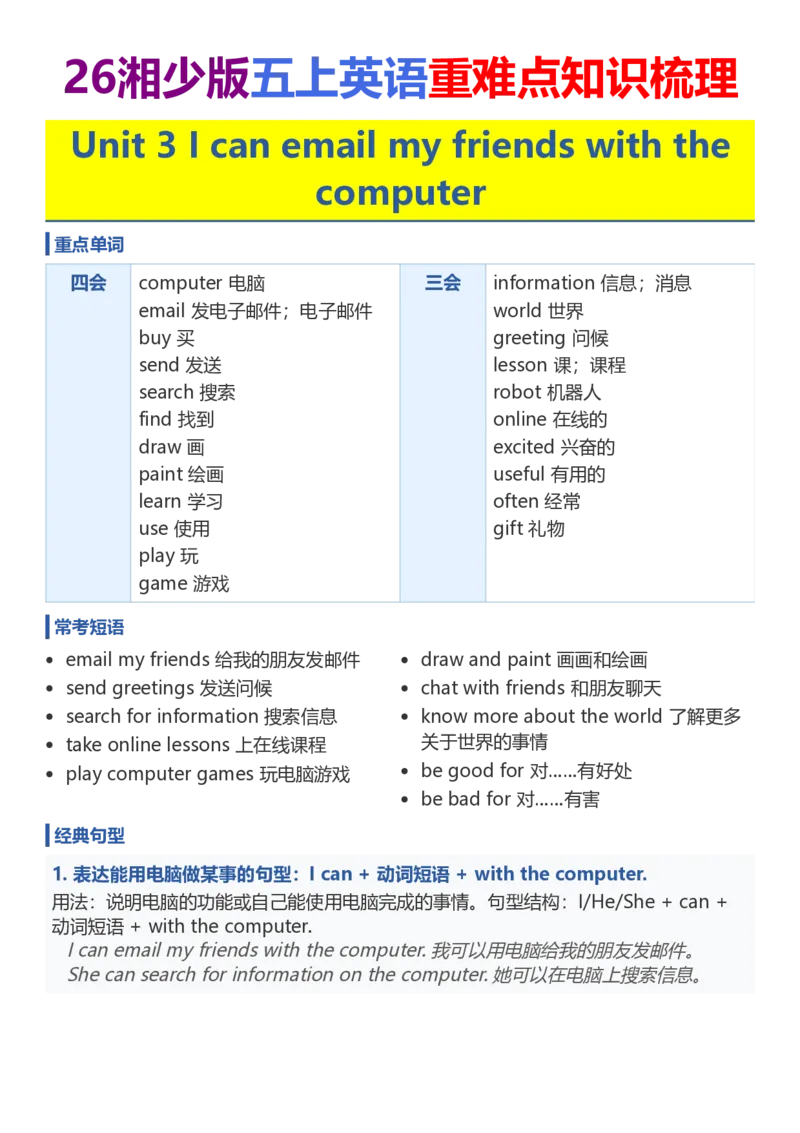
Unit 3 I can email my friends with the
computer
重点单词
四会 computer 电脑 三会 information 信息;消息
email 发电子邮件;电子邮件 world 世界
buy 买 greeting 问候
send 发送 lesson 课;课程
search 搜索 robot 机器人
find 找到 online 在线的
draw 画 excited 兴奋的
paint 绘画 useful 有用的
learn 学习 often 经常
use 使用 gift 礼物
play 玩
game 游戏
常考短语
email my friends 给我的朋友发邮件 draw and paint 画画和绘画
send greetings 发送问候 chat with friends 和朋友聊天
search for information 搜索信息 know more about the world 了解更多
take online lessons 上在线课程 关于世界的事情
play computer games 玩电脑游戏 be good for 对……有好处
be bad for 对……有害
经典句型
1. 表达能用电脑做某事的句型:I can + 动词短语 + with the computer.
用法:说明电脑的功能或自己能使用电脑完成的事情。句型结构:I/He/She + can +
动词短语 + with the computer.
I can email my friends with the computer. 我可以用电脑给我的朋友发邮件。
She can search for information on the computer. 她可以在电脑上搜索信息。2. 表达电脑具有多种功能的句型:It is very useful. I can... and...
用法:介绍电脑的多种用途。句型结构:It is + 形容词 + I can + 动词1 + and + 动词
2。
It is very useful. I can take online lessons and email my friends. 它非常有用。我
可以上在线课程和给朋友发邮件。
3. 给出忠告或建议的句型:Don't play computer games too often.
用法:劝告他人不要过度使用电脑或玩游戏。句型结构:Don't + 动词原形 + 其他。
Don't play computer games too often. It's not good for your eyes. 不要经常玩
电脑游戏。对你的眼睛不好。
4. 表达电子产品危害的句型:It's bad for + 名词.
用法:说明某事或某物对某方面有害。句型结构:It's + bad for + 名词。
Watching too much TV is bad for your eyes. 看太多电视对眼睛不好。
Using the computer for too long is bad for us. 使用电脑太久对我们不好。
核心语法
1. can 情态动词的用法
规则:can表示能力"能、会",后接动词原形,无人称和数的变化。否定形式为
cannot/can't,疑问句将can提到主语前。
I can send emails. 我能发邮件。
Can you draw with the computer? 你会用电脑画画吗?
2. 动名词短语作主语
规则:当表达"做某事是有益/有害的"时,可用动名词短语(V-ing)作主语,谓语动词
用单数。
Playing computer games too often is bad for your eyes. 经常玩电脑游戏对眼睛
不好。
Using the computer can help us learn. 使用电脑能帮助我们学习。26湘少版五上英语重难点知识梳理
Unit 4 Can I use your pencil, please?
重点单词
四会 use 使用 三会 brush 刷子;画笔
borrow 借用 paint 颜料
please 请 blackboard 黑板
pencil 铅笔 dictionary 词典
eraser 橡皮擦 worry 担心
ruler 尺子 ask 询问
pen 钢笔 pass 递;传递
book 书 together 一起
notebook 笔记本 helpful 有帮助的
glue 胶水 beautiful 漂亮的
scissors 剪刀
paper 纸
常考短语
borrow your pencil 借你的铅笔 work together 一起合作
use your brushes 用你的画笔 help each other 互相帮助
pass the glue 递胶水 have a look 看一看
make a kite 做风筝 ask for help 请求帮助
经典句型
1. 礼貌借用物品的句型:Can I use/borrow your + 物品, please?
用法:向他人礼貌地借用东西。句型结构:Can I + use/borrow + your + 名词 +
please?
— Can I use your pencil, please? 请问我能用一下你的铅笔吗?
— Sure. Here you are. 当然。给你。
2. 回应借用请求的句型:Sure. Here you are. / Here you are.
用法:同意借给对方物品时的回应。句型结构:Sure. / Certainly. + Here you are.
— Can I borrow your eraser? 我能借你的橡皮擦吗?
— Sure. Here you are. 当然。给你。3. 给予物品的句型:Here you are.
用法:把物品递给对方时使用。句型结构:Here + you + are.
— Can I use your glue? 我能用你的胶水吗?
— Here you are. 给你。
4. 表达感谢与回应的句型:Thank you. / You're welcome.
用法:借用物品后表达感谢及回应。句型结构:Thank you. / Thanks. / You're
welcome.
— Thank you all! 谢谢你们大家!
— You're welcome. 不客气。
核心语法
1. 情态动词can用于请求许可
规则:Can I...? 是请求对方允许自己做某事,语气礼貌客气。答语常用Sure. /
Certainly. / Of course. 表示同意。
Can I use your notebook? 我能用你的笔记本吗?
Can I borrow your dictionary? 我能借你的词典吗?
2. 简单祈使句的肯定与否定
规则:祈使句用于表达请求、命令或建议。肯定句以动词原形开头,否定句在动词原形
前加Don't。
Pass me the glue, please. 请把胶水递给我。
Don't worry. 别担心。26湘少版五上英语重难点知识梳理
Unit 5 May I have a pet?
重点单词
四会 pet 宠物 三会 parrot 鹦鹉
may 可以 goldfish 金鱼
rabbit 兔子 shop 商店
cat 猫 choose 选择
dog 狗 talk 说话
fish 鱼 follow 跟随
bird 鸟 repeat 重复
lovely 可爱的 back 回到原处
beautiful 美丽的 feed 喂养
clever 聪明的 hold 抱住
small 小的 Mrs 太太;夫人
big 大的
常考短语
have a pet 养宠物 ask for help 请求帮助
at the pet shop 在宠物店 Don't follow me! 别跟着我!
take...home 带……回家 go to the pet shop 去宠物店
talk to... 对……说话
经典句型
1. 请求得到许可的句型:May I have a pet?
用法:向长辈或他人礼貌地请求允许做某事。句型结构:May I + 动词原形 + 其他?
— May I have a pet, Dad? 爸爸,我可以养一个宠物吗?
— Yes, you can. 是的,你可以。
2. 肯定回应的句型:Yes, you can.
用法:同意对方的请求。句型结构:Yes, you can. / Sure. / Of course.
— May I have a rabbit? 我可以养一只兔子吗?
— Yes, you can. 是的,你可以。3. 否定回应的句型:No, you can't.
用法:不同意对方的请求。句型结构:No, you can't. / I'm sorry, you can't.
— May I have a parrot? 我可以养一只鹦鹉吗?
— No, you can't. 不,你不可以。
4. 表达喜好的句型:I like + 名词 + very much.
用法:表达对某人或某物的喜爱程度。句型结构:I/He/She + like/likes + 名词 + very
much。
Xiaoxiao likes him very much. 小小非常喜欢他。
I like dogs very much. 我非常喜欢狗。
核心语法
1. may 和 can 表示请求的区别
规则:may比can更正式、更礼貌,常用于向长辈或陌生人请求许可。can较为随意。本
单元主要学习May I...? 句型表示礼貌请求。
May I have a pet? 我可以养宠物吗?
May I come in? 我可以进来吗?
2. 一般疑问句及肯定/否定回答
规则:May I...? 和 Can I...? 是用于请求许可的一般疑问句。回答用Yes, you may/can.
或No, you may not/can't.。本单元主要学习Yes, you can. / No, you can't.
— May I feed the fish? 我可以喂鱼吗?
— Yes, you can. 是的,你可以。
— Can I hold the rabbit? 我可以抱着兔子吗?
— No, you can't. It's too small. 不,你不可以。它太小了。