文档文本内容
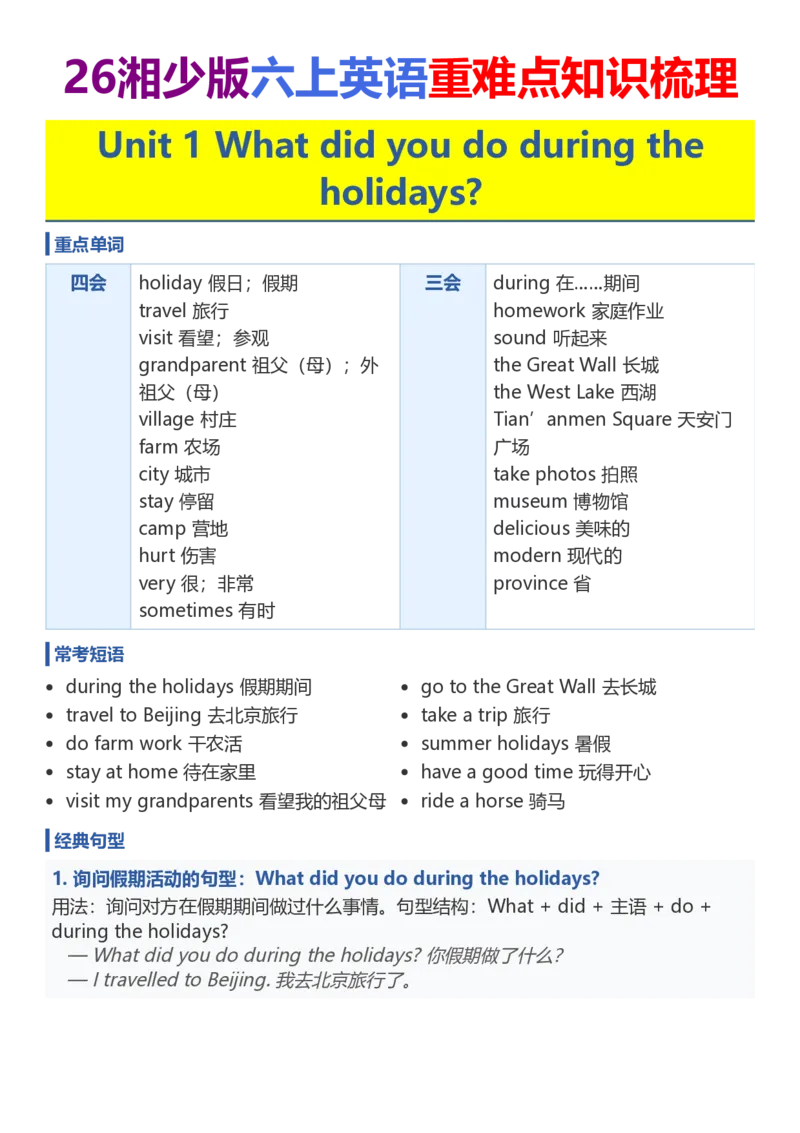
26湘少版六上英语重难点知识梳理
Unit 1 What did you do during the
holidays?
重点单词
四会 holiday 假日;假期 三会 during 在……期间
travel 旅行 homework 家庭作业
visit 看望;参观 sound 听起来
grandparent 祖父(母);外 the Great Wall 长城
祖父(母) the West Lake 西湖
village 村庄 Tian’anmen Square 天安门
farm 农场 广场
city 城市 take photos 拍照
stay 停留 museum 博物馆
camp 营地 delicious 美味的
hurt 伤害 modern 现代的
very 很;非常 province 省
sometimes 有时
常考短语
during the holidays 假期期间 go to the Great Wall 去长城
travel to Beijing 去北京旅行 take a trip 旅行
do farm work 干农活 summer holidays 暑假
stay at home 待在家里 have a good time 玩得开心
visit my grandparents 看望我的祖父母 ride a horse 骑马
经典句型
1. 询问假期活动的句型:What did you do during the holidays?
用法:询问对方在假期期间做过什么事情。句型结构:What + did + 主语 + do +
during the holidays?
— What did you do during the holidays? 你假期做了什么?
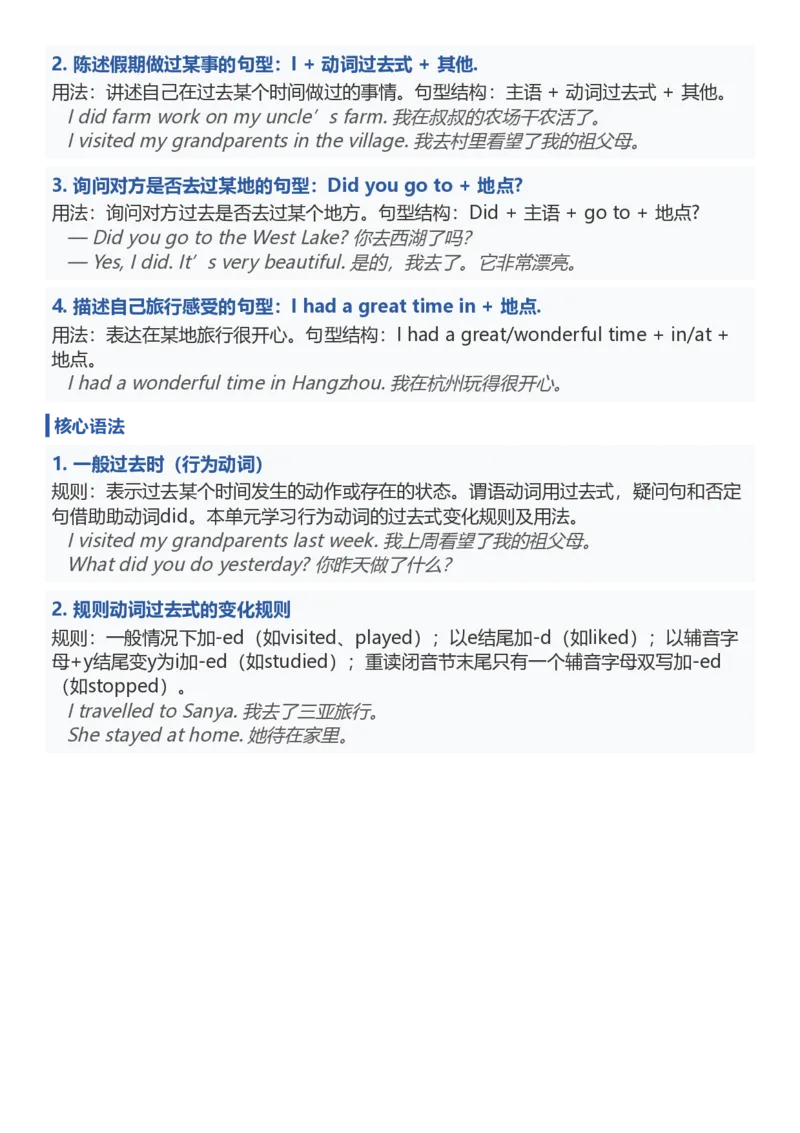
— I travelled to Beijing. 我去北京旅行了。2. 陈述假期做过某事的句型:I + 动词过去式 + 其他.
用法:讲述自己在过去某个时间做过的事情。句型结构:主语 + 动词过去式 + 其他。
I did farm work on my uncle’s farm. 我在叔叔的农场干农活了。
I visited my grandparents in the village. 我去村里看望了我的祖父母。
3. 询问对方是否去过某地的句型:Did you go to + 地点?
用法:询问对方过去是否去过某个地方。句型结构:Did + 主语 + go to + 地点?
— Did you go to the West Lake? 你去西湖了吗?
— Yes, I did. It’s very beautiful. 是的,我去了。它非常漂亮。
4. 描述自己旅行感受的句型:I had a great time in + 地点.
用法:表达在某地旅行很开心。句型结构:I had a great/wonderful time + in/at +
地点。
I had a wonderful time in Hangzhou. 我在杭州玩得很开心。
核心语法
1. 一般过去时(行为动词)
规则:表示过去某个时间发生的动作或存在的状态。谓语动词用过去式,疑问句和否定
句借助助动词did。本单元学习行为动词的过去式变化规则及用法。
I visited my grandparents last week. 我上周看望了我的祖父母。
What did you do yesterday? 你昨天做了什么?
2. 规则动词过去式的变化规则
规则:一般情况下加-ed(如visited、played);以e结尾加-d(如liked);以辅音字
母+y结尾变y为i加-ed(如studied);重读闭音节末尾只有一个辅音字母双写加-ed
(如stopped)。
I travelled to Sanya. 我去了三亚旅行。
She stayed at home. 她待在家里。26湘少版六上英语重难点知识梳理
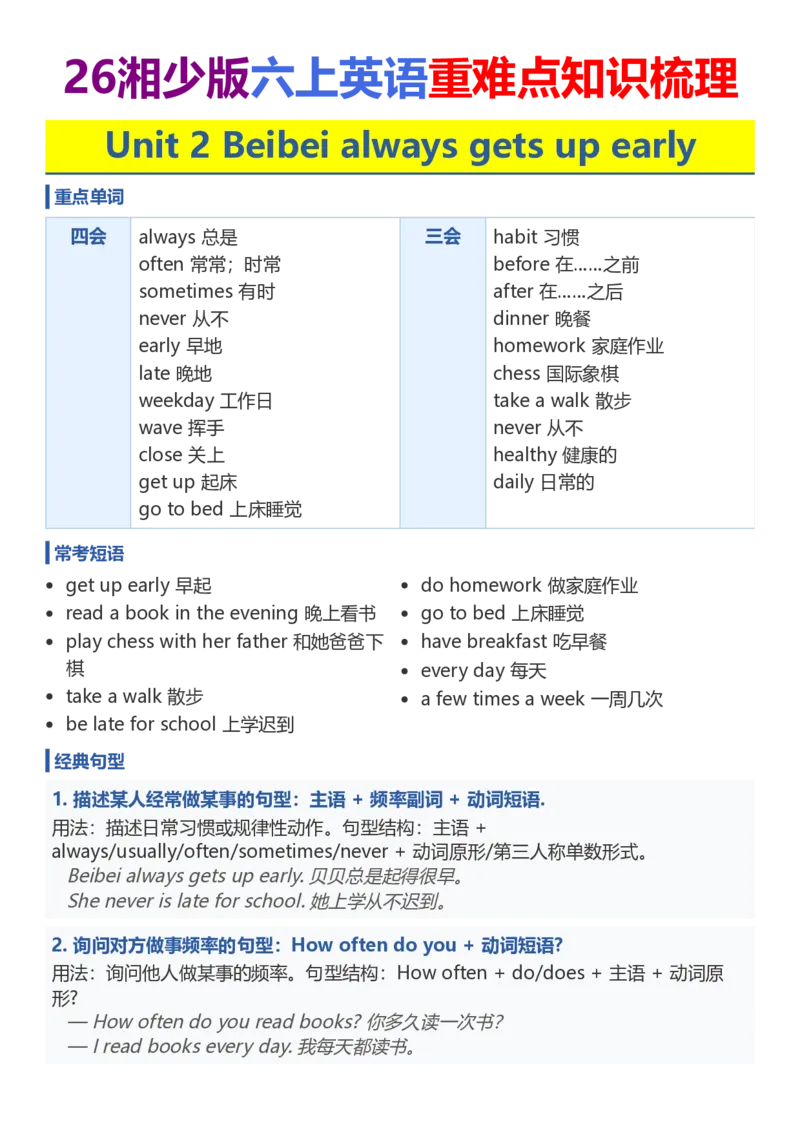
Unit 2 Beibei always gets up early
重点单词
四会 always 总是 三会 habit 习惯
often 常常;时常 before 在……之前
sometimes 有时 after 在……之后
never 从不 dinner 晚餐
early 早地 homework 家庭作业
late 晚地 chess 国际象棋
weekday 工作日 take a walk 散步
wave 挥手 never 从不
close 关上 healthy 健康的
get up 起床 daily 日常的
go to bed 上床睡觉
常考短语
get up early 早起 do homework 做家庭作业
read a book in the evening 晚上看书 go to bed 上床睡觉
play chess with her father 和她爸爸下 have breakfast 吃早餐
棋 every day 每天
take a walk 散步 a few times a week 一周几次
be late for school 上学迟到
经典句型
1. 描述某人经常做某事的句型:主语 + 频率副词 + 动词短语.
用法:描述日常习惯或规律性动作。句型结构:主语 +
always/usually/often/sometimes/never + 动词原形/第三人称单数形式。
Beibei always gets up early. 贝贝总是起得很早。
She never is late for school. 她上学从不迟到。
2. 询问对方做事频率的句型:How often do you + 动词短语?
用法:询问他人做某事的频率。句型结构:How often + do/does + 主语 + 动词原
形?
— How often do you read books? 你多久读一次书?
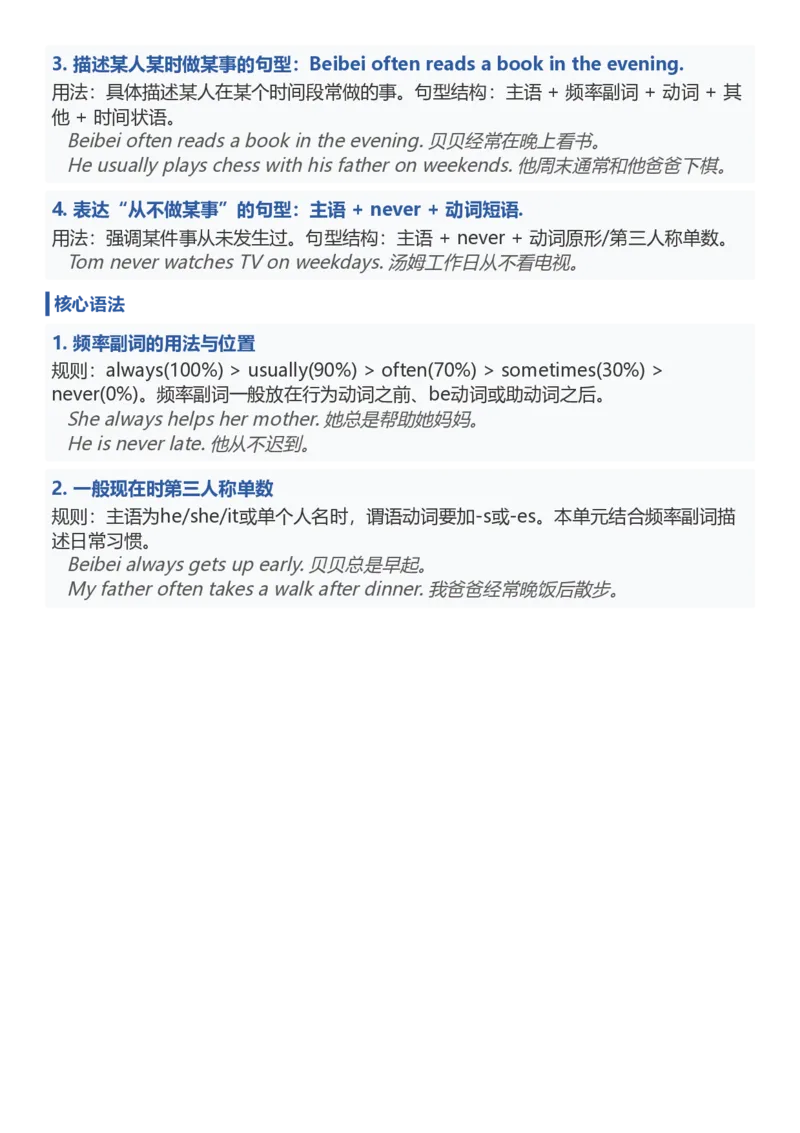
— I read books every day. 我每天都读书。3. 描述某人某时做某事的句型:Beibei often reads a book in the evening.
用法:具体描述某人在某个时间段常做的事。句型结构:主语 + 频率副词 + 动词 + 其
他 + 时间状语。
Beibei often reads a book in the evening. 贝贝经常在晚上看书。
He usually plays chess with his father on weekends. 他周末通常和他爸爸下棋。
4. 表达“从不做某事”的句型:主语 + never + 动词短语.
用法:强调某件事从未发生过。句型结构:主语 + never + 动词原形/第三人称单数。
Tom never watches TV on weekdays. 汤姆工作日从不看电视。
核心语法
1. 频率副词的用法与位置
规则:always(100%) > usually(90%) > often(70%) > sometimes(30%) >
never(0%)。频率副词一般放在行为动词之前、be动词或助动词之后。
She always helps her mother. 她总是帮助她妈妈。
He is never late. 他从不迟到。
2. 一般现在时第三人称单数
规则:主语为he/she/it或单个人名时,谓语动词要加-s或-es。本单元结合频率副词描
述日常习惯。
Beibei always gets up early. 贝贝总是早起。
My father often takes a walk after dinner. 我爸爸经常晚饭后散步。26湘少版六上英语重难点知识梳理
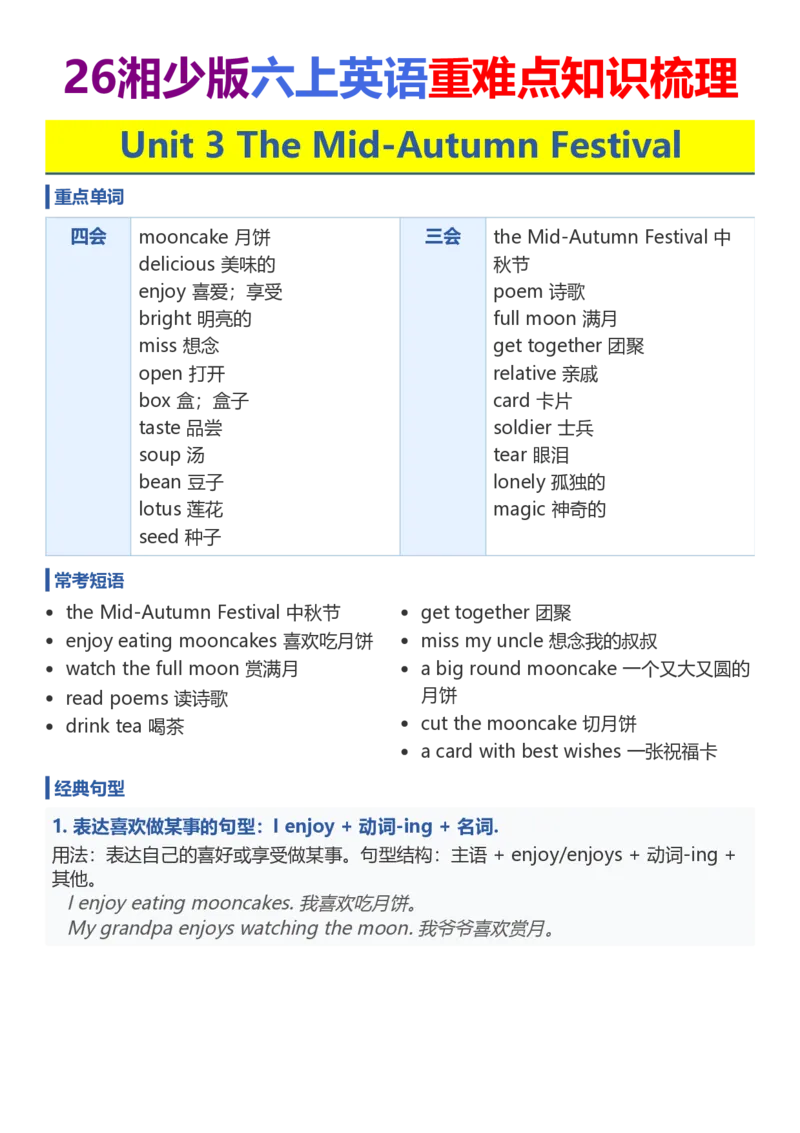
Unit 3 The Mid-Autumn Festival
重点单词
四会 mooncake 月饼 三会 the Mid-Autumn Festival 中
delicious 美味的 秋节
enjoy 喜爱;享受 poem 诗歌
bright 明亮的 full moon 满月
miss 想念 get together 团聚
open 打开 relative 亲戚
box 盒;盒子 card 卡片
taste 品尝 soldier 士兵
soup 汤 tear 眼泪
bean 豆子 lonely 孤独的
lotus 莲花 magic 神奇的
seed 种子
常考短语
the Mid-Autumn Festival 中秋节 get together 团聚
enjoy eating mooncakes 喜欢吃月饼 miss my uncle 想念我的叔叔
watch the full moon 赏满月 a big round mooncake 一个又大又圆的
read poems 读诗歌 月饼
drink tea 喝茶 cut the mooncake 切月饼
a card with best wishes 一张祝福卡
经典句型
1. 表达喜欢做某事的句型:I enjoy + 动词-ing + 名词.
用法:表达自己的喜好或享受做某事。句型结构:主语 + enjoy/enjoys + 动词-ing +
其他。
I enjoy eating mooncakes. 我喜欢吃月饼。
My grandpa enjoys watching the moon. 我爷爷喜欢赏月。2. 描述中秋节活动的句型:We + 动词 + 其他 during the Mid-Autumn Festival.
用法:介绍中秋节的习俗活动。句型结构:主语 + 动词原形/三单 + 其他 + during/on
+ 节日。
We eat mooncakes and drink tea during the festival. 节日期间我们吃月饼喝茶。
My family gets together and watches the full moon. 我的家人团聚在一起赏月。
3. 询问对方是否做某事的句型:Did you + 动词原形 + 其他?
用法:询问对方过去是否做了某事。句型结构:Did + 主语 + 动词原形 + 其他?
— Did you have a good time with your family? 你和家人玩得开心吗?
— Yes, we did. We enjoyed the mooncakes very much. 是的,我们非常喜欢月
饼。
4. 表达思念的句型:I miss + 某人.
用法:表达对不在身边的人的想念。句型结构:主语 + miss/misses + 人。
I miss my uncle. He is a soldier in Xizang. 我想念我的叔叔。他是一名在西藏的军
人。
核心语法
1. 动名词(V-ing)作宾语
规则:enjoy、like、love等动词后需接动名词(动词-ing形式)作宾语,表示“喜欢做
某事”。本单元重点学习enjoy doing的用法。
I enjoy reading poems about the moon. 我喜欢读关于月亮的诗。
She enjoys drinking tea with her family. 她喜欢和家人一起喝茶。
2. 一般过去时(不规则动词)
规则:本单元出现部分不规则动词的过去式,如get-got, eat-ate, cut-cut, miss-
missed(规则), put-put。需特殊记忆。
Grandma cut the mooncake. 奶奶切了月饼。
We had a big dinner yesterday. 我们昨天吃了一顿大餐。26湘少版六上英语重难点知识梳理
Unit 4 It will be sunny and cool
tomorrow
重点单词
四会 will 将要 三会 weather forecast 天气预报
wind 风 light rain 小雨
rain 雨;下雨 strong wind 强风
heavy 大量的;重的 temperature 温度
storm 暴风雨;暴风雪 disaster 灾害
safe 安全的 flood 洪水
zoo 动物园 scientist 科学家
sunny 晴朗的 satellite 卫星
cloudy 多云的 prevent 预防
cool 凉爽的 indoors 在室内
cold 寒冷的
hot 炎热的
常考短语
will be sunny and cool 将晴朗凉爽 park cars in safe places 把车停在安全的
a big storm 一场大风暴 地方
a strong wind 强风 go to the park 去公园
heavy rain 大雨 weather forecast 天气预报
stay at home 待在家里 close the windows 关窗户
drink enough water 喝足够的水
经典句型
1. 描述未来天气的句型:It will be + 天气形容词 + 时间.
用法:预报将来的天气情况。句型结构:It + will be + 天气形容词 + 时间状语。
It will be sunny and cool in Beijing tomorrow. 明天北京将晴朗凉爽。
It will be cloudy in Shanghai. 上海将多云。2. 描述将会有某种天气现象的句型:There will be + 天气名词 + 地点.
用法:预报将出现的风雨雪等现象。句型结构:There + will be + 名词
(rain/snow/storm等)+ 其他。
There will be a big storm in Guangzhou. 广州将有一场大暴风雨。
There will be light rain in the afternoon. 下午将有小雨。
3. 询问将来天气的句型:What will the weather be like + 时间?
用法:询问未来某段时间的天气状况。句型结构:What + will + the weather + be
like + 时间?
— What will the weather be like tomorrow? 明天天气怎么样?
— It will be windy and cold. 将有风且寒冷。
4. 表达将来活动的句型:People will + 动词原形 + 其他.
用法:预报人们将要做的事情。句型结构:主语 + will + 动词原形 + 其他。
Some children will go to the zoo with their parents. 一些孩子将和父母去动物
园。
Students will stay at home. 学生们将待在家里。
核心语法
1. 一般将来时(will型)
规则:表示将来要发生的动作或存在的状态。will为助动词,后接动词原形,无人称和
数的变化。否定形式为won’t = will not。
It will be sunny tomorrow. 明天将放晴。
They won’t go to school next Monday. 他们下周一不去上学。
2. There will be 句型
规则:用于表示“将有……”,是there be句型的一般将来时形式。后接名词,be动词
不受主语影响,一律用will be。
There will be a heavy rain tonight. 今晚将有大雨。
There will be a strong wind tomorrow. 明天将有大风。26湘少版六上英语重难点知识梳理
Unit 5 I will bring a bottle of orange
juice
重点单词
四会 bring 带来 三会 pot 罐;瓶
bottle 瓶子 bar 条;棒
picnic 野餐 outing 短途旅行
yogurt 酸奶 sell 卖
biscuit 饼干 healthy 健康的
cola 可乐 lifestyle 生活方式
candy 糖果 a few 一些
chocolate 巧克力 a bottle of 一瓶
milk 牛奶 a pot of 一罐
fruit 水果 a can of 一罐
cake 蛋糕 countryside 乡村
water 水
常考短语
bring a bottle of orange juice 带一瓶橙 go to the countryside 去乡村
汁 enjoy the day 享受这一天
three pots of yogurt 三罐酸奶 play games on the beach 在海滩上玩游
a few cans of cola 几罐可乐 戏
some candies 一些糖果 a healthy lifestyle 健康的生活方式
have a picnic 去野餐 sell products online 在线销售产品
经典句型
1. 表达将来会带某物的句型:I will bring + 物品.
用法:说明野餐或出行时打算携带的物品。句型结构:主语 + will bring + 名词短语。
I will bring a bottle of orange juice. 我会带一瓶橙汁。
My mother will bring some fruit and cakes. 我妈妈会带一些水果和蛋糕。2. 询问对方会带什么的句型:What will you bring?
用法:询问他人在活动中会携带什么物品。句型结构:What + will + 主语 + bring?
— What will you bring for the picnic? 野餐你会带什么?
— I will bring three pots of yogurt. 我会带三罐酸奶。
3. 描述某人喜欢做某事的句型:My sister likes to play games on the beach.
用法:描述某人的喜好或习惯性活动。句型结构:主语 + like/likes + to + 动词原形 +
其他。
My father likes to bring us to the park at the weekend. 我爸爸喜欢周末带我们去
公园。
My sister likes to play games on the beach. 我妹妹喜欢在海滩上玩游戏。
4. 表达共同做某事的句型:We will + 动词原形 + together.
用法:表达计划一起做某事。句型结构:We/They + will + 动词原形 + together。
We will play games and have a good time together. 我们将一起玩游戏,玩得很
开心。
My parents will play games with us this Saturday. 这周六我父母会和我们一起玩
游戏。
核心语法
1. 一般将来时表示计划与安排
规则:will可以表示将来打算或计划要做的事,常与tomorrow, next week, this
Saturday等时间状语连用。本单元还可用bring表示“带某物”。
I will bring some biscuits for the picnic. 我会为野餐带一些饼干。
We will have a picnic in the countryside. 我们将在乡村野餐。
2. 数量词修饰名词(量词短语)
规则:不可数名词需用量词短语表示数量,如a bottle of(一瓶),a pot of(一
罐),a cup of(一杯),a can of(一罐),a bar of(一条/块),a few(一些,修
饰可数名词复数),some(一些,修饰可数或不可数)。
I will bring three pots of yogurt. 我会带三罐酸奶。
We need a few cans of cola and some candies. 我们需要几罐可乐和一些糖果。