文档文本内容
26湘少版四上英语重难点知识梳理
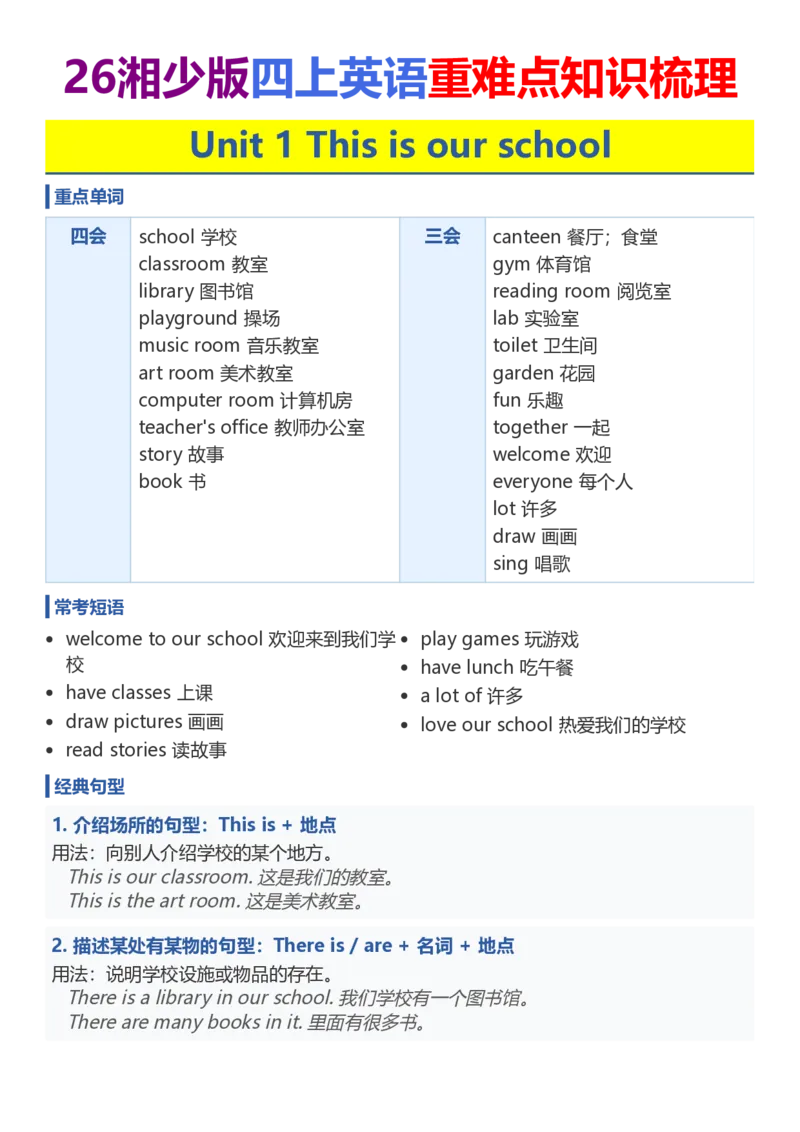
Unit 1 This is our school
重点单词
四会 school 学校 三会 canteen 餐厅;食堂
classroom 教室 gym 体育馆
library 图书馆 reading room 阅览室
playground 操场 lab 实验室
music room 音乐教室 toilet 卫生间
art room 美术教室 garden 花园
computer room 计算机房 fun 乐趣
teacher's office 教师办公室 together 一起
story 故事 welcome 欢迎
book 书 everyone 每个人
lot 许多
draw 画画
sing 唱歌
常考短语
welcome to our school 欢迎来到我们学 play games 玩游戏
校 have lunch 吃午餐
have classes 上课 a lot of 许多
draw pictures 画画 love our school 热爱我们的学校
read stories 读故事
经典句型
1. 介绍场所的句型:This is + 地点
用法:向别人介绍学校的某个地方。
This is our classroom. 这是我们的教室。
This is the art room. 这是美术教室。
2. 描述某处有某物的句型:There is / are + 名词 + 地点
用法:说明学校设施或物品的存在。
There is a library in our school. 我们学校有一个图书馆。
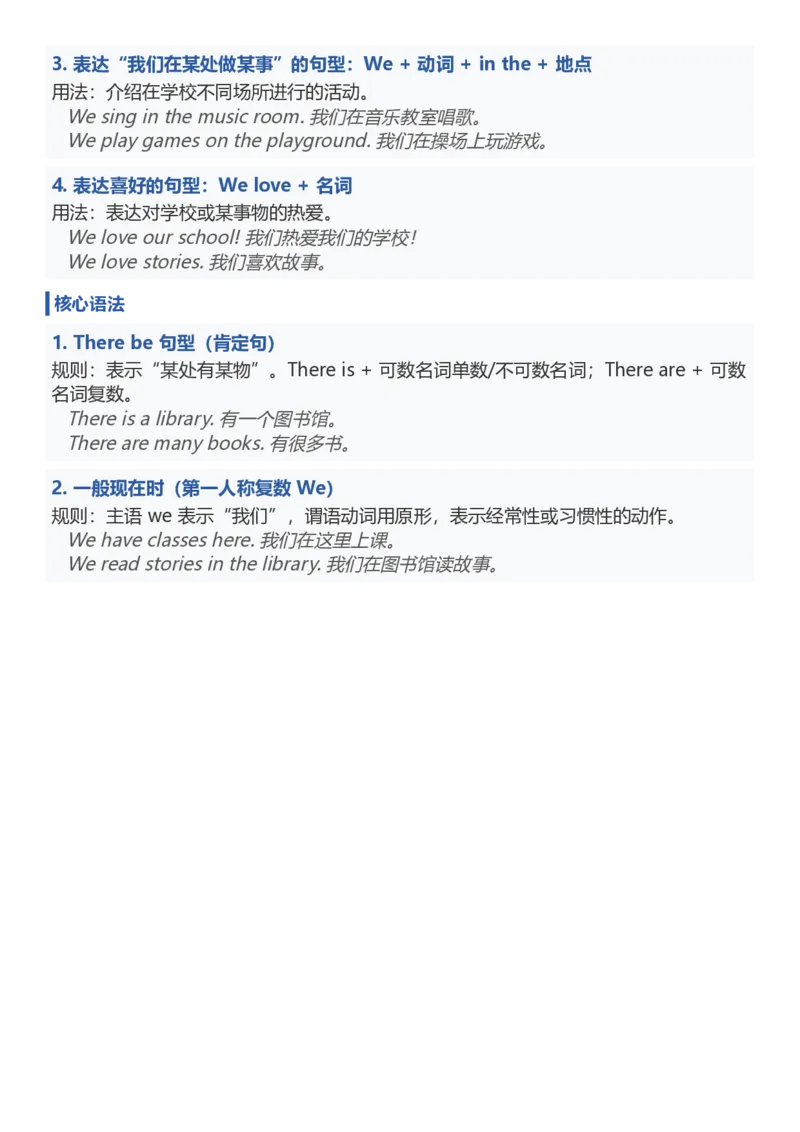
There are many books in it. 里面有很多书。3. 表达“我们在某处做某事”的句型:We + 动词 + in the + 地点
用法:介绍在学校不同场所进行的活动。
We sing in the music room. 我们在音乐教室唱歌。
We play games on the playground. 我们在操场上玩游戏。
4. 表达喜好的句型:We love + 名词
用法:表达对学校或某事物的热爱。
We love our school! 我们热爱我们的学校!
We love stories. 我们喜欢故事。
核心语法
1. There be 句型(肯定句)
规则:表示“某处有某物”。There is + 可数名词单数/不可数名词;There are + 可数
名词复数。
There is a library. 有一个图书馆。
There are many books. 有很多书。
2. 一般现在时(第一人称复数 We)
规则:主语 we 表示“我们”,谓语动词用原形,表示经常性或习惯性的动作。
We have classes here. 我们在这里上课。
We read stories in the library. 我们在图书馆读故事。26湘少版四上英语重难点知识梳理
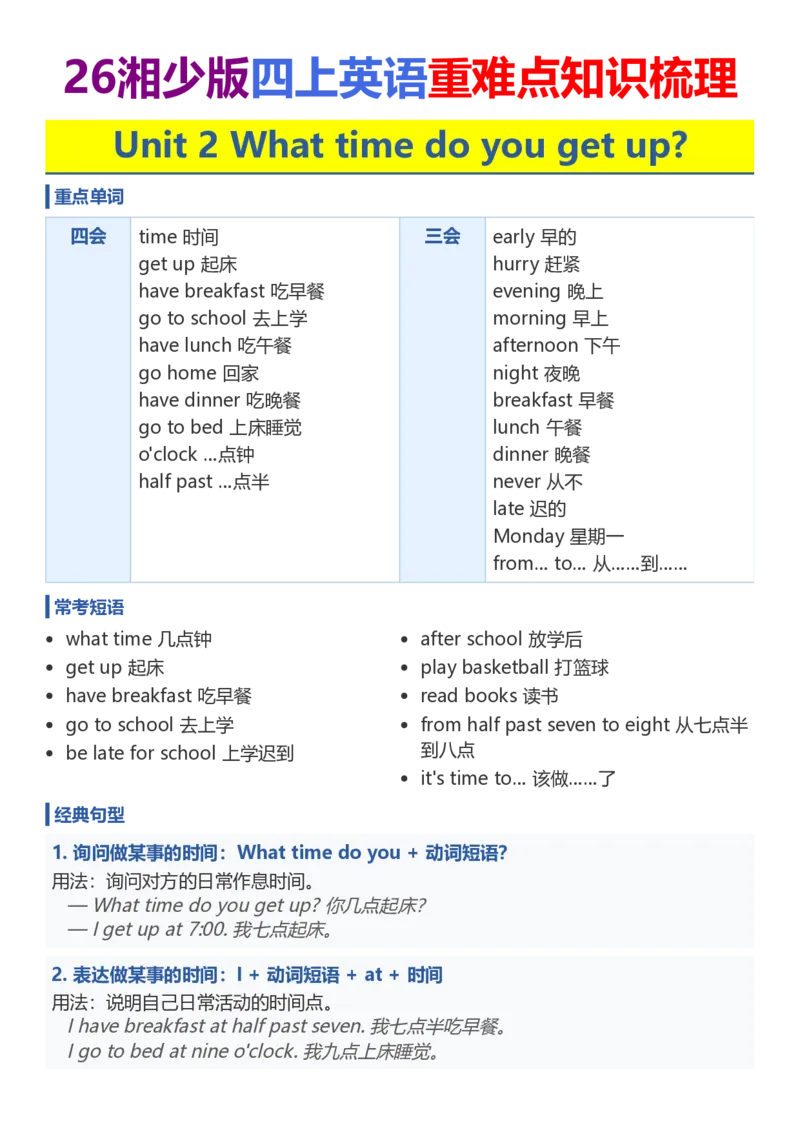
Unit 2 What time do you get up?
重点单词
四会 time 时间 三会 early 早的
get up 起床 hurry 赶紧
have breakfast 吃早餐 evening 晚上
go to school 去上学 morning 早上
have lunch 吃午餐 afternoon 下午
go home 回家 night 夜晚
have dinner 吃晚餐 breakfast 早餐
go to bed 上床睡觉 lunch 午餐
o'clock …点钟 dinner 晚餐
half past …点半 never 从不
late 迟的
Monday 星期一
from… to… 从……到……
常考短语
what time 几点钟 after school 放学后
get up 起床 play basketball 打篮球
have breakfast 吃早餐 read books 读书
go to school 去上学 from half past seven to eight 从七点半
be late for school 上学迟到 到八点
it's time to… 该做……了
经典句型
1. 询问做某事的时间:What time do you + 动词短语?
用法:询问对方的日常作息时间。
— What time do you get up? 你几点起床?
— I get up at 7:00. 我七点起床。
2. 表达做某事的时间:I + 动词短语 + at + 时间
用法:说明自己日常活动的时间点。
I have breakfast at half past seven. 我七点半吃早餐。
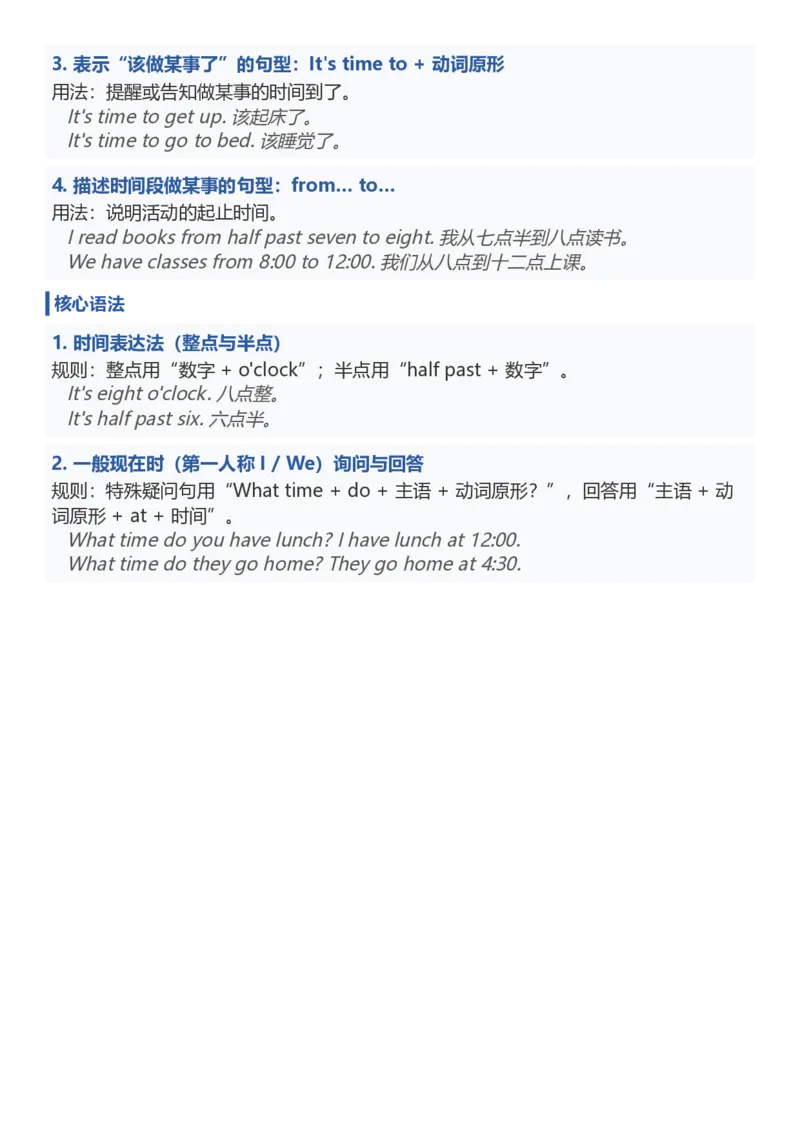
I go to bed at nine o'clock. 我九点上床睡觉。3. 表示“该做某事了”的句型:It's time to + 动词原形
用法:提醒或告知做某事的时间到了。
It's time to get up. 该起床了。
It's time to go to bed. 该睡觉了。
4. 描述时间段做某事的句型:from… to…
用法:说明活动的起止时间。
I read books from half past seven to eight. 我从七点半到八点读书。
We have classes from 8:00 to 12:00. 我们从八点到十二点上课。
核心语法
1. 时间表达法(整点与半点)
规则:整点用“数字 + o'clock”;半点用“half past + 数字”。
It's eight o'clock. 八点整。
It's half past six. 六点半。
2. 一般现在时(第一人称 I / We)询问与回答
规则:特殊疑问句用“What time + do + 主语 + 动词原形?”,回答用“主语 + 动
词原形 + at + 时间”。
What time do you have lunch? I have lunch at 12:00.
What time do they go home? They go home at 4:30.26湘少版四上英语重难点知识梳理
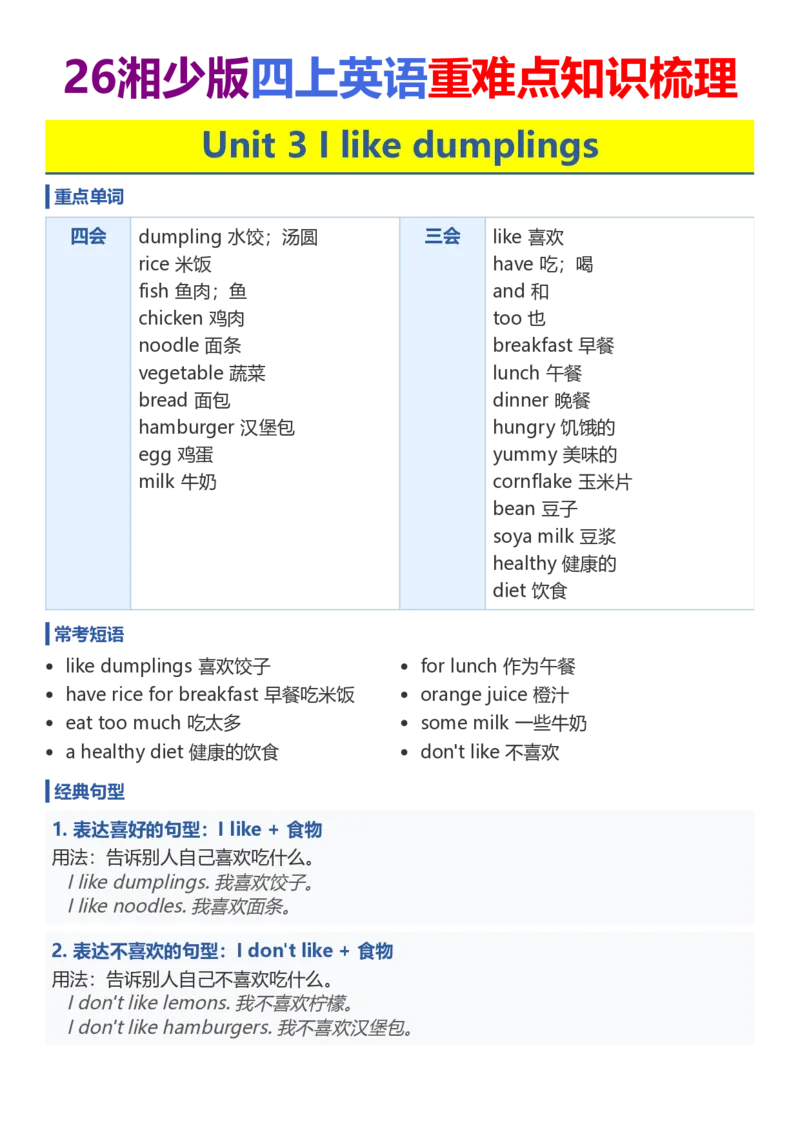
Unit 3 I like dumplings
重点单词
四会 dumpling 水饺;汤圆 三会 like 喜欢
rice 米饭 have 吃;喝
fish 鱼肉;鱼 and 和
chicken 鸡肉 too 也
noodle 面条 breakfast 早餐
vegetable 蔬菜 lunch 午餐
bread 面包 dinner 晚餐
hamburger 汉堡包 hungry 饥饿的
egg 鸡蛋 yummy 美味的
milk 牛奶 cornflake 玉米片
bean 豆子
soya milk 豆浆
healthy 健康的
diet 饮食
常考短语
like dumplings 喜欢饺子 for lunch 作为午餐
have rice for breakfast 早餐吃米饭 orange juice 橙汁
eat too much 吃太多 some milk 一些牛奶
a healthy diet 健康的饮食 don't like 不喜欢
经典句型
1. 表达喜好的句型:I like + 食物
用法:告诉别人自己喜欢吃什么。
I like dumplings. 我喜欢饺子。
I like noodles. 我喜欢面条。
2. 表达不喜欢的句型:I don't like + 食物
用法:告诉别人自己不喜欢吃什么。
I don't like lemons. 我不喜欢柠檬。
I don't like hamburgers. 我不喜欢汉堡包。3. 表达“某餐吃什么”的句型:I have + 食物 + for + 餐次
用法:说明一日三餐的饮食内容。
I have rice for lunch. 我午餐吃米饭。
I have an egg and some milk for breakfast. 我早餐吃一个鸡蛋并喝一些牛奶。
4. 表达建议或劝告的句型:Don't eat too much.
用法:提醒别人不要吃太多。
Don't eat too much. It's not good for you. 别吃太多,对你不好。
Don't eat too much candy. 别吃太多糖果。
核心语法
1. 动词 like 的一般现在时用法(肯定与否定)
规则:主语为 I / you / we / they 时,like 用原形;否定句用 don't like,后接可数名
词复数或不可数名词。
I like fish. 我喜欢鱼。
I don't like vegetables. 我不喜欢蔬菜。
2. 可数名词与不可数名词的初步区分
规则:可数名词有复数形式(如 noodles, dumplings),不可数名词没有复数形式
(如 rice, fish, chicken)。本单元中,bread, milk, rice 为不可数名词,不能说 a
bread,但可以说 some bread。
I like rice. (不可数)
I like noodles. (可数复数)26湘少版四上英语重难点知识梳理
Unit 4 Animals
重点单词
四会 animal 动物 三会 strong 强壮的
elephant 大象 funny 有趣的
lion 狮子 beautiful 美丽的
tiger 老虎 kangaroo 袋鼠
panda 大熊猫 bald eagle 白头鹰
monkey 猴子 bulldog 斗牛犬
bear 熊 bamboo 竹子
giraffe 长颈鹿 Australia 澳大利亚
cute 可爱的 country 国家
tall 高的 friend 朋友
help 帮助
each other 互相
go back 回去
常考短语
look at 看 go back home 回家
a funny monkey 一只有趣的猴子 love each other 彼此相爱
a small elephant 一头小象 make cards 制作卡片
a cute bear 一只可爱的熊 live in 生活在
animal doctor 动物医生 eat leaves 吃叶子
经典句型
1. 描述动物特征的句型:There is + a/an + 形容词 + 动物
用法:介绍某处有某种动物及其特征。
There is a funny monkey. 有一只有趣的猴子。
There is a small elephant. 有一头小象。
2. 表达“看某物”的句型:Look at + 名词
用法:提醒对方注意看某个动物或物品。
Look at the monkey. 看那只猴子。
Look at the elephant. It's big. 看那头大象,它很大。3. 描述动物能力的句型(复习)
用法:介绍动物能做什么。
The monkey can jump high. 猴子能跳得很高。
The bird can fly. 鸟会飞。
4. 表达爱意的句型:They love each other.
用法:描述动物或人之间相互关爱。
Li Jie helps the animals. They love each other. 李杰帮助动物们,他们彼此相爱。
The dogs and cats love each other. 狗和猫彼此喜欢。
核心语法
1. There be 句型(单数形式)
规则:There is + a/an + 单数名词,表示“有一个……”。本单元用于描述单个动物的
存在。
There is a cute bear. 有一只可爱的熊。
There is a lion in the zoo. 动物园里有一头狮子。
2. 形容词作定语(位置规则)
规则:形容词放在名词前面,修饰名词,表示“……的”。
a funny monkey (一只有趣的猴子)
a small elephant (一头小象)
a beautiful panda (一只漂亮的大熊猫)26湘少版四上英语重难点知识梳理
Unit 5 Can you play basketball?
重点单词
四会 can 能;会 三会 high 高高地;高的
can't = cannot 不能 well 熟练地
play 玩;打(球) far 远地
basketball 篮球 try 尝试
football 足球 sport 运动
ping-pong 乒乓球 ability 能力
swim 游泳 rabbit 兔子
run 跑 monkey 猴子
jump 跳 elephant 大象
fast 快地;快的 football player 足球运动员
have a try 试一试
jump high 跳得高
run fast 跑得快
常考短语
play basketball 打篮球 jump far 跳得远
play football 踢足球 can't jump 不会跳
play ping-pong 打乒乓球 have a try 试一试
run fast 跑得快 play it well 打得好
jump high 跳得高 want to 想要
经典句型
1. 询问对方能力的句型:Can you + 动词原形?
用法:询问某人是否会做某项运动或动作。
— Can you play basketball? 你会打篮球吗?
— Yes, I can. / No, I can't. 是的,我会。/ 不,我不会。
2. 表达自己能力的句型:I can + 动词原形
用法:告诉别人自己会做什么。
I can swim. 我会游泳。
I can run fast. 我能跑得快。3. 表达自己不会做某事的句型:I can't + 动词原形
用法:告诉别人自己不会做什么。
I can't jump. 我不会跳。
I can't play ping-pong. 我不会打乒乓球。
4. 鼓励对方尝试的句型:Let's have a try.
用法:建议或鼓励对方试一试。
Let's have a try. 我们试一试吧。
You can't do it? Have a try! 你不会做?试一试!
核心语法
1. 情态动词 can 的用法(肯定句、否定句、一般疑问句)
规则:can 表示能力“会,能”,后面跟动词原形。否定形式为 can't。一般疑问句将
can 提到句首。
I can play football. (肯定)
She can't swim. (否定)
Can you run fast? (疑问) — Yes, I can.
2. 程度副词的用法(修饰动词)
规则:fast, high, well 等副词放在动词后面,表示动作的程度。
run fast (跑得快)
jump high (跳得高)
play well (打得好)