专题13  动词不定式
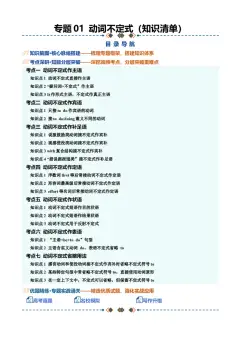
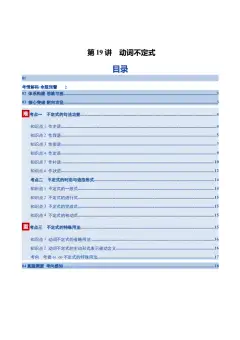
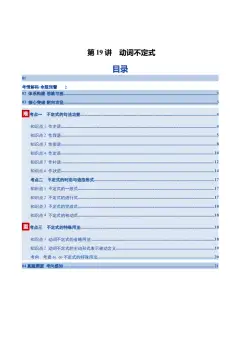
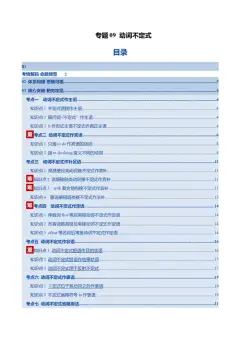
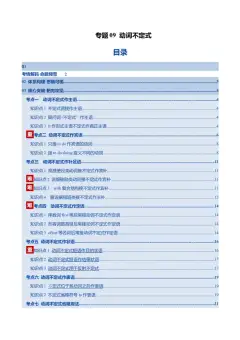
内容导航
01
命题透视·考情前瞻
对标素养,研判高考命题趋势
02
思维建模·脉络梳理
搭建知识框架,构建系统思维
03
考点精讲·靶向突破
拆解核心考点,归纳解题范式
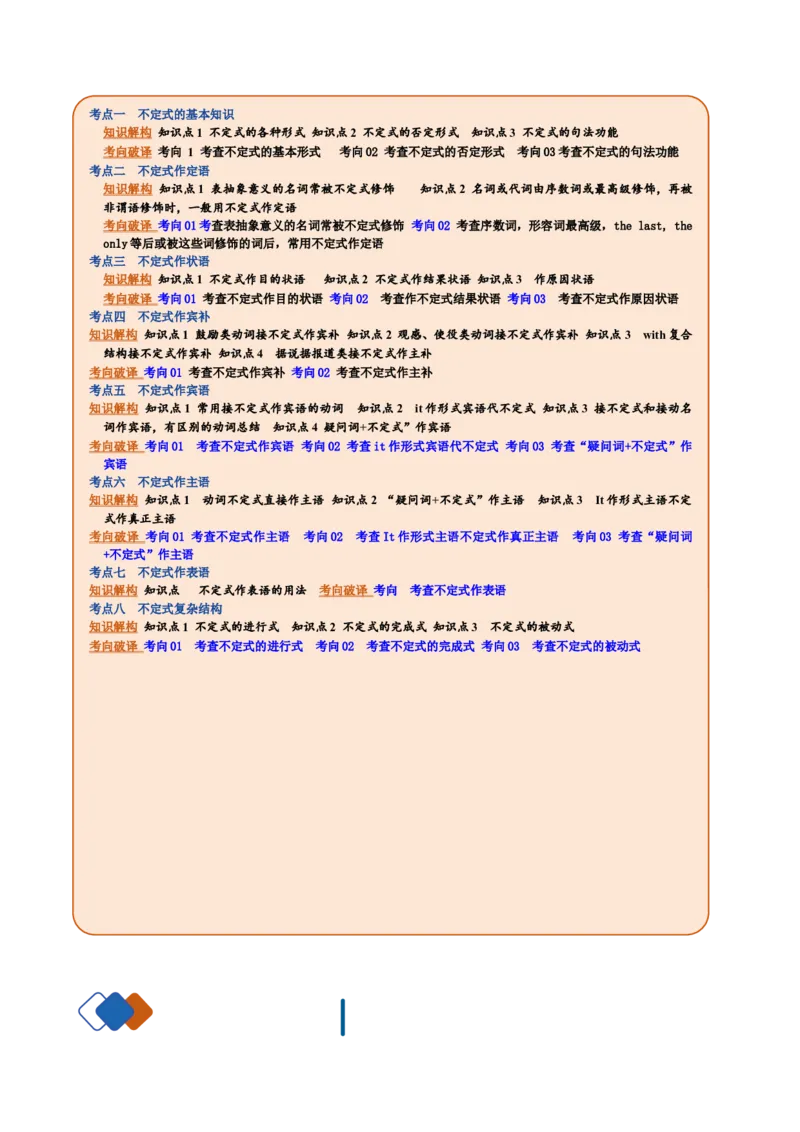
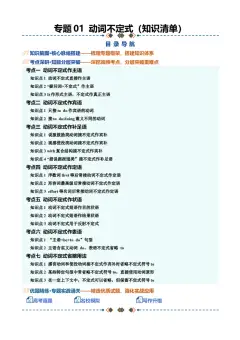
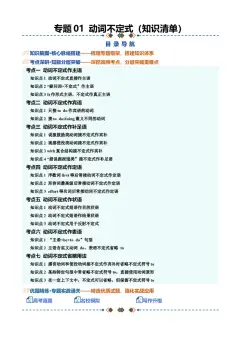
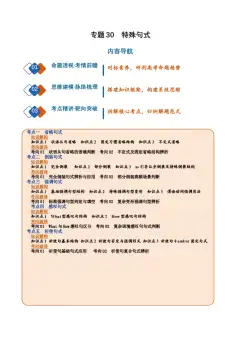
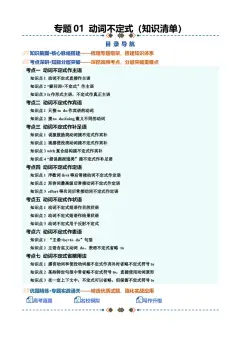
考点一  不定式的基本知识
知识解构 知识点1 不定式的各种形式 知识点2 不定式的否定形式  知识点3 不定式的句法功能
考向破译 考向 1 考查不定式的基本形式   考向02 考查不定式的否定形式  考向03 考查不定式的句法功能
考点二  不定式作定语
知识解构 知识点1 表抽象意义的名词常被不定式修饰    知识点2 名词或代词由序数词或最高级修饰,再被
非谓语修饰时,一般用不定式作定语
考向破译

  考向01 考查表抽象意义的名词常被不定式修饰 考向02 考查序数词,形容词最高级,the last, the
only 等后或被这些词修饰的词后,常用不定式作定语
考点三  不定式作状语
知识解构 知识点1 不定式作目的状语   知识点2 不定式作结果状语 知识点3  作原因状语
考向破译

  考向01 考查不定式作目的状语 考向02  考查作不定式结果状语 考向03  考查不定式作原因状语
考点四  不定式作宾补
知识解构 知识点1 鼓励类动词接不定式作宾补 知识点2 观感、使役类动词接不定式作宾补 知识点3  with 复合
结构接不定式作宾补 知识点4  据说据报道类接不定式作主补
考向破译

  考向01 考查不定式作宾补 考向02 考查不定式作主补
考点五  不定式作宾语
知识解构 知识点1 常用接不定式作宾语的动词  知识点2  it 作形式宾语代不定式 知识点3 接不定式和接动名
词作宾语,有区别的动词总结  知识点4 疑问词+不定式”作宾语
考向破译

  考向01  考查不定式作宾语 考向02 考查it 作形式宾语代不定式 考向03 考查“疑问词+不定式”作
宾语
考点六  不定式作主语
知识解构 知识点1  动词不定式直接作主语 知识点2 “疑问词+不定式”作主语  知识点3  It 作形式主语不定
式作真正主语
考向破译

  考向01 考查不定式作主语  考向02  考查It 作形式主语不定式作真正主语  考向03 考查“疑问词
+不定式”作主语
考点七  不定式作表语
知识解构 知识点   不定式作表语的用法  考向破译

  考向  考查不定式作表语
考点八  不定式复杂结构
知识解构 知识点1 不定式的进行式  知识点2 不定式的完成式 知识点3  不定式的被动式
考向破译

  考向01  考查不定式的进行式  考向02  考查不定式的完成式 考向03  考查不定式的被动式
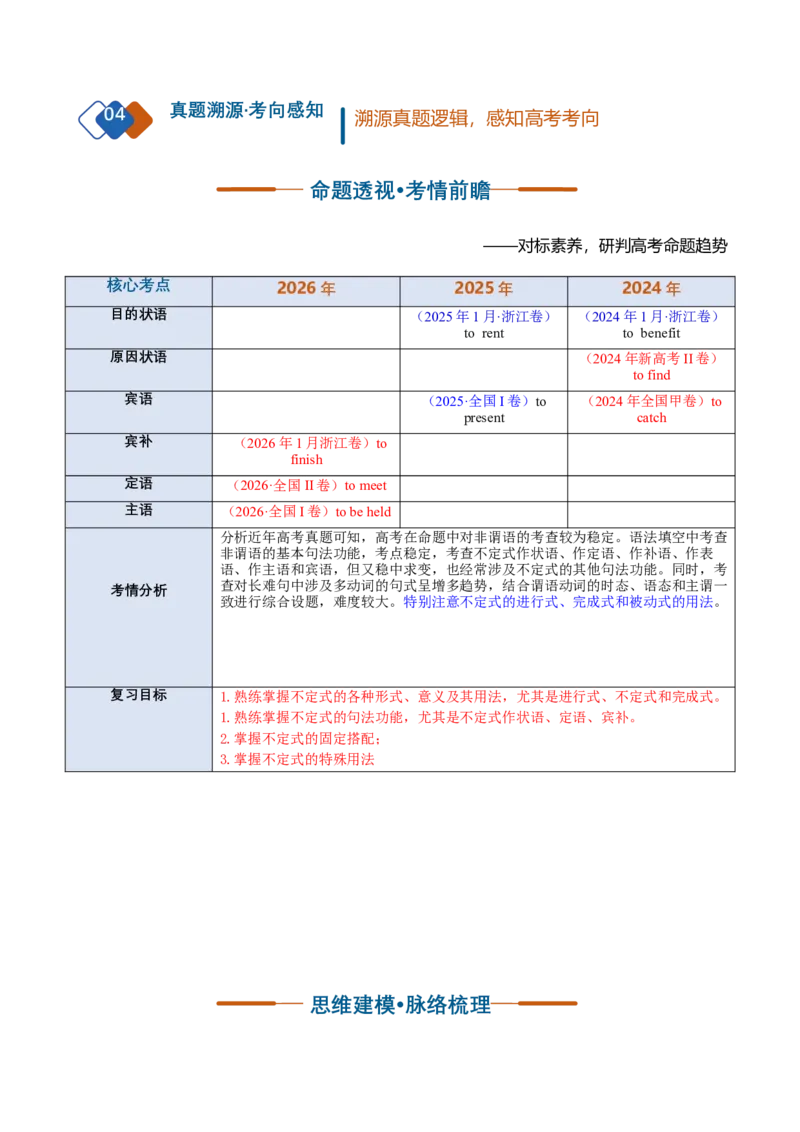
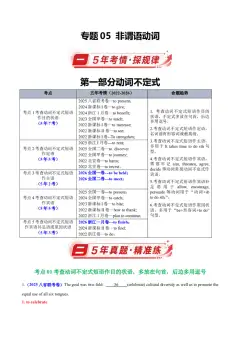
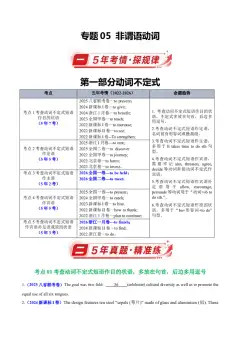
命题透视·考情前瞻
——对标素养,研判高考命题趋势
核心考点
2026 年
2025 年
2024 年
目的状语
(2025 年1 月·浙江卷)
to rent
(2024 年1 月·浙江卷)
to benefit
原因状语
(2024 年新高考II 卷)
to find
宾语
(2025·全国I 卷)to
present
(2024 年全国甲卷)to
catch
宾补
 (2026 年1 月浙江卷)to
finish
定语
(2026·全国II 卷)to meet
主语
(2026·全国I 卷)to be held
考情分析
分析近年高考真题可知,高考在命题中对非谓语的考查较为稳定。语法填空中考查
非谓语的基本句法功能,考点稳定,考查不定式作状语、作定语、作补语、作表
语、作主语和宾语,但又稳中求变,也经常涉及不定式的其他句法功能。同时,考
查对长难句中涉及多动词的句式呈增多趋势,结合谓语动词的时态、语态和主谓一
致进行综合设题,难度较大。特别注意不定式的进行式、完成式和被动式的用法。
复习目标
1.熟练掌握不定式的各种形式、意义及其用法,尤其是进行式、不定式和完成式。
1.熟练掌握不定式的句法功能,尤其是不定式作状语、定语、宾补。
2.掌握不定式的固定搭配;
3.掌握不定式的特殊用法
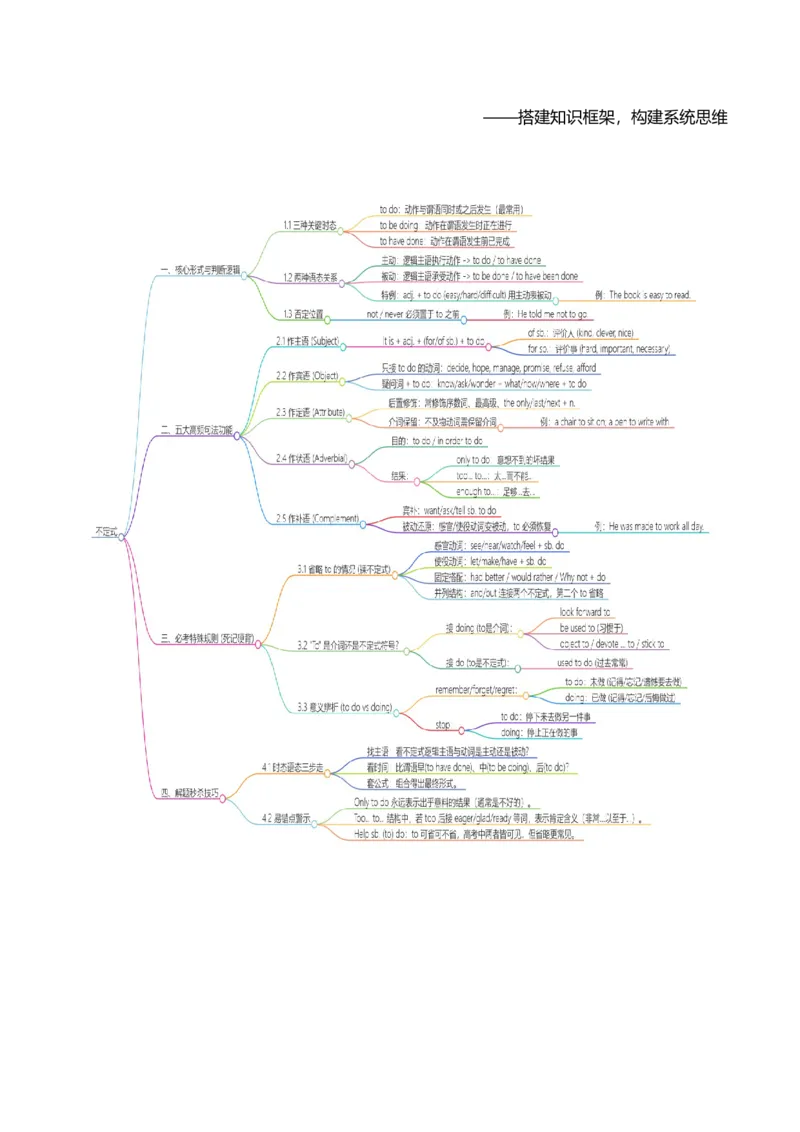
思维建模·脉络梳理
04
真题溯源·考向感知
溯源真题逻辑,感知高考考向
——搭建知识框架,构建系统思维
考点精讲·靶向突破
——拆解核心考点,归纳解题范式
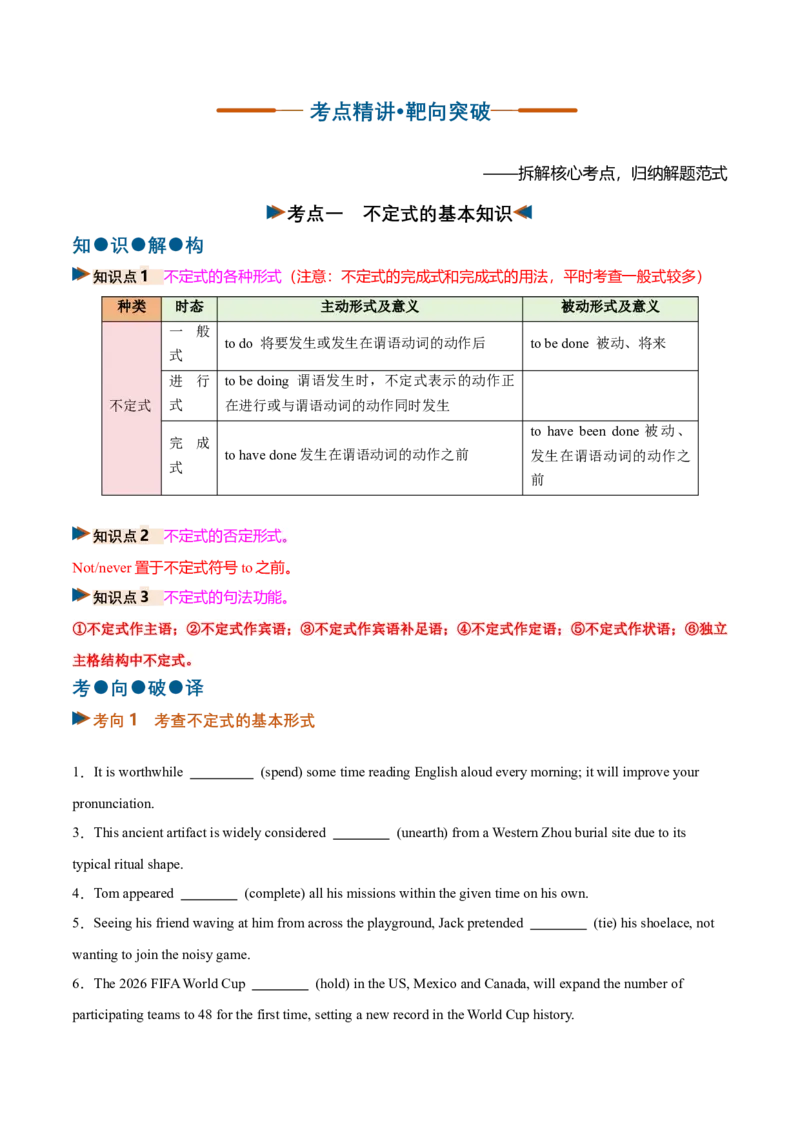
考点一  不定式的基本知识
知●识●解●构
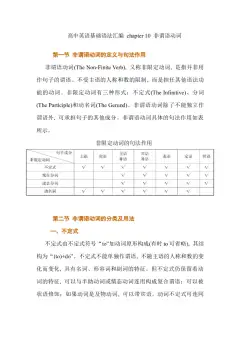
知识点1  不定式的各种形式(注意:不定式的完成式和完成式的用法,平时考查一般式较多)
种类
时态
主动形式及意义
被动形式及意义
不定式
一
般
式
to do 将要发生或发生在谓语动词的动作后
to be done 被动、将来
进
行
式
to be doing 谓语发生时,不定式表示的动作正
在进行或与谓语动词的动作同时发生
完
成
式
to have done 发生在谓语动词的动作之前
to have been done 被动、
发生在谓语动词的动作之
前
知识点2  不定式的否定形式。
Not/never 置于不定式符号to 之前。
知识点3  不定式的句法功能。
①不定式作主语;②不定式作宾语;③不定式作宾语补足语;④不定式作定语;⑤不定式作状语;⑥独立
主格结构中不定式。
考●向●破●译
考向1  考查不定式的基本形式
1.It is worthwhile           (spend) some time reading English aloud every morning; it will improve your
pronunciation.
3.This ancient artifact is widely considered          (unearth) from a Western Zhou burial site due to its
typical ritual shape.
4.Tom appeared          (complete) all his missions within the given time on his own.
5.Seeing his friend waving at him from across the playground, Jack pretended          (tie) his shoelace, not
wanting to join the noisy game.
6.The 2026 FIFA World Cup          (hold) in the US, Mexico and Canada, will expand the number of
participating teams to 48 for the first time, setting a new record in the World Cup history.
考向2  考查不定式的否定形式
1.As a habitual coffee drinker and a regular customer, his character named 663 soon finds it hard       (not
pay) attention to the free-spirited counter girl played by Faye Wong.
2.No matter what harm he suffered he would do his best         (conceal) his feelings, trying         (not
let) others know how he feels.
考向3  考查不定式的句法功能
1.She expects          (join) the school’s music club next semester, as she has been practicing the piano for
years.
2.He convinced the police department to allow him          (set) up a couple of “chat benches” in two of their
local parks.
3.In order to keep up with the fashion, quite a few teenagers turn to unhealthy methods          (lose) weight.
考点二  不定式的句法功能
知●识●解●构
不定式作定语(高频考点)
知识点1 表抽象意义的名词常被不定式修饰,如:chance, need, promise, ability, way,
opportunity, right, attempt, plan, evidence 等,常表同位关系。
1.In my everyday life, I am on an ongoing journey to figure out different ways ________(reduce)my carbon
footprint on the planet.
2.There are very few moments in our lives where we have the privilege          (witness) history taking place.
知识点2  名词或代词由序数词或最高级修饰,再被非谓语修饰时,一般用不定式作定语,表主谓
关系。
1.(2026·广东省佛山市南海区南执高级中学高三阶段)The woman was Tu Youyou, the first Chinese female
scientist        (award) a Nobel Prize for her work.
2.As long as you choose the right person          (marry), you will enjoy happiness the whole life with or
without a wedding party.
考●向●破●译
考向一 考查表抽象意义的名词常被不定式修饰
1.(2026 届福建泉州市高中毕业班质量检测(一))By treating these trees as “living history”, the combined
protection model aims to strengthen public awareness of the need          (safeguard) both cultural and
ecological heritage.
2.(2026·山西省运城一模 )There were two full-length performances on Friday and Saturday, when five dancers
performed alongside five robots from different Chinese robotics companies. Audience members also had the
opportunity          (interact) and become part of the show.
3.(2026·吉林省G35 联合体第一次模拟)Yet, I believe I will always miss China when the time comes for me
          (leave) the country.
考向二  考查序数词,形容词最高级,the last, the only 等后或被这些词修饰的词后,
常用不定式作定语
1.Mr. Green stood up in defense of the 16yearold boy, saying that he was not the one          (blame).
2.She was the first student          (win) the international competition in our school’s history.
3.The 67-year-old writer became the first Chinese writer           (receive) the Premio Internazionale Nord-
Sud, a highly prestigious Italian literary prize.
不定式作定语的特点:1.不定式作定语常放在所修饰词后表将来的动作。不定式与其所修饰词之间多是动
宾关系。
2.序数词,形容词最高级,the last, the only 等修饰人时,用不定式作定语,且有逻辑上的主谓关系。
3.表抽象意义的名词常被不定式修饰,如:chance, need, promise, ability, way, opportunity, right, attempt, plan,
evidence 等。不定式和被修饰词之间是同位关系。
思维建模


✅技巧1:找准通常用不定式作定语的关键修饰词:序数词,形容词最高级,the last, the only 等,进
而确定不定式作定语

✅技巧2:熟记常接不定式作定语的抽象意义的名词: chance, need, promise, ability, way,
opportunity, right, attempt, plan, evidence 等

✅技巧3:不定式与其所修饰词之间关系:动宾关系,主谓关系和同位关系。
考点三  不定式作状语(高频考点)
知●识●解●构
知识点1 不定式作目的状语
1.         (speed) up the process and ensure its safety, Tu and her team volunteered to test qinghao extract on
themselves first.
2.At the same time, designers are employing programmes          (produce) high-performance equipment,
which is stretching the capacity of today’s athletes far beyond that of previous generations.
3.Each participant wore a device          (measure) their body movements and activity levels for seven days.
知识点2  不定式作结果状语
常用于so/such…as to…(如此…以致…);enough …to …(足够);only to …(结果);never to…(结果再也没有)
; too… to…(太…而不能…)等结构中。
不定式作结果状语时多表示出乎意料的结果,其逻辑主语通常是句子的主语。作结果状语的不定式通
常用一般式,为了表示强调可在不定式前加上only。
1.Many parents say there’s too much traffic on the roads for their children          (walk) safely to school, so
they pack them into the car instead.
2.Yesterday I went to see my good friend, only        (learn) that she had gone abroad a week before.
知识点3  作原因状语
不定式与情感类形容词连用时,大多表示原因,用来作原因状语。这类形容词主要有:happy, kind,
surprised, frightened, shocked, glad, delighted, disappointed 等。
1.I am very proud and excited         (display) the traditional Chinese musical instrument in Cuba and
communicate with local musicians.
2.I’m surprised          (know) that we can keep flowers blooming by removing the water with a process like
air drying or pressing.
知识点4 动词不定式也可以跟在一些作表语的形容词easy, hard, difficult, pleasant, good, fit,
comfortable 等后面作状语,构成“主语+be+形容词+不定式”结构,在该结构中构成不定式的动词
和句子的主语构成逻辑上的动宾关系,不定式通常用主动形式表示被动含义。另外需注意的是在该结
构中,不定式中的动词必须是及物动词,若为不及物动词,则要在其后加上适当的介词,使之构成及
物动词短语。
1.He told his mother he feels honored            (have) enjoyed such a long career.
2.The essence of learning is extreme repetition and persistence until you become experienced through practice,
skilled enough          (apply) what you gain and eventually form muscle memory.
考●向●破●译
考向一  考查不定式作目的状语
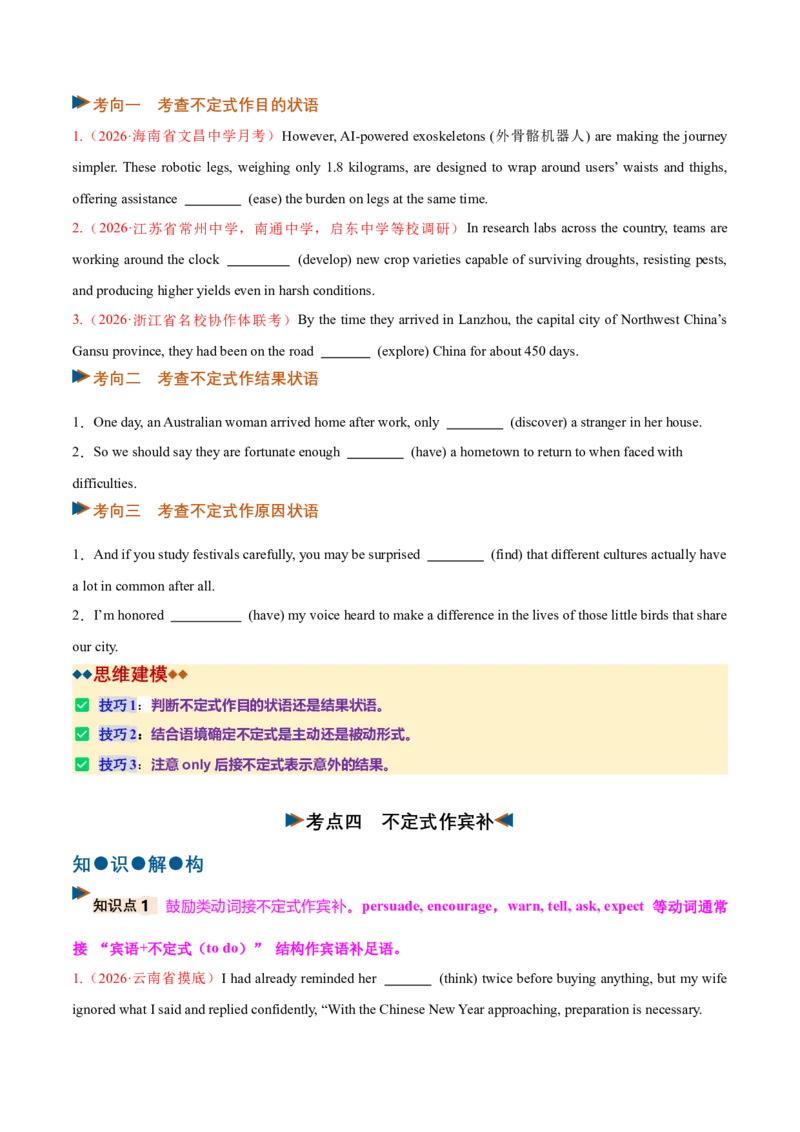
1.(2026·海南省文昌中学月考)However, AI-powered exoskeletons (外骨骼机器人) are making the journey
simpler. These robotic legs, weighing only 1.8 kilograms, are designed to wrap around users’ waists and thighs,
offering assistance          (ease) the burden on legs at the same time.
2.(2026·江苏省常州中学,南通中学,启东中学等校调研)In research labs across the country, teams are
working around the clock          (develop) new crop varieties capable of surviving droughts, resisting pests,
and producing higher yields even in harsh conditions.
3.(2026·浙江省名校协作体联考)By the time they arrived in Lanzhou, the capital city of Northwest China’s
Gansu province, they had been on the road         (explore) China for about 450 days.
考向二  考查不定式作结果状语
1.One day, an Australian woman arrived home after work, only          (discover) a stranger in her house.
2.So we should say they are fortunate enough          (have) a hometown to return to when faced with
difficulties.
考向三  考查不定式作原因状语
1.And if you study festivals carefully, you may be surprised          (find) that different cultures actually have
a lot in common after all.
2.I’m honored            (have) my voice heard to make a difference in the lives of those little birds that share
our city.
思维建模


✅技巧1:判断不定式作目的状语还是结果状语。

✅技巧2:结合语境确定不定式是主动还是被动形式。

✅技巧3:注意only 后接不定式表示意外的结果。
考点四  不定式作宾补
知●识●解●构
知识点1  鼓励类动词接不定式作宾补。persuade, encourage,warn, tell, ask, expect 等动词通常
接 “宾语+不定式(to do)” 结构作宾语补足语。
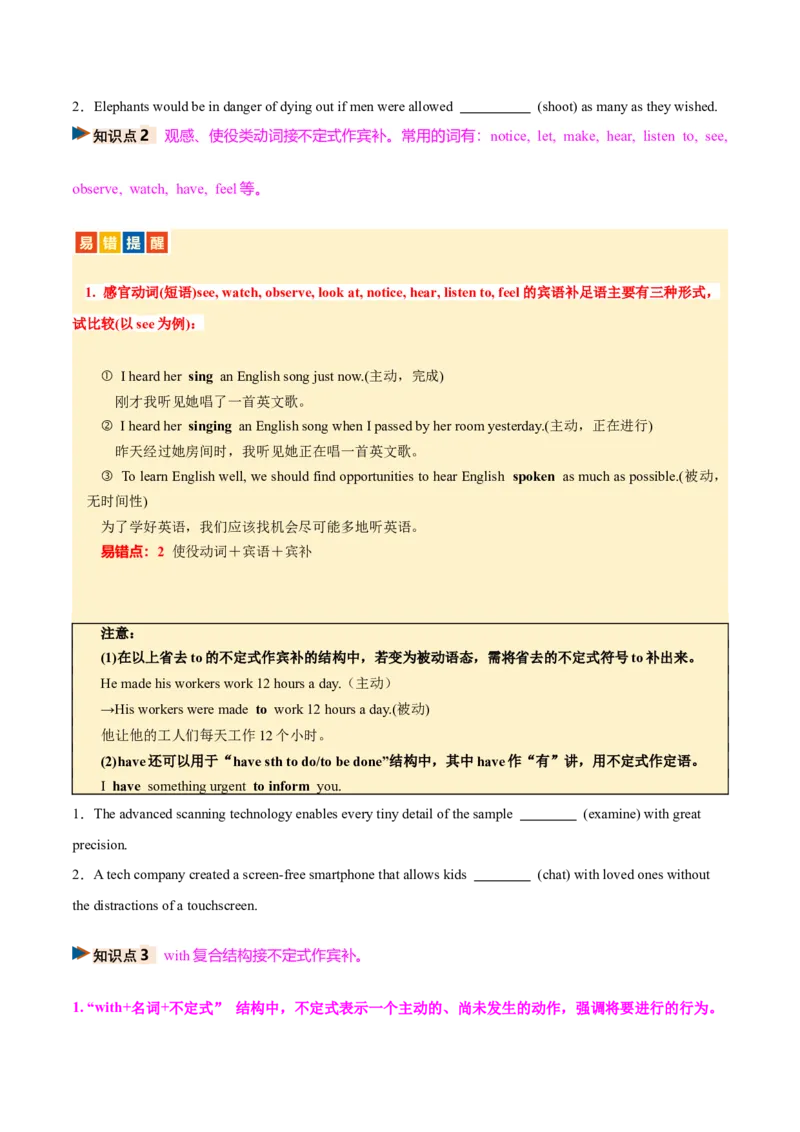
1.(2026·云南省摸底)I had already reminded her        (think) twice before buying anything, but my wife
ignored what I said and replied confidently, “With the Chinese New Year approaching, preparation is necessary.
2.Elephants would be in danger of dying out if men were allowed            (shoot) as many as they wished.
知识点2  观感、使役类动词接不定式作宾补。常用的词有:notice, let, make, hear, listen to, see,
observe, watch, have, feel 等。
1. 感官动词(短语)see, watch, observe, look at, notice, hear, listen to, feel 的宾语补足语主要有三种形式,
试比较(以see 为例):
① I heard her sing an English song just now.(主动,完成)
刚才我听见她唱了一首英文歌。
② I heard her singing an English song when I passed by her room yesterday.(主动,正在进行)
昨天经过她房间时,我听见她正在唱一首英文歌。
③ To learn English well, we should find opportunities to hear English spoken as much as possible.(被动,
无时间性)
为了学好英语,我们应该找机会尽可能多地听英语。
易错点:2 使役动词+宾语+宾补
注意:
(1)在以上省去to 的不定式作宾补的结构中,若变为被动语态,需将省去的不定式符号to 补出来。
He made his workers work 12 hours a day.(主动)
→His workers were made to work 12 hours a day.(被动)
他让他的工人们每天工作12 个小时。
(2)have 还可以用于“have sth to do/to be done”结构中,其中have 作“有”讲,用不定式作定语。
I have something urgent to inform you.
1.The advanced scanning technology enables every tiny detail of the sample          (examine) with great
precision.
2.A tech company created a screen-free smartphone that allows kids          (chat) with loved ones without
the distractions of a touchscreen.
知识点3  with 复合结构接不定式作宾补。
1. “with+名词+不定式” 结构中,不定式表示一个主动的、尚未发生的动作,强调将要进行的行为。
2.独立主格结构中的不定式作宾补
With so many different forms of poetry          ( choose) from, you may eventually want to write poems of
your own. Give it a try!
知识点4  据说据报道类接不定式作主补
1. 在“be said/believed/reported/known to do”结构中,不定式短语本质上是对主语的动作或状态进行
补充说明,相当于 “主语被认为/据说/据报道/众所周知要做某事”,此处不定式承担主语补足语的功能
(因句子为被动语态。
2.在特定语境中上述结构不定式还可能用不定式的进行式、完成式等。
The traditional snack recipe is believed          (keep) in the family for over a century.
考●向●破●译
考向一  考查不定式作宾补
1.Neighbors will bring me freshly made cheese and will come to my door to remind me          (close) the
window in my car when rain is coming.
2.More than admiring scenery, the mentor told children           (identify) rocks and some plant species in
the reserve.
3.People were pleased with Henry’s music and songs and finally invited him           (perform) on the stage.
考向二  考查不定式作主补
1.This means the local environment was favorable for the natural growing of rice, which was why people were
motivated         (settle) in this place.
2.Tom was observed          (go) into his classroom with his classmates happily.
3.Passengers are reminded        (take) all their personal belongings with them when they leave the plane.
思维建模


✅技巧1:牢记动词接不定式作补足语的动词。

✅技巧2:注意with 复合结构中的不定式作宾补。

✅技巧3:当把句子变成被动语态后,宾语补足语就变成了主语补足语。
考点五  不定式作宾语
知●识●解●构
知识点1  不定式作宾语:下面这些词常接不定式作宾语:
like/love/want/wish/hope/expect/desire/hate/prefer/continue/manage/try/ask/beg/demand/afford/offer/fail/
start/begin/forget/remember/promise/mean/intend/attempt/decide/determine/learn/agree/choose/pretend/
arrange to do…
①We decide to study harder than ever before.
②Please remember to buy some medicine for the patient on your way back home.
知识点2  it 作形式宾语代不定式:  find/think/consider/feel/make it + 形/名 + to 不定式:  发
现/认为/使得做…是…
①We find it necessary to master German and French.
②I think it a pity to miss such a good chance.
③We feel/think it our duty to make our country a better place.
④New technologies have made it possible to produce new products faster and at a lower cost.
知识点3 英语中有一些动词后接不定式和动名词时,意义差别较大,这类动词是语法中的重点和
易错点。
forget 忘记, remember 记住/regret 后悔, go on 继续, stop 停止, can’t help 禁不住, mean 打算, try 试图。
forget to do 忘记要去做某事(未做)
forget doing 忘记已经做过某事(已做)
She forgot to turn off the lights. 她忘记关灯了。
I'll never forget meeting you for the first time. 我永远不会忘记第一次见你的情景。
remember to do 记得将要做某事(未做)
remember doing 记得已经做过某事(已做)
Remember to lock the door before leaving. 离开前记得锁门。
I remember locking the door today. 我记得今天锁门了。
regret to do 遗憾去做某事(未做)
regret doing 后悔做过某事(已做)
I regret to tell you that you failed the exam. 我很遗憾地告诉你,你考试没及格。
He regrets quitting his job. 他后悔辞掉了工作。
go on to do 继续做另一件事 (对象变了)
go on doing 继续做正在做的事 (对象不变)
After finishing math, he went on to study physics. 做完数学后,他接着学物理。
They went on working despite the rain. 尽管下雨,他们仍继续工作。
stop to do 停下来去做另一件事 (对象变了)
stop doing 停止做某事 (对象不变)
We stopped to have a rest. 我们停下来休息一下。
Please stop talking. 请停止说话。
can’t help to do 不能帮助做某事
can’t help doing 情不自禁做某事
I'm sorry I can't help to clean the room today—I'm too busy.抱歉我今天不能帮忙打扫房间,我太忙了。
She couldn't help crying when she heard the sad news. 听到这个坏消息,她情不自禁地哭了。
mean to do 打算做某事(未做)
mean doing 意味着做某事 (解释作用)
I mean to finish the report today. 我打算今天完成报告。
Missing the train means waiting for another hour. 错过这趟火车意味着要再等一小时。
try to do 努力做某事(不一定成功)
try doing 尝试做某事 (强调尝试和行动)
She tried to solve the problem. 她努力解决这个问题。
Try adding some sugar to make it taste better. 试着加点糖,让它味道更好些。
知识点4 “疑问词+不定式”作宾语,常用的疑问词有what,when,which,how,where 等。
I don’t know what to do.我不知道该怎么办。
考●向●破●译
考向一  考查不定式作宾语
1.(2026·山东省烟台市诊断性测试)Zhang grew up watching her grandfather weave baskets. After studying
product design at university, she chose        (explore) the craft even further. She traveled to Daoming in person
to receive training from Zhao Sijin, the master inheritor of Daoming bamboo weaving.
2.Kevin learned an important lesson that day: always verify the facts before taking action, but never hesitate
(help) those in need.
3.I feel bad, so I don’t think I can manage          (take) a long walk.
考向二  考查it 作形式宾语代不定式
1.Spending too much time online is unhealthy and makes it very difficult         (focus) on other things.
2.The noise from outside often made it hard for him          (concentrate) on the thing that brought him joy.
3.I think it worthwhile          (spend) time with family.
考向三  考查“疑问词+不定式”作宾语
1.All of us want to know          to do with the pavilions (展览馆) after the Shanghai World Expo.
2.Children nowadays tend to be so rebellious that parents often feel at a loss about what          (expect) from
them.
3.The English teacher knows how            (stimulate) her students in class when they are in low spirits.
思维建模


✅技巧1:牢记只接不定式作宾语的动词。

✅技巧2:动词+it+形容词/名词+to do”结构,it 作形式宾语。
考点六  不定式作主语
知●识●解●构
知识点1  动词不定式直接作主语
不定式(to + 动词原形)直接置于句首作主语,表示一次性的、具体的动作或将来的行为。
         (change) bad habits is never easy, but as long as you persist, you will succeed.
动词不定式作主语谓语用单数形式。
To love and to be loved is the greatest happiness. 爱与被爱是最大的幸福。
2.“疑问词+不定式”作主语
“疑问词(what, how…)+不定式” 结构可作主语,表达 “如何做 / 做什么” 等含义。
How

   to    solve

   the
    problem

  is still unknown. 如何解决这个问题仍不清楚。
When

   to    start

   the
    meeting

  has not been decided. 会议何时开始尚未决定。
“疑问词+不定式”结构作主语谓语用单数形式;难点在于疑问词的选择。
What to do next depends on your decision. 接下来做什么取决于你的决定。
知识点3  It 作形式主语不定式作真正主语
①当不定式作主语时,为避免句子头重脚轻,常用 it 作形式主语,将真正的主语(不定式)置于句
末。常用于“It+be+形容词/名词(for/of sb)+to do sth.”或It takes sb time to do sth.句型。
1.It’s good         (spend) time with my family, although it can get a bit boring in my hometown after a while.
2.It’s necessary            (promote) cultural and tourism resources with digital means, because intelligent
transformation of scenic spots brings newer experiences to tourists and makes management more efficient.
②当形容词描述人的品质(kind, clever, foolish 等)时,用 of;当句中形容词描述动作特征时用
for。
1.It’s a great honour for me          (stand) here and address my speech titled “Be smart online learners”.
2.It was once common for farmhouses, especially those along the lower reaches of the Yangtze River,
(have) a zaotou that was painted with floral figures.
考●向●破●译
考向一  考查不定式作主语
1.         (form) a good habit is beneficial to our lifelong development.
2.         (preserve) traditional festivals is essential for passing down cultural values to future generations.
3.       (protect) endangered species is not only a responsibility of governments but also a duty of every
citizen.
考向二  考查It 作形式主语不定式作真正主语
1.I’m very delighted to know that you’re going to visit a Chinese family. It’s necessary for you
(know) about table manners of China.
2.It cost him no money          (watch) the movie Wolf Warriors which Wu Jing directed and starred in, for
he was given a free ticket.
3.It is of great significance for students        (develop) critical thinking skills, as it helps them analyze
problems independently in future study and work.
考向三  考查“疑问词+不定式”作主语
1.When and where        (hold) the next international conference on climate change has not been decided yet
by the organizing committee.
2.How          (stop) polluting this important river is a big problem.
思维建模


✅技巧1:掌握不定式作主语三种情况。

✅技巧2:判断不定式是主动还是被动形式。

✅技巧3:注意主谓一致。
考点七  不定式作表语
知●识●解●构
知识点1  表示一般的概念时,不定式、动词ing 形式可以互换,而表示具体的、个别的动作或有
将来含义时,一般用不定式。
1.To deal with the plastic pollution, the best approach is not          (ban) plastics, but to manage them more
carefully.
2.The main goal of the exhibition is          (promote) mutual understanding between Eastern and Western
civilizations.
知识点2  不定式作表语时,主语常是: duty, work, job, task, wish, hope, thing, goal, aim,
problem, question, happiness, what, advice, idea…等
1.Our main aim is          (promote) mutual understanding between the two countries.
2.Our goal as educators is          (inspire) students to pursue their passions and achieve their dreams.
to 不定式作表语解释前面do 时, to 可省去:
1.Yesterday all we did was (to) clean the kitchen and the toilet.
2.What I would like to do today is (to) have a good sleep at home.
3.The only thing you need to do now is (to) fill in/up/out the form immediately.
4.All she wanted to do when she got the first prize in the contest was (to) say thanks to her teachers and parents.
考●向●破●译
考向  考查不定式作表语
1.The aim of the activity is to        (strength) the bonds between parents and kids.
2.Biology is my favorite subject, and my target is          (prepare) myself for my degree in biology at
university.
3.Human life is regarded as part of nature, so the only way for us to survive is          (live) in harmony with
nature.
考点八  不定式复杂结构
知●识●解●构
由于平时模拟题中考查不定式的一般式居多,为了避免学生产生思维定势,要格外训练不定式的进行
式、完成式和被动式。这些在高考中时有考查,很多学生容易出错。
知识点1  不定式的进行式:to be doing。 谓语发生时,不定式表示的动作正在进行或与谓语动
词的动作同时发生。
1.She pretended            (study) when her mother opened the door.
2.When he noticed his classmates staring at him, he pretended          (listen) carefully to the lecture so that
no one would find he was absent-minded.
知识点2 不定式的完成式:to have done。不定式的动作发生在谓语动词的动作之前。
1.He pretended            (see) the accident, but actually he was not there at that time.
2.The ancient town is reported          (witness) the rise and fall of three different dynasties over the course
of a century.
知识点3 不定式的被动式:to have been done/to be done。不定式的逻辑主语和不定式动作之间
有被动关系。
1.(2023·新高考Ⅰ卷 语法填空)Nanxiang aside, the best Xiao long bao have a fine skin, allowing them
       (lift) out of the steamer basket without tearing or spilling any of their contents.
2.We traveled a long distance to visit the museum, only          (inform) that it was temporarily closed for
maintenance.
3.The vocabulary and grammatical differences between British and American English are so trivial and few as
hardly          (notice).
4.The term is thought         (use) firstly in 16th century England to describe dough balls dropped in liquid.
考●向●破●译
考向一  考查不定式的进行式
1.The renowned athlete is said        (train) intensively for the upcoming Olympic Games in Los Angeles.
2.She pretended          (read) a book when the teacher entered the classroom.
3.When the teacher came in, the naughty boy pretended          (read) with the book upside down.
4.Allen is believed          (design) a new computer program at present, but we don’t know when she will
finish it.
考向二  考查不定式的完成式
1.An expert who has studied polar bears for many years said that from the position of its dead body, the bear
appeared          (starve) and died.
2.The ancient town is reported          (witness) the rise and fall of three different dynasties over the course
of a century.
3.He pretended          (finish) the project on time, but his partner revealed they hadn’t even started.
4.The naughty boy pretended to          (punish) by his parents so as to gain his grandma's sympathy.
考向三 考查不定式的被动式
1.At least 200, 000 people were reported          (kill) in the ever recorded worst earthquake that struck Haiti
last winter.
2.20 thousand square metres of wasteland is said to          (convert) to lands growing fruit trees and other
cash crops last year.
3.We traveled a long distance to visit the museum, only          (inform) that it was temporarily closed for
maintenance.
4.The young singer is said          (train) by a master for the coming performance every day.
5.There are several environmental campaigns          (hold) in our school next semester, including a tree-
planting day.
思维建模


✅技巧1:根据不定式的动作与主句谓语动词的动作先后判断不定式的三种形式。

✅技巧2:根据不定式的动作与主语之间的关系判断是主动还是被动。
真题溯源·考向感知
——溯源真题逻辑,感知高考考向
单句填空 在空白处填入1 个适当的单词或括号内单词的正确形式。
1.(2026·全国I 卷)Daji, or big open-air fairs, typically take place on specific dates of the lunar calendar, for
example, on dates with five or seven as the last digit. It is also common for them     56     (hold) during
traditional Chinese holidays such as the Spring Festival and the Mid-Autumn Festival, as well as other local
festivals.
2.(2026·全国II 卷)It’s time for my dan tian     65     (meet) another life force: coffee.
3.(2026 年1 月浙江卷)There are few people who could find joy in waiting for a microwave (微波炉)

 5  6
(finish) heating, but my mum did it.
4.(2025 年新高考I 卷)We hope             (present)the rather abstract Go game and AI in a visual context,
and initiate dialogues with minimalist art, conceptual art and expressionism.
5.(2025 年浙江I 月卷)Tanya’s shop offers fashion clothes for women
  ____


  (rent) rather than purchase
them outright, providing a less expensive solution to one-time event dressing.
6. (2024 年新高考II 卷)Those cultural elements have increased Stratford’s international visibility, said
Edmondson, adding that visitors walking through the Birthplace Garden were often amazed ___

 ____

 ___

  (find)the
connection between the two great writers.
7.(2024 年全国甲卷)Although parks of all sizes and types exist at any level the national parks, in particular,
tend ________(catch)our attention because of their large size and variety.
8.(2023 年新高考I 卷)To eat one, you have to decide whether ________(bite) a small hole in it first,
releasing the stream and risking a spill ( 溢出), or to put the whole dumpling in your mouth, letting the
hot soup explode on your tongue.
9.(2023 年全国甲卷)For thousands of years, people have told fables (寓言)

 __


  (teach) a lesson or to
pass on wisdom.
10.(2023 年全国乙卷)________ (visit) several times over the last 10 years, I was amazed by the co-existence
of old and new, and how a city was able to keep such a rich heritage (遗产) while constantly growing.
11.(2023 年北京卷语法填空)She called for action         (address)the struggles of people around the world
facing “too little water or too dirty water”.