专题24  情态动词
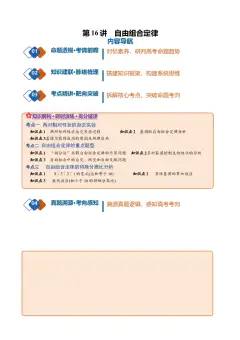
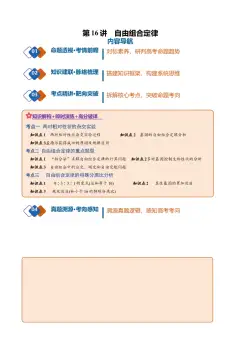
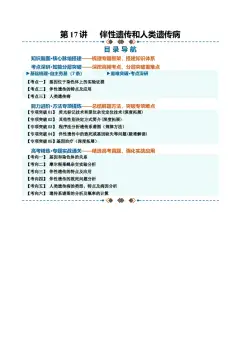
内容导航
01
命题透视·考情前瞻
对标素养,研判高考命题趋势
02
思维建模·脉络梳理
搭建知识框架,构建系统思维
03
考点精讲·靶向突破
拆解核心考点,归纳解题范式
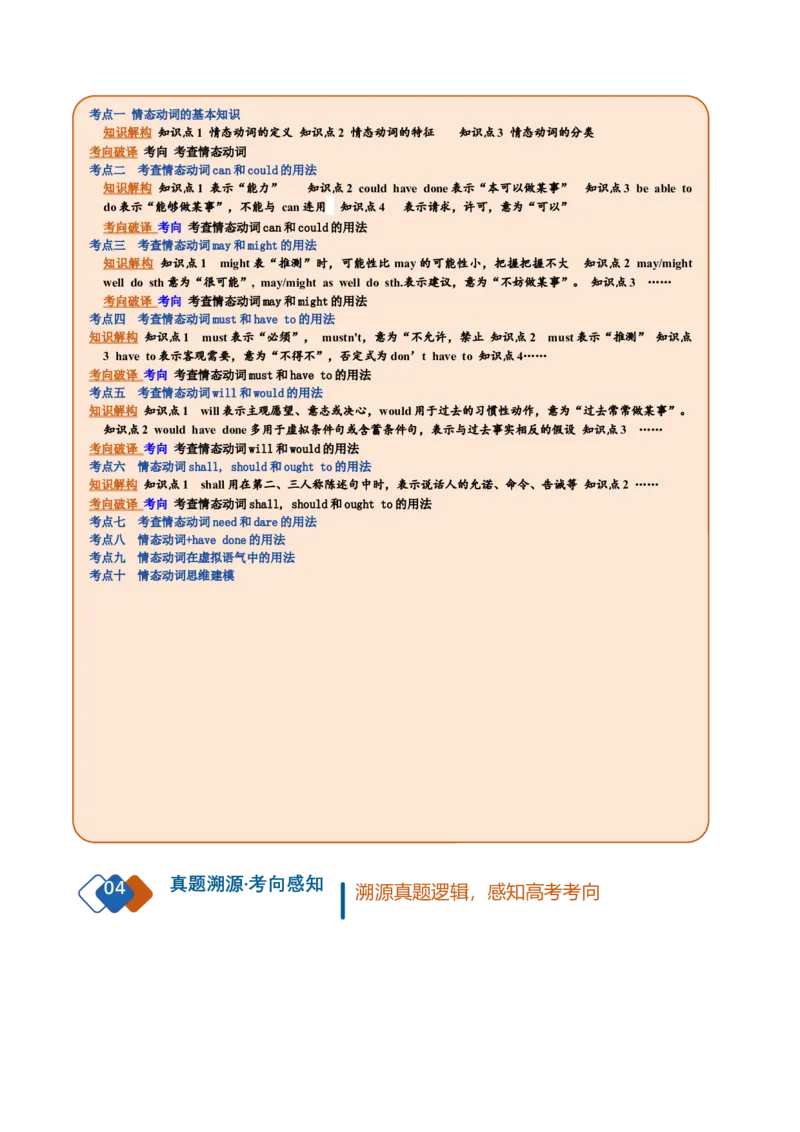
考点一 情态动词的基本知识
知识解构 知识点1 情态动词的定义 知识点2 情态动词的特征    知识点3 情态动词的分类
考向破译 考向 考查情态动词
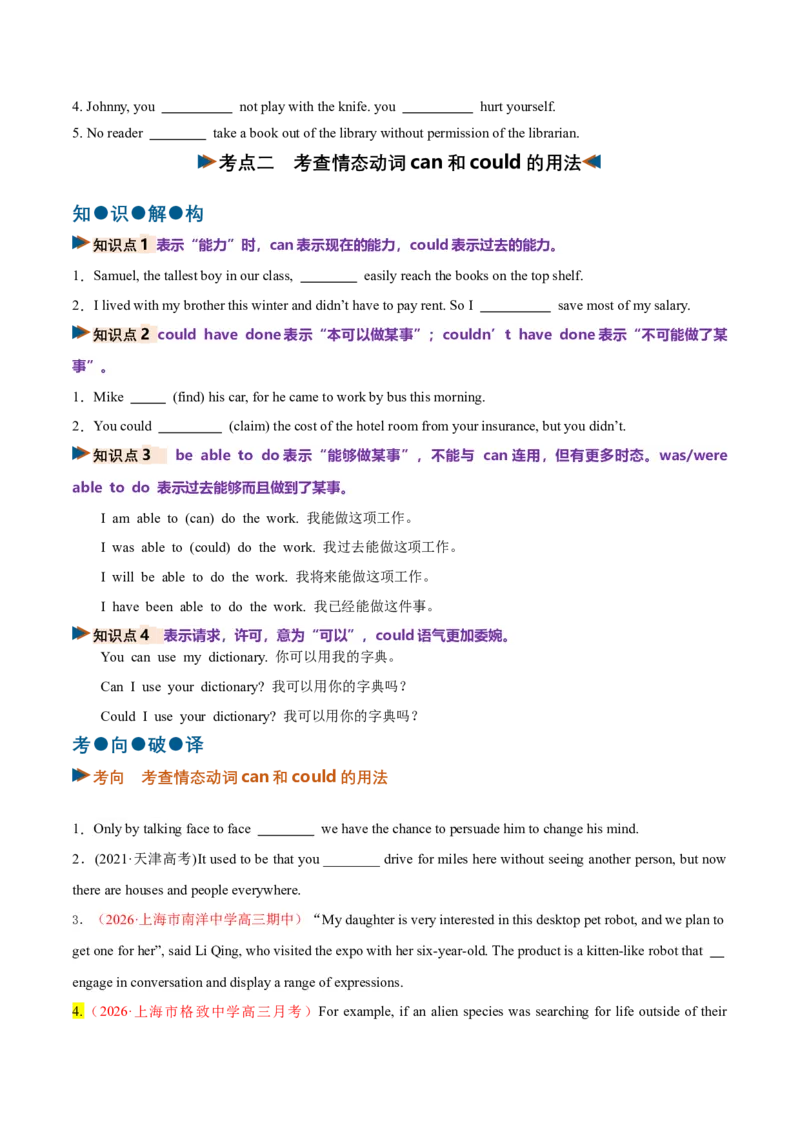
考点二  考查情态动词can 和could 的用法
知识解构 知识点1 表示“能力”    知识点2 could have done 表示“本可以做某事”  知识点3 be able to
do 表示“能够做某事”,不能与 can 连用  知识点4   表示请求,许可,意为“可以”
考向破译

  考向 考查情态动词can 和could 的用法
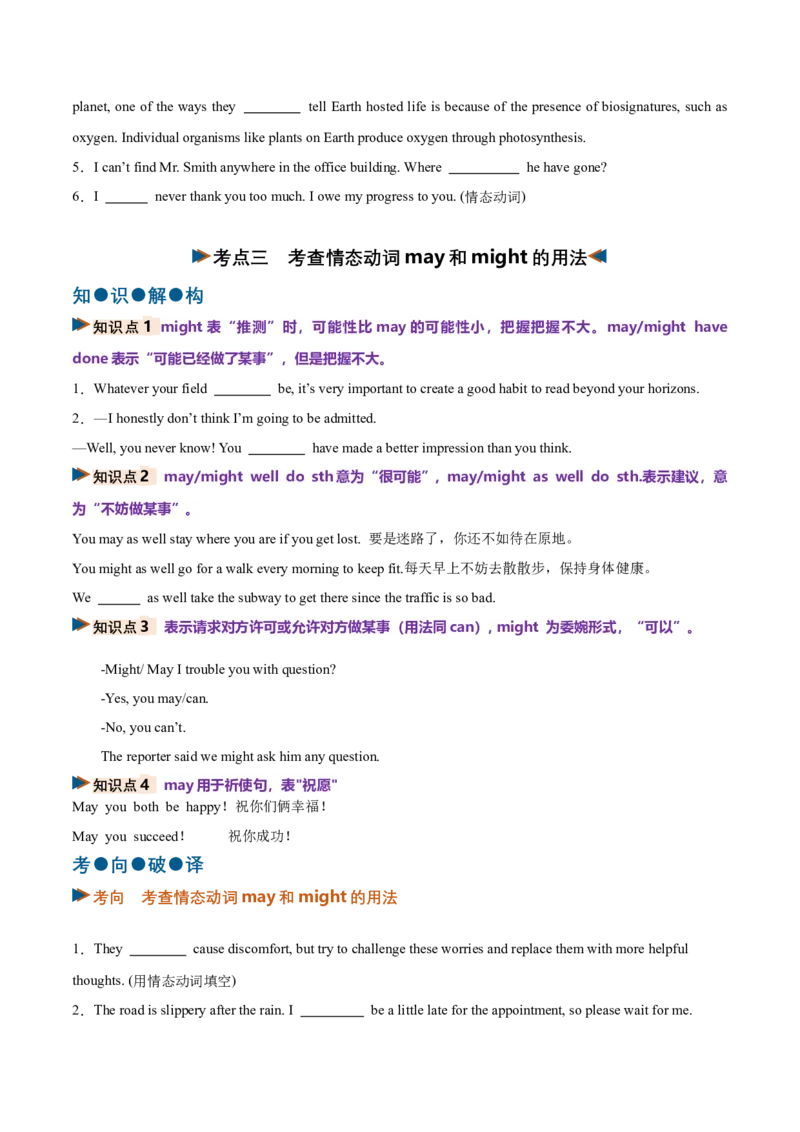
考点三  考查情态动词may 和might 的用法
知识解构 知识点1  might 表“推测”时,可能性比may 的可能性小,把握把握不大  知识点2 may/might
well do sth 意为“很可能”, may/might as well do sth.表示建议,意为“不妨做某事”。 知识点3  ……
考向破译

  考向 考查情态动词may 和might 的用法
考点四  考查情态动词must 和have to 的用法
知识解构 知识点1  must 表示“必须”, mustn't,意为“不允许,禁止 知识点2  must 表示“推测” 知识点
3 have to 表示客观需要,意为“不得不”,否定式为don’t have to 知识点4……
考向破译

  考向 考查情态动词must 和have to 的用法
考点五  考查情态动词will 和would 的用法
知识解构 知识点1  will 表示主观愿望、意志或决心,would 用于过去的习惯性动作,意为“过去常常做某事”。
知识点2 would have done 多用于虚拟条件句或含蓄条件句,表示与过去事实相反的假设 知识点3  ……
考向破译

  考向 考查情态动词will 和would 的用法
考点六  情态动词shall, should 和ought to 的用法
知识解构 知识点1  shall 用在第二、三人称陈述句中时,表示说话人的允诺、命令、告诫等 知识点2 ……
考向破译

  考向 考查情态动词shall, should 和ought to 的用法
考点七  考查情态动词need 和dare 的用法
考点八  情态动词+have done 的用法
考点九  情态动词在虚拟语气中的用法
考点十  情态动词思维建模
04
真题溯源·考向感知
溯源真题逻辑,感知高考考向
命题透视·考情前瞻
——对标素养,研判高考命题趋势
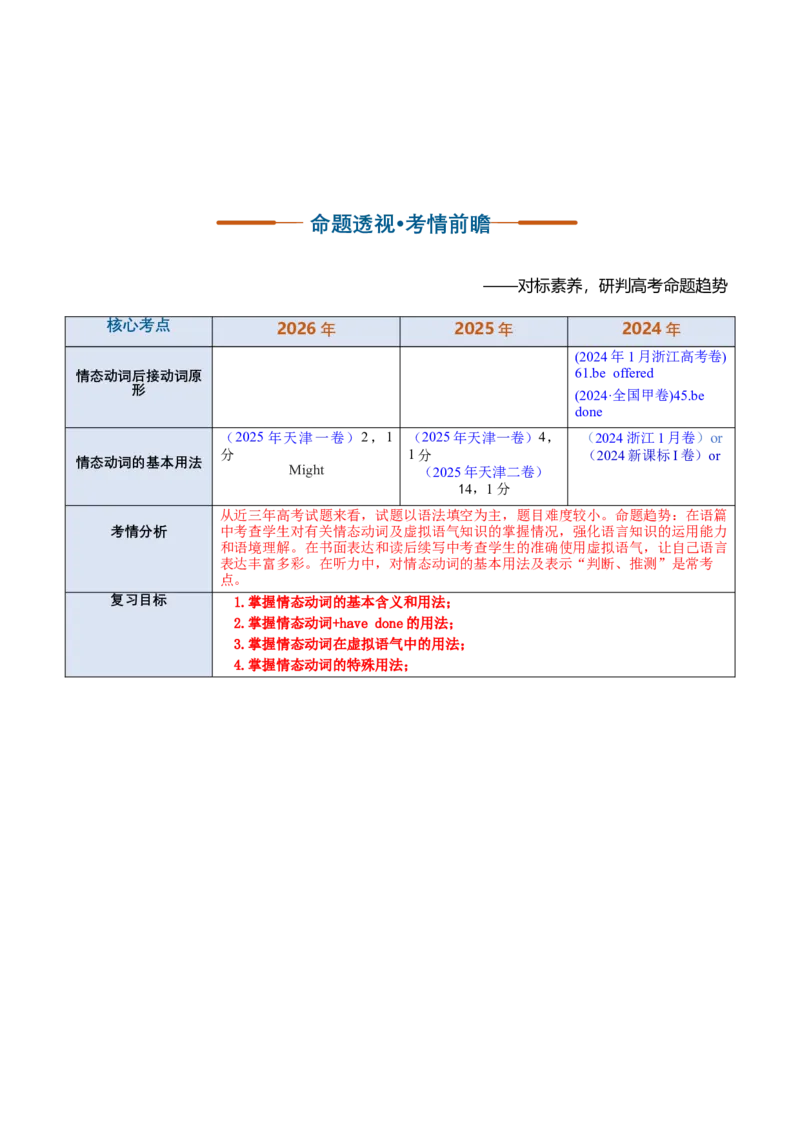
核心考点
2026 年
2025 年
2024 年
情态动词后接动词原
形
(2024 年1 月浙江高考卷)
61.be offered
(2024·全国甲卷)45.be
done
情态动词的基本用法
(2025 年天津一卷)2,1
分
Might
(2025 年天津一卷)4,
1 分
(2025 年天津二卷)
14,1 分
(2024 浙江1 月卷)or
(2024 新课标I 卷)or
考情分析
从近三年高考试题来看,试题以语法填空为主,题目难度较小。命题趋势:在语篇
中考查学生对有关情态动词及虚拟语气知识的掌握情况,强化语言知识的运用能力
和语境理解。在书面表达和读后续写中考查学生的准确使用虚拟语气,让自己语言
表达丰富多彩。在听力中,对情态动词的基本用法及表示“判断、推测”是常考
点。
复习目标
1.掌握情态动词的基本含义和用法;
2.掌握情态动词+have done 的用法;
3.掌握情态动词在虚拟语气中的用法;
4.掌握情态动词的特殊用法;
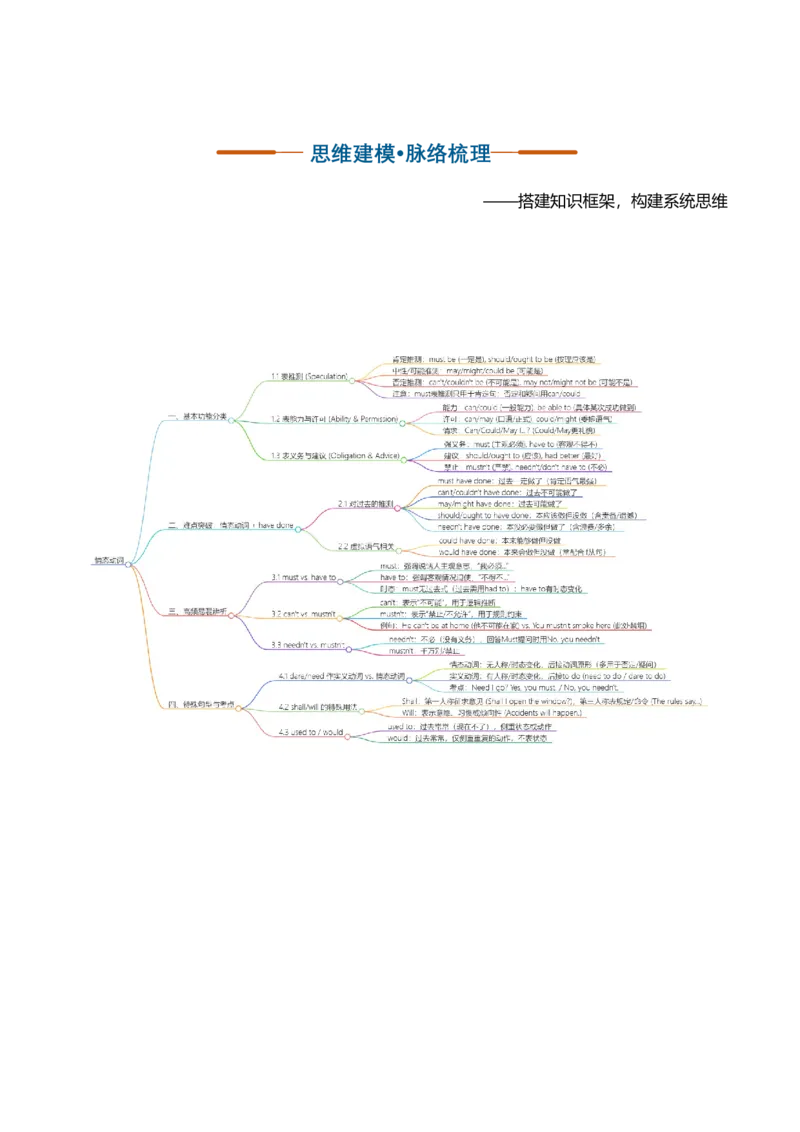
思维建模·脉络梳理
——搭建知识框架,构建系统思维
考点精讲·靶向突破
——拆解核心考点,归纳解题范式
考点一  情态动词的基本知识
知●识●解●构
知识点1  情态动词的定义:情态动词就是用来表达说话人“情绪和态度”的动词。
知识点2  情态动词的特征:
情态动词具有以下四个特征:
①本身有一定的词义。
②不能单独作谓语,必须与谓语动词的原形一起构成谓语。
③没有人称和数的变化。
④情态动词的否定式直接在其后面加“not”,疑问式把情态动词提到主语之前。
知识点3  情态动词的分类:
情态动词可分为以下四类:
①只作情态动词:can(could),may(might),must,ought to。
②可作情态动词又可作助动词:shall(should),will(would)。
③可作情态动词又可作实义动词:need,dare。
④具有情态动词特征:have to,used to
考●向●破●译
考向  考查情态动词
1.The man standing at the gate          be our new headmaster, because I saw him in the office just now.
2.He is a badtempered man, but he          be quite kind and patient sometimes.
3. Her appearance has changed so much that you                  well not recognize her.
4. Johnny, you            not play with the knife. you            hurt yourself.
5. No reader          take a book out of the library without permission of the librarian.
考点二  考查情态动词can 和could 的用法
知●识●解●构
知识点1 表示“能力”时,can 表示现在的能力,could 表示过去的能力。
1.Samuel, the tallest boy in our class,          easily reach the books on the top shelf.
2.I lived with my brother this winter and didn’t have to pay rent. So I            save most of my salary.
知识点2 could have done 表示“本可以做某事”;couldn’t have done 表示“不可能做了某
事”。
1.Mike       (find) his car, for he came to work by bus this morning.
2.You could           (claim) the cost of the hotel room from your insurance, but you didn’t.
知识点3   be able to do 表示“能够做某事”,不能与 can 连用,但有更多时态。was/were
able to do 表示过去能够而且做到了某事。
I am able to (can) do the work. 我能做这项工作。
I was able to (could) do the work. 我过去能做这项工作。
I will be able to do the work. 我将来能做这项工作。
I have been able to do the work. 我已经能做这件事。
知识点4  表示请求,许可,意为“可以”,could 语气更加委婉。
You can use my dictionary. 你可以用我的字典。
Can I use your dictionary? 我可以用你的字典吗?
Could I use your dictionary? 我可以用你的字典吗?
考●向●破●译
考向  考查情态动词can 和could 的用法
1.Only by talking face to face          we have the chance to persuade him to change his mind.
2.(2021·天津高考)It used to be that you ________ drive for miles here without seeing another person, but now
there are houses and people everywhere.
3.(2026·上海市南洋中学高三期中)“My daughter is very interested in this desktop pet robot, and we plan to
get one for her”, said Li Qing, who visited the expo with her six-year-old. The product is a kitten-like robot that
engage in conversation and display a range of expressions.
4.(2026·上海市格致中学高三月考)For example, if an alien species was searching for life outside of their
planet, one of the ways they         tell Earth hosted life is because of the presence of biosignatures, such as
oxygen. Individual organisms like plants on Earth produce oxygen through photosynthesis.
5.I can’t find Mr. Smith anywhere in the office building. Where            he have gone?
6.I        never thank you too much. I owe my progress to you. (情态动词)
考点三  考查情态动词may 和might 的用法
知●识●解●构
知识点1 might 表“推测”时,可能性比may 的可能性小,把握把握不大。may/might have
done 表示“可能已经做了某事”,但是把握不大。
1.Whatever your field          be, it’s very important to create a good habit to read beyond your horizons.
2.—I honestly don’t think I’m going to be admitted.
—Well, you never know! You          have made a better impression than you think.
知识点2  may/might well do sth 意为“很可能”, may/might as well do sth.表示建议,意
为“不妨做某事”。
You may as well stay where you are if you get lost. 要是迷路了,你还不如待在原地。
You might as well go for a walk every morning to keep fit.每天早上不妨去散散步,保持身体健康。
We        as well take the subway to get there since the traffic is so bad.
知识点3  表示请求对方许可或允许对方做某事(用法同can), might 为委婉形式,“可以”。
-Might/ May I trouble you with question?
-Yes, you may/can.
-No, you can’t.
The reporter said we might ask him any question.
知识点4  may 用于祈使句,表"祝愿"
May you both be happy!祝你们俩幸福!
May you succeed!     祝你成功!
考●向●破●译
考向  考查情态动词may 和might 的用法
1.They          cause discomfort, but try to challenge these worries and replace them with more helpful
thoughts. (用情态动词填空)
2.The road is slippery after the rain. I           be a little late for the appointment, so please wait for me.
(用适当的词填空)
3.They            have missed the plane, or perhaps they have been prevented from coming for some reason.
(用适当的词填空)
考点四  情态动词must 和have to 的用法
知●识●解●构
知识点1  must 表示“必须”,强调说话人的主观态度,否定式为mustn't,意为“不允许,禁止”。
The school has made it a rule that students            not use mobile phones in class. (用适当的词填空)
知识点2  must 表示“推测”,意为“一定是,准是",只用于肯定句中。must be doing 肯定正在
做某事;must have done 表示对过去发生的事情肯定判断,表示“肯定已经做了”。
She         have earned a lot of money, for she bought a second new car yesterday. (用适当的词填空)
知识点3  have to 表示客观需要,意为“不得不”,否定式为don’t have to,相当于needn't。
I don’t want to do so much homework at weekend, but I have          .(用适当的词填空)
知识点4  must 表示“偏要”,指说话人对发生的事情表示不满。用于表达说话人对某人固执行为或
不合时宜的情况的不满、不耐烦或责备,强调“对方偏偏要这样做”,隐含“本不该如此却执意为之”的
情绪。
Why          you always interrupt me when I am doing my homework? (用适当的词填空)
考●向●破●译
考向  考查情态动词must 和have to 的用法
1.         you work at such a late hour? You are killing me with that noise. (用适当的词填空)
2.He             have passed the exam; otherwise, he wouldn’t be so happy.
3.The room is spotless. Someone          (clean) it thoroughly before we arrived. (所给词的适当形式填空)
4.But grocery store bread          stay fresh during long shipping and storage times. So companies often put a
chemical preservative in it. (用适当的词填空)
5.—Tomorrow is a holiday. Why are you doing your homework?
—I am doing these exercises now so that I won’t have        on Sunday.
考点五 情态动词will 和would 的用法
知●识●解●构
知识点1   will 表示主观愿望、意志或决心,would 用于过去的习惯性动作,意为“过去常常做某
事”。
1.It was said that the old lady                  sit under the big tree, waiting for her son to return from the
front. (情态动词)
2.—Thank you for inviting us. Tell your wife that she gave us a perfect party.
—I         . See you later. (用适当的情态动词填空)
知识点2  would have done 多用于虚拟条件句或含蓄条件句,表示与过去事实相反的假设。
It’s a pity that you were late, otherwise you          (see) the star from Korea.
知识点3 would 用于否定句可以表示顽固倾向,意为“老是不”“总是不”。另外,would do 还可
以表示过去将来时;
知识点4 will 表示“请求”,常用于第二人称疑问句中,would 比will 语气更委婉。
知识点5 will 和would 用于第二人称的疑问句中,would 表示委婉语气。
考●向●破●译
考向 考查情态动词will 和would 的用法
1.Tina          (lie) on the grass observing stars when she was young.
2.I want to tell you that I          rather die than give in to these selfish people. (用适当的词填空)
3.We lost our way in that small village; otherwise we would          (visit) more places of interest yesterday.
考点六 情态动词shall, should 和ought to 的用法
知●识●解●构
知识点1  shall 用在第二、三人称陈述句中时,表示说话人的允诺、命令、告诫等。
It has been announced that candidates          remain in their seats until all the papers have been collected.
知识点2 should 表示“推测”,常意为“按道理说应该”;should 还可以表示说话人的惊奇、愤
怒、失望等,多用于It is necessary that…句型。
 As a parent, it is vital that you ___________ (teach) your child the value of money.
知识点3 should have done 表示“本应该做某事而没有做”,否定式则表示在“本不该做某事但已
经做了”。
Only when the results came out did he realize that he should          (devote) himself to his studies, but it was
too late.
知识点4 should/ought to 表示责任,义务,意为“应该”,否定式为should not/ ought not
to。
(2026·上海市卢湾高级中学高三期中)In group work, teachers          assign the students particular roles,
for example one student might be a scribe (抄写员) and another one might be in charge of a particular device.
知识点5 should 有“竟然”之意,表示惊讶。
You can’t imagine a well-behaved man          be so rude to a lady. (情态动词)
考●向●破●译
考向  考查情态动词shall, should 和ought to 的用法
1.One of our rules is that every student          wear school uniforms while at school.
2.If a wisdom tooth brings you too much pain, you          go to a dentist (牙医) and have it pulled out.
3.We              have studied last night, but we went to the concert instead.
4.Remember, however, that you should usually consult different types of sources. That is, you      always rely
just on the Internet for your research.
5.They request that all the cleaning work          (finish) this morning.
6.You shouldn’t          (interrupt) the meeting to tell me that; you could have come to tell me afterward.
7.To motivate your employees better, you             _________ figure out what they want and how you can
give that to them for doing what you want them to do. (用适当的词填空)
考点七 考查情态动词need 和dare 的用法
知●识●解●构
知识点1  need 用作情态动词,多用于否定句、疑问句,后接动词原形。needn’t have done 表
示“本没必要做某事但实际上做了”。
You          (come) all the way to my office; I could have sent you the documents by email.

知识点2  need 用作实意动词,接名词、代词、不定式作宾语。need doing=need to be
done 表示需要做。

知识点3  dare 用作情态动词,多用于否定句、疑问句,只有dare 和dared 两种形式。I
dare say...意为“我想,大概,可能,或许……”。
But there are still some dishes that Dad                not try even after many years of marriage to my mother.

知识点4 dare 用作实意动词,接名不定式作宾语。
考●向●破●译
考向  考查情态动词need 和dare 的用法
1.I actually          have bought so much food — only three people came.
2.The weather turned out to be fine yesterday. I needn't        (take)my umbrella with me.
3.There are over 50,000 characters in modern Chinese but luckily, Chinese children          not learn all of
them for everyday purpose.
4.He doesn't dare _________(go) home alone at night.
考点八 情态动词+have done 的用法
知●识●解●构
知识点1  can’t have done 表示“不可能做了某事”。
知识点2  could have done 用于肯定句,表示“本可以做某事”。couldn’t have done 表示“不可能做
了某事”。
知识点3 may/might have done 用于肯定或否定句中,表示对过去的推测,意思是“也许已经┅,可能
已经…”。
知识点4 must have done 只用于肯定句,表示对过去的推测,意思是“一定已经,想必已经,准是已
经….”。
知识点5  should/ought to have done 表示“本应该做某事而没有做”; shouldn’t have done 表示在“本
不该做某事但已经做了”。
知识点6 needn’t have done 表示“作了不必做或不需要做的事”。
考●向●破●译
考向  考查情态动词+have done 的用法
1.Using supercomputer, many labs are now conducting experiments that couldn’t          (be) possible in the
past.
2.5Jack described his father, who          have been a brave boy many years ago, as a strong-willed man.
3.Susan hasn’t arrived yet. She          (miss) the train, as there’s usually heavy traffic at this time.
4.He          have finished writing the paper. He hadn’t written a single word when I left him fifty minutes
ago.
考点九 情态动词在虚拟语气中的用法
知●识●解●构
知识点1 if 虚拟条件句的用法
场合
从句谓语动词形式
主句谓语形式
与现在事实相反
动词过去式(be 用were)
would / could / should / might+ 动词原形
与过去事实相反
had +动词过去分词
would/ could / should / might have done
与将来事实相反
1.动词过去式(be 用were)
2.were to + 动词原形
3.should + 动词原形
would / could / should / might + 动词原形
知识点2 从句谓语用“(should)+动词原形”的情况
① (坚持insist 命令order, command 建议advise, suggest, recommend 要求demand, desire, require, request)
接从句谓语用should+动词原形,且should 可以省略。但应注意insist 表示“坚持说”,suggest 表示“暗示,
表明”时,后接宾语从句应用陈述语气。
It is suggested that the meeting should be put off till next week.
②名词(order, command, advice, suggestion, requirement 等)后接从句,该从句谓语动词用should+动词原形,
且should 可以省略。
We agreed to the order that the task (should) be completed at 5 o'clock.
It is necessary/strange/ impossible..that..
③
从句谓语用should+动词原形,且should 可以省略。若从句涉及已
经发生的动作,则应用should have done。
It is strange that he should have acted toward his parents like that.
知识点3 特殊句型中虚拟语气的用法
I wish that…
①
从句与过去、现在、将来事实相反,分别用had done, did, would/could do。
I wish
从句结构
示例
与现在事实相反
一般过去式
I wish it were autumn now.
与过去事实相反
过去完成式
He wished he had not lost the chance.
与将来事实相反
would+动词原形
I wish you would come soon.
if only
②
表示“如果……该多好”,as if/though 表示“好像”,从句虚拟用法同上。
I would rather that…
③
从句与过去事实相反用过去完成时,与现在、将来相反用一般过去时。
It is high/about time that..
④
后面常用did 或should do, should 不能省,意为“早该……”。
知识点4 情态动词后跟完成式虚拟语气的用法
分类
形式
用法
对过去情况的
后悔、遗憾或
责备等
needn't have done
过去没有必要做……但实际上做了
should/ought to have
过去本应该做……而实际上并未做
done
would have done
本来会做……而未做
could have done
本来可以做……但是实际没有做
考●向●破●译
考向  考查情态动词在虚拟语气中的用法
1.(2026·上海月考)My suggestion is that the problem                  (discuss) at the meeting as soon as
possible.
2.The expert suggested that if students          (pay) more attention to accumulating English vocabulary in
daily life, their reading comprehension ability would improve significantly.
3.I           have worried before I came to the new school, for my classmates here are very friendly to me.
4.But for the abundant English reading materials provided by the school library, the students
         (broaden) their horizons and improved their reading speed significantly last semester.
6.(2026·陕西省西安高新第一中学月考)It is desired that accurate and timely weather warnings
(transmit) to all coastal communities before the storm arrives.
考点十 情态动词思维建模
思维建模


✅技巧1:熟练掌握情态动词的基本用法:情态动词+动词原形。

✅技巧2:根据具体的语境判断使用相应的情态动词。

✅技巧3:注意情态动词的特殊用法。例如should“竟然”。

✅技巧4:近年来情态动词与动词时态、语态联考是重点。

✅技巧5:根据具体语境恰当使用情态动词和虚拟语气表达自己的思想感情,尤其是在写作中。
真题溯源·考向感知
——溯源真题逻辑,感知高考考向
单句填空 在空白处填入1 个适当的单词或括号内单词的正确形式。
1.(2026 年天津一卷)2.You’d better check the airport arrangement first, because the flight ______ be cancelled
due to heavy rain before you leave.
A. shouldn’t B. needn’t C. might D. must
2.(2025 年天津一卷)4.You________ rush to finish the report. The deadline has been extended.
A.couldn’t
B.mustn’t
C.needn’t
D.wouldn’t
3.(2025 年天津二卷)14.No reader________remove a book from the library without permission.
A.would
B.might
C.shall
D.need
4.(2024 年1 月浙江高考卷) However, though it’s nice to get a few cents off a pack of sausages, it would help
even more if they could sometimes     61     (offer) in smaller packs. Even the biggest sausage fan doesn’t
want to eat them every day.
5.(2024·全国甲卷)What should     45    (do)with such a beautiful place?
6.(2023 年全国甲卷) Carson proves that a simple literary form that has been passed down through the ages
can still ______ (employ) today to draw attention to important truths.