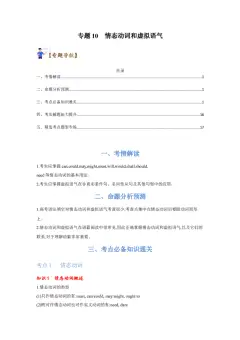
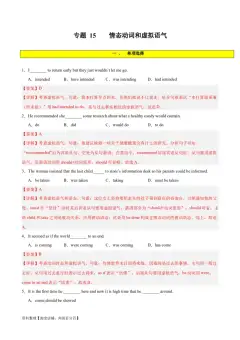
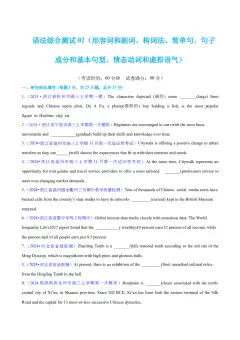
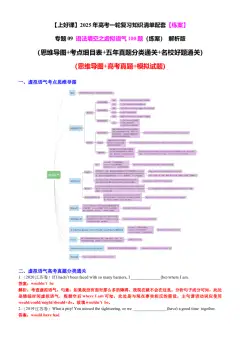
专题 07 情态动词和虚拟语气(讲义)
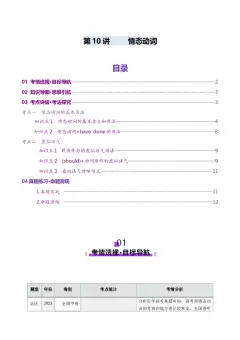
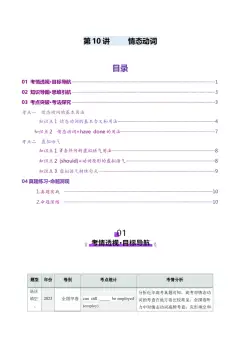
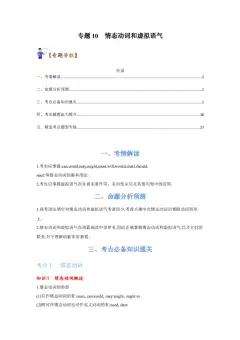
目 录
考点 情态动词和虚拟语气 ---------------------------------------------------------------------------------------------------------1页
---------------------------------------------------------------------------=------------------------------------------1页
------------------------------------------------------------------------------------------------------------------------2页
【真题研析·规律探寻】-----------------------------------------------------------------------------------------------------2
页
考向1考查情态动词的基本用法----------------------------------------------------------------------------------------------------------------2页
考向2考查情态动词的基本含义及用法--------------------------------------------------------------------------------------------------------2
页
考向3考查虚拟语气中----------------------------------------------------------------------------------------------------------------------------3页
【核心提炼·考向探究】----------------------------------------------------------------------------------------------------3页
1.情态动词的基本用法----------------------------------------------------------------------------------3
页
2.情态动词后跟完成式的用法----------------------------------------------------------------------------7
页
3.虚拟语气的常用用法-------------------------------------------------------------------------------------------------------------------------------------7页
【题型特训·命题预测】-------------------------------------------------------------------------------------------------------------7页
预测考向1 考查情态动词的基本用法----------------------------------------------------------------------------------------------------------------8页
预测考向2 考查情态动词+完成式的用法-----------------------------------------------------------------------------------------------------------8页
预测考向3 考查虚拟语气--------------------------------------------------------------------------------------------------------------------------------8页考点 情态动词和虚拟语气
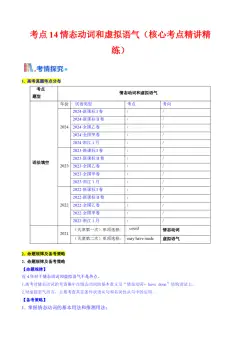
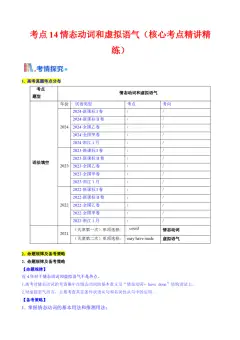
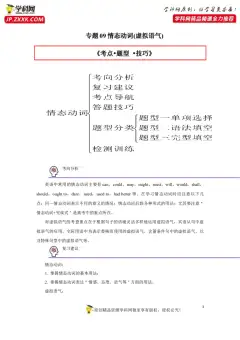
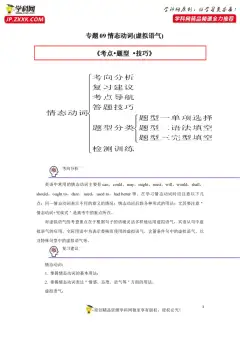
考情分析:分析2021-2023年新高考有关情态动词和虚拟语气的考向分布。
书面表达
题型 语法填空
高级句式
高考考点 情态动词和虚拟语气
can still 高考英语写作范文中时常有虚拟语气和涉及情态动词
2023全国甲卷
(employ)【答案】be 的句子。
employed
I ______________(be) where
2020江苏卷
I am.【答案】wouldn’t be
or we ________________(have)
2019江苏卷 a good time together.【答案】
would have had
总结高考考点,探究名词的命题规律。
近年来,高考名词主要考查:情态动词后动词原形;虚拟语气和情态动词的融合。
考点要求 考题统计 考情分析
【命题规律】
根据新高考三年的考情分析,情态动词和虚拟语气考点有可能
情态动词 3年1考
在语法填空中考查,但更多的是在写作中考查。
虚拟语气 3年多考考向1 考查情态动词的基本用法(情态动词后接动词原形)
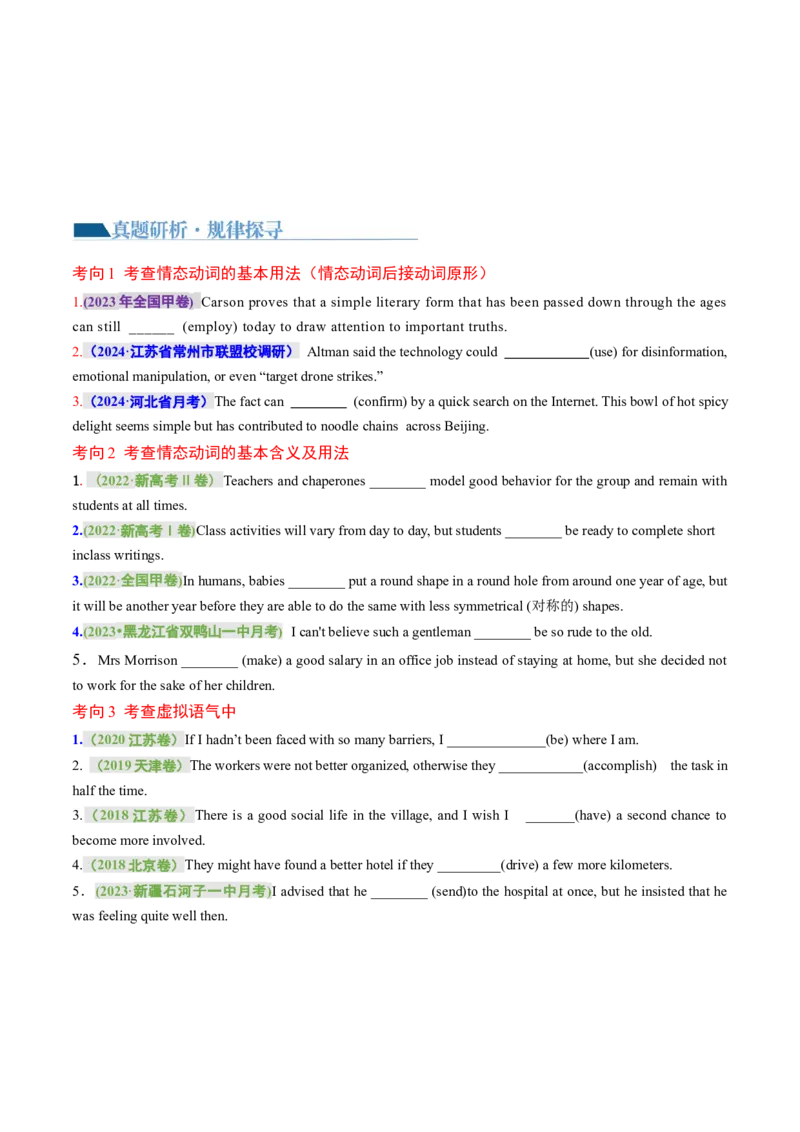
1.(2023年全国甲卷) Carson proves that a simple literary form that has been passed down through the ages
can still ______ (employ) today to draw attention to important truths.
2.(2024·江苏省常州市联盟校调研) Altman said the technology could (use) for disinformation,
emotional manipulation, or even “target drone strikes.”
3.(2024·河北省月考)The fact can (confirm) by a quick search on the Internet. This bowl of hot spicy
delight seems simple but has contributed to noodle chains across Beijing.
考向2 考查情态动词的基本含义及用法
1. (2022·新高考Ⅱ卷) Teachers and chaperones ________ model good behavior for the group and remain with
students at all times.
2.(2022·新高考Ⅰ卷)Class activities will vary from day to day, but students ________ be ready to complete short
inclass writings.
3.(2022·全国甲卷)In humans, babies ________ put a round shape in a round hole from around one year of age, but
it will be another year before they are able to do the same with less symmetrical (对称的) shapes.
4.(2023•黑龙江省双鸭山一中月考) I can't believe such a gentleman ________ be so rude to the old.
5.Mrs Morrison ________ (make) a good salary in an office job instead of staying at home, but she decided not
to work for the sake of her children.
考向3 考查虚拟语气中
1.(2020江苏卷)If I hadn’t been faced with so many barriers, I ______________(be) where I am.
2. (2019天津卷)The workers were not better organized, otherwise they ____________(accomplish) the task in
half the time.
3.(2018 江苏卷)There is a good social life in the village, and I wish I _______(have) a second chance to
become more involved.
4.(2018北京卷)They might have found a better hotel if they _________(drive) a few more kilometers.
5.(2023·新疆石河子一中月考)I advised that he ________ (send)to the hospital at once, but he insisted that he
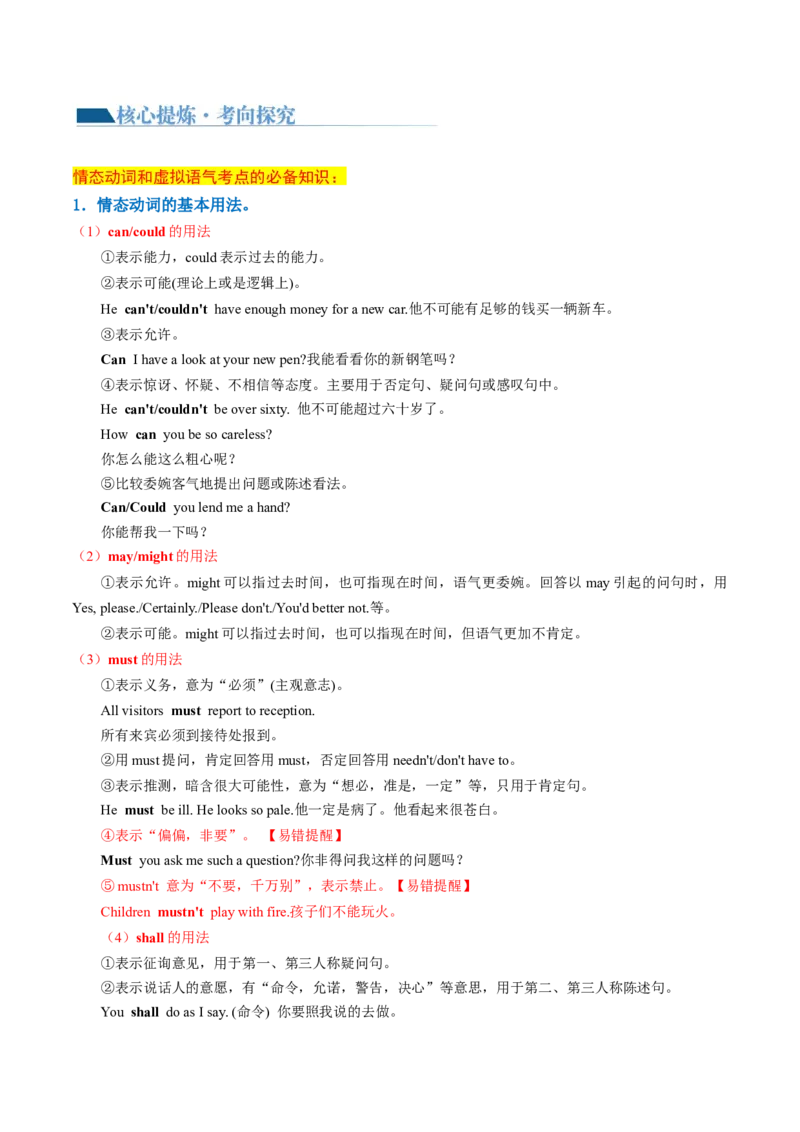
was feeling quite well then.情态动词和虚拟语气考点的必备知识:
1.情态动词的基本用法。
(1)can/could的用法
①表示能力,could表示过去的能力。
②表示可能(理论上或是逻辑上)。
He can't/couldn't have enough money for a new car.他不可能有足够的钱买一辆新车。
③表示允许。
Can I have a look at your new pen?我能看看你的新钢笔吗?
④表示惊讶、怀疑、不相信等态度。主要用于否定句、疑问句或感叹句中。
He can't/couldn't be over sixty. 他不可能超过六十岁了。
How can you be so careless?
你怎么能这么粗心呢?
⑤比较委婉客气地提出问题或陈述看法。
Can/Could you lend me a hand?
你能帮我一下吗?
(2)may/might的用法
①表示允许。might可以指过去时间,也可指现在时间,语气更委婉。回答以may引起的问句时,用
Yes, please./Certainly./Please don't./You'd better not.等。
②表示可能。might可以指过去时间,也可以指现在时间,但语气更加不肯定。
(3)must的用法
①表示义务,意为“必须”(主观意志)。
All visitors must report to reception.
所有来宾必须到接待处报到。
②用must提问,肯定回答用must,否定回答用needn't/don't have to。
③表示推测,暗含很大可能性,意为“想必,准是,一定”等,只用于肯定句。
He must be ill. He looks so pale.他一定是病了。他看起来很苍白。
④表示“偏偏,非要”。 【易错提醒】
Must you ask me such a question?你非得问我这样的问题吗?
⑤mustn't 意为“不要,千万别”,表示禁止。【易错提醒】
Children mustn't play with fire.孩子们不能玩火。
(4)shall的用法
①表示征询意见,用于第一、第三人称疑问句。
②表示说话人的意愿,有“命令,允诺,警告,决心”等意思,用于第二、第三人称陈述句。
You shall do as I say. (命令) 你要照我说的去做。Everyone shall not pass without permission! (警告)没有允许,任何人休想通过!
(5)will的用法
①表示意愿,用于各种人称陈述句。【易错提醒】
If you will read the book, I'll lend it to you.如果你愿意读这本书,我就借给你。
②表示某种倾向或习惯性动作。【易错提醒】
These things will happen. 这些事情早晚要发生。
③表示临时作出的决定。【易错提醒】
—Someone is knocking at the door.
—I will answer it.
——有人在敲门。
——我来开门。
(6)would的用法
①表示意愿。【易错提醒】
She just wouldn't do what I asked her.
她就是不愿照我说的去做。
②表示委婉地提出请求、建议或看法。
③表示过去反复发生的动作或过去的一种倾向。【易错提醒】
When he was young, he would sit in front of the door, waiting for his father to come back home.
小时候,他常常坐在门口等着爸爸回家。
(7)should/ought to的用法
①表示义务,意为“应该”(某件事适宜做),用于各种人称。
You should be polite to your teachers.你应该对老师有礼貌。
Such things ought to be banned.这种事应该禁止。
②表示推测,意为“想必,一定,照说应该,估计”等。
They should be home by now.他们现在应该在家。
If he started out at nine, he ought to be here by now.他如果九点出发,现在应该到这里了。
③should还可以用在if引导的虚拟条件从句中。should置于句首时,省略if,相当于“万一”的意思。
【易错提醒】
If it were not raining, we should go for a picnic.
如果现在不下雨的话,我们就出去野餐了。
Should you change your mind, please let us know.
万一你改变主意,请让我们知道。
④should还可用在以 why, who, how等开头的疑问句或某些感叹句中,带有感情色彩。意为“竟然,
竟会”。 【易错提醒】
Why should you be so late today?
你今天竟然来得这么晚?
⑤在It is+adj.+that从句中,从句的谓语动词常用should+动词原形,should可以省略。【高频再
现】It is vital that every student (should) respect their teachers.
每个学生都应该尊重他们的老师,这很重要。
(8)need的用法
need表示必要性,常用于疑问句和否定句中,needn't表示“不必”。need作实义动词时,可用于肯定
句、否定句和疑问句中,有人称、数和时态的变化;其后可接名词、代词、带to的不定式或动名词作宾语。
The classroom needs cleaning.
=The classroom needs to be cleaned.
教室需要打扫。
(9)dare的用法
dare意为“敢,敢于”,没有人称、数和时态的变化,主要用于疑问句、否定句和条件句中,后接动
词原形。作实义动词时,在肯定句中通常接带to的不定式,在疑问句和否定句中,dare之后的不定式可省
略to。
We should not be producing compliant students who do not dare (to) criticize.
我们不应当把学生培养成不敢批评的唯唯诺诺的人。
(10)used to/had better/might as well的用法
①used to+动词原形表示过去的习惯动作或状态,现在不再发生或不存在。疑问式和否定式有两种。
There used to be a building at the street corner, but it has been pulled down.过去在街角有一幢大楼,但现
在已经被拆掉了。
I used not/didn't use to like opera. 我过去不喜欢歌剧。
Used you/Did you use to go to school on foot?你过去常常步行去上学吗?
②had better意为“最好”,后面接动词原形,否定式为had better not do。【高频再现】
We had better take an umbrella in case it rains.
以防下雨,我们最好带把伞。
③might as well意为“倒不如……,还是做……好”。 【高频再现】
The heavy rain ruined our trip. We might as well have stayed at home.
大雨毁了我们的旅行。我们还不如待在家里。
2.情态动词后跟完成式的用法
分类 形式 用法
must have done 对过去的动作的肯定推测,表示肯定做过某事
表示对过去情况的否定推测,用于否定句和疑问句,
can't/couldn't have done
表示不可能做过某事
对过去的推测
表示对过去情况的不太肯定的推测;用于肯定句、否
may/might
定句,但不用于疑问句。表示“可能”。might have
have done
done 也用于虚拟语气句,表示未实现的动作
对过去情况的
needn't have done 过去没有必要做……但实际上做了
后悔、遗憾或should/ought to have
过去本应该做……而实际上并未做
done
责备等
would have done 本来会做……而未做
could have done 本来可以做……但是实际没有做
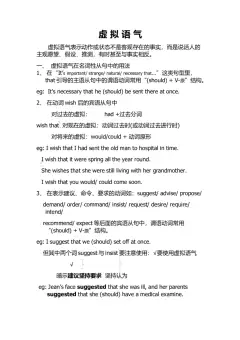
3.虚拟语气的常用用法
(1)if虚拟条件句的用法
场合 从句谓语动词形式 主句谓语形式
与现在事实相反 动词过去式(be用were) would / could / should / might+ 动词原形
与过去事实相反 had +动词过去分词 would/ could / should / might have done
1.动词过去式(be用were)
与将来事实相反 2.were to + 动词原形 would / could / should / might + 动词原形
3.should + 动词原形
(2)从句谓语用“(should)+动词原形”的情况
① (坚持insist命令order, command建议advise, suggest, recommend要求demand, desire, require, request)
接从句谓语用should+动词原形,且should可以省略。但应注意insist表示“坚持说”,suggest表示“暗示,
表明”时,后接宾语从句应用陈述语气。
It is suggested that the meeting should be put off till next week.
②名词(order, command, advice, suggestion, requirement等)后接从句,该从句谓语动词用should+动词原形,且
should可以省略。
We agreed to the order that the task (should) be completed at 5 o'clock.
③It is necessary/strange/ impossible..that..从句谓语用should+动词原形,且should可以省略。若从句涉及已经
发生的动作,则应用should have done。
It is strange that he should have acted toward his parents like that.
(3)特殊句型中虚拟语气的用法
①I wish that…从句与过去、现在、将来事实相反,分别用had done, did, would/could do。
I wish 从句结构 示例
与现在事实相反 一般过去式 I wish it were autumn now.
与过去事实相反 过去完成式 He wished he had not lost the chance.
与将来事实相反 would+动词原形 I wish you would come soon.
②if only表示“如果……该多好”,as if/though表示“好像”,从句虚拟用法同上。
③I would rather that…从句与过去事实相反用过去完成时,与现在、将来相反用一般过去时。
④It is high/about time that..后面常用did或should do, should不能省,意为“早该……”。
情态动词和虚拟语气考点的关键能力:
1.熟练掌握情态动词的基本用法:情态动词+动词原形。
2.根据具体的语境判断使用相应的情态动词。3.注意情态动词的特殊用法。例如should“竟然”。
4.根据具体语境恰当使用虚拟语气表达自己的思想感情,尤其是在写作中。
【2024年高考命题预测】
根据高考考情分析2024年高考将:(1)有可能考查情态动词与动词的连用情况;(2)考查情态动词
+完成式表推测仍然是重难点;(3)虚拟语气在写作中表示考生的思想感情。
预测考向1 考查情态动词的基本用法
1.(2023•江苏省南通)Affected by the poem, we felt the responsibility that we ________ assume to
strive for our motherland.
2.(2023•海南省琼海市嘉积中学月考)Children 8 years of age and under ________ be accompanied by
an adult.
3. Not only ________ he play the piano,but also he plays the violin very well.
预测考向2 考查情态动词+完成式的用法
1.(2023·河南省九师联盟联考)There are several theories about why dinosaurs suddenly died out, one of which
says their disappearance ________ (cause) by the climate change.
2.I can't find Charlie anywhere; I think the mailman ________ (forget) to close the gate.
预测考向3 考查虚拟语气
1.(2023·海南省海口市高三能力诊断)I ________ (not worry) before I came to the new school, for my
classmates here are very friendly to me.
2.(2023·辽宁省辽西联合校高三期中考试)I am sure I would have lost him if I ________ (continue) dancing.
3.It is high time that we ________ (join) hands to protect the only home we have.
4.(2018江苏卷)It’s strange that he _______ have taken the books without the owner’s permission.