文档文本内容
话题:人与自然(卫生与健康)
体裁:说明文
来源:theoaklandpress.com, 20200325
词数:371
FK Grade Level: 8.9


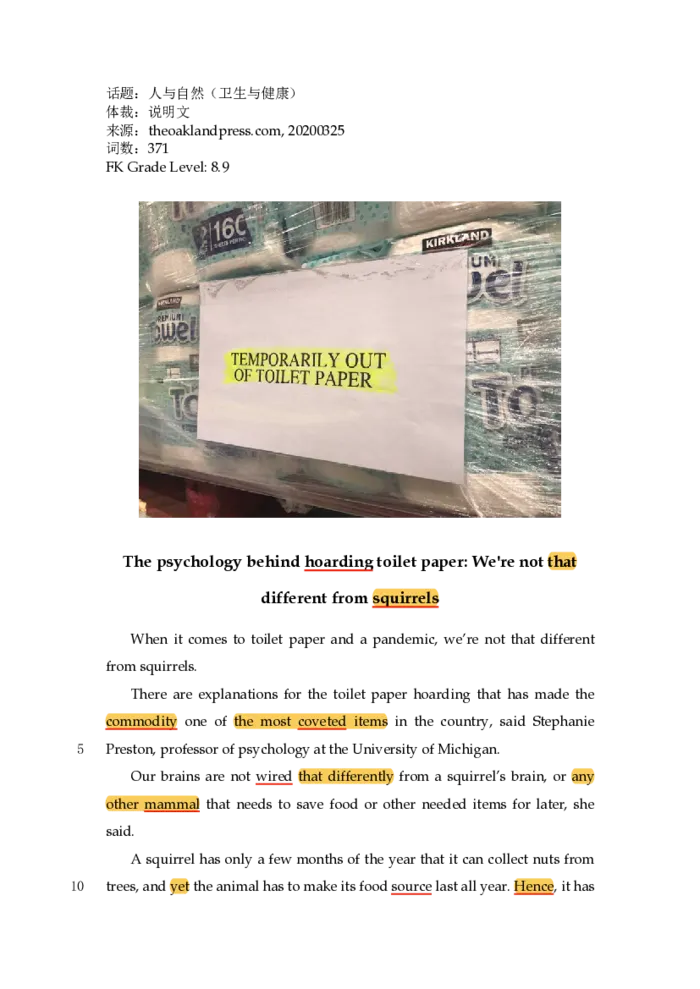
The psychology behind hoarding toilet paper: We're not that
different from squirrels
When it comes to toilet paper and a pandemic, we’re not that different
from squirrels.
There are explanations for the toilet paper hoarding that has made the
commodity one of the most coveted items in the country, said Stephanie
Preston, professor of psychology at the University of Michigan.
5
Our brains are not wired that differently from a squirrel’s brain, or any
other mammal that needs to save food or other needed items for later, she
said.
A squirrel has only a few months of the year that it can collect nuts from
trees, and yet the animal has to make its food source last all year. Hence, it has
10
the capacity to remember all the places where it hides them.
Similarly, when a pandemic puts humans under stress, a common
response is to clean and to hoard. “Toilet paper is the perfect storm of the two,”
Preston said, because of its association with cleanliness.
But why not hoard milk or bread or some other food?
15
Preston said if a food item is in short supply, people can make some
reasonable substitution for it. There are few good substitutes for toilet paper.
And people can hoard it without fear that it will go bad.
And when nobody can find it, it becomes even more important, she said.
“It’s not something we’re particularly interested in until we see the
20
shelves are empty,” Preston said. “And then you think if there isn’t any, it
must be something really good.”
It’s similar to the phenomenon of toys that become the most popular at
Christmastime. Remember the Cabbage Patch doll and Tickle Me Elmo?
Adding to all this fixation with toilet paper is that “it’s kind of taboo and
25
gross and funny,” Preston said. Just check out all the toilet paper memes
going around on social media.
Why aren’t people thinking that if they buy the last packages of toilet
paper in the store, that will mean someone else won’t have any?
“Under stress, we’re self-focused on our perceived needs,” Preston said.
30
If someone else approached the toilet paper display at the same time, the
shopper attempting to take all of it would most likely be confronted with that
person’s need and may offer to share the supply.