ARTICLE · 1051286
初中英语 | 新版外研社英语八年级上册 Unit 3 Make it happen!
2026
初中英语
外研版八年级上册
重点课文 1
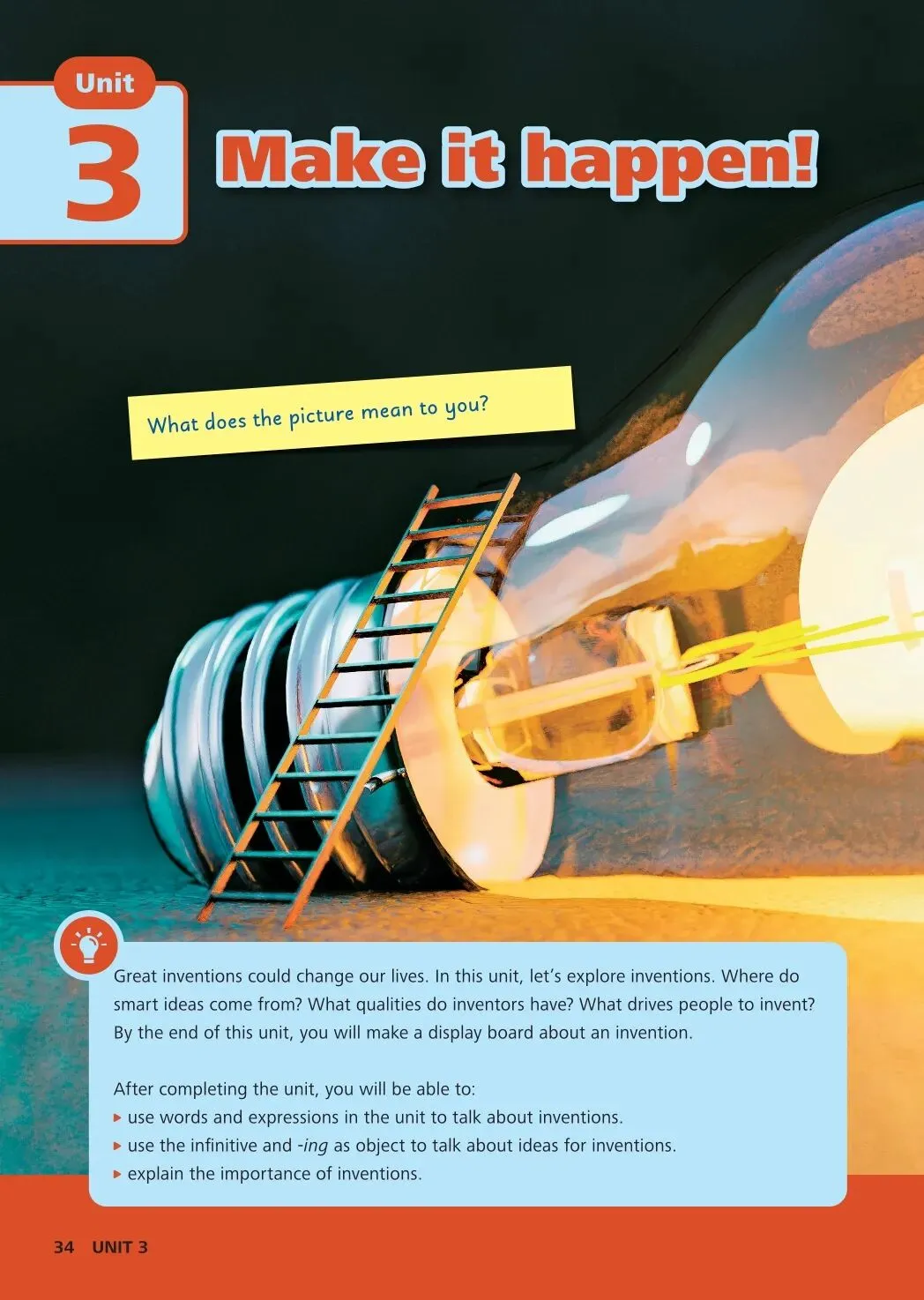
Great inventions could change our lives. In this unit, let’s explore inventions. Where do smart ideas come from? What qualities do inventors have? What drives people to invent? By the end of this unit, you will make a display board about an invention.
伟大的发明可以改变我们的生活。在本单元,我们一起探索发明吧。聪明的主意从何而来?发明家具备哪些品质?是什么推动人们去发明?在本单元的结尾,你将制作一个关于一项发明的展板。
单元主题:本单元主题为创造、发明与探索,围绕 “动手实践、大胆创新” 展开,通过发明家、科学小发明、科技展相关故事,讲述普通人依靠好奇心、坚持与钻研,克服失败、动手创造,做出实用发明改变生活的故事。
A helping hand
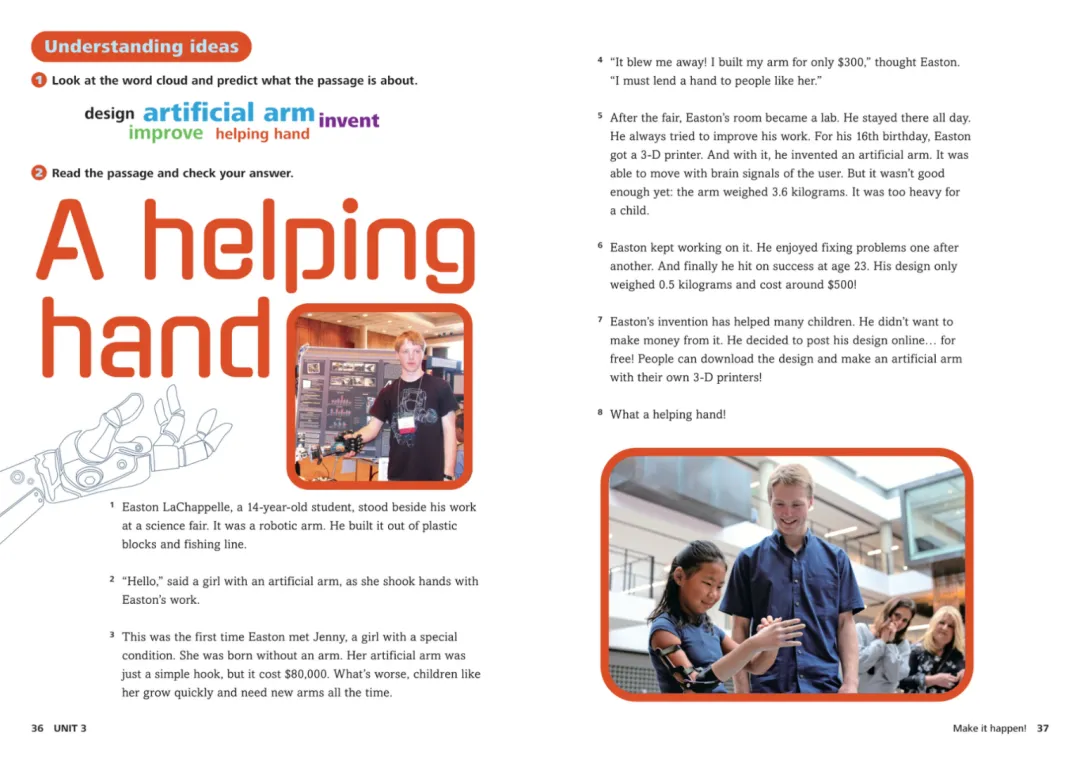
1 Easton LaChappelle, a 14-year-old student, stood beside his work at a science fair. It was a robotic arm. He built it out of plastic blocks and fishing line.
2 “Hello,” said a girl with an artificial arm, as she shook hands with Easton’s work.
3 This was the first time Easton met Jenny, a girl with a special condition. She was born without an arm. Her artificial arm was just a simple hook, but it cost $80,000. What's worse, children like her grow quickly and need new arms all the time.
4 “It blew me away! I built my arm for only $300,” thought Easton. “I must lend a hand to people like her.”
5 After the fair, Easton's room became a lab. He stayed there all day. He always tried to improve his work. For his 16th birthday, Easton got a 3-D printer. And with it, he invented an artificial arm. It was able to move with brain signals of the user. But it wasn't good enough yet: the arm weighed 3.6 kilograms. It was too heavy for a child.
6 Easton kept working on it. He enjoyed fixing problems one after another. And finally he hit on success at age 23. His design only weighed 0.5 kilograms and cost around $500!
7 Easton’s invention has helped many children. He didn’t want to make money from it. He decided to post his design online… for free! People can download the design and make an artificial arm with their own 3-D printers!
8 What a helping hand!
援助之手
1 14 岁少年伊斯顿・拉沙佩勒站在科技展自己的作品旁 —— 一只机械手臂,由塑料积木和鱼线搭建而成。
2 一位佩戴假肢的女孩走上前,和机械手臂握手打招呼。
3 伊斯顿第一次见到珍妮,一个有特殊情况的女孩。她天生缺少一只手臂。她的假肢只是简易挂钩,却要花费八万美元。更糟糕的是,像她这样的孩子长得很快,需要不断更换新假肢。
4 伊斯顿大为震撼:“我做这只机械臂只花了 300 美元!我一定要帮助像她一样的人。”
5 展会结束后,他把房间改成实验室,整日待在那里,试图改进他的工作。16 岁生日,伊斯顿得到一台 3D 打印机,用它造出了一个假肢,能够随着使用者的大脑信号移动。然而这个假肢还不够好,它重达 3.6 千克,对一个孩子来说太重了。
6 伊斯顿持续改良,乐此不疲解决一个个难题。23 岁时他终于取得突破:新款假肢仅 0.5 千克,造价约 500 美元。
7 这项发明帮助了无数残疾儿童。他不靠这项发明牟利,反而把设计图纸免费发布到网上,任何人都能下载,用自家 3D 打印机制作假肢。
8 多么温暖的援手!
重要课文 2
The power of curiosity
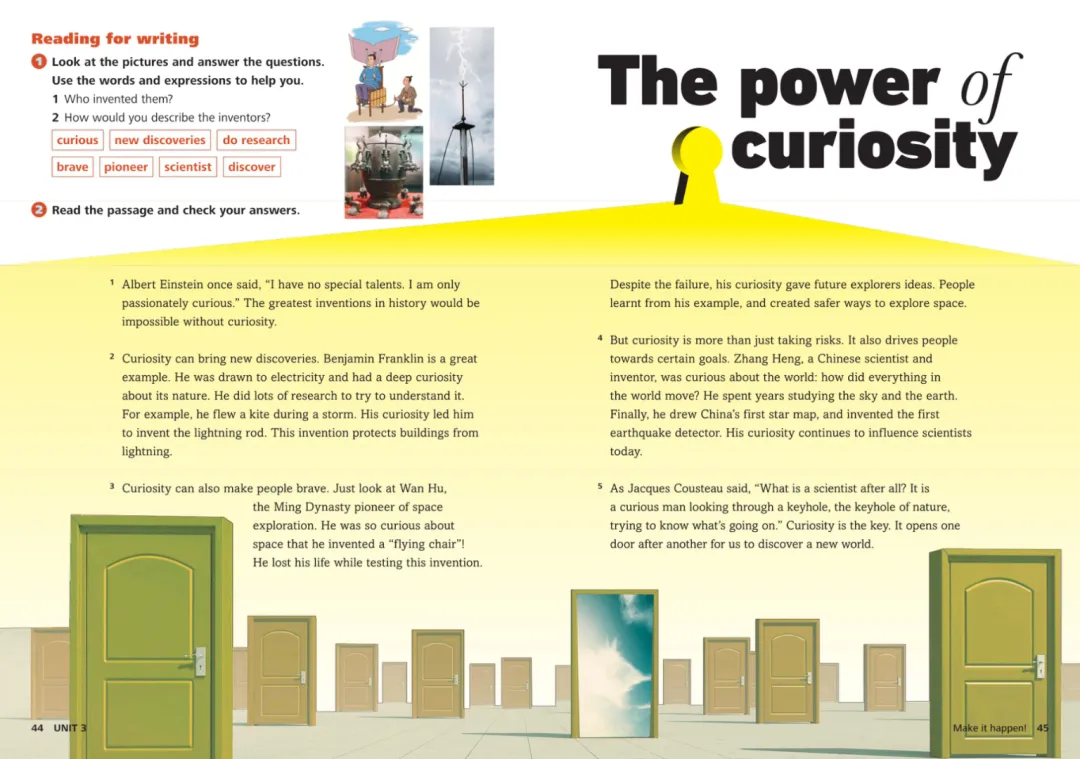
1 Albert Einstein once said, “I have no special talents. I am only passionately curious.” The greatest inventions in history would be impossible without curiosity.
2 Curiosity can bring new discoveries. Benjamin Franklin is a great example. He was drawn to electricity and had a deep curiosity about its nature. He did lots of research to try to understand it. For example, he flew a kite during a storm. His curiosity led him to invent the lightning rod. This invention protects buildings from lightning.
3 Curiosity can also make people brave. Just look at Wan Hu, the Ming Dynasty pioneer of space exploration. He was so curious about space that he invented a "flying chair"! He lost his life while testing this invention. Despite the failure, his curiosity gave future explorers ideas. People learnt from his example, and created safer ways to explore space.
4 But curiosity is more than just taking risks. It also drives people towards certain goals. Zhang Heng, a Chinese scientist and inventor, was curious about the world: how did everything in the world move? He spent years studying the sky and the earth. Finally, he drew China's first star map, and invented the firste arthquake detector. His curiosity continues to influence scientists today.
5 As Jacques Cousteau said, "What is a scientist after all? It is a curious man looking through a keyhole, the keyhole of nature, trying to know what's going on." Curiosity is the key. It opens one door after another for us to discover a new world.
好奇心的力量
1 爱因斯坦曾说:“我并无过人天赋,只是满怀好奇。” 人类史上所有伟大发明,都源于好奇心。
2 好奇心能带来全新发现。本杰明·富兰克林就是一个很好的例子。他痴迷电,对电的本质有着强烈的好奇心。他做了大量的研究试图理解它。例如,他在暴风雨中放风筝。他的好奇心促使他发明了避雷针。这项发明保护建筑物免受雷击。
3 好奇心也能让人变得勇敢。看看明朝太空探索的先驱万虎就知道了。他对太空如此好奇,以至于发明了一把“飞行椅”!他在测试这项发明时失去了生命。尽管失败了,他的好奇心给了未来的探险者灵感。人们以他为榜样,创造了探索太空的更安全的方法。
4 然而好奇心不仅仅是冒险,它也驱使人们朝着特定目标前进。中国科学家和发明家张衡对这个世界很好奇:世界上的万物是如何运动的?他常年观测天象。最后,他绘制了中国第一张星图,并发明了地动仪。他的好奇心至今仍影响着科学家们。
5 正如雅克・库斯托所说,科学家如同透过锁孔窥探世界的好奇者,探寻自然奥秘。好奇心,是打开一切未知大门的钥匙。
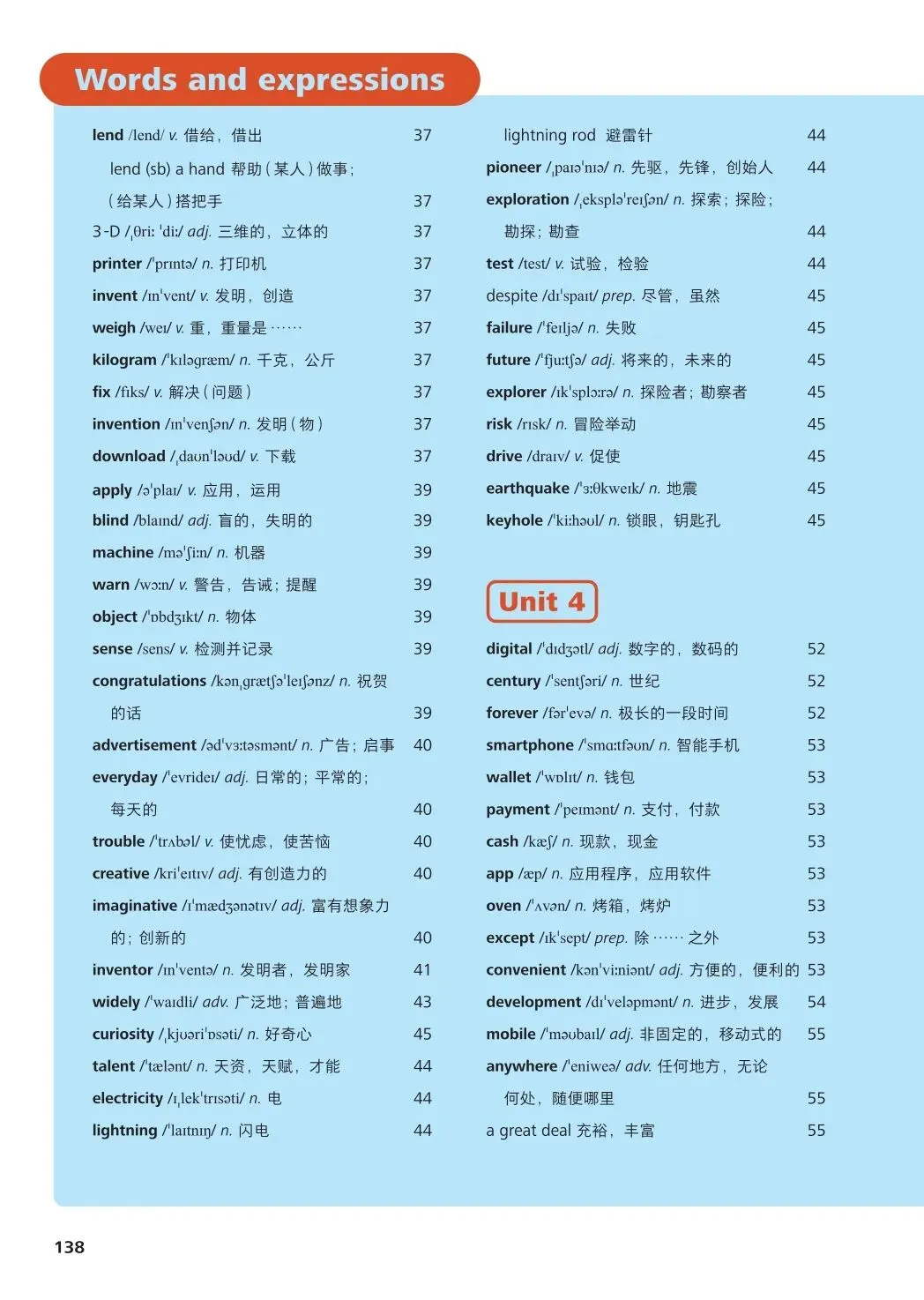
核心词汇+重要短语
核心词汇
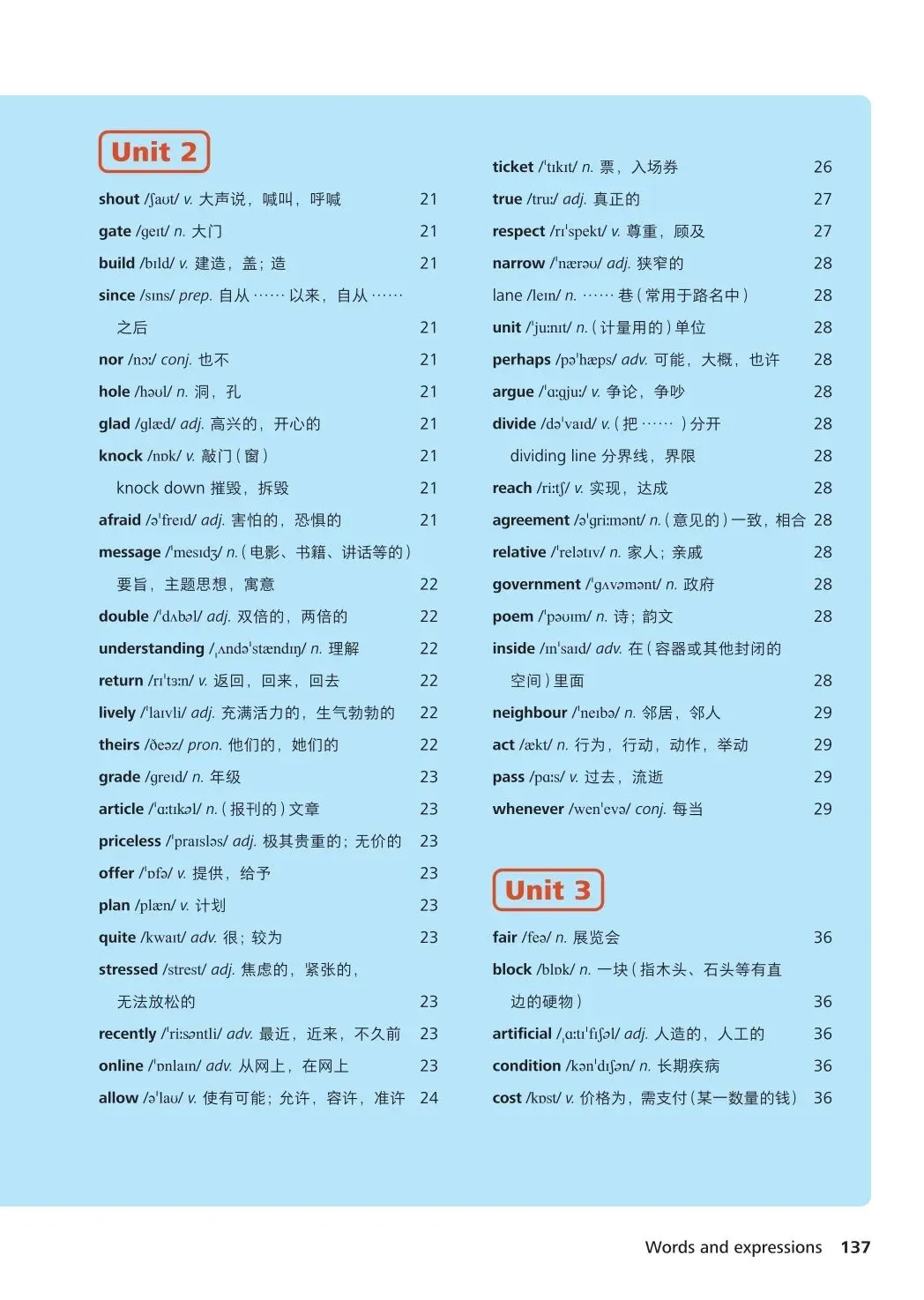
fair n. 展览会
①science fair 科技展览会
②fair adj. 公平的
③fairness n. 公平
④近义词(展览会):show, exhibition
block n. 积木,方块
①plastic blocks 塑料积木
②block v. 阻挡,堵塞
③近义词:cube
artificial adj. 人造的
①artificial arm 人造手臂,假肢
②artificially adv. 人造地
③近义词:man-made
condition n. 身体状况,疾病
①in good condition 身体状况良好
②conditional adj. 有条件的
③近义词:state
cost v. 花费(物作主语)
①sth cost sb + money 某物花费某人多少钱
②过去式 / 过去分词:cost
③近义词:spend, take, pay
lend v. 借出
①lend sb sth = lend sth to sb 借给某人某物
②过去式 / 过去分词:lent
③反义词:borrow 借入
improve v. 改良,改善
①improve skills 提升技能
②improvement n. 改进,改善
invent v. 发明
①invent new machines 发明新机器
②inventor n. 发明家;
③invention n. 发明物
④近义词:create
weigh v. 重……
①weigh 5 kilos 重达五千克
②weight n. 重量
kilogram n. 千克
①two kilograms 两千克
②缩写:kg
fix v. 解决,修理
①fix machines 修理机器;
②fix problems 解决难题
③fixed adj. 固定的
④近义词:repair(修理);solve(解决)
download v. 下载
①download videos 下载视频
②download n. 下载
③反义词:upload 上传
curiosity n. 好奇心
①be curious about 对…… 感到好奇
②curious adj. 好奇的;
③curiously adv. 好奇地
talent n. 天赋
①have a talent for 在…… 方面有天赋
②talented adj. 有天赋的
electricity n. 电
①save electricity 节约用电
②electric adj. 用电的;
③electrical adj. 电气的
pioneer n. 先驱
①a pioneer of science 科学先驱
②pioneer v. 开拓,开创
③近义词:forerunner
exploration n. 探索
①space exploration 太空探索
②explore v. 探索;
③explorer n. 探险家
④近义词:research
despite prep. 尽管
①despite difficulties 尽管困难重重
②近义词:in spite of
③辨析:though/although(连词,后接完整句子)
failure n. 失败
①end in failure 以失败告终
②fail v. 失败;
③failed adj. 失败的
④反义词:success n. 成功
risk n. 风险
①take risks 冒险
②risk v. 冒险;
③risky adj. 有风险的
④近义词:danger
earthquake n. 地震
①earthquake detector 地动仪
②合成词:earth(大地)+ quake(震动)
keyhole n. 锁眼
①look through the keyhole 透过锁孔观察
②合成词:key(钥匙)+ hole(洞)
blind adj. 失明的
①blind people 盲人
②blindness n. 失明
③近义词:sightless
sense v. 感应,感知
①sense danger 感知危险
②sensation n. 感觉;
③sensory adj. 感官的
congratulate v. 祝贺
①congratulate sb on sth 因某事祝贺某人
②congratulations n. 祝贺(常用复数)
③近义词:celebrate
creative adj. 有创造力的
①creative ideas 创意想法
②create v. 创造;
③creation n. 创作物;
④creator n. 创造者
⑤近义词:inventive
widely adv. 广泛地
①be widely used 被广泛使用
②wide adj. 宽阔的;
③widen v. 拓宽
④近义词:broadly
单词变形
invent v. 发明
invention n. 发明物
inventor n. 发明家
curious adj. 好奇的
curiosity n. 好奇心
explore v. 探索
exploration n. 探索
explorer n. 探险家
fail v. 失败
failure n. 失败
weigh v. 称重
weight n. 重量
create v. 创造
creative adj. 有创意的
wide adj. 宽的
widely adv. 广泛地
blind adj. 失明的
blindness n. 失明
improve v. 改善
improvement n. 改进
动词短语
build sth out of 用…… 制作某物
shake hands with 和…… 握手
lend a hand 伸出援手,帮忙
try to improve 努力改良
work on 钻研,改进
fix problems 解决难题
hit on success 取得成功
post online 发布到网上
download design 下载图纸
do research 做研究
fly a kite 放风筝
test invention 测试发明
名词短语
science fair 科技展
robotic arm 机械手臂
plastic blocks 塑料积木
brain signals 脑电波
3-D printer 3D 打印机
lightning rod 避雷针
star map 星图
earthquake detector 地动仪
固定搭配
what's worse 更糟糕的是
one after another 一个接一个
for free 免费
be able to 能够
be drawn to 被…… 吸引
despite the failure 尽管失败
look through a keyhole 透过锁孔观察
重点句型
重点句型
It blew me away.
这件事让我大为震撼。
He built the robotic arm out of plastic blocks and fishing line.
他用塑料积木和鱼线做出机械臂。
It wasn't good enough yet.
然而它还是不够好。
He enjoyed fixing problems one after another.
他乐于逐一解决难题。
Without curiosity, there would be no great inventions.
没有好奇心,就没有伟大发明。
He was so curious about space that he invented a "flying chair"!
他对太空如此好奇,以至于发明了一把“飞行椅”!
语法1-动词不定式(to do)作宾语
1.基本用法:谓语动词后面使用 to + 动词原形 充当动作对象,这个 to do 整体作句子的宾语。
2.只接 to do 作宾语的核心动词 & 短语:
①want to do 想要做
②promise to do 承诺做
③plan to do 计划做
④decide to do 决定做
⑤agree to do 同意做
⑥refuse to do 拒绝做
⑦offer to do 主动提出做
⑧learn to do 学习做
⑨try to do 尽力做
⑩fail to do 未能做成
⑪prepare to do 准备做
⑫would like to do 想要做
3.句型结构
①否定结构:动词 + not to do
I decided not to go.
我决定不去
She asked me not to be late.
她让我不要迟到
②it 作形式宾语:主语 + find/make/feel/think/believe + it + 名词/形容词 + to do
I find it interesting to learn English.
我发现学英语很有趣。
A good teacher makes it a pleasure to learn.
好的老师能够寓教于乐。
I don't feel it difficult to study English.
我觉得学习英语并不难。
I think it very important to learn English well.
我认为学好英语非常重要。
I believe it important to protect the environment.
我认为保护环境很重要。
4.例句
I want to visit my grandma.
我想去看望奶奶。
He decided to give up smoking.
他决定戒烟。
She hopes to travel around the world.
她希望环游世界。
I choose not to tell him the truth.
我选择不告诉他真相。
5.易错点
❌ I hope you to help me.(不能说hope sb to do)
✅ I hope (that) you can help me.
语法2-动名词(doing)作宾语
1. 定义:动词后加动词 - ing 形式,动词变为名词性质,整体 doing 充当谓语动词的宾语。
2. 只接 doing 作宾语的核心动词 & 短语
①enjoy doing 喜欢做
②finish doing 完成做
③practice doing 练习做
④mind doing 介意做
⑤suggest doing 建议做
⑥miss doing 怀念 / 错过做
⑦avoid doing 避免做
⑧keep doing 持续做
⑨imagine doing 想象做
⑩stand doing 忍受做
⑪give up doing 放弃做
⑫put off doing 推迟做
3. 扩展固定搭配(介词后只能用 doing)
介词后出现动词,一律变为 doing,常考词组:
①look forward to doing 期待做
②be good at doing 擅长做
③spend time (in) doing 花费时间做
④be interested in doing 对…… 感兴趣
⑤think about doing 考虑做
⑥without doing 没有做
4. 例句
I enjoy listening to pop music.
我喜欢听流行音乐。
Have you finished writing your report?
你写完报告了吗?
Would you mind closing the window?
你介意关上窗户吗?
We are looking forward to having a holiday.
我们期待放假。
语法3-不定式作宾语补足语(扩展)
1. 定义:动词不定式(to do 或 do)作宾语补足语时,主要用于补充说明宾语的动作、状态或特征,使句子语义完整。
2. 结构:不定式与宾语形成逻辑上的主谓关系,即宾语是不定式动作的执行者。
① 肯定形式:主语 + 谓语动词 + 宾语 + to do/do(有些情况to可省略)
② 否定形式:主语 + 谓语动词 + 宾语 + not to do(直接在to前加not)
3. 带 to 的不定式(to do)作宾语补足语
① 表“意愿、命令、要求、请求”类动词:ask(要求)、tell(告诉)、want(想要)、wish(希望)、order(命令)、require(要求)、teach(教)、invite(邀请)、encourage(鼓励)等。
例句:
The teacher asks us to finish the homework.
老师要求我们完成作业。
③表“认知、判断、意见”类动词:believe(相信)、consider(认为)、think(认为)、find(发现)、suppose(料想)等,常为 to be + 名词/形容词,to be 有时可省略。
例句:④ 表“情感、心理”类动词:like(喜欢)、hate(讨厌)、prefer(偏爱)、expect(期望)等。
例句:⑤ 表“使、让”类动词(get):注意:get 后必须带 to,与 let/make 不同。
例句:⑥ 表“成语动词”类:call on(号召)、arrange for(安排)等。
例句:4. 不带 to 的不定式(do)作宾语补足语
① 感官动词类(一感二听五看):feel(感觉)、hear(听见)、listen to(听)、see(看见)、watch(观看)、notice(注意到)、observe(观察)等,强调感知到宾语动作的“全过程”或“一次性动作”。
例句:
I saw him cross the street.
我看见他过马路了。
② 使役动词类(三使):let(让)、make(使)、have(使、让),强调“让/使/迫使”宾语做某事,后接不带to的不定式,但被动语态需恢复to。
例句:
She made me cry.(主动语态无to)
她让我哭了。
I was made to apologize.(被动语态加to)
我被迫道歉。
③ 半帮助类(help 帮助)
例句:
I helped my grandma (to) carry the box.
我帮奶奶搬箱子。
语法4-被动语态(扩展)
1. 定义:被动语态表示主语是动作的承受者,相当于中文的“被……”、“由……”的句式。比如:“他的自行车被偷了”、“这座楼房是由他们建造的。
2. 结构
①肯定句:主语+be+及物动词的过去分词+(by)
②否定句:主语+be not+过去分词+(by)
③一般疑问句:Be+主语+过去分词+(by)?
④特殊疑问句:特殊疑问词+be+主语+过去分词+(by)?
例句:
My phone was made in China.(肯定句)
My phone wasn’t made in China. (否定句)
Was your phone made in China?(一般疑问句)
Where was your phone made?(特殊疑问句)
3. 不同时态的被动语态
①一般现在时被动: am/is/are + 过去分词
②一般过去时被动: was/were + 过去分词
③一般将来时被动: will be + 过去分词
④现在完成时被动: have/has been + 过去分词
⑤含情态动词的被动: can/must/should + be + 过去分词
例句:
The robot arm was built by a student.(一般现在时被动)
这个机械手臂是一名学生制作的。
The telephone was invented by Alexander Graham Bell in 1876.(一般过去时被动)
电话是亚历山大·格雷厄姆·贝尔于 1876 年发明的。
The work will be finished tomorrow.(一般将来时被动)
工作明天将会完成。
The room has been cleaned.(现在完成时被动)
房间已经被打扫过了。
The work must be finished today. (含情态动词的被动)
工作必须今天完成。
The machine can be carried easily.(含情态动词的被动)
这台机器可以轻松携带。
学习主线
1. 词汇层面:
①发明创造类:invent (v. 发明), invention (n. 发明物), inventor (n. 发明家), create (v. 创造), creative (adj. 有创造力的), improve (v. 改良,改善), fix (v. 修理;解决), download (v. 下载), explore (v. 探索), exploration (n. 探索)
②品质情感类:curiosity (n. 好奇心), talent (n. 天赋), risk (n. 风险), failure (n. 失败), widely (adv. 广泛地), despite (prep. 尽管)
③物品工具类:3-D printer (3D 打印机), robotic arm (机械臂), plastic blocks (塑料积木), earthquake detector (地动仪), lightning rod (避雷针)
③重要短语:build sth out of (用…… 制作某物), work on (钻研,改进), fix problems (解决难题), do research (做研究), test invention (测试发明), lend a hand (伸出援手,帮忙), hit on success (取得成功), for free (免费), one after another (一个接一个), despite the failure (尽管失败)
2. 核心语法:动词不定式(to do)和动名词(doing)作宾语,课文围绕发明创作也涉及到了不少被动语态相关的语句。
3. 写作输出:核心写作话题是 “发明” ,主要的命题方向如下:
①有哪些伟大的发明?
②是什么促成了某项发明?
③发明的重要性及其对生活的影响。
英文范文
例文1:
Great Inventions in the World
There are countless great inventions that change our world and make our life much easier. In ancient times, the earthquake detector was a brilliant invention. It helped people know about earthquakes in advance. In modern times, 3-D printers, robotic arms and lightning rods are widely used in our life and work. They are all creative inventions created by hard-working inventors.
Besides these technical inventions, the computer is one of the greatest inventions of all time. It allows people to study online, do research and solve different problems. Small but useful inventions are also important, such as artificial arms. They help disabled people live a normal and convenient life.
All great inventions come from curiosity and hard work. They light up our world and bring us endless convenience.
翻译:
世界上的伟大发明
世间有无数伟大的发明,改变着我们的世界,让生活变得更加便捷。在古代,地动仪是一项杰出的发明,能够帮助人们提前感知地震。在现代社会,3D打印机、机械手臂、避雷针被广泛应用于生活和工作中,它们都是勤恳的发明家创造出的创意成果。
除了这些科技发明,电脑是有史以来最伟大的发明之一。人们可以借助电脑线上学习、开展研究、解决各类难题。一些小巧实用的发明同样意义重大,比如假肢,帮助残障人士过上正常、便利的生活。
所有伟大的发明都源于好奇心与不懈的努力,它们点亮了我们的生活,为我们带来无尽便利。
例文2:
The Importance of Inventions
Inventions are the driving force of social progress and play an important role in our daily life. They greatly change our lifestyle and bring us huge convenience.
Firstly, inventions solve many practical problems in our life. Artificial arms help disabled people regain the ability to live independently. Earthquake detectors and lightning rods protect people’s safety. Modern inventions like 3-D printers and online tools make our work and study more efficient. Secondly, inventions broaden our horizons. They encourage us to explore the unknown world and inspire more creative ideas.
As middle school students, we should keep curiosity, learn to think creatively and dare to practice. Only in this way can we create more meaningful things and make our life better.
翻译:
发明的重要性
发明是社会进步的动力,在我们的日常生活中占据着至关重要的地位,极大地改变了我们的生活方式,为生活带来了极大便利。
首先,发明解决了生活中的诸多实际难题。假肢帮助残障人士重拾独立生活的能力,地动仪、避雷针守护着人们的生命安全。3D打印机、线上工具等现代发明,让我们的工作和学习更加高效。其次,发明拓宽了我们的视野,激励我们探索未知世界,催生更多创新思维。
作为中学生,我们要永葆好奇心,学会创新思考、敢于动手实践。唯有如此,我们才能创造更多有意义的事物,让生活变得更加美好。
往期回顾
单词音频
10、小学英语 | 新版外研社英语五年级上册单词跟读音频合集
电子课本
英语合集
注:文字原创,图片来源于网络。
与您分享,与君共勉!