ARTICLE · 1180117
高中英语非谓语动词不定式 · 动名词 · 分词 三合一全攻略,一篇讲清楚
高中英语非谓语动词不定式 · 动名词 · 分词 三合一全攻略,一篇讲清楚👉 非谓语动词是高中语法的"三合一难题"——不定式、动名词、分词,三种形式、三种用法、同一个位置。今天一篇文章全部讲清楚。
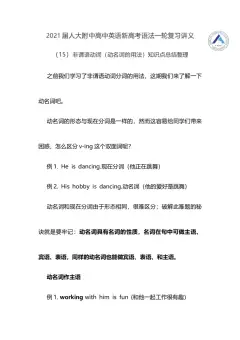
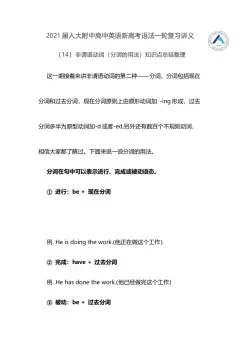
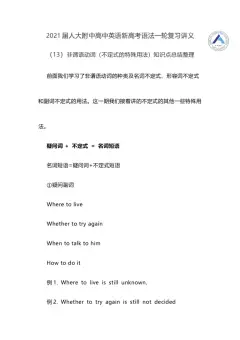
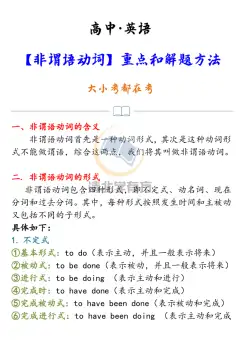
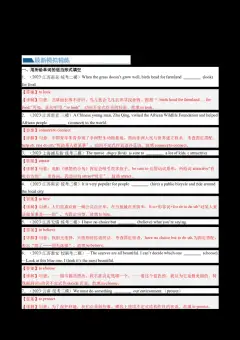
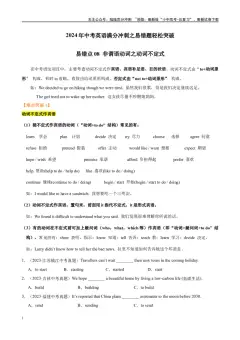
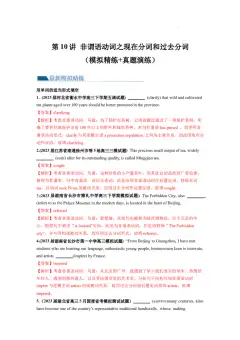
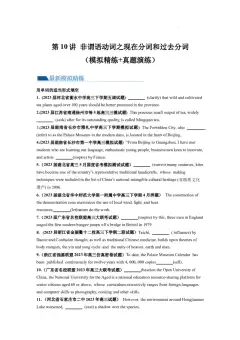
📋 一、什么是非谓语动词 英语句子中,谓语动词的形式是有限的(时态 + 语态 + 主谓一致)。一个简单句只能有一个谓语动词,其余动词如果还要出现,就必须"降级"为非谓语形式。 非谓语动词有三种:**不定式(to do)**、**动名词(doing)**、**分词(doing / done)**。它们的共同特点是:没有人称和数的变化,不能独立作谓语,但可以在句中充当主语、宾语、表语、定语、状语、补足语等成分。 判断一个动词是否以非谓语形式出现,关键是看它前面是否没有对应的主谓关系。例如 "I enjoy **reading**" 中 reading 是动名词作宾语,reading 本身不表达完整的"谁在读什么"的意思,它只是 enjoy 的宾语。 📋 二、不定式(to do) 🎯 2.1 不定式的定义与形式 不定式由 "to + 动词原形" 构成,to 有时省略(如 make sb. do / let sb. do)。不定式可以在句中作主语、宾语、表语、定语、状语和补足语。 常见的不定式形式有:一般式(to do)、进行式(to be doing)、完成式(to have done)、被动式(to be done)、完成被动式(to have been done)。 一般式 to do 表示与谓语动词同时发生或稍后发生;完成式 to have done 表示动作发生在谓语动词之前;进行式 to be doing 表示动作正在进行;被动式 to be done 表示被动含义。 🎯 2.2 不定式作主语 It is important **to be honest**. —— 诚实很重要。 It is necessary **to review mistakes**. —— 复习错题是必要的。 It is a great honor **to be invited**. —— 被邀请是莫大的荣幸。 To give is better than to receive. 给予比索取更好。 To hesitate means to fail. 犹豫就意味着失败。 It is impossible **to finish the work in one day**. —— 不可能一天完成这项工作。 It requires courage **to speak the truth**. —— 说实话需要勇气。 To err is human, to forgive is divine. 犯错人皆有之,宽恕难能可贵。 🎯 2.3 不定式作宾语 某些动词后面只能接不定式作宾语,这些动词是高考的高频考点,务必熟记:agree(同意)、decide(决定)、demand(要求)、expect(期待)、hope(希望)、manage(设法)、offer(提议)、plan(计划)、prepare(准备)、pretend(假装)、promise(承诺)、refuse(拒绝)、tend(倾向)、threaten(威胁)、wish(希望)、ask(请求)、choose(选择)、determine(决定)、fail(未能)、learn(学会)。 I hope **to see you again**. —— 我希望再见到你。 She decided **to move to Shanghai**. —— 她决定搬到上海。 He managed **to finish the task on time**. —— 他设法按时完成了任务。 They refused **to answer the question**. —— 他们拒绝回答这个问题。 I can't afford **to buy this car**. —— 我买不起这辆车。(afford 也只能接不定式) We happened **to meet her in the park**. —— 我们碰巧在公园遇见她。 I would love **to travel around the world**. —— 我很想环游世界。 She appears **to have finished the work**. —— 她似乎已经完成了工作。(appear + to have done) He seemed **to be waiting for someone**. —— 他似乎在等人。 I expect **to receive your reply soon**. —— 我期待很快收到你的回复。 🎯 2.4 不定式作宾语补足语 某些动词后接"宾语 + 不定式(作宾补)",构成复合宾语结构。此时不定式在句中补充说明宾语的动作或状态。 常见接不定式作宾补的动词:ask(要求)、expect(期待)、invite(邀请)、tell(告诉)、want(想要)、wish(希望)、allow(允许)、permit(允许)、encourage(鼓励)、force(强迫)、get(使)、have(使)、let(让)、make(使)—— 注意:make、let、have 后接不带 to 的不定式;其他动词后均带 to。 The teacher asked us **to hand in the homework**. —— 老师要求我们交作业。 I want you **to be happy**. —— 我希望你开心。 She encouraged her son **to study harder**. —— 她鼓励儿子更加努力学习。 His words forced me **to think again**. —— 他的话迫使我重新思考。 Let him **do it himself**. —— 让他自己做。(let 后不定式不带 to) The boss had the employee **work overtime**. —— 老板让员工加班。(have 后不定式不带 to) The story made everyone **laugh**. —— 故事让所有人都笑了。(make 后不定式不带 to) I saw him **enter the building**. —— 我看见他进入了大楼。(see 后不带 to,但变为被动语态时 to 须还原:He was seen to enter the building.) 🎯 2.5 不定式作状语 不定式作状语主要表示目的、原因或结果。 作目的状语时,不定式通常位于句首或句末,可置于句首以加强语气,有时用 in order to 或 so as to 加强。 To pass the exam, you must work hard. 为了通过考试,你必须努力学习。 She got up early **in order to catch the first bus**. —— 她早起以便赶上第一班车。 He worked day and night **so as not to disappoint his parents**. —— 他夜以继日地工作以免让父母失望。 作结果状语时,多见于 too...to(太……以至于不能)、enough...to(足够……可以)、so...as to(如此……以至于)等结构。 He is too young **to understand this**. —— 他太年轻了,理解不了这个。 The problem is easy enough **to solve**. —— 这个问题足够简单,可以解决。 She left in such a hurry **as to forget her phone**. —— 她走得太急以至于忘了带手机。 🎯 2.6 不定式作定语 不定式作定语时,位于被修饰名词或代词之后,对名词进行补充说明。 I have a lot of homework **to do**. —— 我有很多作业要做。(homework 与 to do 是逻辑动宾关系) She is always the first person **to arrive**. —— 她总是第一个到的人。 He bought a new house **to live in**. —— 他买了一所新房子住。(介词 in 不能省略,因为 live in the house) There is nothing **to worry about**. —— 没什么可担心的。 The best way **to improve English** is to practice every day. —— 提高英语最好的方法是每天练习。 The teacher gave us a lot of exercises **to complete**. —— 老师给了我们很多要完成的练习。 📋 三、动名词(doing) 🎯 3.1 动名词的定义与特征 动名词由"动词原形 + ing"构成,形式上与现在分词相同,但用法和含义不同。动名词表示"泛指的、习惯性的、或已完成的"动作,具有名词和动词的双重特征,可以作主语、宾语、表语、定语。 动名词有自己的逻辑主语(可用物主代词或名词所有格修饰),可以带自己的宾语和状语,构成动名词短语。 Learning English takes time. 学英语需要时间。(动名词作主语) I enjoy reading novels. 我喜欢读小说。(动名词作宾语) His job is teaching. 他的工作是教学。(动名词作表语) 🎯 3.2 动名词作主语 动名词位于句首作主语,表示一般性、习惯性的动作。 🎯 3.3 动名词作宾语 动名词在两类动词后作宾语:一是只能接动名词的动词,二是既可接不定式也可接动名词但含义不同的动词。 - enjoy / finish / suggest / avoid / postpone / mind / admit / deny / consider / imagine / keep / appreciate / risk / practice / fancy / resent / resist - include / involve / escape / pardon / forgive I enjoy **listening to music**. —— 我喜欢听音乐。 He finished **doing the homework**. —— 他完成了作业。 She suggested **going there by bike**. —— 她建议骑车去那里。 We avoid **making the same mistake**. —— 我们避免犯同样的错误。 He admitted **stealing the money**. —— 他承认偷了钱。 The job involves **dealing with customers**. —— 这项工作包括与客户打交道。 - remember / forget / regret:doing 表示已发生的事,to do 表示尚未发生的事 - I remember **locking the door**. —— 我记得锁了门。(锁门这件事已经发生了) - Remember **to lock the door**. —— 记得锁门。(提醒还没做的事) - I forgot **meeting her before**. —— 我忘了以前见过她。 - Don't forget **to call me**. —— 别忘了给我打电话。 - stop:doing 表示停下原来的动作,to do 表示停下来去做另一件事 - Stop **talking**. —— 别说话了。(停下说话这个动作) - Stop **to have a rest**. —— 停下来休息一下。(停下正在做的事,去休息) - try:doing 表示试着做,to do 表示努力去做 - Try **using another method**. —— 试试用另一种方法。 - Try **to finish it today**. —— 努力在今天完成它。 - mean:doing 表示意味着,to do 表示打算 - Success means **working hard**. —— 成功意味着努力工作。 - I mean **to help you**. —— 我打算帮助你。 - go on:doing 表示继续做同一件事,to do 表示接着做另一件事 - He went on **reading**. —— 他继续读书。(同一本书) - After finishing the book, he went on **to write a review**. —— 读完书后,他接着写了一篇书评。 - be afraid:doing 表示害怕做某事(可能产生不良后果),to do 表示不敢做 - I'm afraid **going alone**. —— 我害怕一个人去。(对独自前往感到恐惧) - I'm afraid **to tell him the truth**. —— 我不敢告诉他真相。(担心说了之后的后果) - be pleased / be delighted:doing 表示因做某事而高兴,to do 表示对将做的事高兴 - I'm pleased **meeting you**. —— 见到你我很高兴。 - I'm pleased **to meet you**. —— 很高兴认识你。(寒暄语) 🎯 3.4 动名词的逻辑主语 动名词可以有自己的逻辑主语,由物主代词或名词所有格引出,在句中作主语或宾语。 I appreciate **your helping me**. —— 我感谢你帮助我。(物主代词 your 作动名词的逻辑主语) Do you mind **my smoking here**? —— 我在这里抽烟你介意吗? 🎯 3.5 动名词作表语与定语 作表语时,动名词说明主语的内容,主语通常是 work / hobby / job / aim / dream 等名词。 The best hobby is **reading**. —— 最好的爱好是阅读。 What I hate most is **being late**. —— 我最讨厌的是迟到。 作定语时,动名词通常表示被修饰词的用途或功能,与被修饰词之间是"用于……」的关系。 a **sleeping** bag 睡袋(bag for sleeping,用于睡觉的包) a **reading** room 阅览室(room for reading,用于阅读的房间) a **swimming** pool 游泳池(pool for swimming,用于游泳的池) 📋 四、分词(doing / done) 🎯 4.1 分词的形式 分词有现在分词(doing)和过去分词(done)两种形式。现在分词表示主动和进行;过去分词表示被动和完成(及物动词的过去分词)或状态(不及物动词的过去分词)。 现在分词的一般式(doing)表示与谓语动词同时发生的动作;完成式(having done)表示动作在谓语动词之前发生,已完成。 The boy **sitting there** is my brother. —— 坐在那里的男孩是我弟弟。(现在分词 sitting 修饰 the boy,boy 与 sit 是主动关系) The window **broken yesterday** has been repaired. —— 昨天打破的窗户已经修好了。(过去分词 broken 修饰 window,window 与 break 是被动关系) Having finished the work, he went home. 完成了工作后,他回家了。(现在分词完成式 having finished 作状语,发生在谓语 went 之前) 🎯 4.2 分词作状语 分词作状语是高中英语最常见的考点之一,可以表示时间、原因、条件、让步、方式和伴随等。 He sat there **reading a newspaper**. —— 他坐在那里看报纸。 The students came in **followed by their teacher**. —— 学生们走进来,老师跟在后面。(过去分词 followed 表被动伴随) 🎯 4.3 分词作定语 单个分词作定语通常前置,分词短语作定语通常后置。 The **rising** sun is beautiful. —— 正在升起的太阳很美。(现在分词主动进行) The **fallen** leaves covered the ground. —— 落叶覆盖了地面。(过去分词已完成) The **excited** children opened their presents. —— 兴奋的孩子们打开了礼物。(过去分词状态) The student **sitting by the window** is my best friend. —— 坐在窗户旁边的学生是我最好的朋友。 The letter **received yesterday** was from my mother. —— 昨天收到的信是我妈妈寄来的。 The people **invited to the party** were all celebrities. —— 被邀请参加派对的人都是名人。 🎯 4.4 分词作补足语 感官动词(see / hear / watch / notice / observe 等)和使役动词(have / get / make 等)后可以接分词作补足语。 I saw him **crossing the street**. —— 我看见他正在过马路。(看见的瞬间) I heard the song **sung by the famous singer**. —— 我听到这首歌是由那位著名歌手演唱的。(被动含义) The boss had the worker **repairing the machine**. —— 老板让工人正在修理机器。(进行含义) I got my hair **cut** yesterday. —— 我昨天理发了。(使役 + 过去分词,被动完成) 🎯 4.5 分词作表语 现在分词作表语表示主语的特征,主语通常是物;过去分词作表语表示主语的状态,主语可以是人或物。 The news is **exciting**. —— 这条消息令人兴奋。(现在分词,news 是发出 exciting 这一特征的主体) We are **excited** about the result. —— 我们对结果感到兴奋。(过去分词,we 是承受 excited 这一状态的主体) The book is **interesting**. —— 这本书很有趣。(现在分词特征) The book is **interested** in the story. —— 这本书对故事感兴趣。(误用,通常说 sb. is interested in) The situation is **encouraging**. —— 形势令人鼓舞。 They are **encouraged** by the progress. —— 他们受到了进步的鼓舞。 📋 五、三种非谓语动词对比与易混辨析 🎯 5.1 作主语对比 To learn is important. / Learning is important. 两者均正确,但 to learn 更正式,learning 更口语化和自然。 To be rejected hurts. / Being rejected hurts. 不定式 to be rejected 强调具体的一次性动作;动名词 being rejected 强调一般性或习惯性的感受。 🎯 5.2 作宾语对比 只能 to do 作宾语的动词:agree, decide, demand, expect, hope, manage, offer, plan, prepare, pretend, promise, refuse, wish, ask, choose, determine, fail, learn, tend 只能 doing 作宾语的动词:enjoy, finish, suggest, avoid, postpone, mind, admit, deny, consider, imagine, keep, appreciate, risk, practice, include, involve, escape 两者均可但含义不同的动词:remember, forget, stop, try, mean, go on, be afraid, be pleased 🎯 5.3 作定语对比 动名词作定语表示用途;现在分词作定语表示主动进行;过去分词作定语表示被动完成。 a **sleeping** bag(用途:用于睡觉的包)/ the **sleeping** baby(正在睡觉的婴儿) a **flying** bird(正在飞的鸟)/ a **flown** bird(被飞走的鸟?不对,fly 是不及物动词,过去分词 flown 表示已完成) 🎯 5.4 作状语对比 不定式作状语主要表示目的和结果;分词作状语表示时间、原因、条件、让步、伴随。 🎯 5.5 高中英语非谓语动词解题口诀 📋 六、中考真题演练 🎯 例题 1(2023 某市中考改编) I regret ______ you that your application has been rejected. A. telling B. to tell C. told D. tell **答案:B。** regret to tell 表示"很遗憾地告诉(对方一个坏消息)";regret telling 表示"后悔曾经告诉过(已发生的事)"。根据句意,应选 to tell。 🎯 例题 2(2022 某市中考改编) The boy was seen ______ the street when the traffic light was red. A. cross B. crossing C. crossed D. to cross **答案:B。** see sb. doing 表示"看见某人正在做某事",题意为"当红灯亮起时,有人看见那个男孩正在过马路",进行时更符合情境。注意:主动时 see 后可接不带 to 的不定式或现在分词,但变为被动语态时须还原 to,即 sb. is seen to do / doing。 🎯 例题 3(2023 某市中考改编) ______ the work on time, they need your help. A. Finish B. Finishing C. To finish D. Finished **答案:C。** 不定式作目的状语,意为"为了按时完成工作,他们需要你的帮助"。Finishing 是动名词,不能作状语;Finished 是过去分词,不能与 they need your help 构成逻辑关系。 🎯 例题 4(2024 某市中考改编) Don't forget ______ the lights when you leave the room. A. turning off B. to turn off C. turn off D. turned off **答案:B。** forget to do 表示"忘记要做某事(还没做)",符合句意"别忘了关灯(你离开时还没关)"。turning off 是动名词,但 don't forget doing 表示"忘记曾经关过(却以为没关)",与题意相反。 🎯 例题 5(2022 某市中考改编) The news is worth ______ again and again. A. reading B. to read C. read D. readed **答案:A。** worth 后只能接 doing(主动形式表示被动含义),构成 be worth doing 结构,意为"值得做……"。 📋 七、速查对照表
🌟 三条铁律
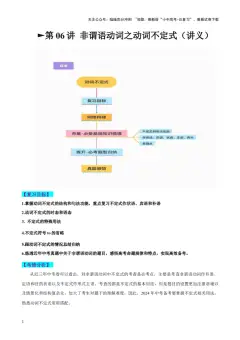
非谓语没有人称和数的变化,不能独立作谓语,但可以作主语、宾语、表语、定语、状语、补足语
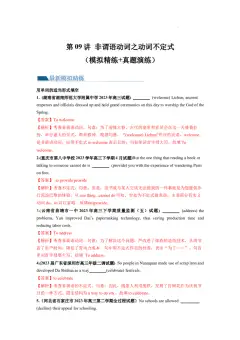
主动用 doing / to do,被动用 done / to be done——判断主被动是解题第一步
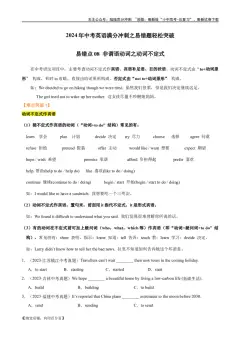
记住固定搭配动词表——只能 to do 的、只能 doing 的、两者皆可但含义不同的,是三大高频考点
| 位置 | 不定式 to do | 动名词 doing | 现在分词 doing | 过去分词 done |
|---|---|---|---|---|
| ✅ | ✅ | |||
| ✅ | ✅ | ✅ | ||
| ✅ | ✅ | ✅ | ✅ | |
| ✅ | ✅ | ✅ | ✅ | |
| ✅ | ✅ | ✅ | ||
| ✅ | ✅ | ✅ |
| 常见信号词 | 对应非谓语 |
|---|---|