ARTICLE · 1327266
高考英语12个月提分打卡 · Day226
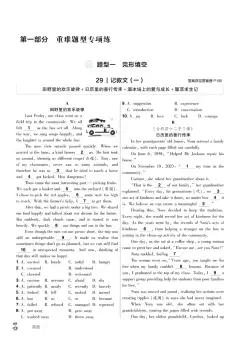
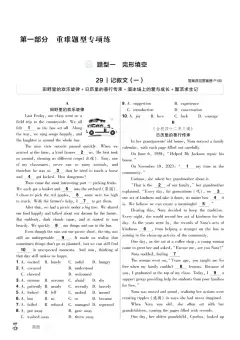
高考英语12个月提分打卡 · Day226阶段定位:主攻考场审题失误、完形读文节奏失控、七选五多空连环失分、阅读长难句卡顿四大失分板块;对标高考原版试卷布局,适配真题原生阅读节奏,限时训练,做完集中复盘错题。 一、语法填空|考场审题失误防范 ⚠️必看易错提示 核心任务:规避考场紧张造成的审题漏洞,快速区分有提示词 / 无提示词考点;做题标记考点,杜绝看漏关键词、时态标志词。 训练目标:限时独立完成,不查阅词典;完成后标注每一处考点,识别短文主题。 限时:7 分钟考点回顾 + 9 分钟保温训练 阅读下面短文,在空白处填入 1 个适当的单词或括号内单词的正确形式。 Last spring, _ 1 _ student named Mia took part in a field research project. _ 2 _ project aimed to record how local wild flowers changed with the seasons. Before the trip, her teacher reminded _ 3 _ to keep careful records every day. Many classmates simply took photos and forgot to write notes, but Mia knew _ 4 _ would be impossible to remember all small details without written records. She carried an old notebook. _ 5 _ cover was soft and worn after years of use. Each day, she recorded the temperature, the height of the flowers and _ 6 _ (they) state of growth. Once, she nearly filled a whole page without noticing that she _ 7 _ (write) down the wrong date by accident. On one rainy morning, she found a rare flower. Few people had ever seen _ 8 _ before. She was shocked by its beauty and stood there for nearly one hour. She did not want to miss anything about _ 9 _ amazing plant. When the project ended, Mia handed in her notebook. Her teacher praised her highly and said careful checks saved her from many silly mistakes. Mia learned that success never comes from hurry. One careless look may make you lose _ 10 _ valuable discovery. 复盘实操:标注每空考点(冠词 / 介词 / 代词 / 非谓语 / 时态等);错题登记:审题疏忽点、判断失误原因。 二、完形填空|读文节奏考场优化 ⚠️必看易错提示 核心任务:训练高考完形读题节奏;不要一看到空立刻选答案;通读全文把握主线,再回头敲定答案;避开单句误导选项。 训练目标:限时完成;抓情节、情感线索解题;避免主观脑补故事。 限时:8 分钟考点回顾 + 15 分钟保温训练 阅读下面短文,从每题所给的 A、B、C、D 四个选项中选出最佳选项。 I grew up in a quiet small town in the north. The _ 1 _ of how different my hometown was hit me soon after I went to college in a big city. Even though I lived _ 2 _ only a few hours away, most of my classmates viewed my town as a strange far‑off place. They kept asking whether I needed planes to get home and whether I lived on a farm. The _ 3 _ seemed to have no end. I was a _ 4 _ in their eyes. As years went by, I became more and more _ 5 _ for my small‑town roots. My friends and I used to _ 6 _ about being bored out in the quiet countryside. _ 7 _, when I finished my third year at college, I realized it took _ 8 _ my hometown to truly understand how much we loved it and what we valued most. Life here moves slowly, and local people _ 9 _ building warm connections with one another. You do not just greet your neighbours. In many ways, they are a true _ 10 _ of your own family. Much of this special _ 11 _ comes from being outdoors and knowing every corner of the town. Paying attention to your _ 12 _ is an important part of this simple culture. During my college years, I _ 13 _ every chance to travel back to my little town. I am thankful for all the _ 14 _ I gained while growing up. No matter where my new journeys carry me, I can _ 15 _ my town roots to guide me forward. 1. A. dream B. realization C. doubt D. plan 2. A. still B. quite C. even D. hardly 3. A. questions B. tests C. games D. speeches 4. A. winner B. visitor C. novelty D. leader 5. A. thankful B. hopeful C. careful D. responsible 6. A. argue B. complain C. hear D. learn 7. A. therefore B. meanwhile C. however D. otherwise 8. A. leaving B. visiting C. changing D. protecting 9. A. admit B. value C. fear D. forget 10. A. honor B. example C. extension D. challenge 11. A. lifestyle B. project C. rule D. system 12. A. findings B. surroundings C. belongings D. greetings 13. A. give up B. look forward to C. put off D. face up to 14. A. confidence B. reputation C. experience D. opportunity 15. A. trust B. inspire C. remind D. praise 复盘实操格式:原句|误选答案|考点(词汇辨析 / 逻辑 / 语境)|出错原因|解题思路 额外任务:圈出文中提示答案的线索词。 三、七选五|多空连环失分复盘 ⚠️必看易错提示 核心任务:破解连续空全部选错的连环失误;优先锁定逻辑标记词、指代线索;不能只看紧邻前后一句话。 训练目标:找准主题句、过渡句、细节支撑句;做完代入通读验证整篇通顺度。 限时:7 分钟考点回顾 + 7 分钟保温训练 根据短文内容,从短文后的选项中选出可以填入空白处的最佳选项。选项中有两项为多余选项。 It is common to get stuck on several blanks at the same time during an English exam. Suddenly several empty choices puzzle you, and none of the answers seem suitable. ____ Without a proper plan, you may waste plenty of time and still end up with wrong answers. The most useful rule is: do not stay too long on difficult items at once. Many students stop everything and keep thinking over one hard sentence. ____ Your brain cannot work well when it is stuck on a single point. Moving on lets your mind notice hidden connections quietly. ____ Some sentences carry clear signal words such as however, for example and in addition. Pronouns like they, this problem and such changes also give strong hints. Once you fill in these easy blanks first, your available choices become fewer and the task becomes much easier. After finishing the simple ones, return to the difficult blanks. Read the whole paragraph instead of only the sentences right before and after the blank. ____ An answer may fit one single sentence perfectly but break the main idea of the paragraph. Good choices always match the paragraph’s central message. If two answers still seem possible, try the replacement test. Put each choice into the text one by one. Ask yourself whether the text flows naturally and whether the logic makes sense. ____ Wrong answers often look good at first sight but break the natural flow of the article. Never guess all remaining answers in a rush when time runs out. Hasty guessing raises your chance of a whole chain of wrong choices. A quick final check can cut down unnecessary mistakes. Stay calm, take it step by step, and let the text lead you to the correct answers. A. Choose the easiest blanks first. B. This situation can make anyone nervous. C. They hope to work out the answer right away. D. Good answers never break the basic rules of logic. E. See the big picture instead of only nearby sentences. F. You will usually find one choice fits far better than the other. G. It is impossible to work out every hard question in a very short time. 复盘任务:标记所有逻辑词、指代词线索;记录干扰项误导点;区分主旨句、过渡句、细节句。 四、阅读理解|长难句卡顿失分复盘 ⚠️必看易错提示 核心任务:遇到长难句不要直接跳过;拆分长句主干;区分事实细节、观点、推断信息;防止被修饰成分干扰定位答案。 训练目标:快速抓取段落核心;精准定位出题句;规避偷换概念类干扰选项。 限时:7 分钟考点回顾 + 10 分钟保温训练 Museums hold huge collections of art and historical exhibits. For a long time, visitors mainly learned about works from fixed notice boards beside each exhibit. These boards carry limited information and cannot meet different visitors’ needs. Young children, teenagers and adults all hope to get different kinds of introduction about the same exhibit. AI technology is changing museum visiting experiences greatly. Many museums now use image recognition technology to scan exhibits. The system can tell the name, story and background information of each work right away. It can also change its speech and introduction length according to the visitor’s age and interests. Some people worry that AI virtual guides will completely replace human tour guides. Human guides can notice visitors’ feelings and tell warm, flexible stories. They can answer sudden new questions and communicate with visitors face to face. AI works as a powerful helper instead of a full replacement. It reduces the heavy work of human guides and offers more choices for visitors. Visitors enjoy this new way of exploring museums. Kids love the lively short introductions. Students get enough information for their school projects. Elderly visitors can slow down the speed of the voice and repeat explanations whenever they want. Instead of simply looking at old exhibits, people can now connect closely with history and art. 1. What was the problem with traditional notice boards in museums? A. They were too expensive to make. B. They provided fixed and limited information. C. They broke easily over time. D. They could not show pictures of exhibits. 2. What advantage does the AI museum guide have? A. It can change introductions for different visitors. B. It knows every visitor’s home address. C. It can repair broken museum exhibits. D. It works without any computer support. 3. What is the writer’s opinion about AI and human guides? A. AI will soon take the place of all human guides. B. Human guides are useless with the help of AI. C. AI serves as a useful helper for human guides. D. Human guides only know simple information. 4. What is the main idea of the text? A. The long history of world‑famous museums. B. Problems caused by modern technology. C. How AI improves visitors’ museum experiences. D. Ways to protect ancient museum exhibits. 【思维训练】碰到长难句第一步:划出谓语动词,拆分主句与定语 / 状语修饰部分;圈出题干关键词回原文定位。 当日复盘重点 一、语法填空:考场紧张审题失误;警惕隐藏时态标志、冠词固定搭配陷阱;做完强制检查。 二、完形填空:严格遵循真题读题逻辑;首句把握全文基调;线索均匀分布整篇短文,不要局限空的前后两句;杜绝主观臆造情节。 三、七选五:逻辑信号词、代词是最高频破题点;连续错题优先复盘是不是忽略段落主旨。 四、阅读理解:长难句拆解训练;区分原文事实与作者主观观点;主旨题避免片面段落干扰选项。 打卡寄语 Progress does not live in perfect answers, but in the calm patience to read every line carefully. 进步不在于全部答对,而在于认真读懂每一行文字的从容耐心。 ✅参考答案 + 详细解析 语法填空 1. a 解析:student 为辅音音素开头,泛指一名学生,用不定冠词 a。 2. The 解析:特指上文提到的项目,句首大写。 3. her 解析:remind 后面接宾格,指代 Mia。 4. it 解析:形式主语,固定句型 it is + adj. + to do。 5. Its 解析:名词 cover 前面形容词性物主代词,指代笔记本,句首大写。 6. their 解析:修饰名词 state,指代 flowers。 7. had written 解析:write 动作发生在 noticing 之前,过去完成时。 8. it 解析:代词指代前文 rare flower。 9. the 解析:特指这株奇特的植物。 10. a 解析:泛指一项珍贵发现,valuable 辅音开头。 完形填空 1. B realization 意识到;来到大城市之后才意识到家乡和别处不一样。 2. C even 即使;即使仅仅相隔几个小时路程。 3. A questions;上文同学不停提问,问题没完没了。 4. C novelty 新奇事物;在同学眼中“我”是一个新奇的存在。 5. A thankful;长大后对小城故土心怀感激。 6. B complain;过去朋友常常抱怨乡村枯燥无聊。 7. C however;转折,从前抱怨,大学之后想法改变。 8. A leaving;离开家乡之后才懂得热爱故土。 9. B value;当地人看重彼此之间温暖的联系。 10. C extension 延伸;邻居就像是家人的延伸。 11. A lifestyle;这种独特的生活方式。 12. B surroundings;关注周遭环境。 13. B look forward to;期盼每一次回到小镇的机会。 14. C experience;成长过程收获的所有经历。 15. A trust;可以相信故土根基指引自己前行。 七选五 答案:1.B 2.C 3.A 4.E 5.F 解析 1.B:承接上文遇到一堆难题,这种情况会让人紧张,开启下文对策。 2.C:很多学生停下全部事情死磕难题,希望立刻算出答案。 3.A:总起本段,优先选择最简单的空来完成。 4.E:要看全局,不能只盯着附近句子,避免单句匹配偏离段落主旨。 5.F:两个备选答案代入之后,通常有一个明显更加贴合文章逻辑。 多余选项:D、G 阅读理解 答案:1.B 2.A 3.C 4.C 解析 1.B:细节题;传统告示板信息固定、内容有限,无法满足不同人群需求。 2.A:细节题;AI 可以根据访客调整介绍内容与语速,适配不同人群。 3.C:观点态度题;AI 不会取代人工导游,而是得力帮手,减轻导游工作。 4.C:主旨题;全文介绍人工智能如何提升博物馆游客参观体验。