“无灵主语”转化大法
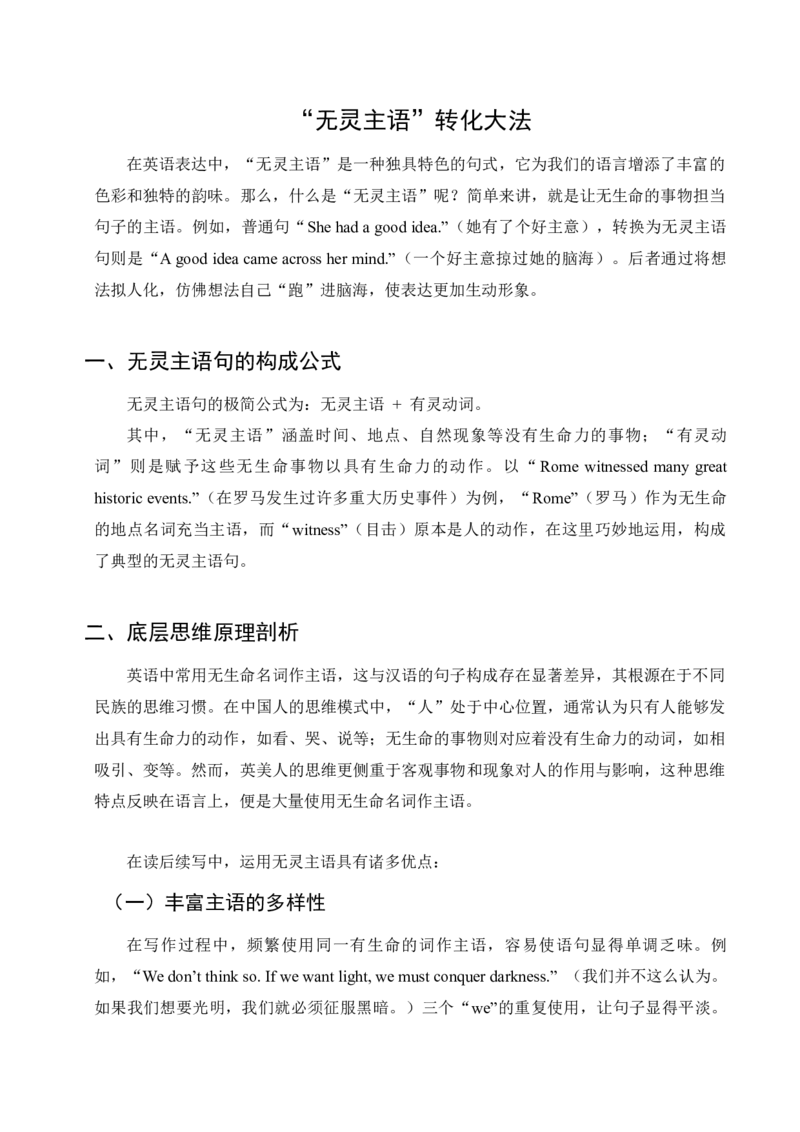
在英语表达中,“无灵主语”是一种独具特色的句式,它为我们的语言增添了丰富的
色彩和独特的韵味。那么,什么是“无灵主语”呢?简单来讲,就是让无生命的事物担当
句子的主语。例如,普通句“She had a good idea.”(她有了个好主意),转换为无灵主语
句则是“A good idea came across her mind.”(一个好主意掠过她的脑海)。后者通过将想
法拟人化,仿佛想法自己“跑”进脑海,使表达更加生动形象。
一、无灵主语句的构成公式
无灵主语句的极简公式为:无灵主语 + 有灵动词。
其中,“无灵主语”涵盖时间、地点、自然现象等没有生命力的事物;“有灵动
词”则是赋予这些无生命事物以具有生命力的动作。以“Rome witnessed many great
historic events.”(在罗马发生过许多重大历史事件)为例,“Rome”(罗马)作为无生命
的地点名词充当主语,而“witness”(目击)原本是人的动作,在这里巧妙地运用,构成
了典型的无灵主语句。
二、底层思维原理剖析
英语中常用无生命名词作主语,这与汉语的句子构成存在显著差异,其根源在于不同
民族的思维习惯。在中国人的思维模式中,“人”处于中心位置,通常认为只有人能够发
出具有生命力的动作,如看、哭、说等;无生命的事物则对应着没有生命力的动词,如相
吸引、变等。然而,英美人的思维更侧重于客观事物和现象对人的作用与影响,这种思维
特点反映在语言上,便是大量使用无生命名词作主语。
在读后续写中,运用无灵主语具有诸多优点:
(一)丰富主语的多样性
在写作过程中,频繁使用同一有生命的词作主语,容易使语句显得单调乏味。例
如,“We don’t think so. If we want light, we must conquer darkness.” (我们并不这么认为。
如果我们想要光明,我们就必须征服黑暗。)三个“we”的重复使用,让句子显得平淡。而调整为“We don’t think so. If we want light, darkness must be conquered.” (我们并不这么
认为。如果我们想要光明,黑暗就必须被征服。)则使句子更加协调自然。
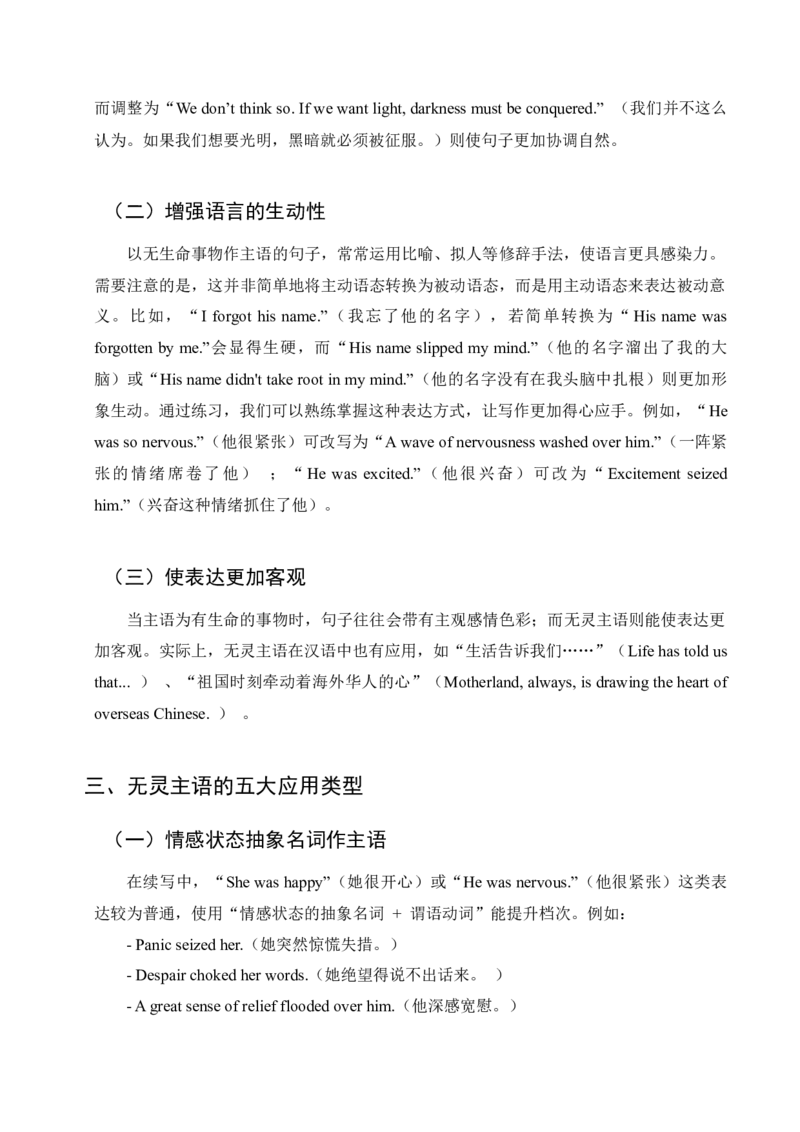
(二)增强语言的生动性
以无生命事物作主语的句子,常常运用比喻、拟人等修辞手法,使语言更具感染力。
需要注意的是,这并非简单地将主动语态转换为被动语态,而是用主动语态来表达被动意
义。比如,“I forgot his name.”(我忘了他的名字),若简单转换为“His name was
forgotten by me.”会显得生硬,而“His name slipped my mind.”(他的名字溜出了我的大
脑)或“His name didn't take root in my mind.”(他的名字没有在我头脑中扎根)则更加形
象生动。通过练习,我们可以熟练掌握这种表达方式,让写作更加得心应手。例如,“He
was so nervous.”(他很紧张)可改写为“A wave of nervousness washed over him.”(一阵紧
张的情绪席卷了他) ;“He was excited.”(他很兴奋)可改为“Excitement seized
him.”(兴奋这种情绪抓住了他)。
(三)使表达更加客观
当主语为有生命的事物时,句子往往会带有主观感情色彩;而无灵主语则能使表达更
加客观。实际上,无灵主语在汉语中也有应用,如“生活告诉我们……”(Life has told us
that... ) 、“祖国时刻牵动着海外华人的心”(Motherland, always, is drawing the heart of
overseas Chinese. ) 。
三、无灵主语的五大应用类型
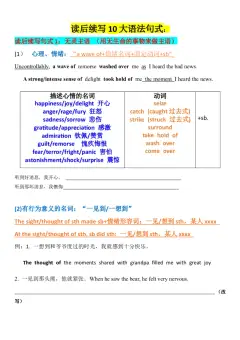
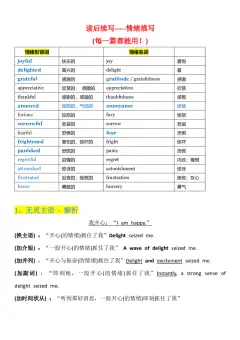
(一)情感状态抽象名词作主语
在续写中,“She was happy”(她很开心)或“He was nervous.”(他很紧张)这类表
达较为普通,使用“情感状态的抽象名词 + 谓语动词”能提升档次。例如:
- Panic seized her.(她突然惊慌失措。)
- Despair choked her words.(她绝望得说不出话来。 )
- A great sense of relief flooded over him.(他深感宽慰。)- Fear gripped the village.(整个村庄笼罩在恐怖之中。)
常见的情绪名词有 happiness(开心)、joy(快乐)、delight(愉悦)、surprise(惊
奇)、astonishment(惊讶)、shame(羞耻)、anger(愤怒)等;常见的谓语动词有seize
(侵袭)、choke(噎住)、flood(充满)、creep(不知不觉产生)等,可根据文中情绪
灵活搭配。
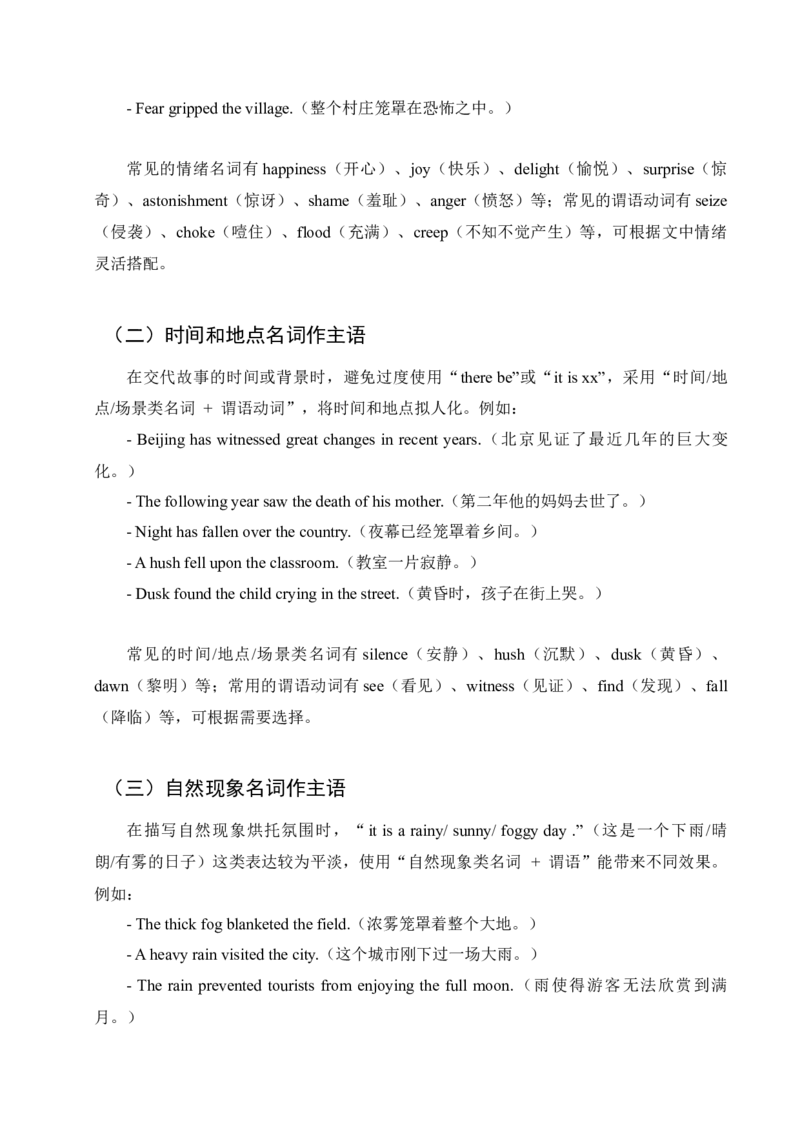
(二)时间和地点名词作主语
在交代故事的时间或背景时,避免过度使用“there be”或“it is xx”,采用“时间/地
点/场景类名词 + 谓语动词”,将时间和地点拟人化。例如:
- Beijing has witnessed great changes in recent years.(北京见证了最近几年的巨大变
化。)
- The following year saw the death of his mother.(第二年他的妈妈去世了。)
- Night has fallen over the country.(夜幕已经笼罩着乡间。)
- A hush fell upon the classroom.(教室一片寂静。)
- Dusk found the child crying in the street.(黄昏时,孩子在街上哭。)
常见的时间/地点/场景类名词有 silence(安静)、hush(沉默)、dusk(黄昏)、
dawn(黎明)等;常用的谓语动词有see(看见)、witness(见证)、find(发现)、fall
(降临)等,可根据需要选择。
(三)自然现象名词作主语
在描写自然现象烘托氛围时,“it is a rainy/ sunny/ foggy day .”(这是一个下雨/晴
朗/有雾的日子)这类表达较为平淡,使用“自然现象类名词 + 谓语”能带来不同效果。
例如:
- The thick fog blanketed the field.(浓雾笼罩着整个大地。)
- A heavy rain visited the city.(这个城市刚下过一场大雨。)
- The rain prevented tourists from enjoying the full moon.(雨使得游客无法欣赏到满
月。)常见的自然现象名词有 sun(太阳)、sunshine(阳光)、moon(月亮)、moonlight
(月光)、fog(雾)等;常见的谓语动词有 blanket(覆盖)、come(来)、bring(带
来)、prevent(妨碍)等,可根据环境描写需求搭配。
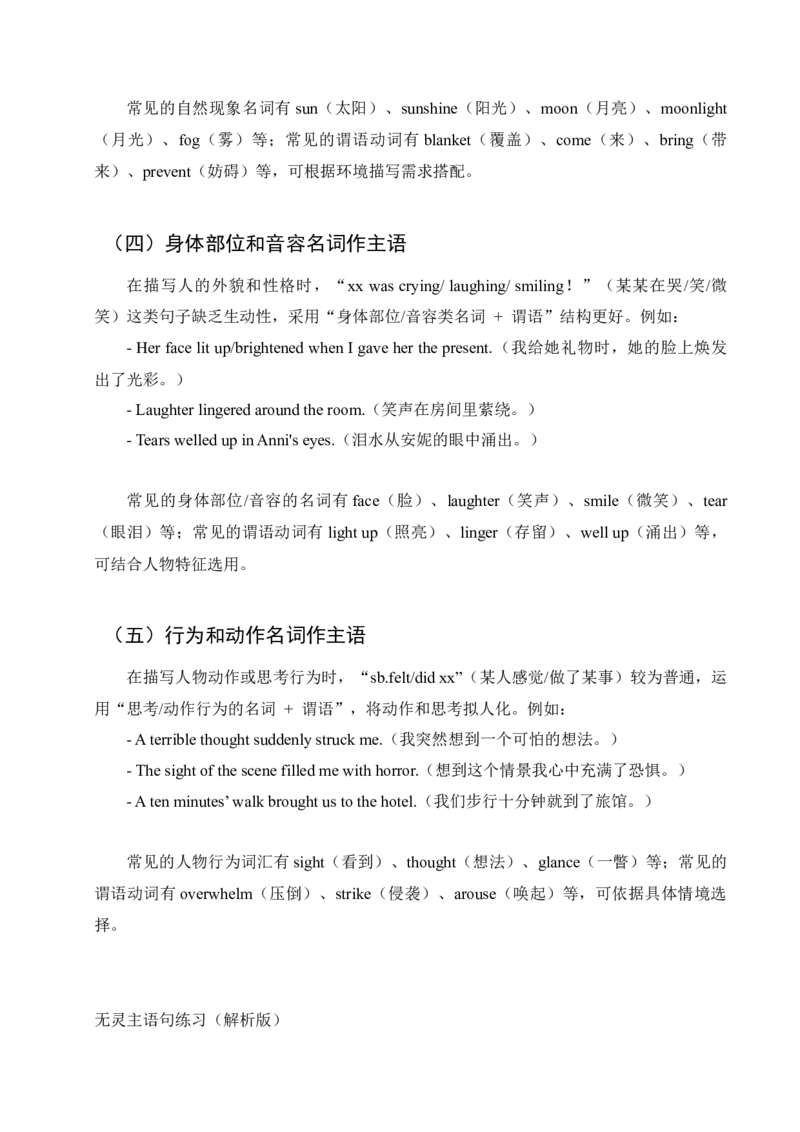
(四)身体部位和音容名词作主语
在描写人的外貌和性格时,“xx was crying/ laughing/ smiling!”(某某在哭/笑/微
笑)这类句子缺乏生动性,采用“身体部位/音容类名词 + 谓语”结构更好。例如:
- Her face lit up/brightened when I gave her the present.(我给她礼物时,她的脸上焕发
出了光彩。)
- Laughter lingered around the room.(笑声在房间里萦绕。)
- Tears welled up in Anni's eyes.(泪水从安妮的眼中涌出。)
常见的身体部位/音容的名词有face(脸)、laughter(笑声)、smile(微笑)、tear
(眼泪)等;常见的谓语动词有 light up(照亮)、linger(存留)、well up(涌出)等,
可结合人物特征选用。
(五)行为和动作名词作主语
在描写人物动作或思考行为时,“sb.felt/did xx”(某人感觉/做了某事)较为普通,运
用“思考/动作行为的名词 + 谓语”,将动作和思考拟人化。例如:
- A terrible thought suddenly struck me.(我突然想到一个可怕的想法。)
- The sight of the scene filled me with horror.(想到这个情景我心中充满了恐惧。)
- A ten minutes’ walk brought us to the hotel.(我们步行十分钟就到了旅馆。)
常见的人物行为词汇有sight(看到)、thought(想法)、glance(一瞥)等;常见的
谓语动词有overwhelm(压倒)、strike(侵袭)、arouse(唤起)等,可依据具体情境选
择。
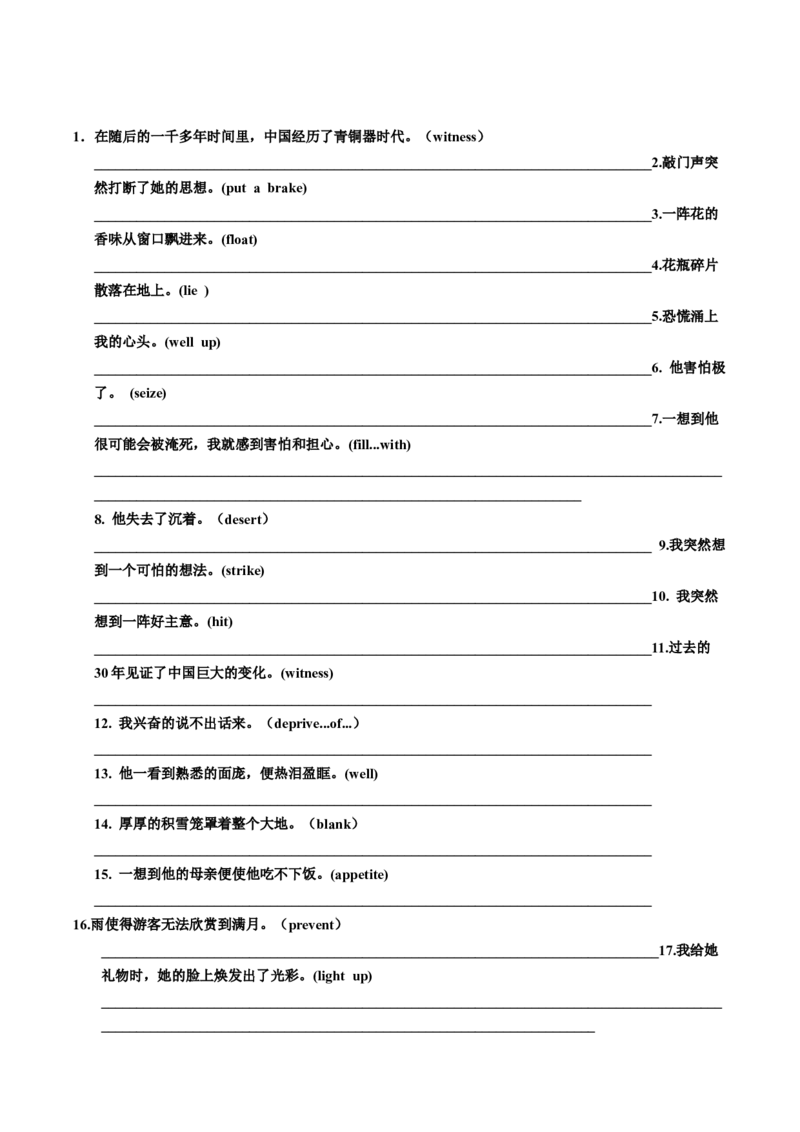
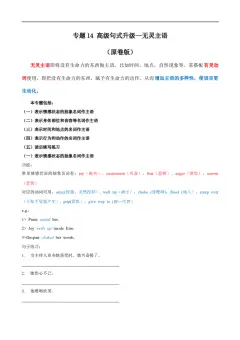
无灵主语句练习(解析版)1.在随后的一千多年时间里,中国经历了青铜器时代。(witness)
_______________________________________________________________________________2.敲门声突
然打断了她的思想。(put a brake)
_______________________________________________________________________________3.一阵花的
香味从窗口飘进来。(float)
_______________________________________________________________________________4.花瓶碎片
散落在地上。(lie )
_______________________________________________________________________________5.恐慌涌上
我的心头。(well up)
_______________________________________________________________________________6. 他害怕极
了。 (seize)
_______________________________________________________________________________7.一想到他
很可能会被淹死,我就感到害怕和担心。(fill...with)
_________________________________________________________________________________________
_____________________________________________________________________
8. 他失去了沉着。(desert)
_______________________________________________________________________________ 9.我突然想
到一个可怕的想法。(strike)
_______________________________________________________________________________10. 我突然
想到一阵好主意。(hit)
_______________________________________________________________________________11.过去的
30年见证了中国巨大的变化。(witness)
_______________________________________________________________________________
12. 我兴奋的说不出话来。(deprive...of...)
_______________________________________________________________________________
13. 他一看到熟悉的面庞,便热泪盈眶。(well)
_______________________________________________________________________________
14. 厚厚的积雪笼罩着整个大地。(blank)
_______________________________________________________________________________
15. 一想到他的母亲便使他吃不下饭。(appetite)
_______________________________________________________________________________
16.雨使得游客无法欣赏到满月。(prevent)
_______________________________________________________________________________17.我给她
礼物时,她的脸上焕发出了光彩。(light up)
________________________________________________________________________________________
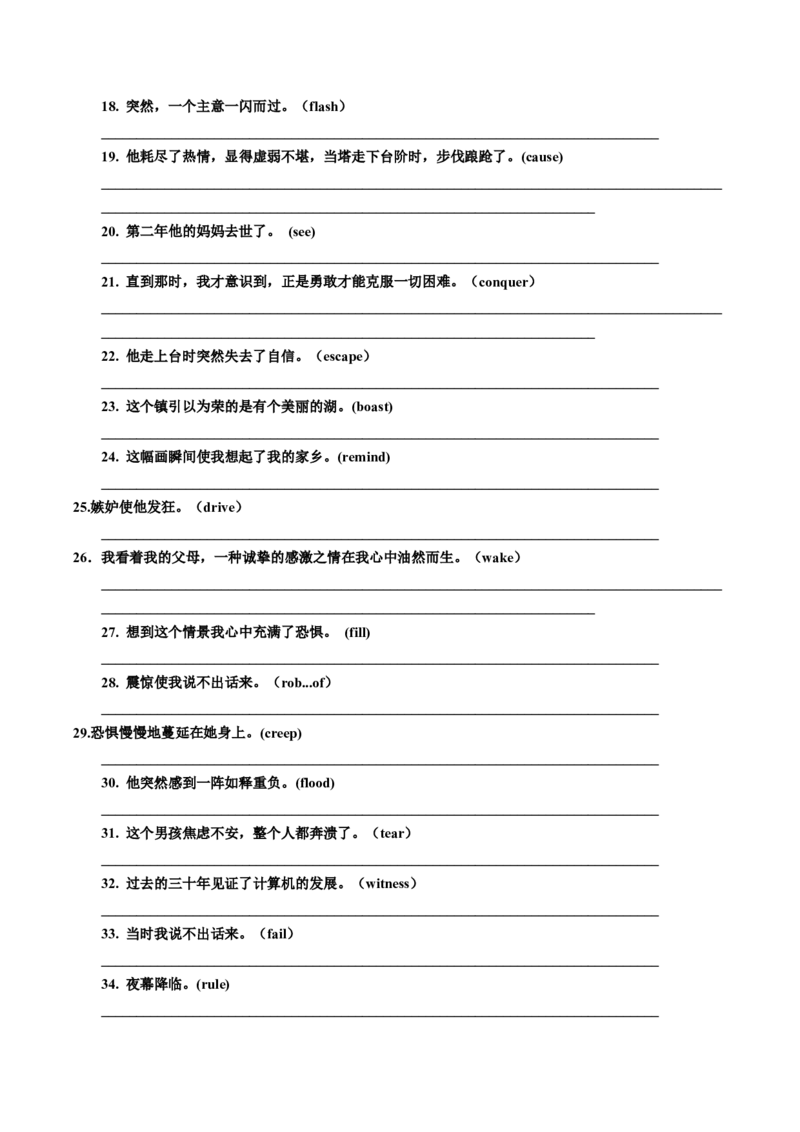
______________________________________________________________________18. 突然,一个主意一闪而过。(flash)
_______________________________________________________________________________
19. 他耗尽了热情,显得虚弱不堪,当塔走下台阶时,步伐踉跄了。(cause)
________________________________________________________________________________________
______________________________________________________________________
20. 第二年他的妈妈去世了。 (see)
_______________________________________________________________________________
21. 直到那时,我才意识到,正是勇敢才能克服一切困难。(conquer)
________________________________________________________________________________________
______________________________________________________________________
22. 他走上台时突然失去了自信。(escape)
_______________________________________________________________________________
23. 这个镇引以为荣的是有个美丽的湖。(boast)
_______________________________________________________________________________
24. 这幅画瞬间使我想起了我的家乡。(remind)
_______________________________________________________________________________
25.嫉妒使他发狂。(drive)
_______________________________________________________________________________
26.我看着我的父母,一种诚挚的感激之情在我心中油然而生。(wake)
________________________________________________________________________________________
______________________________________________________________________
27. 想到这个情景我心中充满了恐惧。 (fill)
_______________________________________________________________________________
28. 震惊使我说不出话来。(rob...of)
_______________________________________________________________________________
29.恐惧慢慢地蔓延在她身上。(creep)
_______________________________________________________________________________
30. 他突然感到一阵如释重负。(flood)
_______________________________________________________________________________
31. 这个男孩焦虑不安,整个人都奔溃了。(tear)
_______________________________________________________________________________
32. 过去的三十年见证了计算机的发展。(witness)
_______________________________________________________________________________
33. 当时我说不出话来。(fail)
_______________________________________________________________________________
34. 夜幕降临。(rule)
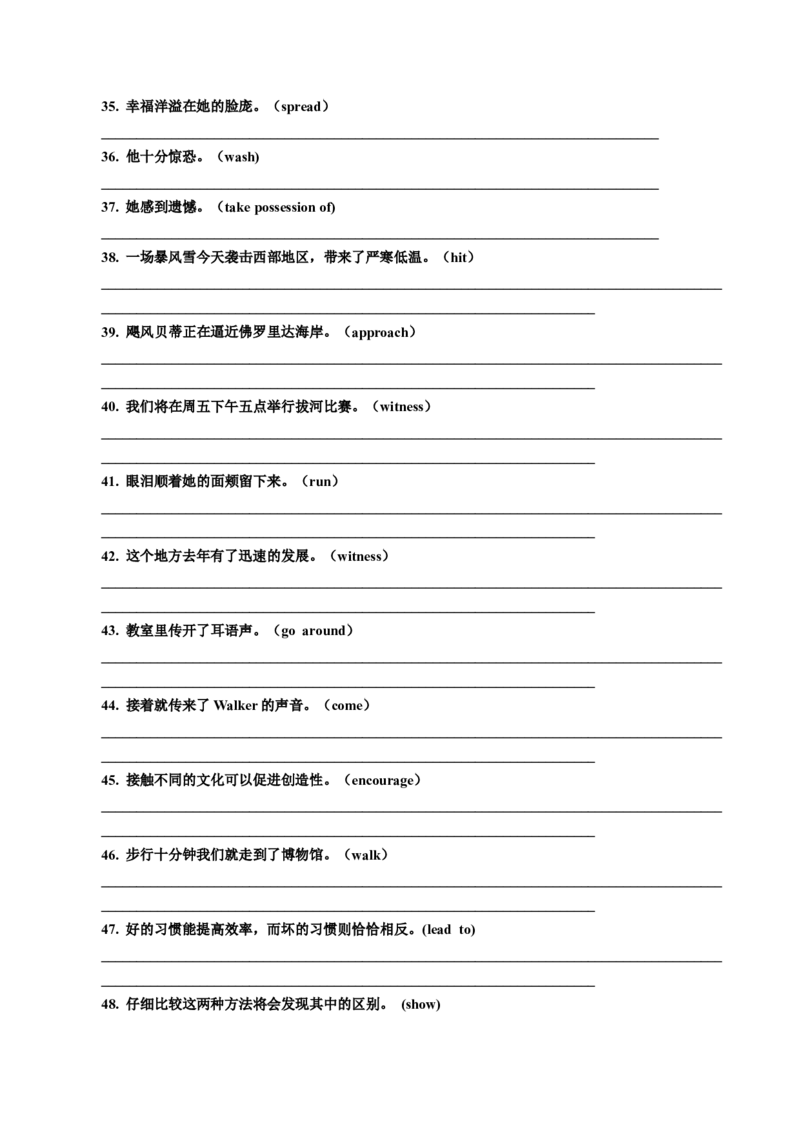
_______________________________________________________________________________35. 幸福洋溢在她的脸庞。(spread)
_______________________________________________________________________________
36. 他十分惊恐。(wash)
_______________________________________________________________________________
37. 她感到遗憾。(take possession of)
_______________________________________________________________________________
38. 一场暴风雪今天袭击西部地区,带来了严寒低温。(hit)
________________________________________________________________________________________
______________________________________________________________________
39. 飓风贝蒂正在逼近佛罗里达海岸。(approach)
________________________________________________________________________________________
______________________________________________________________________
40. 我们将在周五下午五点举行拔河比赛。(witness)
________________________________________________________________________________________
______________________________________________________________________
41. 眼泪顺着她的面颊留下来。(run)
________________________________________________________________________________________
______________________________________________________________________
42. 这个地方去年有了迅速的发展。(witness)
________________________________________________________________________________________
______________________________________________________________________
43. 教室里传开了耳语声。(go around)
________________________________________________________________________________________
______________________________________________________________________
44. 接着就传来了Walker的声音。(come)
________________________________________________________________________________________
______________________________________________________________________
45. 接触不同的文化可以促进创造性。(encourage)
________________________________________________________________________________________
______________________________________________________________________
46. 步行十分钟我们就走到了博物馆。(walk)
________________________________________________________________________________________
______________________________________________________________________
47. 好的习惯能提高效率,而坏的习惯则恰恰相反。(lead to)
________________________________________________________________________________________
______________________________________________________________________
48. 仔细比较这两种方法将会发现其中的区别。 (show)________________________________________________________________________________________
______________________________________________________________________
49. 我当时忘记了他的名字。(escape)
________________________________________________________________________________________
______________________________________________________________________
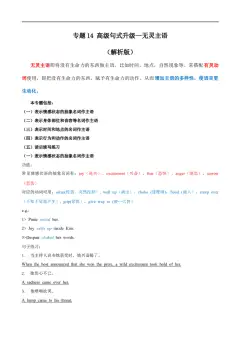
1.在随后的一千多年时间里,中国经历了青铜器时代。(witness)
【答案】In the following 1,000 years, China witnessed a Bronze Age.
2.敲门声突然打断了她的思想。(put a brake)
【答案】The knocking sound on the door put a sudden brake to her thought.
3.一阵花的香味从窗口飘进来。(float)
【答案】A burst of flowers’ fragrance floated into the house through the window.
4.花瓶碎片散落在地上。(lie )
【答案】The vase lay in pieces on the floor.
5.恐慌涌上我的心头。(well up)
【答案】A flood/ripple/surge of panic seized/overcame/consumed/welled up in me.
6. 他害怕极了。 (seize)
【答案】 Fear seized him.
7.一想到他很可能会被淹死,我就感到害怕和担心。(fill...with)
【答案】The thought of the fact that he was likely to be drowned filled me with fright and
concern.
9. 他失去了沉着。(desert)
【答案】His presence of mind deserted him.
9. 我突然想到一个可怕的想法。(strike)
【答案】A terrible thought suddenly struck me.
10. 我突然想到一阵好主意。(hit)
【答案】A good idea suddenly strikes/hits him.
11.过去的30年见证了中国巨大的变化。(witness)
【答案】The past 30 years have witnessed great changes in China.
13. 我兴奋的说不出话来。(deprive...of...)
【答案】Excitement deprived me of all power of speech.
16. 他一看到熟悉的面庞,便热泪盈眶。(well)
【答案】When he saw the familiar face, tears welled up in his eyes.
17. 厚厚的积雪笼罩着整个大地。(blank)
【答案】The thick snow blanketed the field.
18. 一想到他的母亲便使他吃不下饭。(appetite)
【答案】The thought of his mother led to his loss of appetite.16.雨使得游客无法欣赏到满月。(prevent)
【答案】The rain prevented tourists from enjoying the full moon.
17.我给她礼物时,她的脸上焕发出了光彩。(light up)
【答案】Her face lit up/brightened when I gave her the present.
20. 突然,一个主意一闪而过。(flash)
【答案】Suddenly, an idea struck me in a flash.
21. 他耗尽了热情,显得虚弱不堪,当塔走下台阶时,步伐踉跄了。(cause)
【答案】The weakness of exhausted passion caused her to totter as she descended the steps.
23. 第二年他的妈妈去世了。 (see)
【答案】The following year saw the death of his brother.
24. 直到那时,我才意识到,正是勇敢才能克服一切困难。(conquer)
【答案】Only then did I realize that it was bravery that can conquer whatever difficulty came in the
way.
25. 他走上台时突然失去了自信。(escape)
【答案】His confidence escaped him when he walked on stage.
24. 这个镇引以为荣的是有个美丽的湖。(boast)
【答案】The town boasts a beautiful lake.
25. 这幅画瞬间使我想起了我的家乡。(remind)
【答案】The painting immediately reminded me of my hometown.
25.嫉妒使他发狂。(drive)
【答案】Jealousy drives/drove him crazy.
26.我看着我的父母,一种诚挚的感激之情在我心中油然而生。(wake)
【答案】A sincere gratitude woke within me as I gazed at my mother and father.
29. 想到这个情景我心中充满了恐惧。 (fill)
【答案】The sight of the scene filled me with excitement.
30. 震惊使我说不出话来。(rob...of)
【答案】The astonishment robbed me of the power to say anything.
29.恐惧慢慢地蔓延在她身上。(creep)
【答案】Fear slowly creeps up on her.
30. 他突然感到一阵如释重负。(flood)
【答案】A great sense of relief flooded over him.
31. 这个男孩焦虑不安,整个人都奔溃了。(tear)
【答案】Anxiety tore the boy into pieces.
32. 过去的三十年见证了计算机的发展。(witness)
【答案】Past three decades have witnessed the evolution of the computer.
33. 当时我说不出话来。(fail)【答案】Words fail me at the moment.
34. 夜幕降临。(rule)
【答案】Darkness ruled the forest.
35. 幸福洋溢在她的脸庞。(spread)
【答案】Happiness spread over her whole face.
36. 他十分惊恐。(wash)
【答案】A wave of terror washed over him.
37. 她感到遗憾。(take possession of)
【答案】 Regret took possession of her.
38. 一场暴风雪今天袭击西部地区,带来了严寒低温。(hit)
【答案】A snowstorm hit the West today, bringing with it frigid temperatures.
39. 飓风贝蒂正在逼近佛罗里达海岸。(approach)
【答案】Hurricane Betty is now approaching the coast of Florida.
40. 我们将在周五下午五点举行拔河比赛。(witness)
【答案】The playground will witness the tug war which will be held at 4 pm this Friday afternoon.
41. 眼泪顺着她的面颊留下来。(run)
【答案】Tears trickled/streamed/ran down her cheeks.
42. 这个地方去年有了迅速的发展。(witness)
【答案】Last year witnessed the rapid development of this place.
43. 教室里传开了耳语声。(go around)
【答案】Whispers went around the classroom.
44. 接着就传来了Walker的声音。(come)
【答案】Then came Miss Walker’s voice.
45. 接触不同的文化可以促进创造性。(encourage)
【答案】Exposure to different culture can encourage creativity.
46. 步行十分钟我们就走到了博物馆。(walk)
【答案】A ten minutes’ walk brought us to the museum.
47. 好的习惯能提高效率,而坏的习惯则恰恰相反。(lead to)
【答案】Good habits lead to efficiency while bad ones bring the opposite.
48. 仔细比较这两种方法将会发现其中的区别。 (show)
【答案】Careful comparison of the two methods will show you the difference.
49. 我当时忘记了他的名字。(escape)
【答案】His name escaped/failed me at the moment.
综合模拟演练Robert and Henry were two friends in the same class. They always played together and
went home together. One day,Robert and Henry were going home from school, when, on
turning a corner, Robert cried out, “A fight! Let’s go and see!”
“No,” said Henry. “Let us go quietly home and not meddle with(插手)this quarre1. We
have nothing to do with it and may get into trouble. Also our parents are expecting to have
dinner with us together at home and I don’t want them to worry about me.”
“You are a coward, and afraid to go,” said Robert,and off ha ran. Henry want straight
home, and in the afternoon went to school as usual.
But Robert had told all the boys that Henry was a coward, and they laughed at him a great
deal. From then on, they looked down upon Henry and didn’t want to play with him together.
Henry was sad but he wasn’t angry with Robert for his rude behavior, because he learned
that true courage is shown most in bearing misunderstanding when it was not deserved, and that
he ought to be afraid of nothing but doing wrong. Thus, he just ignored the other boys’ laughter
and continued to go to school and study as well. However, Robert didn’t invite Henry to go
home with him anymore. Instead, he had some other boys who also thought Henry was a
coward. Every day after school , they didn’t go home directly but went to the river or
somewhere to play games and had a lot of fun.
A few days later, Robert was bathing with his new friends in a river, and got out of his
depth. He struggled, and screamed for help, but all in vain. The boys who had called Henry a
coward got out of the water as fast as they could, but they did not even try to help him.
注意:
1.所续写短文的词数应为150左右;
2.续写部分分为两段,每段的开头语已为你写好;
Paragraph 1:Robert was fast sinking.
___________________________________________________________________________
Paragraph 2:Thus,Robert's life was saved.
___________________________________________________________________________
翻译小练习
1. 罗伯特好像要淹死了。就在这时,亨利碰巧路过。
___________________________________________________________________________2. 听到尖叫声,亨利跑到河边,脱掉衣服,毫不犹豫地跳入水中。
___________________________________________________________________________
3. 他在罗伯特最后一次下沉的时候找到了他。
___________________________________________________________________________
4. 他费了很大的力气,冒着极大的危险把罗伯特带到了岸边。
___________________________________________________________________________
5. 罗伯特和他的新朋友们因称亨利为懦夫而感到羞耻。
___________________________________________________________________________
6. 他们意识到亨利有真正的勇气。
___________________________________________________________________________
7. 他们为亨利的粗鲁行为向他道歉,并请求他的原谅。
___________________________________________________________________________
8. 亨利高兴地原谅了他们。他和罗伯特又是朋友了,他们像往常一样一起回家了。
___________________________________________________________________________
9. 从这件事中,罗伯特懂得了什么是真正的勇气:永远不要害怕做好事,而要永远害怕
做坏事。
___________________________________________________________________________
参考答案
1. 罗伯特好像要淹死了。就在这时,亨利碰巧路过。
It seemed as if Robert would be drowned. Just at the moment, Henry happened to be
passing by.
2. 听到尖叫声,亨利跑到河边,脱掉衣服,毫不犹豫地跳入水中。
Hearing the screams, Henry ran to the riverside, threw off his clothes and jumped into the
water without hesitation.
3. 他在罗伯特最后一次下沉的时候找到了他。
He reached Robert just as he was sinking the last time.
4. 他费了很大的力气,冒着极大的危险把罗伯特带到了岸边。
By great effort, and with much danger to himself, he brought Robert to the shore.
5. 罗伯特和他的新朋友们因称亨利为懦夫而感到羞耻。
Robert and his new friends were ashamed at having called Henry a coward.
6. 他们意识到亨利有真正的勇气。They realized that Henry had true courage.
7. 他们为亨利的粗鲁行为向他道歉,并请求他的原谅。
They said sorry to Henry for their rude behavior and asked for his forgiveness.
8. 亨利高兴地原谅了他们。他和罗伯特又是朋友了,他们像往常一样一起回家了。
Henry forgave them happily. He and Robert were friends again and they went home
together as usual.
9. 从这件事中,罗伯特懂得了什么是真正的勇气:永远不要害怕做好事,而要永远害怕
做坏事。
From this, Robert learned what true courage was: never be afraid to do good, but always
fear to do evil.
参考范文
Robert was fast sinking. It seemed as if Robert would be drowned. Just at the moment,
Henry happened to be passing by. Hearing the screams, Henry ran to the riverside, threw off his
clothes and jumped into the water without hesitation. He reached Robert just as he was sinking
the last time. By great effort, and with much danger to himself, he brought Robert to the shore.
Thus, Robert’s life was saved. Robert and his new friends were ashamed at having called
Henry a coward. They realized that Henry had true courage. They said sorry to Henry for their
rude behavior and asked for his forgiveness. Henry forgave them happily. He and Robert were
friends again and they went home together as usual. From this, Robert learned what true courage
was: never be afraid to do good, but always fear to do evil.