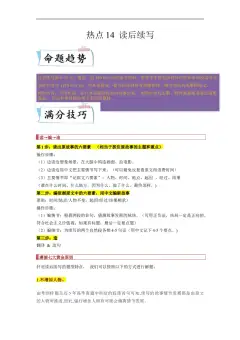
动作链场景突破法
在英语读后续写中,合理构建动作链能使故事更加连贯、生动。本文详细梳理了 25
种常见情境下的动作链,助力读者掌握动作构造逻辑,提升写作能力。
一、灾难相关动作链
(一)遇到火灾/水灾/雪灾/地震/洪水
察觉异常(如闻到焦味、听到巨响等),迅速确认灾难源头,接着寻找最近的逃生路
径,随后迅速逃离现场,最后找到安全位置避险。
示例:她闻到刺鼻焦味,停下手中活计,四处查看发现厨房起火,赶忙抓起手机冲向
大门,边跑边拨打119,跑到街道安全处后,才松了一口气。
英文:She smelled a sharp, acrid burning odor and immediately stopped what she was
doing. She looked around and discovered that the kitchen was engulfed in flames. She quickly
grabbed her phone and rushed towards the door. While dialing 911, she ran out onto the street.
After reaching a safe spot, she finally breathed a sigh of relief.
(二)各种灾难救人
听到求救声音后,确定求救者位置,准备救援工具,进入救援现场展开救援,成功救
出伤者,并将伤者带到安全区域。
示例:他隐约听到废墟下的呼救声,立刻确定声源,找来铁杆当撬杠,小心翼翼挪开
瓦砾,成功救出受困者,随后背起对方迅速撤离到安全地带。
英文:He vaguely heard faint cries for help from beneath the rubble. Immediately located
the source. Found a metal rod to use as a lever. Carefully lifted away the debris. Successfully
pulled the trapped person out. He carried the person to a safe area.
(三)各种灾难求救
意识到无法独自脱险时,寻找求救工具(电话、信号设备等),发送求救信号(拨打电话、发射信号),等待救援并确认救援抵达。
示例:她被困水中无法游到岸边,拼命寻找漂浮木板,抓住木板后用手机求救,等待
时紧紧抓着木板,听到直升机声后心情逐渐平静。
英 文 : She realized she was trapped in the water and couldn’t swim to shore. She
desperately looked for a floating plank. Grabbing the plank, she used her phone to call for help.
While waiting for rescue, she held onto the plank tightly. Hearing the sound of a helicopter in the
distance, her anxiety started to fade.
(四)各种灾难逃生
察觉到灾难逼近,确定最佳逃生路径,准备逃生用品,按照计划逃生,确保安全后停
止行动。
示例:他感到地面剧烈震动,马上确定通往出口的最短路线,拿上背包里的急救包和
水,沿着走廊迅速朝出口跑去,到达户外空旷地后,停下检查自己是否受伤。
英文:He felt the ground shake violently. Immediately determined the shortest route to the
exit. Grabbed the first-aid kit and water from his backpack. Ran quickly down the hallway
towards the exit. After reaching the open outdoor area, he stopped to check if he was injured.
(五)灾难结束之后庆幸
确认灾难结束,检查自身安全,环顾四周确定无危险,感叹生还幸运,并与他人分享
劫后余生的感受。
示例:地震停止后,他拍拍身体确认没受伤,环顾四周确认无新危险,长舒一口气感
叹自己还活着,随后与周围幸存者紧紧拥抱。
英文:The earthquake finally stopped. He patted his body to make sure he wasn’t injured.
Looked around to confirm there was no new danger. He exhaled deeply, saying, “I’m alive!”
Then embraced the surrounding survivors tightly.
二、人物相关动作链(一)发现子女/妻子/丈夫不见
发现家人不在预期位置,寻找可能去向,询问周围的人,联系家人和朋友,报警或求
助,持续寻找。
示例:她发现儿子不在卧室,迅速检查整个房子,问邻居无果后,拿起电话急切联系
家人和朋友,最终报警求助,整晚都在街上四处寻找。
英文:She noticed her son wasn’t in his bedroom. Quickly checked the entire house. Asked
the neighbors, but no one had seen him. She grabbed her phone and urgently called family and
friends. Finally reported to the police and asked for help. She spent the whole night searching the
streets.
(二)找人一波三折
初步线索失败后,重整计划寻找,新的线索引导行动,途中遇到挫折或意外,最终找
到目标。
示例:他先去常去的咖啡馆找她,没找到后重新思考她可能去的地方,想起她提过的
公园,在公园找了很久,还与陌生人发生争执,终于在偏僻长椅上发现她静静坐着。
英文:He first went to the usual café to find her, but she wasn’t there. Reconsidered where
she might have gone. Suddenly remembered she mentioned a park. Searched the park for a long
time, even got into an argument with a stranger. Finally found her sitting quietly on a secluded
bench.
(三)朋友/夫妻吵架
意见产生分歧,情绪逐渐升级,进而爆发争吵,言辞激烈,其中一方冷静下来,吵架
结束但气氛紧张。
示例:他们讨论晚饭安排时意见分歧,声音逐渐提高且互不相让,最终争吵爆发,她
喊道“你从来不考虑我的感受!”,他看着她沉默下来,房间陷入沉默,气氛紧张。
英文:They were discussing dinner plans, and it didn’t take long for their opinions to
diverge. Their voices gradually grew louder, neither willing to back down. Finally, the words
became sharper, and a full-blown argument erupted. “You never consider my feelings!” sheshouted. He looked at her, saying nothing, slowly calming down. The room fell into silence,
tension hanging in the air.
(四)内心挣扎
面临选择时内心纠结,不断反复权衡利弊,决定采取行动并付诸实践。
示例:他站在门口握着信,内心充满挣扎,虽不断告诉自己这是正确决定,但又担心
后果,反复踱步手心冒汗,最终深吸一口气将信放进信箱,做出决定后肩膀顿感轻松。
英文:He stood at the door, holding the letter, his heart full of conflict. He kept telling
himself this was the right decision. But another voice echoed in his mind, reminding him of the
potential consequences. He paced back and forth, palms sweating. Finally, he took a deep breath
and dropped the letter into the mailbox. The decision was made, and a weight lifted from his
shoulders.
(五)筹备惊喜活动
产生惊喜的想法,计划活动细节,准备惊喜材料,实施惊喜,观察对方反应。
示例:他突然想为她筹备惊喜生日派对,列出宾客名单、挑选场地,购买她喜欢的花
和蛋糕并装饰场地,她走进房间时灯光亮起,大家高喊“生日快乐!”,看到她的惊讶与
感动,他心里满是满足。
英文:He suddenly thought of organizing a surprise birthday party for her. He made a guest
list and chose a suitable venue. Bought her favorite flowers and cake, decorated the venue. When
she walked into the room, the lights suddenly came on, and everyone shouted “Happy Birthday!”
Seeing the surprise and emotion on her face, his heart was filled with satisfaction.
(六)准备礼物
决定送礼物,选择礼物类型,考虑对方喜好,购买或制作礼物,包装礼物,将礼物送
出。
示例:他决定送她特别礼物,想到她提过的书,马上去书店挑选精装版,回家用心包
装,她打开礼物时露出灿烂笑容。英文:He decided to prepare a special gift for her. Remembered she had recently mentioned
a particular book. Immediately went to the bookstore and picked out a hardcover edition. At
home, he carefully wrapped it in beautiful paper. When she opened the gift, a bright smile
appeared on her face.
三、场景相关动作链
(一)欣赏景色
抵达观景点,选定最佳观景位置,放松身体,环顾四周欣赏美景,深呼吸感受空气,
内心平静下来。
示例:她走到山顶,选视野开阔处坐下,调整姿势让自己舒适,眼睛扫过山谷风景,
深吸清新空气,闭上眼睛感受内心宁静。
英文:She reached the mountain top and found a spot with a wide view to sit down.
Adjusted her posture to get comfortable. Let her eyes sweep across every inch of the valley. Took
a deep breath, feeling the freshness in the air. Closed her eyes, feeling an overwhelming sense of
peace.
(二)发现野生动物
发现不寻常动静,定睛观察,确认是野生动物,慢慢靠近,观察动物行为,保持安全
距离。
示例:他听到草丛有动静,停下脚步仔细观察,发现是小鹿觅食,放慢脚步小心靠
近,观察小鹿动作,同时始终保持安全距离。
英文:He heard rustling in the bushes. Stopped walking and observed closely. Saw it was a
deer foraging. Slowed his pace and cautiously approached. Watched its every move, not wanting
to startle it. But kept a safe distance at all times.
(三)救动物
发现动物受困,判断解救方法,获取工具或方法,接近动物,实施救援,检查动物状态。
示例:他看到小狗被困泥潭,判断需用绳子拉出,找来结实树枝和绳子,小心接近安
抚小狗,将绳子套在小狗身上拉上岸,获救后检查小狗四肢确保没受伤。
英文:He saw a puppy trapped in a muddy bank by the river. Realized he needed a rope to
pull it out. Found a sturdy branch and some rope. Carefully approached the puppy, calming it
down. Looped the rope around the puppy and slowly pulled it to safety. After rescuing the puppy,
he checked its legs to make sure it wasn’t injured.
(四)猎人发现危险的野兽
感受到威胁,确认野兽位置,准备武器,评估逃跑或战斗的可能性,做出决定,行动
以确保安全。
示例:他感到背后寒意,慢慢转身发现熊走来,悄悄拉开弓箭紧盯熊,评估地形后决
定采取防御姿态,熊靠近时果断射箭,熊受伤逃跑后他松了口气。
英文:He felt a chill down his spine. Slowly turned around to see a bear approaching him.
Quietly drew his bow, eyes locked on the bear. Assessed the surrounding terrain and decided to
take a defensive stance. As the bear came closer, he swiftly released the arrow. The bear fled after
being hit, and he finally breathed a sigh of relief.
(五)受到野兽攻击
意识到被攻击,尝试躲避,找到武器或防御物,反击或逃跑,确保自己安全。
示例:听到低吼,他转头发现狼扑来,迅速躲闪,狼爪擦过肩膀,他抓起树枝挥向
狼,狼被击退,他趁机跑开,跑一段距离确认狼没追来才放心。
英文:A low growl sounded in his ear, and he turned sharply to see a wolf lunging at him.
He quickly dodged, the wolf’s claws grazing his shoulder. He grabbed a branch from the ground
and swung it hard at the wolf. The wolf retreated, and he seized the moment to sprint away. After
running a good distance, he looked back to make sure the wolf wasn’t following before he
relaxed slightly.(六)转危为安
发现自己处于危险之中,冷静思考解决办法,实施行动,成功脱险,重新确认安全。
示例:他被困狭窄山路,两侧是悬崖,深吸一口气让自己冷静,发现大石头作支撑
点,小心攀爬避免滑倒,到达安全地带后长舒一口气,环顾四周确认无其他危险。
英文:He found himself trapped on a narrow mountain path, with steep cliffs on both sides.
Took a deep breath, trying to calm himself down. Spotted a larger rock that could serve as a
foothold. Carefully climbed up, making sure not to slip. Finally reached a safe area, he exhaled
deeply and looked around to ensure there was no other danger.
(七)意料之外
事情按计划进行,突发意外,做出应急反应,处理意外,结果出乎意料。
示例:他们按计划野餐,一切顺利,突然下雨,慌忙收拾找避雨处,雨越下越大躲进
废弃小屋,虽计划被打乱,但在小屋度过难忘时光。
英文:They went on a picnic as planned, everything was going smoothly. Suddenly, the sky
darkened, and it started to rain heavily. They quickly packed up and looked for shelter. But the
rain kept pouring, so they had to take refuge in an abandoned hut. Although their plans were
disrupted, they ended up having an unforgettable time in the hut.
(八)自己一个人在野外探险
准备探险装备,选择探险路线,出发探险,途中遇到困难,解决问题,继续探险。
示例:他整理背包检查地图和指南针,选了通往森林深处的路线,迎着晨光独自出
发,途中遇沼泽地受阻,观察地形找到绕路小道,克服障碍后继续前进,充满成就感。
英文:He packed his bag, checking the map and compass. Chose a route leading deep into
the forest. Setting out in the morning light, he began his solo adventure. Along the way, he
encountered a swampy area that blocked his path. He carefully observed the terrain and found a
narrow path around the swamp. After overcoming the obstacle, he continued forward, filled with
a sense of accomplishment.(九)比赛开始(马术、篮球、足球、钢琴、小提琴、演讲等)
做好准备工作,等待比赛开始,比赛开始信号发出后全力投入比赛,适应比赛节奏,
调整战术,全力冲刺,直至比赛结束。
示例:他检查马鞍和缰绳确保正常,聚精会神等待裁判哨声,哨响后策马飞奔,感受
马蹄震动迅速进入状态,中途发现落后便调整骑马节奏,最后一圈全力冲刺,终点线前超
越对手。
英 文 : He checked the saddle and reins to ensure everything was in place. Focused
intensely, waiting for the referee’s whistle. As soon as the whistle blew, he urged his horse into a
gallop. Feeling the horse’s hooves pounding the ground, he quickly found his rhythm. Midway, he
realized he was falling behind, so he adjusted his riding pace. On the final lap, he gave it his all in
a sprint. The finish line was in sight, and he finally overtook his opponent.
(十)比赛结束获奖
比赛结束后等待结果公布,听到自己获奖后表达激动与感激,上台领奖,分享获奖感
言。
示例:比赛结束哨声响起,他大口喘气站在赛场边等待结果,听到自己名字时不敢相
信,兴奋地与队友击掌庆祝,走上领奖台接过奖杯,眼中闪烁泪光,在观众掌声中分享获
奖感言,感谢支持他的人。
英文:The whistle signaling the end of the match blew, and he panted heavily. Stood on the
sidelines waiting for the results. When he heard his name, he could hardly believe his ears. He
jumped up in excitement, high-fiving his teammates. Stepping onto the podium, he took the
trophy with tears in his eyes. Amidst the applause of the audience, he shared his acceptance
speech, thanking everyone who supported him.
(十一)反思时的动作行为
沉思过去的经历,分析事件的得失,思考改进的方法,做出新的决定,付诸实践。
示例:他坐在窗前凝视远方,回想最近发生的事,细细分析得失找问题根源,思考改
进方法并决定改变策略,最终起身准备重新开始,坚定迈出第一步,朝新方向前进。
英文:He sat by the window, gazing into the distance, reflecting on everything that hadhappened recently. He carefully analyzed the gains and losses, trying to identify the root cause of
the problems. Thought about some ways to improve and decided to change his strategy. Finally,
he stood up, ready to start again. He took the first step resolutely, moving toward a new direction.
(十二)野外迷路寻找回家的路
意识到迷路后冷静下来观察环境,查找地图或使用指南针,选择一个方向,途中确认
路线,终于找到正确路径,最终回家。
示例:他意识到迷路停下脚步,强迫自己冷静观察地形,拿出地图和指南针确定位
置,选择最可能的方向前进,边走边确认路线,看到熟悉地标后松了口气,几小时后安全
到家。
英文:He realized he was lost and stopped in his tracks. Forced himself to calm down and
carefully observe the surrounding terrain. Pulled out his map and compass, trying to pinpoint his
location. Chose the most likely direction to lead him out. As he walked, he kept checking to
ensure he was on the right path. Finally, he saw a familiar landmark in the distance and felt a
sense of relief. A few hours later, he safely made it back home.
(十三)在屋子里回忆美好的过去
走进房间看到熟悉物品,触发记忆,坐下静静回忆,情感涌上心头,轻轻抚摸那些物
品,对过去充满怀念。
示例:他走进曾经的书房,看到书架摆满熟悉书籍,每本书都承载回忆,他拿起一本
书翻开扉页,画面浮现,坐在椅子上闭眼回忆,眼中含泪抚摸书页,仿佛回到过去,对那
些日子充满怀念。
英文:He walked into his old study, the shelves still lined with those familiar books. Each
book carried a beautiful memory. He gently picked up a book and opened the first page, the
images of those times flooding his mind. He sat down in the chair, closed his eyes, and let the
memories wash over him. Tears welled up in his eyes as he gently touched the pages, as if
transported back to that carefree era. He was filled with longing for those days.(十四)小动物在野外探险发现人类
小动物在野外探险,发现陌生气味或声音,顺着气味/声音小心靠近,看到人类的身
影,观察人类的行为,做出是否靠近或逃跑的决定,采取行动。
示例:小兔子在森林探险,闻到陌生味道听到奇怪声音,顺着气味和声音靠近空地,
拨开树枝看到人在树下休息,紧张观察人类动作,犹豫后决定退回树丛,在安全距离继续
观察。
英文:The little rabbit was exploring the forest, sniffing the various scents in the air.
Suddenly, it caught a strange smell and heard some unusual sounds. Following the scent and
sound, it cautiously approached a clearing. Pushing aside a few branches, it saw a human sitting
under a tree, resting. The rabbit nervously observed the human’s movements, unsure whether to
approach. In the end, it decided to retreat back into the bushes, continuing to watch from a safe
distance.
四、学习动作链的意义及运用方法
学习动作链旨在理解“动作构造逻辑”,日常练习和考场上,不能直接套用,而要根
据具体情境将不同动作链灵活组合、扩写或者改写,让故事内容丰富、逻辑合理。
综合演练
In 1945, a 12-year-old boy saw a beautiful brooch(胸针) in a shop window that set his heart
racing. But the price-five dollars-was too high for Reuben Earle. Five dollars would buy almost a
week's food for his family.
Reuben couldn't ask his father for the money. Everything his father made through fishing went
to his mother, Dora. Slim and beautiful, she was the center of the home, the glue that held it together.
The housework was never-ending, and she struggled to support their five children but
she was happy as her family and their well-being were all she cared about.
Nevertheless, he opened the shop's weathered (风化的)door and went inside, Standing proud
and straight in his flour-sack(面粉袋改做的) shirt and washed-out trousers, he told theshopkeeper what he wanted, adding, "But I don't have the money right now. Can you please hold it
for some time?
"I'll try," the shopkeeper smiled. "People around here don't usually have that kind of money to
spend on things. It should keep for a while."
Reuben respectfully touched his worn cap and walked out.
He would raise the money and not tell anybody, for he thought Mum would get surprised when
she saw that brooch. On hearing the sound of hammering from a side street, Reuben suddenly had an
idea that he could raise money by selling the used nail bags(装钉子的麻袋). People built their own
buildings in Bay Roberts, using nails bought in bags from a local factory. Sometimes the used nail
bags were thrown away at the construction site, and Reuben knew he could sell them back to the
factory for five cents a piece.
That day he sold two nail bags and hid the money in a rusty soda tin.
注意:
1. 所续写短文的词数应为150左右;
2. 续写部分分为两段,每段的开头语已为你写好;
Paragraph l: Every day after school, Reuben started his plan.
__________________________________________________________________________
Paragraph 2: Finally, the time came!
__________________________________________________________________________
翻译小练习:
1. 鲁本又冷又饿,在街上徘徊,小心翼翼地寻找指甲袋。
__________________________________________________________________________
2. 为了省更多的钱,他甚至决定一大早送报纸。__________________________________________________________________________
3. 尽管他感到筋疲力尽,但他仍然坚持这个计划。
__________________________________________________________________________
4. 商店橱窗里的胸针提醒他,他所做的是值得的。
__________________________________________________________________________
5. 经过长时间的努力,他终于成功了。
__________________________________________________________________________
6. 他拿出汽水罐,把硬币倒出来,开始数。
__________________________________________________________________________
7. 五美元!他的努力得到了回报!
__________________________________________________________________________
8. 鲁本拿着汽水罐,冲到商店去买胸针。
__________________________________________________________________________
9. 当他拿到漂亮的胸针时,他冲进前门,把它放在朵拉和阿普斯的手里。__________________________________________________________________________
10. 多拉从来没有收到过这样的礼物。
__________________________________________________________________________
11. 她说不出话来,高兴极了,把儿子紧紧地抱在怀里,眼里噙满了泪水。
__________________________________________________________________________
参考答案:
1. 鲁本又冷又饿,在街上徘徊,小心翼翼地寻找指甲袋。
Cold and hungry, Reuben wandered the streets, searching for the nail bags carefully.
2. 为了省更多的钱,他甚至决定一大早送报纸。
To save more money, he even decided to deliver papers in the early morning.
3. 尽管他感到筋疲力尽,但他仍然坚持这个计划。
Exhausted and tired as he felt, he still stuck to the plan.
4. 商店橱窗里的胸针提醒他,他所做的是值得的。
It was the brooch in the shop window that reminded him that what he did was worthwhile.
5. 经过长时间的努力,他终于成功了。
After a long time of hard work, he made it eventually.
6. 他拿出汽水罐,把硬币倒出来,开始数。
He took out the soda tin, poured the coins out and began to count.
7. 五美元!他的努力得到了回报!
Five dollars! His hard work paid off!
8. 鲁本拿着汽水罐,冲到商店去买胸针。
Holding the soda tin firmly, Reuben rushed for the shop to buy the brooch.
9. 当他拿到漂亮的胸针时,他冲进前门,把它放在朵拉和阿普斯的手里。The moment he got the beautiful brooch, he burst through the front door and placed it in Dora&
apos’s hand.
10. 多拉从来没有收到过这样的礼物。
Never had Dora received such a gift.
11. 她说不出话来,高兴极了,把儿子紧紧地抱在怀里,眼里噙满了泪水。
Speechless and happy, she held her son tightly into her arms, with tears welling up in her eyes.
参考范文:
Paragraph 1: Every day after school, Reuben started his plan. Cold and hungry, Reuben wandere
d the streets, searching for the nail bags carefully. To save more money, he even decided to deliver pa
pers in the early morning. Exhausted and tired as he felt, he still stuck to the plan. It was the brooch i
n the shop window that reminded him that what he did was worthwhile. After a long time of hard wo
rk, he made it eventually.
Paragraph 2: Finally the time came! He took out the soda tin, poured the coins out and began to
count. Five dollars! His hard work paid off! Holding the soda tin firmly, Reuben rushed for the shop t
o buy the brooch. The moment he got the beautiful brooch, he burst through the front door and place
d it in Dora&apos’s hand. Never had Dora received such a gift. Speechless and happy, she held her s
on tightly into her arms, with tears welling up in her eyes.