2021 年上半年中小学教师资格考试
英语学科知识与教学能力试题(高级中学)
注意事项:
1. 考试时间120分钟,满分150分。
2. 请按规定在答题卡上填涂、作答。在试卷上作答无效,不予评分。
一、单项选择题(本大题共30小题,每小题2分,共60分)
在每小题列出的四个备选项中选择一个最佳答案,请用2B铅笔把答题卡上对应题目的
答案字母按要求涂黑,错选、多选或未选均无分。
1. Which of the following English phonemes has more than one allophone based on its position
in a word?
A. /w/
B. /j/
C. /m/
D. /1/
2. What is the right pronunciation of the word ‘permit’ when it is used as a noun?
A. /ˈpəmɪt/
B. /pəˈmɪt /
C. /рз:ˈmɪt/
D. /ˈpз:mit/
3. Astronomer Heidi Hammel, a proponent of science education, conveys a passion for
planetary science that her fascinated audience find _______.
A. equivocal
B. archaic
C. timid
D. infectious
4. The discoveries made by Nobel Prize winning geneticist Barbara McClintock are considered
to be among the major ______ of 20th-century biological science.
A. proposals
B. elaborations
C. accomplishments
D. deliberations
5. Hoping to preserve natural habitats, conservationists lobbied for legislation that would
_______ commercial development in these areas.
A. accommodate
B. diversify
C. promote
D. arrest
6. The ethical judgments of the court become an important issue and the court cannot maintain
its legitimacy as guardian of the law _______ justices behave like politicians.A. when
B. lest
C. before
D. unless
7. For whatever _______, don’t be late again, or our work will be lagging far behind others.
A. any reasons
B. a reason
C. reason
D. the reason
8. Little is known of Oliver’s childhood, _______ at the factory at the early age of eight.
A. suppose that he worked
B. provided that he worked
C. providing that he worked
D. save that he began to work
9. In a sequence of two related utterances by two speakers, the second utterance is always a
response to the first. This is known as _______.
A. pair work
B. pair practice
C. adjacency pairs
D. minimal pairs
10. Which of the following involves progressive assimilation in connected speech?
A. Bags
B. Issue
C. One cup
D. Ten me
11. Problem-solving activities, role -play, information gap, etc. are typical classroom activities
of _______.
A. the direct method
B. total physical response
C. the audio-lingual method
D. communicative language teaching
12. The ultimate goal of middle school English teaching and learning is to _______.
A. enhance certain basic language knowledge
B. develop integrative abilities in language use
C. increase learners' interest in studying English
D. foster listening, speaking, reading and writing skills
13. When a teacher says, “Is this sentence right?”, he/she may be doing all of the following
EXCEPT _______.
A. giving students feedback
B. eliciting students’ responses
C. inviting students’ judgments
D. correcting a mistake explicitly
14. In a process-based writing class, after students have finished drafting, their teacher would
most probably have them _______.
A. edit their draft
B. do brainstorming on the topicC. analyze the topic
D. learn useful words and expressions
15. Which of the following activities is NOT appropriate for developing students’ awareness
of discourse coherence?
A. Writing a conclusion for a passage.
B. Underlining the topic sentences of each paragraph.
C. Changing sentences from active forms into passive ones.
D. Arranging all the sentences to produce a meaningful passage.
16. In English teaching, mechanical activities such as _______ may be helpful for teaching
particular structures, but they should not be overused.
A. transformation and role-play
B. translation and word-matching
C. gap-filling and topic discussion
D. memorization and pattern drilling
17. Which of the following is most effective for a teacher when students do not understand
how to do an activity that he/she has described?
A. Demonstrating how to do it.
B. Asking students to talk freely.
C. Encouraging students to share their ideas.
D. Walking around the classroom and answering questions.
18. Which of the following activities has a focus on grammar?
A. Read a story and act it out in groups.
B. Read a story and answer comprehension questions.
C. Read a story and underline the most difficult sentences.
D. Read a story and analyze how past events are described.
19. Which of the following should be discouraged concerning the use of Internet resources?
A. Teachers depend on Internet resources for teaching materials.
B. Teachers use Internet resources to supplement their textbooks.
C. Teachers adapt Internet resources before using them for language input.
D. Teachers select Internet resources according to their teaching purposes.
20. David took a test and his score was at the top 10 percent in his class. This is an interpretation
of the result of a ______ test.
A. diagnostic
B. formative
C. norm-referenced
D. criterion-referenced
请阅读Passage 1,完成第21~25小题。
Passage 1
The age of “melancholy” is how psychologist Daniel Goleman describes our era. People today
experience more depression than previous generations, despite the technological wonders that help
us every day. It might be because of them.
Our lifestyles are increasingly driven by technology. Phones, computers and the Internet
pervade our days. There is a constant, nagging need to check for texts and emails, to update
Facebook, MySpace and LinkedIn profiles, to acquire the latest notebook or cellphone.
Are we being served by these technological wonders or have we become enslaved by them? Istudy the psychology of technology, and it seems to me that we are sleepwalking into a world where
technology is severely affecting our well-being. Technology can be hugely useful in the fast-paced
modern living, but we need to stop it from taking over.
For many of us, it is becoming increasingly difficult to control the impulse to check our inbox
yet again or see whether the headlines have changed since we last looked. Our children are in a
similar position, scared to miss a vital Tweet or status update on Facebook. In many homes, the
computer has become the center of attention; it is the medium through which we work and play.
How does this arise, and what is it doing to us? In this era of mass consumption, we are
surrounded by advertising that urges us to find a fulfillment through the acquisition of material
goods. As a result, adults and children increasingly believe that in order to belong and feel good
about themselves, they must own the latest model or gadget.
Yet research by psychologist Tim Kasser of Knox College in Galesburg, Illinois, has shown
that people who place a high value on material goals are unhappier than those who are less
materialistic. Materialism is also associated with lower self-esteem, greater narcissism, greater
tendency to compare oneself unfavorably with other people, less empathy and more conflict in
relationships. Our culture also constantly reminds us that time is money. This shows a need for total
efficiency, which is the reason for us to allow laptop computers and mobile phones to blur the
separation between work and home. As one unhappy human-resource manager in a high-tech
company put it, “They gave me a mobile phone so they can own me 24 hours a day, and a portable
computer, so my office is now with me all the time -I cannot break out of this pressure.” Sound
familiar?
Psychologists generally believe that the lack of a clear separation between work and home
greatly damages our relationships with loved ones. It also predisposes us to focus on the here and
now at the expense of long-term goals.
By imposing these twin pressures, modern society is in danger of swapping the standard of
living for quality of life. We need ways to help recover those increasingly large parts of our lives
that we have ceded to technology, to regain mastery over technology and learn to use it in a healthy
and positive way.
21. What does Daniel Goleman attempt to illustrate by calling the era “the age of melancholy”
in Paragraph 1?
A. Technology has increased people 's feelings of happiness.
B. People become frustrated for lack of on-line experience.
C. People are getting stressed out because of technology.
D. Technology can work wonders in modern society.
22. What impact has been produced by technology on people according to Paragraph 2?
А. People cannot afford the latest laptops.
B. People have to adopt a different lifestyle.
C. People constantly write messages and emails.
D. People cannot live without computers or telephones.
23. What is the author most worried about concerning the change induced by technology?
A. Technology will take away people 's jobs.
B. People’s happiness will be greatly jeopardized.
C. Technology is developing at a breath-taking speed.
D. People will be indifferent to technological wonders.
24. According to Tim Kasser, why are people obsessed with material pursuit?
A. The pressure from peers and relatives.B. The temptation to own the latest model.
C. The divergence of life values and standards.
D. The convenience of accessing digital devices.
25. Which of the following would be the best title for the passage?
A. Technology Wonders Bring New Lifestyles
B. Technology Today: Empowers or Enslaves
C. The Standard of Living or Quality of Life
D. Sad Feelings in Advanced Society
请阅读Passage 2,完成第26~30题。
Passage 2
Speaking two languages rather than just one has obvious practical benefits in an increasingly
globalized world. But in recent years, scientists have begun to show that the advantages of
bilingualism are even more fundamental than being able to converse with a wider range of people.
Being bilingual, it turns out, makes you smarter. It can have a profound effect on your brain,
improving cognitive skills not related to language and even shielding against dementia in old age.
This view of bilingualism is remarkably different from the understanding of bilingualism through
much of the 20th century. Researchers, educators, and policy-makers long considered a second
language to be an interference, cognitively speaking, that hindered a child's academic and
intellectual development.
They were not wrong about the interference: there is ample evidence that in a bilingual's brain
both language systems are active even when he is using only one language, thus creating situations
in which one system obstructs the other. But this interference, researchers are finding out, isn't so
much a handicap as a blessing in disguise. It forces the brain to resolve internal conflict, giving the
mind a workout that strengthens its cognitive muscles.
Bilinguals, for instance, seem to be more adept than monolinguals at solving certain kinds of
mental puzzles. In a 2004 study by the psychologists Ellen Bialystok and Michelle Martin-Rhee,
bilingual and monolingual preschoolers were asked to sort blue circles and red squares presented on
a computer screen into two digital bins—one marked with a blue square and the other marked with
a red circle.
In the first task, the children had to sort the shapes by color, placing blue circles in the bin
marked with the blue square and red squares in the bin marked with the red circle. Both groups did
this with comparable ease. Next, the children were asked to sort by shape, which was more
challenging because it required placing the images in a bin marked with a conflicting color. The
bilinguals were quicker at performing this task.
The collective evidence from a number of such studies suggests that the bilingual experience
improves the brain’s so-called executive function—a command system that directs the attention
processes that we use for planning, solving problems, and performing various other mentally
demanding tasks. These processes include ignoring distractions to stay focused, switching attention
willfully from one thing to another, and holding information in mind—like remembering a sequence
of directions while driving.
Why does the tussle between two simultaneously active language systems improve these
aspects of cognition? Until recently, researchers thought the bilingual advantage stemmed primarily
from an ability for inhibition that was honed by the exercise of suppressing one language system:
this suppression, it was thought, would help train the bilingual mind to ignore distractions in othercontexts. But that explanation increasingly appears to be inadequate, since studies have shown that
bilinguals perform better than monolinguals even at tasks that do not require inhibition, like
threading a line through an ascending series of numbers scattered randomly on a page.
The key difference between bilinguals and monolinguals may be more basic: a heightened
ability to monitor the environment. “Bilinguals have to switch languages quite often—you may talk
to your father in one language and to your mother in another language,” says Albert Costa, a
researcher at the University of Pompeu Fabra in Spain. “It requires keeping track of changes around
you in the same way that we monitor our surroundings when driving.” In a study comparing
German-Italian bilinguals with Italian monolinguals on monitoring tasks, Mr. Costa and his
colleagues found that the bilingual subjects not only performed better, but they also did so with less
activity in parts of the brain involved in monitoring, indicating that they were more efficient at it.
26. What can be inferred from the passage about the traditional view of bilingualism?
A. Bilinguals are cognitively disadvantaged.
B. The pros of bilingualism outweigh the cons.
C. Bilinguals have advantages over monolinguals.
D. Bilinguals and monolinguals are intellectually similar.
27. According to Bialystok and Martin-Rhee, why is the second task more challenging than the
first one?
A. It demands the subjects to solve a variety of tough problems.
B. It involves a more complicated cognitive process in the brain.
C. It requires more time and experience to complete the second task.
D. It forces the subjects to focus all their attention on the experiment.
28. How is language interference perceived by modern researchers according to the passage?
A. It impedes a child’s academic growth.
B. It improves a child’s cognitive flexibility.
C. It diverts a child’s attention from one thing to another.
D. It enables a child to use two languages interchangeably.
29. Which of the following is closest in meaning to the underlined word “tussle” in Paragraph
7?
A. Tunnel.
B. Quarrel.
C. Struggle.
D. Argument.
30. Which of the following would be the best title of the passage?
A. Fallacies about Bilinguals
B. Why Bilinguals Are Smarter
C. Odds and Ends of Bilinguals
D. Bilinguals: Advantages or Disadvantages二、简答题(本大题1小题,20分)
根据题目要求完成下列任务,用中文作答。
31.请列出四种英语阅读技能(8 分),并分别写出一句课堂教学指令语以培养相应的
技能。(12分)
三、教学情境分析题(本大题1小题,30分)
根据题目要求完成下列任务,用中文作答。
32.下面是某教师讲解remember doing something和remember to do something语言点时
的课堂实录。
Teacher: Li Hua, what did you do last Sunday morning?
Li Hua: I played badminton with my friends.
Teacher (to the class): Did Li Hua remember playing badminton with her friends?
Students: Yes, she did.
Teacher: Liu Ying, what did you do last Sunday morning?
Liu Ying: I visited my grandparents.
Teacher (to the class): Did Liu Ying remember visiting her grandparents?
Students: Yes, she did.
Teacher: What will you do this Sunday morning then, Liu Ying?
Liu Ying: I will see a film with my sister.
Teacher: Please remember to take the tickets with you and be there on time.
Liu Ying: Sure, I will remember to do that. Thank you.
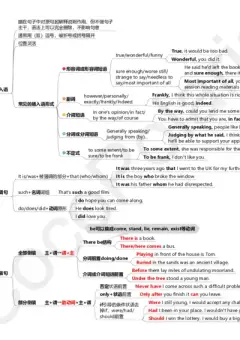
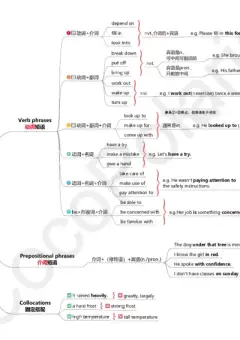
Teacher: Now class, can you tell the difference between “remember doing sth.” and “remember
to do sth.”? Look at the following diagrams:
请根据此教学情景回答下列问题。
(1) 该教师在讲解知识点时运用了哪两种方法?(8分)
(2) 这些方法各自有何特点?(8分)能发挥什么作用?(8分)
(3)使用这些方法时应重点注意什么?(6分)四、教学设计题(本大题1小题,40分)
根据提供的信息和语言素材设计教学方案,用英文作答。
33.设计任务:根据下列学生信息和语言素材,设计20分钟的英语读写课的教学方案。
教案没有固定格式,但须包含下列要点:
teaching objectives
teaching contents
key and difficult points
major steps and time allocation
activities and justifications
教学时间:20分钟
学生概况:某城镇普通中学高中一年级学生,班级人数40人。多数学生的英语水平达
到了课程标准的相应要求。学生课堂参与积极性一般。
语言素材:
In the summer when I want to relax, I go down to the river at the edge of our village. There is
a deep pond and all the village children meet in hot weather to swim.
The tall trees along the river bank give us shade when we just want to sit and talk and the sandy
river bank is perfect for the little children to play on. On the opposite river bank are some large
rocks to which we older children swim when we want to sunbathe. The river flows slowly and water
is crystal clear. The air smells of trees and damp earth and my worries begin to disappear as soon as
I arrive.
Sometimes on warm evenings we take food and drink down to the river. It’s very pleasant to
sit with friends and watch the night fall. I can’t think of anywhere I’d rather be on a summer evening.