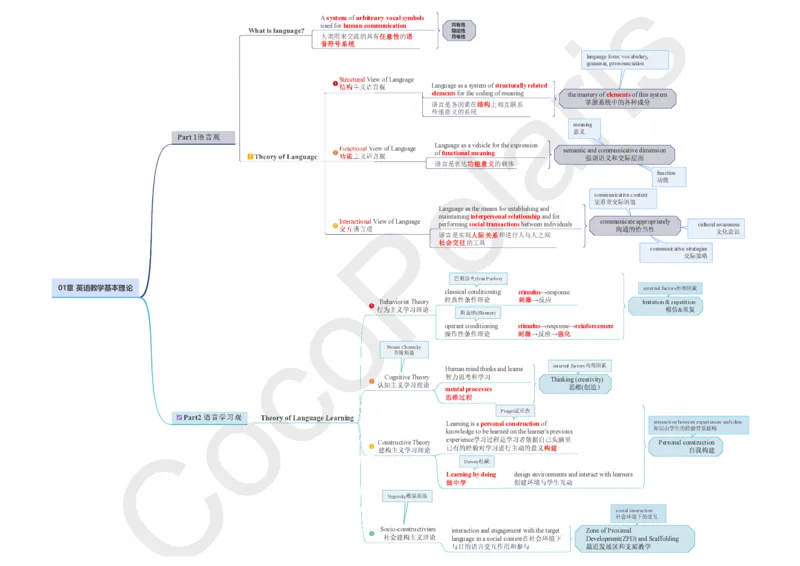
A system of arbitrary vocal symbols
used for human communication 共有性
What is language? 稳定性
人类用来交流的具有任意性的语 符号性
音符号系统
language form: vocabulary,
grammar, pronounciation
Structural View of Language
Language as a system of structurally related
elements for the coding of meaning the mastery of elements of this system
语言是各因素在结构上相互联系
传递意义的系统
meaning
Language as a vehicle for the expression
View of Language of functional meaning semantic and communicative dimension
语言是表达功能意义的载体
function
communicative context
Language as the means for establishing and
maintaining interpersonal relationship and for
View of Language performing social transactions between individuals communicate appropriately cultural awareness
语言是实现人际关系和进行人与人之间
社会交往的工具
communicative strategies
巴甫洛夫(Ivan Pavlov)
01章 英语教学基本理论 external factors
classical conditioning stimulus→response
Behaviorist Theory → Imitation & repetition
&
斯金纳(Skinner)
operant conditioning stimulus→response→reinforcement
→ →
Noam Chomsky
乔姆斯基
internal factors
Human mind thinks and learns
Cognitive Theory Thinking (creativity)
mental processes (
Piaget
Learning is a personal construction of interaction between experiences and ideas
knowledge to be learned on the learner's previous
Constructive Theory experience Personal construction
Dewey
Learning by doing design environments and interact with learners
Vygotsky
social interaction
Socio-constructivism interaction and engagement with the target Zone of Proximal
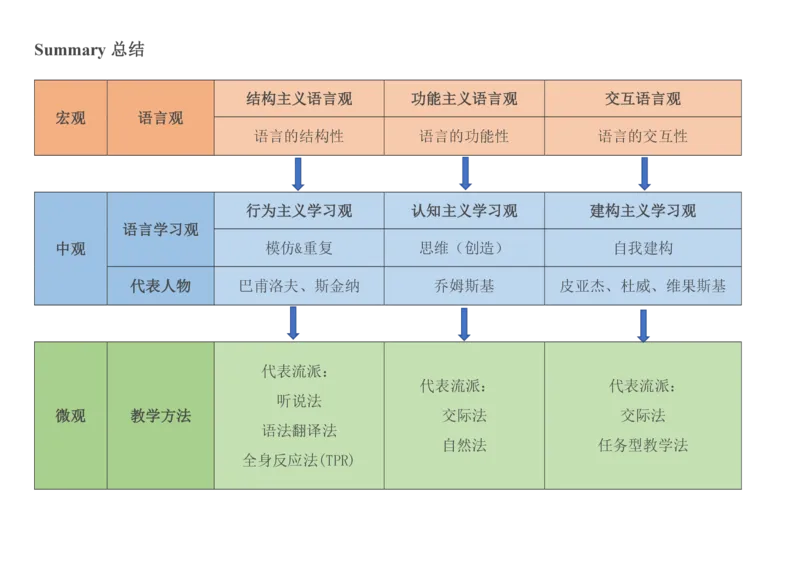
language in a social context Development(ZPD) and Scaffolding01章 英语教学基本理论Summary 总结
结构主义语言观 功能主义语言观 交互语言观
宏观 语言观
语言的结构性 语言的功能性 语言的交互性
行为主义学习观 认知主义学习观 建构主义学习观
语言学习观
中观 模仿&重复 思维(创造) 自我建构
代表人物 巴甫洛夫、斯金纳 乔姆斯基 皮亚杰、杜威、维果斯基
代表流派:
代表流派: 代表流派:
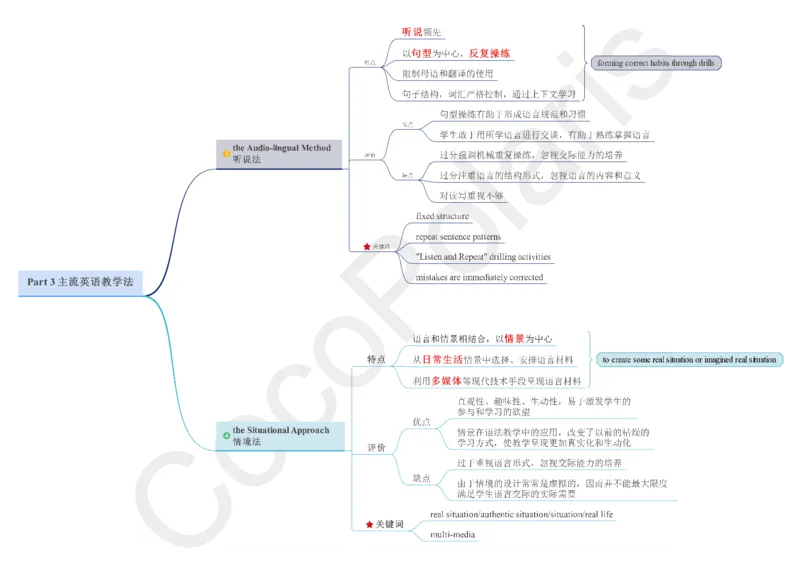
听说法
微观 教学方法 交际法 交际法
语法翻译法
自然法 任务型教学法
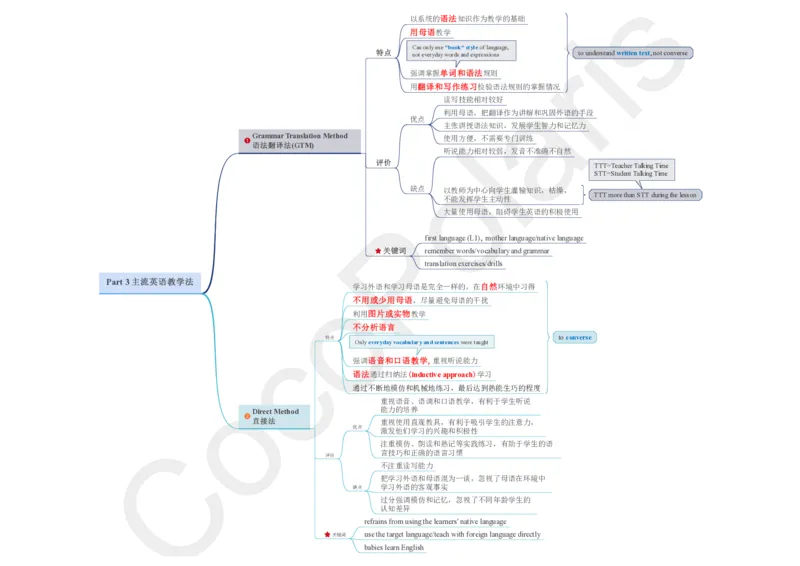
全身反应法(TPR)以系统的语法知识作为教学的基础
用母语教学
Can only use "book" style of language,
特点 not everyday words and expressions to understand written text, not converse
强调掌握单词和语法规则
用翻译和写作练习检验语法规则的掌握情况
读写技能相对较好
利用母语,把翻译作为讲解和巩固外语的手段
优点
主张讲授语法知识,发展学生智力和记忆力
Grammar Translation Method 使用方便,不需要专门训练
(GTM)
听说能力相对较弱,发音不准确不自然
评价
TTT=Teacher Talking Time
STT=Student Talking Time
缺点 以教师为中心向学生灌输知识,枯燥,
TTT more than STT during the lesson
不能发挥学生主动性
大量使用母语,阻碍学生英语的积极使用
first language (L1), mother language/native language
关键词 remember words/vocabulary and grammar
translation exercises/drills
Part 3
学习外语和学习母语是完全一样的,在自然环境中习得
不用或少用母语,尽量避免母语的干扰
利用图片或实物教学
不分析语言
特点 to converse
Only everyday vocabulary and sentences were taught
强调语音和口语教学,重视听说能力
语法通过归纳法(inductive approach)学习
通过不断地模仿和机械地练习,最后达到熟能生巧的程度
重视语音、语调和口语教学,有利于学生听说
Direct Method 能力的培养
重视使用直观教具,有利于吸引学生的注意力,
优点 激发他们学习的兴趣和积极性
注重模仿、朗读和熟记等实践练习,有助于学生的语
言技巧和正确的语言习惯
评价
不注重读写能力
把学习外语和母语混为一谈,忽视了母语在环境中
缺点 学习外语的客观事实
过分强调模仿和记忆,忽视了不同年龄学生的
认知差异
refrains from using the learners' native language
关键词 use the target language/teach with foreign language directly
babies learn English听说领先
forming correct habits through drills
Part 3
to create some real situation or imagined real situationlinguistic competence
pragmatic competence
强调学生恰当使用语言的能力
特点 to foster Ss' overall communicative competence
教学过程交际化 discourse competence
strategic competence
重视培养学生的交际能力
Communicative Approach 重视学生的实际需要
优点
评价 培养学生在一定的社会环境中恰当地使用外
语进行交际的能力
没有处理好语法知识的教学问题,强调语法教
缺点
学只学使用、不学用法,实际上是行不通的
using language appropriately
关键词
linguistic, pragmatic, discourse
Functions
how to use language in real life e.g. ask a price
Functional Approach /Notional Approach
/Functional-notional Approach - Notions
abstract concepts e.g.ownership
主张听说读写齐头并进,全面发展
特点 强调理解学习 Ss are seen as active paraticipants in the learning process
Part 3 正确对待,分析学生的错误,反对见错就改
强调以学生为中心,培养学生的创造性思维,有利于
加强对学生总体的素质教育
优点
Cognitive Approach 强调有意义的学习和有意义的训练
评价 有利于调动学生的积极性
认知法强调语言练习必须是有意义的,否定机械操
作,但实际教学中并不可行,特别在初学阶段
缺点
未强调培养学生的交际能力
all-round development
关键词
tolerate the mistake
以“听-做动作”的形式教学
特点 Listen and Act
以“祈使句”为主
将语言与动作结合,课堂生动有趣,激发学生积极性
主张以句子为教学单位,整句学,整句用,重视语言
优点
内容和意义,有利于培养学生实际运用语言进行交际
的能力
Total Physical Response 评价
只适用于语言学习初级阶段。其动作和言语大都很简单
(TPR)
方法中包含了大量的游戏活动和角色表演等,如果没
缺点
有好的课堂教学管理模式,再好的教学方法、再丰富
的教学活动,也难以达到预期的效果
action or gesture
关键词 imperative sentences
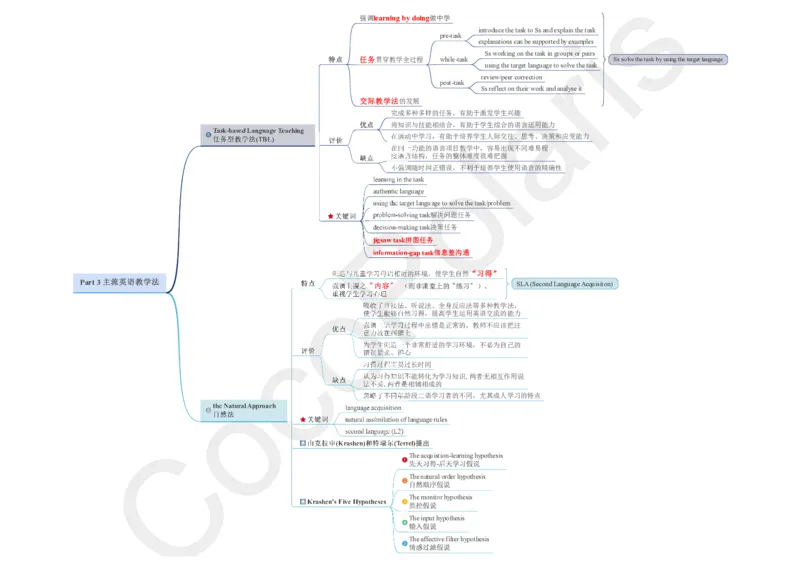
children learn English强调learning by doing做中学
introduce the task to Ss and explain the task
pre-task
explanations can be supported by examples
Ss working on the task in groups or pairs
特点 任务贯穿教学全过程 while-task Ss solve the task by using the target language
using the target language to solve the task
review/peer correction
post-task
Ss reflect on their work and analyse it
交际教学法的发展
完成多种多样的任务,有助于激发学生兴趣
优点 将知识与技能相结合,有助于学生综合的语言运用能力
Task-based Language Teaching
在活动中学习,有助于培养学生人际交往、思考、决策和应变能力
在同一功能的语言项目教学中,容易出现不同难易程
度语言结构,任务的整体难度很难把握
不强调随时纠正错误,不利于培养学生使用语言的精确性
learning in the task
authentic language
using the target language to solve the task/problem
problem-solving task解决问题任务
decision-making task决策任务
拼图任务
information-gap task信息差沟通
创造与儿童学习母语相近的环境,使学生自然“习得”
Part 3 (而非课堂上的〝练习〞)、 SLA (Second Language Acquisiton)
吸收了直接法、听说法、全身反应法等多种教学法,
使学生能够自然习得,提高学生运用英语交流的能力
强调二语学习过程中出错是正常的,教师不应该把注
意力放在纠错上
为学生创造一个非常舒适的学习环境,不必为自己的
错误紧张、担心
习得过程需要过长时间
认为习得知识不能转化为学习知识,两者无相互作用说
法不妥,两者是相辅相成的
忽略了不同年龄段二语学习者的不同,尤其成人学习的特点
natural assimilation of language rules
(Terrel)提出
The acquistion-learning hypothesis
-
The natural order hypothesis
The monitor hypothesis
The input hypothesis
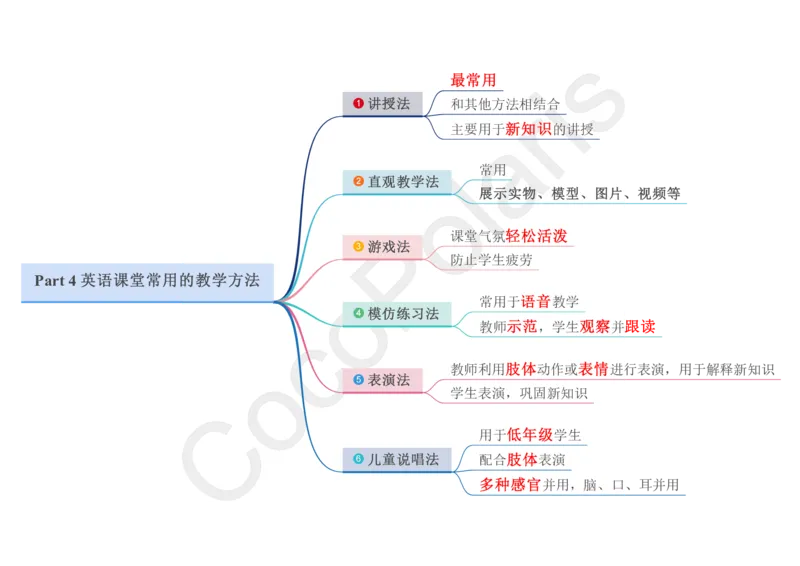
The affective filter hypothesis最常用
讲授法 和其他方法相结合
主要用于新知识的讲授
常用
直观教学法
展示实物、模型、图片、视频等
课堂气氛轻松活泼
游戏法
防止学生疲劳
Part 4
常用于语音教学
模仿练习法
教师示范,学生观察并跟读
教师利用肢体动作或表情进行表演,用于解释新知识
表演法
学生表演,巩固新知识
用于低年级学生
儿童说唱法 配合肢体表演
多种感官并用,脑、口、耳并用pronunciation
语音
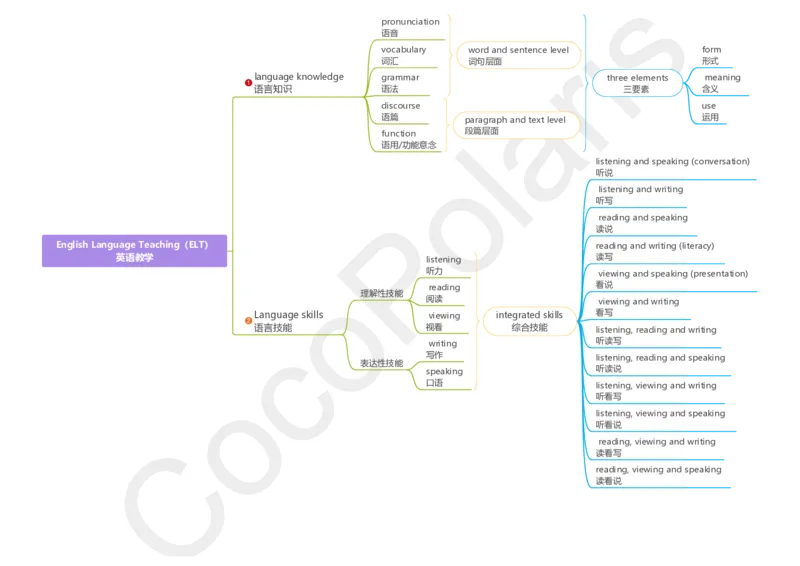
vocabulary word and sentence level form
词汇 词句层面 形式
language knowledge grammar three elements meaning
语言知识 语法 三要素 含义
discourse use
语篇 paragraph and text level 运用
function 段篇层面
语用/功能意念
listening and speaking (conversation)
听说
listening and writing
听写
reading and speaking
读说
English Language Teaching(ELT) reading and writing (literacy)
英语教学 listening 读写
听力 viewing and speaking (presentation)
reading 看说
理解性技能
阅读 viewing and writing
Language skills viewing integrated skills 看写
语言技能 视看 综合技能 listening, reading and writing
writing 听读写
写作 listening, reading and speaking
表达性技能
speaking 听读说
口语 listening, viewing and writing
听看写
listening, viewing and speaking
听看说
reading, viewing and writing
读看写
reading, viewing and speaking
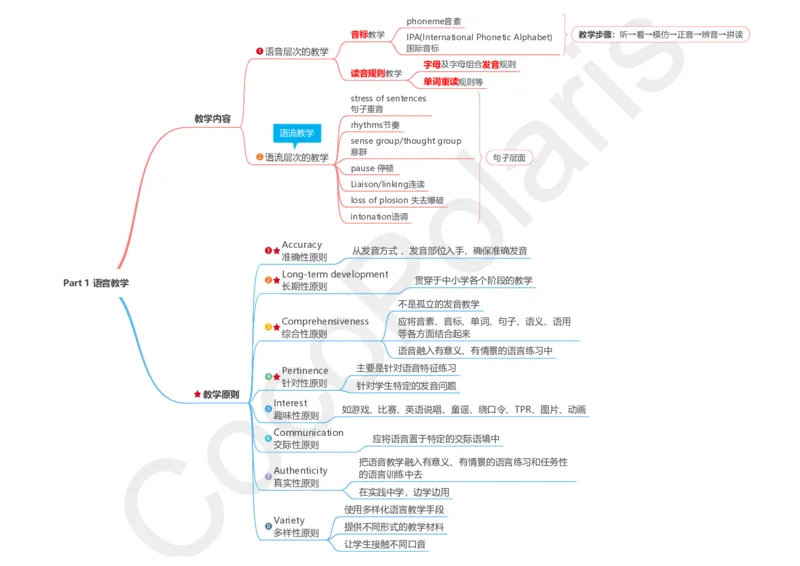
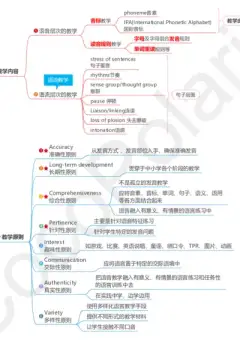
读看说phoneme音素
音标教学 IPA(International Phonetic Alphabet) 教学步骤:听→看→模仿→正音→辨音→拼读
国际音标
语音层次的教学
字母及字母组合发音规则
读音规则教学
单词重读规则等
stress of sentences
句子重音
rhythms节奏
语流教学
sense group/thought group
意群
语流层次的教学 句子层面
pause 停顿
Liaison/linking连读
loss of plosion 失去爆破
intonation语调
Accuracy
从发音方式 、发音部位入手,确保准确发音
准确性原则
Long-term development
Part 1 语音教学 贯穿于中小学各个阶段的教学
长期性原则
不是孤立的发音教学
Comprehensiveness 应将音素、音标、单词、句子、语义、语用
综合性原则 等各方面结合起来
语音融入有意义、有情景的语言练习中
Pertinence 主要是针对语音特征练习
针对性原则
针对学生特定的发音问题
Interest
如游戏、比赛、英语说唱、童谣、绕口令、TPR、图片、动画
趣味性原则
Communication
应将语音置于特定的交际语境中
交际性原则
把语音教学融入有意义、有情景的语言练习和任务性
Authenticity
的语言训练中去
真实性原则
在实践中学,边学边用
使用多样化语言教学手段
Variety
提供不同形式的教学材料
多样性原则
让学生接触不同口音培养学生能够辨认和区分不同语音的能力
Part 1 语音教学
I thought a thought. But the thought I thought wasn't the thought I
Betty beat a bit of butter to make a better butter.字面意义/词典中的定义和释义
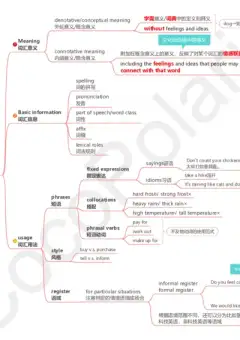
denotative/conceptual meaning
dog→狗(a common animal with four legs, fur, and a tail)
外延意义/概念意义 without feelings and ideas
Meaning 文化和语境中的意义
词汇意义
connotative meaning
附加在概念意义上的意义,反映了对某个词汇的情感联系 dog→loyalty忠诚
内涵意义/隐含意义
including the feelings and ideas that people may
connect with that word
spelling
词的拼写
pronunciation
发音
Basic information part of speech/word class
词汇信息 词性
affix
词缀
lexical rules
词法规则
Don't count your chickens before they're hatched.别
sayings谚语 有文化传承气息
太早打如意算盘。
Part 2 词汇教学 教学内容 fixed expressions
固定表达 take a hike滚开
idioms习语 有地域文化限制
It's raining like cats and dogs.倾盆大雨
hard frost√ strong frost×
phrases
collocations
短语 heavy rain√ thick rain×
搭配
high temperature√ tall temperature×
pay for
phrasal verbs
work out 不及物动词的使用范式
短语动词
usage
make up for
词汇用法
style buy v.s. purchase
风格 tell v.s. inform
friends/family
informal register Do you feel coming over tonight?
register for particular situations formal register business
语域 注意特定的情境语境或场合
We would like to invite you to our party this evening.
根据语境范围不同,还可以分为比如医学英语,法律英语,
科技英语,非科技英语等语域strategies
Part 2 词汇教学 教学内容
学习策略
metacognitive strategies
对整个词汇学习进行计划、实施、反思、评价和调整
元认知策略
词典
课外阅读
帮助学生增加词汇量的技巧和方法
影像视频
老师高频词
词汇选择原则
能够运用到课堂活动中
系统性原则 展示词汇之间的系统性、联系性
文化性原则 引导学生了解词汇的文化意义
教学原则
直观性
presentation呈现
PPT practice练习
教学模式
test测试
TBLT模式 task-based language teachingnation→national
morphology
play→played
词法
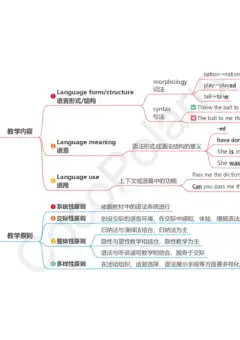
Language form/structure
tall→taller
语言形式/结构
syntax Throw the ball to me.
句法 The ball to me throw.
-ed
教学内容
have done
Language meaning
语法形式或语法结构的意义
语意 She is in the kitchen.
Where is she?
She was in the kitchen.
Part 3 语法教学
Language use Pass me the dictionary. 命令,咄咄逼人
上下文或语篇中的功能
语用
Can you pass me the dictionary? 委婉,客气地请求,协商
系统性原则 依据教材中的语法系统进行
交际性原则 创设交际的语言环境,在交际中感知、体验、理解语法规则
归纳法与演绎法结合,归纳法为主
教学原则
整体性原则 隐性与显性教学相结合,隐性教学为主
语法与听说读写教学相结合,服务于交际
多样性原则 在活动组织、话题选择、语法展示手段等方面要多样化教师直接讲语法规则,然后举例子帮
from examples to rules
Part 3 语法教学 carefully selected examples
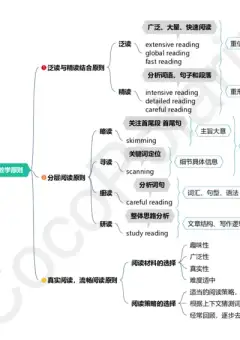
目标→语法形式的正确性广泛、大量、快速阅读
泛读 extensive reading 重信息,轻形式
global reading
fast reading
泛读与精读结合原则 内容与形式相统一
分析词语、句子和段落
精读 intensive reading 重形式,重手段
detailed reading
careful reading
关注首尾段 首尾句
略读 主旨大意
skimming
泛读
关键词定位
寻读 细节具体信息
Part 5 阅读教学 阅读教学原则 scanning
分层阅读原则
分析词句
细读 词汇、句型、语法
careful reading
精读
整体思路分析
研读 文章结构、写作逻辑、写作手法意图
study reading
趣味性
广泛性
阅读材料的选择
真实性
真实阅读,流畅阅读原则 难度适中
适当的阅读策略,使用跳读和览读的阅读技能
阅读策略的选择 根据上下文猜测词义
经常回顾,逐步去增加阅读难度预测、分享背景知识
Top-down Model
整体→部分,重视背景知识和文化
自上而下的模式
标题title、首句→预测主题topic
学习生词、短语和句型
Bottom-up Model
部分→整体,重视词汇教学
自下而上的模式
阅读教学模式 词→句→文章
预测、分享背景知
识 学习生词、短
Interactive Model 既强调背景知识,上下文预测,又不
语和句型
交互式模式 忽视单词和短语的教授
①②模式结合
arouse Ss' interest
目的 motivate Ss to read
Pre-reading prepare Ss for the content of the text
准备/导入阶段
读前阶段 讲解生词
主要教学活动 分享背景知识
预测文章内容
Part 5 阅读教学 help Ss understand the content and
目的 structure of the text 理解文本,训练阅读技能
and the author's purpose in writing it
skimming
文章主旨大意
略读
While-reading
scanning 核心环节
读中阶段 具体细节信息
阅读教学过程 寻读
主要教学活动
careful
词义长难句分析
reading细读
study reading 文章结构、观点态度、推理性问题
研读 或深层寓意
consolidate or reflect on what has been
read in the text
目的 阅读后练习巩固
relate the text to the Ss'own
knowledge, interest or views
Post-reading
总结收尾
读后阶段 复述大意
讨论辩论
主要教学活动
仿写
角色扮演目的 reading for gist/the main idea
read the first and last paragraph/sentences quickly
reading for specific information focus on a few
use key words to locate/scan the answers
Part 5 阅读教学
attitude/intention/opinion/following content
infer the meaning of words from the context
the author's writing logic, background, cultural information
What is the author's attitude/feeling towards...
How do you know that?/How does the data
word-learning strategy/enlarge vocabularies
context/affix/synonym and antonym趣味性 贴近学生的生活
广泛性 口音多样性
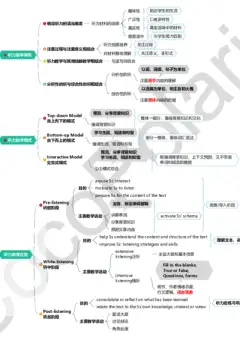
确定听力的适当难度 听力材料的选择
真实性 真实语境中的材料
难度适中 与学生能力匹配
听力技能培养 关注过程
注重过程与注重意义相结合
对材料整体理解 关注意义,非形式
听力教学与其他技能教学相结合 与读写说结合
以词、词组、句子为单位
分析性的听
注重细节内容的理解
分析性的听与综合性的听相结合
以语篇为单位,听主旨和大概
综合性的听
注重整体内容的把握
预测、分享背景知识
Top-down Model
整体→部分,重视背景知识和文化
自上而下的模式
强调背景知识
学习生词、短语和句型
Bottom-up Model
部分→整体,重视词汇语法
自下而上的模式
强调生词、短语和句型
预测、分享背景知识
Interactive Model 学习生词、短语和句型 既强调背景知识,上下文预测,又不忽视
交互式模式 单词和短语的教授
Part 6 听力教学 ①②模式结合
arouse Ss' interest
目的 motivate Ss to listen
prepare Ss for the content of the text
Pre-listening 发音,新旧单词都有 准备/导入阶段
听前阶段
主要教学活动 讲解单词 activate Ss' schema
分享背景知识
预测文章内容
help Ss understand the content and structure of the text
目的 理解文本,训练听力技能
improve Ss' listening strategies and skills
extensive
主旨大意和基本信息
listening泛听
While-listening
Fill in the blanks, 核心环节
听中阶段
主要教学活动 True or false,
intensive Questions, forms
listening精听
细节,作者情绪态度、
行文逻辑、语音现象
consolidate or reflect on what has been learned
目的 听力后练习巩固
relate the text to the Ss'own knowledge, interest or views
Post-listening
复述大意 总结收尾
听后阶段
主要教学活动 讨论辩论
角色扮演select the appropriate topic
Listening for gist
create a synopsis for the listening material
大意理解能力
match the topic
fill in the diagram/blanks
true or false(T/F)
answer the specific questions
Listening for specific/detailed information re-order sentences/pictures
细节理解能力 matching
听前预测
dictation 听中速记 听写的三个基本步骤
听后检查
ask questions about words and phrases
word-guessing
word substitution
词义猜测能力
context/synonym and antonym
Part 6 听力教学 常用听力技能
deduce attitude/intention of the speaker
inferring and predicting
predict what the materials is going to say next
推理判断和预测能力
judge the relationship of the speakers
spot dictation/compound dictation
note-taking
记笔记的能力 fill in the diagram/table
identify the different phonemes
discrimination mark stress, rhythm, sense group etc.
辨音能力 imitate
repeat
listen and circle the information
listen and choose the appropriate information
recognizing communicating signals
listen and match the explanations with the
交际信息辨别能力
information
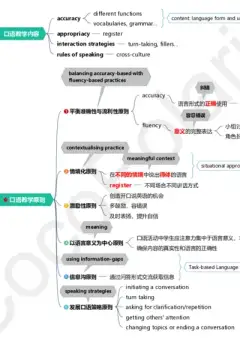
listen and discussdifferent functions
accuracy content: language form and use
vocabularies, grammar...
口语教学内容 appropriacy register
interaction strategies turn-taking, fillers...
rules of speaking cross-culture
balancing accuracy-based with
fluency-based practices
纠错
accuracy 模仿性口语
语言形式的正确使用 识别录音中的语音
平衡准确性与流利性原则
容忍错误
fluency 小组讨论 交际性口语
意义的完整表达
角色扮演
contextualising practice
meaningful context
situational approach
Part 7 口语教学 情境化原则
在不同的情境中说出得体的语言
register 不同场合不同讲话方式
创造开口说英语的机会
口语教学原则
激励性原则 多鼓励,容错误
及时表扬,提升自信
meaning
口语活动中学生应注意力集中于语言意义,非形式
以语言意义为中心原则
确保内容的真实性和语言的正确性
using information-gaps
Task-based Language Teaching
信息沟原则 通过问答形式交流获取信息
initiating a conversation
speaking strategies
turn taking
发展口语策略原则 asking for clarification/repetition
getting others' attention
changing topics or ending a conversationPresentation
讲解口语活动中的词汇、句子等 focus on accuracy
呈现
Practice 复述
设计一些控制性练习 focus on accuracy
练习 分角色朗读/朗读
PPP
角色讨论
辩论讨论
Production运用 focus on fluency
口语教学模式 问题解决
角色扮演
Pre-task
任务前
While-task
PWP Task-based Language Teaching
任务中
Post-task
任务后
听说结合,以听带说
两人对话、小组讨论、角色扮演、配音等
Part 7 口语教学 积极回应对方 yeah, wow, good
back-channelling
适当借用补白词 emm, well, you know fillers
借助形体语言
paraphrase
迂回策略
synonym/antonym
主动回避 担心对方听不懂而使用简单的词或简单句的策略
回避策略
被动回避 避免错误或误解,使用简单词或句子
求助策略 自己想说的词不会时,请对方帮助
常规程序套话 Hello/bye/how are you
controlled/mechanical activities 结构化活动 阅读、背诵、模仿、重复
focus on form and accuracy
类交际活动 编对话、分角色阅读、复述
通过提问识别不同的图片
semi-controlled/semi-mechanical activities focus on more on meaning and
通过提问发现图片或故事的顺序
半控制性或半机械性活动 communication
根据火车时刻表提出最佳路线
open/creative activities
模拟真实情景进行角色扮演、辩论、问卷访谈 focus on fluency
开放性或创造性活动命题作文
看图写作
focus on format/sentence structure
模仿性写作 有范文,可套用 议论文 formal
wording is precise, accurate
模仿性与应用性 说明文
相结合原则 记叙文
日记/书信/邮件
无很多范文,实用, sentences are short and simple
应用性写作 课堂笔记 informal
教学原则 新颖、综合 incomplete sentence
通知/留言/请假条
重过程与重结果 重过程 写作态度,写作方法
相结合原则 重结果 写作作品,写作成绩
Part 8 写作教学 写作与听说、阅读 听说 写前讨论、思路构思
有机结合原则 阅读 通过阅读获取信息,分析文章写作结构
学习性写作与交际性写作 学习性写作 学习写作方法和技能的写作
相结合原则 交际性写作 真实交流,表达思想和情感写作
强调控制性练习:语法结构的准确性
Product-oriented Approach
采取模仿写作的方式, 重结果的准确性
重结果的写作教学模式
突出文本形式的准确性
教学模式 Process-oriented Approach 内容与过程并重 写作思路、构思,
重过程的写作教学模式 写前准备→打草稿→同伴互改(peer-editing)→修改 过程很重要
Content-oriented Approach 看重写前准备
内容充实,丰富
重内容的写作教学模式
写作素材的搜集Creating a motivation to write topic should be familiar, meaningful and
think freely and put down all possible ideas
care about grammar or spelling
10-15 mins
the most important points of the essay
Part 8 写作教学 more important
内容、语言、篇章进行查错修改
adding new point or deleting irrelevant facts
老师给予一定的指导
correcting spelling, punctuation, grammar or
Check grammar, spelling, punctuation, or capitalization
encourage Ss to do independent proofreading
between the teacher and individual
focusing on the main problemsControlled writing 培养学生写作的规范性
控制性写作
Guided writing
练习形式
指导性写作
Expressive writing
交流性写作
cohesion
衔接
Part 8 写作教学
coherence
连贯
重组句子
短文填空
知识拓展 连贯性训练
添加代词/转折词
cohesive devices 重复关键字/句型
衔接手段 because of/for this reason cause transitions
effect transitions
comparison transitions
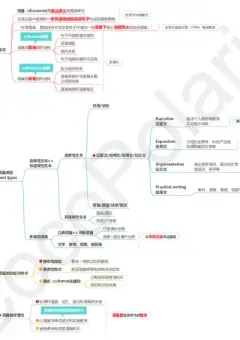
contrast transitions语篇(discourse)是表达意义的语言单位
语言学中的概念
交流过程中使用的一系列连续的语段或句子构成的语言整体
“所谓语篇,是指任何不完全受句子约束的一定语境下表示完整意义的自然语言。” 语言学家胡壮麟(1994)教授解读
cohesion衔接 句子内部的语法结构
词语搭配
语篇的微观组织结构
概念 指代关系
句子信息的展开方式等
新课标
coherence连贯 段与段的关系
语篇各部分与语篇主题
语篇的宏观组织结构
之间的关系
语篇类型和语篇格式
对话/访谈
开头-背景情况
Narration 描述个人经历的故事、
语篇结构 中间-事件过程
记叙文 日记或小说等
结尾-结局或评价
开头-总体情况
Exposition 介绍历史事件、科技产品或
语篇结构 中间-具体特点
说明文 地理现象的文章等
结尾-强调要点
连续性文本 记叙文/说明文/应用文/议论文
连续性文本v.s 开头-主要观点
非连续性文本 Argumentation 表达某种观点、看法的文章 语篇结构 中间-理由或例子
Part 4 语篇教学 议论文 或演讲、影评等
语篇类型
结尾-观点或立场
text types
开头-事物名称
Practical writing
邮件、便条、海报、说明书等 语篇结构 中间-目的和内容
应用文
结尾-细节提醒
歌曲/歌谣/诗歌/韵文
图表/图示
非连续性文本
网页/广告等
口语课中出现
口语语篇v.s.书面语篇
多模态语篇 阅读+语法课中出现 以不同文体形式呈现
文字、音频、视频、数码等
整体性效能 整体>局部之和的原则
预测性特点 英语语言逻辑性的特点决定的
语篇的功能与特点
已有的经验背景知识
图式(scheme)化建构
新旧知识的关联
处理好语音、词汇、语法和语篇的关系
语言教学应围绕语篇来进行
语篇教学理念 语篇是语言学习的载体
以语篇为单位设计和实施教学
避免单纯地讲授语篇知识Reading
高中重点
Writing
PWP
Listening
1. 教学内容 初中重点
Speaking
Grammar
PPP
Vocabulary
普高2003版,义教2011版
language ability goals
语言能力
以学生为主体
04 教学设计 cultural awareness goals 知识与技能 Knowledge aim
文化意识
2. 教学目标 三维教学目标 过程与方法 Ability aim
thinking capacity goals
思维品质 情感、态度与价值观 Emotional aim
learning ability goals
学习能力
以教师为主体
Key teaching points
知识目标 深入浅出、引导学生思考、讨论
教学重点
3. 教学重难点
Potential difficulties
能力目标 善于引导、善于联系和联想
教学难点Warming upOpen questions 多个答案
开放性问题 v.s. 封闭性问题 答案数量
Closed questions 一个答案
What is this word?
Display questions 答案源于材料
课堂提问的类型 (brother) (sister)
展示性问题 v.s. 参考性问题 真实性问题 老师是否预设了答案
How old is your brother? 答案源于个人
Referential questions
What does he do?
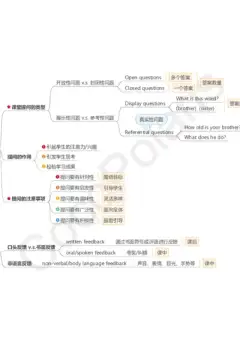
引起学生的注意力/兴趣
引发学生思考
检验学习成果
05章 教学实施
提问要有针对性 围绕目标
提问要有启发性 引导学生
提问要有趣味性 灵活多样
提问要有广泛性 面向全体
提问要有积极性 鼓励引导
written feedback 通过书面符号或评语进行反馈 课后
课堂反馈 oral/spoken feedback 夸奖/纠错 课中
非语言反馈 non-verbal/body language feedback 声音、表情、目光、手势等 课中直接纠错 Explicit/direct correction
不指出错
让学生意识到错误
T: Good. You mean you went to the park yesterday, right?
05章 教学实施
错误进行技术上的分析或描述
T: Good, but remember you are talking about Past event.
S: Oh, I saw a film last night.小组讨论主要实施者
教师评价 主导作用
评价的指导者
家长评价 家校共育
评价主体 多元化
同学互评 互相学习
自我反思
学生自评 自我激励
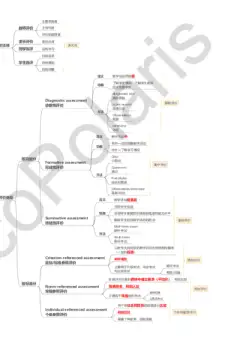
自我调整
定义 教学活动开始前
了解学生情况,了解学生差异,
功能
适当安置学生
diagnostic test
摸底测验
Diagnostic assessment
诊断性评价 score record 事前评价
成绩记录
方法
Observation
观察
interview
访谈
定义 教学活动中
老师—及时调整教学活动
功能
学生—了解学习情况
Quiz
按功能分
Formative assessment 小测试
事中评价
形成性评价 Questions
05章 教学评价与反思 教学评价 提问
方法
Portofolio
成长档案袋
Observation/interview
观察/访谈
评价类型
定义 教学活动结束后
评定学生成绩
功能 证明学生掌握知识技能的程度和能力水平
Summative assessment
确定学生后续教学活动的起点 事后评价
终结性评价
Mid-term exam
期中考试
方法
final exam
期末考试
以教学大纲规定的教学目标为依据制定基准
(一定的标准)
Criterion-referenced assessment 和标准比 绝对评价
目标/标准参照评价
主要用于升级考试、毕业考试 期末考试
和合格考试 雅思/托福
在被评价对象的群体中建立基准(平均分),相互比较
按标准分
Norm-referenced assessment 强调排名,和别人比
相对评价
常模参照评价
教师招聘
主要用于选拔类的考试
公务员考试
将个体过去和现在的成绩进行比较
Individual-referenced assessment
和自己比 个体内差异评价
个体参照评价
尊重个体差异,因材施教Placement Test 为分班而进行的测试,让学生有更适合自己的学习起点
分班测试 入学测试
Achievement Test 考试内容即所学内容,检测某一期间学习的情况
成绩测试 期中考试/期末考试
Proficiency Test
雅思/托福/CET
水平测试
Aptitude Test 旨在衡量受试者今后学习时是否有较强的学习能力
预测性测试
潜能测试 SAT/GRE
Diagnostic Test 诊断和分析学生在学习过程中存在的问题
语言测试 诊断测试 教学过程中的单元测试
Exit Test 仪式性的考试
结业测试 多数较注重形式
Subjective Test
答案不唯一,主观题
主观性测试
Objective Test
唯一答案,选择、判断正误
客观性测试
Norm-referenced Test
常模参照性测试
Criterion-referenced Test
标准参照性测试
05章 教学评价与反思 重难点是否准确
内容的深度和范围对学生是否适度
内容的呈现是否符合学生的年龄和心理特征
设计的具体活动是否有助于达到教学目标
积极主动地对自己教学活动中具有反思和研究价值的经验进
行持续而真实的记录
定义
在此基础上对其进行批判的理解和认识
从而不断更新观念,增长技能,促进自身专业发展
为有针对性改进教学积累了良好的素材
作用 不断提高自己的课堂陈述水平
Teaching Journal
形成教师个人教学风格
教学反思
亲历性 自己亲身经历的
叙事性 记叙一个教学事件从发生、发展到对结果反思的整个过程
注意事项 启示性 内容具有启示性,注意教学事件承载的思想
典型性 选择有价值的记录
及时性 课后立即写
通过教育主体的故事叙说 可以是真实故事也可以是虚构故事
Narrative Research
来描绘教育行为、进行意义建构
并使教育活动获得解释性意义理解的一种研究方法
针对实际问题提出改进计划
Action Research
行动研究 通过在实践中实施、验证、修正
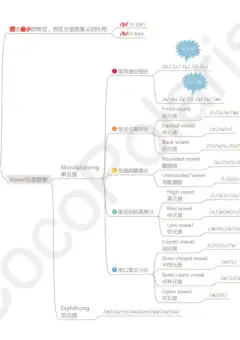
进而得到研究结果的一种研究方法/p/ in pan
音的最小的单位,有区分语言意义的作用
/b/in ban
长元音
/ɑ:/ /ɔ:/ /ɜ:/ /i:/ /u:/
按发音长短分
短元音
/ʌ/ /ɒ/ /(cid:1317)/ /ɪ/ /ʊ/ /e/ /æ/
Front vowel
/i://ɪ//e//æ/
前元音
Central vowel
按舌位高低分 /ɜ://(cid:1317)//ʌ/
中元音
Back vowel
/ɔ://ɒ//u://ʊ//ɑ:/
后元音
Rounded vowel
/u://ʊ//ɔ://ɒ/
06 语音 Phoneme Monophthong 圆唇音
按唇的圆展分
音素 单元音 Unrounded vowel
Vowel元音音素 /i://ɪ//ɜ://(cid:1317)//e//æ//ʌ//ɑ:/ 20个
非圆唇音
High vowel
/i://ɪ//u://ʊ/
高元音
Mid vowel
按舌抬起高度分 /ɜ://(cid:1317)//e//ɔ:/
中元音
Low vowel
/æ//ɑ://ɒ//ʌ/
低元音
Closed vowel
/i://ɪ//u://ʊ/
闭元音
Semi-closed vowel
/e//ɜ:/
半闭元音
按口型大小分 半开半合
Semi-open vowel
/(cid:1317)//ɔ://ɒ//ʌ/
半开元音
Open vowel
/æ//ɑ:/
开元音
Diphthong
/eɪ//aɪ//ͻɪ//(cid:1317)ʊ//aʊ//e(cid:1317)//ɪ(cid:1317)//ʊ(cid:1317)/
双元音Voiceless
s/ /ʃ/ /tʃ/
ʒ//dʒ/
/p//b//t//d//k//g/
ð//s//z//ʃ//ʒ/
06 语音 24个IPA-International Phonetic Alphabet
bed,seat,beaut
06 语音 两个辅音之间不管有多少个元音,单音节 全部重读
通常在第一个音节 多数双音节的名词和形容词
含a-/be-/de-/re-/in-/im-/en-/
a'bout, be'fore, de'feat, re'ceive, in'form, im'press, en'force
em-/es-/ex-/con-/com-/dis-/
mis-/pre-/per-/pro-/un-/trans- em'ploy, es'cape, ex'plain, com'pare, dis'cuss
双音节重读 前缀,多半动词,通常第二个音
mis'take, pre'pare, per'mit, pro'duce, trans'late
节重读
record n. /ˈrek.ɔːd/ v./rɪˈkɔːd/
名词动词重读不一样,名前动后
present n. /ˈprez.(cid:1317)nt/ v./prɪˈzent/
单词重读
-ic,-ison和-tion结尾的单词, graph‧ic /ˈɡræfɪk/, sys‧te‧mat‧ic /ˌsɪst(cid:1317)ˈmætɪk/
倒数第二个音节重读 ex‧ten‧sion /ɪkˈstenʃ(cid:1317)n/, ed‧u‧ca‧tion /ˌedjʊˈkeɪʃ(cid:1317)n/
Stress
重读 de‧moc‧ra‧cy /dɪˈmɒkr(cid:1317)si/, un‧cer‧tain‧ty /ʌnˈsɜːtnti/
-cy, -ty, -phy, -gy 和 -al结尾的单词,
ge‧og‧ra‧phy /dʒiˈɒɡr(cid:1317)fi/, ge‧ol‧o‧gy /dʒiˈɒl(cid:1317)dʒi/
多音节重读 重读倒数第三个音节
ex‧cep‧tion‧al /ɪkˈsepʃ(cid:1317)n(cid:1317)l/,crit‧i‧cal /ˈkrɪtɪk(cid:1317)l/
复合名词,重读第一部分 BLACKbird, GREENhouse, ICE-cream
复合词 bad-TEMpered, old-FASHioned
复合形容词和动词,重读第二部分
underSTAND, overFLOW, overCHARGE
实词重读 名、动、形、副、数、代等
仅为一般情况
虚词弱读 冠、连、介、感叹词等
句子重读
Logical stress 不受语法限制,为了突出强调说话者想表达的意思而进行的重读
逻辑重读 I don’t think she will listen to him.
06 语音 语音现象 前一个词辅音结尾
辅音+元音 put~it~up/it~is
后一个词元音开头
前一个词-r/-re结尾
r/re+元音 look for~it/there~is
后一个词元音开头
前一个词辅音结尾
同一意群内 辅音+半元音 thank~you/meet~you
后一个词半元音开头(/j/)
前一个词辅音结尾
Liaison/linking 辅音+h(不发音) 后一个词以清辅音/h/开头 tell~(h)im/for~(h)im
连读 语速快时,/h/不发音,前一个单词辅音
直接和/h/后的元音连读
前一个词元音结尾
后一个词元音开头
元音+元音
/u/ 加/w/音 Just do~(w)it/go~(w)away
/u:,ɪ,i:/ 加/j/音 see~(j)us/hurry~(j)up
意群和意群之间即使符合 Is~it~a hat or a cat?
不可连读
上述规则也不可连读 There~is~a good book in my desk.
no(te)book
爆破音+爆破音 /p//b//t//d//k//g/ 两两组合时,前一个失去爆破 goo(d) morning
Plosive bi(g) boy
爆破 great changes
/p//b//t//d//k//g/ +
爆破音+摩擦音/破擦音 前面爆破音不完全爆破 good jobs
/f//v//θ//ð//s//z//ʃ//ʒ//tʃ//dʒ/
grandchildvoice assimilation bless you/blesjuː/→/bleʃjuː/
/t/在/p b m/前变成/p/ white piece
/d/在/p b m/前变成/b/ speed boat
/n/在/p b m/前变成/m/ London Bridge
/nd/在/p b m w/前变成/m/ sandwich handmade
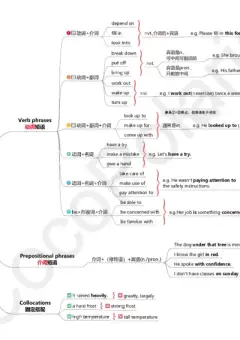
06 语音depend on
动词+介词 fill in =vt.,介词后+宾语 e.g. Please fill in this form.
look into
break down 宾语是n.,
e.g. She brought up four children.
可中间可副词后
put off =vt.
宾语是pron.,
e.g. His father brought him up.
bring up 只能放中间
work out
wake up =vi. e.g. I work out(=exercise) twice a week.
turn up
兼具①+②特点,但宾语在介词后
look up to
Verb phrases
make up for 通常是vt. e.g. He looked up to (=admire) his teacher.
come up with
have a try
make a mistake e.g. Let's have a try.
give a hand
07 词汇
take care of
e.g. He wasn't paying attention to
make use of
the safety instructions.
pay attention to
be able to
be concerned with e.g.Her job is something concerned with computers.
be familiar with
The dog under that tree is mine.
修饰名词
I know the girl in red.
介词+(修饰语)+宾语(n./pron.)
He spoke with confidence.
修饰动词
I don't have classes on sunday.
greatly, largely
strong frost
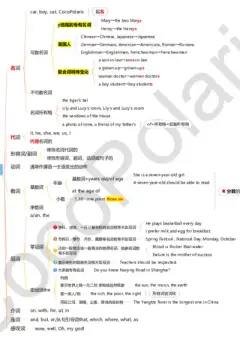
high temperature tall temperature给客观事物起名
① 名词
car/boy/CocoPolaris
代替名词的
② 代词
it, he, she, we, us, I
修饰名词/代词 注意:这里代词主要是不定代词
③ 形容词 a handsome man, a beautiful flower
something new/anybody interesting 形容词放不定复合代词后面
修饰形容词,副词,动词或句子
④ 副词 very beautiful, very fast, run fast
Actually, he is a good boy.
08 词法句法 词法 ⑤ 动词 通常做谓语,表示主语发出的动作。
⑥ 数词 1 2 3/第1 2 3
a/an不定冠词 泛指
⑦ 冠词
the定冠词 特指
表达两个词之间关系的
⑧ 介词
on, with, for, at, in
连接词或句子的
⑨ 连词 and, but, for 连接句子
that, which, where, what, as… 连接从句,从句引导词
表达惊讶、惊喜等
⑩ 感叹词
wow, oh, no, really…由名词或代词构成
句法 只有一套主谓结构()→定语 []→状语 {}→同位语
Ed's (beloved) pet, {a (big fat )cat (with ugly grin)},
scratched a (regular) customer [at Ed's bake shop]
[yesterday morning].
修饰名词/代词
① 定语
带修饰成分 前置定语/后置定语
简单句 只有一套主谓结构
修饰动词、形容词、副词或整个句子
② 状语
时间状语、地点状语、原因状语、结果状语等
代替名词/代词
③ 同位语
通常在主语、宾语或表语之后和前面的词
同等地位、同样作用
总结 句子主干 主谓宾补系表+定状同(化妆品/装饰品)
句法
从句不是句子,而是用一句话(子句)代替句子的某个
复合句=简单句+从句
主干
What he said surprised me.
① 主语从句
That her son lied to her made her angry.
I know (that) he is a teacher.
② 宾语从句
We discussed whether we should close the shop.
复合句 主从复合句
③ 补语从句 You can call me whatever you like.
④ 表语从句 The trouble is that we are short of money.
This is the house which we bought last month.
⑤ 定语从句
The old man has a son, who is in the army.
⑥ 状语从句 We were about to leave when he came in.
⑦ 同位语从句 He had to face the fact that he lost his job.七大并列连词[BOYFANS]→and but yet or nor so for
相互独立,同等重要。 单句既可以是简单句,也可以是复合句
并列句=2个或以上独立的单句+(从属从句)+连词
Tom read the novel, but his friend saw the movie. 简单句+连词+简单句
Carolyn's dad was a physics professor at the
例句
Massachusetts Institute of Technology but when
句法 并列句 简单句+连词+复合句
she started at nearby Harvard University she was
tempted to major in music.
长难句 不带修饰成分的简单句+修饰成分+从句+连词+单句(简单句or复合句)
先找连词,再在每个单句里找谓语动词→找修饰成分
总结
拆解长难句 Carolyn's dad/was /a physics professor /at the Massachusetts 意群断句法
Institute of Technology// but //when she started /at nearby
Harvard University /she was tempted /to major in music.插在句子中对原句起解释说明作用,但不做句子
主干,语法上可以完全删除,不影响句意
通常用(双)逗号,破折号或括号隔开
位置灵活
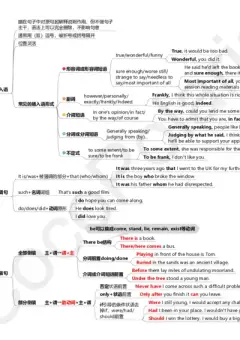
True, it would be too bad.
true/wonderful/funny
Wonderful, you did it.
He said he'd left the book on the desk,
形容词或形容词短语
sure enough/worse still/
and sure enough, there it was.
strange to say/needless to
Most important of all, you must read all pre-
say/most important of all
session reading materials before lecture.
插入语
however/personally/ Frankly, I think this whole situation is ridiculous.
副词
常见的插入语形式 exactly/frankly/Indeed His English is good, indeed.
In one's opinion/in fact/ By the way, could you lend me some money?
介词短语
by the way/of course You have to admit that you are, in fact, in difficulties.
Generally speaking, people like her as a leader.
Generally speaking/
分词或分词短语 Judging by what he said, I think it's very unlikely that
judging from (by)...
he'll be able to support your application.
to some extent/to be To some extent, she was responsible for the accident.
不定式
sure/to be frank To be frank, I don't like you.
It was three years ago that I went to the UK for my further study.
特殊结构
It is/was+被强调的部分+that (who/whom) It is the boy who broke the window.
It was his father whom he had disrespected.
强调句 such+名词词组 That's such a good film.
I do hope you can come along.
do/does/did+动词原形 He does look tired.
I did love you.
be可以换成come, stand, lie, remain, exist等动词
There is a book.
There be结构
There/here comes a bus.
全部倒装 主+谓→谓+主 Playing in front of the house is Tom.
分词前置doing/done
Buried in the sands was an ancient village.
Before them lay miles of undulating moorland.
倒装句 介词或介词短语前置
Under the tree stood a young man.
否定状语前置 Never have I come across such a difficult problem.
only+状语前置 Only after you finish it can you leave.
部分倒装 主+谓→助动词+主+谓 Were I still young, I would accept any challenge.
if引导的条件状语去
掉if,were/had/ Had I been in your place, I wouldn't have given it up so early.
should前置
Should I win the lottery, I would buy a big house.说话人认为不可能发生的情况
正常时态基础上,倒推一个时态
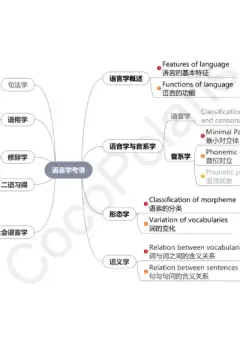
特殊结构Features of language
Classification of vowels
30集 语音
and consonants语音的分类
Minimal Pairs
最小对立体
Phonemic Contrast
Phonetic phonomena
30集 语音
Relation between vocabularies
Relation between sentencesLanguage in general
Language of particular languages
语言学概述
sounds in a particular language
of words and phrases
in a sentence
the study of how language is affected by the situation in
which it is used, of how language is used to get things or
how words can express things
that are different from what they appear to mean语言符号的形式≠其表示的意义
a system of arbitrary vocal symbols
语言学概述语音学中最小的单位(smallest unit),不区分语言意义
Phonology
音系学
complementary distribution
互补分布不能被进一步拆分,最小的语法单位/语义单位
构词上主要充当词根
Morphology
形态学
可以是前缀,也可是后缀
属性,不构成新词
ed
/smallest
词干≥词根incorrect
reasonable
IT=Information Technology
VOA=Voice of America
APEC=Asia-Pacific Economic Cooperation
IELTS=International English Language Testing System
smoke+fog→smog(雾霾、烟雾)
breakfast+lunch→brunch(早午餐)
Morphology Variation of vocabularies
phone→phone
形态学 词的变化
→math
adjective→a.
Road→Rd.
government→govt.
Xmas=Christmas
$=dollar
televise←television
假想的后缀(imagined affix)
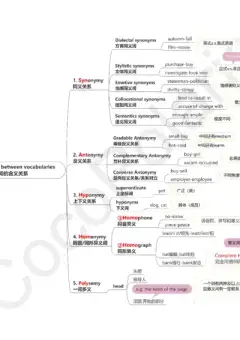
edit←editorautumn-fall
意义同,搭配不同
Semantics Relation between vocabularies
语义学 词与词之间的含义关系
不同角度看同一种关系
读音可能相同,也可能不同)
拼写同,意义不同X: The boy killed the dog.
若X真,则Y真;若X假,则Y假
Y: The dog was killed by the boy.
X: The boy killed the dog.
若X真,则Y假;若X假,则Y真
Y: The dog was killed by that man.
Semantics Relation between sentences X: He has been to France.
若X真,则Y真;若
=Y is an entailment of X
语义学 句与句间的含义关系 X假,则Y可真可假
Y: He has been to Europe.
X: The queen of England is old.
=Y is a prerequisite of X
Y: England has a queen.
My unmarried sister is married to a bachelor.说话本身的行为
“It's noisy outside". → Her boyfriend closed the window.
Pragmatics
语用学
满足交际所需要的信息量
要有关联,不能答非所问在词组或句子中,两个或以上靠近的词,单词开头有相同的
atal loins of these two foes
peppers.
;
单词词尾最后一个音不同
Rhetoric
修辞学
There came the click of high-heeled shoes.有明显的比喻词 like, as, seem, as if, similar to, look like...
五角大楼 (The Pentagon) = 美国国防部
working in his factory.
goes very well with your cap.
Rhetoric
修辞学通过词,短语或从句让句子保持平行,使句子有平衡感节奏感
在一个句子或一组句子中重复使用相同或相似的话语结构
Mary likes to hike, swim, and ride a bike.
Rhetoric
Syntactic Rhetoric
Easy come, easy go.
修辞学 句法修辞
将意义相反的词句进行对比的修辞手段
Marriage is easy, housekeeping is hard.
有意重复使用同一个词短语或句子,用以突出或强调
例子 The only thing we fear is fear itself.学习者在第二语言习得的某个阶段所说的语言 语言错误
英式英语
美式英语
澳式英语
印度英语
10 语言学