文档文本内容
Section I[ Translation
熟路效应
芍-、文章总体分析
本文节选自心理学研究网站www.spring.org. uk 2013年6月一篇题为The W ell-tra veiled Road
Effect: Why Familiar Routes Fly By(熟路效应:为何熟悉路线飞逝)的文章。 文中介绍了 “ 熟路效应 ”(人
们走熟路时往往会低估所需的时间)以及这种心理效应的成因。 由于文章话题为日常生活中的心理学,
通俗易懂,故理解并不是很困难,但翻译时应注意原文语义传达的完整性、多义词的词义选择,以及修辞
用法的翻译。
4 7
2015年全真试题J守f 二、语篇分析
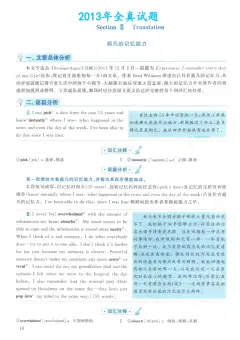
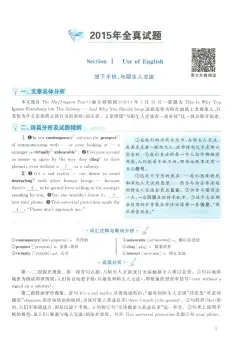
I OThink about driving a route( that’S very familiar. @It
试想开车走一条非常熟悉的路。
could be your commute to work, a trip into town or the way
可以是上下班、进城或是回家的路。 不
home. @Wl
管是哪条路,你对每一处曲曲弯弯都了
back of your hand. 。On these sorts of trips it’s easy to lose
如指掌。在这种路上,很容易不专注于
concentration on the driving and pay little attention to the
驾驶,很少注意沿途的景色。结采你就
passing scenery. 0 The consequence is that you perceive( that
觉得旅途所花的时间比实际的妥短。
the trip has taken less time than it actually has.
这就是熟路效应:人们走熟路时往
II This is the well-travelled( road effect: people tend to
往会低估所需的时间。
underestimate0 the time it takes to travel a familiar route.
/i.
: ·词汇注释与难旬分析. :二手
( route[ru:t] n. 路,道路(尤指公路) ~\ ·经典搭配
( perceive [pa1si:v J v. 发觉,感知 ? ( know ... like the back of o时’s hand (对……,-分热
③well-travelledα. 经常旅行的,去过很多地方的(指 (, 悉,了如指掌〉
人);频繁经过的 < ( twist and turn(迁回曲折)
( underestimate[Andar1est1mert] v. 低估 $
: ·语篇分析:-:: d
第一、二段采用“具体情形描述法”引出心理学概念“熟路效应”。
第一段介绍一种生活常情:轻车熟路会感觉途中所花时间比实际短。
首句以 Think about 带读者进入虚设场景:开车走一条非常熟悉的路(a route that's very familiar)。
②③句补充说明你对这条路的熟悉程度。 两句间以 Whichever it is (无论哪种情形,无论哪条路)形成
“列举一概括”逻辑;两句中 it 均指代首句 a route;your commute to work、a trip into town、the way home
以及 know every twist and turn like the back of your hand则呼应首句 very familiar,凸显你对这条路的
熟悉程度。④句进一步指出,在这种熟悉的路上,你所费精力甚少。句中 these sorts of trips 回指前文
所述“熟悉的路”;近义表达 lose concentration on 和 pay little attention to 则说明开车走这种熟路“所费
精力甚少”的情形;it’s easy to 则强调这是惯常情形。 ⑤句紧承④句指出结果:你会觉得旅途所花的时
间比实际要短。 其中 you perceive 和 it actually has 形成“个人感觉 vs 实际情形”的对比, taken less
time说明对比结果·个人感觉花时间比实际短。
第二段由上段具体情形正式引出“熟路效应”概念。
该句为独句段,This 回指首段所述情形,This is ...引出对该情形的界定。其中 well-travelled road
呼应首段 a route that’s very familiar; effect 回应首段 consequence;冒号后具体说明效应(effect) :
underestimate the time it takes 与首段末句 you perceive that the trip has taken less time ... 一致,展现熟
路效应的核心内容·人们走熟路时往往会低估所需的时间。
田。The effect is caused by the way we allocate①
这种效应是由我们分自己注意力的方式
our attention. @ When we travel down a well-known
造成的。我们走很熟的路时,由于不必非
route, because we don’t have to concentrate much, time
常专注,时间似乎就过得快些。之后,我们
seems to flow more quickly. 8 And afterwards, when we
回想起这段旅程时,由于当时没怎么注意,
come to think back on it, we can’t remember the journey
所以记得不很清楚。这样,我们就觉得时
well because we didn't pay much attention to it. 。So we
间#豆了 。
assume® it was shorter. [156 words]
48· 词汇注释与难旬分析· ,;{二、.
:
( allocate[ 1能lake1t] v. 分配,派定,配给 ~ · 经典搭配
( … 1e [a'川J v. 假定,酬,想当然地认为;承担 ①thin问M回想)
: · 语篇分析 . : ,4."
第三段介绍熟路效应的成因。
首句提出段落主旨,概述熟路效应的成因:我们分配注意力的方式导致。 The effect 回指 the well
travelled road effect;因果标志词 is caused by 引出其成因。 ②至④句具体说明首句,三句间以 When.. .
And afterwards ... So .. . 表明“因一果”逻辑:走熟路时由于不必非常专注,时间似乎就过得快些;事后回
想旅程时,因为没怎么注意所以记得不很清楚,所以也就觉得时间短了。 其中②句 we don’t have to
concentrate much、③句 we di巾’t pay much attention to it 呼应首段 it’s easy to lose concentration ... and
pay little attention to ...所述情形,并解,释本段首句 the way we allocate our attention 具体内涵;②句
seems to、④句 assume 呼应首段末句 perceive,体现熟路效应乃“个人感受主观性”所致。
主字 三、 难旬分析
1. On these sorts of trips it’s easy to lose concentration on the driving and pay little attention to the
passmg scenery.
本句涉及难点:it 形式主语,并列结构,现在分词做定语。
[旬法分析]
On thes巳 sorts of trips
介词短语作地点状语
主干: it’s easy to lose concentration on the driving
It作形式主语十is系动词 表语 不定式作真正主语l
and Ct o) pay little attention to the passing scenery.
省略了 to的不定式作真正主语2
[要点注释]
① it 在句中作形式主语,无需翻译 出来; 真正主语为 to lose concentration ... (to) pay little
attention . .. ,为了符合汉语表达习惯,可以不翻译形式主语,而是直接译为“很容易……”。
② pass一词原意为“走过,经过”,这里以其现在分词形式 passing修饰 scenery,可根据上下文译为
“沿途的景色”。
2. When we travel down a well-known route, because we don’t have to concentrate much, time seems to
flow more quickly.
本句涉及的难点:原因状语从旬、熟词僻意。
[句法分析]
When 引导的时间状语从旬: When we travel down a well known route,
引导词主语谓语 介词短语作状语
because 引导的原因状语从旬: because W巳 don’t have to concentrate much,
引导词主语 谓语 程度副词作状语
主干旬: time seems to flow more quickly.
主语 谓语 状语
[要点注释]
① travel 此处并非常见“旅行、旅游”之意,此处意为 change location; move, or proceed“经过,通
过’气well known 也非常见的“知名的,众所周知”之意,此处意为“熟悉的”;down 表示“沿着,顺着”,按照
汉语表达习惯可i略去;所以 when 引导的整个从何可处理成“我们走很熟的路时”。
②flow 常见义为“流捕、流动”,此处形容时间Ctime seems to flow)为暗i喻修辞;考生根据常用表达
“时光如流水”不难理解句意,可根据上下文直接译为“时间似乎就过得快些”。
493. And afterwards, when we come to think back on it, we can’t remember the journey well because we
didn’t pay much attention to it.
本句涉及的难点: 词义选取、时间状语从旬、原因状语从旬。
[旬法分析]
时间状语:And afterwards, When 引导的时间状语从旬: when we come to think back on it
引导词主语 谓语+宾语部分
主干旬: we can’t remember the journey well
主语“情态动词+动词原形”构成谓语 宾语 副词作状语
because 引导的原因状语从旬: because we didn’t pay much attention to it.
引导词主语 谓语
[要点注释]
come to thinl王 back on it 中, come to 是偏口语化的表达,翻译时可以弱化或省去, it 指代 the
Journey,为了文意清晰、翻译时将其明确。故整个短语可直接译为“回想起这段旅程”。
Section N Writing
Part A
招募夏令营的志愿者
一、审题谋篇
1. 解析题目指令,确定行文要点
指令关键词 信息解读 要点归纳
Write a notice 规定写一个告示。 1. 应用文类型为告示,告示格式要正
确和完整;
call for volunteers 透露告示的目的是招募志愿者。
2. 告示需要号召读者成为志愿者,所
briefly introduce the camp 规定写作内容:要介绍夏令营的
写内容需有吸引力;
act1v1t1es 活动。
3. 告示内容应该包括:介绍适合高中
host a summer camp for 提供内容线索:夏令营是针对高 生参与的夏令营活动,吸引读者为
high school students 中生的。 这个夏令营提供志愿者服务。
2. 罗列关键词
organize [ v. ]组织,cooperation ability合作能力,practical skills 实践技能
二、优秀范文赏析
Recruitment Announcement
We are looking for som巳 volunteers for the summer camp for high school students. The summer
camp is organized to facilitate high school students' academic learning and more importantly cultivate their
cooperation ability and practical skills through activities including but not limited to reading salon and
busin巳ss-starting competition.
Volunteers are required to help organize activities and cope with daily affairs during the summer
camp. Ideal candidates should be patient, acti时, warm-hearted and responsible. Having relevant
experience is preferred. Anyone interested please contact us by students’ union@abcuniversity.edu. cn or
r巳ach us at 12345678.
Students' Union
50