专题47 语法填空之期终考试专题15 篇 原卷版
错题变式专区:集错题,找错因,做变式,举一反三!
错误清单一:seat 用法知多少
期终原题:Upon           (seat) at a table, Emma watched as a copper pot of clear broth(汤) was placed in
the center.
考点提炼:seat 用作名词,搭配有take a seat, take one’s seat;用作动词,搭配有seat sb, seat oneself 和
be seated;sit 是不及物动词,不接宾语,变化是sat, sat。
变式训练:
1.Please remain _____________(seat); the winner of the prize will be announced soon.
2. ---Can those _____________ (seat/sit) at the back of the classroom hear me? --- No problem.
3.Ladies and gentleman, please remain ________ (seat) until the plane has come to a complete stop.
4. When I entered the room, I found him _______ (seat) in an armchair, deep in thought.
5.When I entered the room, I found he _______ (seat) in an armchair, deep in thought.
错误清单二:捉摸不定的介词
期终原题:The menu had characters describing meat cuts and cooking techniques, _______ "shuan rou"-the verb
for quickly cooking thin slices in boiling broth.
考点提炼:注意介词与动词、名词、形容词习惯搭配,同时留意错题整理。
变式训练:
1. This book is __________ the most popular ones among senior high students.
2.          artificial lab environments, the marathon's unpredictable outdoor conditions tested the robots' adaptability
and endurance capabilities.
3.This study offers fascinating insight ________ the relationship __________ sleep quality and productivity.
4. (2021浙江6 月卷) In 1844 they bought it __________ $1,200 and some land from Charles Dresser, who performed
their marriage ceremony in 1842.
5. (2025 北京卷)After all, exploring the world shouldn’t come         the planet’s expense.
6. (2021 全国乙卷)Ecotourism has its origin with the environmental movement of the 1970s. It was not widely
accepted as a travel concept _________ the late 1980s.
7. __________ the storm, everyone on board was safe and sound.
8. Her white dress looked beautiful __________ the dark night sky.
9. You can't take the book __________ the teacher's permission.
10. The tired boy leaned __________ the wall and closed his eyes for a while.
期末真题专区:做好题才有好成绩!练技能,补漏洞,提分数!
01(25-26 高三上·湖南长沙·期末)阅读下面短文,在空白处填入1 个适当的单词或括号内单词的正确形式。
Sachets (香囊) , or fragrant pouches, are beloved traditional Chinese handicrafts with a 3, 000-year history.
Those small bags,     1     (fill) with natural herbs like wormwood and mint, give off refreshing scents and carry
profound cultural meanings rooted in folk customs.
In ancient times, sachets kept insects away, guarded against bad luck and prayed for good health. They were
hand-sewn by women,     2     patterns including phoenixes and peonies (牡丹) — symbols of prosperity and
harmony. Today, young craftsmen who are devoted to     3     (bring) the craft back to life add modern elements:
some sachets     4     (design) into cartoon characters, making the art more appealing to teenagers.
To ensure its survival, inheritors (继承人) need     5     (support) by policies and public attention.
Communities hold workshops     6     craftsmen teach residents to select herbs and stitch (缝补) patterns, sharing
this time-honored skill. The fragrance of sachets comes from natural herbs with health benefits. Last month, a Beijing
exhibition     7     (attract) thousands of visitors, among whom many young people showed interested look.
This art has developed rapidly in recent years. While modern tech improves production, core craftsmanship of
hand-stitching is preserved carefully — machine-made products lack manual     8     (warm) . Making a sachet is     9
delicate process: every stitch must be precise.
As an intangible cultural heritage, sachets carry memories and values. During     10     (festival) like the
Dragon Boat Festival, they are used as gifts to express care. With inheritors’ efforts, sachets will be passed down
through generations, shining with unique charm in modern life.
02(25-26 高三上·山东临沂·期末)阅读下面短文,在空白处填入1 个适当的单词或括号内单词的正确形式。
There are few people who could find joy in waiting for a microwave (微波炉)    1      (finish) heating,
but my mum did it. One of my earliest memories is being held     2     her arms, counting down the flashing
green     3     (number) together. Mum is small, but I remember feeling so high up there. She would dance us
left and right around the kitchen, our eyes     4     (watch) the microwave like it was a space rocket countdown,     5
(excite) and tension building to that final moment: BEEP! The microwave had a loud alarm, but we overshadowed
that noise with our own performance, tipping our heads back and shouting into the air-a scream     6     always
ended in laughter.
My mum would find fun even when completing the most boring of tasks. I remember     7     (push) in a
supermarket trolley (手推车) over     8     uneven car park ground like riding a rollercoaster. She would speed
up, the wind blowing our hair back     9     my tiny voice singing out, “Weeee-eee-eee!”
I realise now that Mum didn’t find the joy in these tasks: she created it. Who cares if neighbours can hear you
singing along to a microwave? Life is full of so many     10     (seeming) uneventful moments, but we can turn any
of them into a celebration.
03(25-26 高三上·陕西榆林·期末)阅读下面短文,在空白处填入个适当的单词或括号内单词的正确形式。
Each year, thousands of people come to Shaanxi, China, to visit the Terracotta Army,     1     shows the
life of Qin Shi Huang, the country’s first emperor. As one of the most famous tourist     2     (sight) in the world,
the Terracotta Army is a form of funerary (与葬礼相关的) art     3     (bury) with the first emperor. It was
designed     4     (protect) the emperor in his afterlife.
Since their discovery, experts have questioned whether the life-size models of soldiers     5     (base) on
real warriors or whether they came off a production line.
In October, a BBC documentary (纪录片), the Greatest Tomb on Earth: Secrets of Ancient China, suggested
the     6     (inspire) for the Terracotta Warriors may have come from ancient Greece, about which archaeologist Li
Xiuzhen said, “We now have evidence that close contact did exist between the First Emperor’s China     7     the wes
t.”
On the 4st International Museum Day, it was     8     (official) announced that new technology has just
made     9     possible for visitors to be guided. Thanks to     10     interactive (交互式的) 360-degree
video, visitors can choose either to view the figures close up or from a distance.
04(25-26 高三上·陕西西安·期末)阅读下面短文,在空白处填入1 个适当的单词或括号内单词的正确形式。
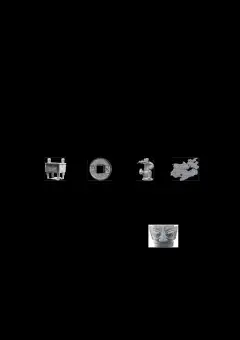
The Simuwu Ding, also known as the Houmuwu Ding, remains the largest and most significant bronze container
ever discovered in archaeological history. This extraordinary artifact was unearthed at Anyang, Henan province,     1
historic capital of China’s late Shang Dynasty over three thousand years ago.
This monumental rectangular cauldron (矩形鼎) astonishes with its massive scale,     2    (weigh) 82.84
kilograms. It    3      (serve) crucial ritual functions in ancient ceremonies primarily     4     (present) wine
offerings to ancestral spirits. Historical evidence indicates the ding was specially cast by a Shang dynasty king to
commemorate his mother,     5     is the meaningful origin of its name “Houmuwu,” translating to “Queen
Mother Wu.”
The container’s artistic excellence is equally     6     (impress). Its surface features beautiful and detailed
decorations dominated by the mysterious taotie motif (饕餮纹) — a legendary creature with staring eyes and curved
horns that held religious significance. These designs not only demonstrate exceptional artistic complexity     7
represent the spiritual beliefs of the time.
Currently,     8     (house) in the National Museum of China in Beijing, the Simuwa Ding continues to
appeal to visitors worldwide. It stands     9     an enduring testament to China’s brilliant cultural heritage and
remarkable technological accomplishments      10      (date) back thousands of years.
05(25-26 高三上·广东深圳·月考)阅读下面短文,在空白处填入1 个适当的单词或括号内单词的正确形式。
Dead to Rights, a film on the Nanjing Massacre, has stormed China’s summer box office,     1     (hit) 1
billion yuan in just eight days.
    2     (direct) by Shen Ao, the film became the first post-Spring Festival release to achieve this box
office milestone and has maintained its daily box office lead in China since its July 25 debut (首映), according to
industry trackers.
The film has topped daily box office charts in all provincial-level     3     (region) across the Chinese
mainland for five straight days through Friday.     4     date, it has drawn over 30 million admissions.
Dead to Rights centers on a group of Chinese civilians     5     take refuge in a photography studio during
the Japanese aggressors’ cruel     6     (occupy) of Nanjing. In a. desperate attempt to stay alive, they are forced to
assist a Japanese military photographer in developing film — only     7     (discover) that the negatives (底片)
contain evidence of crimes committed by Japanese forces across the city. They     8     (secret) keep the negatives
and risk their lives to deliver them to the outside world.
According to     9     latest prediction, Dead to Rights is now expected to earn over  billion yuan in total
revenue, a further upward revision from     10      (early) estimates. If achieved, it would become China’s
second most successful film this year, second only to Ne Zha 2.
06(25-26 高三上·宁夏吴忠·期末)阅读下面短文,在空白处填入1 个适当的单词或括号内单词的正确形式。
While Tai Chi is often valued for physical fitness, many believe its true strength lies     1     the philosophy
behind its graceful movements. Two Americans share how this ancient art has already impacted their lives.
Louis Dang, a 35-year-old freelancer from Minnesota, first encountered Tai Chi during a meditation retreat in
Australia.     2     began as simple curiosity about Chinese martial arts gradually turned into a deeper search for
inner peace.
“Tai Chi is like water,” Dang explained. “It’s gentle and elegant, yet deeply     3     (power). It teaches
you to release tension and rediscover balance in a world,     4     never slows down.” He believes the slow and  5
(flow) movements train not only muscles but also awareness itself, helping him match quick thoughts with steady
actions.
For Dang, Tai Chi’s philosophy of harmony and adaptability reaches far beyond cultural     6     (boundary)
and is popular with many people.     7     (influence) by Taoist principles of yin and yang and the unity of nature
and humanity, it restores a sense of balance that modern life frequently overlooks.
Jake Pinnick, from Illinois, a 16th-generation student of the Wudang martial arts tradition, agrees that Tai Chi
represents much more than a set of physical forms. “It’s     8     (essential) a way of perceiving the world,” he
said. “The idea of Tai Chi     9     (use) to guide every aspect of human experience.”
“We all perceive life differently, yet through the same senses,” Pinnick noted. “Through the practice of Tai
Chi, we have the patience      10      (guide) our breath, steady our steps, and learn to bring peace to both mind
and body.”
07(25-26 高三上·甘肃·期末)阅读下面短文,在空白处填入1 个适当的单词或括号内单词的正确形式。
China is speeding up the development of a modern civilization    1    humans and nature coexist
harmoniously, creating new opportunities for giant panda conservation. It is well known that the quality of habitats
is directly linked to the survival and    2    (reproduce) of wild giant pandas, so over the years, China has
strengthened the conservation of their habitats through initiatives like natural forest protection and nature reserve
establishment. China has established 67 giant panda nature reserves. Since the    3    (office) establishment of
the Giant Panda National Park, a conservation system centered    4    the park has been developed, expanding
the total    5    (protect) area from 1.39 million hectares to 2.58 million hectares. Additionally, China has worked
with 26 institutions in 20 countries on giant panda conservation, successfully breeding ( 繁殖) 43 litters of cubs.
China’s giant panda conservation system has become    6    (increasing) refined, and the wild population is
steadily growing.
In fact, China launched a wilderness training and reintroduction program for captive (被圈养的) giant pandas
in 2003 to support the long-term conservation. So far, 12 captive-born pandas    7    (release) to the wild, with
10 surviving. As    8    effective system for wilderness training, the program provides a scientifically sound
approach to    9    (promote) sustainable development. China will continue to develop the Giant Panda National Park
and build a world-class research platform   10    (strengthen) conservation efforts.
08(25-26 高三上·河北张家口·期末)阅读下面短文,在空白处填入1 个适当的单词或括号内单词的正确形
式。
Traditional Chinese opera may seem miles apart from today’s youth culture. Yet, in the hands of director Li
Zhuoqun, this ancient art form has found unexpected vitality (生命力). With respect for heritage and a bold eye for
1    (innovate), Li is proving that traditional Chinese opera can be transformed into a dynamic (有活力的) stage
where timeless emotions     2    (express) in fresh ways.
In collaboration with the National Centre for the Performing Arts, Li’s latest Peking Opera production, Yan
Zhenqing, was primarily performed on Wednesday,     3    (feature) artists from the Jingju Theater Company of
Beijing. Set against the Tang Dynasty, the production tells the story of Yan Zhenqing, a man     4     made
sacrifice (牺牲, 奉献) for his country. Although famous for his calligraphy works, it’s Yan’s courage on the battlefield
against corruption (腐败) at the age of 75 that     5    (touch) modern audience’s hearts.
    6     the support of multimedia technology, Li brings this historical figure to life, creating a visual
feast (视觉盛宴) that enhances the drama while honouring the core traditions of Peking Opera. “Each school (流派)
brings          unique flavor to the performance,” says Li.
    8    (notice) by younger audiences, Li’s approach proves to be successful. Yan Zhenqing has drawn
praise from those who may not have normally engaged with Peking Opera. “The visuals were stunning, and the story
felt so     9    (relevance) to ours today. It was somewhat old     10     made new again,” an audience
wrote on Little Red Book.
09(25-26 高三上·海南海口·期末)阅读下面短文,在空白处填入1 个适当的单词或括号内单词的正确形式。
Classical Chinese gardens are famous around the world for their unique designs. Often called “scholars’
gardens”, these spaces beautifully combine nature    1    art. There are three main types of classical Chinese
gardens.
The first type is the imperial garden, with the Summer Palace in Beijing    2    (be) one of the most well-
known examples. These large gardens    3    (create) for emperors and their families to enjoy the beautiful
landscapes which seemed to come from scenic paintings. Elements like    4    (impress) halls, colorful pavilions,
and covered walkways can be found.
Next are temple gardens, usually    5    (find) in peaceful mountain areas. These gardens share some
features with imperial gardens and are designed as quiet places for prayers and reflection that the public can visit.
Many temple gardens,    6    have stunning natural views, are enhanced by tall mountains that add to their calm
atmosphere.
Finally, southern gardens, considered the finest in China, are primarily found in cities south of the Yangtze
River. Many of them were built by scholars and officials. They resemble temple gardens but are smaller and    7
(delicate) . Instead of temples, these gardens have homes for scholars, along with pavilions, viewing areas, and studios
for poetry and painting. These gardens are small    8    rich in design, featuring hills, lakes, pavilions, and bridges.
Their remarkable design feature is the ability    9    (change) the scenery with each step.
To fully appreciate the beauty of Chinese gardens, it’s important to understand the     10     (philosophy) that
inspire their various designs.
10(25-26 高三上·辽宁葫芦岛·期末)阅读下面短文,在空白处填入1 个适当的单词或括号内单词的正确形
式。
The inkstone, one of the Four Treasures of the Study, is     1     essential tool for Chinese calligraphy and
painting. With a history of over 2,000 years, it originated in the Han Dynasty and     2     (praise) by scholars
and artists ever since.
Inkstones are usually made from stone, clay or jade. The craftsmen of ancient times paid great attention to
material selection, and     3     (vary) techniques were applied to polish the surface to perfection. Some top-
quality inkstones, carved with delicate scenery,     4     (be) much sought-after by collectors at home and
abroad.
An inkstone     5     surface is smooth but not slippery can produce fine ink.     6     the small size,
making such an inkstone is a delicate task that requires years of practice and a keen eye for detail. Many inkstones
bear patterns of mountains and rivers,     7     (reflect) the harmony between humans and nature in traditional
Chinese culture.
In modern times, the inkstone still plays an important role in cultural exchanges that require us to promote and
preserve our traditional art     8     (constant). By sharing stories of the inkstone, we can help more people
understand the deep    9      (wise) behind Chinese traditional arts. As young cultural messengers, we should try
our best     10     (build) a bridge between Chinese culture and the world.
11(25-26 高三上·山东淄博·期末)阅读下面短文,在空白处填入1 个适当的单词或括号内单词的正确形式。
For centuries, the artist’s studio has been a place of solitary (独自的) struggle, with creative breakthroughs
often attributed to the muse     1     mysterious external force. Yet till today, artificial intelligence (AI)     2
(step) into this field, bringing code that fundamentally challenges the romantic idea of inspiration, just as the muse
once shaped modern understandings of creativity.
The explosion in generative AI has caused a crisis. These tools can create complex images     3

(immediate). To traditionalists, this is automation. They argue that true art requires human experiences and     4
(pain) qualities that a chip can never possess. To them, the machine is a servant, rather than a partner.
However, many artists are embracing the algorithm (算法),     5     (regard) it as a new form of muse.
The process often begins with an indistinct idea. The artist feeds this into the AI, which responds with     6     (vary).
Sometimes, the machine produces something unexpected     7     the human mind would never have
conceived.
In this dynamic, humans remain the operator. Inspiration     8     (emerge) from the probability of neural
networks. History suggests that new technology will not kill art. Instead, it forces artists to focus on     9     makes
them uniquely human. Ultimately, the magic happens in the friction (碰撞)     10     the prompt (指令) and the
algorithm, where the artist remains the essential element.
12(25-26 高三上·河北衡水·期末)阅读下面短文,在空白处填入1 个适当的单词或括号内单词的正确形式。
Colorful traditional costumes, handcrafted cultural items, and the smell of Southeast Asian flavors filled a hall
at Beijing’s International Innovation Park as young people from across the region     1     (gather) under one
roof. Music and lively conversations flowed through the air,     2     (turn) the spot into a celebration of diversity.
The event was SEA YOU@ASEAN 2025, a cultural festival organized for     3     (young).
At one stand, an Indonesian student named Lim     4     (cautious) unfolded pieces of batik (巴蒂克布
料). “Batik is a great source     5     pride for Indonesians,” she said. “Every pattern of its own tells a story about
history, nature or daily life.”
Lim was one of the young professionals from China and ASEAN countries who took part in the festival,     6
was cooperatively organized by the Malaysian Students Association in China and the Association of Malaysian
Students in Beijing.
    7     (hold) as Malaysia served as ASEAN’s rotating chair in 2025, the festival aimed     8

(strengthen) people-to-people ties and show the region’s cultural diversity through exhibitions, performances, and
interactive experiences.
At the Myanmar stand, for example, Hein, a 21-year-old junior studying at Peking University, demonstrated
chinlone, a traditional Burmese sport often compared to China’s cuju     9     ancient ball game considered an
early form of soccer. He said he was especially touched when participants from different ASEAN countries exchanged
small gifts at the end of the event. “It showed     10     closely connected our cultures are,” he added.
13(25-26 高三上·江苏盐城·期末)阅读下面短文,在空白处填入1 个适当的单词或括号内单词的正确形式。
Initially built during the Sui Dynasty, the Xi’an City Wall now circles the historic city. Yet its long life has not
escaped damage. By the early 1980s, before Xi’an undertook a     1     (sweep) restoration campaign, much of the
structure     2     (fall) into a state of disrepair.
Today, data has become the wall’s newest guardian. High-precision 3D modeling has mapped its entire structure,
creating     3    complete digital foundation. Plus, over 3,000 monitoring points and 1,300 smart devices track
minor signs of structural damage     4     (cause) by anything from settlement to displacement, and feed data
into a center     5    AI analyzes and anticipates potential risks. These findings have not just informed targeted
repairs that preserve the City Wall     6    addressed hidden weaknesses as well.
While technology plays a key role in its     7     (preserve), the wall has long been part of citizens’ daily
life in Xi’an. Visitors bike along its 12-meter-wide top, watch cultural performances, or take photos while dressed
   8

traditional Hanfu against the backdrop of its ancient gates. Around the-wall, some cafes and guesthouses offer “wall-
view” rooms. The contrast — the modern on the old — connects locals to the       9     (dynasty) that once ruled
from here.
Watching the city evolve through centuries, the wall is more than bricks and earth. Here, tradition meets
technology, and the past      10      (breathe) through modern life — brick by brick, byte (字节) by byte.
14(25-26 高三上·江苏徐州·期末)阅读下面短文,在空白处填入1 个适当的单词或括号内单词的正确形式。
QinXiaoya, a virtual figure playing a young female role in Qinqiang Opera, has caught people’s attention since
it made its debut in an art festival in Xi’an. The design team employed 3D modeling     1     (copy) the original clothes
and accessories of the virtual actress.
Qinqiang Opera, a Chinese folk opera     2     (originate) in the Western Zhou Dynasty, continues to
thrive in Northwest China and     3     (add) to the country’s intangible cultural heritage list in 2006.
As a newcomer to this ancient art, Qin Xiaoya demonstrates     4     youthful image. Young people are
interested in an introductory music video for the Ninth China Qinqiang Opera Arts Festival,     5    she performed
Qinqiang Opera remixed with rock’n’roll.
“We hope to make her a spokesperson for the art of Qinqiang Opera and make related cartoons, movies and
a     6     (diverse) of other products in the future,” said Zhang xi, adding that they are developing more functions
for the virtual figure, who     7     (expect) to interact with netizens via live streaming.
The technology that is injected     8     the opera can also be found among cinematic techniques. For
example many opera fans enjoy a 3D Qinqiang Opera film Three Drops of Blood, which is regarded as a masterpiece in
Qinqiang Opera.
Traditionally, actors perform at the     9     (center) part of the stage which is decorated with tables and
chairs, and the band plays Chinese folk instruments in the wings,      10      in the 3D film, the centuries-old
art takes on a new look.
15(25-26 高三上·山西晋中·期末)阅读下面短文,在空白处填入1 个适当的单词或括号内单词的正确形式。
How many ways can a piece of blue calico (印花布) be expressed? The encounter between tradition and
modernity stimulates its fashionable     1     (transform). Blue calico, emerging from the depths of time, is
reborn through     2     (innovation) expression.
Yu Hongjin, an inheritor (传承人) of Qidong blue calico intangible cultural heritage expressed that his first
task was to draw inspiration from tradition.“What must remain unchanged     3     (be) our traditional dyeing (染色)
technique. To make intangible cultural heritage fit into modern life, we need to ensure it is suitable for the present
background while     4     (firm) preserving its traditional practical use and beauty. Adapting blue calico     5
(meet) today’s needs is essential,” Yu said.
Wang Ruyi, the founder of Ruyi Studio, pointed out that blue calico always carries an ancient, plain charm
6     often lacks modern taste. So, she wants to design accessories (配饰)     7     re-imagine it in a fashionable
way, breathing new life into the art. As Wang introduced, her design philosophy integrated old charm with modern
fashion, combining ethnic elements with contemporary style, making it appealing     8     more young people.
She believes that’s how it can go even further.
Gong Jianpei, a professor at Nanjing University of the Arts, said that from the perspective of renewal, our
intangible cultural heritage should not only    9    (carry) forward, but also expanded and upgraded to new heights.
“The work I do with my students has already led to innovations in the patterns,     10     (create) a fresh, new
look that is more attractive to people and society as a whole,” he noted.